 The Audubon Aquarium: Field Notes on Photographing Through Glass
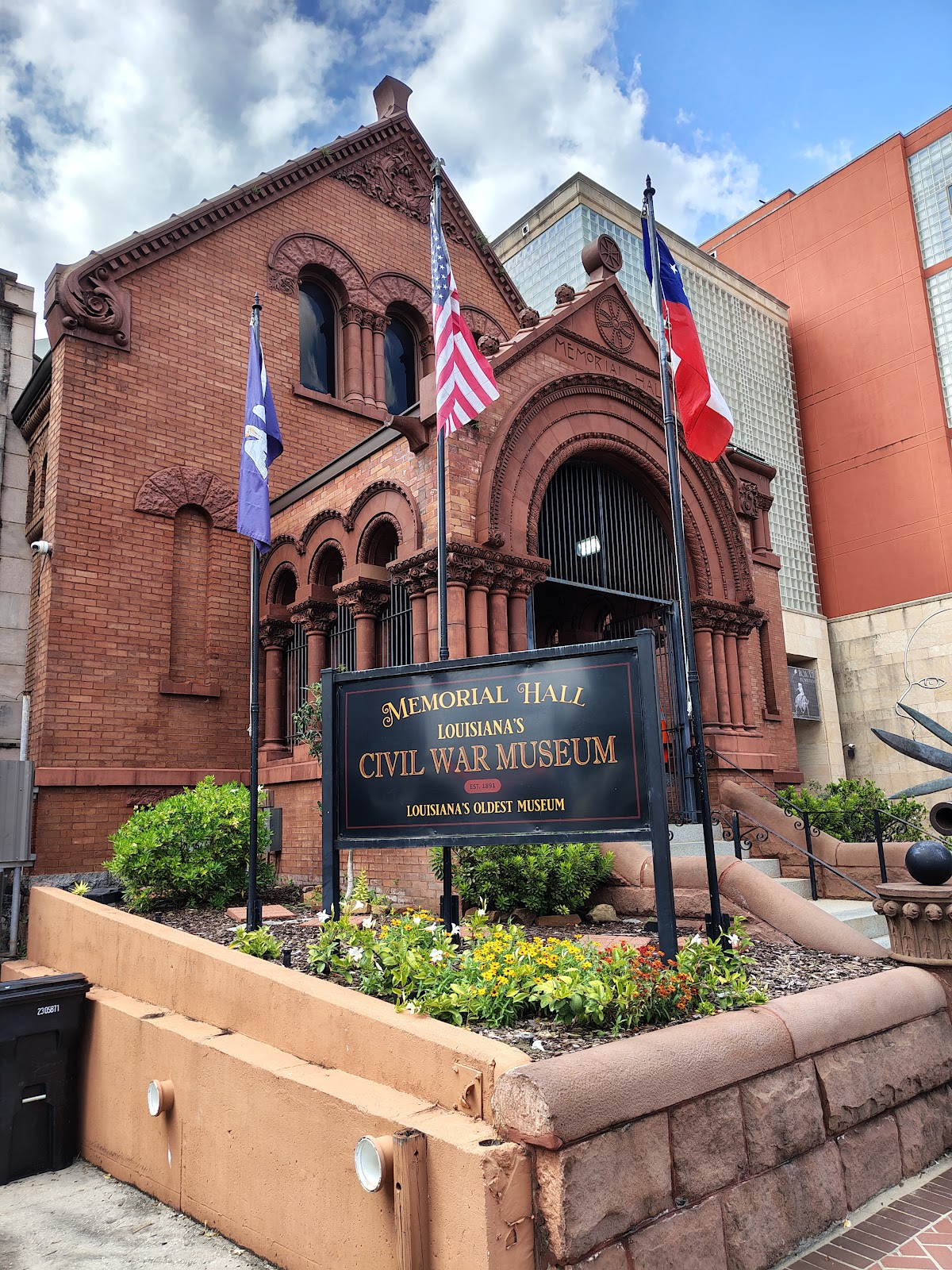
The Ogden Museum, New Orleans: A Walk Up Through the Building
This building gets better the higher you go, and the roof is the reason to be here.
The Ogden Museum in New Orleans has galleries, a central atrium and — the feature its own material singles out — a rooftop terrace.
A museum with a roof terrace is an unusual combination and it produces a building that improves as you ascend. The galleries at the bottom are the hardest spaces to work in, because gallery lighting is engineered for conservation and display rather than for faces. The atrium in the middle is better, because it holds nothing light-sensitive and is therefore generously lit. And the terrace at the top is the best thing on the site, because it is outdoors, above the roofline, and has the whole sky as a source.
So this is a walk up through the building. We have not photographed a wedding at the Ogden; museums with roof terraces behave consistently. Whether photography is permitted in galleries, whether stands and flash are allowed, and whether the terrace is bookable and at what hour are the questions for their team — the last one decides the day.
The Ogden Museum at a glance
| Where | New Orleans, Louisiana |
| Character | An art museum with galleries, a central atrium and a rooftop terrace |
| The pattern | The building improves as you go up |
| The reason to book it | The terrace, in the last forty minutes and after sunset |
| Ask first | Gallery photography, stands and flash, terrace access and hour |
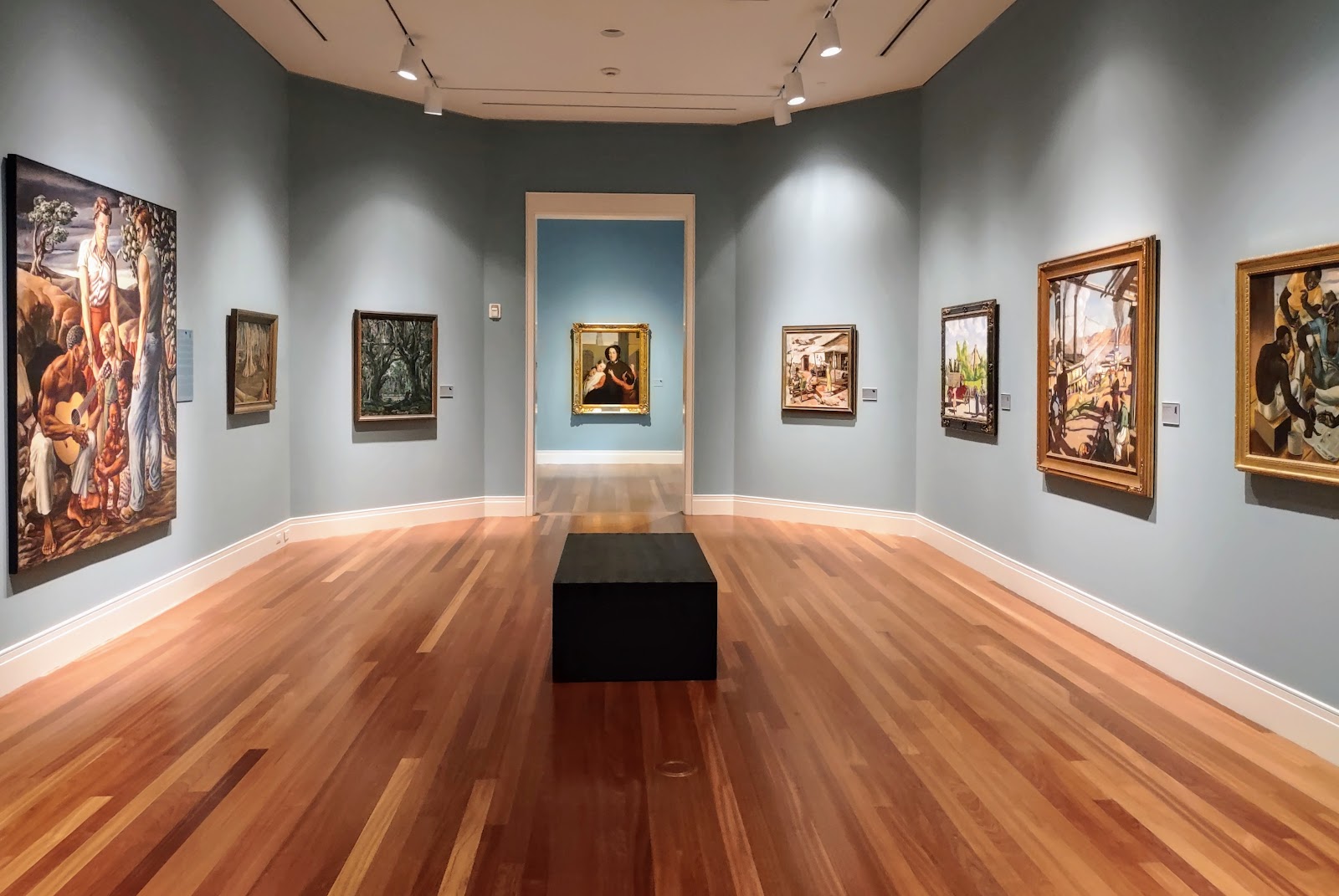
Ground level: the galleries, and why they resist
Galleries resist for three reasons at once and light level is the least serious. Conservation caps the level two or three stops below comfortable, which a fast lens and a raised ISO handle without difficulty.
Direction is the real problem. Display lighting comes from track or recessed fittings in the ceiling, aimed down at works, which means light from directly above — darkening the eye sockets, drawing a hard line from the nose, and leaving the underside of the chin unlit. It is the lighting direction used deliberately in horror films, for exactly this reason.
Spectrum is the third and it survives editing least well. Museum fittings are frequently narrow-band LED chosen for low ultraviolet output rather than colour rendering, and under a low-CRI source skin can go sallow or plum-toned even at technically correct white balance, because the source is not emitting the wavelengths skin needs to reflect. No adjustment recovers a wavelength that was never there.
Gallery walls in a contemporary museum are often mid-tone or dark with high ceilings, so bounce returns nothing and every source must be direct and modified. Where any light is permitted, keep it small: a gridded source on the couple alone, spilling onto nothing, about a stop under a correct reading for the room. A dim gallery with a small pool reads as atmospheric; flooded, it reads as a lit room with pictures in it.
Artworks behind people need the standard decision — commit to one work deliberately so both read, or subordinate with a long lens at a wide aperture so the wall becomes a soft field of colour. Half-in fails, and a large saturated canvas also throws its own colour onto a nearby face, which is a further reason to let your own source own the skin.
The atrium and the stairs
A central atrium is the middle of the building and the best interior in it. An atrium holds nothing light-sensitive, so it has no conservation limit; it is usually top-lit or glazed, so the level is generous; and it is tall, which carries no visual clutter even if it removes bounce.
The light in a top-lit atrium is soft, even and largely from above — which makes groups easy and position almost unimportant, and darkens eye sockets. The fixes are cheap and should be ready every time: a reflector held low bouncing light back up into the face, a pose with the chin lifted, or a small source at face height that overrides the geometry.
If the atrium surfaces are pale, exposure needs a deliberate correction, because a bright space pushes a meter towards underexposure. Add half a stop to a stop over the metered reading and check the surfaces still hold texture rather than clipping.
Stairs in an atrium are the most useful single feature in a museum of this kind. A stair gives elevation, a diagonal or a curve, a handrail as a leading line, and — most practically — rows for a group automatically, which a flat gallery floor never provides. Almost every group photograph in a building like this belongs on its stairs.
Contemporary museum surfaces are spare, which means backgrounds must be built rather than found. The tools are depth, a long lens at a wide aperture, one directional source to make a shadow side, and placement against the darkest element available. Pale on pale under even top light is the default failure in any modern atrium.
Symmetry in an atrium rewards precision. A frame centred on the space collapses if the camera is off centre or a degree out of level, because the verticals splay and the composition reads as careless. Level, and either centre exactly or clearly do not.
- Galleries: one gridded source on the couple, a stop under the room, spilling nowhere
- Atrium: fix the overhead light with a low reflector or a lifted chin
- Add half a stop or more in a pale atrium, as for snow
- Put the group on the stairs; a flat floor will not make rows
- Build backgrounds from depth and darkness; spare surfaces give none
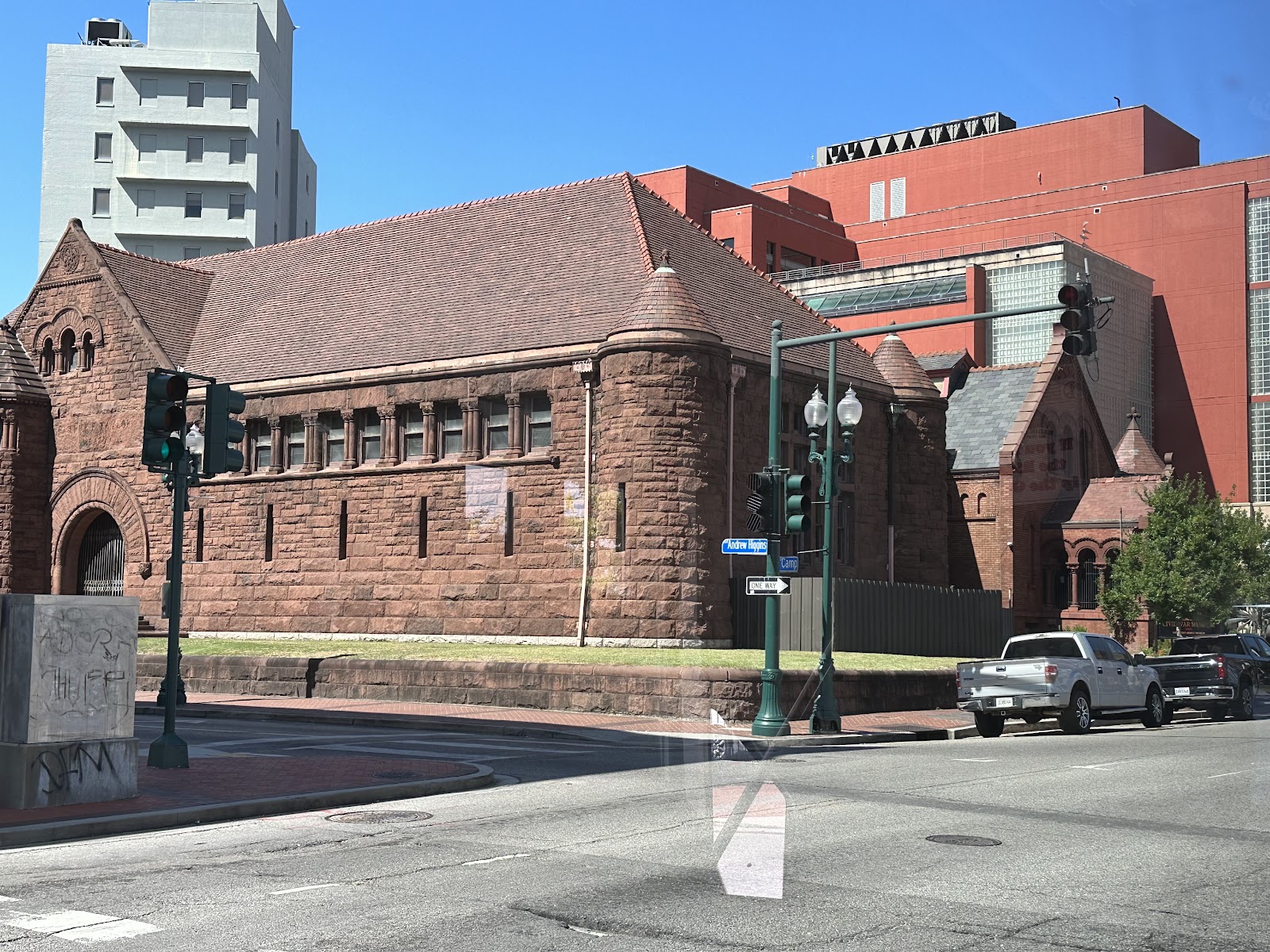
The roof, and New Orleans weather
The terrace is an outdoor venue that happens to be on top of a museum, and it follows outdoor rules exactly. There is no ceiling and no wall, so nothing bounces and every source must be direct. After dark the ambient is close to zero, because a roof has no reflecting surfaces. And the good light is confined to two narrow windows.
The first is the last forty minutes of daylight, and on a roof it starts earlier than at street level — because being above the surrounding roofline means low sun reaches the terrace when the streets below are already in shadow. That is the terrace’s structural advantage and it is worth an extra thirty minutes in the schedule.
Long lenses matter up there. Compression brings the roofscape, the river and the city close behind a couple, where a wide lens reduces all of it to a strip under a large sky. And a low camera helps for the opposite reason: dropping close to the terrace floor puts the parapet or decking as a leading line and lifts the couple against sky rather than against rooftops.
The twenty minutes after sunset is the frame the terrace exists for. With the sky still holding colour and the city lights beginning to read, one exposure holds a couple, the roofline and a coloured sky — and it needs one light on the faces at about a stop under the sky, or they silhouette. That is a clock-time appointment: sunset plus fifteen, in position, couple already there.
Before that window, a New Orleans rooftop in the middle of a summer day is genuinely unworkable: no shade whatever, high sun, and heat and humidity with nothing to escape into. Anything scheduled up there before late afternoon is a welfare decision as much as a photographic one.
Wind is the standing rooftop constraint — stronger and gustier than at street level, so a veil becomes a held-or-removed decision and any light stand needs real weight rather than good intentions.
New Orleans weather governs the terrace absolutely. Afternoon thunderstorms are near-daily in a Gulf Coast summer rather than occasional, and a roof has no cover, so a stated fallback with a capacity and an agreed decision time is required — the museum interior is the answer, which is why the combination works. Humidity also produces the region’s equipment problem in its most severe form: a camera chilled inside an air-conditioned museum fogs comprehensively and immediately on reaching the terrace and can take a long time to clear. Since the terrace holds the day’s most important frame, the handling is to put a body out into ambient air well before the dusk window rather than carrying it up cold.
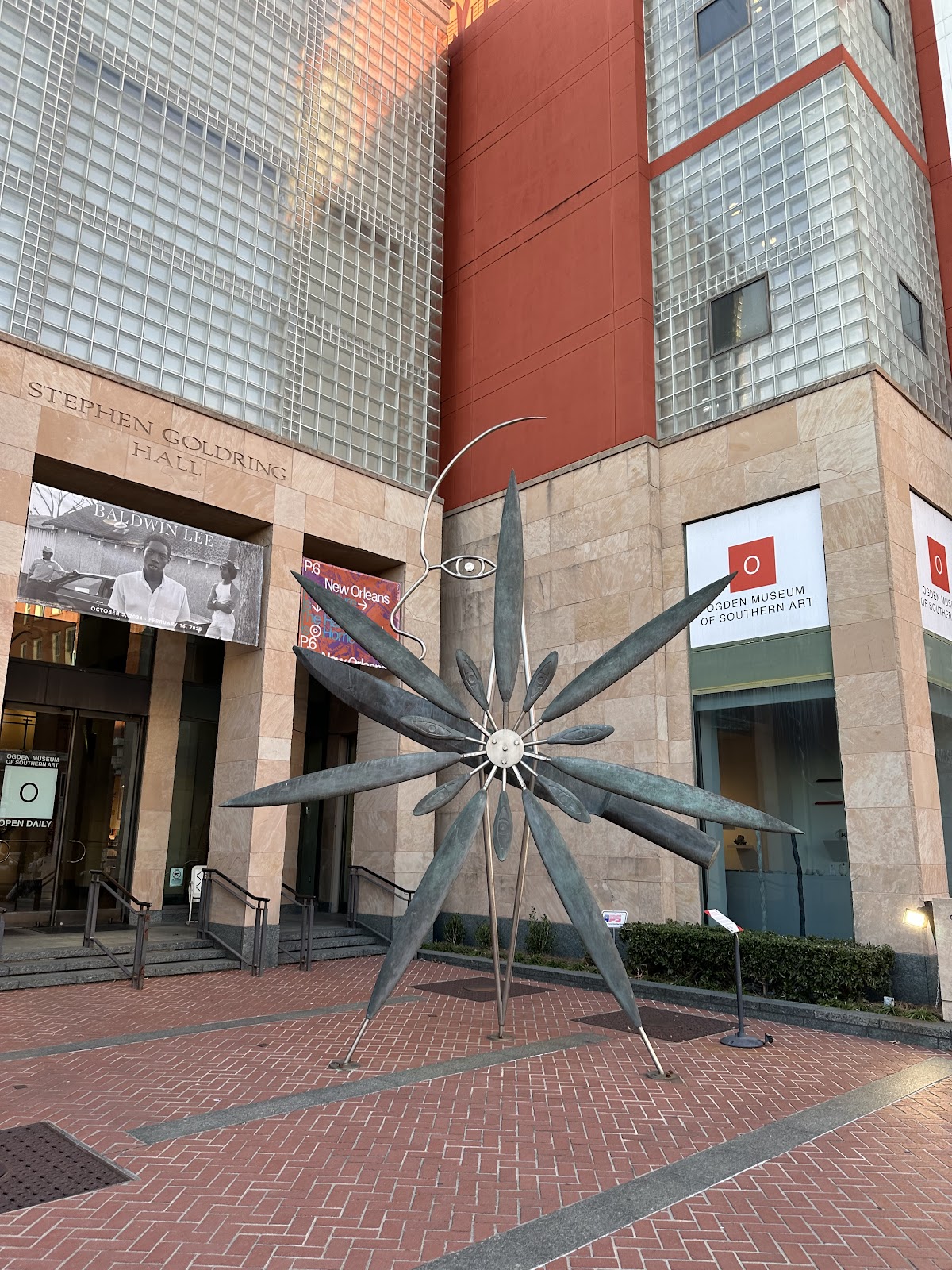
More frames from The Ogden Museum
The Ogden Museum wedding photography: common questions
Why do the galleries resist?
Three reasons at once: conservation caps the level, fittings aim down from the ceiling so eyes go dark, and narrow-spectrum sources render skin badly even at correct white balance.
What is the best interior in the building?
The atrium. It holds nothing light-sensitive so there is no conservation limit, it is generously lit, and its stairs give elevation, a leading line and rows for a group automatically.
What does a top-lit atrium need?
A fix for the overhead direction — a low reflector, a lifted chin, or a face-height source — and half a stop to a stop of added exposure if the surfaces are pale.
Why is the roof terrace the reason to book it?
Because it is above the surrounding roofline, so low sun reaches it while the streets are already in shadow — and because the twenty minutes after sunset there is the best frame the site offers.
When is the terrace unusable?
The middle of a summer day. No shade at all, high sun, heat and humidity with nothing to escape into — a welfare decision as much as a photographic one.
What does the terrace need in equipment terms?
Direct light, since nothing bounces; one source on the faces at about a stop under the sky after sunset; weighted stands for rooftop wind; and a body already at ambient temperature so it does not fog.
More Louisiana venue guides
We are writing a photographer’s guide to every venue we would happily shoot in Louisiana. Here are three more, plus the full index:
- The Omni Royal Orleans, New Orleans: The One Decision That Governs Everything
- The Ritz-Carlton New Orleans: How the Light Moves
- The Roosevelt New Orleans: The One Decision That Governs Everything
Planning a wedding at The Ogden Museum?
The terrace is the day’s one appointment. Tell us your date and we will book the hour.