 Hotel Saint Louis: A Walk-Through of an 1893 Union Trust Building
The Raphael Hotel: A Small Hotel and the District Around It
The hotel is modest and the district outside it is not. That inverts where the day should happen.
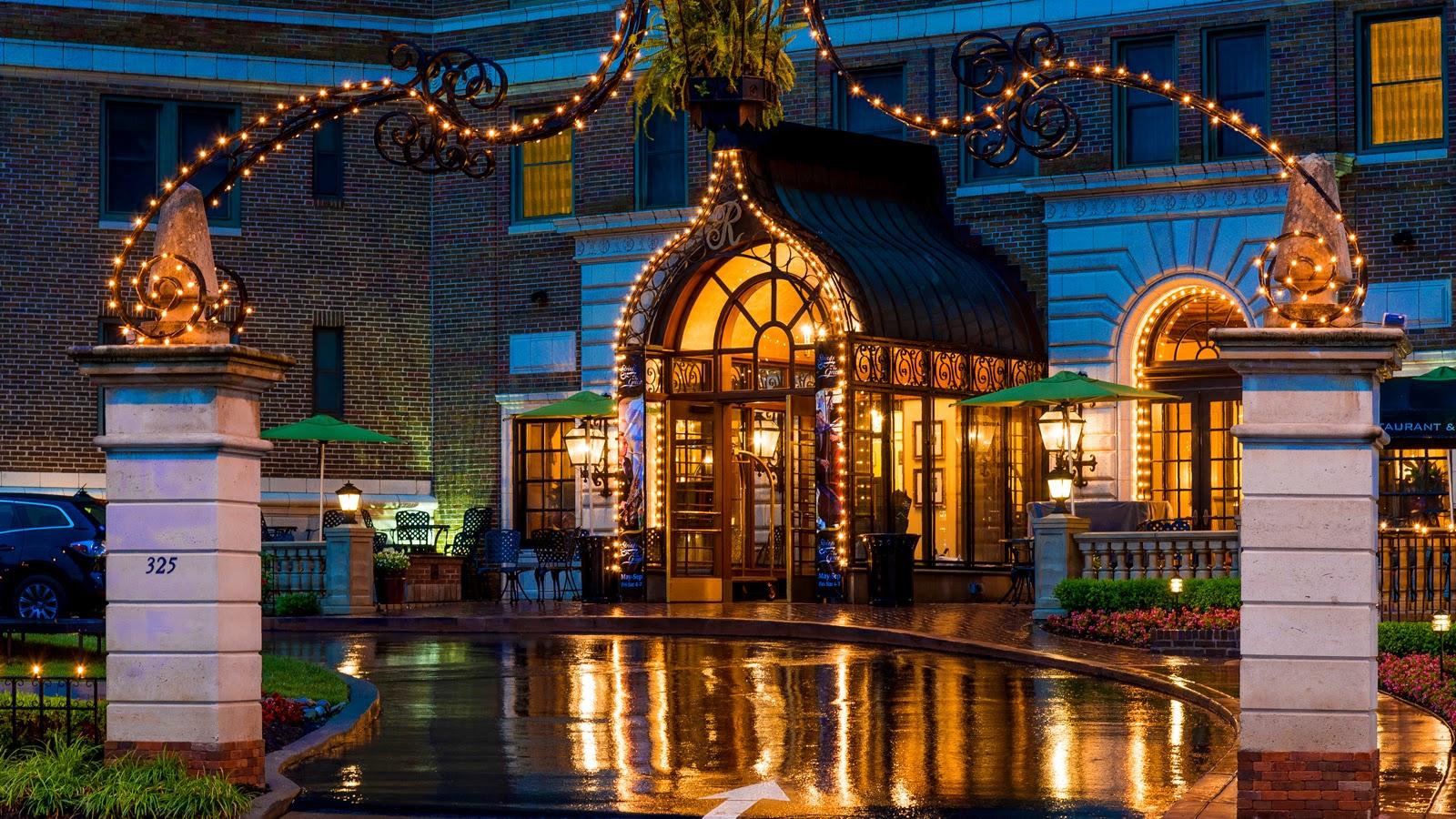
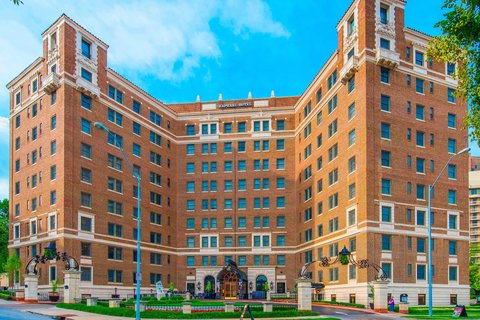
The Raphael Hotel occupies a 1920s building beside the Country Club Plaza in Kansas City, Missouri — a small hotel rather than a grand one, with intimate public rooms and guest floors, on the edge of a district built in a coherent Spanish-influenced style.
Most venue guides treat the building as the venue and the surroundings as a bonus. Here that would be the wrong way round. The hotel is pleasant and modest: small rooms, limited public space, no vast ballroom and no dramatic architectural set piece. The Country Club Plaza immediately outside is one of the most photographically coherent districts in the Midwest — towers, tilework, ironwork, fountains and arcades, all built to one architectural idea and all at a walkable scale.
So this is a walk that starts inside and spends most of its time outside. We have not photographed a wedding at the Raphael; small period hotels and coherent architectural districts behave the same wherever they meet. Real capacity, which rooms are allocated and what the Plaza permits for photography are questions worth asking — the last of a district that is privately managed rather than a public street.
The Raphael Hotel at a glance
| Where | Beside the Country Club Plaza, Kansas City, Missouri |
| Character | A small 1920s hotel next to a coherent Spanish-influenced district |
| The inversion | The district outside is the stronger half of the venue |
| Inside | Small rooms, so bounce beats a modifier and the kit stays tiny |
| Ask first | Real capacity, and what the Plaza allows for photography |
Inside: a small hotel, worked properly
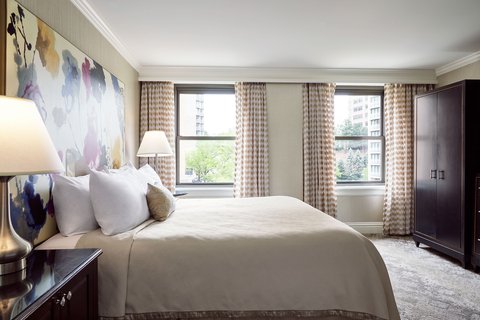
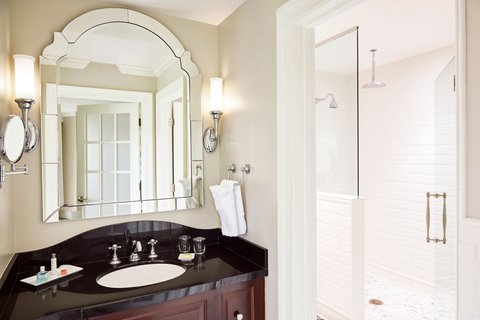
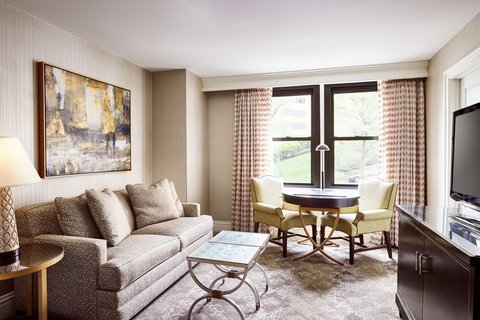
Small hotel rooms have a specific set of consequences and all of them are manageable. Camera position is decided by the walls rather than chosen, which means a 28mm or 35mm for anything with more than two people and an 85mm for faces across a table. Wide lenses at close range stretch whatever sits near the frame edge, so keep faces towards the centre and arrange any group in a shallow arc rather than a line.
Lighting is easier than in a large hotel, not harder. In a small room with pale surfaces, a bare flash bounced off a wall or a normal-height ceiling turns the entire space into a source larger than any modifier that would fit through the door. That means a very small kit and a fast setup, which is the opposite of what a ballroom demands.
Guest floors are where the daylight is, as in any hotel of the period, and the request worth making is for the largest window on the shaded side. Then switch off the overheads and move the lamps out, because mixed tungsten and daylight in one room is the commonest cause of inconsistent skin tone across a preparation gallery.
The scale constraint is groups. A small hotel cannot take formal groups past about a dozen indoors, so they happen outside — and in this case outside is an asset rather than a fallback, which makes the decision easy. Establishing exactly where before the day turns a twenty-minute exercise into five minutes.
The Plaza: why a coherent district is worth more than a grand room
A district built to one architectural idea is unusually valuable photographically, and the reason is consistency. In a typical city, walking two streets changes the register completely — brick to glass to concrete — so a set shot across a few blocks looks assembled from different places. In a coherent district every frame shares a vocabulary: the same tilework, the same arcading, the same tower forms, the same materials. A gallery shot across it reads as one place, which is exactly what a wedding set wants.
The specific features worth using are arcades, towers and water. An arcade is the most useful: a covered walkway gives hard-edged full shade with a bright open street in front of it, so a couple standing two metres inside the shade line and facing out has a large soft key with a dark surround — available all day regardless of the sun’s position, and better than anything a photographer could carry. It is also a colonnade, so it provides a receding line as well as shade.
Towers and tilework need raking light, as all textured architecture does. Low sun lifts the relief in tile, stone and ironwork; flat midday sun erases it into plain colour. So the architectural frames want the ends of the day, which conveniently is also when faces work best outdoors.
Fountains and water features give the upward fill that makes faces work under a high sun, plus movement and, at a slow shutter, a soft white texture that reads well against hard architecture. They also give the mirror frame in still water, with the usual caveats about breeze and high sun.
The practical caveat is that a managed district is not a public street: photography may be permitted informally, restricted for commercial work, or require notice. That is worth establishing rather than assuming, because it is the difference between a planned block and being asked to stop.
- Small rooms: 28mm or 35mm, faces centred, groups in an arc
- Bounce off a pale wall; it beats any modifier that would fit
- Ask for the largest shaded-side window for preparation
- Use an arcade as your studio: two metres inside, facing out
- Confirm what a managed district permits before planning a block in it
Sequencing it, and the Missouri conditions
Because the district is the stronger half, the day should be weighted towards it rather than towards the hotel — which is the reverse of most hotel weddings and worth saying to a couple explicitly. Preparation and detail work in a guest room at a good window; groups outside; and the substantial portrait coverage in the Plaza, with two blocks rather than one.
The first block is the arcades, and it can happen at any hour because covered shade with a bright street in front of it is hour-independent. That makes it the block to move when the running order slips, which is useful, because the second block cannot move.
The second is the last forty minutes of daylight, when low sun rakes the towers and tilework and lights faces from the side. That is the only outdoor block with a clock attached, and it is the one worth protecting above everything else. A short return after dark is also worth considering, because a district of lit arcades and illuminated towers is a genuinely different register — and a warm source balanced to the ambient handles it.
Two Missouri conditions apply throughout. Summer humidity is high enough that a lens carried from an air-conditioned hotel into outdoor air fogs for ten to twenty minutes, and wiping the front achieves nothing — acclimatise the body you intend to use outside before the block rather than during it. And summer afternoon thunderstorms build fast, rain hard and clear, which means an outdoor-weighted plan needs a genuine decision point; the arcades are a partial answer because they are covered, which is another argument for making them the flexible block.
One last note on scale: a small hotel means short internal distances and no lift journeys of consequence, which is a real advantage over a large property. Nothing here costs fifteen minutes to reach, so the time that a big venue loses to movement is available for coverage instead.
More frames from The Raphael Hotel
The Raphael Hotel wedding photography: common questions
Is the hotel or the district the venue here?
Effectively the district. The hotel is modest — small rooms, limited public space, no grand set piece — while the Country Club Plaza outside is one of the most photographically coherent districts in the Midwest. The day should be weighted accordingly.
Why is a coherent district so useful?
Because every frame shares a vocabulary. In a typical city, walking two streets changes the register from brick to glass to concrete and the set looks assembled from different places. Here the tilework, arcading and materials are consistent, so it reads as one place.
What is the single most useful feature?
An arcade. A covered walkway gives hard-edged shade with a bright street in front, so two metres inside facing out is a large soft key with a dark surround — available all day regardless of the sun, and it is a colonnade as well.
What kit does the hotel need?
Very little. Small rooms with pale surfaces mean a bare flash bounced off a wall turns the whole space into a source larger than any modifier that would fit through the door. Fast to set up, and the opposite of a ballroom.
Can you photograph freely in the Plaza?
Worth establishing rather than assuming. A managed district is not a public street — photography may be permitted informally, restricted for commercial work, or require notice. That is the difference between a planned block and being asked to stop.
Which block can move if the day runs late?
The arcades, because covered shade with a bright street in front is hour-independent. The last forty minutes of daylight cannot move, so protect that one and treat the arcades as the flexible block.
More Kansas City, MO venue guides
We are writing a photographer’s guide to every venue we would happily shoot in Kansas City, MO. Here are three more, plus the full index:
- Union Station Kansas City: Four Ways Out of the Great-Hall Problem
- The Muehlebach Hotel: A Historic Wing Attached to a Modern One
- The Aladdin Hotel: What a 1925 Art Deco Interior Suits
All Kansas City, MO Wedding Venues →
Planning a wedding at The Raphael Hotel?
The district is the venue and the hotel is the base. Tell us your date and we will weight the day outwards.