 Choctaw Hall: What a Gazebo Ceremony Does to the Photographs
The Beauvoir, Biloxi: A Walk Through the Building
Understand what the site is first. Then the galleries are the best light on the coast.
Before any of the photography, the thing that has to be said clearly, because it is not a detail and a couple should not encounter it late.
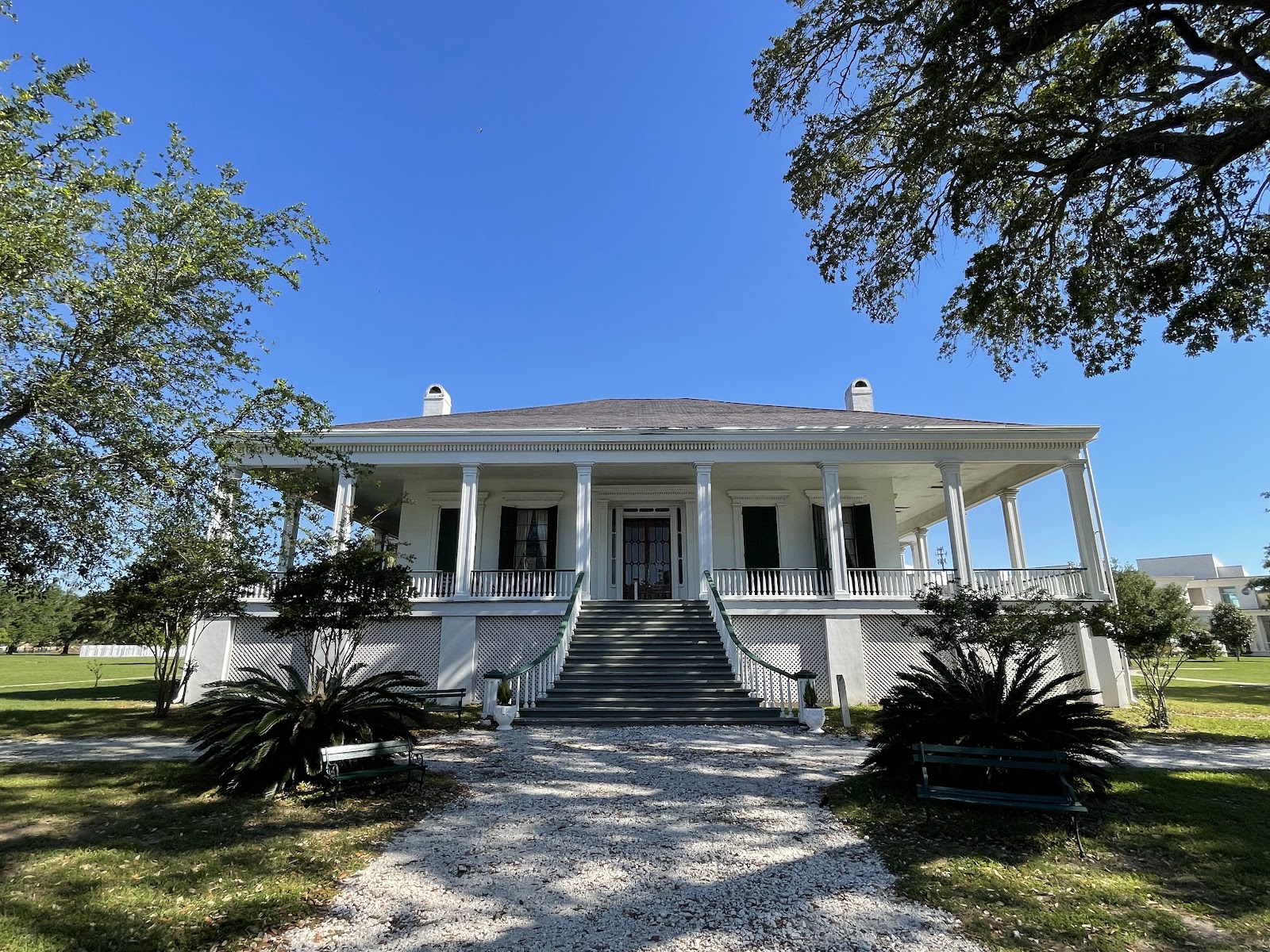
Beauvoir is an eighteen-fifties raised cottage on the Gulf at Biloxi, and its significance is that it was the last home of Jefferson Davis, president of the Confederacy, who bought it in eighteen seventy-seven and died there in eighteen eighty-nine. It later served as a home for Confederate veterans, there is a Confederate cemetery on the grounds, and the site today operates as a house museum and a presidential library devoted to Davis. It is, in other words, a Confederate memorial site.
The Confederacy was a state formed to preserve the enslavement of Black Americans. The house itself predates Davis — it was built in the late eighteen-forties and early eighteen-fifties for an earlier owner, and it was built by enslaved people, as almost every substantial building on this coast in that decade was.
So a couple considering this venue should decide about all of that deliberately, rather than by default. A significant number of people, photographers among them, decline to work at Confederate memorial sites for exactly this reason, and that is a coherent and respectable position. Others book them having thought it through. Booking without having thought about it is the option that tends to be regretted, sometimes publicly and sometimes years later.
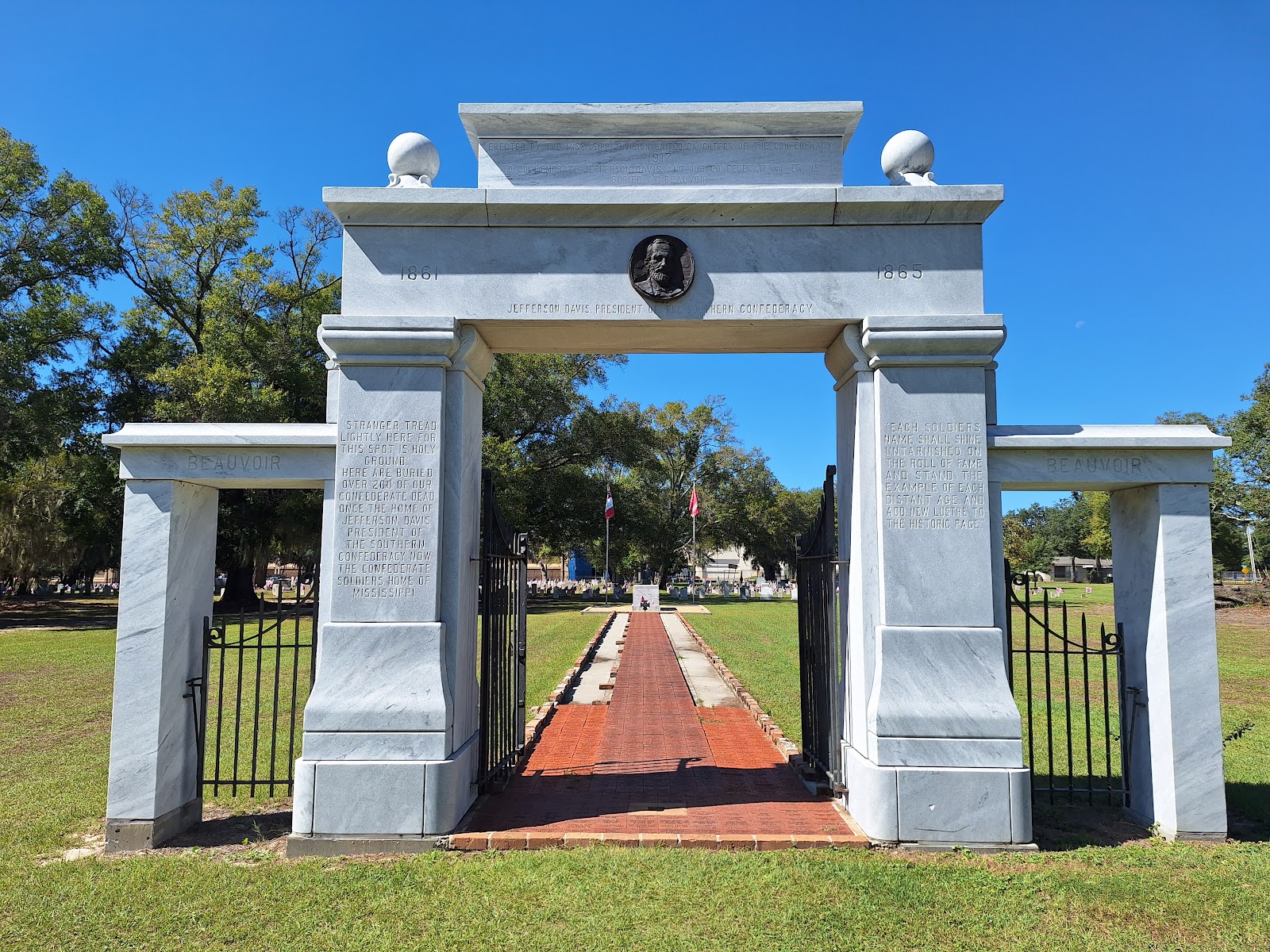
There is a working consequence too, and it is practical rather than abstract. Keep the Confederate cemetery, the memorial features and the Davis-related interpretation out of the wedding coverage entirely. Portraits belong at the house, the galleries, the oaks and the lawn. Using a memorial or a cemetery as a picturesque backdrop is the specific failure that gets this kind of venue written about badly, and it usually happens by accident rather than intent. Settle it with the couple in advance; it takes one sentence.
The second thing to know before the walk is that what stands here now is substantially a restoration. Hurricane Katrina came ashore at this coast in two thousand and five with a storm surge that destroyed a great deal of the Mississippi shoreline, and this building was badly damaged and subsequently restored and reopened.
That matters photographically in a specific way: some of what you see is original and some is reconstruction, and at close range in flat light the difference can show. The building therefore photographs best at distance or in low raking light, where construction detail stops being legible and mass, silhouette and proportion take over. That is a rule for any restored building and it points the same direction as everything else in this guide.
With both of those established, the architecture is genuinely fine and it offers one thing better than almost anywhere on this coast.
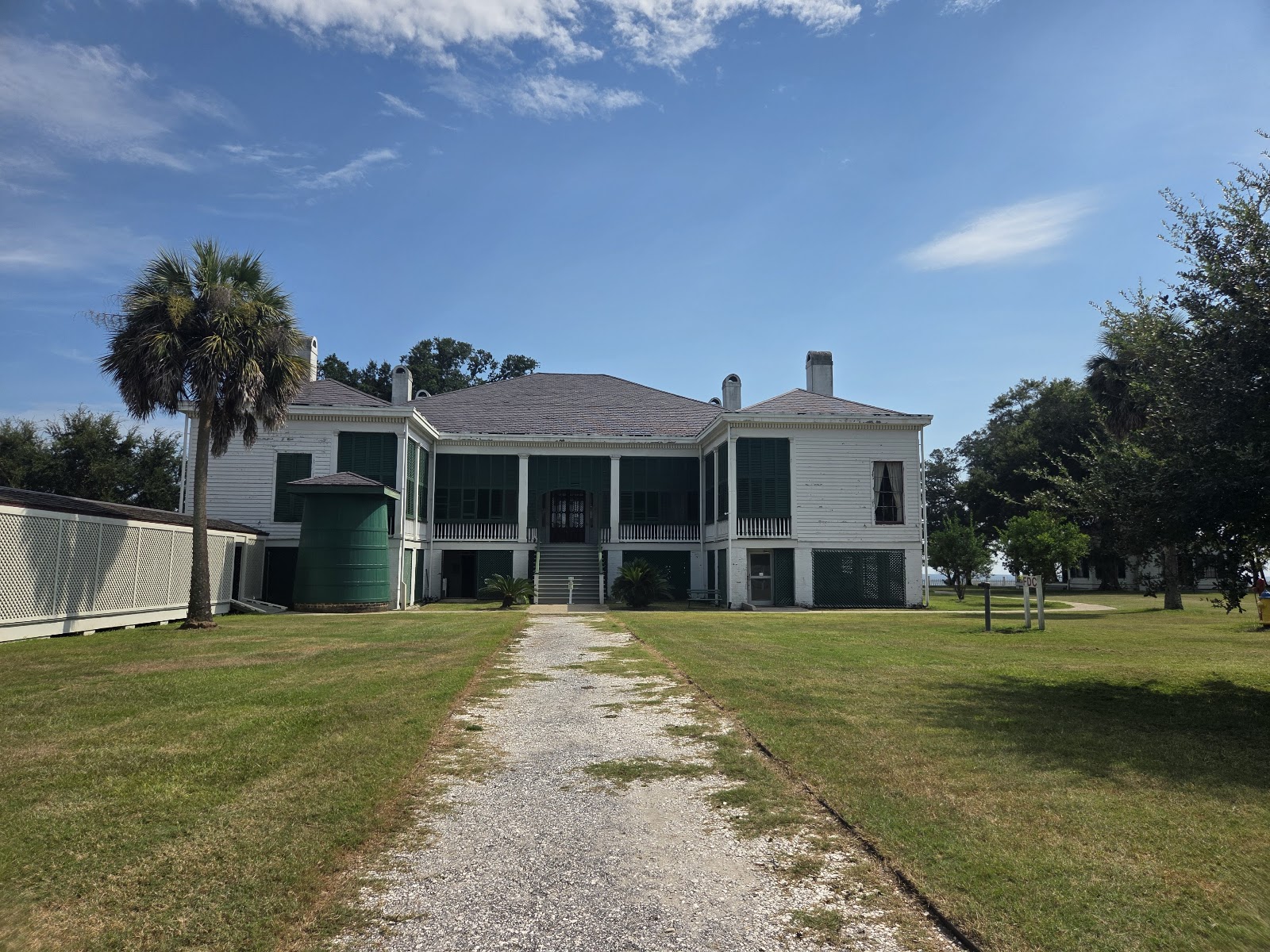
It is a raised Gulf Coast cottage: a main floor lifted above the ground on piers, with a broad low-pitched roof carried out over deep galleries across the front, and rooms that open onto those galleries. The gallery is the point. A roofed gallery at this latitude is the best portrait light available outdoors at any hour of any day, for reasons of pure geometry, and the second section explains why.
So the walk goes: the gallery, the interiors, the oaks and the lawn, and then the Gulf across the road.
The Beauvoir at a glance
| Where | An 1850s raised Gulf Coast cottage on the shore at Biloxi, Mississippi |
| Decide first | This is a Confederate memorial site with a Confederate cemetery on the grounds |
| Working rule | Keep memorials, the cemetery and Davis interpretation out of wedding coverage |
| Also note | Substantially restored after Hurricane Katrina; photograph at distance or in raking light |
| The asset | Deep galleries — the best outdoor portrait light on this coast, at any hour |
The gallery, and why it works
Start on the gallery, because it is where most of the good photographs at this venue will be made and because the reason it works is worth understanding rather than merely using.
A roofed gallery is an outdoor room with a ceiling and open sides. The roof removes the overhead portion of the sky, and at thirty degrees north the overhead sky is exactly the part that causes trouble — the midsummer noon sun here reaches about eighty-three degrees, within seven of straight overhead, and that vertical light is what puts black shadows in eye sockets and under jaws.
Take the roof away from the equation and what remains arrives horizontally, from a very large bright area in front of the building, with the gallery floor bouncing a little back up underneath. Soft, directional, filled from below: that is precisely the geometry a face wants, and it is available at eleven in the morning in July when nothing else outdoors on this coast is.
Work about a metre inside the line of the columns, with the subject facing out. Falloff from a gallery edge is roughly a stop per step, so the positions are stepped out rather than estimated — two metres further in and a face is underlit and flat, and at the drip line it is nearly in full daylight.
Photograph along the gallery rather than across it. A run of columns down the length of a frontage gives a receding rhythm with air between the shafts and a built-in vanishing point, and it is the strongest architectural frame the building owns. A single intercolumniation used as a frame around a figure gives you a border for nothing.
The gallery is also the wet-weather answer, and on the Gulf coast that matters. Under cover, dry, with rain visible beyond and light arriving horizontally from a bright overcast sky, is a better portrait condition than most sunny days and it needs no equipment at all.
And it is the heat answer, which on this coast is a welfare question rather than a comfort one. A shaded gallery with air moving through it is where a wedding party will actually want to be between eleven and four in summer, and photographs made where people are comfortable look different from photographs made where they are not.
One note about the raised floor. A house lifted on piers means the gallery is above ground level, which gives you a slightly elevated camera position looking out over the lawn and the oaks — useful, because on flat coastal ground there is no other elevation at all. It also means steps, which are a compositional gift: a flight of steps up to a gallery gives a height difference, a diagonal, and a natural place to arrange a group at several levels.
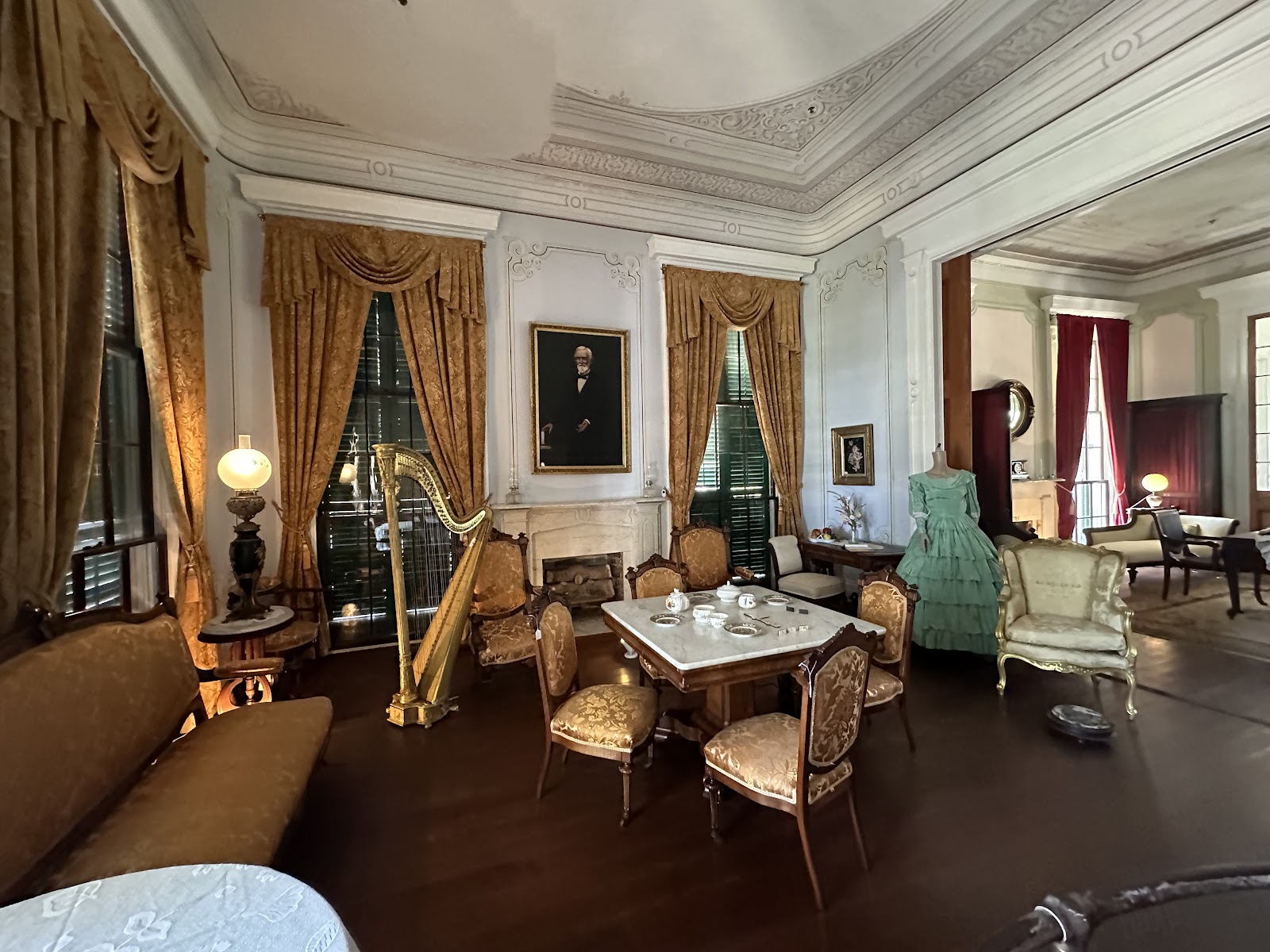
Then the interiors, and the expectation needs setting honestly. A raised cottage of this date has domestic room sizes — a room is perhaps five or six metres square, furnished, with window openings sized for their period — and the whole floor is under a deep gallery roof, which means very little direct light reaches any interior wall.
The consequence is rooms that are dim, even and slightly cool, lit almost entirely by light bounced off the gallery floor and arriving from the strip of sky beyond the gallery edge. There are no beams across a floor here and no hour at which a window becomes dramatic.
That is a constraint and a convenience at once. The rooms are the same at ten in the morning and three in the afternoon, so interior coverage can be scheduled around the wedding rather than around the sun — which is rare and genuinely useful. The cost is that you are lighting rather than finding.
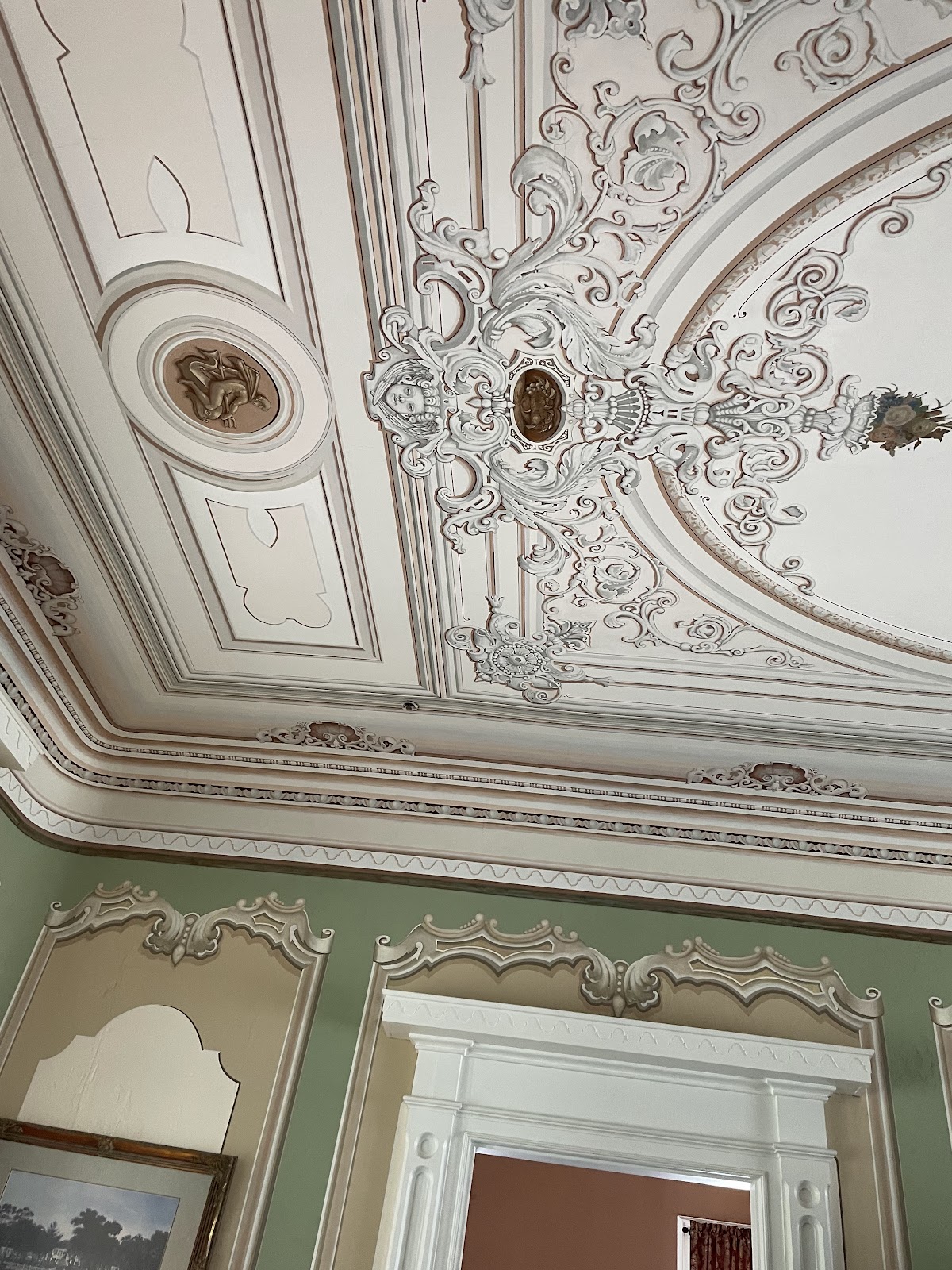
The practical setup is one source bounced off a pale ceiling to lift the ambient by a stop and a half, plus a small directional light for a key. Check the ceiling in each room on arrival, because a house of this period may have pale plaster, which is ideal, or exposed timber, which absorbs almost everything you send at it. Warm whatever you bring, because the ambient in there is cool and a neutral flash reads clinical.
And ask two things before the date: the interior capacity as a number, and the covered alternative’s capacity as a number. At a small historic house on a coast with this weather, that comparison against the guest list is the largest risk in the booking.
The oaks, the lawn and the Gulf
Outside the building, the grounds have one outstanding feature and it is the live oaks.
Live oak is evergreen, broad and low-crowned, with heavy limbs that often run out horizontally and dip toward the ground, and the oaks on this coast are old and very large. Three things follow.
They cast genuine solid shade with no dapple, and they do it in January exactly as in July, because the leaves never leave. That is unusual in this library, where most canopies vanish for half the year, and it means one of these trees is a reliable midday position in any month and a winter frame here looks much like an autumn one.
They are structure rather than background. A limb running out horizontally at head height, or dipping to the ground and rising again, is a line you can compose on — under it, through it, along it. An old live oak is a natural room that shades a group of forty and frames a ceremony with no arch, no arbour and no structure at all.
And they take low raking light extremely well. The bark on an old live oak is deeply furrowed and full of small shadow, so at noon the tree is a dark mass with a bright edge and at six it is a structure with texture in it.
Spanish moss is the detail that places a frame on this coast, and it is not a moss — it is a bromeliad, an air plant, hanging from the limbs in grey-green translucent streamers. Backlit against a low sun it glows, and a curtain of it in the foreground gives depth to a frame that would otherwise be flat. Look for resurrection fern on the upper surfaces of the big limbs too: it greens within hours of rain and curls brown crisp in a dry spell, so the same limb photographs completely differently depending on the week.
There is a specific local note about these trees that belongs here. Many of the coast’s live oaks survived Katrina and a number that did not were subsequently carved into sculpture, which is a well-known feature of this shoreline. If there is carved oak on or near the property, treat it as sculpture — photographed close, in raking light, as its own subject — rather than as a backdrop for a portrait.
The lawn is the venue’s open-ground answer and it follows the usual rule. Open grass with a near-overhead summer sun is a squint; the same lawn in the last ninety minutes is superb, with the low sun raking across it and the oaks throwing shadows metres long. A low camera on open grass with a long lens, nothing behind the subject but grass and canopy, is as clean as a portrait gets and it is the frame most photographers at a historic house never make because they are busy with the house.
Then the Gulf, and it needs two corrections because couples arrive with expectations from elsewhere.
The water here is not blue. Biloxi faces the Mississippi Sound, which is shallow and brackish, sheltered from the open Gulf by barrier islands some distance offshore, and it carries a good deal of suspended sediment — so it reads green-brown rather than turquoise, and there is essentially no surf. What it gives instead is a very broad open horizon, a great deal of sky, and calm water that on a still morning genuinely reflects.
And the beach is man-made. The long sand strip along this shoreline was created in the middle of the twentieth century and it is one of the longest artificial beaches anywhere — flat, wide, pale and featureless, with a highway running along the landward side of it.
That highway is the practical constraint. At most properties on this shore the beach is on the far side of a busy road from the venue, which means crossing it with a wedding party, traffic noise in any ceremony near the water, and vehicles in the background of any frame looking landward. Establish how the crossing works and how long it takes.
Photographically, a featureless pale beach is difficult at midday and excellent at the ends of the day. Flat wet sand at low water is a mirror, which on a coast with so little else in the frame is the single most useful thing about it: a couple reflected in wet sand with a low sun behind them, camera low, is the frame this shoreline is for. Go at the bottom of the tide and work from ground level.
The Gulf coast, and the year
Biloxi sits at about thirty degrees north and the numbers that follow shape every hour here.
The midsummer noon sun reaches about eighty-three degrees, within seven of directly overhead — an extreme condition dominating the middle of the day from May into September, which is exactly why the galleries and the oaks matter so much. And civil twilight runs about twenty-two minutes, among the shortest in this library, of which the usable balance point is perhaps ten. The end of the day is brief and its frames have to be decided in advance and walked to rather than discussed as the light goes.
Humidity is the compensator and here it is among the strongest in the collection. Summer dewpoints sit in the mid to high seventies, which means the air is saturated with water vapour, and vapour scatters light in every direction — so a sunlit lawn in July carries something like two and a half stops less shadow contrast than the same sun angle in a dry climate. Shadow edges are soft, eye sockets hold detail, and open shade at midday is genuinely workable. The extreme sun angle and the generous fill partly cancel, and desert instincts about the middle of the day do not apply with anything like the same force.
The costs are a pale washed sky that adds nothing to a wide frame, visible haze on long lenses, and a lens that fogs within seconds moving from an air-conditioned interior into this air — a recurring event on a day that alternates between a cooled room and a July gallery. Keep the camera warm rather than cool.
The land is coastal plain and dead level, with no relief at all, which means no elevated viewpoint except a raised gallery, no slope to separate a subject from a background, and a level horizon in every direction. Any camera tilt is immediately obvious, so use a level outdoors here.
December through April is the season and the reversal against most of this library is emphatic. Mild, comparatively dry, sunny, with a February noon sun near forty-five degrees that models a face rather than flattening it and rakes a gallery colonnade properly. Azaleas and camellias through late winter and early spring. And because the live oaks are evergreen and the Spanish moss hangs year-round, a January frame looks very much like an October one — so the off season costs almost nothing in appearance and gains everything in comfort and sun angle. This is the best time to photograph here by a wide margin.
May through September is the constraint and it is serious. Afternoon temperatures in the nineties with dewpoints in the high seventies, in formal clothing, is a welfare matter before it is a photographic one, and discomfort photographs as discomfort. The Gulf coast also has mosquitoes and, on the beach, biting flies in season, which will determine how long anybody stands anywhere. The shape of a summer day here is the two ends outdoors and the middle under a gallery roof or under an oak — which is exactly what the building was designed for.
Afternoon convection is near-daily in the wet season and this coast gets a great deal of lightning, so an outdoor ceremony in summer needs a covered alternative that genuinely exists and is reachable in minutes, with its capacity known as a number rather than assumed.
Hurricane season runs June through November and peaks in August and September, and on this particular coast that is not a remote consideration. This shoreline has been struck, hard, within living memory, and a named storm in the Gulf a week out disrupts travel, suppliers and accommodation whether or not it makes landfall nearby. A summer or early-autumn date here deserves a genuine contingency and, frankly, a conversation about insurance.
The compensation is the half hour after a cell clears, which is the best light of the year: washed air so the Sound and the barrier islands finally resolve, wet sand at its most mirror-like, saturated planting, resurrection fern greened up on the oak limbs within hours, wet live oak bark at full contrast, and a low sun under a broken ceiling. If a storm goes through at six, do not pack.
Two closing notes. The house is pale, which means in bright sun the elevation will blow out at any exposure that keeps a face in gallery shade — meter for the wall and light the face, or keep both in the same light. And the property is dark once the twenty-two minutes are gone, with the highway as the only ambient, so everything after that is lit entirely by you.
And one instruction that applies in every season and is the most useful sentence here: photograph the empty gallery and the empty rooms in the first thirty minutes you are on site. A deep gallery with nothing in it but light, and a raised cottage interior with nothing in it but proportion, are fine subjects, and once the chairs and the bags and the dresses arrive you will not see them again that day.
More frames from The Beauvoir
The Beauvoir wedding photography: common questions
What should we understand about this site before booking?
That it is a Confederate memorial site. Its significance is that it was the last home of Jefferson Davis, president of the Confederacy — a state formed to preserve the enslavement of Black Americans — and there is a Confederate cemetery on the grounds and a library devoted to Davis. The house itself predates him, built in the late 1840s and early 1850s by enslaved people, as almost every substantial building on this coast in that decade was. Many people, photographers included, decline to work at such sites, which is a coherent position. Deciding deliberately either way is the point.
How should that be handled on the day?
Keep the Confederate cemetery, the memorial features and the Davis interpretation out of the wedding coverage entirely. Portraits belong at the house, the galleries, the oaks and the lawn. Using a memorial or a cemetery as a picturesque backdrop is the specific failure that gets this kind of venue written about badly, and it usually happens by accident rather than intent. Agreeing it with the couple in advance takes one sentence and costs nothing.
Why are the galleries so good?
Geometry. A roofed gallery removes the overhead portion of the sky, and at thirty degrees north that is exactly the part that causes trouble — the midsummer noon sun reaches about eighty-three degrees and its vertical light is what puts black shadows in eye sockets. What remains arrives horizontally from a large bright area with the gallery floor bouncing a little back up: soft, directional and filled from below, which is what a face wants. Work about a metre inside the line of the columns, because falloff is roughly a stop per step.
Why are the interiors so dim?
Because the whole main floor sits under a deep gallery roof, so very little direct light reaches any interior wall — the rooms are lit almost entirely by light bounced off the gallery floor and arriving from the strip of sky beyond its edge. That gives rooms that are dim, even and slightly cool, with no beams across a floor and no hour at which a window becomes dramatic. The upside is real: they are identical at ten and at three, so interior coverage can be scheduled around the wedding rather than the sun.
What is the water and the beach like?
Not what couples expect. Biloxi faces the Mississippi Sound, which is shallow, brackish and sheltered by barrier islands well offshore, carrying enough suspended sediment to read green-brown rather than turquoise, with essentially no surf. And the beach is man-made — a long artificial sand strip created in the mid-twentieth century, flat, wide, pale and featureless, with a highway along its landward side. The single best thing about it is wet sand at low water, which is a genuine mirror: get the camera low with a low sun behind the couple and work at the bottom of the tide.
When is the best time of year?
December through April, which reverses the usual advice. Mild, comparatively dry and sunny, with a February noon sun near forty-five degrees that models rather than flattens and rakes a colonnade properly, azaleas and camellias in late winter, and evergreen live oaks with year-round Spanish moss so a January frame looks much like an October one. Summer brings nineties heat with high-seventies dewpoints, near-daily lightning, biting insects, and a hurricane season that on this coast is a genuine planning matter rather than a remote one.
More Biloxi, MS venue guides
We are writing a photographer’s guide to every venue we would happily shoot in Biloxi, MS. Here are three more, plus the full index:
- The Biloxi Lighthouse, Biloxi: One Frame, and How It Is Made
- The Hard Rock Casino, Biloxi: Field Notes, Problem and Solution
Planning a wedding at The Beauvoir?
Decide about the site first. Then the galleries do the work. Tell us your date.