 The Sheraton Portsmouth: What a Conventional Hotel Actually Buys You
AMC Pinkham Notch, New Hampshire: The Problem and Four Ways Out of It
The ridges on both sides take the ends of the day. That is the problem.
Pinkham Notch is a deep north-south valley cut by ice between the eastern flank of Mount Washington and the long wall of Wildcat Ridge, and the photographic problem here is stated by the topography rather than by the weather.
The sun rises in the east, which at this site means it rises behind Wildcat Ridge. It sets in the west, which means it sets behind the Presidential Range. Both walls are high and close, which means the sun clears one of them late in the morning and disappears behind the other early in the evening.
The consequence is precise and it is the opposite of what a mountain venue is expected to offer: the golden hours are not available here. The first and last hours of direct light — the hours that most outdoor wedding photography is built around — happen above the site, on the ridges, while the floor of the notch is already or still in shadow.
What the site has instead is a long middle: several hours of direct overhead-ish sun, and, at either end of the day, a long period of open shade lit by a bright strip of sky between two dark walls.
That is a genuine problem and it has four distinct solutions. None of them is a workaround; each produces a different and legitimate photograph, and choosing among them consciously is the whole job here.
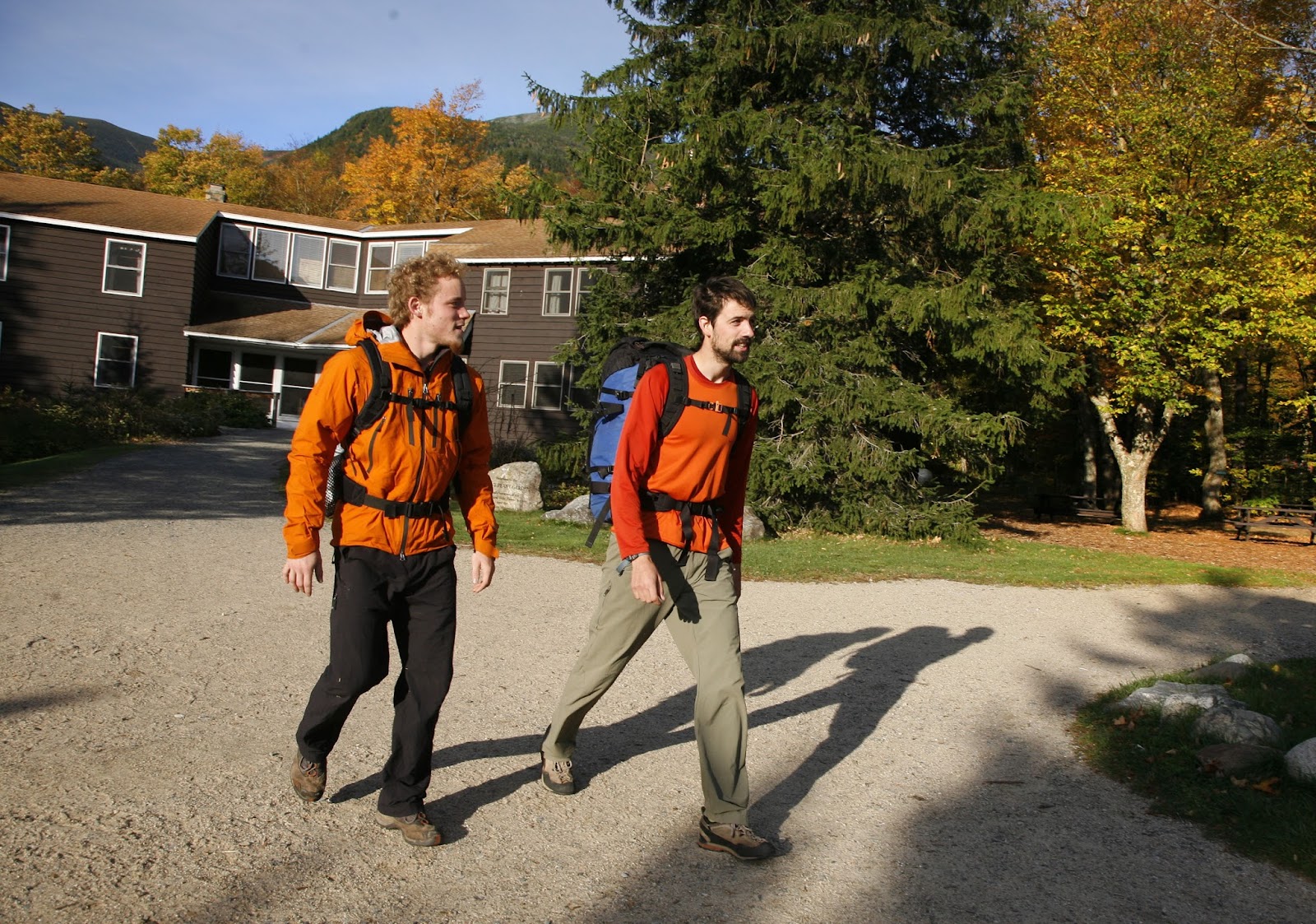
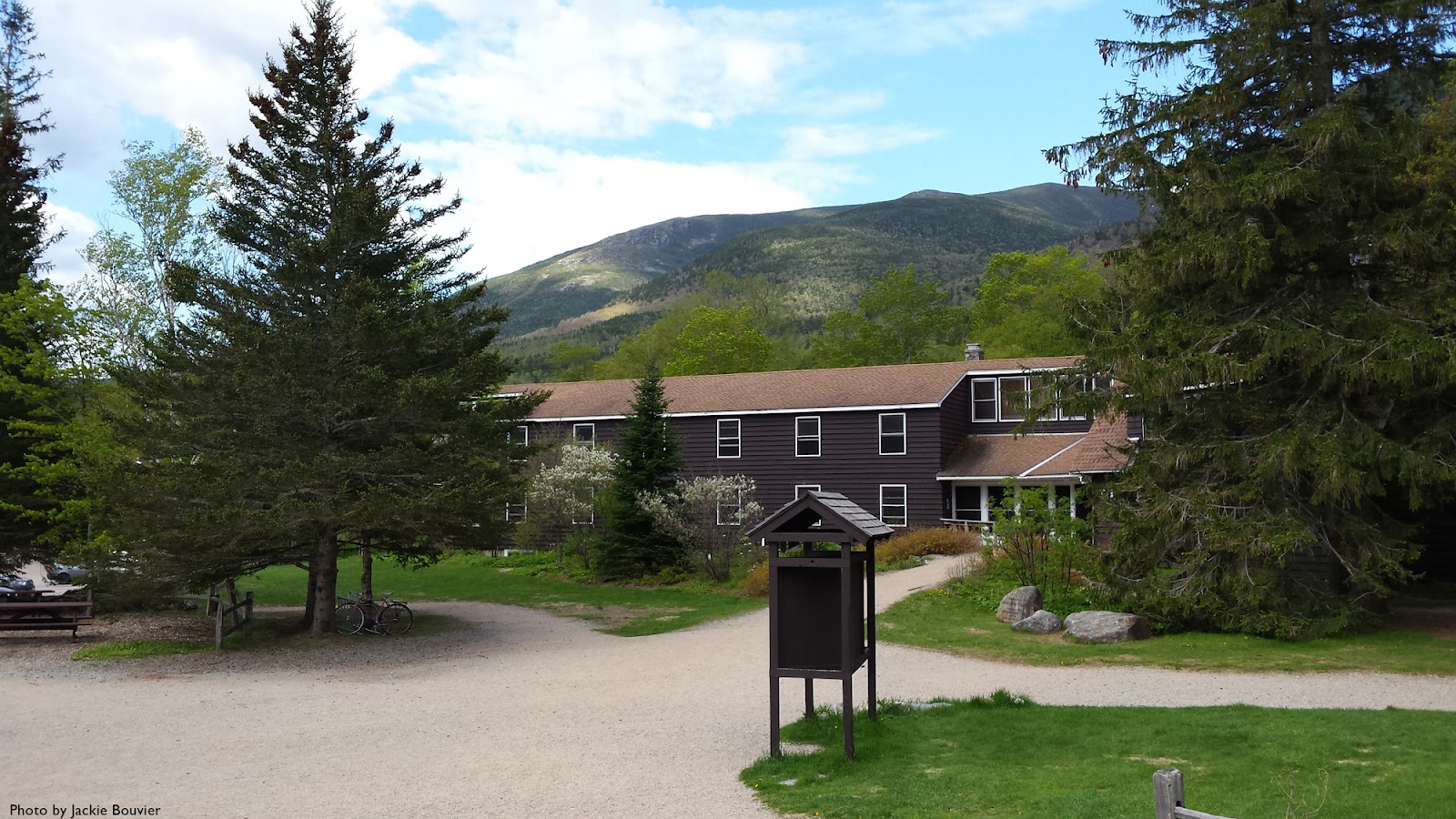
The site is a mountain base camp rather than a resort — a lodge and associated buildings at the trailhead, built for hikers, at around two thousand feet with the summits three and a half thousand feet above. Pinkham Notch sits at about forty-four and a quarter degrees north, which gives a June noon sun of around sixty-nine degrees, a December noon sun of around twenty-two, and civil twilight of thirty-five minutes or more.
We have not photographed a wedding at Pinkham Notch. Whether ceremonies are held there, which spaces are available, what group sizes are possible and what the access and hours allow, are questions for their team — and at a working base camp those answers are likely to be narrower than at a resort.
AMC Pinkham Notch Visitor Center at a glance
| Where | A mountain base camp in a deep glacial notch, eastern White Mountains |
| The problem | Ridges on both sides take the first and last hours of direct light |
| Four ways out | Shoot the shade; go up; use the walls; work the water and the forest |
| The compensation | Open shade between two dark walls is a huge soft directional source |
| Ask first | Whether ceremonies are held, available spaces, group size, access, hours |
The first two ways out
The first way out is to stop treating the shade as a deficiency and photograph in it properly, because the light on the floor of a notch is better than its reputation.
The physics is worth being clear about. A deep valley with dark forested walls and a bright strip of sky above is, optically, a very large source with a hard mask — light arrives almost entirely from overhead and from the open band of sky along the valley axis, and the walls absorb rather than bounce. That produces soft light with a real direction: not the directionless grey of a flat overcast, but a broad top-and-along-the-valley source with visible fall-off to the sides.
The practical method is to orient subjects along the valley rather than across it. Facing up or down the notch puts the bright sky band in front of them and the dark wall behind, which gives a lit face against a dark ground — the same effect an arcade or a veranda produces, at landscape scale. Facing across the notch puts a dark wall in front of them and is the one orientation that does not work.
The colour needs attention. Light from a blue strip of sky, filtered along a green forested corridor, is both cool and green, which in combination reads as an unhealthy cast on skin. The correction is a custom white balance taken on a face in position, and — where it matters — a warm-gelled source at about a stop over the ambient, which puts the skin back into a normal range while leaving the forest as it is.
The second way out is to go up. The light the notch floor cannot get is available a few hundred feet higher, and this is the one venue in this guide where gaining elevation is a genuine photographic strategy rather than a luxury.
From partway up either wall, the sun clears the opposite ridge earlier and stays longer, the notch itself becomes the subject rather than the container, and the frames available are completely different in kind: a valley receding between two walls, the Presidential Range opposite, and the pale scar of a glacial cirque high on Mount Washington’s south-east face that holds snow into June and sometimes July.
The practical constraints are obvious and worth stating. Gaining elevation here means a trail, and a trail in wedding clothes is a different proposition from a lawn. What is realistic is a short walk to a viewpoint with two people, not a wedding party — which makes this an option for a portrait session rather than for the day’s main sequence.
Where mechanical uplift exists nearby, the same logic applies without the trail, and it changes the arithmetic completely. Whether that is available and on what terms is a question worth asking early, because the answer determines whether the good light is reachable at all.
The second two, and the rest of the site
The third way out is to use the walls as the subject rather than the obstacle. A notch is the most dramatic landform in New England and its drama comes from confinement, not from openness.
That means the strongest wide frames here are vertical rather than horizontal: a tall frame with a small figure at the bottom and several hundred metres of forested wall and sky above, which states the scale of the place in a way a wide panorama cannot. The walls are also where the weather is visible — cloud tearing along a ridge, a shaft of light on the opposite slope, a squall coming down the valley — and a frame that includes the wall includes the weather.
A specific and reliable frame belongs to this category. When the sun is high enough to clear one ridge but still low, it lights the opposite wall while the floor stays in shadow. That gives a brightly lit slope behind a subject standing in soft even shade: the separation of a studio setup with a mountain as the backdrop, and it happens twice a day.
The fourth way out is the water and the forest, which are what a base camp actually has at close range.
Streams in the notch are steep, rocky and fast, running over granite. Moving water in shade is one of the most forgiving photographic subjects there is, because the shade prevents the blown highlights that ruin a sunlit stream and a long exposure is easy when the light is already low. A frame with a subject on a rock, a stream in the foreground and a dark wall behind is available at any hour of any day and depends on nothing.
The forest here is boreal rather than the sugar-maple hardwood of the lower valleys: red spruce and balsam fir dominate at this elevation, with birch mixed in. Spruce and fir block light almost completely, which makes their edge the best free separation on the site — a subject a metre inside a conifer margin has soft directional light in front and near-blackness behind, three or four stops for nothing.
White paper birch is the counterpoint and the most useful individual tree in these mountains. Its bark is highly reflective, which makes a stand of birch against dark conifer the highest-contrast natural background in New England: pale verticals on black, needing nothing added.
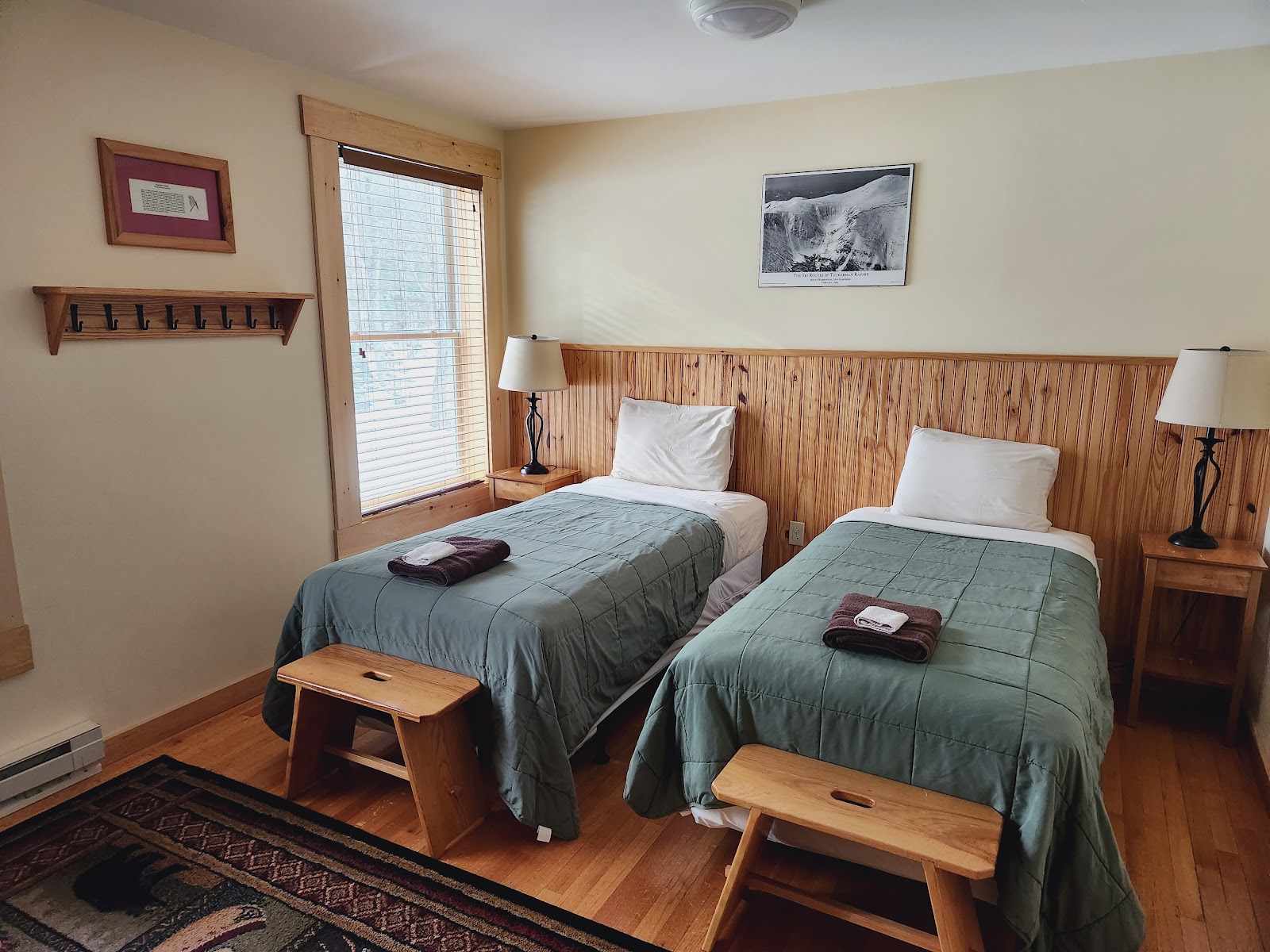
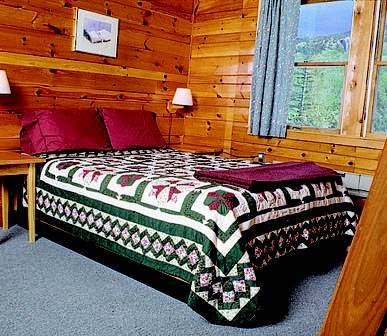
The buildings are what they are — a working base camp rather than a designed venue — and the honest note is that the interiors are functional: timber, moderate ceilings, ordinary glazing. Timber absorbs, which means the ambient is a stop or two below what the eye estimates and the background drops away for free. Meter on skin and let the room go dark. A window used at forty-five degrees is the whole interior lighting plan.
Two practical matters specific to this place. The weather on Mount Washington is genuinely severe — the summit held the world’s highest recorded surface wind speed for more than sixty years and is in cloud on most days of the year — and conditions on the floor of the notch can be entirely different from conditions eight hundred metres above. Planning on the basis of the valley forecast is a mistake.
And the notch is a corridor, which channels wind along its axis. That makes a lightstand a liability on any exposed ground and means every source is handheld or weighted.
- Orient subjects along the valley, never across it
- Custom white balance on a face; the notch light is cool and green
- A lit opposite wall behind a shaded subject is a twice-daily gift
- Vertical frames state the scale; wide ones do not
- Conifer margin for separation, birch against it for contrast
The high notch year
At two thousand feet in the eastern White Mountains the year is long at both ends and short in the middle.
Winter is the dominant season and it lasts. Snow lies deep from around December into April, the notch road is a winter road, and the site is a working base for winter mountain travel. For a camera, snow transforms the problem this page is about: a snow-covered notch floor is a very large bright reflector, which lifts the shade from something soft and dark to something soft and bright, and against near-black spruce it gives the widest brightness range in this guide.
Expose for the snow and let the conifer go black, opening up deliberately relative to the meter, which snow fools by about two stops. The December noon sun at twenty-two degrees also means the little direct light that reaches the floor rakes rather than falls — the only time of year the notch gets low-angle light at all.
The costs are severe cold at altitude, a day under nine hours, batteries that drain quickly, and glass that fogs going from outside into a heated building.
Spring at this elevation is late and it is the weakest window. Snow rots through April, the ground is saturated, the hardwoods below are bare, and the landscape is brown and grey. May brings leaf-out at the valley floor while the summits are still white, which is a genuinely good combination — pale new green below, snow above — and lasts about two weeks.
The black flies are a real constraint and they should not be glossed over: in northern New Hampshire they run from around mid-May into mid-June, and at a forested site beside running water they are at their most intense. An outdoor ceremony in that window needs them planned for.
Summer is short and the weather is at its most workable. Days are over fifteen hours long at the solstice and civil twilight runs thirty-five minutes or more, which — even with the ridges taking the ends of the day — means there is more usable light here in July than the topography suggests. The notch is at its greenest, the streams are lower and clearer, and the glacial cirque high on the mountain opposite may still hold snow into early July.
The caution is afternoon build-up. These mountains generate their own weather, and a clear morning in the notch frequently becomes a wet afternoon. On a site with almost no covered outdoor space, a named indoor alternative is a requirement rather than a courtesy.
Late September into early October is the best window of the year, and at this elevation it is early. The hardwoods in the lower notch turn while the spruce stays black and the summits go bare and sometimes take their first snow, which gives three distinct bands of colour stacked up a valley wall — the single most characteristic image of the White Mountains. The air in autumn is also the clearest of the year, which matters when the subject is several hundred metres of opposite slope.
The peak in the high country runs roughly from the third week of September into the first week of October, two or three weeks ahead of the seacoast, because the timing progresses downhill and southward.
Late October and November strip it to structure: bare hardwood, black conifer, grey granite and a very low sun. It photographs austerely and extremely well, and the site is quiet.
More frames from AMC Pinkham Notch Visitor Center
AMC Pinkham Notch Visitor Center wedding photography: common questions
What is the problem here?
The notch walls take the first and last hours of direct light. The golden hours happen on the ridges above the site, not on the floor of it.
What is the light on the notch floor actually like?
A very large soft source from the strip of sky overhead and along the valley, with dark absorbing walls. Directional, not flat — and cool and green in colour.
How should subjects be oriented?
Along the valley, facing up or down the notch, so the bright sky band lights them and the dark wall is behind. Never across the notch.
What is the twice-daily gift?
When the sun clears one ridge but is still low, it lights the opposite wall while the floor stays shaded — a bright backdrop behind a softly lit subject.
Is going up realistic?
For a portrait session with two people and a short trail, yes. For a wedding party, no — unless mechanical uplift is available nearby.
When is the best time of year?
Late September into early October: colour in the lower notch, black spruce above it, bare or snow-dusted summits above that, in the clearest air of the year.
More New Hampshire venue guides
We are writing a photographer’s guide to every venue we would happily shoot in New Hampshire. Here are three more, plus the full index:
- Bedford Village Inn, Bedford: A Walk Through the Site
- Capitol Center for the Arts, Concord: One Frame and How It Is Made
- The Derryfield Country Club, Manchester: Field Notes, Problem and Solution
Planning a wedding at AMC Pinkham Notch Visitor Center?
A site the sun barely reaches, and four ways to work it. Tell us your date.