 The Sheraton Portsmouth: What a Conventional Hotel Actually Buys You
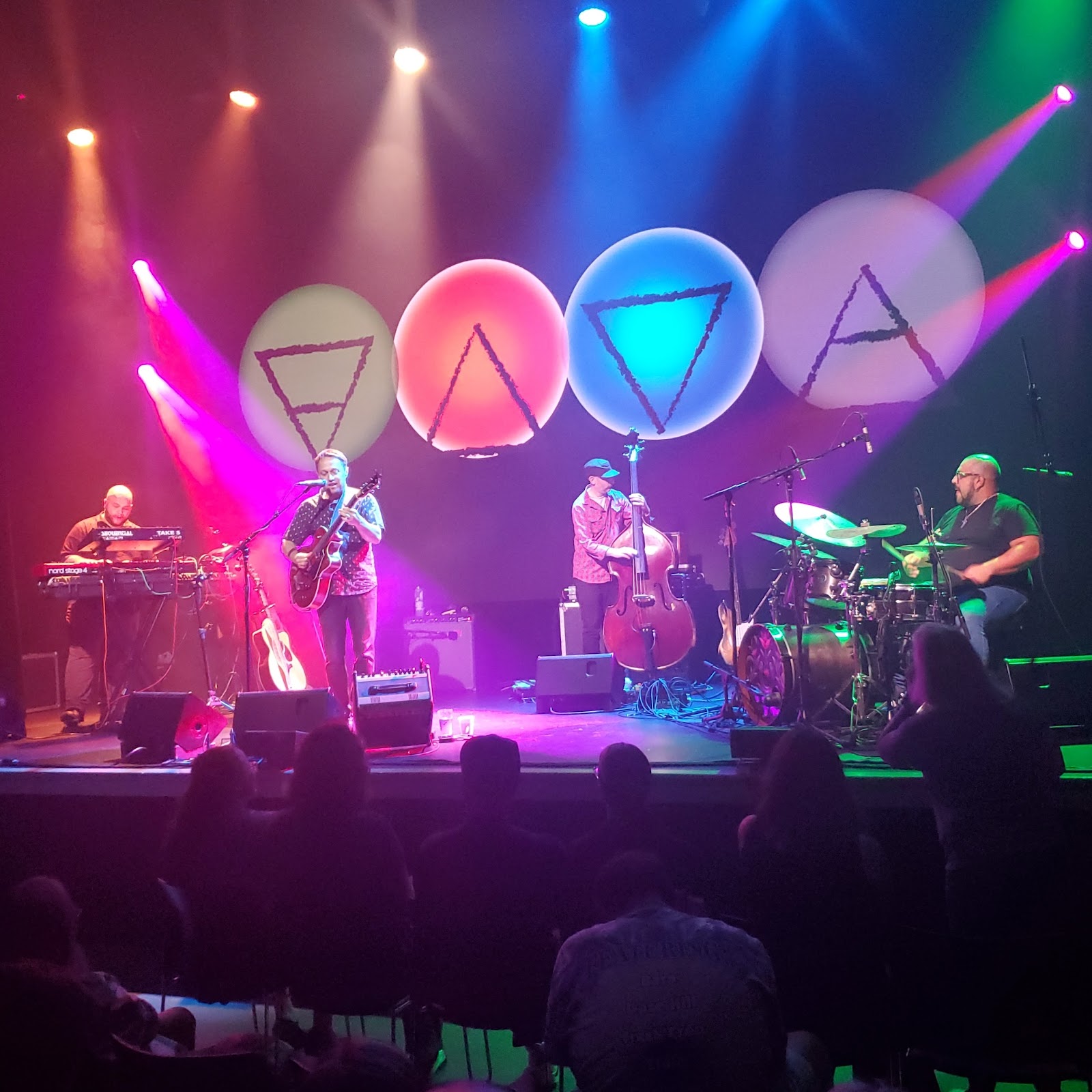
Capitol Center for the Arts, Concord: One Frame and How It Is Made
Two people on a stage, and a thousand empty seats going into the dark.
There is one frame in a theatre that is worth planning the whole evening around, and it is the reverse of the picture a theatre normally makes.
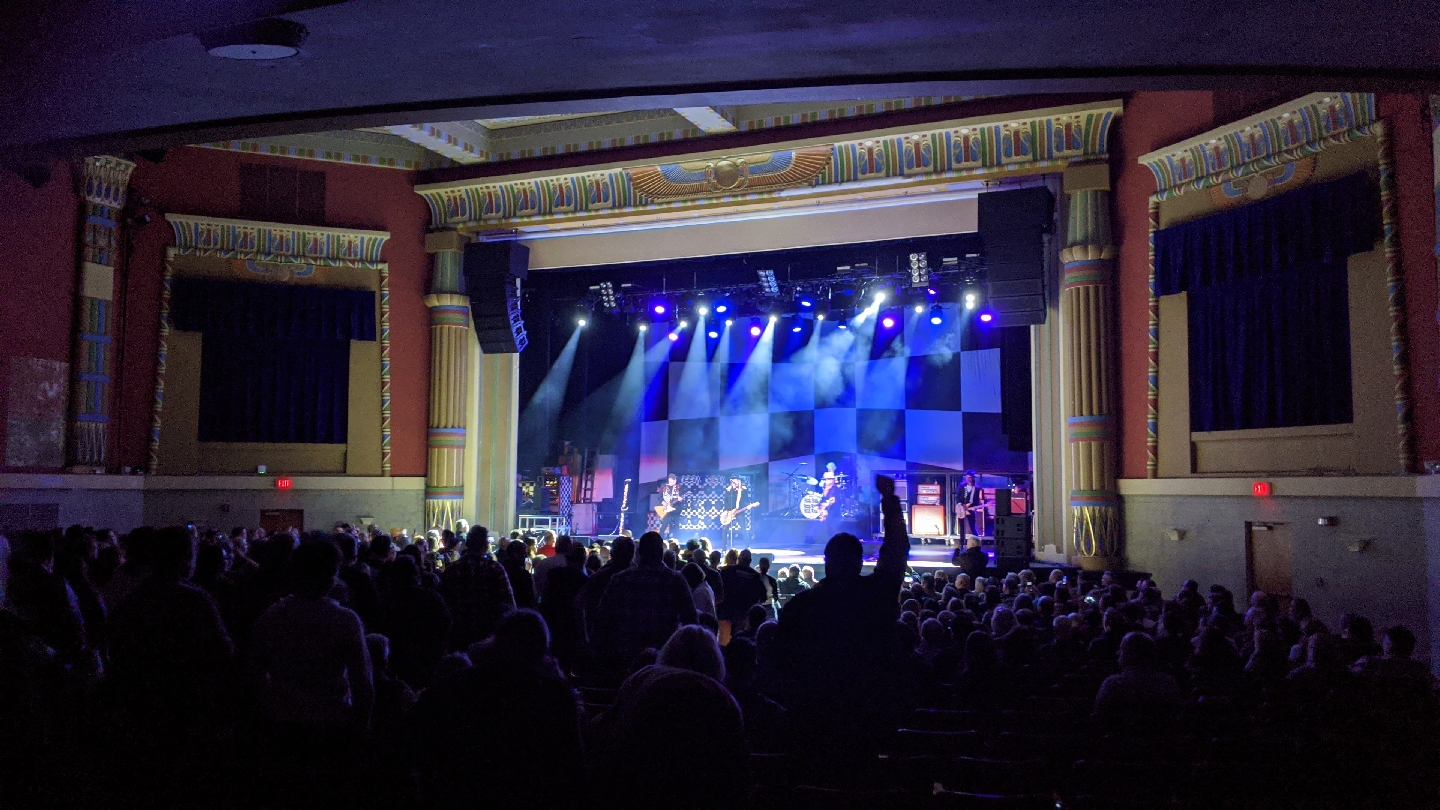
The frame is this: the couple standing on the stage, photographed from the house, with the auditorium receding behind the camera and the proscenium framing them. Or its mirror — the couple in the house, photographed from the stage, with row after row of empty seats going back into the dark behind them.
Both versions depend on the same thing, which is that a theatre is the only building type designed from first principles to put light on two people and nothing else. Everything about it — the raked seating, the proscenium, the black surfaces, the lighting positions — exists to make a small lit area the sole focus of a large dark volume. That is exactly what a portrait wants, and it is the only venue in this guide where the architecture has already solved the problem.
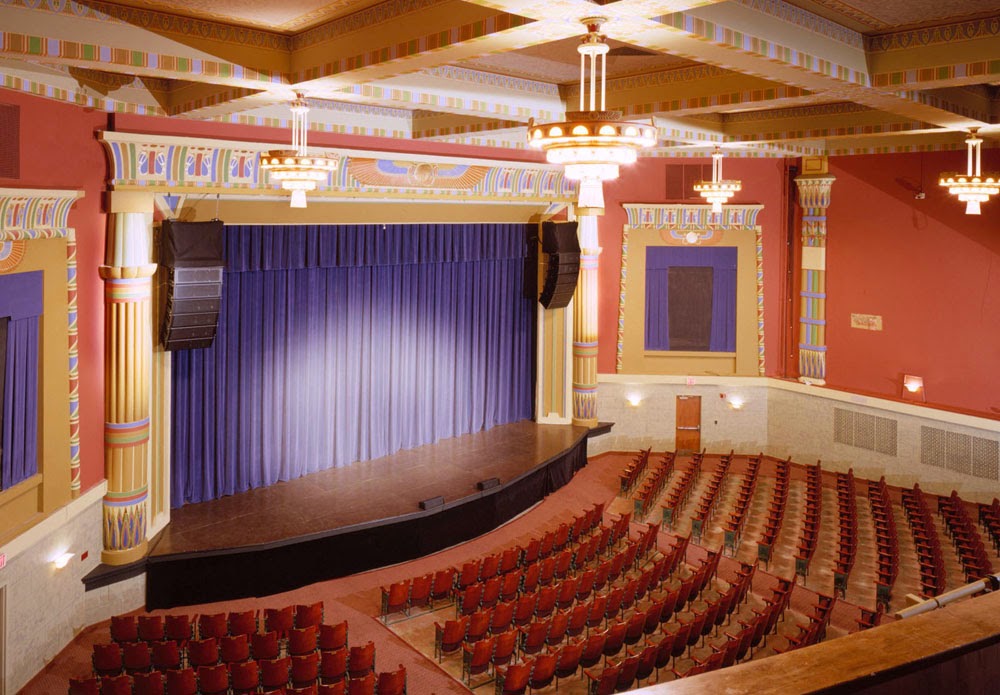
The Capitol Center is a restored theatre of the 1920s picture-palace era in Concord, which means it also has the decorative interior of that period: ornamental plaster, a decorated proscenium, painted surfaces and fixtures designed to be seen as much as to illuminate.
So the frame is made of four decisions: what light is on the subjects, what the house is doing, where the camera is, and how the two exposures are related. None of them is complicated, and getting any of them wrong produces a version of the picture that is recognisably not quite right.
Concord sits at about forty-three and a quarter degrees north, which matters only for the exteriors: the June noon sun reaches around seventy degrees, the December noon sun about twenty-three, and civil twilight is around thirty-three minutes.
We have not photographed a wedding at the Capitol Center. Which spaces are included, whether the stage and the house are available for photographs, whether any of the theatrical lighting can be used and what the permitted hours are, are questions for their team — and the question about the stage lighting is the one that most changes what this frame can be.
Capitol Center for the Arts at a glance
| Where | A restored 1920s theatre in Concord, New Hampshire |
| The frame | Two people on the stage, the house receding into dark behind the camera |
| Why it works | A theatre is designed to put light on two people and nothing else |
| The variable | Whether the theatrical lighting is available to use |
| Ask first | Stage and house access, use of theatrical lighting, permitted hours |
Building the frame
Start with the light on the subjects, because everything else is derived from it.
If the theatrical lighting is available, use it and do not add to it. A stage wash is a large, soft, high-and-frontal source and it is designed to make faces legible from thirty metres away — which means it is generous, even and flattering, and considerably better than anything a photographer would rig in the time available.
The one thing to check is colour. Stage lighting is frequently gelled and modern fixtures are often LED, both of which produce light that is far from neutral and sometimes narrow-spectrum, which makes skin tones unpredictable and white balance a matter of a custom reading on a face rather than a preset. It is worth taking that reading before it matters.
It is also worth asking for the simplest state available rather than a designed look. A plain warm front wash is the most useful light in the building; a saturated colour wash is striking and difficult and should be one frame rather than the whole session.
If the theatrical lighting is not available, the substitute is a single source placed high and frontal — which is to say, imitating what a stage wash does. One light at about forty-five degrees above eye level and slightly off axis, close enough to fall off before it reaches the scenery behind, is a complete setup, and it works because the stage is already surrounded by black.
The house is the second decision and it is the one people get wrong by trying too hard. An empty auditorium behind or in front of the subjects works best when it is nearly dark, with just enough light on it to read as rows of seats and ornament rather than as a black void.
Nearly dark means two to three stops below the subjects. That is a narrow target: four stops down and the house disappears entirely, one stop down and it competes. Whatever house lighting exists — usually dimmable — should be set to give that relationship, and if it cannot be dimmed the alternative is to accept it and expose for the subjects, which usually loses the house.
The camera position is the third decision and it makes more difference than anything else. A theatre is a raked space, which means the camera height changes the entire geometry of the frame.
From the front row at seated height, the stage is above the camera and the subjects loom, with the proscenium arch cutting across the top of the frame. From halfway up the rake, the camera is at roughly stage height and the frame is level and formal, with the proscenium framing the subjects cleanly — this is the version that works most often. From the back of the house or a balcony, the camera is above stage level, the frame looks down, and the whole stage becomes a lit rectangle in a dark field, with the subjects small in it.
That last version is the most distinctive photograph the building produces and it requires a long lens and a stable support, because the exposure will be long.
The exposure relationship is the fourth decision and it follows from the three above. Meter on the faces under whatever the key light is, set that, then check what the house is doing relative to it and adjust the house rather than the exposure. If the house cannot be adjusted, move the camera so that less of it is in frame.
That order — subjects first, house second, camera third — is the reverse of what instinct suggests and it is the reason the frame either works or does not.
The rest of the building
A 1920s theatre has four other environments and each has a specific character worth using.
The lobby and foyer are the most useful for people. A theatre of this period has decorative public spaces designed to impress on arrival, with ornamental plaster, patterned surfaces and fixtures that are themselves objects. The light is low, warm and mixed, and the fixtures read as hot points in the frame.
The method is the one that suits every decorative interior: balance for the room rather than for a flash, gel any added source warm so that the subjects belong to the space, use the existing pools of light as key rather than filling them out, and let the gaps go dark. A room lit for atmosphere is lit with more intention than a photographer can replicate quickly, and the frames that use it look better than the frames that override it.
The ornamental plasterwork is a compositional resource and a hazard in the same way a patterned wallpaper is. It is busy, which means a subject placed against it needs either enough separation to throw it out of focus or enough intent that it reads as setting. Half-resolved ornament behind a head is visual noise.
The backstage and technical areas are the site’s counterpoint and they are worth ten minutes. Black-painted walls, rigging, ropes, rails, work lights and bare structure give a completely different register from the decorated front of house — industrial, dark, high-contrast — and a set of photographs is better for containing both. A work light is a small hard source, which is exactly what a dramatic single-source portrait needs, and the black surroundings mean no fill returns at all.
The proscenium and the architectural details are worth photographing without people, once. A decorated arch, a row of house lights, a curtain in a raking light — these are the frames that establish what kind of building this is, and two or three of them in a set do the work that a wide establishing shot cannot.
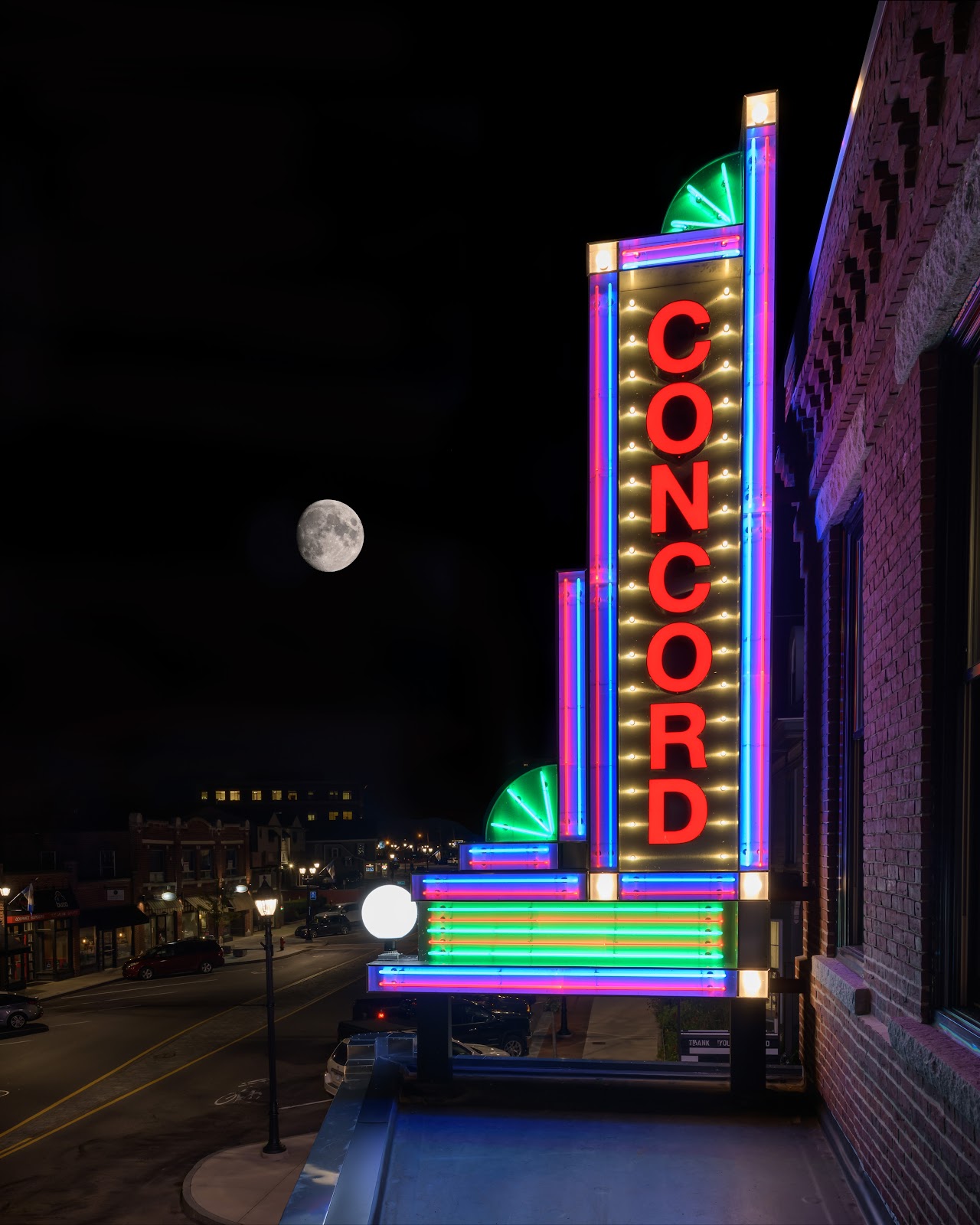
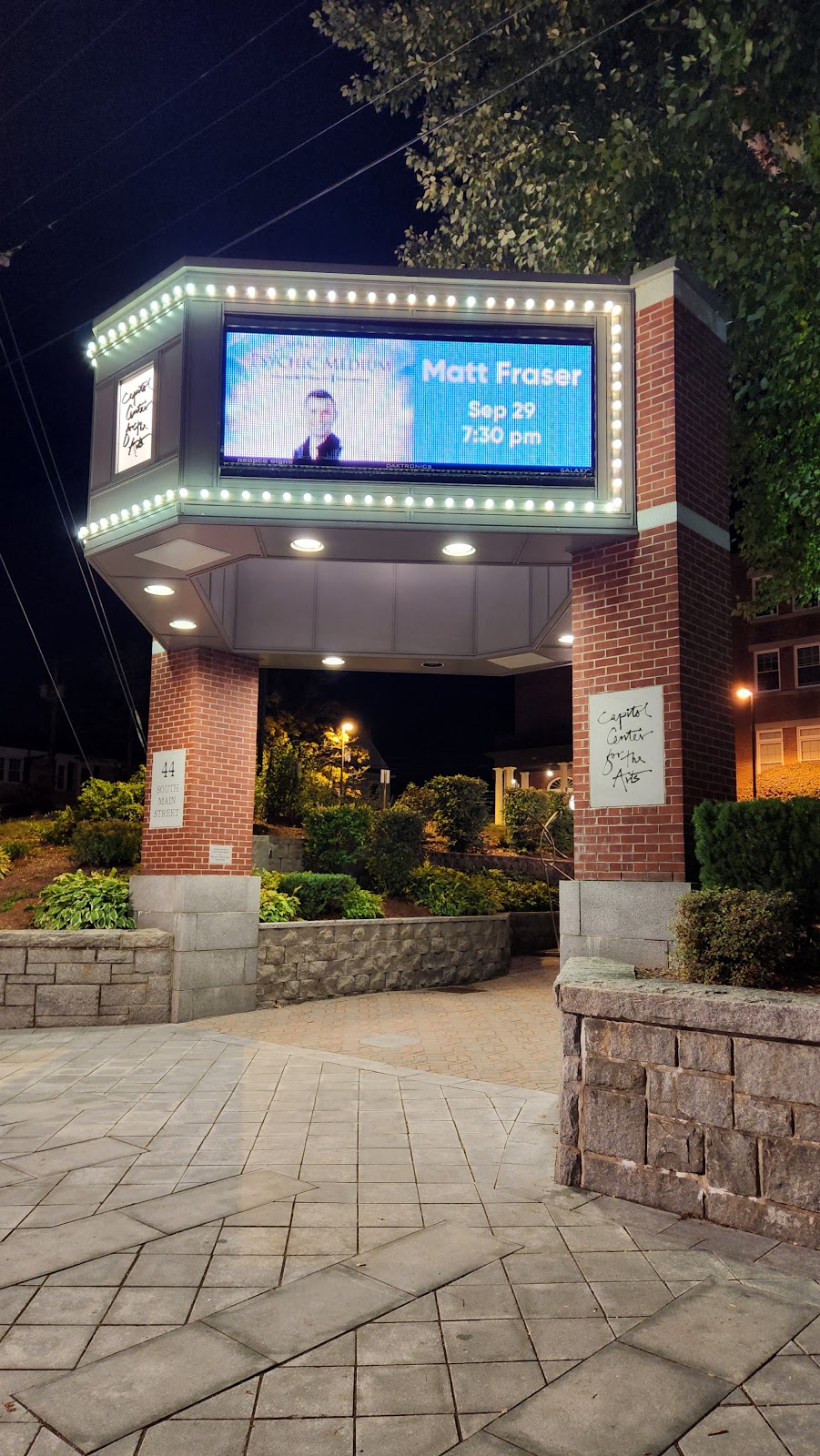
The exterior is the fourth environment and the honest note is that a theatre’s exterior is usually its least interesting aspect. A downtown frontage on a street, probably with a marquee or signage, probably with traffic and utility furniture in front of it. The useful frames are at night, when the frontage is lit and the street is dark, and the same crossing-point rule applies as at any illuminated building: the sky and the lit façade sit within about a stop of each other for roughly ten minutes at dusk, and that crossing is the frame.
Concord’s downtown gives the other exterior option, which is streetscape rather than façade: a period brick street, a state-capital civic architecture, and material variety within a short walk. Mixed artificial light after dark is the technical caution, and the answer is either to choose one dominant source and balance for it or to use enough flash to override the mixture entirely.
Two practical matters specific to theatres. Sound and movement are constrained during anything that is running, which means the times when the stage and house are available may be narrow and set — a question to establish early rather than to negotiate on the day.
And a dark, raked, cable-crossed space is a genuine trip hazard in low light for anyone in long clothing. That is worth a word to the party rather than an assumption, and it is a reason to have the camera positions scouted while the house lights are still up.
- Use the stage wash if it is offered; imitate it if it is not
- Set the house two to three stops below the subjects — not four, not one
- Halfway up the rake puts the camera at stage height, which is the reliable position
- Subjects first, house second, camera third
- Backstage black is the counterpoint the set needs
The season, and why it matters less here
A theatre is the least seasonal venue in this guide, and that is a genuine practical advantage rather than an absence.
Nothing about the frame described above changes between January and July. The stage wash is the same, the house is the same, the ornament is the same, and the exposure relationships are identical. A February wedding in a theatre gets the same photographs as a July one, which is not true of any other venue type on this site.
For a couple choosing a date in the New England off-season, that is the strongest argument a theatre has. A February date at an outdoor venue in this state is a different event from a July one; a February date here is not.
What the season does change is everything outside the doors, and since a theatre’s exteriors are its weakest aspect, the calculation is about how much the outdoor portion matters.
Winter in central New Hampshire is cold with reliable snow, a December noon sun of about twenty-three degrees that rakes all day, and a very early dusk — sunset a little after four in December, which means the crossing point for a lit-façade frame arrives at around half past four rather than after nine. For an evening event that is a real convenience: the exterior frames land before the reception rather than in the middle of it.
Snow also improves a downtown street considerably. It covers the road surface, removes the visual clutter of paving and kerbs, lifts the shadows under a low sun to within a stop, and turns a brick frontage into a strong dark shape against white. A lit theatre marquee against falling snow is the best exterior frame this kind of venue produces all year.
Spring in central New Hampshire is late and unremarkable: mud season through late March and April leaves grey streets and bare trees, and there is no good version of an urban exterior in it. This is the window in which the theatre’s season-proof interiors matter most, and a date here is perfectly workable on the strength of them.
Summer brings long days — over fifteen hours at the solstice — and a generous thirty-three-minute twilight, which means a dusk exterior sequence does not happen until after half past eight. For an evening wedding that usually falls after the part of the reception when people can be taken outside, which is worth planning around rather than discovering.
Central New Hampshire in summer is also humid, which puts haze into the air. At an urban venue with no distant view that costs almost nothing.
Autumn arrives in central New Hampshire in the first and second weeks of October — after the White Mountains, before the seacoast — and the palette here has a strong sugar maple component, which means real reds and oranges. A brick downtown street with street maples turning is a genuinely good exterior, and it is the one time of year when the outdoor portion of a day at this venue can compete with the indoor portion.
November strips it back and the theatre’s advantage reasserts itself: outside is bare and grey, inside is exactly what it always is.
One recurring practical note. Glass carried from a cold street into a heated theatre fogs, which is the reverse of the problem in the southern half of this guide and has the same solution: acclimatise in a bag on the way in, and decide which environment holds the next frame rather than moving back and forth repeatedly.
More frames from Capitol Center for the Arts
Capitol Center for the Arts wedding photography: common questions
What is the frame?
Two people on the stage with the empty house receding into the dark behind the camera, and the proscenium framing them.
Why does a theatre work so well?
It is the only building type designed from first principles to put light on two people and nothing else. The architecture has already solved the problem.
How dark should the auditorium be?
Two to three stops below the subjects. Four stops down it disappears; one stop down it competes.
Where should the camera go?
Halfway up the rake, which puts it at roughly stage height and gives a level formal frame. The balcony gives the most distinctive version, with a long lens and support.
What if the stage lighting is not available?
Imitate it: one source high and frontal, close enough to fall off before it reaches the scenery. The stage is already surrounded by black.
Does the season matter here?
Barely, and that is the point. The interior frames are identical in February and July, which no outdoor venue in this state can offer.
More New Hampshire venue guides
We are writing a photographer’s guide to every venue we would happily shoot in New Hampshire. Here are three more, plus the full index:
- The Derryfield Country Club, Manchester: Field Notes, Problem and Solution
- Grappone Conference Center, Concord: What It Suits and What It Does Not
- The Lakehouse at Ferry Point, Sanbornton: How the Light Moves on a Lake
Planning a wedding at Capitol Center for the Arts?
A building that already knows how to light two people. Tell us your date.