 The Sheraton Portsmouth: What a Conventional Hotel Actually Buys You
The Derryfield Country Club, Manchester: Field Notes, Problem and Solution
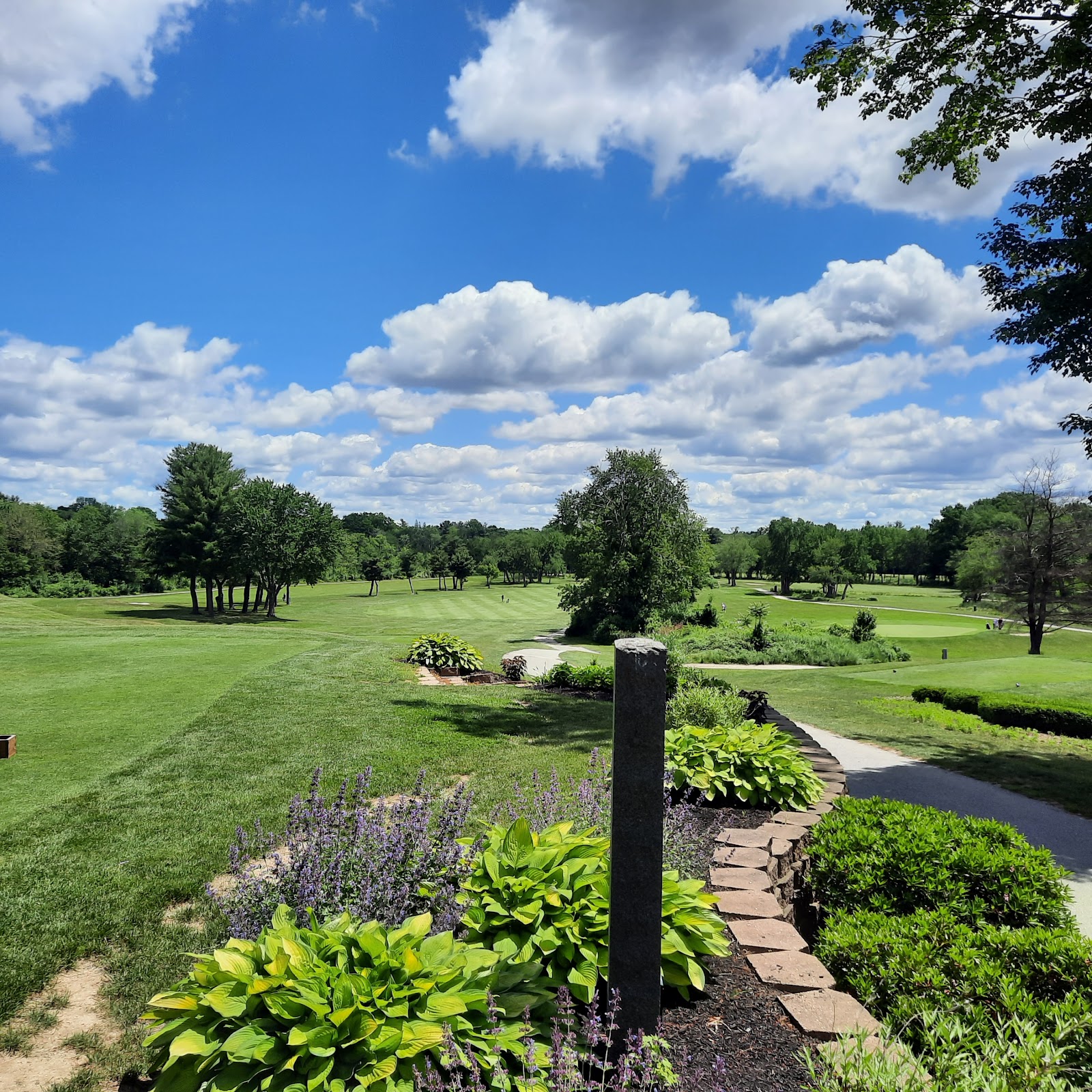
Clean level ground, and the only shade is at the boundary.
These are field notes rather than a description, organised as problems and what solves them, because a golf course presents a small number of specific problems that recur at every course in this guide and are worth stating once properly.
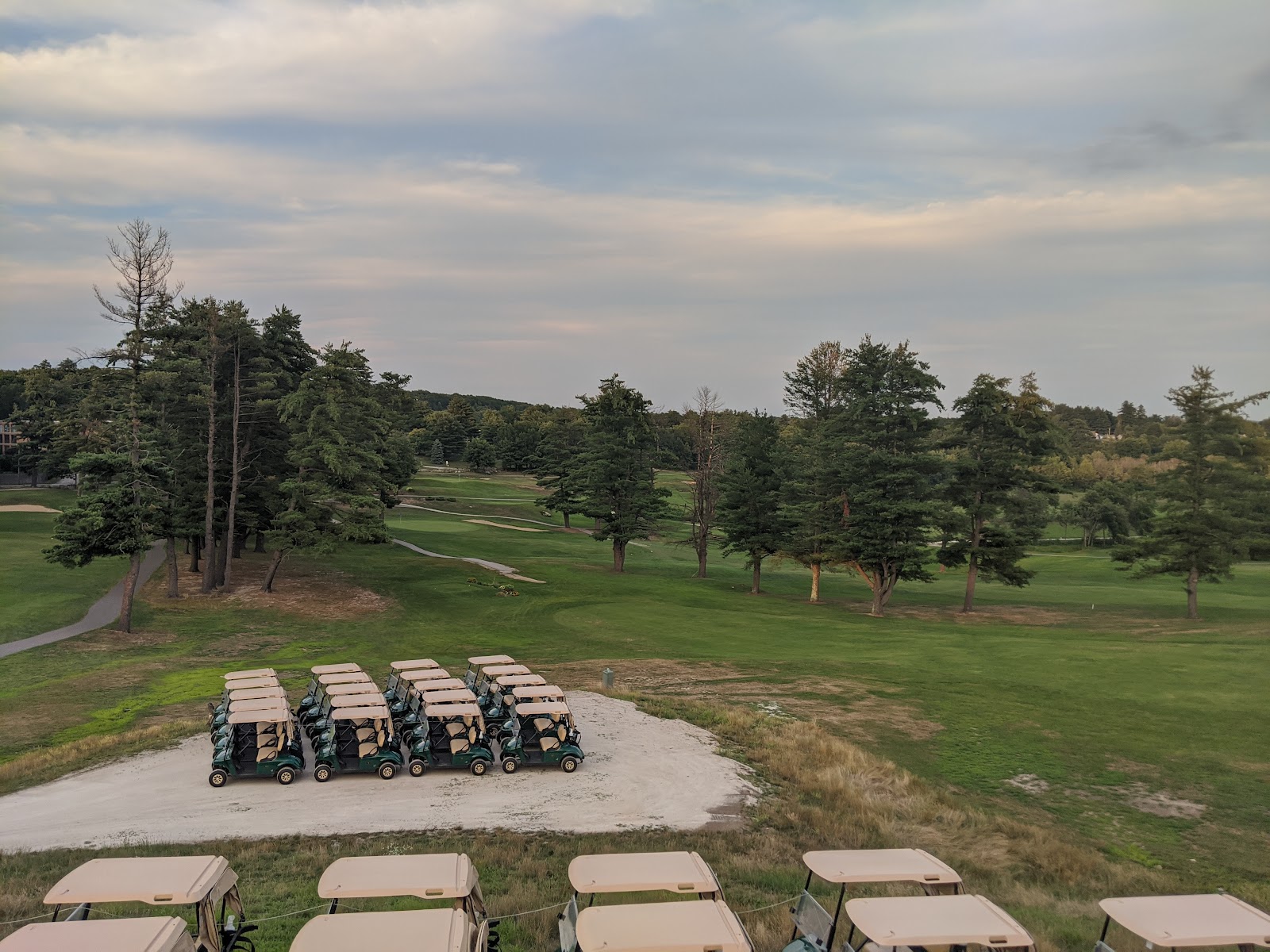
The setting first. Derryfield sits on the edge of Manchester, in the Merrimack valley of southern New Hampshire, which is the most populous and mildest part of the state. The ground is rolling rather than flat, the course is cut into mixed New England woodland, and the surroundings are suburban rather than rural or mountainous.
A golf course is a particular kind of landscape and it has three properties that matter to a camera. It is maintained, which means the ground is clean, level, dry and walkable in any footwear. It is open, which means there is no overhead cover anywhere across most of its area. And it is uniform, which means a wide frame taken from one part of it looks much like a wide frame taken from another.
Those three produce the whole set of problems below. The first is an advantage and the other two are constraints, and the honest position is that a course is an excellent venue for some things and a limited one for others.
Manchester sits at about forty-three degrees north. The June noon sun reaches around seventy degrees, the December noon sun about twenty-three, days run from about nine hours to over fifteen, and civil twilight is around thirty-three minutes — a long dusk that gives real working time at the end of the day.
We have not photographed a wedding at this club. Which spaces are included, what access the course allows and when, whether a cart is available and what the permitted hours are, are questions for their team.
The Derryfield Country Club at a glance
| Where | A golf club on the edge of Manchester, southern New Hampshire |
| The advantage | Maintained ground: clean, level, dry, walkable in any footwear |
| The problems | No overhead cover, and a uniform landscape that repeats |
| The solution | The woodland margins — New England’s species do the work |
| Ask first | Course access and timing, cart availability, permitted hours |
Four problems and what solves them
Problem one: no cover. A course has no overhead shade between the treelines, which under a summer sun at seventy degrees of elevation puts eyes in shadow and foreheads in light with nothing available to modify it.
The solution is the margins, and in New England the margins are unusually good. A golf course cut into mixed woodland has boundaries of white pine, spruce, hemlock, maple, oak and birch, and the conifers among them block almost all direct light. A subject standing a metre or two inside a pine or hemlock edge, facing out toward the sunlit fairway, gets soft directional light in front and three or four stops of near-blackness behind.
That is a free studio portrait with a dark background, and it works at any hour including the middle of a July day. The boundary line itself — bright mown turf meeting dark forest — is the single best compositional element on any course, a clean division a subject can be placed on.
The hardwood margins behave differently and are worth distinguishing. Maple, oak and beech canopy gives soft even light with a green cast, and the cast is fixed by standing at the canopy edge rather than deep inside it, where most of the light on a face arrives from open sky rather than through leaves.
White paper birch against dark conifer is the best specific combination available: reflective white bark on near-black, which is the highest-contrast natural background in New England and needs nothing added.
Problem two: uniformity. Mown turf is one colour, the mowing pattern is consistent, the tree lines are similar all round, and the features repeat — which means five wide fairway frames are the same picture five times.
The solution is to work at more than one scale rather than to walk further. A varied set from a single location looks like this: a close frame at conversational distance; a canopy-edge portrait with forest as the whole background; a boundary-line frame; a low-camera frame that puts the subjects against sky with no horizon behind them; and one wide landscape frame. That is five different photographs from one position, where five wide frames from five positions are one photograph five times.
Problem three: texture. There is very little rough material on a course. No weathered timber, no rock at close range, no untidy edges — the surfaces are smooth and uniform, which means all the interest has to come from light, from the people and from composition.
That makes precision matter more here than at a textured venue: a frame a degree off level against a horizon of mown turf reads as a mistake immediately, where the same error disappears entirely in a forest. There is no solution to this beyond care, and care is the solution.
Problem four: recognisability. Flags, bunkers, cart paths, tee markers and yardage posts say golf course, which is fine when intended and distracting when not. A step to one side, a lower camera with turf across the bottom of the frame, a longer lens at a wider aperture, or a tighter crop removes any of them — but they have to be looked for before the shutter rather than noticed after.
Further notes from the field
On the gradient. Rolling ground is a resource that a flat course does not have, and it is worth using deliberately. From below the subjects on any rise, they stand against open sky with no horizon behind them — the cleanest background available in any conditions, at any venue. From above them, the course and the treeline fill the space behind.
Two entirely different pictures from the same spot, decided by walking twenty metres uphill or down. It is also the answer whenever something intrudes in the background, because everything at or below the subjects’ level falls out of a frame shot from beneath them.
On groups. Maintained turf is the best surface in this guide for a large group: level, clean, dry and generous, with no hazards underfoot. The requirement is that everyone is in the same light — full open shade, full overcast, or full sun with the sun behind the camera — and the dappled option is worse here than most places because the hardwood canopy at a course edge ends abruptly.
On uneven ground the practical answer is to find the flattest available bench and arrange in ranks across the slope rather than up it, so heads sit at the same height. And level ground lets a group be arranged in depth rather than in a line, because the turf behind them is as clean as the turf they stand on.
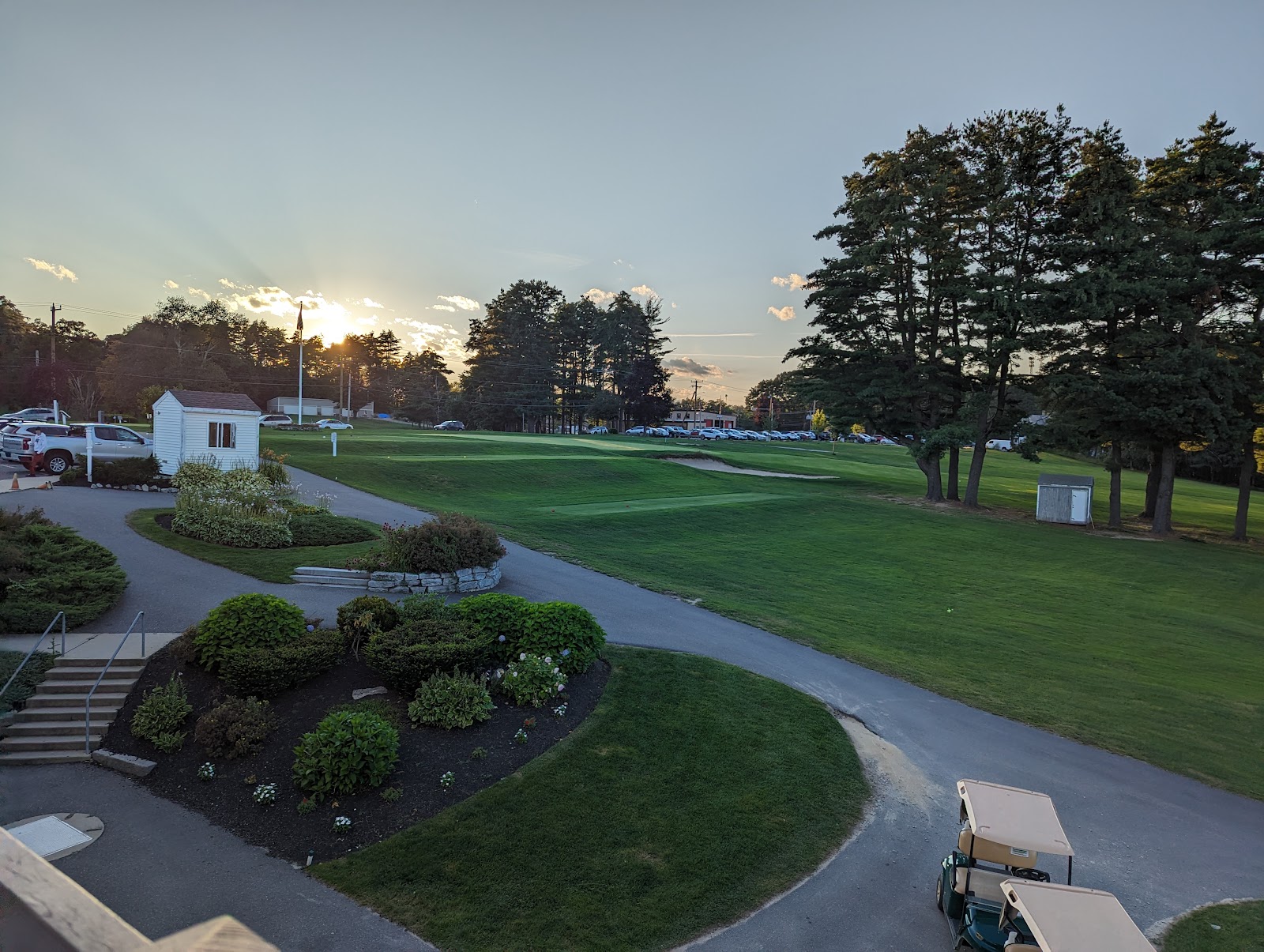
On the low light. A course at the ends of the day is the best version of itself, because a low sun rakes across level mown ground rather than falling onto it — which puts texture into a surface that is flat at noon and turns the mowing pattern into long graphic lines.
At this latitude the civil twilight is around thirty-three minutes, which is a genuinely generous window and long enough to work an unhurried sequence in. The frames that belong to it are: the couple with the sun behind them, exposed for the sky and lifted by a close warm-gelled source; the couple with the sun behind the camera, which needs nothing; and a silhouette against the treeline.
The gel is not optional. Low sun at this latitude is strongly warm and open shade is lit by a blue sky, so an ungelled flash puts cold faces into a gold landscape.
On the water. Where a course has ponds, they are horizontal reflectors that fill faces from below — precisely where a high sun leaves people dark — and mirrors when calm. Calm on an inland pond means the early morning and the last hour, because the air moves as the land heats through the day.
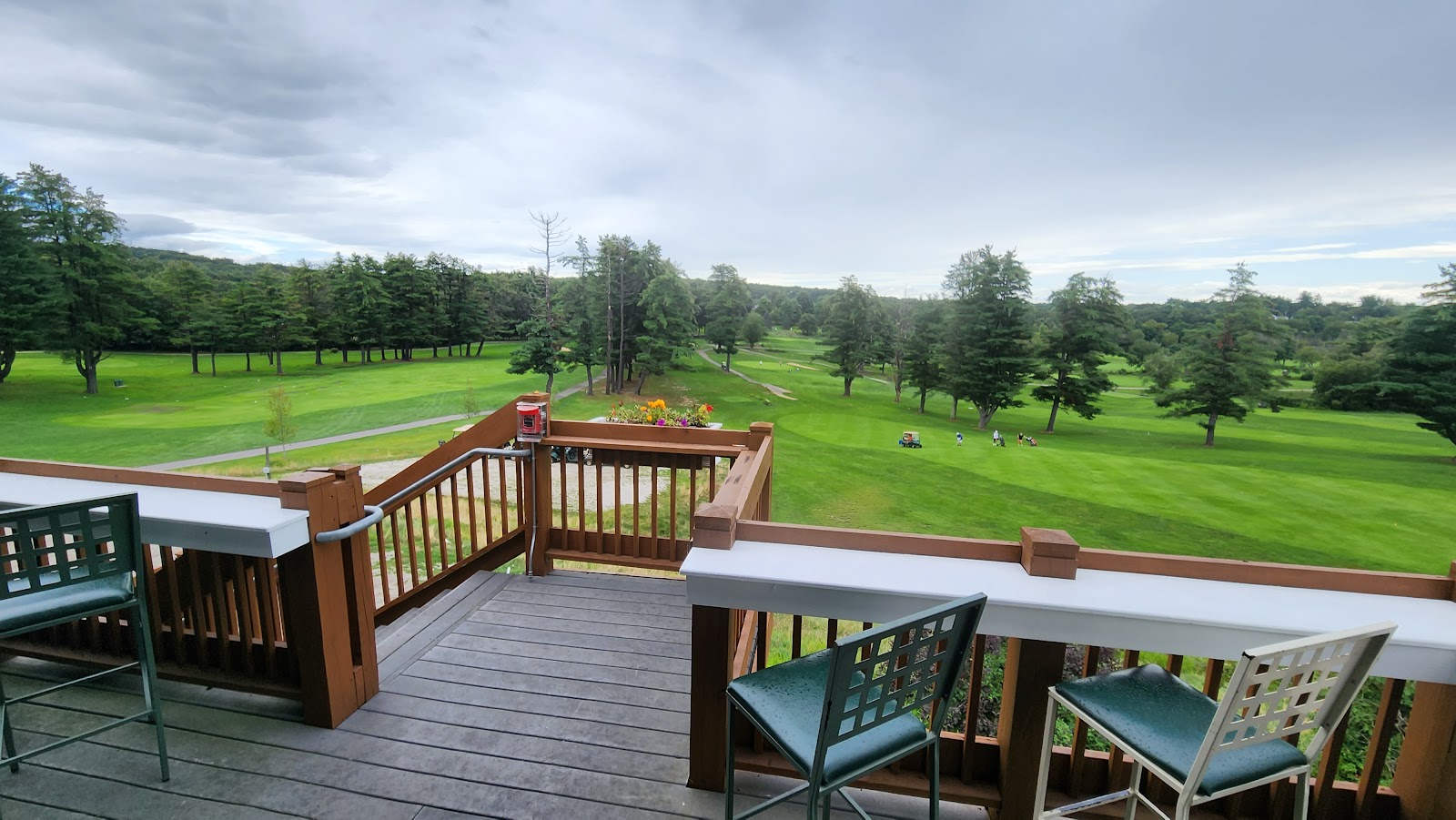
On indoors. A clubhouse is likely to be either timber or pale and modern. Timber absorbs, which means the ambient is a stop or two below what the eye estimates and the background falls away for free — meter on skin and let the room go dark. Pale and modern inverts the problem to separation: find something dark, use the glazing as a directional source at forty-five degrees, or add a source a stop over ambient so the subject has a shadow side.
A window facing snow in winter delivers very bright cool light, which makes a clubhouse better lit in February than in July and further from neutral in colour — so the white balance goes on a face rather than on a preset.
On granite and stone walls. Southern New Hampshire is granite country and a course cut into old farmland will have nineteenth-century field walls in its woodland margins, left behind when the farms were abandoned and the trees grew back. A low granite wall is a strong horizontal at seated height, which is one of the most useful things a landscape can offer, and coarse-grained pale grey granite is a genuinely low-saturation background that treats skin and white fabric kindly.
- Conifer margin: three or four stops of free separation at any hour
- Work five scales from one position rather than one scale from five positions
- Camera below subjects on a rise gives the cleanest background there is
- Arrange groups across a slope on a bench, never up it
- Expose for the sky and lift the faces close and warm-gelled
The southern New Hampshire year
The Merrimack valley is the mildest and latest part of the state, and the calendar here runs noticeably behind the mountains.
Winter is cold with variable snow cover — more reliable than the seacoast, less than the north country. When snow is on the ground it transforms the course: mown turf becomes a clean white plane, the conifer margins go near-black, every recognisable golf feature is buried, and the result is a simple winter landscape rather than a golf course.
Snow is also the best natural fill available: it lifts the shadow under a brow to within a stop of the highlight and fools a meter by about two stops, so open up deliberately. The December noon sun at twenty-three degrees means the whole short day rakes rather than floods, which removes the high-sun problem entirely and puts the good light in the middle of the afternoon. On the light alone, a clear February afternoon here is better than any day in July.
The costs are cold, a nine-hour day, batteries draining fast, glass fogging on the way from outside into a heated clubhouse, and course access that depends entirely on conditions and on the club.
Spring is earlier here than in the mountains but it is still the weak window. March and early April leave grey ground, bare hardwood and off-colour turf, and there is no good version of an open course in it. The turf greens through late April, and leaf-out runs from late April into May — pale transmissive new foliage that backlights beautifully for about three weeks.
Southern New Hampshire has more flowering understory than the north — shadbush, dogwood, apple — which gives a spring the mountains cannot match, and the black flies are less severe this far south, running from about mid-May into early June rather than dominating a month.
Summer is long and warm: over fifteen hours of daylight at the solstice, thirty-three minutes of civil twilight, and the turf at its best. The costs are the middle of the day at seventy degrees of sun elevation, and humidity, which puts haze into the air and softens anything at distance — less damaging on a course, where the subjects are close and the backgrounds are the treeline, than at a venue with a view.
Thunderstorms in the Merrimack valley are a summer afternoon possibility rather than a daily certainty, and on open turf with no cover a named indoor alternative is a requirement rather than a courtesy.
Autumn is the best season here and it arrives late. The timing runs southward and downhill: the White Mountains peak from the third week of September into the first week of October, central New Hampshire follows in the first and second weeks, and the Merrimack valley in the second and third weeks of October.
The southern palette has more oak and hickory and less sugar maple than the mountains, which means more bronze, russet and gold and fewer pure reds — and it holds on the trees longer, which makes the window wider and more forgiving than the mountains’ two weeks.
On a course that autumn arrives exactly where it is most useful: in the treelines that form every background. A boundary-line frame with a subject on the edge of bright green turf and a wall of bronze and gold behind them is the strongest thing this kind of venue produces all year.
Late October and November strip it back to bare hardwood, dark conifer and brown-green turf under a very low sun. It photographs austerely and well, and the course is empty.
More frames from The Derryfield Country Club

The Derryfield Country Club wedding photography: common questions
What is the main problem on a course?
No overhead cover anywhere between the treelines, which under a summer sun makes open turf unusable for portraits in the middle of the day.
What solves it?
The woodland margins. Pine, spruce and hemlock block almost all light, so a metre inside a conifer edge gives soft directional light with three or four stops of dark behind.
How do I avoid a monotonous set?
Work five scales from one position rather than one scale from five positions — close, canopy edge, boundary line, low camera against sky, and one wide frame.
Why does precision matter more here?
There is no rough texture to hide in. A frame a degree off level against a horizon of mown turf reads as a mistake immediately.
What is the cleanest background available?
Camera below the subjects on any rise, which puts them against open sky with no horizon behind them and drops everything else out of frame.
When is the course at its best?
The second and third weeks of October, for bronze and gold treelines behind green turf — and any clear February afternoon, for the easiest light of the year.
More New Hampshire venue guides
We are writing a photographer’s guide to every venue we would happily shoot in New Hampshire. Here are three more, plus the full index:
- Grappone Conference Center, Concord: What It Suits and What It Does Not
- The Lakehouse at Ferry Point, Sanbornton: How the Light Moves on a Lake
- Loon Mountain Resort, Lincoln: The Problem and Four Ways Out of It
Planning a wedding at The Derryfield Country Club?
Clean ground, good margins and a long dusk. Tell us your date.