 The Sheraton Portsmouth: What a Conventional Hotel Actually Buys You
Loon Mountain Resort, Lincoln: The Problem and Four Ways Out of It
A ski slope in summer is a field with machinery on it. Four ways to make that work.
A ski resort out of season presents a specific problem and it is worth naming rather than glossing over. The thing that makes it a good ski mountain — wide cleared slopes running downhill with lift infrastructure serving them — is the thing that makes it a difficult photographic site in summer.
The problem has three parts. A cleared slope has no overhead cover at all, which under a high summer sun means the worst light available anywhere on the property. The infrastructure — towers, cables, snow guns, maintenance tracks, signage — is functional and unhidden, and it appears in any frame taken without checking its edges. And a grassed ski trail in July is, visually, a wide featureless green field on a gradient, with less character than the same acreage of meadow.
That is an honest account and it is not the end of it. The site also has genuine assets: real elevation, a river in the valley, a mountain landscape in every direction, forest margins of exactly the right species, and a lift that gains height without a walk — which is rare and valuable.
So the problem has four distinct solutions, each producing a different kind of photograph. Choosing among them deliberately is the whole job here, and defaulting to standing on the slope at two in the afternoon is the failure mode.
Lincoln sits in the Pemigewasset valley at about forty-four degrees north, with the mountain rising to the south. The June noon sun reaches around sixty-nine degrees, the December noon sun about twenty-two, days run from under nine hours to over fifteen, and civil twilight is around thirty-five minutes.
We have not photographed a wedding at this resort. Which spaces and grounds are included, whether summit access by lift is available and on what terms, and what the permitted hours are, are questions for their team — and the lift question changes what the day can be.
Loon Mountain Resort at a glance
| Where | A ski resort in the Pemigewasset valley at Lincoln, White Mountains |
| The problem | Cleared slopes with no shade, visible infrastructure, and featureless summer grass |
| Four ways out | Use the gradient; go up; work the margins; work the river |
| The asset | Real elevation without a walk, if the lift is available |
| Ask first | Included spaces, lift access and terms, permitted hours |
The first two ways out
The first way out is the gradient, and it is the one most people miss because it does not look like a resource.
A slope gives a camera something flat ground never can: a choice of whether the subjects appear against sky or against landscape, decided purely by camera height. From below the subjects, looking up, they stand against open sky with no horizon behind them — which is the cleanest background available anywhere, on any site, in any weather. From above them, looking down, the valley and the far mountains fill the space behind.
Those are two completely different photographs from the same spot, and the only cost is walking twenty metres uphill or down. At a flat venue variety requires travel; here it requires a change of elevation measured in metres.
The from-below frame is also the solution to the infrastructure problem, because a camera low on a slope pointing up sees sky and grass and nothing else. Towers, buildings and signage are all at or below the subjects’ level, which puts them out of the frame entirely.
Groups on a slope need one specific piece of care: a gradient puts heads at different heights, which is either a mess or a deliberate arrangement. The practical answer is to find the flattest available bench and arrange in ranks across the slope rather than up it, so everyone is at the same elevation and the ground behind them is clean.
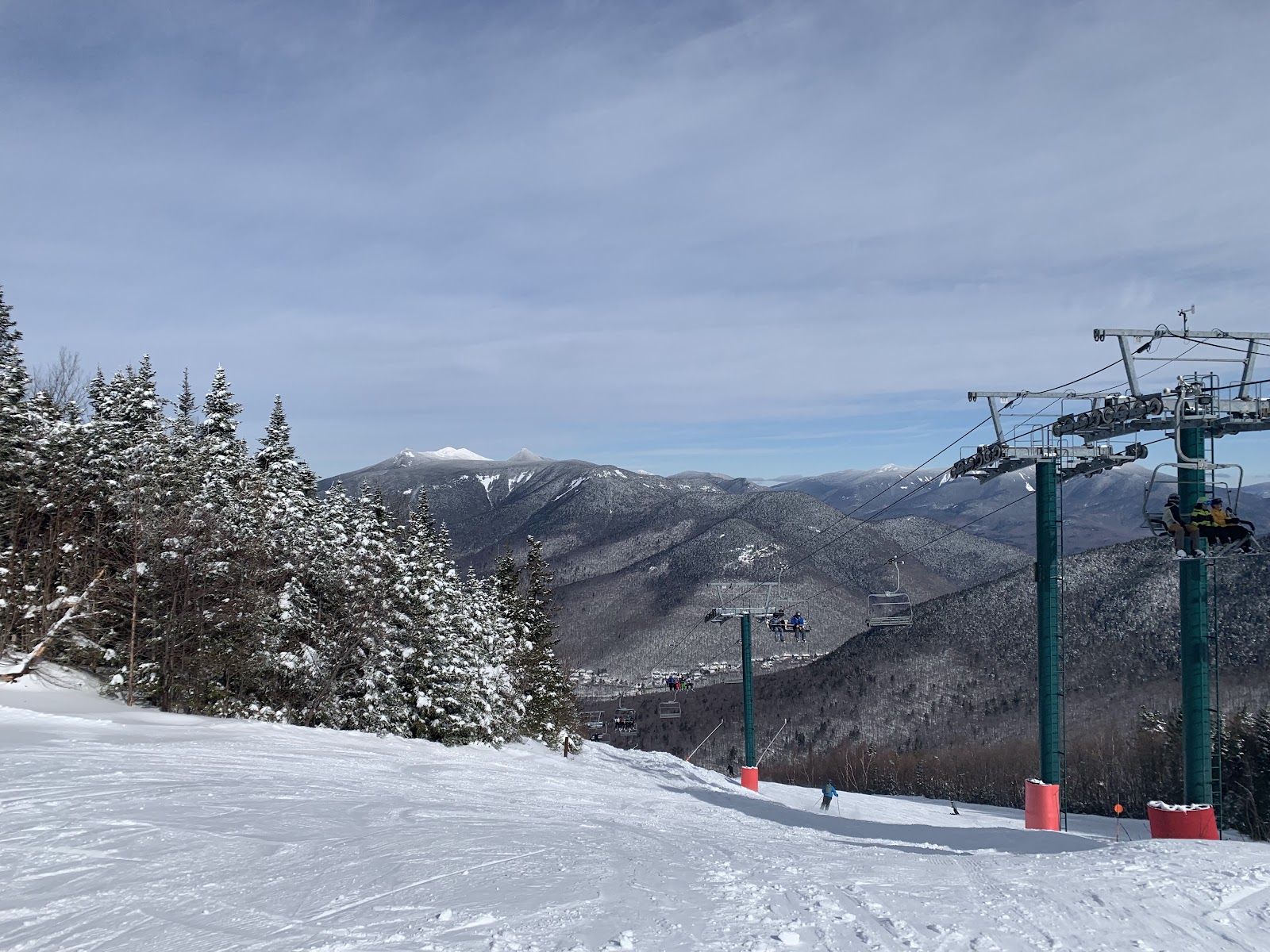
The second way out is to go up, and this is where the lift matters. A summit or mid-station on a White Mountain ski hill is at an elevation that changes the landscape from a valley view to a mountain view — the Pemigewasset valley below, the Franconia Ridge and the surrounding peaks around, and the whole visual register shifting from local to regional.
The lift means that shift is available to a wedding party rather than to two people with boots, which is the single biggest practical difference between this kind of venue and a trailhead one.
The light at elevation behaves differently too. At a thousand or two thousand feet above the valley floor there is measurably less atmosphere overhead, which means direct sun is a little harder, shadows a little deeper, and the air clearer — so the distant ridges hold detail on a long lens in a way they do not from the valley.
It also means the summit and the base can be in entirely different conditions. Cloud sitting on a ridge while the base is clear is the normal condition in these mountains rather than the exception, and a plan that depends on a summit location needs a check on the day and a valley alternative.
The practical cautions at elevation are wind, which is the baseline condition rather than an event and which makes every light handheld or weighted, and time: a lift ride each way plus the walking at the top is a substantial block out of a wedding day and it has to be budgeted honestly.
The second two, and the year
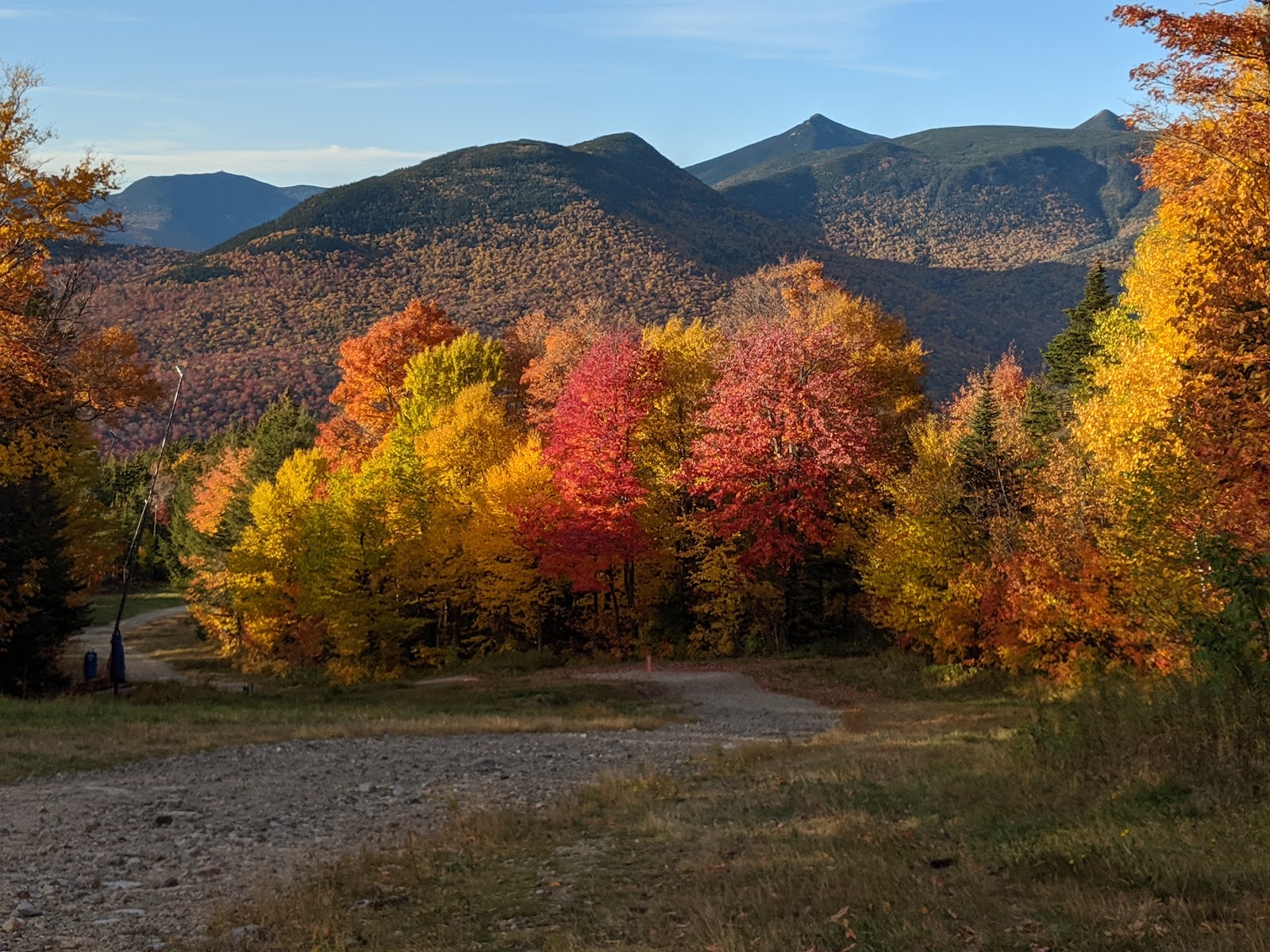
The third way out is the forest margins, and they are the site’s best-kept asset. A cleared slope has edges, and those edges are where the cleared ground meets intact forest — which at this elevation means red spruce, balsam fir, white pine, and paper birch mixed in.
Conifer blocks almost all light, which makes the margin the strongest free separation available anywhere: a subject standing a metre inside a spruce or fir edge, facing out toward the sunlit slope, gets soft directional light in front and three or four stops of near-blackness behind. No equipment, no arrangement, and it works at any hour including the middle of a July day when the open slope is unusable.
The boundary line itself — bright grass meeting dark forest — is the best single compositional element on the property, a hard horizontal or diagonal division that a subject can be placed on.
Paper birch is the counterpoint. White reflective bark against dark conifer is the highest-contrast natural background in New England, a graphic field of pale verticals on black, and the margins of a ski trail are precisely where birch establishes itself because it is a pioneer species that colonises disturbed ground. A cut slope therefore tends to grow the most useful tree in the region along its edges, which is a genuine piece of good luck.
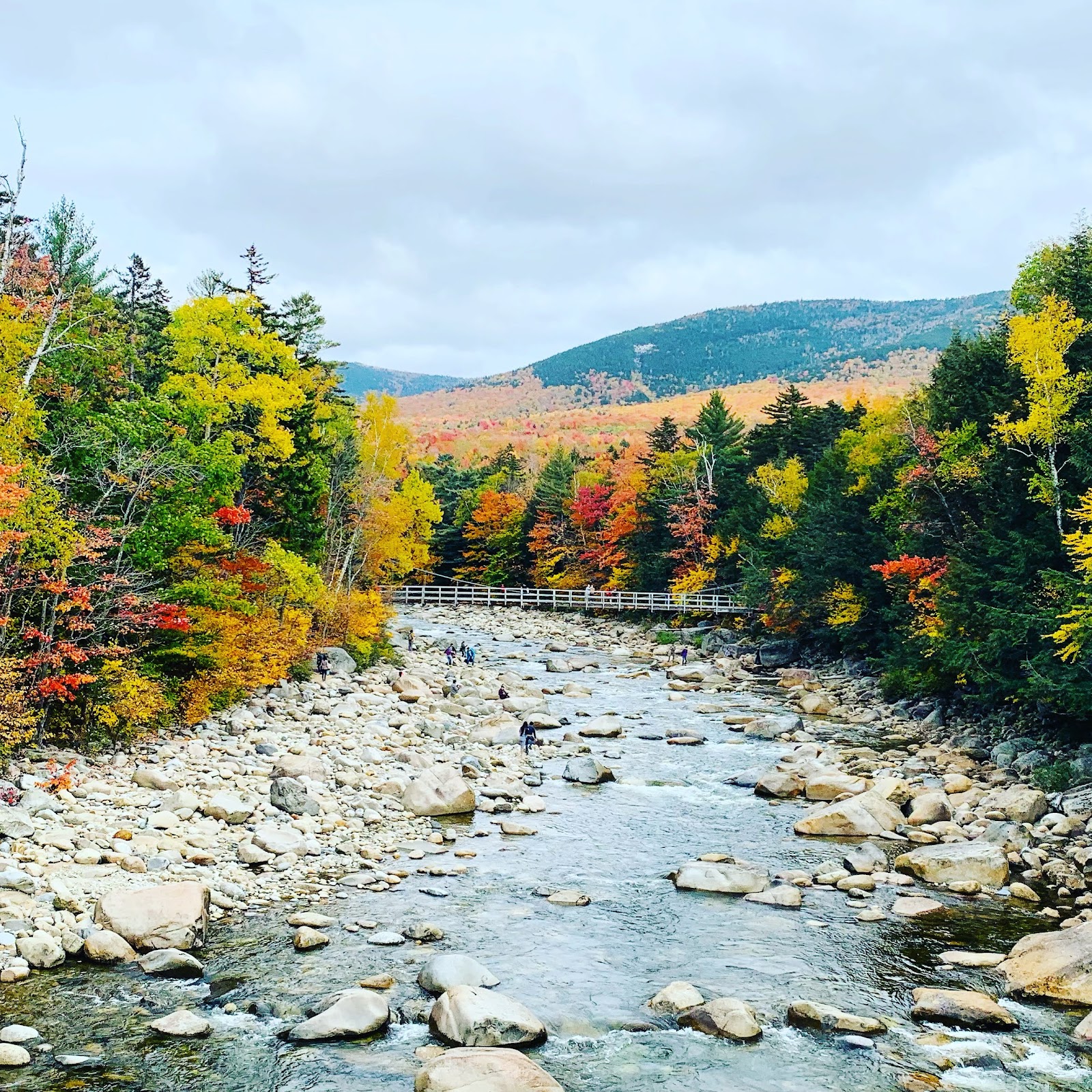
The fourth way out is the valley and the river. The Pemigewasset runs through Lincoln below the mountain, and a river in a New England valley is one of the most reliable photographic subjects there is: water over granite boulders, dark forest on both banks, and a continuous supply of frames at any hour.
Moving water in shade is particularly forgiving, because the shade prevents the blown highlights that ruin a sunlit stream and a slow shutter is easy when the light is already low. A frame with subjects on granite, water in the foreground and dark forest behind is available in any conditions and depends on nothing.
The granite matters here as everywhere in this state. Coarse-grained, pale grey, with visible crystals, it is a high-frequency texture that is spectacular under raking light and dull under flat light, and a low-saturation background that treats skin and a white dress kindly.
The buildings are what a ski resort’s buildings are: base lodges and function spaces built for volume and turnover rather than for light. Expect timber, moderate ceilings and ordinary glazing. Timber absorbs, which means the ambient is a stop or two below what the eye estimates and the background drops away for free — meter on skin and let the room go dark. A window at forty-five degrees is the whole interior plan.
Where a room is pale and modern the problem inverts to separation: find something dark, or add a source a stop over ambient so the subject has a shadow side at all.
The year at this elevation is sharply divided. Winter is what the place is built for and it is the easiest light of the year — snow lifts shadows to within a stop, and against near-black spruce it gives the widest brightness range in this guide, so expose for the snow and open up about two stops relative to the meter. The December sun at twenty-two degrees rakes all day, which removes the high-sun problem entirely.
Spring is the weak window: April is rotting snow, brown slopes and flat light, and there is no good version of it. Late May and June bring leaf-out — pale transmissive green on maple, beech and birch, excellent backlit, for about three weeks — and black flies, which in northern New Hampshire run mid-May into mid-June and are a real consideration at a forested site.
Summer is long-day, short-season and hardest-light, with afternoon build-up: these mountains make their own weather, and a clear morning frequently becomes a wet afternoon. On open slope with no cover, a named indoor alternative is a requirement.
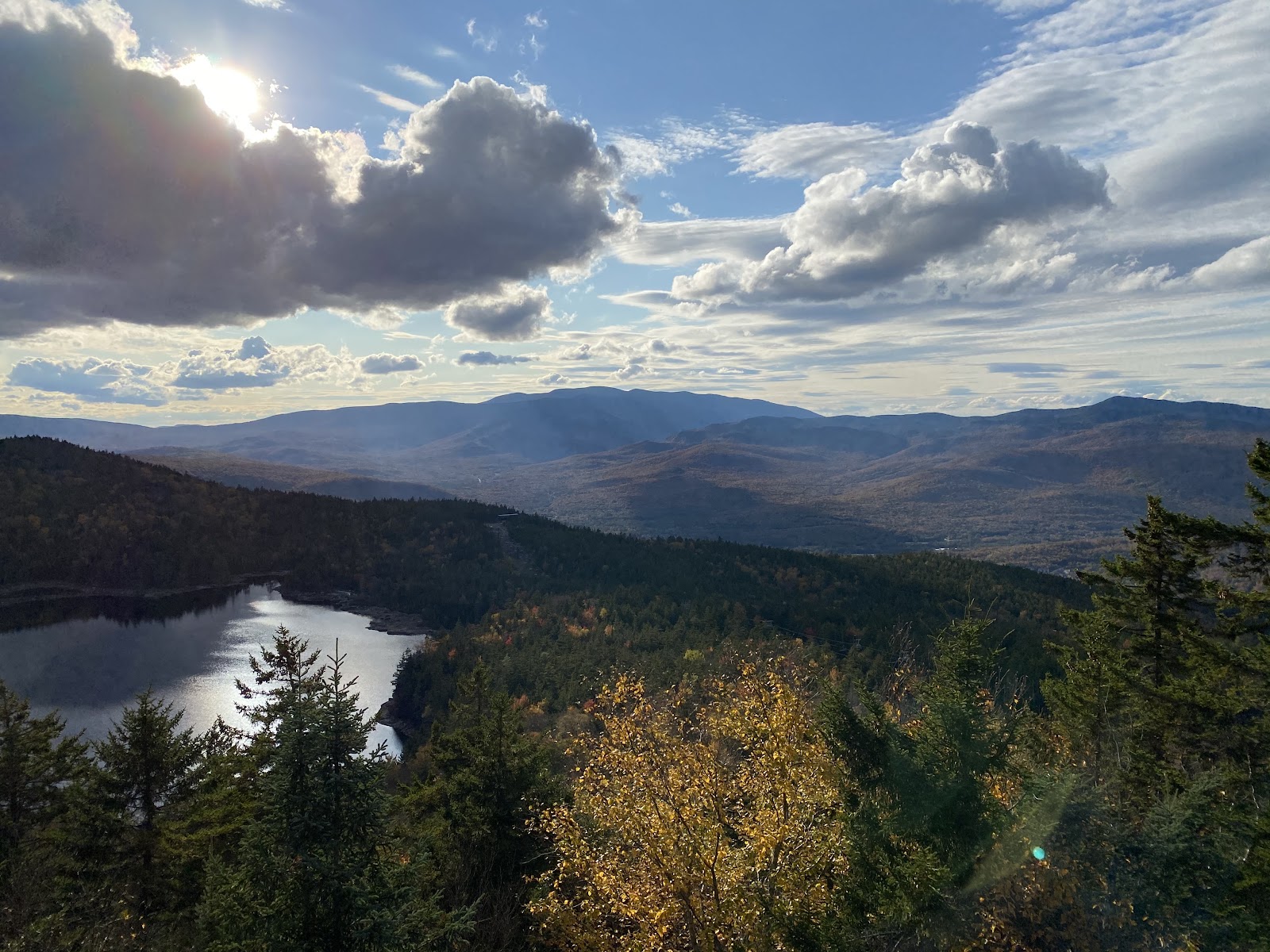
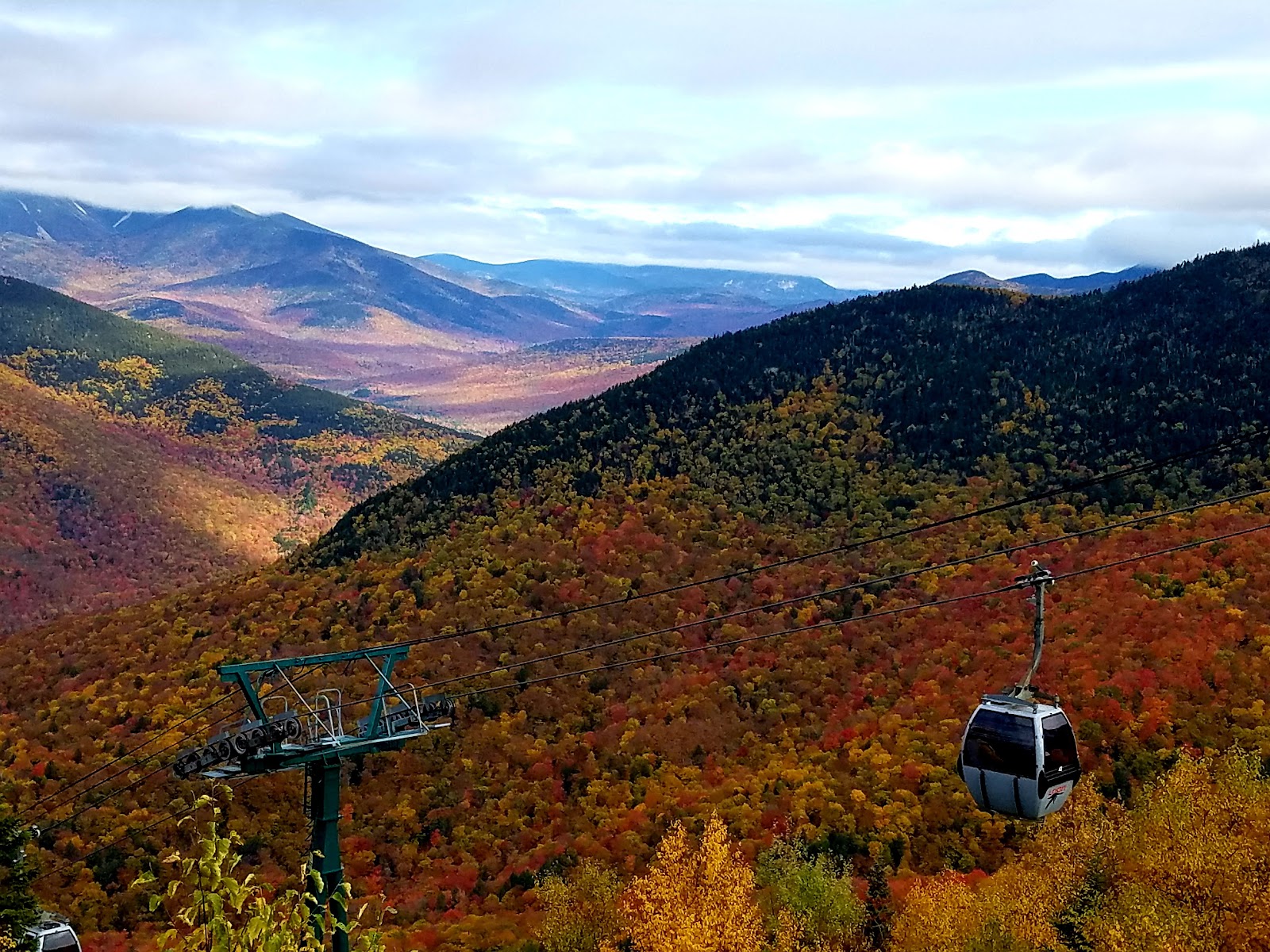
Late September into the first week of October is the best window. The hardwoods in the valley and on the lower slopes turn while the spruce above stays black, and from a lift or a mid-station that colour reads as a landscape rather than as a canopy — blocks of sugar maple red and orange, birch yellow, dark conifer bands, and bare ridgelines above. The autumn air is also the clearest of the year, which is exactly when the distant ridges matter.
- Camera below subjects puts them against clean sky and hides the infrastructure
- Arrange groups across the slope on a bench, never up it
- Conifer margin gives three or four stops of free separation at any hour
- Ski-trail edges grow birch, the best background tree in New England
- Budget the lift honestly — it is a real block of time
The Franconia country year
Some further seasonal detail, because at this elevation the differences between months are large enough to change the plan entirely.
Winter runs long here — snow typically lies from December into April at the base and later on the upper mountain — and the whole landscape simplifies. A snow-covered slope is a clean white plane, the conifer around it is near-black, the infrastructure is partly buried, and every problem described at the top of this page is reduced or removed. On the light alone, February is the best month of the year at this venue.
The costs are cold at elevation, a day under nine hours, batteries draining fast, and glass fogging on the way from outside into a heated lodge. The answer to the last is to acclimatise in a bag on the way in and to treat the outdoors as home base.
The spring window is worth being specific about. The upper slopes hold snow after the valley has greened, which produces a combination available for perhaps three weeks in May: pale new hardwood leaf in the valley, dark conifer on the middle slopes, and residual snow above. From the base looking up, that stacks three bands into one frame.
Summer’s compensations are the long days and the water. Over fifteen hours of daylight and thirty-five minutes of civil twilight mean the low light arrives after eight and lasts, which — unlike at a notch venue where a ridge cuts it off — is genuinely usable on a west-facing slope. And the river is at its most inviting in July, which matters because the river frames are the ones that do not look like a ski resort.
Autumn at a ski resort in these mountains has a specific advantage that is easy to overlook. The lifts frequently run in the foliage season, which means the single best vantage for autumn colour in the region — elevation, looking out over a valley of hardwood — is mechanically accessible. Colour read from above, at distance, with dark conifer bands and bare summits above it, is a stronger photograph than colour read from inside the canopy.
The timing in the White Mountains runs downhill and southward: the high country and the far north turn from roughly the third week of September, the middle elevations and valleys in the first week of October, and the southern part of the state a week or two after. At this elevation the peak is around the turn of the month and the window is about two weeks.
Late October and November strip everything back — bare hardwood, black conifer, brown slopes, grey granite and a very low sun all day — and the site is quiet. It photographs austerely and well, and it is the one part of the year when a ski resort out of season looks deliberate rather than dormant.
One recurring caution for every season: these mountains generate weather locally and quickly. Conditions at the summit bear little relation to conditions at the base, the forecast for the valley is not the forecast for the ridge, and any plan built on a summit location needs a same-day check and a fallback that does not involve the lift.
More frames from Loon Mountain Resort
Loon Mountain Resort wedding photography: common questions
What is the problem with a ski slope in summer?
No overhead cover at all, visible functional infrastructure, and a wide featureless green field on a gradient.
What is the single most useful trick?
Put the camera below the subjects on the slope. They stand against clean sky, and every tower, building and sign falls out of the frame.
How do I photograph a group on a slope?
Find the flattest bench and arrange in ranks across the slope rather than up it, so everyone is at the same elevation.
Where is the best portrait light?
A metre inside the spruce or fir margin at the edge of a trail, facing out — three or four stops of free separation at any hour.
Why is birch so common at trail edges?
It is a pioneer species that colonises disturbed ground, which means a cut slope grows the best background tree in New England along its own margins.
When is the best time of year?
February for the easiest light, and around the turn of September into October for colour read from elevation, in the clearest air of the year.
More New Hampshire venue guides
We are writing a photographer’s guide to every venue we would happily shoot in New Hampshire. Here are three more, plus the full index:
- Manchester Country Club, Bedford: What It Suits and What It Does Not
- Mountain View Grand Resort, Whitefield: How the Light Moves
- Omni Mount Washington Resort, Bretton Woods: The Venue’s Own Logic
Planning a wedding at Loon Mountain Resort?
A slope, a lift and a river. Tell us your date and we will use all three.