 The Sheraton Portsmouth: What a Conventional Hotel Actually Buys You
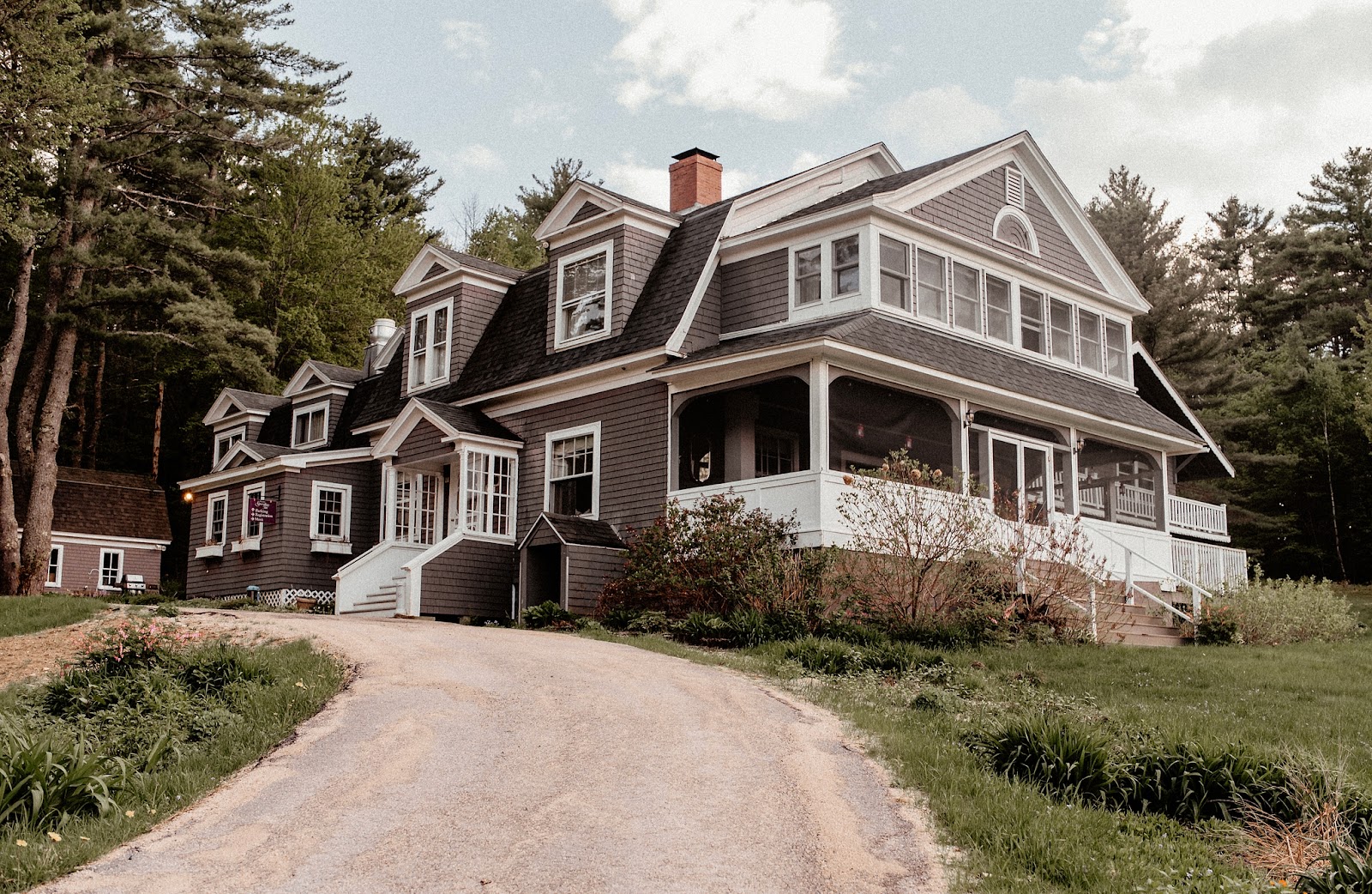
Snowvillage Inn, Snowville: The One Decision That Governs Everything
There is one good direction. Everything follows from whether you use it.
Some venues offer choices in every direction. This one offers one direction that matters, and the single decision that governs every frame here is whether to point the camera at it.
The inn sits on a hillside in the country east of the White Mountains, looking west across open ground toward the Presidential Range. That view is the property’s reason for existing, and it creates a binary: every exterior frame either faces the mountains or faces away from them, and those two choices produce completely different photographs with completely different technical requirements.
Facing the mountains means the subjects are backlit for most of the day and strongly backlit at the end of it, because the view and the sun are in the same direction. It means a wide frame with a distant horizon and a large brightness range. It means a landscape photograph that happens to contain people.
Facing away from the mountains means the subjects are frontally lit for most of the day and beautifully lit at the end of it, because the low sun is behind the camera. It means the background is the inn, the hillside, the trees and the New England country around them — closer, greener and considerably easier. It means a portrait that happens to be outdoors.
Both are good. Neither is a compromise. What does not work is treating them as the same job: exposing a mountain frame as though it were a portrait gives a white sky and a colourless range, and photographing the inn side without noticing that the best light of the day is happening behind the camera wastes the property’s whole advantage.
Snowville sits at about forty-three and three-quarter degrees north. The June noon sun reaches around sixty-nine and a half degrees, the December noon sun about twenty-two and a half, days run from under nine hours to over fifteen, and civil twilight is around thirty-four minutes.
We have not photographed a wedding at this inn. Which rooms and grounds are included, what group sizes are workable, whether the surrounding land is accessible and what the permitted hours are, are questions for their team.
Snowvillage Inn at a glance
| Where | A country inn on a hillside east of the White Mountains, New Hampshire |
| The decision | Facing the mountains, or facing away from them |
| Facing them | Backlit, wide, large brightness range — a landscape with people in it |
| Facing away | Frontally lit, closer, easier — a portrait that happens to be outdoors |
| Ask first | Included rooms and grounds, group size, land access, hours |
Working the decision
Facing the mountains is the harder half and it is worth getting right, because it is the picture people will remember.
The technical situation is a wide frame containing a lit distant range, a bright sky and a foreground that is progressively in shadow as the day goes on — which by late afternoon runs three or four stops and by the last hour considerably more.
The rule is to expose for the mountains, always. That is what the frame is about, and metering on the faces gives a blank sky and a washed-out range, which removes the only reason for pointing the camera that way. The subjects then need their own light: a source close to them, warm-gelled to match the low sun, at about a stop over the ambient falling on them.
Close matters. A light two metres from a couple needs a fraction of the output of one at six, falls off fast enough to leave the hillside behind them dark, and does not announce itself. A light further back lights the whole field and looks exactly like what it is.
The gel is not optional. Low sun at this latitude is strongly warm and the open shade is lit by a blue sky, so an ungelled source puts cold faces into a gold landscape — the most recognisable error in outdoor work.
The alternative in this direction is the silhouette, and on an open hillside with a mountain horizon it works unusually well. Expose for the sky alone, let the subjects go to black, and make the picture about shape: a gap of light between the heads, hands clear of bodies, and a clean line where the figures meet the ridge behind. One or two of those in a set is the right number.
The focal length decision belongs here too, and it is the one most often got wrong. A wide lens renders distant mountains at their true angular size, which is modest — so a wide frame makes the Presidential Range look like low hills. A moderate telephoto compresses, which brings the range forward and makes it read at something closer to the scale the eye perceives.
That means the mountain frames want a long lens and a long working distance, which in turn means finding a stretch of open ground where the camera can retreat twenty or thirty metres from the subjects with nothing between them.
Facing away from the mountains is the easier half and it is where most of the day’s work should happen. With the sun behind the camera in the last two hours, the subjects are frontally lit with warm low light, the inn and the hillside behind them are lit from the same direction, and the whole frame sits within a stop or two. Nothing needs adding.
This is where the groups belong, because a group cannot be lit by a single close source and cannot be silhouetted — which makes the backlit mountain direction the one direction a group photograph should not face. Turning the group around so the mountains are behind the camera is a thirty-second decision that saves the picture.
The inn, the ground and the trees
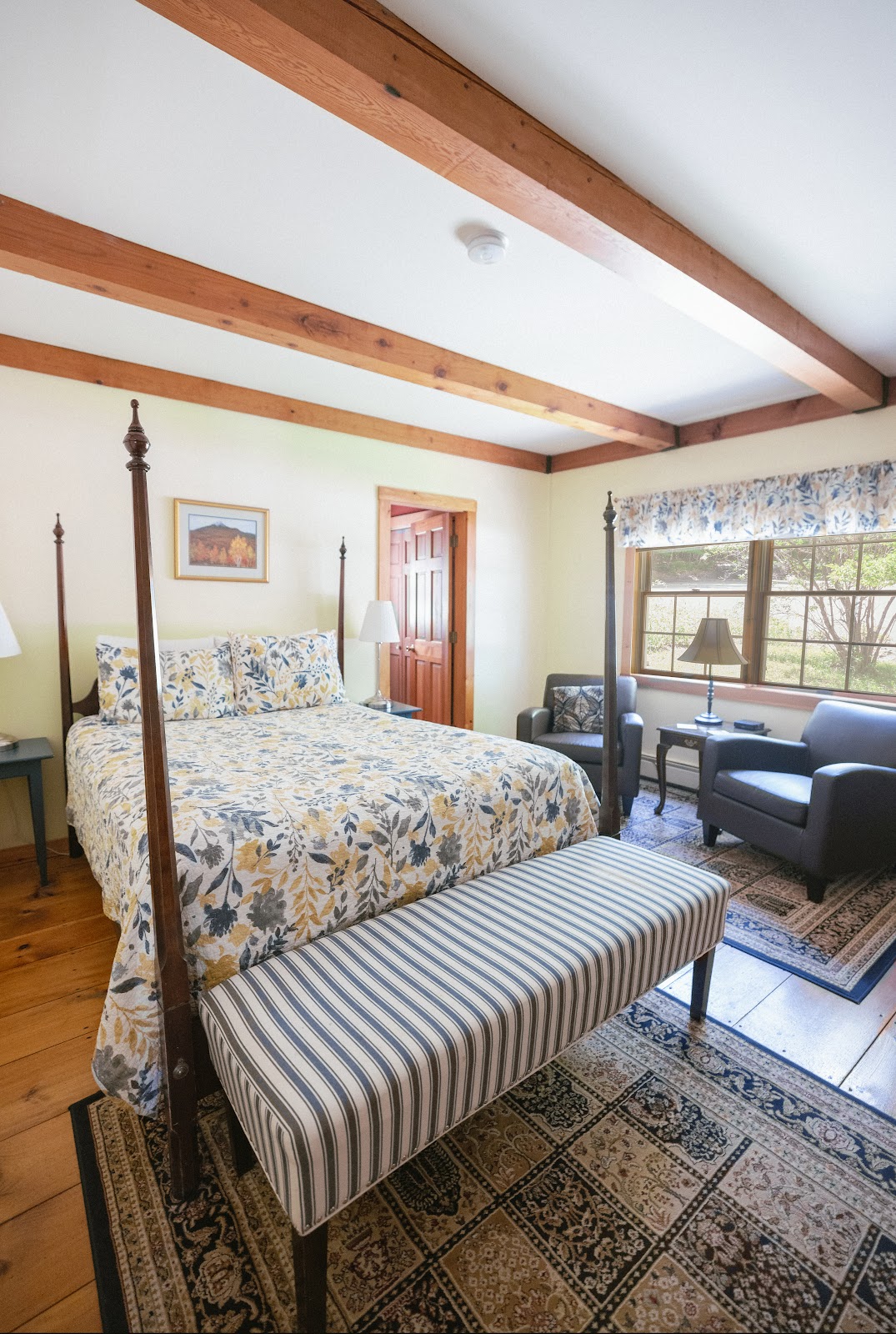
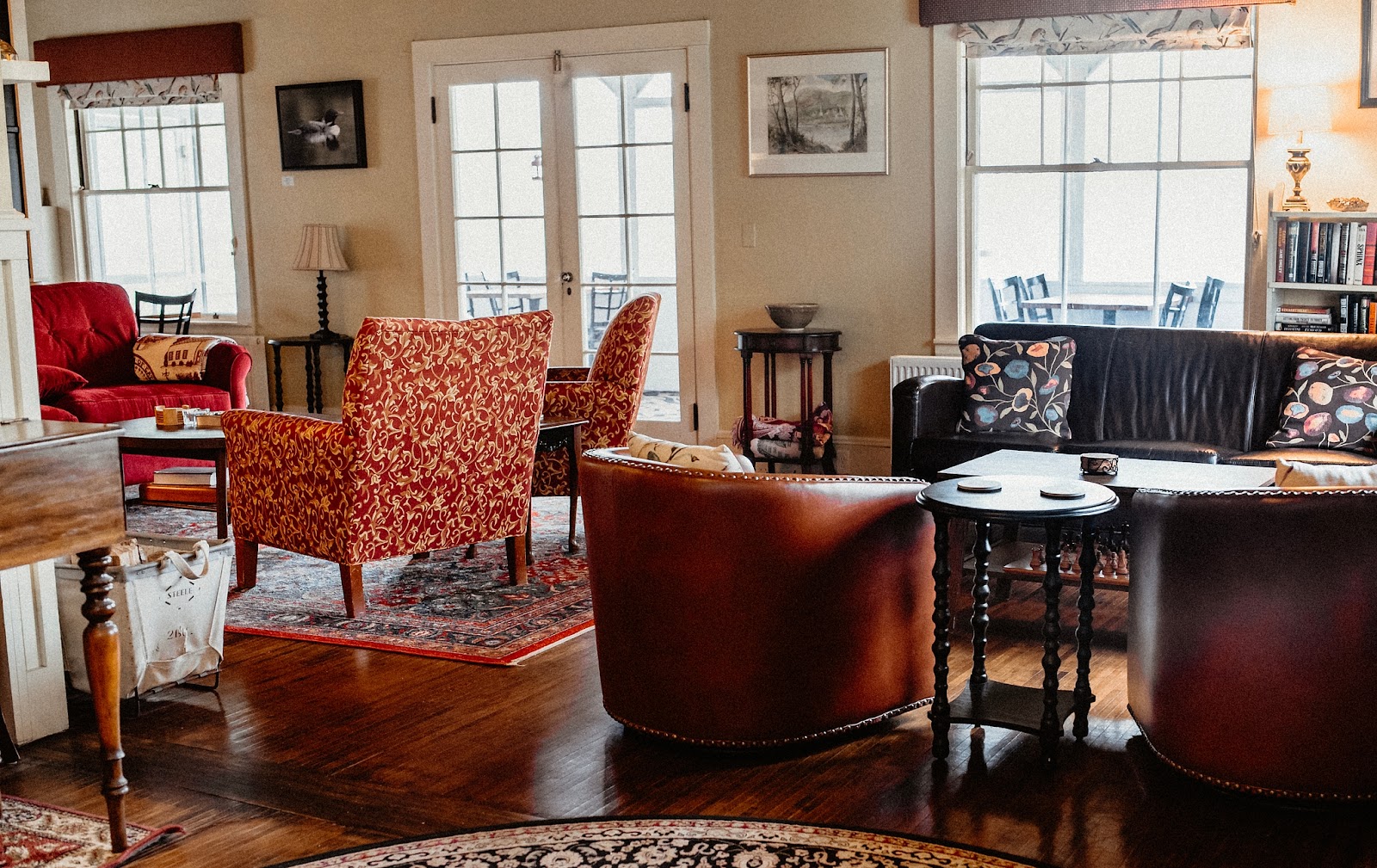
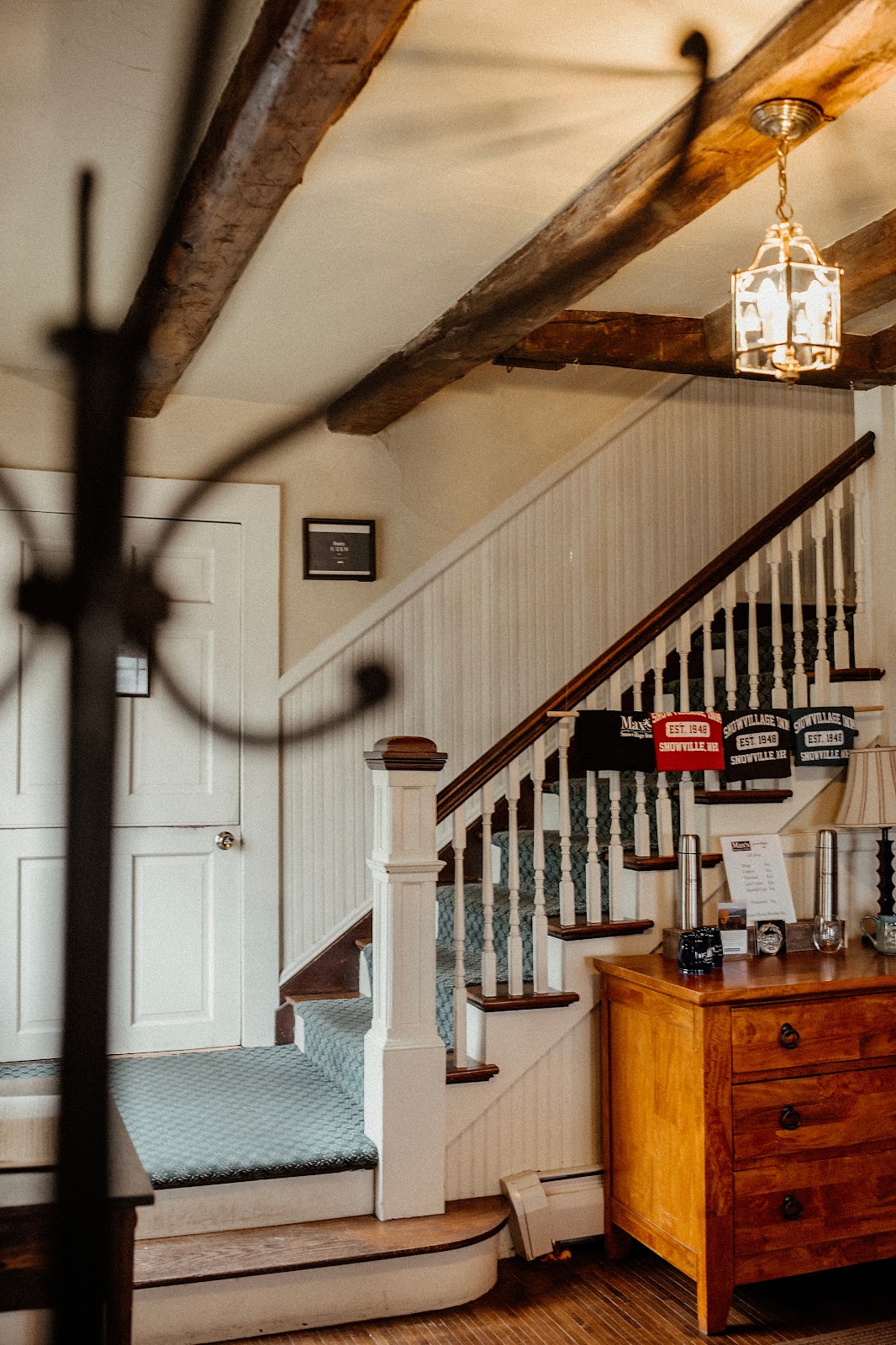
An inn is domestic in scale and that changes the interior approach relative to a hotel. Expect moderate ceilings, ordinary windows in ordinary numbers, and light that is adequate rather than generous.
The method is the same as in any house: a subject at forty-five degrees to a window, at a distance that sets the ratio, with the room falling away behind. Where the finishes are dark — timber, painted panelling, older plaster — the fall-off is free and the background drops away without intervention: meter on skin and let the room go dark.
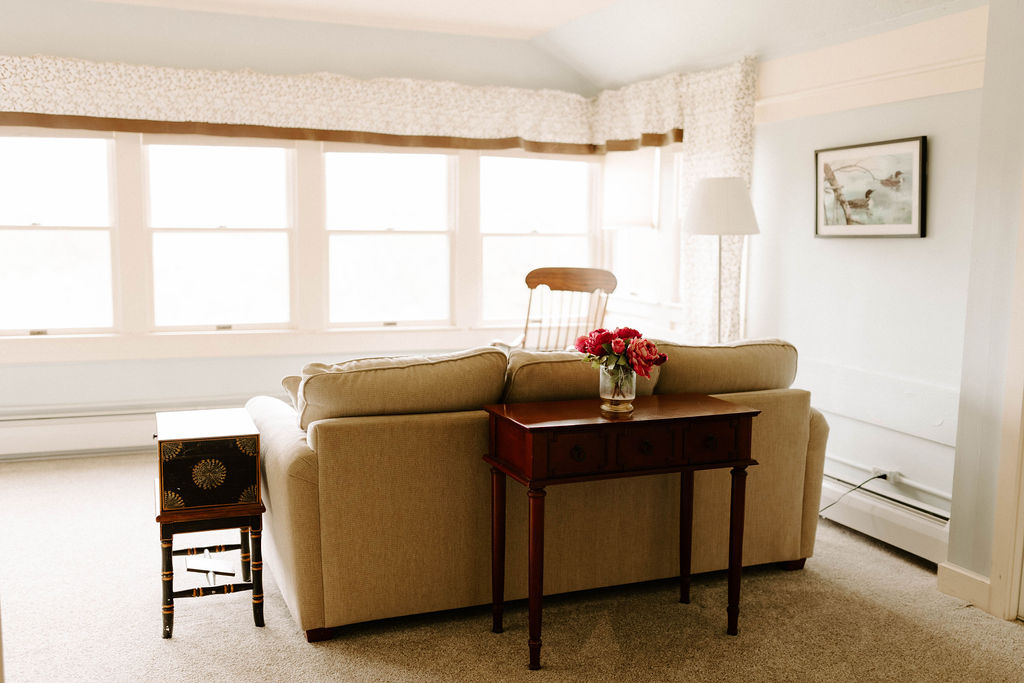
Where a room is pale the problem inverts to separation, and the answer is to find something dark or to add a source a stop over ambient so the subject has a shadow side at all.
The west-facing rooms are the ones to know about, because late in the day they receive direct low sun through the glazing. That produces the strongest interior light of the day and the hardest to control: a hard warm beam across a room, with everything outside it three or four stops down. Used deliberately — a subject standing in the beam, the rest of the room black — it is the best interior frame on the property. Used without noticing, it is a stripe across a face.
The open ground is the site’s main exterior asset and the practical point about it is that it is a hillside rather than a lawn. A gradient gives a camera a choice that flat ground cannot: from below the subjects they stand against open sky with no horizon behind them, which is the cleanest background available in any conditions; from above them the ground and the country fill the space behind.
Two photographs from one position, by moving the camera twenty metres. And the from-below frame is the answer whenever the background is cluttered, since everything at or below the subjects’ level falls out of the frame entirely.
Groups on a slope need one specific piece of care: find the flattest bench and arrange in ranks across the gradient rather than up it, so heads sit at the same height and the ground behind is clean.
The trees around a New England country property divide the way they divide everywhere in this region, and the distinction decides where a portrait can be made in the middle of a day. White pine, spruce and hemlock block almost everything and give near-darkness, which makes their edge the best free separation available — a subject a metre inside a conifer margin has soft directional light in front and three or four stops of black behind.
Hardwood canopy — sugar maple, beech, oak, birch — gives soft even light with a green cast, which is fixed by standing at the edge rather than deep inside it rather than by a global white balance correction. And white paper birch against dark conifer is the highest-contrast natural background in New England: pale verticals on black, needing nothing added.
Two features of the New England landscape appear on almost any old country property here and both are useful. Stone walls are field boundaries built when this land was cleared for farming in the nineteenth century and left behind when the woods grew back — as a photographic element, a low granite wall is a strong horizontal line at seated height, which is one of the most useful things a landscape can provide.
And granite outcrop is everywhere: coarse-grained, pale grey, with visible crystals, which makes it a high-frequency texture that is spectacular under raking light, dull under flat light, and a genuinely low-saturation background that treats skin and a white dress kindly.
- Expose for the mountains and light the faces close and warm-gelled
- Use a moderate telephoto — a wide lens makes the range look like hills
- Put the groups with their backs to the mountains, not facing them
- Camera below subjects on the slope gives the cleanest background there is
- The late beam through a west window is the best interior frame — used on purpose
The eastern White Mountains year
A four-season site in country where the seasons are sharply separated, and where a west-facing hillside gets a specific advantage at each end of the year.
Winter is long and snowy and photographically the easiest season here. Snow is the best natural fill that exists: it lifts the shadow under a brow to within a stop of the highlight, and against the dark spruce and pine of this country it gives the widest brightness range in this guide. Expose for the snow and let the conifer go black, opening up deliberately by around two stops relative to the meter.
The December noon sun at about twenty-two and a half degrees means the whole short day rakes rather than floods, which removes the high-sun problem completely and puts the good light in the middle of the afternoon. And the mountains to the west are at their most legible in winter — snow-covered, above a bare hardwood foreground, with the whole range reading as structure rather than as a green mass.
A snow-covered hillside with a white range behind it, in low raking light, is the strongest frame this property produces, and it is available on any clear afternoon between December and March.
The costs are cold, a day under nine hours, batteries draining fast, and glass that fogs going from outside into a heated inn.
Spring is the weak window and it should be said plainly. Late March and April in this part of New Hampshire is mud season: rotting snow, soft ground, bare hardwood and flat light. The first half of April has no good version.
Late May and June bring leaf-out, and the new foliage on sugar maple, beech and birch is a pale transmissive green that backlights beautifully for about three weeks — which on a west-facing hillside in the last two hours is the best light of the early season. The constraint is black flies, which in New Hampshire run from mid-May into mid-June and at a wooded hillside property are a genuine consideration for an outdoor ceremony.
Summer is long-day and short-season: over fifteen hours of daylight at the solstice, thirty-four minutes of civil twilight, and the low light arriving after eight and lasting. The costs are the middle of the day at nearly seventy degrees of sun elevation, and haze, which softens the mountain horizon — the one thing this property exists to show.
Late September into mid-October is the best window of the year. Northern New England’s forest is dominated by sugar maple, which gives the reds and oranges that distinguish this colour from the yellows of the aspen west, and the timing runs downhill and southward: the high country turns from around the third week of September, the middle country in the first week of October, the south a week or two later.
A hillside facing a mountain range is the ideal vantage, because colour reads better from a distance and from slightly above than it does from inside the canopy. From here the autumn is a landscape: blocks of red and orange in the middle ground, dark conifer bands, and bare or snow-dusted summits beyond. The autumn air is also the clearest of the year, which is exactly when a long-lens mountain frame most needs it.
Late October and November strip everything to structure — bare hardwood, black conifer, brown fields and a very low sun all day. It photographs austerely and extremely well, and the range to the west is at its most visible because nothing is in the way.
More frames from Snowvillage Inn
Snowvillage Inn wedding photography: common questions
What is the one decision?
Whether the camera faces the mountains or faces away from them. Those are two different photographs with different technical requirements.
How do I expose a mountain frame?
For the mountains, always, and light the faces with a close warm-gelled source. Metering on faces gives a white sky and a washed-out range.
What focal length for the range?
A moderate telephoto. A wide lens renders distant mountains at their true angular size, which makes the Presidential Range look like low hills.
Which way should a group face?
Away from the mountains, with the low sun behind the camera. A group cannot be lit by one close source and cannot be silhouetted.
What is the best interior frame?
A subject standing in the late direct beam through a west-facing window with the rest of the room three or four stops down — used deliberately.
When is the best time of year?
A clear winter afternoon, for a snow-covered hillside under a white range in raking light; and the first week of October for colour read as a landscape.
More New Hampshire venue guides
We are writing a photographer’s guide to every venue we would happily shoot in New Hampshire. Here are three more, plus the full index:
- The Villa at Great Bay, Greenland: The One Decision That Governs Everything
- The Wakefield Inn, Wakefield: A Walk Through the Site
- Wentworth by the Sea, New Castle: The Venue’s Own Logic
Planning a wedding at Snowvillage Inn?
One direction decides the picture. Tell us your date and we will work both of them.