 The Sheraton Portsmouth: What a Conventional Hotel Actually Buys You
Wentworth by the Sea, New Castle: The Venue’s Own Logic
Built to catch a breeze, which means it was built full of porches.
This hotel exists because of a nineteenth-century idea about air. People came to the New England coast in summer to be cool, and the buildings that received them were designed around that: wide porches, cross-ventilated rooms, tall windows and a plan that presented as much of itself to the sea as possible.
Wentworth by the Sea stands on New Castle, an island at the mouth of the Piscataqua River near Portsmouth, and it is a survivor of a type — the large wooden seaside resort hotel — that has almost entirely disappeared from this coast. Its logic is the same as the White Mountain grand hotels’ logic, applied to a different climate problem: not a view to be framed but a breeze to be caught.
For a photographer the practical consequence is the same in both cases, which is porches. A deep roofed porch with an open side is a directional soft source with rapid fall-off — a softbox the length of a building — and a hotel of this type has them on more than one elevation and often on more than one storey.
The second consequence is glazing. Buildings designed for light and air before mechanical ventilation have tall windows in numbers, which means the interiors here are brighter than a comparable inland building of the same age and the window light is available on more than one side of most rooms. That is a real advantage: it gives a choice of direction rather than a single usable wall.
The third is the setting, and this is where New Hampshire is unusual. The state has about eighteen miles of Atlantic coastline — the shortest of any coastal state — and this hotel sits at the end of it, on an island between the open ocean and a large tidal estuary. That gives two completely different kinds of water within a short walk, and they behave nothing like each other.
New Castle sits at about forty-three degrees north. The June noon sun reaches around seventy degrees, the December noon sun about twenty-three, days run from about nine hours to over fifteen, and civil twilight is around thirty-three minutes — a long dusk by the standards of the southern half of this guide.
We have not photographed a wedding at the Wentworth. Which rooms, porches and grounds are included, whether the waterfront and marina areas are accessible and what the permitted hours are, are questions for their team.
Wentworth by the Sea at a glance
| Where | A grand seaside hotel on New Castle island, near Portsmouth, New Hampshire |
| The logic | Built to catch a sea breeze: porches, tall windows, cross ventilation |
| The asset | Deep porches on more than one elevation — directional light with fall-off |
| The setting | Open Atlantic on one side, a large tidal estuary on the other |
| Ask first | Included rooms, porches and grounds, waterfront access, hours |
The porches, the glazing and the white paint
Work the porches by depth, exactly as at any building of this type. At the open edge the light is bright and frontal and flat; a metre back it gains direction; two or three metres back, against the wall, the ratio is dramatic and the background falls to four or five stops below the subject.
That deep position is the best unassisted portrait on the property and it works at any hour, including the middle of a bright July day when everything outside it is unusable.
A hotel with porches on more than one elevation gives something a single-aspect building cannot: a choice of light direction at a fixed time. If the south porch is in hard sun at two in the afternoon, the north or east one is in even shade — same depth, same fall-off, different direction. Establishing which elevation faces which way on arrival takes two minutes and saves an hour.
The white paint is the second thing to understand and it changes the technical approach. A large white-painted timber building is an enormous neutral reflector, which means the light around it is brighter, softer and more evenly distributed than around a stone or brick building of the same size. Faces standing near a sunlit white wall are filled from the side generously and neutrally, which is the most flattering free light in this guide.
It also means meters mislead. A frame with a lot of white clapboard in it reads bright and the camera underexposes — often by a full stop — and the correction is deliberate positive compensation checked on skin rather than on the histogram.
And it means the building is hard to expose against a bright sky. White paint and a pale overcast sky are close in value, which makes the roofline disappear. On a grey day the building has almost no silhouette; in low warm light it has a strong one. That argues for putting the architectural frames at the ends of the day and the people frames in the porches in between.
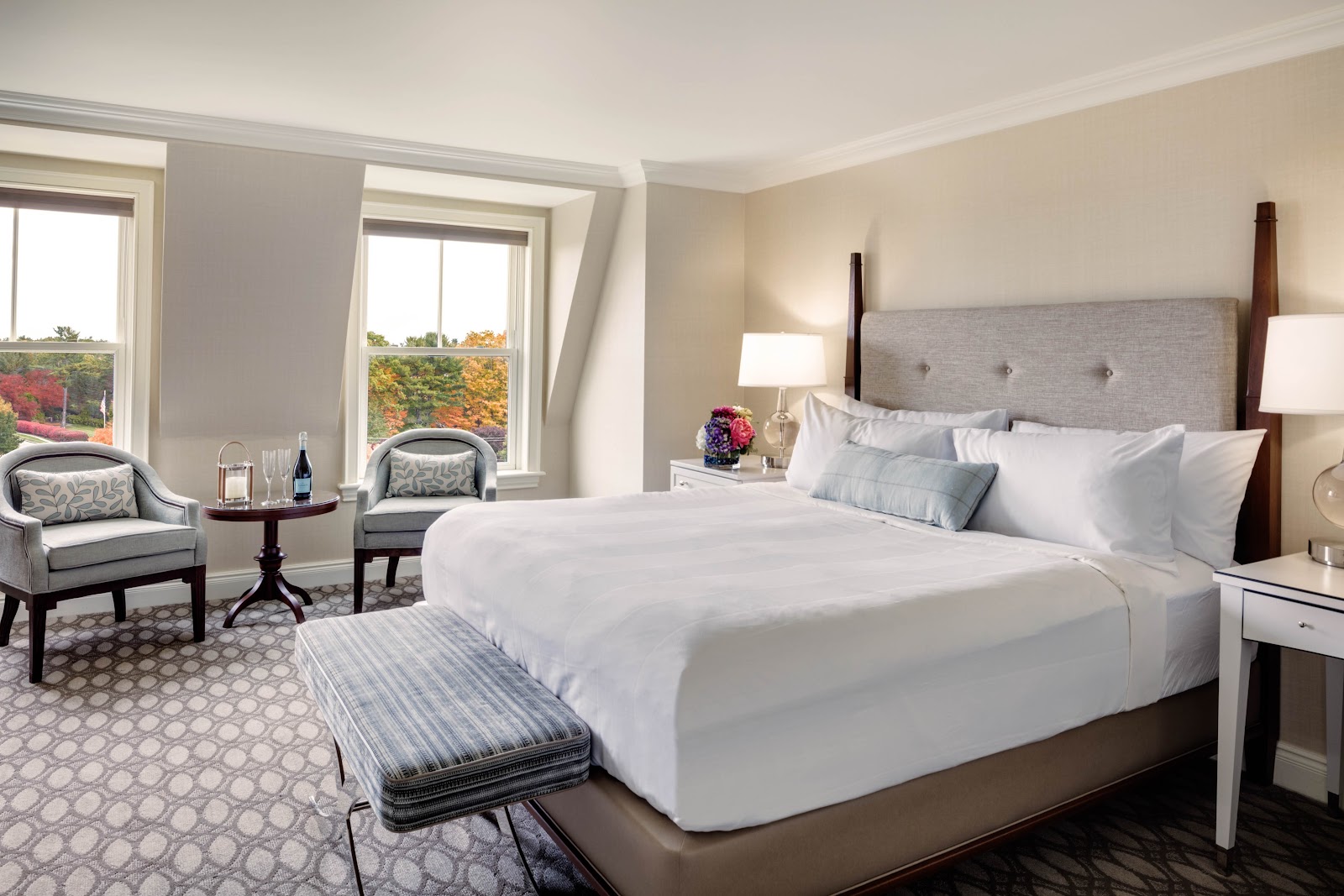
The interiors follow the type. Tall windows in numbers mean the rooms are bright by the standards of a building this old, and the useful method is to treat a window as a studio source: subject at forty-five degrees to it, at a distance that sets the ratio, with the room falling away behind. In a corner room with windows on two walls, one becomes the key and the other the fill, which is a complete lighting setup made of architecture.
Corridors and stair halls are, as always in a building of this period, better than they look. A hallway with a window at one end has several stops of fall-off along its length.
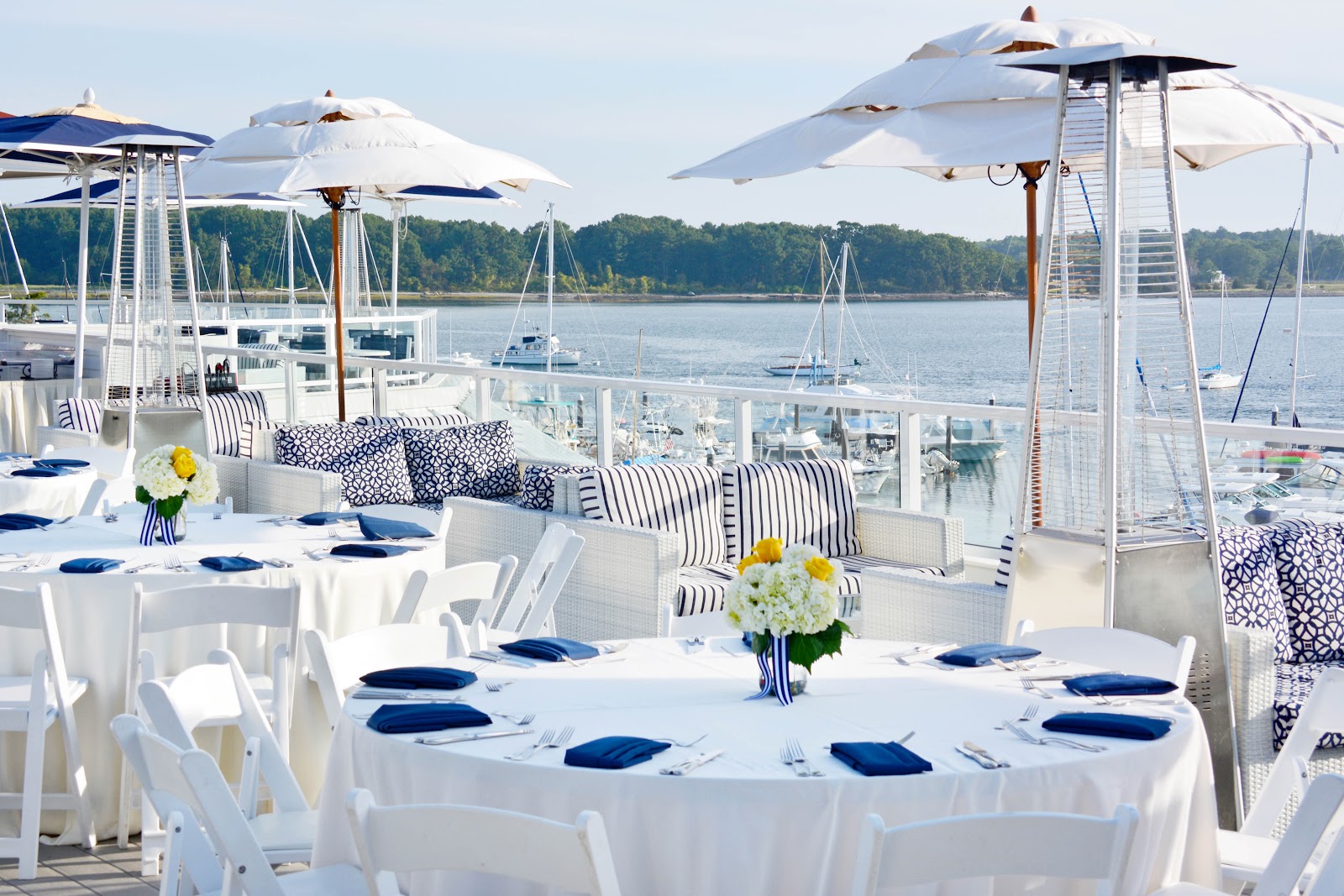
Ballrooms and function rooms take the standard treatment: warm low ambient, fixtures as hot points, a room that absorbs. Gel warm, balance for the room, light the people, let the ceiling go.
Two kinds of water
The open Atlantic and the tidal estuary behave completely differently, and using them as though they were the same body of water is the commonest error on this coast.
The ocean side faces broadly east, which means the sun rises out of the water and sets behind the land. The sun-over-water frame belongs to dawn, and at this latitude in summer dawn is before half past five — which makes it a serious proposition rather than a casual one. What the ocean side gives in the evening is afterglow: a very large, soft, slightly cool source with no direction, which is shadowless and forgiving and much better for groups than it is for a dramatic couple portrait.
The water here is cold. The Gulf of Maine is one of the colder stretches of the western Atlantic, and the practical photographic consequence is fog: when warm humid air moves over cold water, it condenses, and this coast produces genuine sea fog with some regularity between late spring and midsummer.
Sea fog is not a spoiled day. It is a very large diffuser that removes every hard shadow, compresses the whole scene into a narrow tonal range, and makes a white building and a white dress read as delicate rather than blown. It also removes the horizon entirely, which turns any seaward frame into a subject against nothing — an effect worth using deliberately once and not five times.
The estuary side is the more useful water for a photographer and it is governed by the tide. The tidal range in this part of the Gulf of Maine is substantial — several metres on a spring tide, far more than anywhere on the Florida or Gulf coasts — and the Piscataqua is known for exceptionally strong currents because a large tidal volume moves through a narrow mouth.
The photographic consequences are concrete. At high water the estuary is a broad sheet that comes up to the built edge, reflects the sky, and fills faces from below. At low water it is mudflat, weed and exposed rock, with the water withdrawn some distance — which is a completely different picture and, for many frames, a worse one.
That means the tide is a schedulable variable and it should be scheduled. Checking the day’s tide before planning the waterfront portion of a wedding is a five-minute job that decides what the pictures look like, and it is the single most useful piece of preparation available at this venue.
The strong current has a visual signature too: moving water in a narrow channel carries visible boils, seams and slicks, which under low light read as texture and structure rather than as a flat surface. A longer exposure turns it to smoothness; a fast one keeps the structure. Both are legitimate; choosing is the point.
The granite is the last material to note, and in New Hampshire it is everywhere — as outcrop, as seawall, as the stone of steps and terraces. It is coarse-grained pale grey with visible crystals, which makes it a high-frequency texture that is spectacular under raking light and flat under overcast, and a low-saturation background that treats skin and a white dress kindly. On a coast of blue water, green marsh and white paint, one grey field is worth locating.
- Depth back from the porch edge sets the ratio
- Porches on more than one elevation give a choice of direction at any hour
- White clapboard fools a meter by about a stop — compensate on skin
- Check the tide: several metres of range changes the estuary completely
- Sea fog is a diffuser, not a spoiled day — use it once, deliberately
The Gulf of Maine year
A four-season coast, and the seasons here are governed more by the sea than by the calendar.
Winter is cold, the light is very low — a December noon sun at about twenty-three degrees — and the whole short day rakes rather than floods. The coast is at its starkest: bare trees, grey water, a white building against a grey sky, and snow when it comes. Snow on this coast is less reliable than in the mountains, but when it is there it is the best natural fill available, lifting shadows to within a stop and fooling a meter by about two.
The costs are the eight-and-three-quarter-hour day, the cold, and glass that fogs going from outside into a heated interior — the reverse of the Florida problem and solved the same way, by acclimatising in a bag and treating the outdoors as home base.
Spring is late on a cold coast. The sea moderates the air, which means the shoreline warms weeks behind the inland valleys: leaf-out here runs into May, and April is bare, brown and flat. It is also the start of the sea fog season, because the air begins to warm while the water does not.
Late May and June bring the new foliage — a pale transmissive green that backlights well — and the fog at its most frequent. If a couple would rather have a clear horizon than a delicate one, this is the window to avoid.
Summer is the season the building was designed for and the weather is at its best. Days are long, over fifteen hours at the solstice, and civil twilight runs around thirty-three minutes, which gives an unhurried dusk with time to work in it. The salt marsh behind the barrier is at its greenest, the estuary is warm enough to be busy, and the light at the ends of the day is excellent.
The costs are the middle of the day — a seventy-degree sun on open ground and white paint is the hardest light of the year here — and humidity, which softens the distance.
Early autumn is the strongest season on this coast. September brings drier, clearer air than August, the fog season has passed, the sea is at its warmest of the year so the light over it is stable, and the crowds thin. Mid-October brings the colour, which on the seacoast is two or three weeks behind the White Mountains because the timing runs downhill and seaward — the high country turns in late September and the coast in the middle of October.
The coastal palette is different too: less sugar maple than in the mountains, more oak and more marsh grass, which means bronzes, russets and golds rather than the mountain reds. Against grey granite and white paint that is a quieter and arguably more suitable autumn than the mountains’ version.
November strips it back to structure. The trees are bare, the marsh goes tawny, the light is very low all day, and the coast has an austerity that photographs extremely well and that almost nobody books.
Two practical notes for any season. Salt aerosol on an exposed coast settles on front elements within minutes, not hours — a cloth and a habit. And onshore wind here is close to constant, which makes a lightstand on open ground a liability and every source a handheld one.
More frames from Wentworth by the Sea
Wentworth by the Sea wedding photography: common questions
What is the building's logic?
It was built for people who came to the coast to be cool: wide porches, cross ventilation and tall windows in numbers.
Where is the best portrait light?
Two or three metres back under a porch roof, against the wall. With porches on more than one elevation, you also get a choice of direction at any hour.
Why does my meter read wrong here?
White clapboard reflects a great deal, so a frame containing much of it underexposes — often by a full stop. Compensate and check on skin.
Does the tide matter?
Very much. The range here is several metres, so the estuary is a reflecting sheet at high water and mudflat at low water. Check the day’s tide before planning.
What about sea fog?
It is common between late spring and midsummer because warm air meets cold water. Treat it as an enormous diffuser, use it once deliberately, and know it removes the horizon.
When is the coast at its best?
September, for dry clear air after the fog season, and mid-October for the coastal colour — bronzes and golds rather than the mountains’ reds.
More New Hampshire venue guides
We are writing a photographer’s guide to every venue we would happily shoot in New Hampshire. Here are three more, plus the full index:
- Wildcat Mountain, Pinkham Notch: One Frame and How It Is Made
- 3S Artspace: Four Ways Out of the White-Box Problem
- The AC Hotel Portsmouth: One Decision About Which Way You Face
Planning a wedding at Wentworth by the Sea?
Porches, granite and a tide worth planning around. Tell us your date.