 The Sheraton Portsmouth: What a Conventional Hotel Actually Buys You
Mountain View Grand Resort, Whitefield: How the Light Moves
A hilltop with no blocked horizon, which is rarer in these mountains than it sounds.
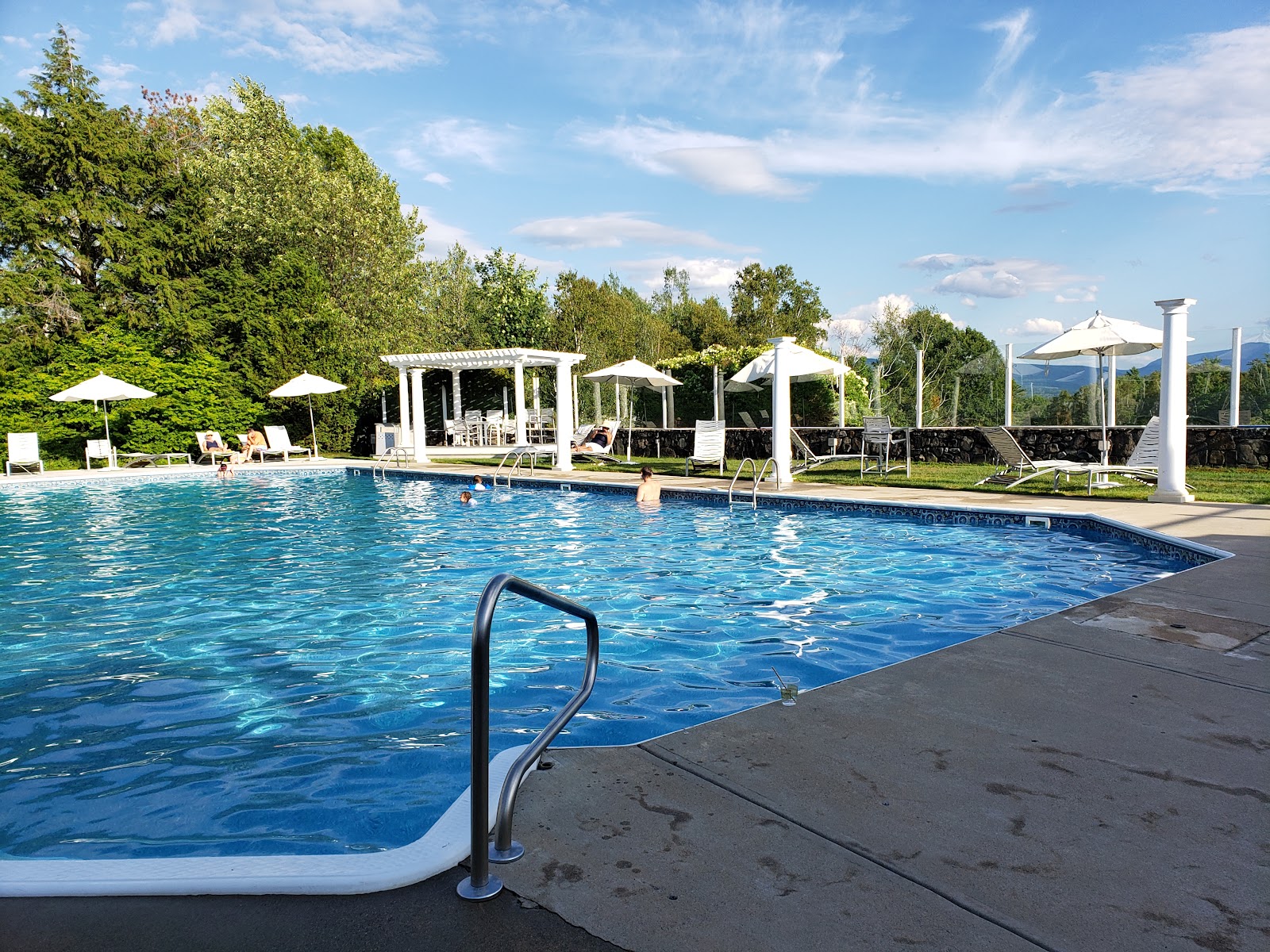
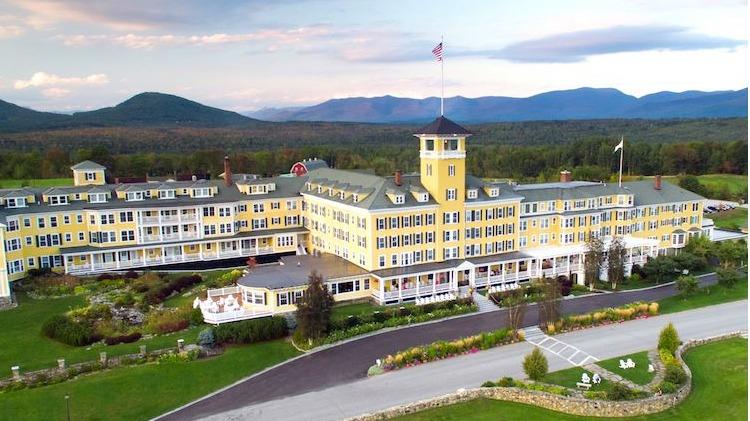
The defining fact about this hotel is not the building. It is that it stands on an open hilltop with the ground falling away in every direction.
In the White Mountains that is unusual. Most venues in this region sit in valleys or notches, which means high ground on one or more sides, which means the first and last hours of direct sun are taken by a ridge before they reach the site. A hotel on a hilltop has no such ridge. The sun rises into it and sets out of it, and the full length of the day — dawn to the end of civil twilight — is actually available.
For a photographer that changes the plan completely. At a notch venue the schedule is built around when the light can get in; here it is built around where to be when it arrives, because it arrives everywhere.
The second consequence is the horizon. Standing on an eminence with the Presidential Range to the south and open country in the other directions gives something no valley venue can: a genuine distant horizon in more than one direction, which means a wide frame can be composed toward the mountains, away from them, or along the light, as the hour requires.
The third consequence is weather, and it cuts both ways. An exposed hilltop sees the weather coming, which is a photographic gift — approaching cloud, a squall on the far side of the valley, shafts of light moving across country — and it is also fully exposed to it. Wind on a hilltop in northern New Hampshire is the normal condition rather than an event.
Whitefield sits at about forty-four and a third degrees north. The June noon sun reaches around sixty-nine degrees, the December noon sun about twenty-two, days run from under nine hours to over fifteen, and civil twilight is thirty-five minutes or more — a long generous dusk that the southern half of this guide does not get.
We have not photographed a wedding at this resort. Which rooms, verandas and grounds are included, whether the wider land is accessible and what the permitted hours are, are questions for their team.
Mountain View Grand Resort at a glance
| Where | A grand hotel on an open hilltop at Whitefield, northern New Hampshire |
| Why it matters | No blocked horizon — the full length of the day is actually available |
| The horizon | The Presidential Range to the south, open country elsewhere |
| The cost | Full exposure: wind on the hilltop is the normal condition |
| Ask first | Included rooms and grounds, access to the wider land, hours |
Dawn to midday
First light on a hilltop is the site’s rarest asset and it is worth getting up for once. The sun comes out of the eastern horizon and strikes the building and the open ground simultaneously, with no ridge to delay it, and at this latitude in summer that happens before half past five.
What that gives is a low, warm, strongly directional light onto a building that is otherwise seen in flat or overhead light all day, and a landscape in which the valleys below are frequently full of mist while the hilltop is clear. Valley fog under a hilltop at dawn is the single most spectacular condition this site produces, and it happens most often on clear calm nights in late summer and autumn, when cold air sinks into the low ground overnight.
That combination — a lit building on a clear hilltop above a sea of valley fog, with mountains beyond it — is the reason a photographer should take a hilltop venue seriously.
Mid-morning is the best portrait window of the day and the reason is the angle. With the sun between twenty and forty degrees of elevation, the open ground is lit directionally rather than from overhead, faces have modelling rather than shadowed sockets, and the shadows on the grass are long enough to give the ground texture. A group arranged on open lawn with the sun behind the camera at this hour needs nothing added.
The verandas take over as the sun climbs. A grand hotel of this type has a deep roofed veranda, and depth back from its open edge is the only lighting control it offers and a complete one: at the edge the light is flat and frontal, a metre back it gains direction, and two or three metres back the ratio is dramatic and the sunlit ground beyond falls away four or five stops.
That deep position is the best unassisted portrait on the property and it is available all day, including the hours when open ground is unusable.
Midday on an exposed hilltop in summer is the hardest light of the year here. At sixty-nine degrees the sun puts eyes in shadow and foreheads in light, and there is very little natural cover — an open hilltop has few large trees by definition. The answers are all architectural: the veranda, the porte-cochère, the building’s shaded elevations, and indoors.
One thing works in the site’s favour at midday. A hilltop has a great deal of sky, and the sky is a vast soft source: on any day with high thin cloud or broken overcast, the open ground here is softer than a comparable site in a valley, because more of the hemisphere is visible from any point on it. Fully clear, it is harsh. Lightly veiled, it is excellent.
Afternoon to dark, and inside
Early afternoon is the weakest window and the right time to be inside, and a hotel of this period rewards it.
Expect high ceilings, deep-set tall windows, timber and plaster, and an ambient well below what the eye estimates. The windows are effectively the only light and the fall-off is the asset: the drop from a face at a window to the wall two metres behind is often three stops or more, which does the separation for free. Meter on skin and let the room go dark.
A subject at forty-five degrees to a tall window, at a distance chosen to set the ratio, is the whole interior plan. In a corner room with windows on two walls, one becomes key and the other fill — a complete lighting setup made of architecture.
Corridors and stair halls are, as in every building of this type, better than they look. A long hallway with a window at one end is a directional source with several stops of fall-off along its length, and a subject placed three or four metres in gets studio separation from a piece of the building.
Ballrooms and function rooms need the standard approach: a warm low ambient, fixtures reading as hot points, and a room that absorbs more than it bounces. Gel the flash warm, balance for the room, light the people and let the ceiling volume go dark rather than trying to fill a space that size.
Mid-afternoon the light comes back round and the western side of the building starts to receive it. The first stage is harsh — a lowish sun on a large façade gives very high contrast — and the useful response is to separate the jobs: photograph the architecture while it rakes, and photograph people in the veranda or in the building’s own shaded returns.
The last ninety minutes are the property’s best and a hilltop gets the whole of them. The sun drops toward an unobstructed horizon, which means the low light keeps coming right down to the end rather than being cut off by a ridge — and the open ground, which was the site’s liability at noon, becomes its greatest asset because a low sun rakes across a grassy hilltop rather than falling onto it.
Three frames belong to this window. The couple on open ground with the sun behind them, exposed for the sky and the landscape and lifted by a close warm-gelled source, because metering on faces gives a white sky and a colourless view. The couple with the sun behind the camera and the Presidential Range in the distance, which needs nothing. And the building itself, lit frontally and low, with the whole hilltop in warm light.
The gel is not optional. Low sun at this latitude is strongly warm and the open shade is lit by a blue sky, so a daylight-balanced flash puts cold faces into a gold landscape — the most recognisable error in outdoor work.
Then dusk, and at this latitude it is generous. Civil twilight runs thirty-five minutes or more, and on an open hilltop the whole of it is usable because there is no ridge cutting the sky off. The afterglow on a western horizon here lasts long enough for a separate, unhurried, quiet session — which is a luxury that no venue in the southern half of this guide can offer.
One practical matter recurs at every hour: the wind. An exposed hilltop in northern New Hampshire is windy as a baseline, which makes a lightstand a liability, means every source is handheld or weighted, and means hair, veils and anything loose behave unpredictably. It also means the air is clear, because wind removes haze — which is why the distant mountains hold detail here more reliably than at a sheltered valley venue.
- Dawn is the rarest thing here — valley fog under a clear hilltop
- Mid-morning open ground needs nothing added
- Veranda depth sets the ratio and works all day
- A hilltop gets the whole of the last ninety minutes — no ridge cuts it off
- Handhold every light; wind is the baseline condition
The northern New Hampshire year
A genuinely four-season site, and at this latitude the seasons are sharply separated.
Winter is long and snowy and photographically the easiest season. Snow is the best natural fill available — it lifts the shadow under a brow to within a stop of the highlight, and against the dark spruce and fir of the surrounding country it gives the widest brightness range in this guide. Expose for the snow and let the conifer go black, opening up deliberately by around two stops relative to the meter.
The December noon sun at twenty-two degrees means the whole short day rakes rather than floods, which removes the high-sun problem entirely and puts the best light in the middle of the afternoon rather than after eight in the evening. On an open hilltop with unobstructed horizons in every direction, a clear winter afternoon is as good as light gets anywhere in this guide.
The costs are cold, a day under nine hours, batteries draining fast, and glass that fogs on the way from outside into a heated lobby — the reverse of the Florida problem, solved by acclimatising in a bag on the way in.
Spring is the weak point and it should be said plainly. Late March and April in northern New Hampshire is mud season: rotting snow, soft ground, bare hardwood and flat light. There is no version of this landscape that photographs well in the first half of April.
Late May and June bring leaf-out, and new foliage on sugar maple, beech and birch is a pale transmissive green that backlights beautifully for about three weeks. The constraint is black flies, which in northern New Hampshire run from mid-May into mid-June and are a genuine consideration for an outdoor ceremony rather than a nuisance.
Summer is the resort’s traditional season. Days are over fifteen hours long, the twilight is thirty-five minutes or more, and the countryside is at its fullest. The trade is the middle of the day and the summer haze, which softens the distance and takes some of the definition out of the mountain horizon — the one thing a hilltop exists to show.
Late September into mid-October is the reason to come. Northern New Hampshire’s hardwood forest is dominated by sugar maple, which produces the reds and oranges that distinguish New England colour from the yellows of the aspen west, and the timing runs downhill and southward: the high country and the far north turn from around the third week of September, the central mountains in the first week of October, the valleys and the seacoast a week or two later.
A hilltop is the ideal vantage for that, because colour reads better from above and at distance than from within it. From here the autumn is a landscape rather than a canopy: blocks of red and orange hardwood, dark bands of spruce, and bare or snow-dusted summits beyond. The air in autumn is also the clearest of the year, which is exactly when the distant horizon matters most.
Late October and November strip everything to structure. Bare hardwood, black conifer, brown grass and a very low sun all day. It photographs austerely and extremely well, the valley fog at dawn is at its most frequent, and almost nobody books it.
More frames from Mountain View Grand Resort
Mountain View Grand Resort wedding photography: common questions
What makes a hilltop different here?
No blocked horizon. Most White Mountain venues sit in valleys where a ridge takes the first and last hours; here the sun rises into the site and sets out of it.
What is the most spectacular condition?
Valley fog at dawn — cold air sinking into the low ground overnight leaves the hilltop clear above a sea of white, with mountains beyond.
When is the best portrait light?
Mid-morning, with the sun between twenty and forty degrees, and again in the last ninety minutes. A hilltop gets the whole of the latter.
How do I expose a wide landscape frame?
For the sky and the landscape, and lift the faces with a close warm-gelled source. Metering on faces gives a white sky and a colourless view.
What is the constant practical problem?
Wind. An exposed hilltop here is windy as a baseline, so every light is handheld or weighted. It also keeps the air clear, which is why the distance holds detail.
When is the best time of year?
The first week of October for colour seen as a landscape from above, in the clearest air of the year. February is the easiest light; early April is the window to avoid.
More New Hampshire venue guides
We are writing a photographer’s guide to every venue we would happily shoot in New Hampshire. Here are three more, plus the full index:
- Omni Mount Washington Resort, Bretton Woods: The Venue’s Own Logic
- Owl’s Nest Resort, Thornton: Field Notes, Problem and Solution
- Snowvillage Inn, Snowville: The One Decision That Governs Everything
Planning a wedding at Mountain View Grand Resort?
A hilltop gets the whole day. Tell us your date and we will use all of it.