 The Redd on Salmon Street: Building the Shot List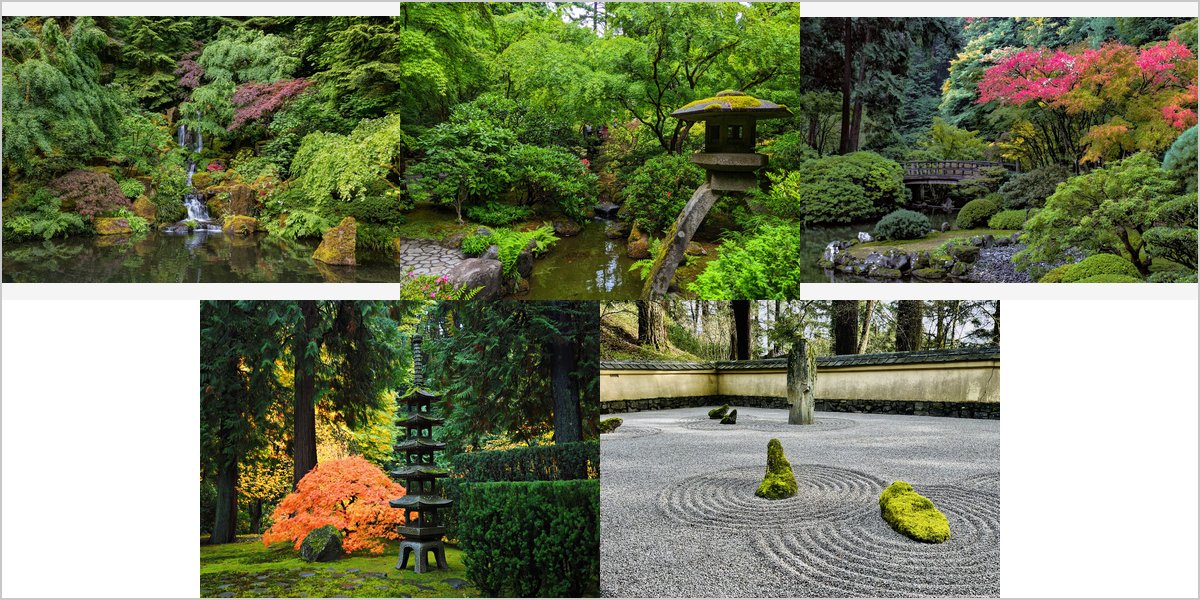
April 12, 2026
Photographing a Wedding at the Portland Japanese Garden
The short version: this is one of the most photogenic acres in Oregon, and it loses its light two hours earlier than couples expect. Plan the timeline around the slope, not the sunset.
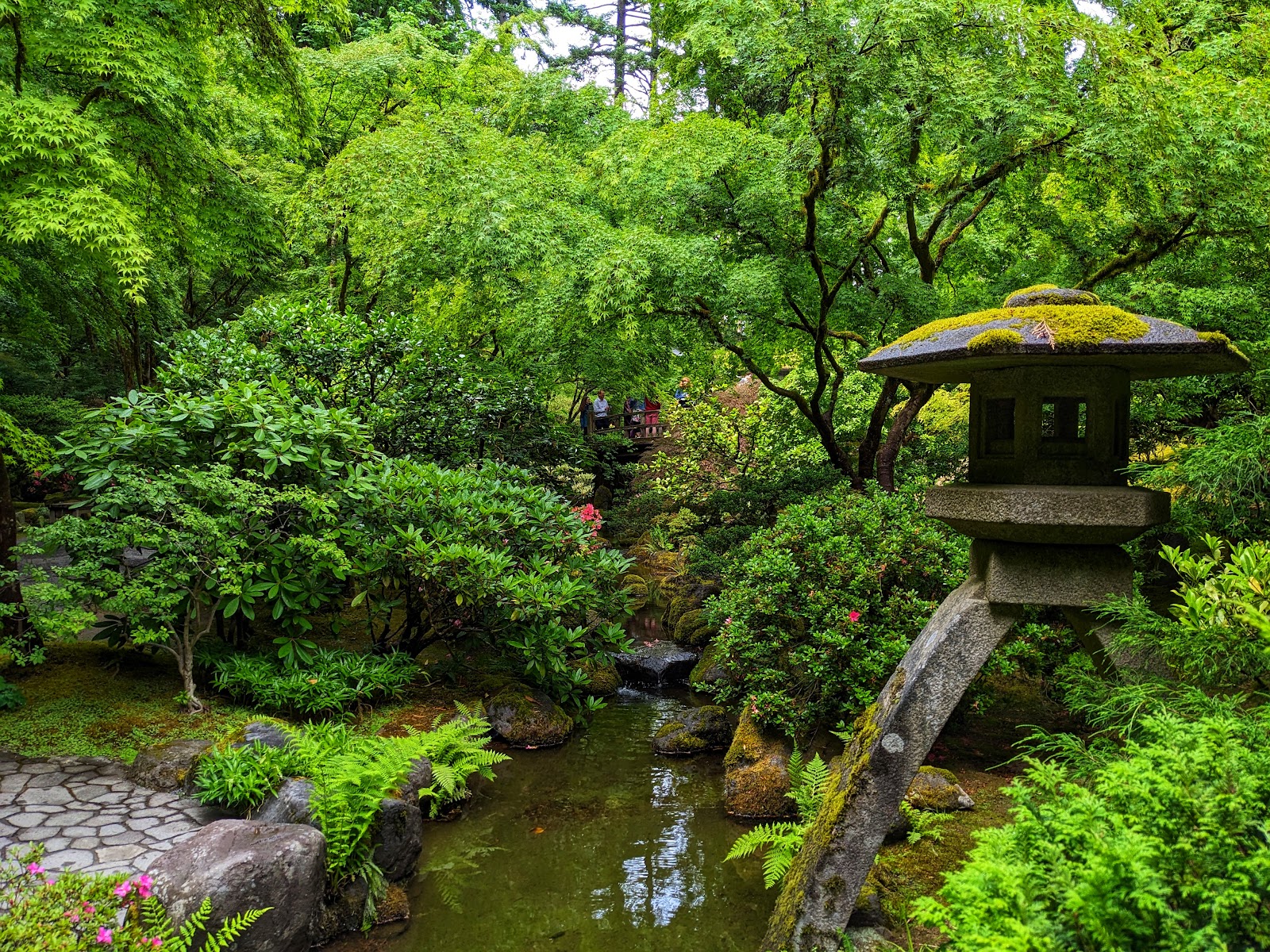
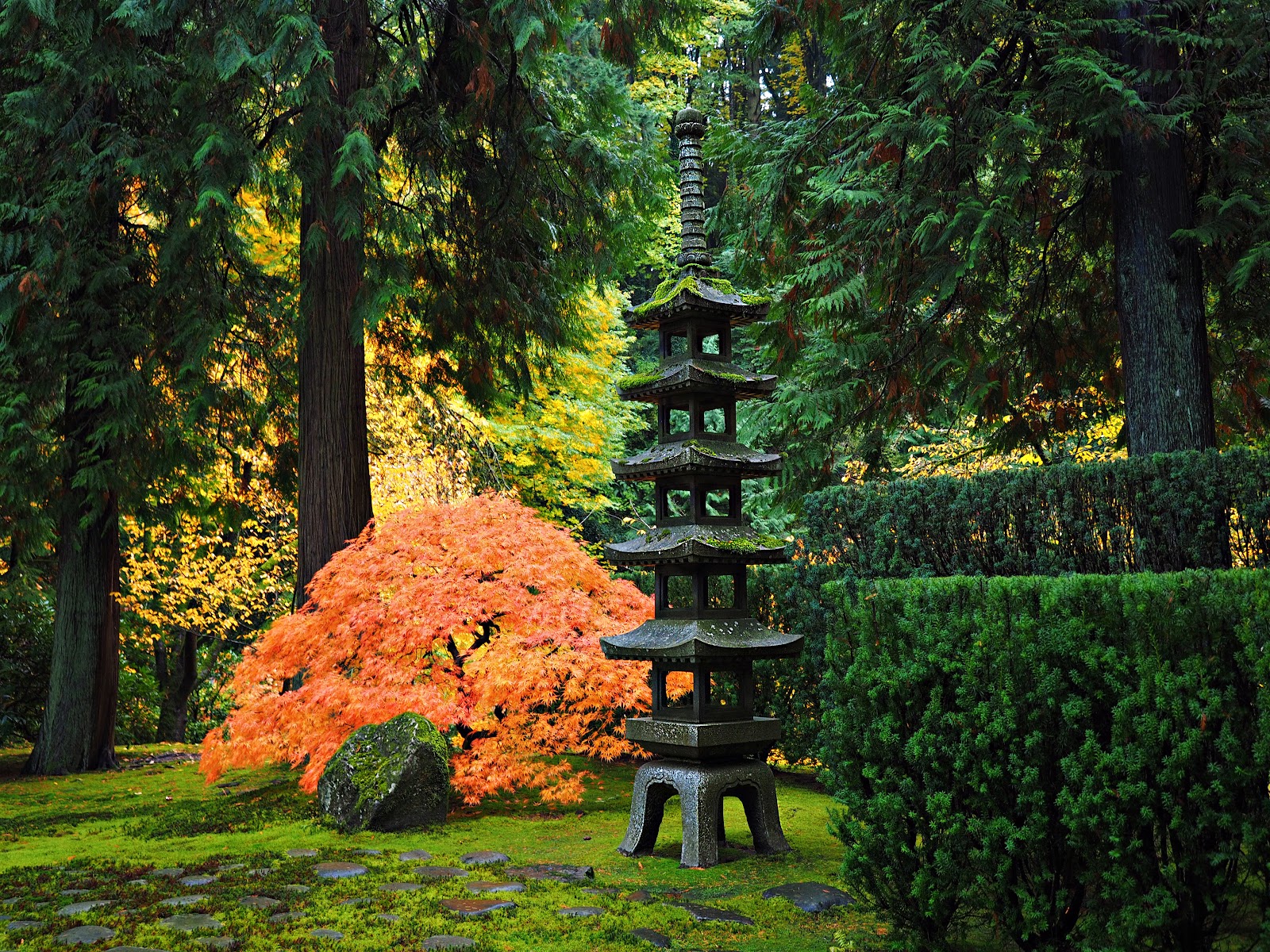
The Portland Japanese Garden sits on an east-facing hillside in Washington Park, and that single geographic fact shapes every photograph anyone has ever taken there. Douglas firs run the ridge above it. Japanese maples fill in below. By the time the sun is low enough to be flattering anywhere else in Portland, this garden is already in full shade — and couples who build a timeline around the published sunset time end up shooting their portraits in near-darkness.
None of which is a problem, as long as you know it in advance. Deep, even, windless shade under a maple canopy is a gift; it is the light portrait painters spent centuries trying to reproduce. What follows is how we would read this garden hour by hour, which of its eight spaces actually photograph well, and where we would put the twenty minutes that matter most.
A note on honesty: we have not photographed a wedding inside this garden. What we know is the craft — how canopy light behaves, how moss and wet stone render, what a 12-acre public garden does to a timeline — and that transfers. Everything below is either verifiable fact about the place or our own working method. Anything venue-specific, confirm directly with their events team, because a garden of this sensitivity changes its rules more often than most.
Portland Japanese Garden at a glance
| Where | Washington Park, Portland, Oregon |
| Character | Twelve acres, eight distinct garden styles, opened to the public in 1967 |
| Light | Deep open shade under maple and conifer canopy; east-facing slope loses direct sun early |
| Best months to photograph | Late March–April for cherry blossom; mid-to-late October for maple colour |
| Hardest thing about it | Dappled sun through the canopy, and how early the hillside goes dark |
| Our lens of choice here | A fast 35mm and an 85mm — the paths are too narrow for anything longer |
How the light actually moves through this garden
Think of the garden as a set of rooms with a shared ceiling. The ceiling is maple and fir, and it is close to solid in high summer. Direct sun only reaches the ground in the open spaces — the Flat Garden, the Sand and Stone Garden, the upper terraces — and even there it arrives filtered.
Between roughly 10am and 2pm you get the worst of it: sun high enough to punch through gaps in the canopy and throw hard white patches across a white dress. Dappled light is the single hardest thing to photograph at any wooded venue, because the contrast range inside one frame exceeds what any sensor can hold. Expose for the face and the highlights clip; expose for the highlights and the face goes muddy. There is no fix in editing, only avoidance.
From about 2pm onward the canopy stops being a problem and becomes an asset. The patches soften, then disappear, and the whole garden settles into flat, cool, directionless shade — the light that makes skin look like skin. This is the window we would fight to protect.
Then it ends abruptly. Because the slope faces east and the West Hills rise behind it, the garden goes into shadow well before official sunset. In October that can mean usable light gone by 4:30pm even though the almanac says 6:20pm. Build the timeline off the terrain, not the table.
The green cast nobody warns couples about
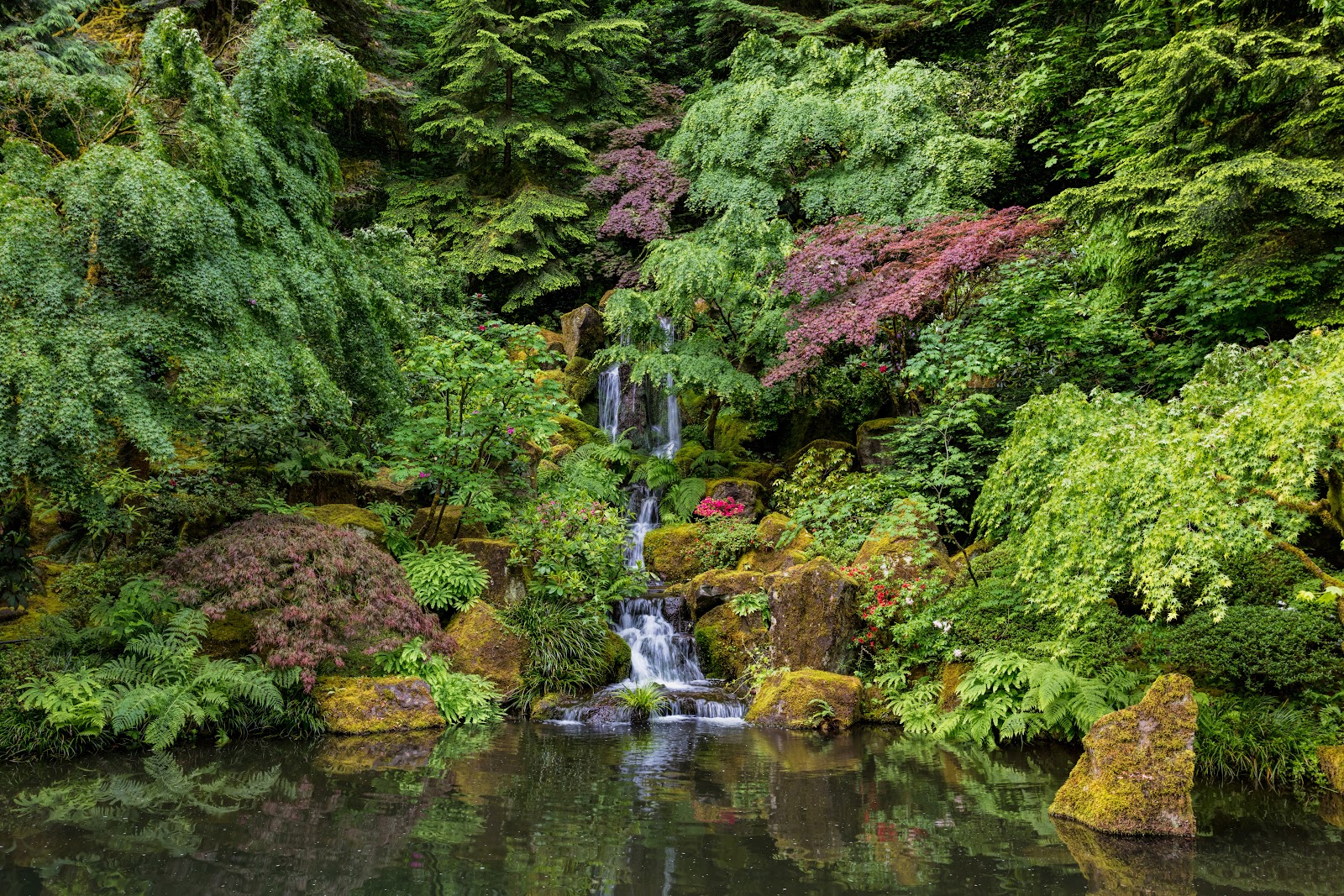
Twelve acres of foliage acts as a giant green reflector. Every surface bouncing light onto your face in this garden is a leaf or a bed of moss, and the result is a colour cast that reads as sickly on skin if it is left alone. It is the most common reason garden wedding photographs look subtly wrong without the viewer being able to say why.
The fix is boring and it is done on the day, not afterwards: set a custom white balance from a grey card in the actual spot you are shooting, and shoot raw so there is room to nudge the tint toward magenta afterwards. A small amount of warm fill — a reflector, or a bare speedlight dialled far down and gelled — separates skin from the background and puts a catchlight back in the eyes. Not to light the scene. Just to make the person the warmest thing in the frame.
There is a related trap in post-processing. Wet moss and Japanese maple render at extraordinary saturation, and the instinct is to lean into it. Resist. Pull the greens down slightly and desaturate the yellows, or the couple ends up as the least vivid element in their own photograph.
A timeline built for an east-facing hillside
This is the schedule we would propose, working backwards from the moment the slope loses its light rather than from the ceremony. Shift everything earlier than instinct suggests.
The logic: everything that needs light happens before the shade arrives, and everything that needs atmosphere happens after. Most couples try it the other way round and lose their portraits.
- Getting ready, off site. There is no bridal suite in a public garden. Find a hotel room downtown with a big north-facing window — you will get better preparation photographs there than anywhere on the grounds.
- Arrive with 45 minutes in hand. Washington Park parking fills, the approach from the entrance to the garden proper is a genuine uphill walk, and a dress plus gravel plus incline is a slow combination. Factor it in or it eats the portrait window.
- Couple’s portraits first, before the ceremony. This is the change that saves the day here. A first look scheduled 90 minutes before the ceremony puts your portraits in the good shade rather than the dead shade.
- Ceremony in the open-sky spaces. The garden’s open areas hold light longest. Anything under heavy canopy after mid-afternoon is a high-ISO proposition.
- Family groups immediately after, not later. Twenty minutes, one location, a written list. Group photographs in falling light are the single biggest cause of timeline collapse.
- Ten minutes back out at blue hour. After the sun is gone the lanterns and the wet stone go cobalt and the whole garden turns cinematic. It is the best frame of the day and it takes ten minutes.
Where the photographs are
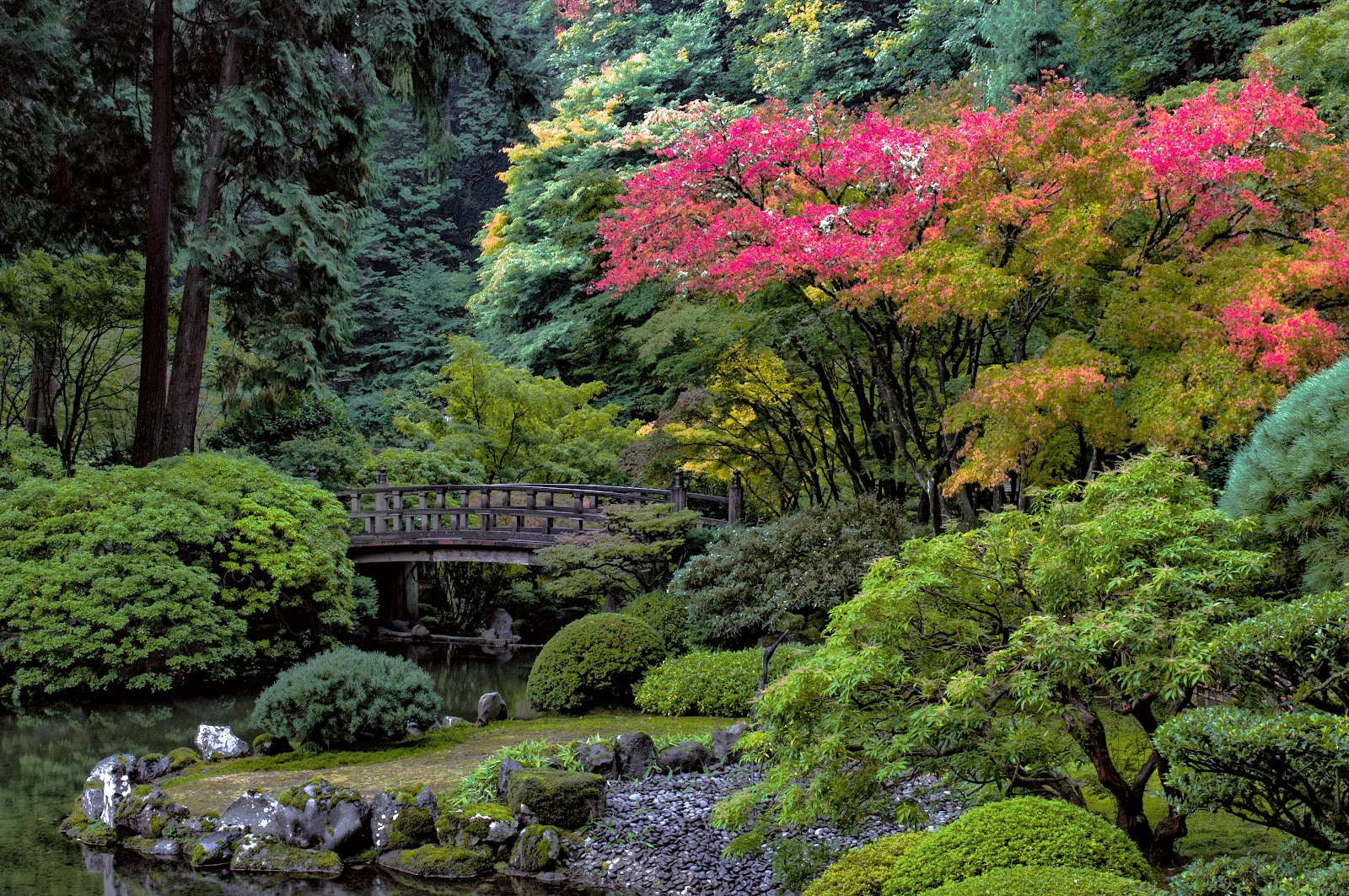
Eight garden styles sounds like eight backdrops. In practice a handful of spaces do most of the work, and a wedding gallery that uses four of them well beats one that uses all eight thinly.
One practical warning that applies to the whole site: the paths are narrow, the moss is protected, and stepping off the gravel to get an angle is usually not permitted. That constraint is real and it shapes the lens choice — you will be working at 35mm and 85mm, standing where you are allowed to stand, rather than roaming.
The water features
Moving water and a dark surround is the most reliable frame in any Japanese garden. Shoot it at a wide aperture from a low position so the falling water reads as texture behind the couple rather than a bright distraction. Keep the shutter above 1/250 or the water turns to cotton wool.
The bridges and gates
Architectural elements give you something the canopy cannot: a hard line to compose against. A gate frames a couple naturally and solves the biggest problem with garden photography, which is that foliage has no edges. These are also the most photographed spots in the garden, so expect to wait for a gap in visitors.
The Sand and Stone Garden
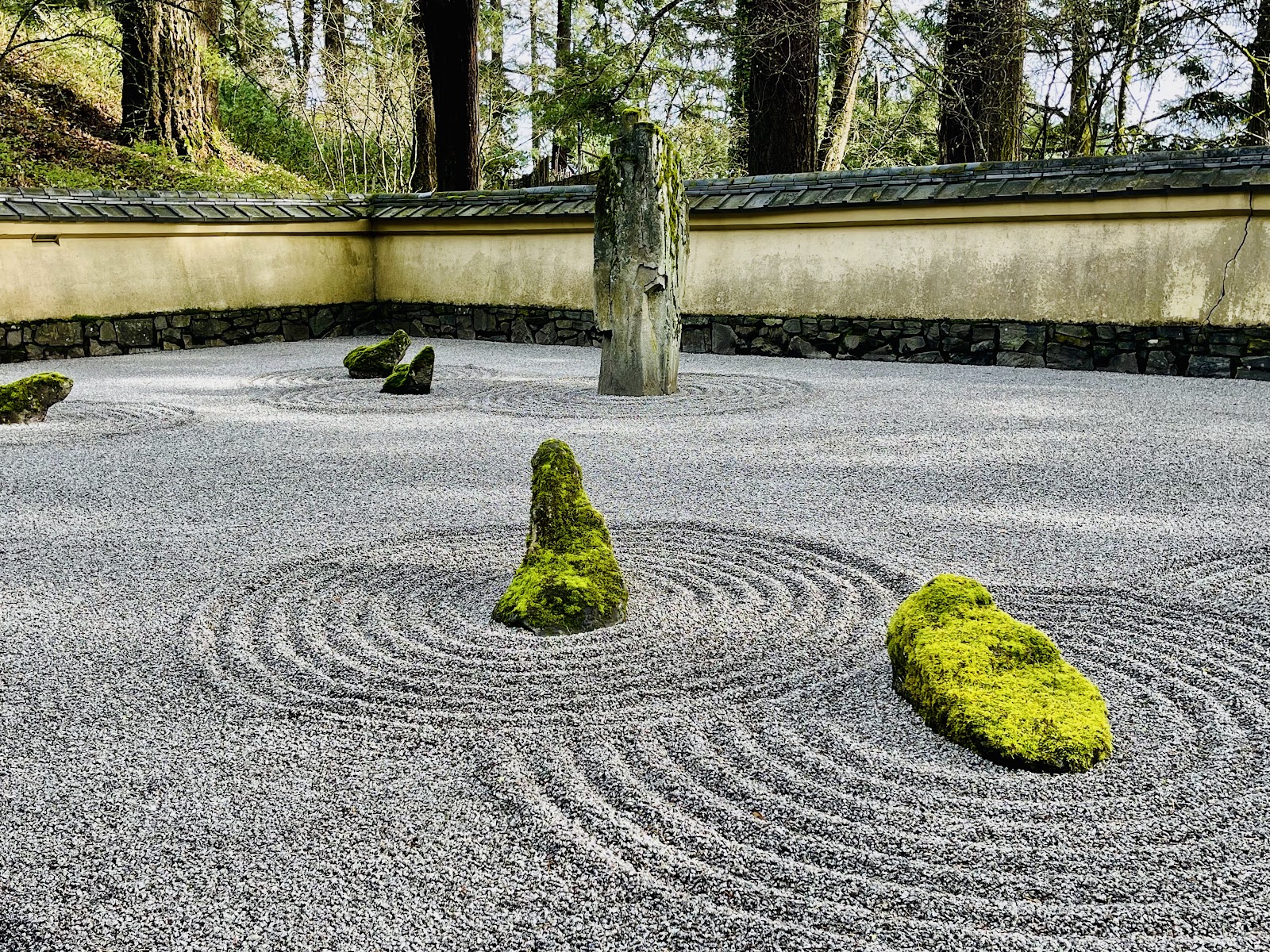
Raked gravel is graphic, minimal and completely unlike anything else on site — it is the frame that makes a gallery feel varied. It is also the brightest surface in the garden, so meter carefully; the highlights will run away from you before the skin does.
The Cultural Village
The 2017 expansion designed by Kengo Kuma added clean contemporary architecture — deep eaves, timber, generous verandas. Covered outdoor space is worth a great deal in Portland, and architectural shade is the most flattering light on the property: soft, directional, and free of the green cast you get under leaves.
Rain is not the contingency here. It is the forecast.
Portland gets rain on roughly 155 days a year, and the months couples like for weddings are bracketed by the months that are reliably wet. A rain plan at this venue is not a pessimistic add-on; it is the main plan, with sun as the pleasant surprise.
The good news is that this garden is arguably better in rain than out of it. Moss saturates, stone darkens, the air goes soft, the crowds thin, and everything that makes a Japanese garden beautiful is amplified by water. Clear umbrellas are the one prop worth insisting on — they keep the light on faces instead of dyeing it whatever colour the fabric is.
What actually needs managing is equipment and footwear. Wet gravel and a long dress need a plan. Two bodies so lenses are not being swapped in the rain, a cloth in every pocket, and the acceptance that a front element will fog when you move between cold air and a warm interior — and that there is nothing to do but wait it out.
What works in your favour
- Genuinely world-class grounds — an unusually high ratio of good frames to walking distance
- Flat canopy shade is forgiving light for skin and for guests who dislike being photographed
- Two distinct peak seasons: cherry blossom in spring, maple colour in late October
- The Cultural Village gives covered, architecturally clean shade — rare and valuable in this climate
- Rain improves rather than damages the look of the place
What to plan around
- Loses usable light hours earlier than the published sunset because of the east-facing slope
- Dappled midday sun through the canopy is unphotographable — the timeline has to avoid it
- A working public garden: visitors in frame, narrow paths, and restrictions on where you may stand
- Strong green colour cast on skin that must be handled on the day
- Tripods, light stands and stepping off paths are commonly restricted at gardens of this sensitivity — verify before planning any lit setup
- It is a garden, not a reception venue; assume the celebration happens elsewhere
Portland Japanese Garden wedding photography: common questions
What time of day photographs best at the Portland Japanese Garden?
Mid-afternoon, roughly 2pm until the hillside falls into shadow. Earlier than that and high sun punches hard dappled patches through the maple canopy, which no sensor can hold in one frame. Later and the east-facing slope has already lost its light — often two hours before the almanac sunset. Then come back out for ten minutes at blue hour, which is the best frame of the day.
Is the Portland Japanese Garden a dark venue to photograph in?
Yes, considerably darker than it looks to the eye. Between the conifer ridge above and the maple canopy below, most of the garden sits in deep open shade all day. Expect to work at higher ISO than the scene suggests, with fast primes rather than a slower zoom. The upside is that the shade is beautifully even.
When is the best season for wedding photographs there?
Late March into April for cherry blossom, and mid-to-late October for Japanese maple colour — the latter is the most dramatic the garden gets. Both are also the busiest periods, so a gallery shot then will involve more waiting for clear frames.
Do we need a rain plan?
Yes, and you should expect to use it. Portland averages around 155 rain days a year. The consolation is that this particular garden photographs better wet than dry: moss and stone saturate, the air softens and the crowds thin. Bring clear umbrellas so the light on faces stays neutral.
Can we bring lighting equipment and tripods?
Assume not until the venue tells you otherwise. Gardens with protected moss and narrow gravel paths commonly restrict stands, tripods and stepping off the path, and those rules change season to season. Plan for a natural-light approach with a small hand-held fill at most, and confirm the current policy with the events team before committing to anything lit.
More Portland, OR venue guides
We are writing a photographer’s guide to every venue we would happily shoot in Portland, OR. Here are three more, plus the full index:
- The Redd on Salmon Street: Building the Shot List
- Rose Test Garden Weddings: A Photographer Answers the Real Questions
- Sentinel Hotel: Reading the Light, Building the Timeline
All Portland, OR Wedding Venues →
Planning a wedding at Portland Japanese Garden?
If you are planning something at the Portland Japanese Garden — or anywhere in Washington Park where the light disappears early and the rules are tight — we would like to hear about it. Tell us the date and what you are picturing, and we will tell you honestly what the light will be doing and how we would build the day around it.