 The Portland Regency: A Season-by-Season Guide
The Portland Company, Portland: The Problem, and Four Ways Out of It
A works building gives you brick and nothing else. Four ways round.
The problem with a nineteenth-century works is that it was built to contain machinery, and nothing about it was designed to be looked at.
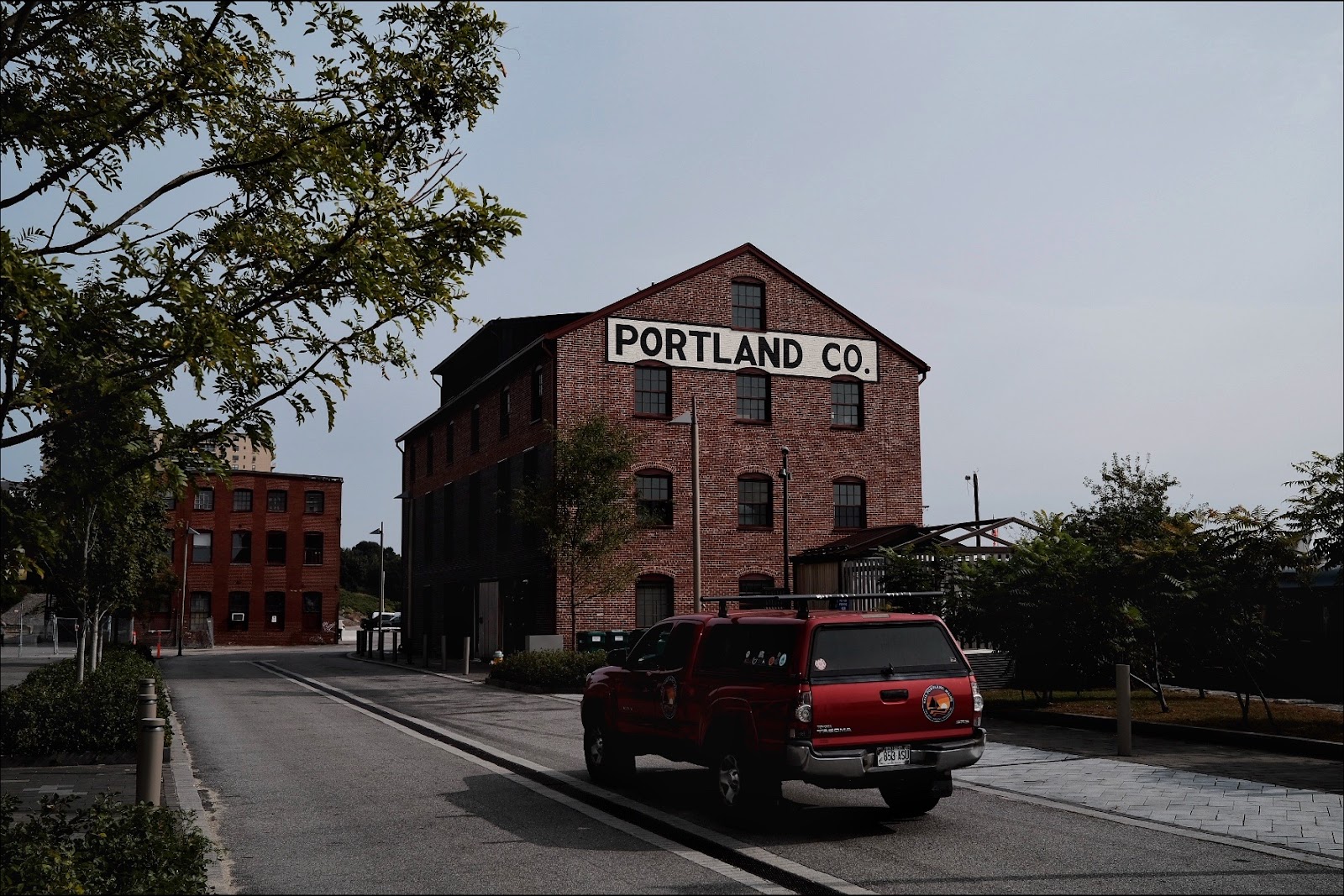
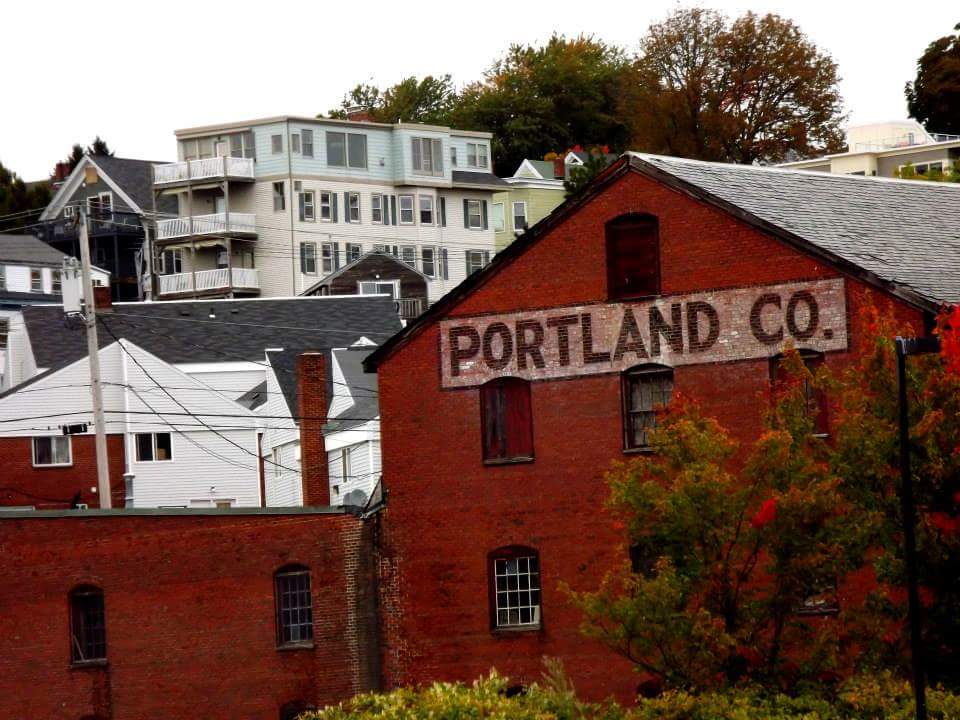
The Portland Company occupied a site on the eastern waterfront of Portland from the middle of the nineteenth century, building locomotives and marine engines — a substantial industrial complex of brick sheds and workshops on the shore, which has been redeveloped in recent years with parts of the historic fabric retained.
That produces four connected problems, and a photographer used to hotels or historic houses will meet all of them within an hour.
The first is that the interiors are dark. An industrial shed is a large volume with high-level glazing rather than domestic windows, and where the original openings survive they are frequently obscured, reduced or facing something. Light levels inside are low and the light that does arrive comes from a long way up.
The second is that brick absorbs. A brick interior reflects perhaps a quarter of the light falling on it, which is better than timber but well below plaster — and in an industrial building the brick is usually unpainted and often soot-darkened. So bouncing is inefficient and tinted, and light aimed at a brick wall comes back weak and warm.
The third is that there is no view. A works building on a waterfront faces the water with a wall, not a window, because the water was for shipping rather than for looking at. So the harbour outside is not visible from inside, which is the opposite of what a couple assumes when they hear the word waterfront.
And the fourth is that the surviving fabric is partial. A redeveloped industrial site keeps some buildings and some walls and replaces others, which means the frames will contain a mixture of nineteenth-century and contemporary construction, and at close range in flat light the difference shows.
None of that makes this a poor venue. Industrial brick on a working waterfront produces a distinctive, unmistakably local set, and the good frames come from four specific manoeuvres rather than from wandering with a camera.
The first is the brick itself, which is the best material available and which rewards a specific kind of light.
The second is the windows and doorways, because in a dark building an opening is a light source with a very fast falloff and that is a portrait condition rather than a problem.
The third is to stop fighting the darkness and light small, because a large dim volume is a black studio and separation comes free.
And the fourth is to go outside, to the water and the city, because that is where the view and the daylight are.
Each of those in detail, then Portland and the year — which on this coast means fog, a large tide and an early autumn.
The Portland Company at a glance
| Where | A nineteenth-century locomotive and marine engine works on the Portland waterfront |
| The problem | Dark interiors, brick that absorbs, no view from inside, and partial historic fabric |
| Four ways out | The brick, the openings, lighting small, and going outside to the water |
| The material | Unpainted industrial brick and iron — superb in raking light, flat in frontal |
| Ask first | Which buildings you have, whether they are glazed, and stand permissions |
Ways one and two: the brick, and the openings
The brick first, because it is the best thing about the place and it is routinely wasted.
Industrial brick is a superb photographic surface and the reason is texture. It is usually unpainted, often irregular, frequently repointed in patches and sometimes soot-darkened, which means a wall of it carries an enormous amount of small-scale variation — every joint, every chipped arris, every patch of different mortar.
All of that shows in raking light and none of it shows in frontal light. A source almost parallel to a brick wall throws each joint into its own shadow and the surface reads as a mass of individual units; the same wall lit straight on is a flat brown plane with a faint grid on it. So the single most useful instruction here is to light brick from the side, always, whether the source is the sun or something you brought.
Outdoors that means working in the first or last hours, when the sun is low enough to rake an elevation, and establishing on a scout which walls face which way. A brick elevation taking a low sun along its length is the best exterior frame on the property.
Indoors it means placing your own light at a shallow angle to the wall rather than aiming it at the subject and letting it spill. One light at forty-five degrees to a subject and nearly parallel to the wall behind them lights both correctly.
Brick is also the friendliest colour you can have behind somebody. It is warm, it holds its tone in shade rather than going blue the way stone and concrete do, and on a grey day — of which Portland has many — it still reads warm when everything else has gone flat. Two metres behind a subject at a moderate focal length, brick renders as a warm textured field that competes with nothing.
The ironwork is the brick’s companion and it deserves the same treatment. A works building has iron in it — columns, brackets, tie plates, rivets, window frames, rails — and rivets and castings are relief, which means they want raking light for exactly the same reason. A riveted column lit almost parallel is a row of small shadows; lit frontally it is a grey post.
Now the openings, which are the second manoeuvre and the answer to the darkness.
In a dark-walled building, any opening — a window, a doorway, a loading bay — is an intense and highly directional light source, because there is nothing inside reflecting light back to fill the shadow side. That gives a portrait condition of real quality for nothing: a subject standing a metre inside an opening is strongly modelled with a genuinely dark shadow side, and the dark interior behind them separates them completely with no aperture tricks required.
The falloff is the thing to respect. In a brick interior it can be a stop and a half per metre near an opening, which means positions are stepped out rather than estimated — a metre in is superb, three metres in is underlit and flat.
Industrial windows are better than domestic ones for two further reasons. They are frequently large and divided into small panes by steel or iron glazing bars, which means the source is broken into a grid and the highlight on a face carries a faint structure; and shooting toward one gives you that grid as a graphic background, with the subject as a dark shape against a bright pattern. That second frame needs no equipment at all.
A loading bay or large door is the same thing at greater scale: an enormous soft source in a wall that reflects nothing. If one exists and opens, it is the best light in the building.
One practical note about openings in a redeveloped building: ask which are original and which are new. A modern window in a historic brick wall behaves optically the same way and photographs differently — larger, clearer glass, no glazing bars, a different reveal depth — and in a frame meant to read as nineteenth-century it is a giveaway.
Ways three and four: light small, and go outside
The third manoeuvre is what makes the reception work and it starts with a question.
Ask whether lights on stands are permitted, where, and at what hours, and get it in writing. A redeveloped industrial building may have its own restrictions, and the answer changes the whole plan.
Assuming they are, do not try to lift the volume. An industrial interior has a high ceiling, often with exposed structure and services, and brick walls that return little — so there is no efficient bounce surface and raising the ambient by a stop across a shed would need more output than is practical.
Instead treat it as a black studio, which is what it is. One modifier, close to the subject and feathered, with a good depth of dark space behind them, and they separate completely because the background sits four or five stops down and records as almost nothing. That is separation for free, without a long lens or a wide aperture, and it takes about ninety seconds per position.
It also suits the material. A pool of warm light on two people with a dark brick interior falling away behind them, and the suggestion of an iron column at the edge of the light, is a more atmospheric and more appropriate photograph in an industrial building than an evenly lit room would be.
Warm the light you bring. If the ambient is filament or festoon — as it usually is in a converted industrial space — a neutral flash reads distinctly cold and looks inserted.
On colour generally: a converted building accumulates lighting, so choose the dominant source, balance for it, gel your own light to match, and let the rest fall. Do not average, because averaging is what makes industrial interiors read grey and dead. And filament bulbs in frame are a feature rather than a fault — let them clip and they read as warmth.
For the wide reception frames, work long and light the people rather than the space. At eighty-five or a hundred and thirty-five millimetres the structure and services compress and stop competing, and the darkness does the rest.
The fourth manoeuvre is to go outside, and on this site it is where the view and the daylight are.
The waterfront is the first thing out there and it is a working one, which is the point. Portland’s harbour is a commercial fishing and shipping port rather than a promenade, with piers, gear, boats, warehouses and the machinery of a port in use. A frame that includes that reads as Portland; one composed to exclude it could be anywhere.
The tide is the fact to check. This coast has a range of around three metres, among the larger on the eastern seaboard, and that changes a waterfront frame completely between high and low water — the height of a moored hull relative to a pier, how much weed-covered piling is exposed, and whether a shoreline is beach or is water. Tide tables are published and free, and low water is generally the more interesting because it exposes wet reflective flats and the full structure of the pilings.
The city is the second thing outside, and Portland’s downtown is unusually consistent because much of it burned in eighteen sixty-six and was rebuilt immediately in brick with cast-iron detail. That means the streets a short walk from an industrial works are in the same material world as the works itself — the same brick, the same period, the same light behaviour — so exterior frames made in the old centre sit naturally beside the interior ones.
There is gradient too, because the city sits on a peninsula with hills on it, and a subject standing uphill of the camera separates from their background by geometry alone with no depth of field required. Granite paving in the older streets is superb wet in raking light and grey lumps dry at midday.
Two practical notes about working outside here. Salt air is corrosive and a breezy day on a waterfront puts a fine saline mist on lenses, bodies and contacts — wipe everything down the same evening rather than the next week. And the eastern waterfront is exposed, so wind is a real consideration for a veil and for a lightstand, with the lee side of any brick building as the calm ground.
One frame worth walking for at the balance point: the works building itself from across a pier or along the shore, lit, against a graduated sky, with the couple small in front of it. At a venue whose identity is a brick industrial elevation, a photograph that includes the building is the one that says where they were, and couples rarely think to ask for it.
Portland, and the year
Three regional conditions shape a wedding on this coast and the first is fog.
The Gulf of Maine is cold, and warm air moving over cold water produces sea fog that rolls in over the peninsula — most often in late spring and summer, frequently with little warning, and sometimes for days. It is one of the defining features of this coast.
For a photographer that is an asset rather than a problem, and at this venue especially. A brick industrial building in fog is a superb subject: the brick goes dark and saturated, the structure recedes into white in layers, lights become soft glows rather than points, and the working waterfront’s clutter simplifies into shapes. If you arrive and it is there, photograph the exteriors immediately, because it lifts.
Fog is also a diffuser the size of the sky, which means it is excellent portrait light — no shadows, a collapsed contrast range, saturated colour and skin that needs almost no work. Frames come back flat and need contrast added rather than removed, and a meter will underexpose a large pale area, so add half a stop to a stop and check a histogram.
The second condition is the tide, covered above, and it is worth restating as a scheduling item: check the table for the date and plan any waterfront session around low water if the pilings and flats matter.
The third is the latitude. Portland sits at about forty-three and a half degrees north, which gives civil twilight of roughly thirty-two minutes in midsummer with a usable balance point of fourteen to seventeen minutes — among the longer dusks in this library and generous enough for two exterior positions if both are decided in advance.
The midsummer noon sun reaches about seventy degrees, meaningfully lower than the South’s, so even a clear midday has some direction in it and open shade works properly. The midwinter noon sun sits near twenty-three degrees and rakes brick from late morning to mid-afternoon — which at a brick venue is the best exterior light of the year and lasts hours rather than minutes.
Season by season. Late September into mid-October is the strongest window: the summer fog and humidity drop out, the air clears, temperatures are comfortable for walking in formal clothing, sunset lands around six so the balance point falls at a civil hour, and New England’s colour comes through the first half of October here — earlier than further south, because this is a northern coast.
June into early September is the summer season and it is mild rather than hot, which makes it comfortable for an outdoor element. The waterfront is at its busiest, the evenings are long with sunset after eight in late June, and the fog risk is highest — which, as above, is mostly a gift.
Summer also brings the region’s afternoon showers, which pass quickly, and the half hour after one clears is the best light of the year at a brick venue: washed air, wet brick several tones darker and dramatically more saturated, wet granite paving reflecting, and a low sun under a broken ceiling raking an elevation. Wet brick is a considerably better material than dry brick, and at this venue that is the single most useful sentence about the weather. If a shower goes through at six, do not pack.
Winter is long, cold and short-dayed, with sunset before half past four in late December, real snow and temperatures well below freezing. That puts the balance point before five — during cocktails rather than after dinner, and therefore a named item on the timeline — and limits any outdoor session to minutes rather than an hour.
In exchange, winter suits this venue better than most. The interiors are entirely unaffected by the season, because they were dark and lit by you in July as well. Outside, the air is at its clearest of the year, a low sun rakes brick through the whole middle of the day, snow on granite paving and on a working pier is a genuinely good subject, and the harbour is quieter. A January date here will also be easier and cheaper to book.
The hazard to plan for is the nor’easter, which brings wind and heavy wet snow to this coast and is a travel problem for guests and suppliers rather than a photographic one. A winter date deserves a contingency that assumes some people cannot drive.
Two closing practicalities specific to a redeveloped industrial site. Establish exactly which buildings and which outdoor areas are within the booking, because a site of this kind usually contains a mixture of uses and ownerships and the answer is a list rather than the whole thing. And ask what construction or development is currently active, because a site under redevelopment changes year to year and hoarding, plant or a partly finished building will be in frames if it is there. That is a question nobody thinks to ask and the answer occasionally changes the plan.
And the closing instruction is the first manoeuvre restated, because it is the one that matters most. Light the brick from the side. Everything else here is ordinary good practice; the difference between a good set at this venue and a flat one is whether the light is raking the wall or hitting it.
The Portland Company wedding photography: common questions
What is the problem with a works building?
Four things at once. The interiors are dark, because an industrial shed has high-level glazing rather than domestic windows. Brick absorbs — it returns perhaps a quarter of the light falling on it, and unpainted or soot-darkened brick returns less, so bouncing is inefficient and tinted. There is no view, because a works faced the water with a wall rather than a window, the water being for shipping rather than for looking at. And the surviving fabric is partial, so frames contain a mixture of nineteenth-century and contemporary construction.
What is the single most useful instruction?
Light brick from the side, always. Industrial brick is a superb surface because of its texture — irregular units, patched pointing, chipped edges, soot — and all of that shows in raking light and none of it shows in frontal light. A source almost parallel to a wall throws every joint into its own shadow; the same wall lit straight on is a flat brown plane with a faint grid. That applies whether the source is the sun or something you brought.
How do you use the openings?
As intense directional sources, which is what they are in a dark-walled building. With nothing inside reflecting light back, a subject a metre inside a window or doorway is strongly modelled with a genuinely dark shadow side, and the dark interior behind separates them completely. Respect the falloff, which in a brick interior can be a stop and a half per metre — a metre in is superb and three metres in is flat. And industrial windows give you a second frame for free: shoot toward one and the divided glazing becomes a bright grid behind a dark subject.
How do you light the reception?
Small, not big. An industrial volume has a high ceiling with exposed structure and brick that returns little, so there is no efficient bounce and lifting the ambient across a shed is impractical. Treat it as a black studio: one modifier close and feathered with a good depth of dark space behind, which separates the subject completely. Warm your light to match filament ambient, choose one dominant colour source per space rather than averaging, and let festoon bulbs clip in frame, because they read as warmth.
Can you see the harbour from inside?
No, and that is the expectation to manage early. A works building faced the water with a wall rather than a window, because the water was for shipping. The harbour is outside, and it is a genuinely good working port — piers, gear, boats and the machinery of a port in use, which reads as Portland where a composed-out version could be anywhere. Check the tide table, because this coast has a range of around three metres and low water exposes wet reflective flats and the full structure of the pilings.
When is the best time of year?
Late September into mid-October: the summer fog and humidity drop out, the air clears, temperatures suit walking, sunset around six puts the dusk window at a civil hour, and colour comes through the first half of October on this northern coast. But winter suits this venue better than most, because the interiors were dark and lit by you in July too — so the season costs nothing indoors, while outside a low sun rakes brick through the whole middle of the day and the air is at its clearest. And remember that wet brick is considerably better than dry, so a shower clearing at six is an opportunity.
More Maine venue guides
We are writing a photographer’s guide to every venue we would happily shoot in Maine. Here are three more, plus the full index:
- The Cathedral of the Immaculate Conception: A Photographer Answers Your Questions
- The Maine Historical Society: Building the Shot List
- The Maine State Pier: Reading the Light on a Working Waterfront
Planning a wedding at The Portland Company?
Rake the brick, then go out to the water. Tell us your date.