 The Hoxton Chicago: Photographing a Wedding in Fulton Market
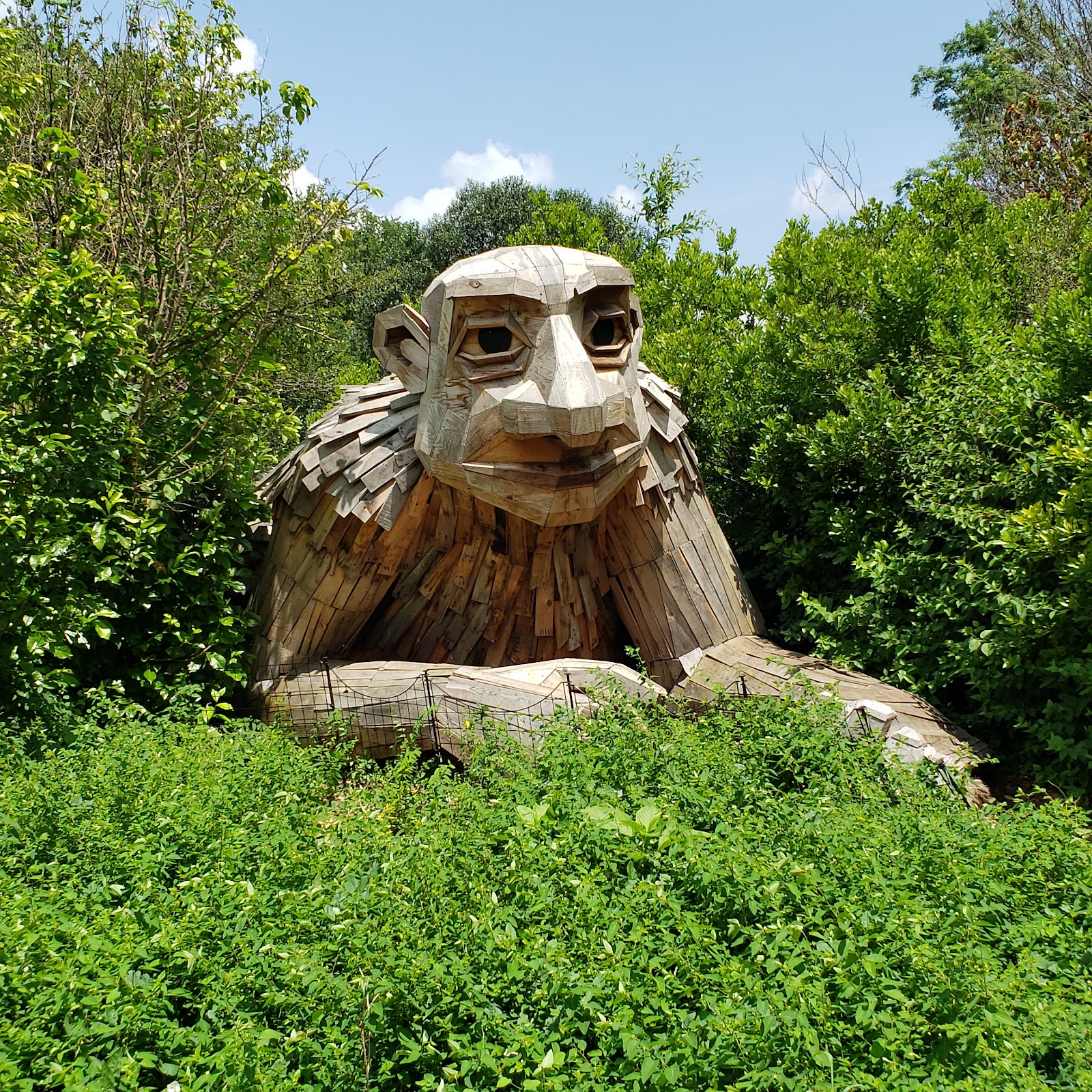
The Morton Arboretum, Lisle: One Frame, and How It Is Made
One tree, two people, and the canopy filling the frame.
This guide is about a single photograph, and it is the one photograph an arboretum can give you that a garden cannot.
The Morton Arboretum occupies something like seventeen hundred acres west of Chicago and it is a tree collection rather than a display garden — a research and conservation institution holding thousands of taxa, arranged partly by geography and partly by genus, with roads and trails through it, a lake, prairie and woodland areas, and remnants of old-growth oak forest.
That distinction matters. A botanic garden is organised around beds, colour and seasonal display. An arboretum is organised around individual trees, grown with space around them so they can reach their full form. And a tree grown with space around it is a completely different object from a tree grown in a wood.
Which gives you the frame. Find one great specimen with clear ground beneath it and room on all sides. Put the couple beneath it, small, near the trunk. Get low and go wide enough that the canopy fills the top two-thirds of the frame and the branch structure is legible all the way out to the drip line. Make it in soft light.
What that produces is a photograph about the tree, with two people inside it — and because the tree is an open-grown specimen rather than a forest trunk, it has a shape: a spreading crown, a visible branching pattern, a silhouette you could recognise. That is the arboretum’s whole photographic proposition.
It is also a frame that most attempts get wrong, in three specific ways, and the first section is mostly about avoiding them.
The first failure is the light. Under a full canopy in direct sun you get dappled shade, which puts hard bright patches on faces several stops above the surrounding skin, and those cannot be recovered. A dappled frame is a ruined frame, and the middle of a sunny day under a broad tree is exactly where dapple lives.
The second is the colour. Light that has passed through leaves is genuinely green, so a face lit only by transmitted canopy light reads sickly and no white balance fixes it, because the cast is in the light rather than in the file.
The third is the contrast. A closed canopy is several stops below open ground, so a subject under a tree with sunlit grass beyond them is a four-stop frame, and either the couple are black or the background is white.
All three have the same set of answers, and they are the subject of what follows — then what else the collection gives, then the year, which at a tree institution is more decisive than anywhere.
The Morton Arboretum at a glance
| Where | A 1,700-acre tree collection west of Chicago at Lisle, Illinois |
| The frame | Two people small beneath one open-grown specimen, canopy filling the frame |
| The three failures | Dappled light, green cast from leaves, and four stops of contrast |
| The answer | Overcast, or the last hour, and open sky reaching the faces from the side |
| Ask first | Which areas are bookable, whether vehicles can reach them, and the rain plan |
Building the frame
Start by choosing the tree, and be far fussier than seems necessary, because most large trees do not work.
You want an open-grown specimen: one that has had space on all sides through its life and has therefore developed a wide, low, spreading crown with a visible branching structure, rather than the tall narrow shape a tree takes when it competes in a wood. In this region that usually means an oak — bur oak and white oak grow exactly that way, because the original landscape here was prairie with oak savanna, and a savanna oak is by definition open-grown.
You also want clear ground beneath it. A specimen with a mown or open understorey lets you get the camera low and lets people stand at the trunk; one with shrubs or long grass under it does neither.
And you want to be able to walk all the way round it, because the light will dictate which side you use and you will not know which until you are there.
Second, the light, and this is where the frame is won. The condition you want is soft: a bright overcast, or the last hour of the day, or the period just after sunrise. Under any of those there is no direct sun to create dapple, the whole canopy is evenly lit, and the light reaching a face is diffuse.
Overcast is genuinely the best condition for this photograph and it should be treated as an opportunity rather than a disappointment. A high even sky puts soft light under a canopy from all directions, the contrast between the tree and the sky behind it drops to something a single exposure holds, and the greens saturate rather than blowing. An arboretum on a grey day is at its best.
If you have direct sun, the position has to change. Move to the canopy edge rather than under the middle of it, so the faces are lit by open sky arriving horizontally rather than by light filtered through leaves from above. The difference is dramatic and it is a two-metre walk: under the crown a face is green and dappled, at the drip line it is cleanly and softly lit with the canopy still filling the frame above.
That is the single most useful piece of positioning at any tree venue and it resolves both the dapple and the green cast at once.
Third, the contrast. Do not include much sunlit ground beyond the tree, because it will be four or five stops above your subject. Either frame so the background is also in shade — other trees, woodland, more canopy — or accept a bright background and light the couple to match.
If you are lighting them, keep it small and low-powered. One source, warmed slightly because the ambient under a canopy is cool and green, feathered so there is no visible pool on the grass. The aim is to bring them up perhaps a stop, not to make them look lit.
Fourth, the lens and the position. Wide enough to hold the crown — usually twenty-four to thirty-five millimetres — and low, because a low camera pointed slightly up makes the canopy dominate and the trunk soar, while a camera at head height makes a great tree look like a shrub behind two people. Kneel or sit.
Stop down to f/8 so the branch structure is sharp all the way out. This is the opposite of the long-and-open approach that works in cluttered venues: here the background is the subject, so it must be rendered properly. A softly rendered canopy is just a green blur and the whole point is gone.
Fifth, the people. Small, at the trunk or just off it, and off centre. The instinct is to bring them forward until they read clearly, which produces a portrait with a tree behind it — a lesser photograph than a tree with two people in it. At perhaps a tenth of the frame height they are unmistakably the subject and the tree is still the story.
Brief them, because this is not what anybody expects when they are asked to stand under a tree. Explain the picture, mark the spot, and make four or five exposures with small changes in their posture rather than in the camera position.
Total time once the tree is chosen: six minutes. Time to choose the tree: a scout, on foot, at the hour you intend to shoot. On seventeen hundred acres that is not a small job, and it is the job that makes the difference.
One variant worth having. Look straight up from directly beneath the trunk, with the couple’s faces in the bottom of the frame looking up too. A branching pattern photographed from below against a bright sky is a radial, almost graphic image, and it takes twenty seconds while you are already down there.
What else the collection gives
Beyond the one frame, an arboretum offers four things that a display garden does not, and one significant constraint.
The first is bark, and it is underused. A collection holding thousands of taxa contains an extraordinary range of bark — plated, furrowed, peeling, smooth, papery, striped — and bark is a textural subject that rewards raking light and a close lens. A sequence of bark details, hands against bark, a ring on a patterned trunk, gives a wedding set a register that no garden provides. Light it from the side, almost parallel to the surface, because frontal light flattens every texture there is.
The second is the collection’s structure, which is geographical and taxonomic. That means there are areas that look like other places — a stand of Asian species, a group from a particular region — and a photographer who asks which is which can produce frames that look unlike the Midwest without leaving Illinois. Ask for a map and ask what is where.
The third is old-growth woodland, if there is accessible remnant forest. Old growth does not look like a planted wood: the trees are larger, the canopy higher and more closed, the understorey comparatively open, and the vertical scale is greater. A background of big trunks receding into soft green or brown darkness is the simplest good background on the property, it works at a long focal length at any hour, and it has no apparatus in it.
The fourth is the water and the open areas — a lake, meadows, prairie restoration — which give you the sky exposure that a canopy denies. A lake edge is a low reflector that lifts a chin and fills eye sockets, and it holds sky colour for twenty minutes after the ground has gone dark, which makes it the correct closing position of an evening. And restored tallgrass prairie, if accessible, is an entirely different environment: two metres high by late summer, translucent, and spectacular backlit by a low sun, peaking from late July into October when the woody collections are past their flowering.
The significant constraint is scale, and it is the practical thing that decides whether a day here works. Seventeen hundred acres is a landscape, not a garden. Two locations that look adjacent on a map can be a kilometre apart, and a wedding party of a dozen in formal clothing moves at perhaps fifty metres a minute with stops.
So the questions to ask months ahead are: which areas are bookable, which are permitted for portraits, and can a vehicle or cart reach them. If a cart is available the arithmetic changes completely; if it is not, the honest plan is one location plus whatever is within two hundred metres of it.
Ask also about the public and about the roads. An institution of this profile has visitors and, in many cases, an internal road system with cars on it, which is both a practical hazard for a wedding party and a presence in wide frames. Establish where you may walk and where you may stand.
And ask about the rain plan, with its capacity as a number. An outdoor institution’s covered alternative is usually a specific building well below the capacity of a lawn, and in this region spring and summer bring organised severe weather rather than passing showers. That figure, against the guest list, is the most important fact in the booking.
One further note that is specific to a research collection: individual trees are catalogued specimens with scientific value, and some will be irreplaceable. Nobody should be climbing them, sitting on low limbs, or standing inside a fenced or mulched root protection area. Ask which specimens are off limits and treat the mulch rings as boundaries.
The tree year
At a tree collection the season is not a mood, it is the subject, and this site runs on a calendar worth knowing in detail.
Spring comes late here and in two stages. Bud break and the first flush of leaf happen through late April into May, and there is a brief window — perhaps ten days — when the canopy is half open: translucent, acid-green, with the branch structure still visible through it. That is arguably the best condition for the frame in this guide, because you get the crown’s shape and its foliage at the same time, which a full summer canopy hides. It is short and it moves with the year, so ask.
The understorey flowering — dogwood, redbud, spring ephemerals in the woodland — runs through the same period and is genuinely lovely. It is also over quickly.
Summer gives full canopy, which is deep shade and a solid green mass, and the frame in this guide works but loses the branch structure. It is also the dappled-light season, so the canopy-edge positioning in the first section matters most between June and August. Midsummer noon sun here reaches about seventy-one and a half degrees, which under a broad tree means light coming almost straight down through every gap.
The compensation is the long evening: sunset after eight by late June, with civil twilight running about thirty-one minutes and a usable balance point of thirteen to sixteen. That is among the more generous ends of day in this library, and at a site with no light pollution the sky holds a clean gradient for longer still.
Autumn is the season this institution exists for, and the sequence is worth knowing because it lasts longer than most photographers assume. Maples and ashes turn first, through the first half of October. Then the collection’s variety works in your favour — a place holding thousands of taxa has species turning at different times across six or seven weeks rather than all at once. And the oaks hold last, going russet and bronze into November, which extends the window well past where a general Midwest calendar would put it.
So a late-October or early-November date here is not a gamble in the way it would be at a garden dependent on a single flowering. Something will be at its best, and the institution will know what.
Air clarity also improves markedly once the summer humidity drops, so the longer views across the collection open up, which matters on a site measured in square kilometres.
Winter is when the frame in this guide is at its purest, and it is the season nobody books. With the canopy gone, an open-grown specimen is pure structure — a branching pattern against the sky, legible to the last twig, which is exactly what a tree collection is for. A low midwinter sun near twenty-four and a half degrees rakes bark all afternoon, and snow on a spreading oak crown is as good as this place gets.
Against that: sunset before half past four, cold well below freezing, snow cover in most years, and a party in formal clothing outdoors as a ten-minute proposition rather than an hour. Check what is open too, because institutions of this kind close sections in winter and run large seasonal events that occupy the best areas.
Humidity through the growing season is continental-humid, with July dewpoints around seventy, filling shadows by roughly two stops against a dry climate. Under a canopy that helps: it lifts the deep shade and softens the edges of any dapple that does get through. The costs are a pale washed sky, haze on distance, and a lens that fogs coming out of an air-conditioned building into July air.
The genuine hazard is spring and summer severe weather. This region sits in an active corridor for organised convection, and the systems that arrive bring real wind and hail rather than rain. At a tree collection that carries an additional and obvious risk: large trees in high wind drop limbs, and a wedding party under a canopy in a squall is in the wrong place. Take the institution’s guidance seriously and move indoors early rather than late.
The half hour after a storm clears is the best light of the year here and the reason is specific to trees: wet bark goes several tones darker and far more saturated, foliage is beaded and glossy, the air is washed clear, and a low sun coming under a broken ceiling into a canopy produces visible shafts in the humid air. A wet oak in late light is a considerably better subject than a dry one. If a cell goes through at six, wait.
One closing instruction. Scout the tree. Everything else in this guide is technique, and the technique is not difficult; the difference between a good set here and an ordinary one is having walked the collection beforehand and chosen the specimen.
More frames from The Morton Arboretum
The Morton Arboretum wedding photography: common questions
What is the one frame?
Two people small beneath a single open-grown specimen tree, with the camera low and wide enough that the canopy fills the top two-thirds of the frame and the branch structure is legible out to the drip line. An arboretum grows its trees with space around them so they develop a full spreading crown, which makes each one a recognisable shape rather than a forest trunk — and that is the photograph a display garden cannot give you.
Why do most attempts fail?
Three reasons, all about light. Dappled shade under a canopy in direct sun puts hard bright patches on faces several stops above the surrounding skin, and those cannot be recovered. Light that has passed through leaves is genuinely green, so a face lit only by canopy light reads sickly and no white balance fixes it. And a closed canopy is several stops below open ground, so a subject under a tree with sunlit grass beyond is a four-stop frame.
What fixes all three?
A two-metre walk to the canopy edge. Under the middle of a crown, faces are lit by filtered green light from above and speckled with dapple; at the drip line they are lit by open sky arriving horizontally, cleanly and softly, with the canopy still filling the frame above. Beyond that, the best condition for this photograph is a bright overcast — no direct sun to dapple, the whole canopy evenly lit, contrast within one exposure, and greens saturating rather than blowing. A grey day here is an opportunity.
What aperture and position?
Low, wide, and stopped down to f/8. The background is the subject, so the branch structure must be sharp all the way out — a softly rendered canopy is just a green blur and the point is lost. And get the camera low, pointed slightly up, so the canopy dominates and the trunk soars; at head height a great tree looks like a shrub behind two people. Keep the couple small, perhaps a tenth of the frame height, and brief them, because nobody expects that.
Is the scale a problem?
It is the practical thing that decides whether a day works. Seventeen hundred acres is a landscape, not a garden — two locations that look adjacent on a map can be a kilometre apart, and a wedding party in formal clothing moves at about fifty metres a minute. Ask months ahead which areas are bookable, which are permitted for portraits, and whether a vehicle or cart can reach them. If not, the honest plan is one location plus whatever lies within two hundred metres of it.
When is the best time of year?
Three answers. Late April into May has a ten-day window when the canopy is half open — translucent and acid-green with the branch structure still visible through it — which may be the best condition for this frame. Autumn runs six or seven weeks rather than one, because a collection of thousands of taxa turns at different times, with maples first in early October and oaks holding russet into November. And winter is when the frame is purest and nobody books it: an open-grown specimen with no leaves is pure structure against the sky, with a low sun raking bark all afternoon.
More Illinois venue guides
We are writing a photographer’s guide to every venue we would happily shoot in Illinois. Here are three more, plus the full index:
- The Brookfield Zoo, Brookfield: The One Decision That Governs Everything
- The Cantigny Park, Wheaton: Field Notes, Problem and Solution
- The Chicago Botanic Garden, Glencoe: The Venue’s Own Logic
Planning a wedding at The Morton Arboretum?
Scout the tree first. Everything after that is six minutes. Tell us your date.