 Dry Tortugas National Park: A Walk Through an Island Fort
The Universal Orlando Resorts: The One Decision That Governs Everything
Theme in or theme out. There is no middle setting.
There is one decision at a themed resort and it is binary: is the theme in the frame, or is it out?
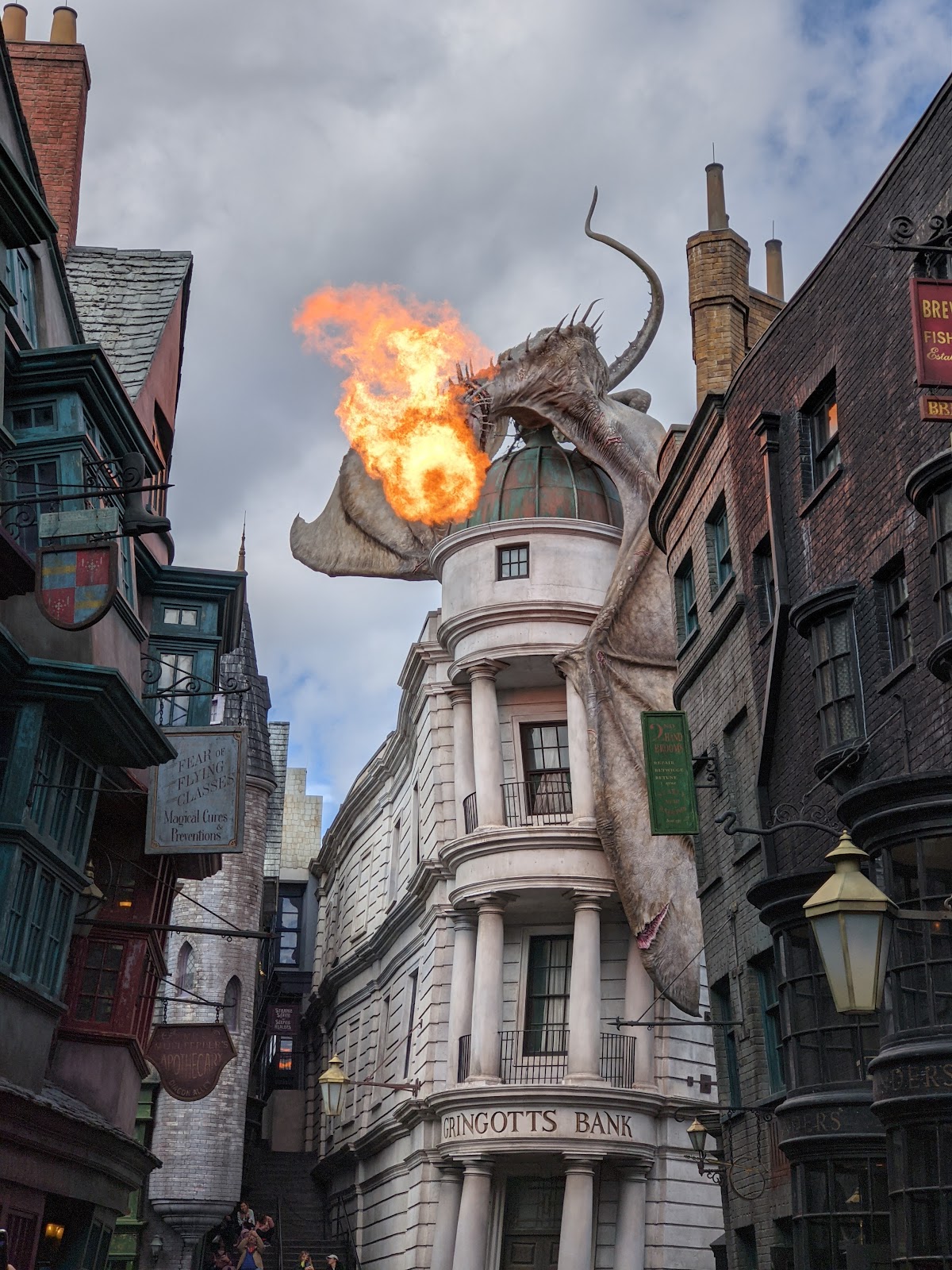
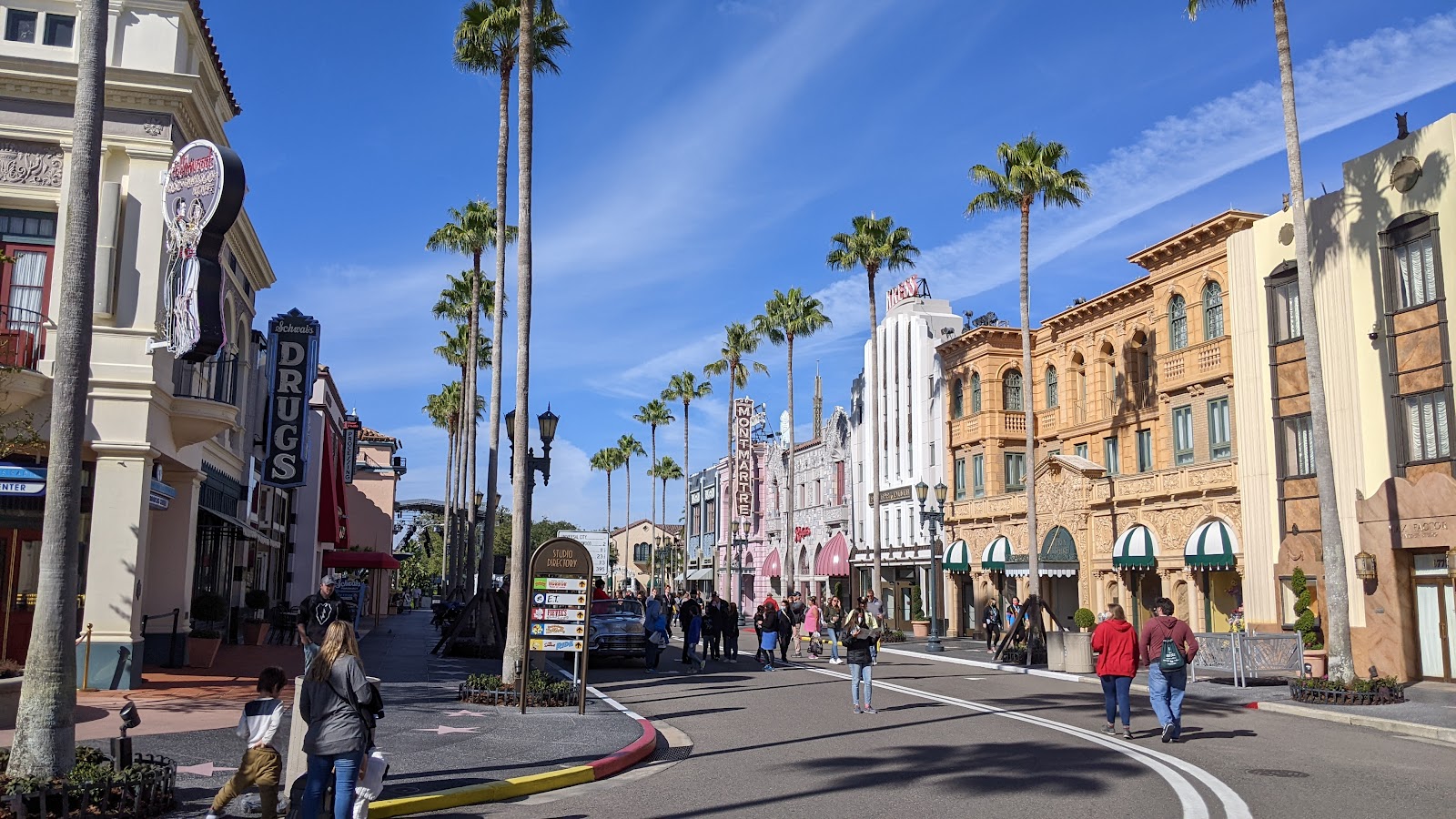
The hotels on a complex like this each commit to a design idiom and carry it through every surface — Mediterranean coastal, Art Deco, Pacific Rim, mid-century Americana, whatever the hotel has chosen. Nothing is undecorated, and the commitment is thorough rather than decorative.
That produces backgrounds that are immediately identifiable and completely non-neutral. A frame taken anywhere on the property is a frame in that design.
So the decision is whether to use it or to work around it, and the middle fails.
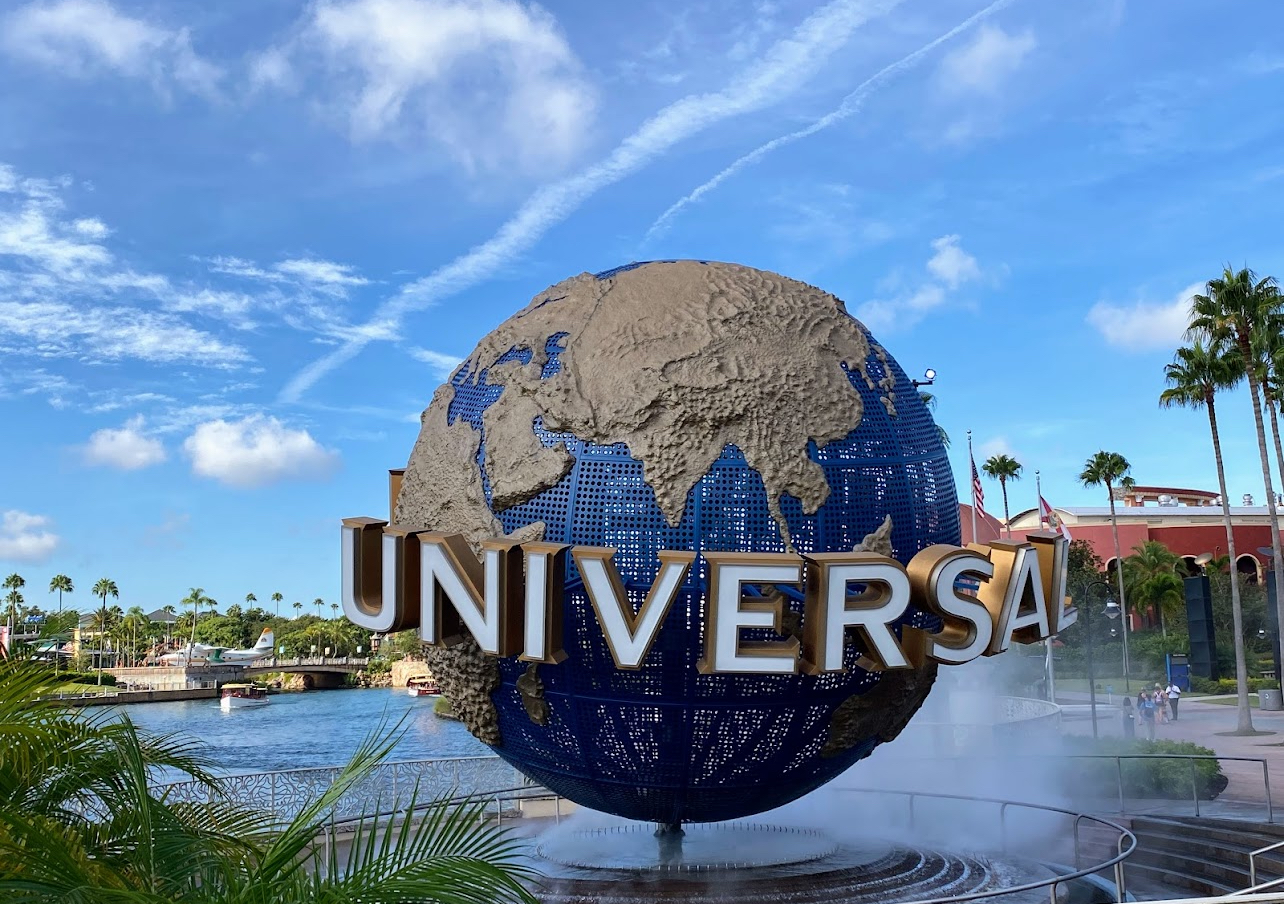
Theme in means composing deliberately with the architecture, the colour palette and the signature features — which produces pictures that look like somewhere specific and that a couple who chose the place will recognise as why they chose it.
Theme out means finding the property’s neutral ground: water, sky, planting, a plain wall, a covered walk with nothing in it — and there is more of that than people expect, because a large resort needs circulation and landscape as well as spectacle.
What fails is the accidental middle: a half-length portrait against an indistinct piece of themed detail, which reads as a badly chosen background rather than as a place. That is the commonest failure at a resort of this kind and it comes from not having decided.
The second thing to establish before anything else is the photography policy. Commercial photography on a resort complex is governed by specific terms — which photographers may work, in which locations, at which times, with what equipment — and those terms are enforced consistently.
That has to be settled in writing before a booking rather than discovered on the day, because the answer may confine coverage to the booked venue rather than the wider property. A couple who visited as guests and imagined working the whole resort may find that is not what they have bought.
Orlando sits at about twenty-eight and a half degrees north at close to a hundred feet. The June noon sun reaches around eighty-five degrees, the December noon sun about thirty-eight, days run from about ten hours twenty to fourteen hours, and civil twilight is roughly twenty-one minutes — the shortest in this library.
We have not photographed a wedding here. The photography policy, which hotels and spaces are bookable, and the permitted hours are questions for the resort.
The Universal Orlando Resorts at a glance
| Where | A themed resort complex in Orlando, Florida |
| The decision | Theme in or theme out. The accidental middle is the commonest failure |
| Theme in | Deliberate composition with the idiom — pictures that look like somewhere |
| Theme out | Water, sky, planting and circulation — more of it exists than people expect |
| Settle first | The photography policy, in writing, before the booking |
Theme in
If the theme is in the frame, the method is to treat the architecture as a designed composition rather than as decoration, and that means reading its logic.
A hotel that commits to an idiom carries it at three scales: the massing and roofline, the surface materials and colour, and the small repeated details. Each is usable and they want different framing.
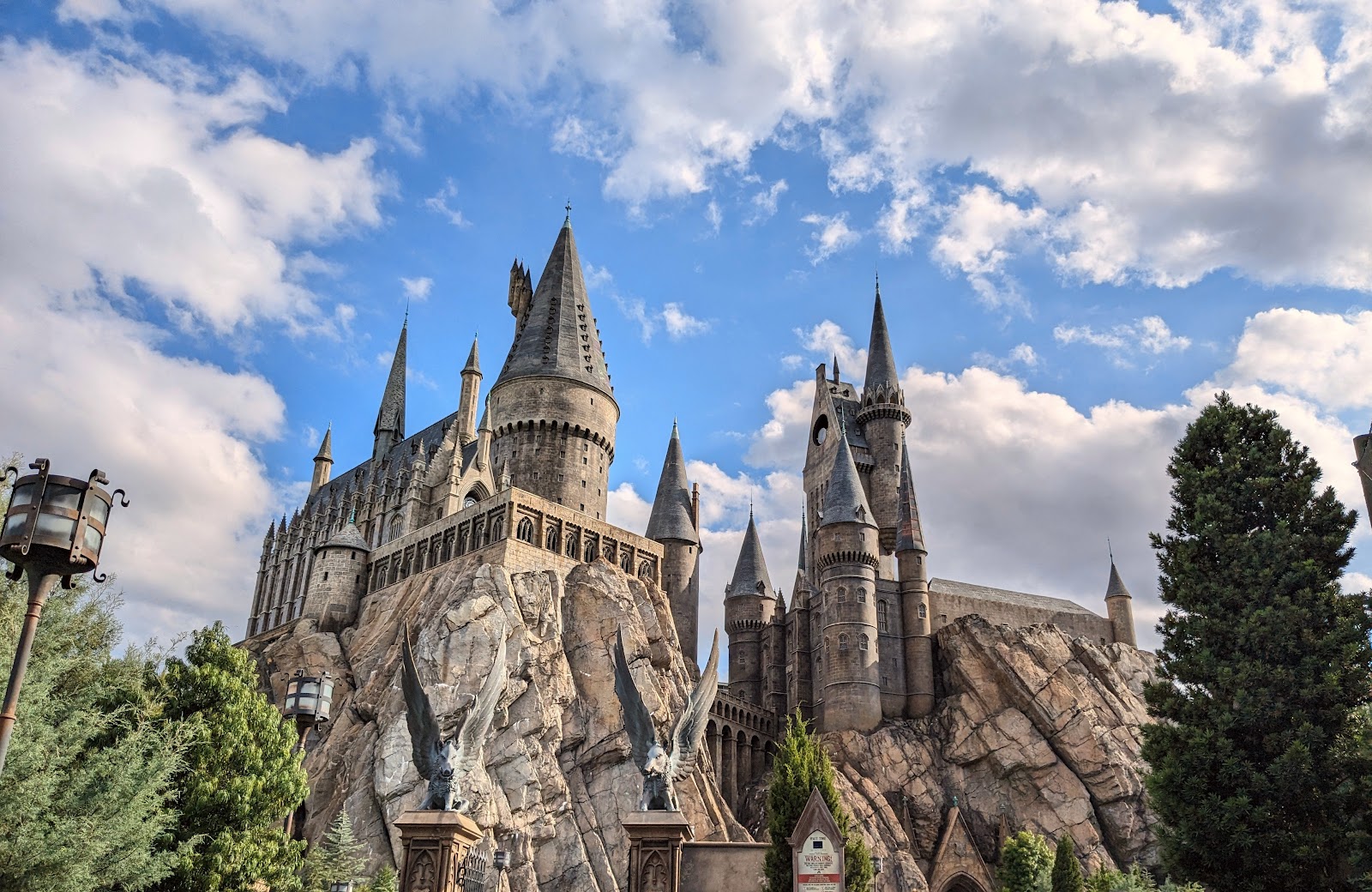
The massing wants a wide lens from distance and a low camera. A themed hotel’s silhouette is usually its clearest statement — a tiled roofline, a tower, a colonnade — and it reads against sky rather than against other buildings. That is the establishing frame and it works best at the ends of the day when the building is lit and the sky has colour.
The surfaces want raking light. Themed architecture uses stucco, tile, timber and applied ornament, and all of that has relief that shows at a shallow angle and vanishes under a frontal midday sun. So the mid-range frames belong at the ends of the day too.
The details want close work, and this is where a themed property is genuinely strong. A lantern, a tiled riser, a painted sign, a wrought-iron rail — each is a close frame with real character, and a sequence of them places a wedding in a specific environment more convincingly than any wide shot.
Colour is the theme’s most powerful tool and the one to use rather than fight. A hotel committed to an idiom has a controlled palette, and a subject placed against a large field of one saturated colour reads as deliberate.
The caveat is bounce. A saturated wall returns its colour onto skin, and a strongly coloured surface within a couple of metres of a subject will tint their face — so either bounce off something neutral, go direct through a modifier, or move them further from the wall.
Signature features are the frames a couple will want and they need one decision each: is the feature the subject with the couple for scale, or are the couple the subject with a fragment of the feature behind them? Both work and the middle does not.
Water is usually part of the theming and it is the property’s most useful element. A resort complex of this kind is built around lagoons and waterways, and water reflects the sky — which makes it a large low-angle source filling under the chin and lifting eye sockets, strongest at grazing angles.
A low camera turns a rippled surface into a bright specular path running toward the lens, and dropping to knee height lengthens it considerably. Themed buildings reflected in still water at dusk is the strongest frame a resort like this produces.
And the lighting design is the theme’s evening expression. A themed hotel is lit deliberately after dark — uplit facades, lanterns, coves, signage — and that lighting is a substantial part of what the place is.
So the blue-hour frame matters more here than at a neutral venue. For roughly eight or ten minutes inside a twenty-one-minute twilight, the sky holds deep blue while the architectural lighting is fully on and both read in one exposure. Before that the sky overpowers it; after, the sky goes black and the building floats.
Be composed before it starts. Ten minutes is enough for three variations of one good frame and nowhere near enough to find the position.
Theme out
If the theme is out, the property has more neutral ground than its reputation suggests and it is worth knowing where.
The planting is the first and best of it. A resort of this scale maintains its landscape to a standard almost no private venue matches, and in central Florida that means genuinely subtropical material: live oak with Spanish moss, sabal palm, crape myrtle, bougainvillea, bamboo and mature specimen trees.
Live oak is the important one. Evergreen, broad, dense and low-crowned, holding its leaves year-round, it casts genuine solid shade with no dapple in January as in July — which makes it the reliable midday position at any time of year. At a latitude where the June noon sun reaches eighty-five degrees, that matters enormously.
The trade is that the canopy is dark, several stops below open ground, so a subject under one with sunlit paving beyond is a four-stop frame needing a fill or a deliberate silhouette. And dwarf palmetto in the understorey is worth backlighting: fan-shaped, translucent, and it places a frame geographically in a way an oak alone cannot.
The water is the second neutral element, because a lagoon photographed low with sky above it contains no theming at all. A couple at the water’s edge with nothing but water and sky behind them could be anywhere — which is exactly the point when the theme is out.
The sky is the third. At this latitude with a low horizon and reliable summer convection, a wide frame with the couple small and the sky large is available whenever the weather is doing anything. That is a frame with no architecture in it at all.
The covered walks and circulation spaces are the fourth and the most overlooked. A resort needs a great deal of connective infrastructure — colonnades, covered walkways, service-adjacent routes, back-of-house corridors — and much of it is plainer than the public spectacle, because it was built to move people rather than impress them.
A plain covered walk is optically a large soft source with a hard mask, controlled by depth from the open edge, and it is frequently the best unassisted light on the property. Finding those is worth a scouting walk.
Indoors, the ballrooms are the neutral option and they behave as hotel ballrooms do. High-level recessed downlights on a low dimmer give strong top light with shadowed eye sockets — so never key from them. Bounce a warm-gelled source off a pale wall or ceiling for a directional key, drag the shutter to a thirtieth or sixtieth so the room’s own light registers, and use two or three sources because a single one set for three metres is four stops down at twelve.
Add a rim regardless of which approach is taken. In a themed environment it separates a subject from busy decoration; in a neutral room it separates them from a wall of the same tone. Either way it is the single biggest improvement available indoors.
And gel warm throughout. Resort lighting is warm tungsten or warm LED, decorative and low, and a daylight-balanced flash against it puts blue-white faces in a golden environment. A quarter to a half warm gel with a correspondingly warm white balance is the default.
- Decide theme in or theme out per location — the accidental middle fails
- Raking light for themed surfaces; frontal midday flattens applied ornament
- Move subjects away from saturated walls, or their faces take the colour
- Live oak is the reliable midday shade in any month at this latitude
- Be composed before the blue hour starts — eight to ten usable minutes
Logistics, and the central Florida year
Two practical matters govern a day at a resort complex and both are about scale.
The distances are transport rather than walking. A property measured in kilometres with internal buses, boats or walkways means moving a wedding party between two locations is a loading, travelling and unloading operation — and a plan that allows fifteen minutes has not accounted for any of it.
Thirty minutes is realistic for a party of thirty, and at a latitude where civil twilight is twenty-one minutes a badly planned transition costs the entire blue hour. That is the single most consequential scheduling fact here.
The other is that the property is busy at almost all hours. A resort complex has guests everywhere and its public spaces are in constant use, which means strangers in the background of most frames and a photographer being tactical rather than assuming clear backgrounds.
Early morning is the only reliably quiet time, and on a property that operates late into the evening even that is relative. A long lens at a wide aperture throws passers-by into unrecognisable colour, and a low camera puts planting rather than crowds behind a head — both are habits rather than tricks and both work.
The central Florida year runs opposite to most of this library and the reversal is emphatic.
December through April is the season: mild, dry, sunny and comfortable, with a December noon sun of about thirty-eight degrees that models rather than flattens. Because the planting is evergreen, a January frame looks much like an October one — which makes a winter date a positive choice rather than a compromise.
It is also the busiest time on a resort property, which is worth knowing when booking.
June through September is the constraint and it is severe. Subtropical summer brings afternoon temperatures in the nineties with dewpoints in the mid-to-high seventies, and for a party in formal clothing outdoors that is a welfare matter rather than a comfort one.
The humidity has a real photographic effect and it is mostly favourable. Water vapour scatters light and fills shadows, so a sunlit courtyard in July carries perhaps two and a half stops less contrast than the same sun angle in Arizona — soft shadow edges, eye sockets holding detail, and midday genuinely workable.
The costs are a pale washed sky, hazed long lenses, and one equipment problem: lenses fog within seconds moving from air conditioning into outdoor air and take minutes to clear. Carry the camera warm rather than leaving it in the cool while waiting.
The cloud is reliable and it is the compensation. Central Florida afternoons generate convection from sea-breeze convergence almost daily in summer, and the half hour after a cell passes is the best light of the year: washed air, wet paving reflecting the sky, saturated colour, a low sun under a broken ceiling.
Wet themed architecture is the specific prize here. Rain darkens and saturates stucco, tile and paint, which deepens a controlled palette considerably — so a themed facade half an hour after a storm looks better than it ever does dry.
The hazard needs stating plainly. Central Florida receives more lightning than anywhere else in the United States, which for an outdoor ceremony in summer means the covered alternative must genuinely exist and be reachable in minutes rather than listed on a website. And hurricane season runs June through November, which is a real planning consideration for a date in that window.
The twilight is the shortest in this library at about twenty-one minutes, and on a property where the good positions may be a bus ride apart, that makes the end-of-day plan the most important thing a photographer settles in advance. Two or three frames, known, with the transitions timed.
More frames from The Universal Orlando Resorts
The Universal Orlando Resorts wedding photography: common questions
What is the one decision?
Theme in or theme out. Composing deliberately with the idiom works, and so does finding the property’s neutral ground. The accidental middle is the commonest failure.
What should I settle before the booking?
The photography policy, in writing. It may confine coverage to the booked venue rather than the wider property, which is a substantial difference.
Where is the neutral ground?
The water and sky, the mature planting, and the covered circulation walks — which are plainer than the public spectacle because they were built to move people.
What about saturated walls?
They tint skin when you bounce off them. Go direct through a modifier or move the subject further from the wall.
How long do transitions take?
Thirty minutes for a party of thirty. The distances are transport rather than walking, and a twenty-one-minute twilight will not wait.
What does rain do?
Improves the theming. Wet stucco, tile and paint saturate considerably, so a themed facade half an hour after a storm looks better than it ever does dry.
More Florida venue guides
We are writing a photographer’s guide to every venue we would happily shoot in Florida. Here are three more, plus the full index:
- The Walt Disney World Resorts: What It Suits, and What It Does Not
- Dry Tortugas National Park: A Walk Through an Island Fort
- The Ernest Hemingway Home, Key West: One Frame, and How It Is Made
Planning a wedding at The Universal Orlando Resorts?
Theme in or theme out. We will decide with you. Tell us your date.