 Dry Tortugas National Park: A Walk Through an Island Fort
The Lightner Museum, St. Augustine: The Problem, and Four Ways Out of It
A hotel, then a museum. The rooms no longer do their jobs.
The problem here is that the building is doing its third job, and the rooms were designed for the first one.
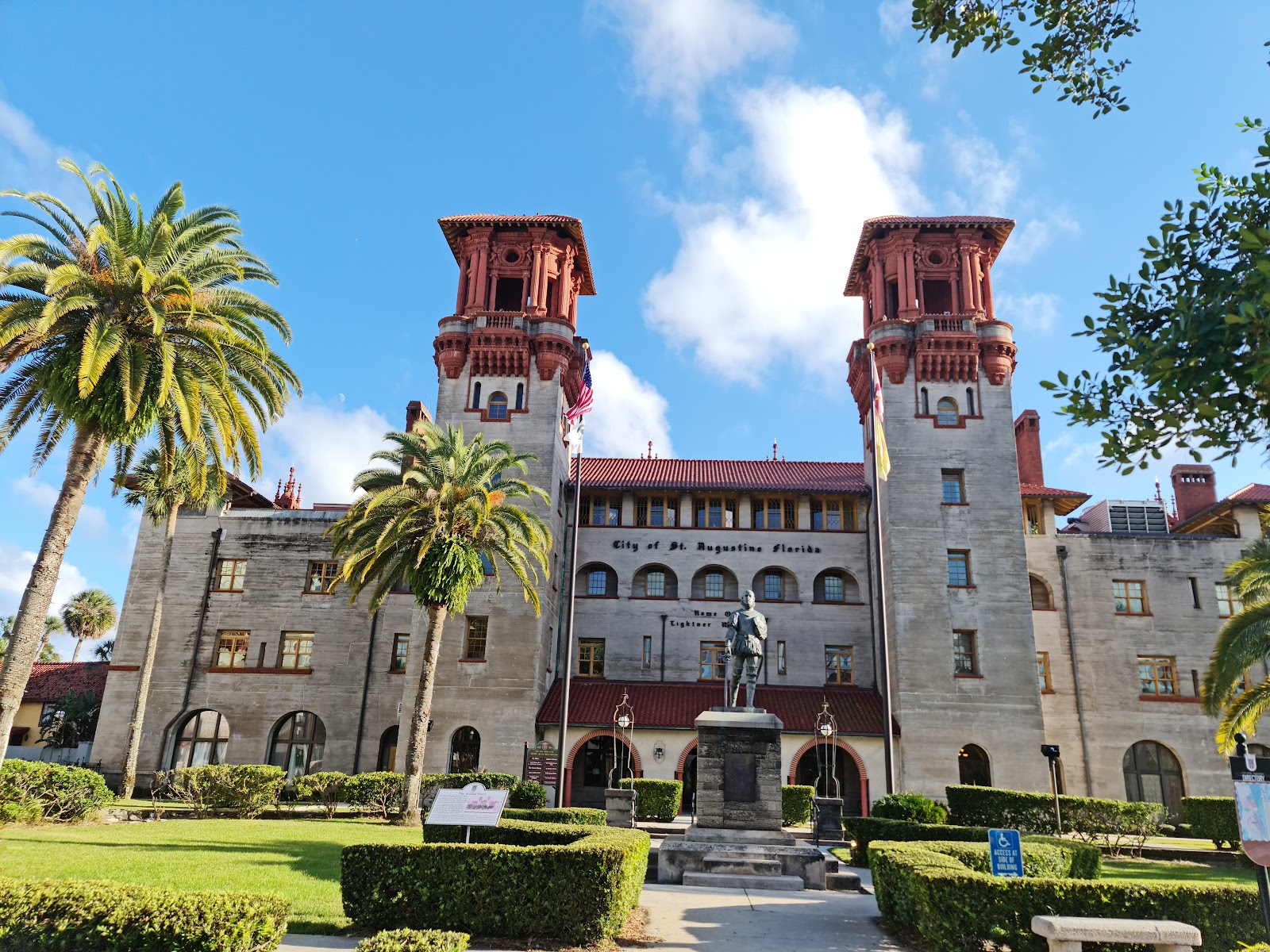
It opened in 1888 as one of Henry Flagler’s Spanish Renaissance Revival hotels in St. Augustine — built of poured concrete with local coquina aggregate, arranged around courtyards, and equipped with what was then among the largest indoor swimming pools in the world. It closed as a hotel, and since the 1940s it has been a museum of nineteenth-century decorative arts.
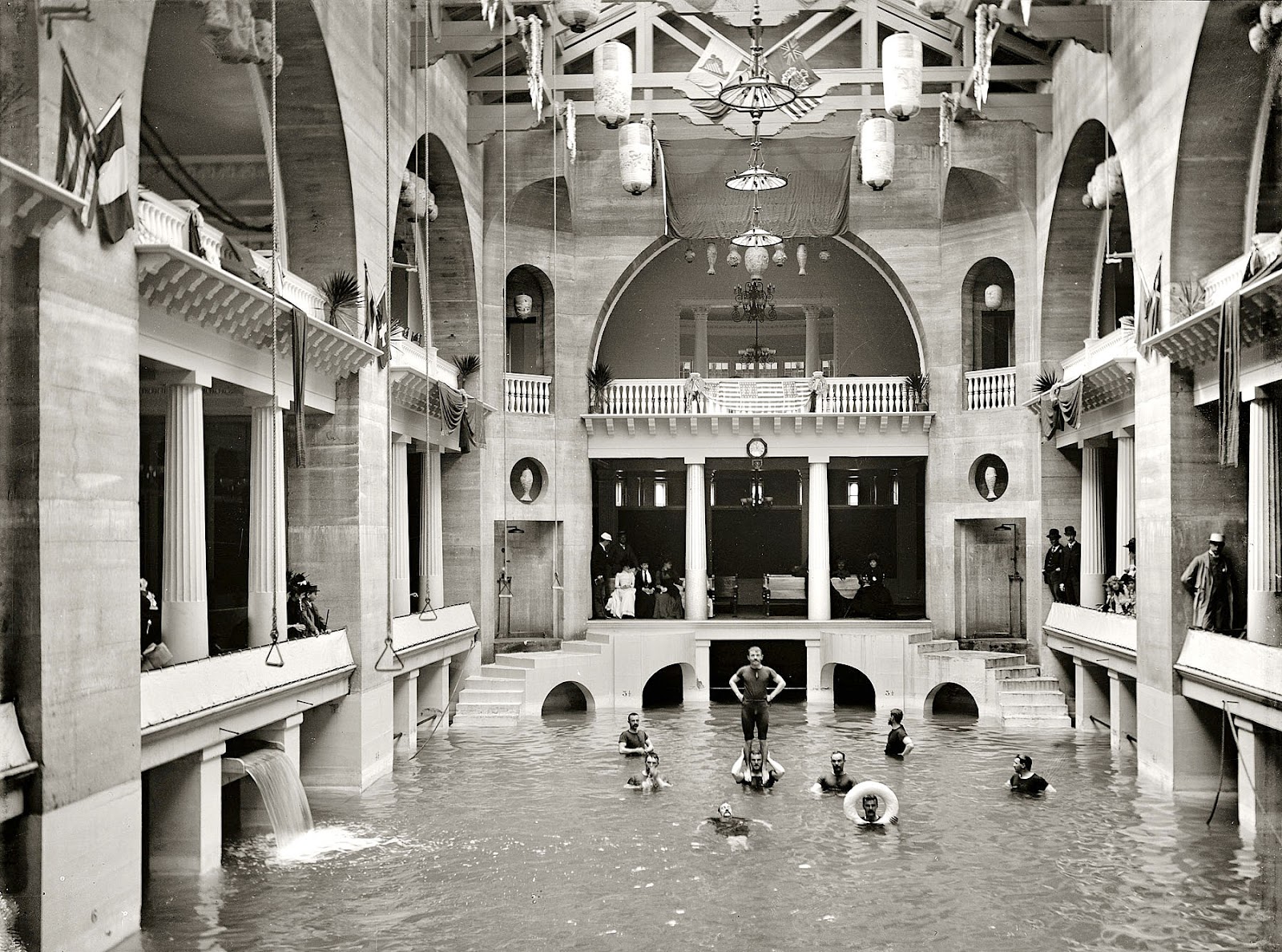
So a grand hotel’s public rooms now hold display cases. A ballroom is a gallery. And the swimming pool — drained — is an exhibition space with the tiered spectator galleries still around it.
That mismatch produces four problems.
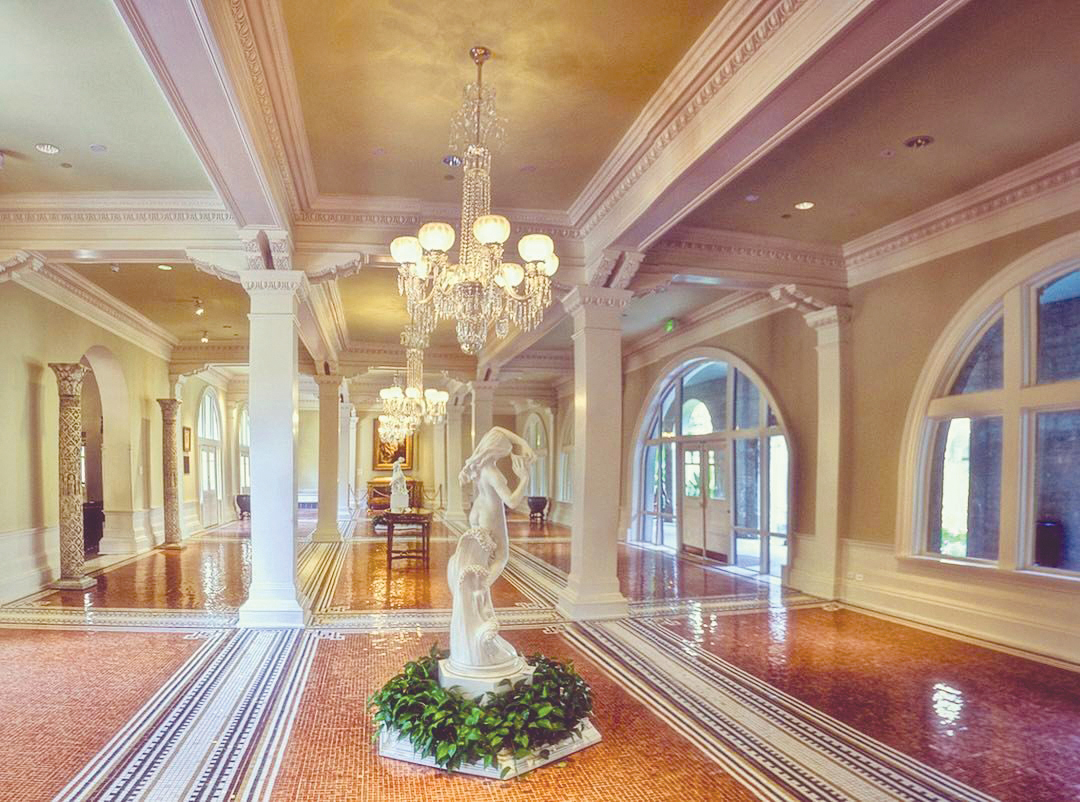
The rooms are the wrong shape for their contents. A hotel’s public spaces were built for movement and sightlines; a museum needs wall space and controlled light. The result is galleries with awkward proportions, cases placed where they fit rather than where they belong, and architecture partly obscured by the display it now carries.
The lighting is conservation lighting in a building not designed for it. Nineteenth-century hotel rooms had large windows because they needed daylight; a museum needs to keep light off its collection. So the windows are frequently blanked, filtered or curtained, which means the building’s original light is largely unavailable and what replaces it is low-level and directionless.
The pool is a peculiar volume. A drained indoor pool is a deep rectangular void with a tiled floor several metres below the surrounding level, tiered galleries above it, and a roof structure overhead — which is an extraordinary space and an extremely difficult one to light.
And the collection competes. Nineteenth-century decorative arts are ornate by definition, and a room full of them gives the eye a dozen things to look at other than the people.
St. Augustine sits at about twenty-nine and three-quarter degrees north near sea level. The June noon sun reaches around eighty-three and a half degrees, the December noon sun about thirty-seven, days run from about ten hours fifteen to fourteen hours, and civil twilight is roughly twenty-two minutes — among the shortest in this library.
What follows is four ways out. We have not photographed a wedding here; the flash policy, which spaces are bookable and the permitted hours are questions for the museum.
The Lightner Museum at a glance
| Where | A museum in a former 1888 Flagler hotel in St. Augustine, Florida |
| The problem | Hotel rooms doing museum work: wrong proportions, blanked windows, ornate contents |
| The peculiar space | A drained indoor pool with tiered galleries — extraordinary and hard to light |
| The construction | Poured concrete with coquina aggregate, arranged around courtyards |
| Ask first | Flash policy, which spaces are bookable, permitted hours |
Way one: the pool
The first answer is the pool, because it is the one space in the building that nothing else resembles and because its difficulty is solvable.
A drained indoor pool is a deep rectangular void: a tiled floor perhaps three metres below the surrounding level, vertical tiled walls, tiered galleries on one or more sides, and a roof above. What that gives is a volume with a floor you can put people on and a gallery you can shoot from — which is elevation, and elevation is the scarcest thing in most buildings.
The frame is from the gallery down into the pool. A couple standing on the tiled floor, photographed from above with the pool’s rectangular geometry around them and the roof structure visible, is a composition available nowhere else. It reads as strange and deliberate, which is exactly right for the space.
That frame needs the camera on the pool’s axis, because a rectangle photographed off-centre reads as a mistake. The tiling will usually mark the centre line; use it.
The reverse frame is also strong: from the pool floor looking up, with the galleries rising and the roof above. A wide lens from low in a deep volume exaggerates the height, which makes a modest pool read as substantial.
The lighting is the difficulty. A drained pool is a light trap — tiled walls are reflective but the volume is deep, so light entering from above falls off rapidly toward the floor, and the pool bottom is several stops below the gallery level.
That gradient is the resource rather than the problem. Expose for the subject on the pool floor and let the galleries above go bright; or expose for the galleries and let the floor go dark with the couple lit separately.
The second is better and it needs a source down in the pool with them. One light through a modifier at forty-five degrees, plus a rim if the space allows a second — and because tiled surfaces are reflective, a little output goes further here than in a fabric-lined room.
Watch the tiles for reflections. A large expanse of glazed tile is a partial mirror, and it will show a light stand and a photographer at some angles. Check the surfaces before the frame.
If the roof is glazed — and Victorian pool halls frequently were, because they needed light — then daylight enters from directly overhead, which gives a large soft source above a deep volume. That is the best condition the space can have: a subject on the pool floor under a glazed roof is lit as if in a very tall softbox, with a steep falloff toward the walls.
Overhead light means shadowed eye sockets, and here the fix is unusually good: a pale tiled floor is an efficient reflector, so turning a subject so the brightest floor is in front of them lifts the sockets noticeably.
The galleries themselves are worth one frame as architecture. Tiered spectator seating around a pool is an unusual geometry, and a long lens along the gallery compresses the tiers into a rhythm.
Ways two and three: the courtyards, and the collection
The second answer is to go outside into the courtyards, because that is where the building’s original architecture is legible and where the daylight is.
A Spanish Renaissance Revival hotel is arranged around courtyards, and a walled courtyard is an open-topped interior: lit by the sky and its own walls, changing completely as the sun crosses. At noon it is a bright box with overhead light; early and late it is a single enormous directional bounce with one wall lit and the opposite in shade.
In pale coquina concrete that bounce is efficient and faintly warm — the material returns a good proportion of the light with a slight cream cast, which flatters skin. A subject three or four metres out from a sunlit courtyard wall is lit by a source the size of the wall.
Distance from the wall is the control and further is usually better. A metre away it is harsh; four metres out it wraps.
The arcades are the courtyard’s best feature. An arcade is a very large soft source with a hard mask, and depth back from the open edge is the entire control: at the edge flat, a metre back directional, two or three metres back dramatic with the courtyard four stops brighter beyond.
Florida’s humidity softens that by perhaps a stop compared with a dry climate, which makes the deep positions more forgiving than the same arcade in Arizona would be.
The exterior wants raking light. Cast concrete with coquina aggregate has a subtle shell texture that catches at a shallow angle and vanishes under frontal light, and the deep-set openings and mouldings read only when the light comes across them — so the exterior is a first-hour or last-hour subject.
The third answer is to handle the collection deliberately rather than letting it intrude.
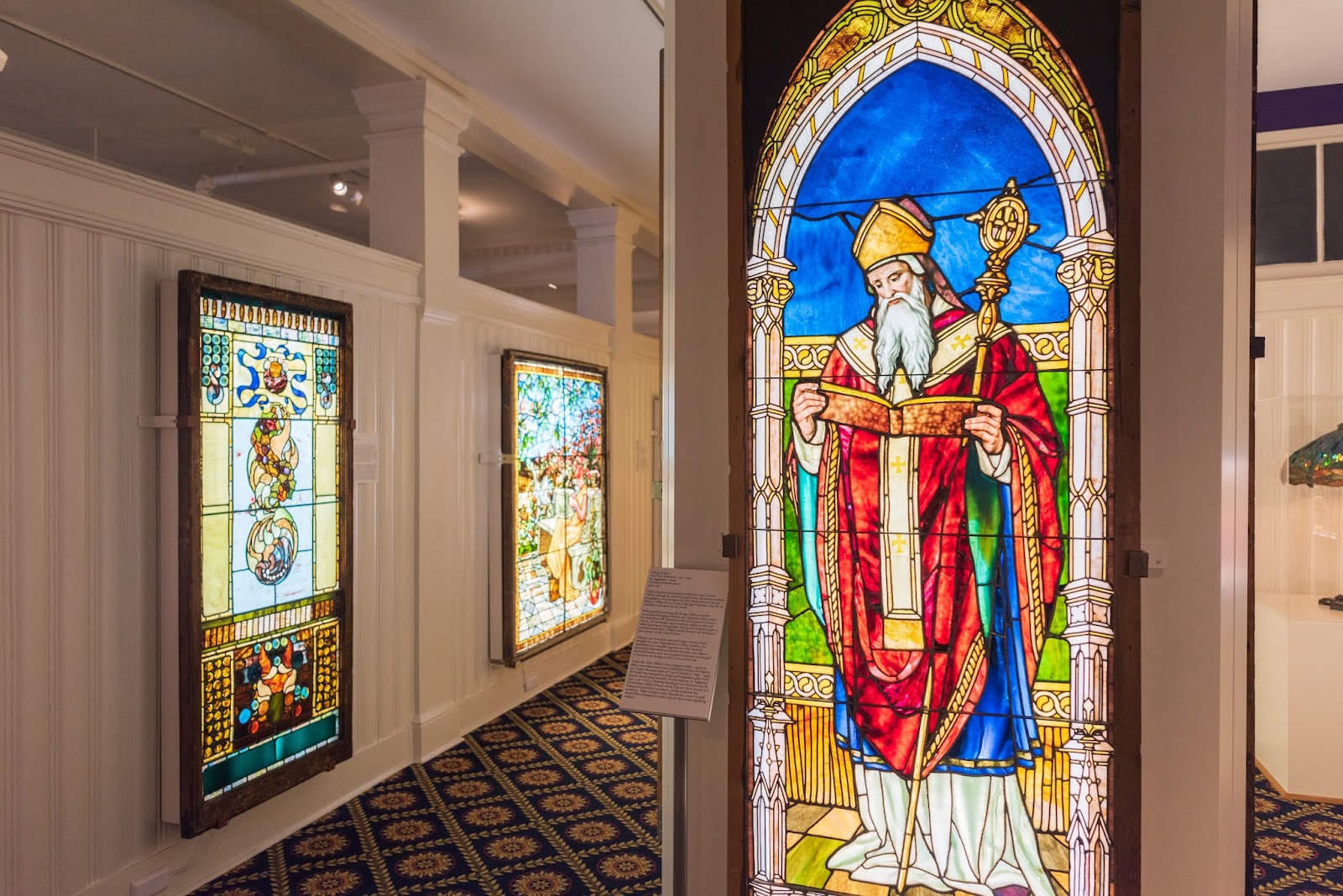
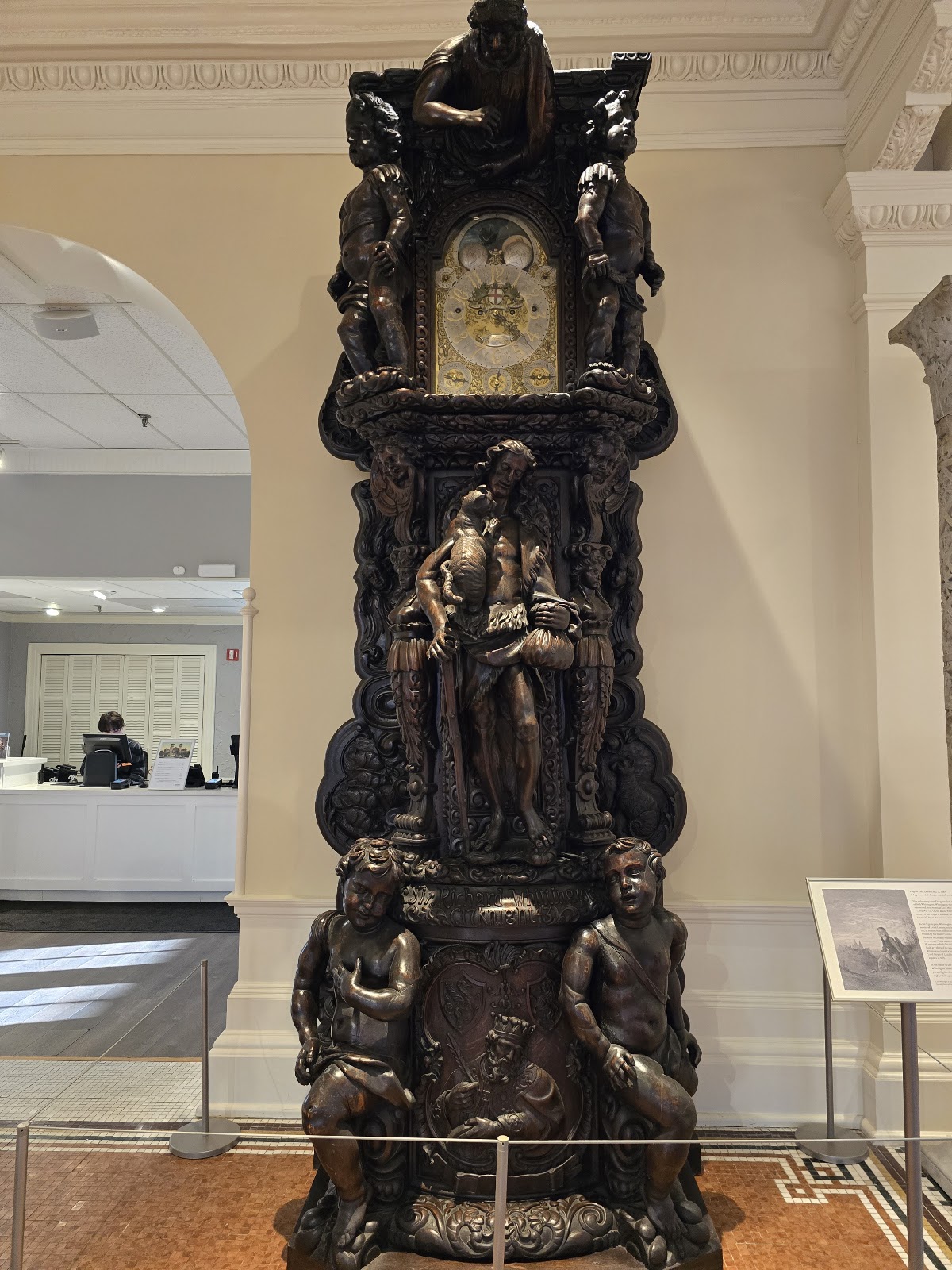
Nineteenth-century decorative arts are ornate by definition — carved furniture, glass, ceramics, mechanical curiosities, mounted specimens — and a room full of them is visually loud. A portrait taken in one is a portrait in a busy environment however it is lit.
There are two approaches and the middle fails. Go tight, so the background reduces to a few soft shapes and the collection barely appears. Or go wide and commit, placing the couple deliberately against a specific strong object so the frame is clearly about both.
What fails is a half-length portrait with an indistinct ornate jumble behind it, which reads as a badly chosen background rather than as a museum.
The display cases are the useful version of the collection. A lit vitrine is a small bright source at close range, so a face turned toward one picks up a defined key with rapid falloff — dramatic in a dim gallery, and it puts a collection object in frame, which is the point of being here.
The flash policy governs all of it and needs settling room by room in writing. Nineteenth-century decorative arts include some of the most light-sensitive material there is — textiles, dyed fabrics, works on paper, painted surfaces — so prohibitions are common and often absolute.
Where flash is forbidden, the approach is a fast lens, a high ISO and a hard shutter floor of a hundred and twenty-fifth. Gallery light tempts a photographer to a thirtieth, and at that speed a standing subject who breathes is soft.
And never bounce toward a glazed case or a framed work. Glass is a mirror and a flash near its axis returns a bright rectangle.
- Shoot the pool from the gallery down, on the tiled centre line
- Put a light down in the pool with them; tiled walls make output go further
- Four metres out from a sunlit courtyard wall, not one
- Go tight or commit — the half-length portrait against ornate clutter fails
- Settle flash policy room by room; decorative arts are highly light-sensitive
Way four: the town, and the Florida year
The fourth answer is to leave the building, and St. Augustine is unusually rewarding for it.
The town was founded in 1565 and is the oldest continuously occupied European settlement in the continental United States, which gives a genuinely unusual urban fabric with two distinct historic layers a few streets apart.
The older one is Spanish colonial and its material is coquina — a limestone made of compressed shell fragments, quarried locally, pale and porous and soft. A coquina wall at close range is a visible mass of shell, which is a texture found almost nowhere else, and it needs raking light: frontal midday renders it flat and a low angle brings the whole surface alive.
The newer layer is the 1880s Flagler development — this building among them — in Spanish Renaissance Revival poured concrete. Both layers want low light and both photograph well.
The live oaks are the third element and they are the Gulf South’s signature. Evergreen, broad, dense and low-crowned, holding their leaves year-round, they cast genuine solid shade with no dapple in January as in July — which makes a live oak the reliable midday position at any time of year.
That is unusual in this library, where most canopies vanish for half the year. The trade is that the canopy is dark, several stops below open ground, so a subject under one with sunlit ground beyond is a four-stop frame.
Spanish moss hangs from the limbs in grey-green translucent streamers and glows when backlit — one of the most distinctive details the region offers. And sabal palm, the state tree, gives almost no useful shade because the crown is high and the fronds sparse, but it is a strong graphic vertical against open sky.
The Florida year runs opposite to most of this library and the reversal is emphatic.
December through April is the season: mild, dry, sunny and comfortable, with a December noon sun of about thirty-seven degrees that models rather than flattens. Because the live oaks are evergreen, a January frame looks much like an October one — so a winter date here is a positive choice rather than a compromise, which is rare.
This is precisely why Flagler built here, and the reason has not changed.
June through September is the constraint. Subtropical summer brings afternoon temperatures in the nineties with dewpoints in the mid-to-high seventies, which for a party in formal clothing outdoors is a welfare matter rather than a comfort one.
The humidity has a real photographic effect and it is mostly favourable. Water vapour scatters light and fills shadows, so a sunlit courtyard in July carries perhaps two and a half stops less contrast than the same sun angle in Arizona — soft shadow edges, eye sockets holding detail, and midday genuinely workable. The costs are a pale washed sky and hazed long lenses.
The cloud is the compensation and it is reliable. Florida summer afternoons generate convection from sea-breeze convergence almost daily, and the half hour after a cell passes is the best light of the year: washed air, wet coquina and concrete deeply saturated, a low sun under a broken ceiling.
Two hazards go with that. Florida receives more lightning than anywhere else in the United States, which for an outdoor ceremony in summer means the covered alternative must genuinely exist. And hurricane season runs June through November, which for a coastal town is a real planning consideration.
For a venue that is substantially indoors, both of those are largely irrelevant — which is the honest strength here. A museum in a concrete building is indifferent to a Florida summer afternoon, and its best frames are all interior.
The twilight is very short: about twenty-two minutes of civil twilight, among the shortest in this library. The end of the day needs its two or three frames known in advance and walked to, and the frame worth scheduling is the building lit from outside against a deep blue sky — towers, arcades and courtyard openings picked out, which is the only condition in which the exterior reads as architecture rather than as pale mass.
More frames from The Lightner Museum
The Lightner Museum wedding photography: common questions
What is the core problem?
The rooms were built for a hotel and are doing museum work — awkward proportions, windows blanked for conservation, and architecture partly obscured by display.
How do I use the drained pool?
From the gallery down onto the floor, on the tiled centre line. Elevation is the scarcest thing in most buildings and a pool hall gives it for free.
How do I light the pool floor?
Put a source down there with them. Tiled walls are reflective, so a little output goes further than in a fabric-lined room — and check the tiles for stand reflections.
How do I handle the collection?
Tight or committed. A half-length portrait against an indistinct ornate jumble reads as a badly chosen background rather than as a museum.
Is the flash policy strict here?
Probably. Nineteenth-century decorative arts include textiles, dyed fabrics and works on paper, which are among the most light-sensitive material there is.
When is the season?
December through April, reversing most of this library. Mild and dry, and the evergreen live oaks mean January looks much like October.
More Florida venue guides
We are writing a photographer’s guide to every venue we would happily shoot in Florida. Here are three more, plus the full index:
- The Ponce de Leon Hotel, St. Augustine: A Walk Through the Building
- The SeaWorld Orlando: Field Notes
- The Universal Orlando Resorts: The One Decision That Governs Everything
Planning a wedding at The Lightner Museum?
A hotel pool full of objects. Tell us your date.