 Dry Tortugas National Park: A Walk Through an Island Fort
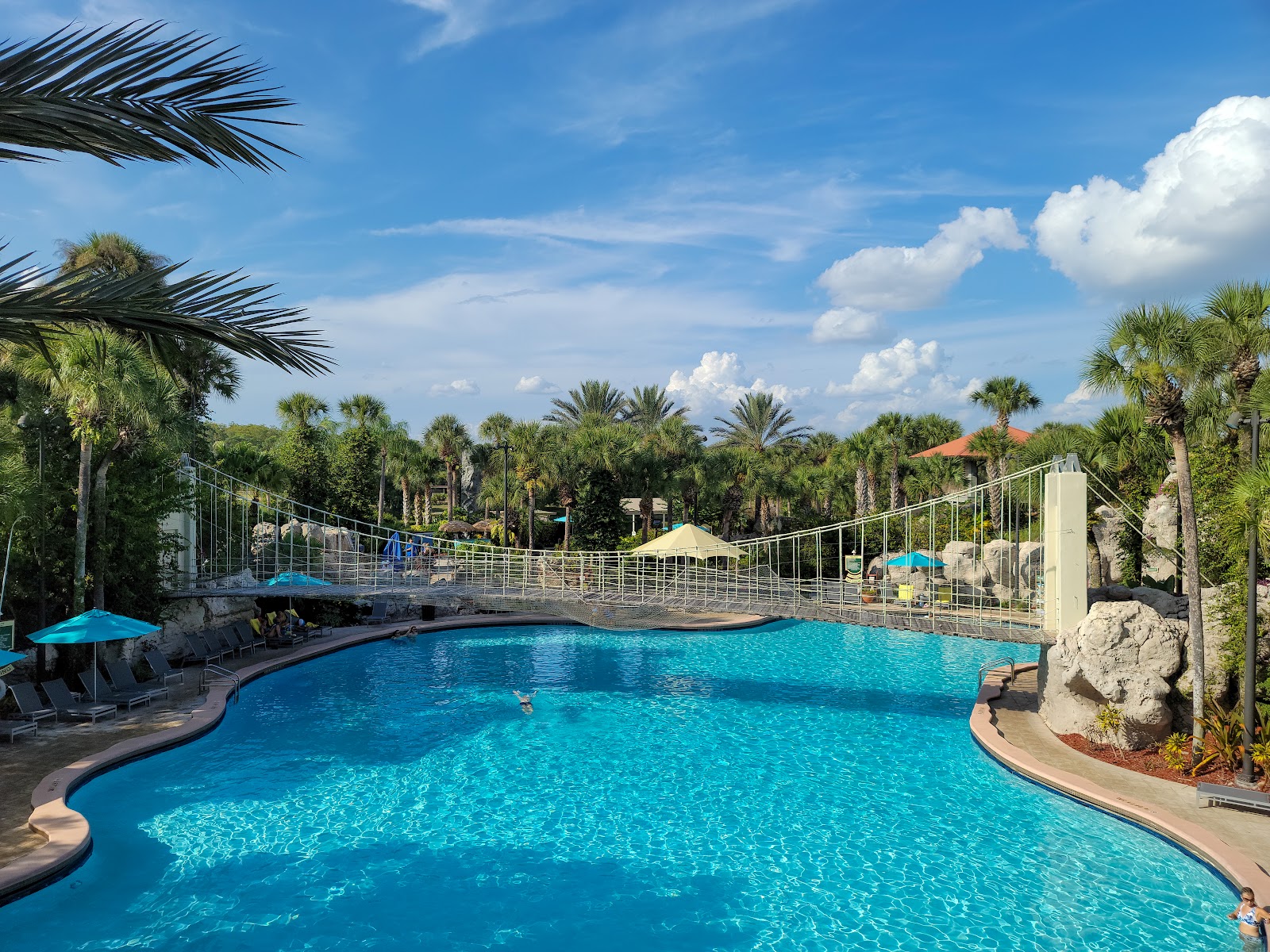
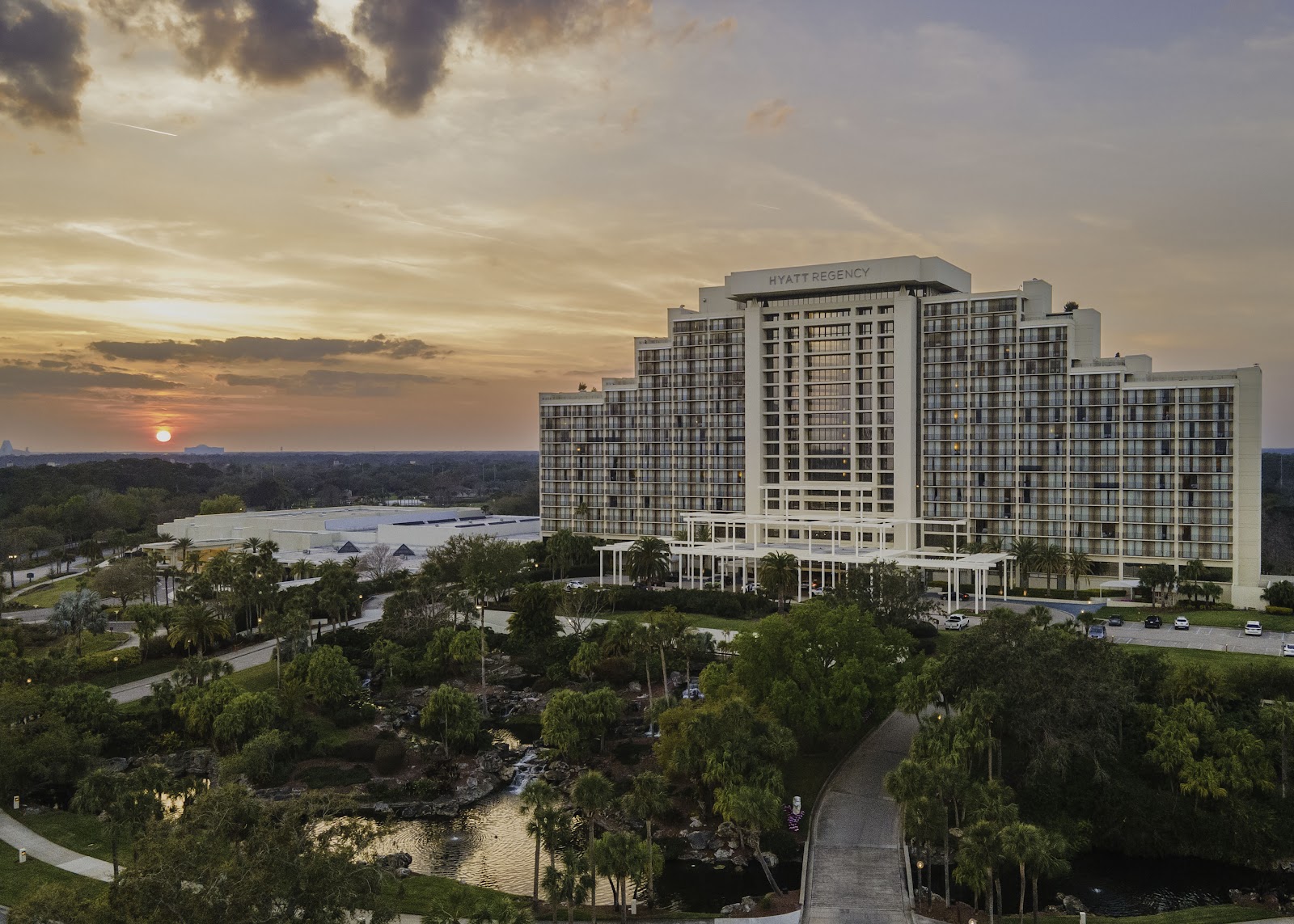
The Hyatt Regency Grand Cypress, Orlando: The Light Through the Day
An eighty-five degree sun and a twenty-one minute dusk. Follow the day.
Two numbers shape every hour at a central Florida resort and both are consequences of the latitude.
The first is that the midsummer noon sun reaches about eighty-five degrees — within five degrees of directly overhead, and higher than anywhere else in this library. That is a genuinely extreme overhead condition and it dominates the middle of the day from roughly May through September.
The second is that civil twilight runs about twenty-one minutes, the shortest figure in this library. The end of the day is brief, which means the best light arrives and departs quickly and the schedule has to protect it.
Between those two, the day has a sharp shape: a difficult middle and two short good ends, with the good ends shorter than a northern photographer’s instincts expect.
The third governing fact is the humidity, and it works the other way. Central Florida summer dewpoints sit in the mid-to-high seventies, which means water vapour scatters light in every direction and fills shadows substantially — a sunlit lawn in July here carries perhaps two and a half stops less contrast than the same sun angle in Arizona.
So the overhead sun is extreme and the fill is generous, and those partly cancel. The practical result is that a midday portrait in open shade at this latitude is genuinely workable, where the same sun angle in a dry climate would be unusable.
And the fourth is the planting, which a resort of this scale maintains to a standard few private venues match. In central Florida that means live oak, sabal palm, crape myrtle, bougainvillea and mature specimen material — and live oak in particular is the practical answer to the overhead sun.
Orlando sits at about twenty-eight and a half degrees north at close to a hundred feet, on the karst lake landscape of central Florida. Days run from about ten hours twenty to fourteen hours, a narrow range that makes the schedule less seasonal here than almost anywhere else.
What follows is the day in order. We have not photographed a wedding here; which spaces are bookable, what each faces and the permitted hours are questions for the resort.
The Hyatt Regency Grand Cypress at a glance
| Where | A large resort near Orlando with a lake and mature subtropical planting |
| The extreme | An eighty-five degree midsummer noon sun — the highest in this library |
| The compensation | Humidity fills shadows about two and a half stops against a dry climate |
| The constraint | Twenty-one minutes of civil twilight, the shortest here |
| The answer | Live oak, which is evergreen and casts solid shade in any month |
Morning into midday
The first two hours are the best light of the day and they are the calmest, which makes them doubly worth using.
With the sun below fifteen degrees the beam travels almost horizontally, raking across lawns and paving so that every contour and edge throws a long shadow. On a resort site with manicured landscape that reveals the design — bed edges, path curves, the shape of a lawn — which a higher sun erases entirely.
The air is also at its stillest. Central Florida’s sea breeze reaches inland through the afternoon, so mornings are calm and the lake surface is at its most mirror-like — which means the reflection frames belong in the first hours and nowhere else.
A still lake doubling the sky, the planting and any lit building is the best water frame the site can produce, and it is available for perhaps ninety minutes.
Dew is the other morning bonus and it is brief. On a clear calm morning, dew sits on grass and foliage and is gone within an hour of the sun reaching it — and backlit dew on a leaf edge or a lawn is a texture available at no other time.
Fog is occasionally available and it is worth knowing about. Central Florida is a karst landscape dotted with lakes, and on a clear calm morning after a warm damp day, shallow mist forms over the water and in low ground, burning off within an hour of sunrise. It is unplannable and it is genuinely striking in a subtropical setting.
Through mid-morning the sun climbs fast at this latitude — faster than a northern photographer expects — and by nine or ten the raking has gone. The lawns flatten, the beds lose their modelling, and the light begins to come from above rather than across.
This is when the day moves under the canopy, and live oak is the reason it works.
Live oak is an evergreen broadleaf that holds its leaves year-round and forms a very broad, low, dense crown — sometimes wider than it is tall, with heavy horizontal limbs. That density means it blocks the direct beam almost entirely, and the space beneath sits several stops below the open ground.
So a subject under a mature live oak at midday is in genuine solid shade with no dapple to manage, which makes the middle of the day workable. That is the single most important practical fact at this latitude, and it holds in January as in July because the canopy never leaves.
The trade is the ratio. A subject in live oak shade with sunlit lawn beyond them is a four-stop frame — so either fill them to within about a stop and a half of the background, or expose for the faces and let the lawn blow, which reads as bright subtropical light rather than as error.
Spanish moss hanging from the limbs is worth backlighting: grey-green, translucent, and it glows against a low sun. It is one of the most distinctive details the region offers and it places a frame immediately.
By the middle of the day the site is at its hardest in the open and its easiest under canopy. At eighty-five degrees the sun is nearly vertical: a face in the open has shadowed eye sockets, a bright forehead and a hard nose line, and the lawns are a flat bright field with no shape.
The humidity softens all of that by a genuine margin — perhaps two and a half stops of contrast compared with a desert at the same angle — which means open shade at noon exposes normally and looks fine. That is the practical difference between Florida and Arizona and it is worth knowing rather than assuming desert rules apply.
Sabal palm is the other tree here and it needs understanding rather than using. The state tree of Florida, it gives almost no useful shade — the crown is high and the fronds sparse, so the shadow is a small pattern well away from the trunk. As a background it is a strong graphic vertical and it photographs best against open sky.
Afternoon to dark
The afternoon brings the sea breeze, the convection and then a very short window of excellent light.
From early afternoon the breeze reaching inland from the coast breaks the lake surface and moves the planting. That ends the mirror frames and makes the specular ones available instead: a low camera turns rippled water into a bright path of highlights running toward the lens, and dropping to knee height stretches that path across the whole frame.
It also means a fast shutter for hair and fabric — a five-hundredth rather than a two-hundred-and-fiftieth — and it means a modifier on an unweighted stand is a risk rather than a certainty.
From roughly June through September the afternoon also brings convection. Central Florida sits between two coasts, and sea breezes advancing from each side converge inland — which produces towering cumulus building through the late morning and thunderstorms in the early afternoon, almost daily in the wet season.
That is genuinely dramatic and genuinely hazardous. Central Florida receives more lightning than anywhere else in the United States, which for an outdoor ceremony in summer means the covered alternative must be real and reachable in minutes rather than listed on a website.
The compensation is that the half hour after a cell passes is the best light of the year. Washed air, wet paving reflecting the sky, saturated planting, a low sun under a broken ceiling — and wet live oak bark and Spanish moss darken and saturate in a way that dry canopy never does.
Through mid-afternoon the light improves steadily as the sun descends. Once it is below thirty degrees the lawns regain their raking, the canopy edges begin to rim, and the beam warms as it travels a longer air path.
The last ninety minutes are what the site is for and there are three frames to know.
Backlit at a canopy edge, with a low sun behind the trees: leaf edges rim, Spanish moss glows, trunks silhouette, and a subject standing just inside the shade is haloed with dark canopy behind them. Block the sun behind a trunk to get the rim without the flare.
Front-lit on the lawn or at the water, with the sun low behind the camera: warm modelled faces, the lake or the planting behind, and the water filling from below — an effect that strengthens sharply at grazing angles, so it is at its best in exactly this hour.
And the silhouette, with a sabal palm or a live oak against a colour sky, which at this latitude is often substantial after a storm-washed day.
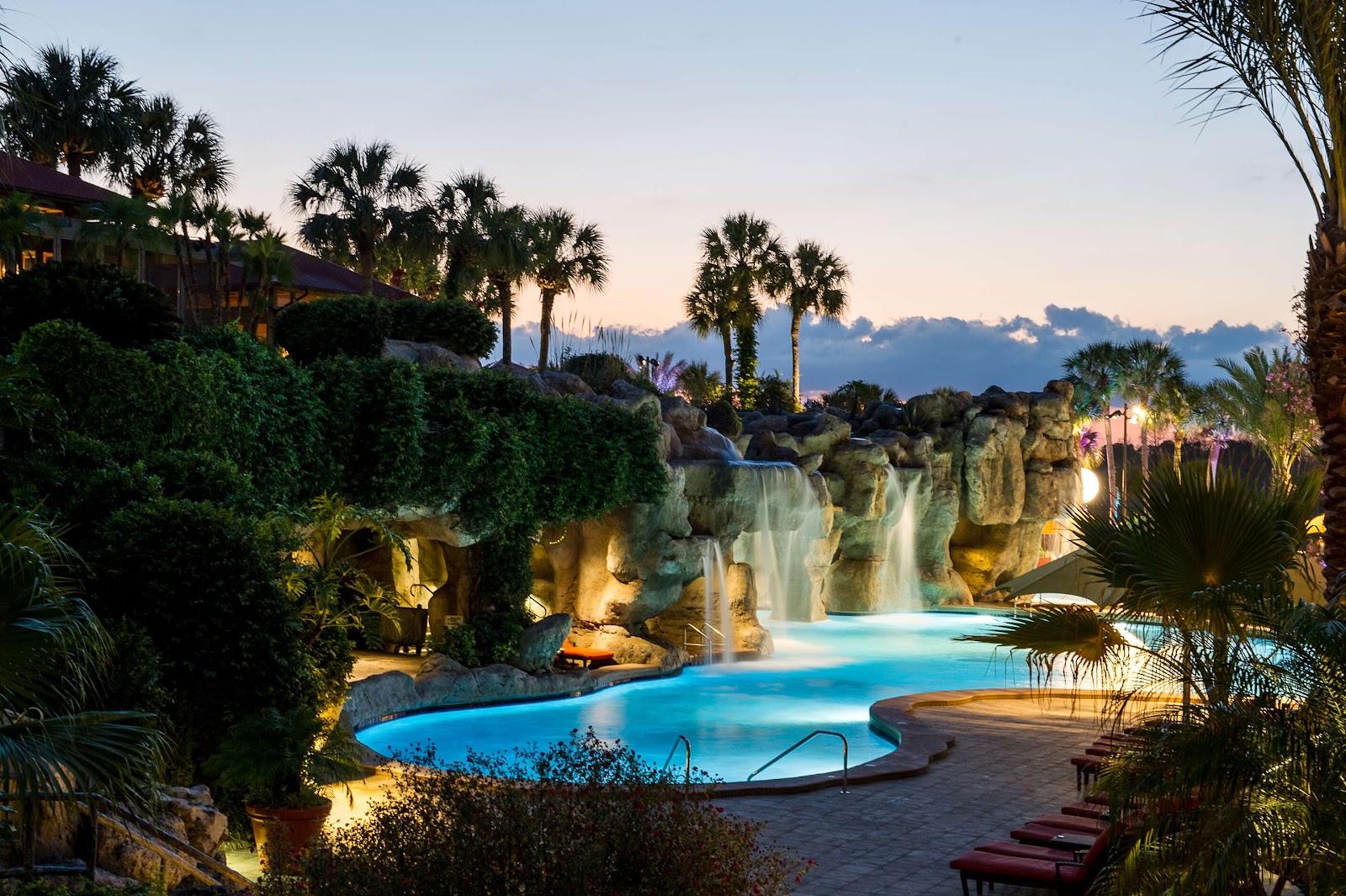
Then the dusk, and it is the shortest in this library. Twenty-one minutes of civil twilight means the balance point where the sky and any resort lighting are equal lasts perhaps eight or ten minutes — and being in position with the frame composed before it starts is the difference between getting it and getting a version of it.
Two or three planned setups fit. Improvisation does not.
The frame worth scheduling is the lake at that balance point: sky still holding deep blue, resort lighting on, water doubling all of it, and a couple lit by a warm-gelled source at about a stop under the ambient.
After dark the resort’s own lighting carries the frames. Warm tungsten or warm LED throughout means gel everything to match and drag the shutter to a thirtieth or sixtieth so the fixtures register — a frame exposed only for flash renders a resort anonymous.
One equipment note that matters here more than anywhere. Moving from an air-conditioned interior into humid outdoor air fogs a lens within seconds and takes minutes to clear. On a day that alternates between cooled ballrooms and subtropical exteriors, that is repeated rather than occasional, and the fix is to carry the camera warm rather than leaving it in the cool while waiting.
- Mornings are calm: the mirror frames belong in the first ninety minutes
- Live oak is the midday answer — solid shade, no dapple, in any month
- Humidity fills shadows two and a half stops against a dry climate
- Knee height lengthens the specular path across the whole lake frame
- Twenty-one minutes of twilight: compose before it starts, not during
The Florida year, reversed
Central Florida’s calendar runs opposite to most of this library and the reversal is emphatic rather than marginal.
December through April is the season. Mild, dry, sunny and comfortable, with a December noon sun of about thirty-eight degrees that models rather than flattens — which means the whole short day has directional light and there is no bad hour at all.
That is worth stating as a positive rather than as heat avoidance. A January wedding here has good light continuously, comfortable temperatures, and evergreen planting that looks exactly as it does in summer. A winter date in central Florida is a genuinely better photographic proposition than a summer one.
It is also the busiest season in Orlando, which is worth knowing when booking.
The evergreen point deserves emphasis because it is unusual in this library. Live oak, sabal palm, palmetto and most of the region’s ornamental planting hold their foliage year-round — so unlike a northern venue, there is no bare season and no month in which the landscape is simply absent.
The corollary is that there is almost no autumn colour. Nothing in an October frame here says October, because the vegetation does not turn. What October and November give instead is the driest, clearest air of the year and the first comfortable temperatures after the wet season — which on a site with a lake and long sightlines matters more than foliage would.
Crape myrtle is the flowering exception worth timing. It blooms pink, white or magenta from June through September — precisely the months when nothing temperate is in flower — and it has smooth mottled bark that peels in patches and photographs well at close range.
Bougainvillea is the reliable colour. Its display is in bracts rather than petals, which means it holds for months rather than weeks, and against a warm stucco wall it is the strongest dependable colour a Florida resort has.
And azaleas flower in March in older plantings, which is the strongest single colour event of the Gulf South year.
June through September is the constraint and it is severe. Afternoon temperatures in the nineties with dewpoints in the mid-to-high seventies is genuinely oppressive, and for a party in formal clothing outdoors it is a welfare matter rather than a comfort one.
The practical shape of a summer day here is the ends and the interior: first two hours outside, the middle indoors or under canopy, the last ninety minutes outside again. That works, and it requires accepting that the grounds are available for perhaps four hours of a fourteen-hour day.
Hurricane season runs June through November and it is a real planning consideration for a Florida date rather than a theoretical one — not because a hurricane is likely on any given date, but because the season affects insurance, contingency and the honest conversation a couple should have before booking.
Two closing notes about the landscape. Central Florida is karst — a limestone landscape dissolved into sinkholes, which is why it is dotted with lakes rather than crossed by rivers. That means the water on a resort site is a natural feature or a modification of one, and the lakes are generally shallow, warm and dark-bottomed, which makes them less reflective of colour than a deep northern lake and more reflective of sky.
And the ground is flat. Central Florida has no relief to speak of, which means there are no elevated viewpoints, no slopes to separate a subject from a background, and a horizon that is level in every direction. Separation has to come from tone, from focus or from the canopy, and a level horizon matters more than it does in hilly country because any tilt is immediately obvious.
More frames from The Hyatt Regency Grand Cypress
The Hyatt Regency Grand Cypress wedding photography: common questions
What is the hardest thing about this latitude?
The midsummer noon sun reaches about eighty-five degrees — the highest in this library — which is nearly vertical and dominates the middle of the day.
What makes it workable anyway?
Humidity. Dewpoints in the mid-to-high seventies fill shadows about two and a half stops compared with Arizona, so open shade at noon exposes normally.
What is the practical midday answer?
Live oak. Evergreen, broad and dense, it blocks the beam almost entirely and gives solid shade with no dapple — in January as in July.
When are the lake reflections?
The first ninety minutes. The sea breeze reaches inland through the afternoon and breaks the surface, which then gives specular frames instead.
How short is the dusk?
About twenty-one minutes of civil twilight, the shortest in this library, with perhaps eight to ten usable minutes at the balance point.
Is there autumn colour?
None. The vegetation is evergreen, so nothing in an October frame says October. What October gives is the clearest air and the first comfortable temperatures.
More Florida venue guides
We are writing a photographer’s guide to every venue we would happily shoot in Florida. Here are three more, plus the full index:
- The Lightner Museum, St. Augustine: The Problem, and Four Ways Out of It
- The Ponce de Leon Hotel, St. Augustine: A Walk Through the Building
- The SeaWorld Orlando: Field Notes
Planning a wedding at The Hyatt Regency Grand Cypress?
Subtropical light, worked hour by hour. Tell us your date.