 Roots Run Deep, Fruita: The Site’s Own Logic
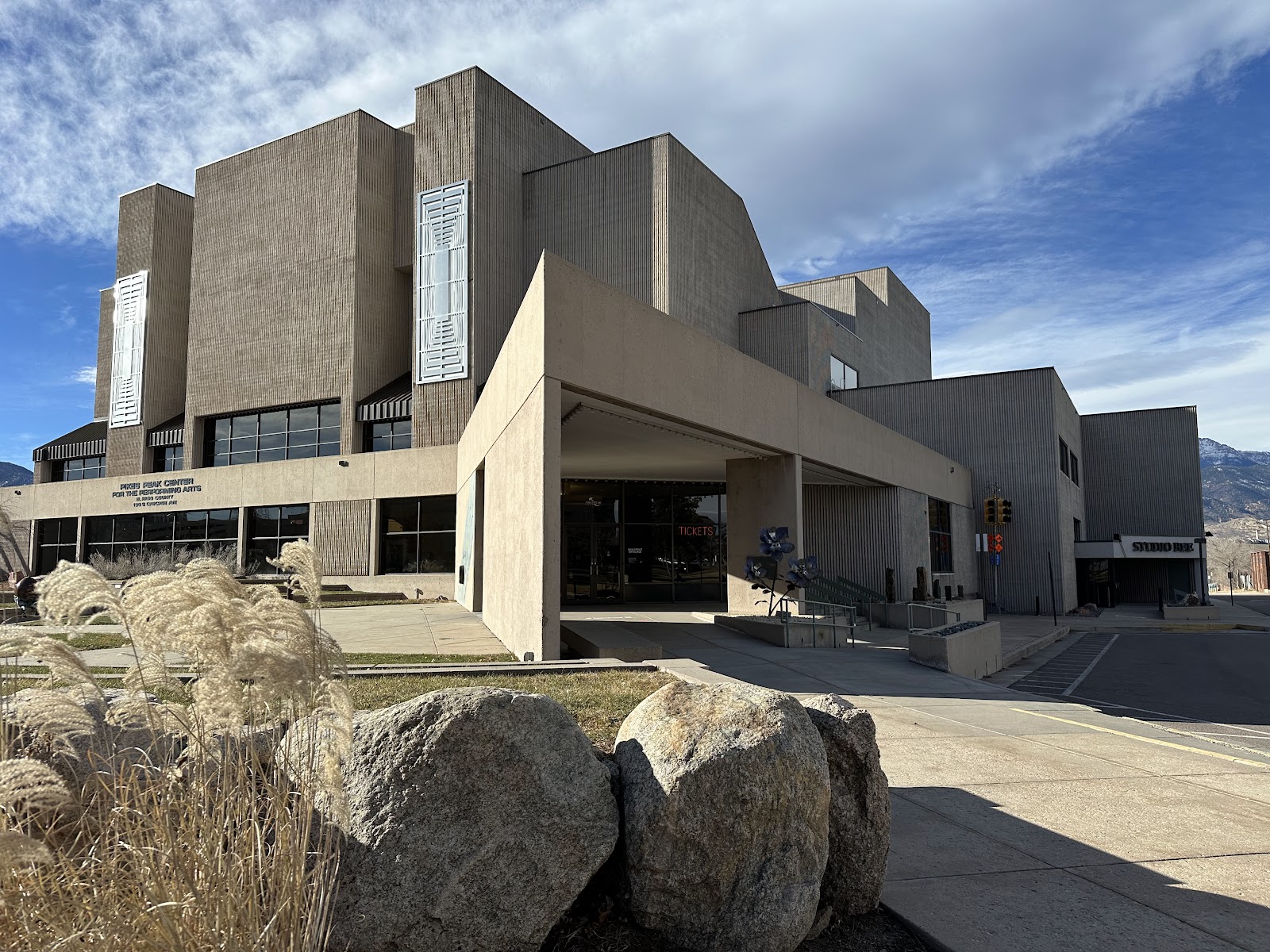
The Pikes Peak Center: The Problem, and Four Ways Out of It
Built to keep light out. Four ways to work with that.
The problem at a performing arts centre is designed in rather than incidental: the building exists to exclude daylight.
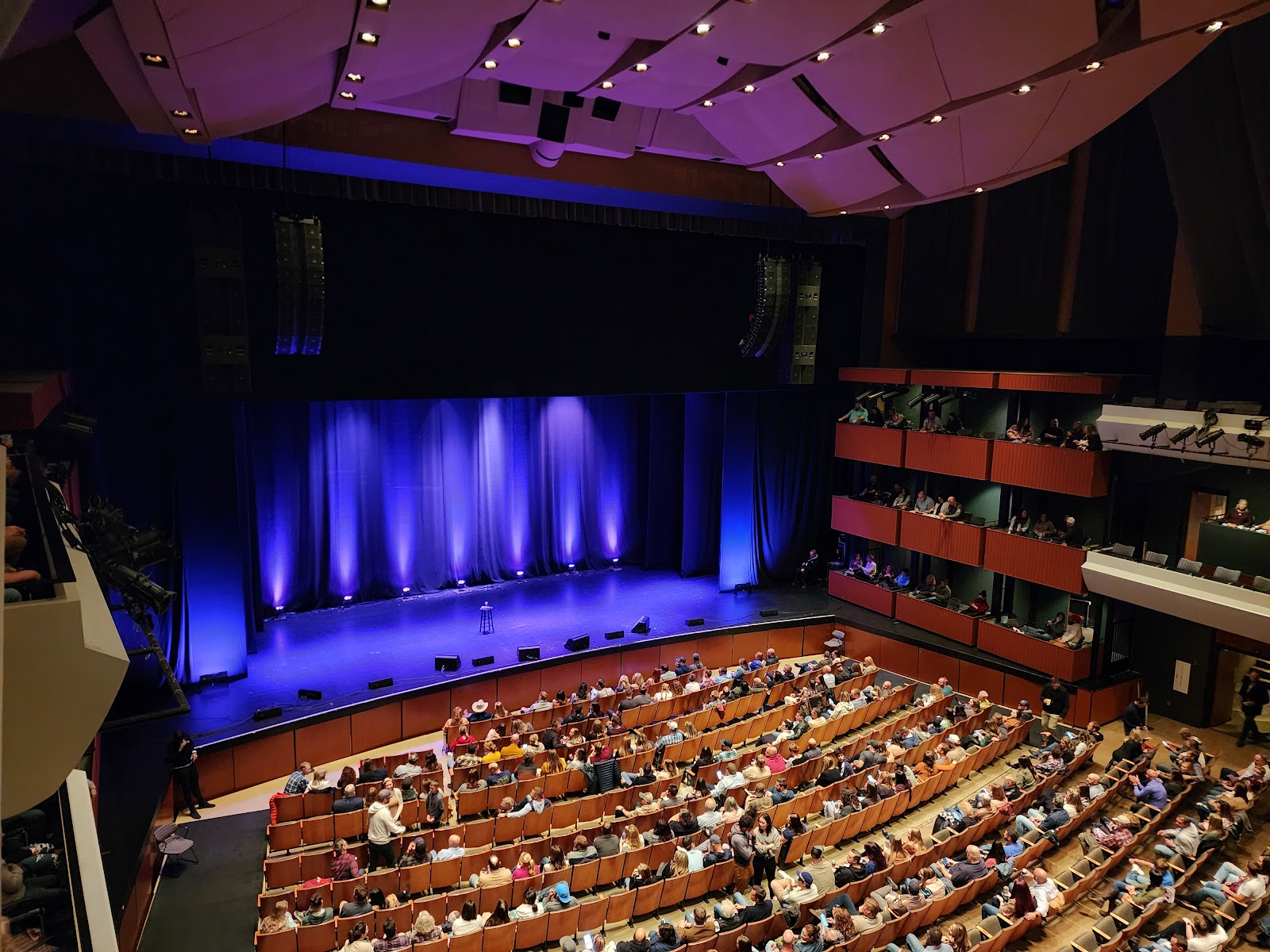
A concert hall needs darkness for the stage to read and acoustic isolation for the sound to work. That means the auditorium has no windows at all, and it is wrapped in circulation, plant and structure that further separate it from the outside — so the daylight is confined to the lobbies and whatever glazing faces the street.
Four problems follow from that.
The hall itself is windowless and very large, which means nothing portable lights it and the distances defeat ordinary technique. A source correct at three metres is four stops down at twelve, so a flash aimed across a hall seating two thousand does nothing at all.
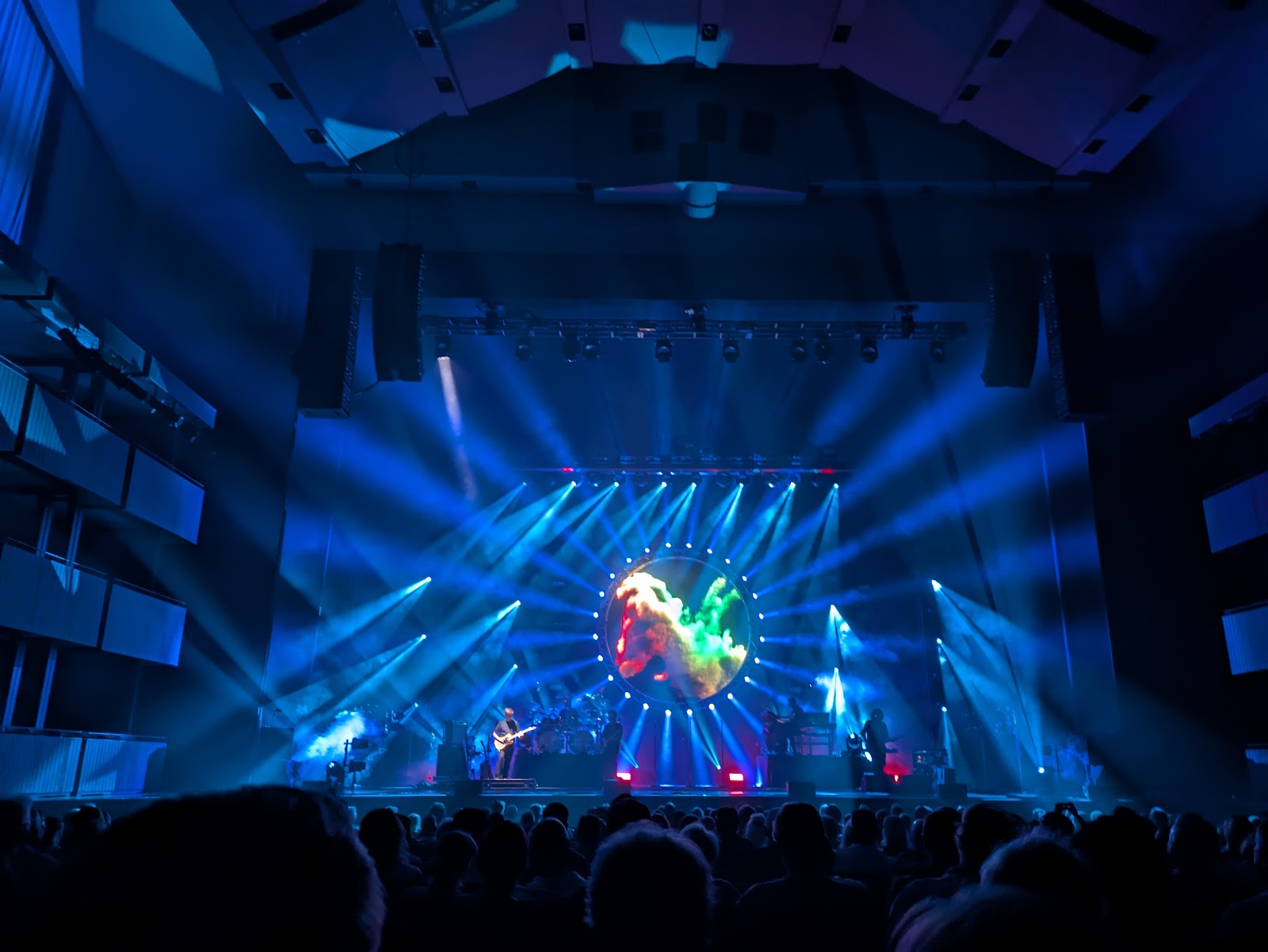
The house lighting is designed for an audience finding its seats and for performers on a stage, not for faces at close range — which means levels that are low, warm and uneven, and stage lighting that is heavily gelled.
The finishes absorb. Modern concert halls use timber, fabric and acoustic panelling on almost every surface precisely because those materials absorb rather than reflect — which is excellent acoustically and means bounce returns very little.
And the interiors are consistent to the point of being featureless. A purpose-built hall has no daylight variation, no seasonal change and no weather, so every frame taken inside looks the same at any hour of any month. That is a genuine advantage for reliability and a problem for variety across a long day.
The compensations are real. A working hall has a controllable rig, staff who understand lighting, tiered seating that gives camera positions at several heights, and a stage — which is the best portrait position in any theatre.
Colorado Springs sits at about thirty-eight and three-quarter degrees north at roughly six thousand feet, which matters for the minutes spent outside rather than for anything indoors. The June noon sun reaches around seventy-four and a half degrees, the December noon sun about twenty-seven and a half, and civil twilight is roughly twenty-seven minutes.
What follows is four ways out. We have not photographed a wedding here; which spaces are bookable, whether the rig is available to you and the permitted hours are questions for their team — and the second is the one that changes what is possible.
The Pikes Peak Center at a glance
| Where | A performing arts centre in downtown Colorado Springs, Colorado |
| The problem | Built to exclude daylight. The hall is windowless and very large |
| The materials | Timber, fabric and acoustic panelling — all designed to absorb |
| The compensation | A controllable rig, tiered camera positions, and a stage |
| Ask first | Whether the stage lighting rig is available to you |
Way one: use the rig
The first and best answer is to use the building’s own lighting, because a working hall has far more of it than anything a photographer carries.
The most valuable request is the simplest and almost nobody makes it: ask for the house lights at full. House lighting in a concert hall goes considerably brighter than it ever is during a performance, because the room has to be lit for cleaning, rigging and audience movement — and at full it is enough for a wide frame on a tripod at a moderate ISO.
With the house up, the wide frame is worth setting up properly: camera low on the centre aisle or from a balcony rail, with the tiers, the stage and whatever acoustic or architectural detail the hall has all reading. That is the photograph that says where this was, and it needs a tripod and a couple of seconds rather than anything clever.
With the house down, the approach inverts: a single controlled source on the couple with the vast dark room behind them, using the darkness rather than fighting it. That is the more atmospheric frame and it suits the building.
What fails is the middle — several flashes trying to light a hall seating thousands, which produces a bright foreground against blackness and reads as a badly lit small room rather than a large one.
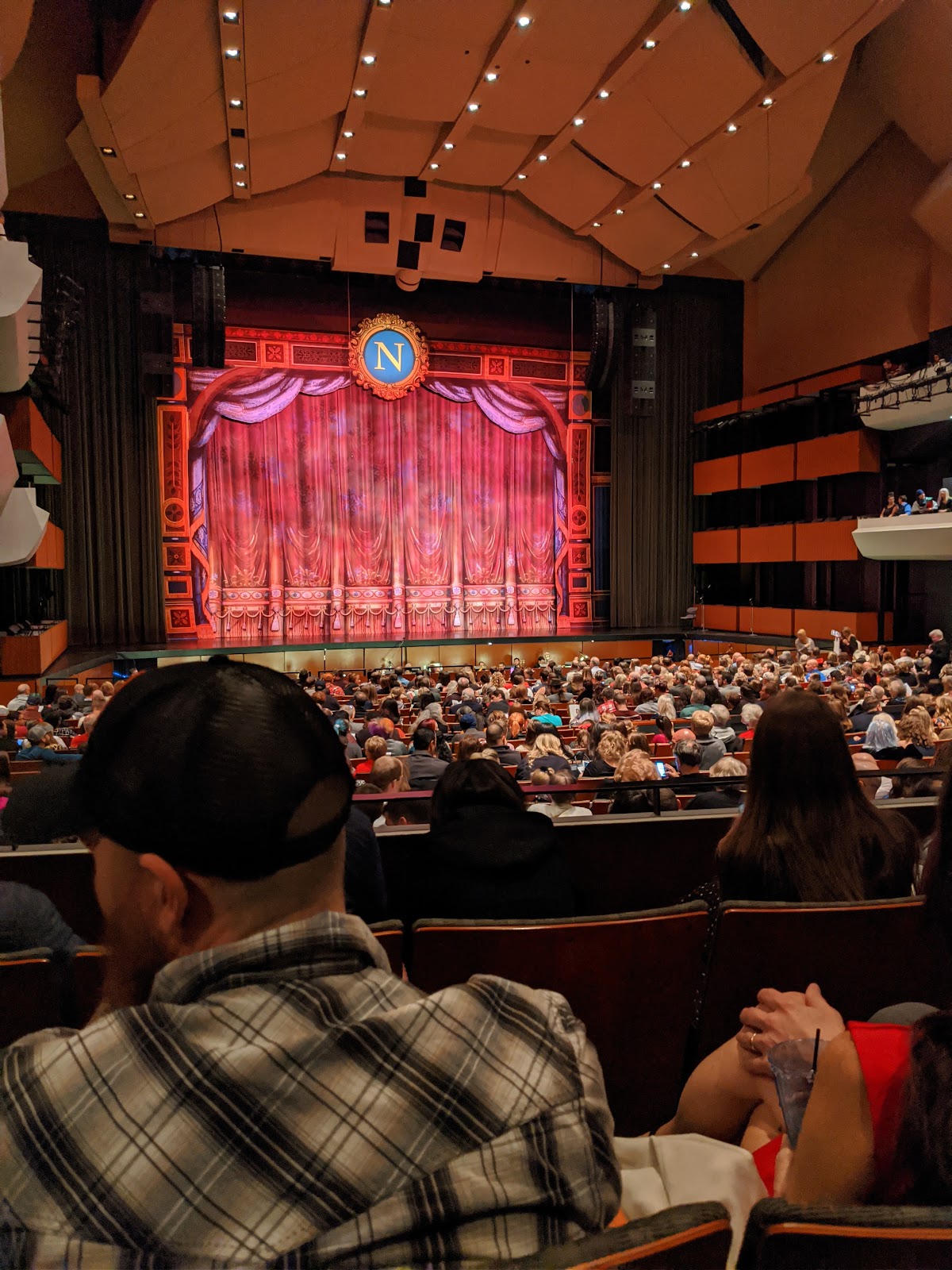
The stage is the best position in the building and it is worth using deliberately. A subject standing on it is above the camera, which flatters; framed by the proscenium or the rig, which supplies composition; and there is already substantial output aimed at exactly where they will stand.
Ask for a neutral wash for five minutes of portraits. Theatrical fixtures are heavily gelled, and a magenta or amber face is unrecoverable toward neutral — set white balance on skin and let the colour be the look, or have staff bring up something close to white. They will usually oblige and hardly anyone asks.
A followspot, if one can be operated, gives the most theatrical frame the building can make: a couple in a hard pool on a dark stage with everything else black. Expose for the pool and let the rest go.
The tiers give the height and it is the building’s scarcest resource. Shooting from a balcony rail down onto a ceremony on the stage or the floor shows the room’s geometry and the people at once — and that is the frame that explains what the venue is. Ask whether the upper levels are accessible, because a locked balcony removes the best wide angle in the building.
One practical note about seating. A hall’s seats are fixed, which means the ceremony happens where the room allows and the camera positions are the aisles, the stage and the balconies. That is a real constraint and it is worth walking in advance, because there are fewer options than an empty room suggests.
Ways two and three: the lobbies, and the absorbing finishes
The second answer is the lobbies, which is where most of a wedding actually happens and where the daylight is.
A modern performing arts centre puts large circulation space outside its hall — for interval crowds and bars — and those spaces are frequently glazed to the street, generously proportioned, and empty between performances.
A glazed lobby is a very large side source, and three or four metres in from the glass is the best unassisted light in the entire building. Arrange groups parallel to the glazing rather than across the space, because perpendicular puts one end of a row three stops below the other.
The exposure trap is the view, and at six thousand feet in clear Colorado air it is worse than usual, because the exterior is brighter than at sea level for the same sun angle. Holding both interior and exterior means adding light inside to within about a stop and a half of the outside, or accepting blown glazing and composing so it reads as a clean shape rather than a hole.
Stairs are the other lobby asset. A public building’s stairs are wide and shallow with substantial balustrades, designed for crowds moving in both directions — and they give the reliable three frames: from below looking up, from a landing looking down, and from across the space at landing height, which is the one that shows the stair as architecture and the one most people skip.
The third answer is to work around the absorbing finishes rather than against them.
Acoustic design means timber slats, fabric panels, perforated surfaces and heavy drapes on almost every interior surface — all chosen because they absorb sound, and all of which absorb light for the same structural reasons. A flash aimed at an acoustic panel returns almost nothing.
So the method indoors is direct light through a modifier rather than bounce, with a rim from behind. The rim matters more here than almost anywhere, because a subject lit only frontally against a dark absorbing surface loses their edges entirely and merges into the background.
Where there is a pale plaster or painted surface — usually in the lobbies rather than the hall — bounce works normally, and it is worth identifying those on arrival rather than assuming either way.
Gel to match. A performing arts centre is lit by warm tungsten or warm LED at modest levels in the public spaces, and a daylight-balanced flash against that puts a blue-white face in a warm room. A quarter to a half warm gel with a correspondingly warm white balance resolves it.
Drag the shutter so the fixtures register. The house lighting, any feature lighting and lit signage are what make the building read as a theatre rather than a corridor, and a frame exposed only for flash renders them dark and the space anonymous. A thirtieth to a sixtieth on a wide lens is the range.
One genuine advantage of an absorbing interior is worth stating: it gives total lighting control. In a bright reflective room a single flash becomes many sources as every surface returns it; in an acoustically damped hall, a single source stays a single source, and the only light in the frame is the light you placed.
That means a photographer with one gridded speedlight in a concert hall has more command over a portrait than one with three heads in a white marquee. It is worth using for at least one deliberately sculptural frame — a hard key, a rim, and nothing else.
- Ask for the house lights at full — they go far above performance level
- Ask for a neutral stage wash for five minutes of portraits
- Three metres in from lobby glazing is the best unassisted light here
- Direct through a modifier with a rim; acoustic panelling returns nothing
- Absorbing interiors give total control — use it for one sculptural portrait
Way four: go outside, and the altitude
The fourth answer is to leave the building, and downtown Colorado Springs at six thousand feet is worth the ten minutes.
The altitude is the governing fact outdoors and it changes every default. Roughly twenty percent less atmosphere above the camera means less scattering, which gives a more intense direct beam, shadows with almost no fill, a deeper blue sky, and exceptional clarity over distance.
The practical consequence is higher contrast than sea-level experience suggests: put subjects entirely in sun or entirely in shade, because half and half at six thousand feet is a five-stop problem.
The colour consequence is the most reliable correction in Colorado. Open shade is lit almost entirely by that deep blue sky and reads distinctly cool, while sunlit brick or stone reads warm — so warm-gel every source by a quarter to a half as a default. An ungelled flash in downtown shade gives a slightly green face in a warm frame.
Pikes Peak is the landmark and from downtown it dominates the western view — over fourteen thousand feet, a dozen miles off, some eight thousand feet above the city. Thin clear air means it holds detail on a long lens where the same distance in humid country would dissolve.
It is a morning subject, because its eastern face is front-lit early and in its own shadow by afternoon. And it wants compression: a wide lens renders it as a low pale ridge across the top of the frame, while a long telephoto brings it forward into mass.
It also shortens the day. A fourteen-thousand-foot mountain to the west blocks the sun earlier than a flat horizon would, so the golden hour downtown ends before an app predicts — sometimes substantially.
The compensation is the lag, which is the region’s most reliable good light. After the sun drops behind the range, the high rock stays lit while the city goes into shade — giving a subject in soft even shadow against a warm lit mountain, at a ratio one modest source bridges. It happens every clear evening.
Civil twilight is about twenty-seven minutes, which is short, and the mountain makes the usable end of the day shorter still. Two or three frames known in advance and walked to, without discussion.
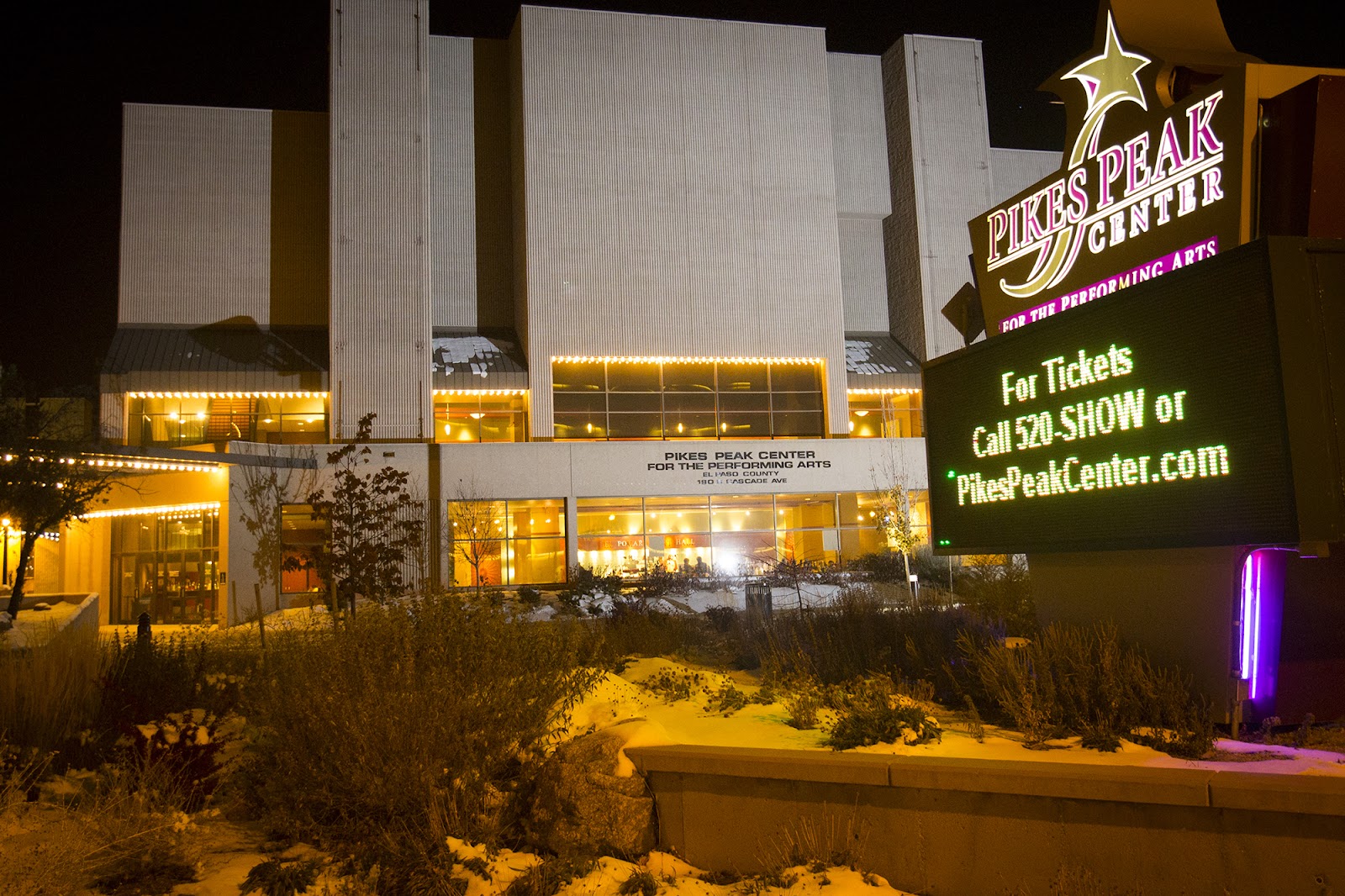
The frame worth scheduling then is the building lit from within against a deep blue sky, from the street — glazed lobbies glowing, which is the only condition in which a performing arts centre’s glazing reads properly from outside. It takes ten minutes.
The year matters mainly for those ten minutes, because the interior does not care.
Late September into early October is the best window: the storm season has ended, the air reaches its clearest of the year, the Gambel oak in the foothills turns russet-bronze, aspen at altitude goes gold in clonal blocks, and Pikes Peak has taken its first snow. A snow-capped summit against a deep blue sky is the state’s signature frame and it is available from roughly October into June.
Summer brings near-daily afternoon thunderstorms from July into August, with the Front Range among the most hail-prone regions in North America — which for a fully indoor venue is a non-event and which gives the best exterior light of the year in the half hour after a cell passes: washed air, wet streets reflecting the buildings, a low sun under a broken ceiling.
Winter is milder than the latitude suggests, because the altitude sun is intense and Chinook winds can lift temperatures thirty or forty degrees in hours. The day is nine and a half hours and the twilight twenty-seven minutes, which makes the blue-hour frame arrive around five — comfortably before a reception rather than in the middle of it.
And that is the honest strength of a windowless venue in this climate. A building with no daylight is indifferent to hail, wind, snow and a nine-hour December day, and its best frames are identical in any month. Everything variable about Colorado happens in the ten minutes spent outside, and if the weather takes those away, nothing else about the day changes.
More frames from The Pikes Peak Center
The Pikes Peak Center wedding photography: common questions
What is the single most useful request?
House lights at full. They go far brighter than any performance level, which makes a tripod wide frame of the hall possible — and hardly anyone asks.
Should I try to light the auditorium?
No. A source correct at three metres is four stops down at twelve, so anything portable gives a bright foreground against blackness. Use one light and the darkness.
Why doesn't bounce work?
Acoustic design uses timber slats, fabric and perforated panels because they absorb — and they absorb light for the same reasons. Go direct with a rim.
Is there an advantage to that?
Total control. A single source stays a single source, so the only light in frame is what you placed. Worth one deliberately sculptural portrait.
Where is the daylight?
The lobbies. Three or four metres in from street glazing is the best unassisted light in the building, with groups arranged parallel to the glass.
Does the season matter?
Only for the ten minutes outside. A windowless building is indifferent to hail, wind and a nine-hour December day, and its frames are identical year round.
More Colorado venue guides
We are writing a photographer’s guide to every venue we would happily shoot in Colorado. Here are three more, plus the full index:
- The Pinery at the Hill, Colorado Springs: One Frame, and How It Is Made
- The Vail Mountain Club, Vail: Field Notes
- The Willow Creek Farm, Westminster: The Light Through the Day
Planning a wedding at The Pikes Peak Center?
A hall that keeps the weather out entirely. Tell us your date.