 The Hilton Garden Inn Fargo: Field Notes on a Standardised Hotel
The Rough Riders Hotel, Medora: The Venue’s Own Logic
A frontier hotel with badlands on three sides.
The logic of this building is that it was put up in 1884 at a railhead in the middle of nowhere, and the nowhere is the interesting part.
Medora was founded as a cattle-shipping town on the Northern Pacific line where it crosses the Little Missouri, and the hotel was built to house the people the railway brought. Theodore Roosevelt ranched a few miles away in the same years, and the hotel takes its name from the regiment he later raised.
What matters photographically is not the history but the geology. The town sits in a valley cut into the Little Missouri badlands — a landscape of soft sedimentary rock eroded into buttes, gullies and terraces, exposed in horizontal bands of genuinely different colours.
Those bands are the thing. Grey-blue bentonite clay, tan and buff sandstone, seams of black lignite coal, and — most distinctively — red scoria, which is clay baked hard where a coal seam burned underground. The result is a landscape striped in blue-grey, tan, black and brick red, and it is unlike anything else in this library.
The red is worth understanding because it is everywhere once you notice it: scoria is used locally for road surfacing, which means the roads in this part of North Dakota are red, and a road running through badlands is a red line through banded rock.
So the building’s logic is that it is a modest frontier structure in an extraordinary landscape, and the photographic weight falls on the surroundings rather than on the architecture. A frame of the hotel is a frame of a nineteenth-century timber building; a frame from the hotel is a frame of the badlands.
The second part of the logic is the latitude and the exposure. Medora sits at about forty-seven degrees north at roughly two thousand three hundred feet, which is far enough north to give a midsummer day of almost sixteen hours and a midwinter one of barely eight and a quarter, with civil twilight running about thirty-eight minutes — among the longest in this library.
And the third is that this is genuinely remote. The nearest city of any size is a long drive, the town is small, and the infrastructure is seasonal — which affects everything from supplier logistics to whether anything is open.
We have not photographed a wedding here. What is bookable, what the seasonal operating dates are and the permitted hours are questions for the hotel — and the second matters more here than almost anywhere.
The Rough Riders Hotel at a glance
| Where | An 1884 hotel in Medora, in the Little Missouri badlands, North Dakota |
| The logic | A modest frontier building in an extraordinary landscape |
| The landscape | Banded sedimentary rock — blue-grey clay, tan sandstone, black lignite, red scoria |
| The latitude | About 47°N: a 38-minute twilight and a sixteen-hour midsummer day |
| Ask first | Seasonal operating dates, what is bookable, permitted hours |
The badlands, and how the light works on them
The banding is the subject and it behaves in a specific way that governs the hours.
Horizontal bands of differently coloured rock read most clearly when the light rakes across the face of a butte rather than striking it flat — because raking light emphasises the small ledges and recesses where softer bands have eroded back from harder ones, and those shadows separate the bands.
Under a high midday sun the same butte flattens into a pale washed mass with the colour drained out of it. At low sun the bands separate, the reds saturate, and the whole landscape acquires relief.
So the badlands are an ends-of-the-day subject emphatically, and midday is for interiors or for the deep shade of a gully.
The red scoria is the colour that does the most work and it is worth seeking specifically. Where a coal seam has burned, the baked clay above it is a genuine brick red — and in late light that goes to something close to orange, which against blue-grey bentenite below and a deep sky above is the most saturated combination the region produces.
The bentonite is the opposite and it needs watching. Grey-blue clay is a low-reflectance surface that goes almost slate-coloured in shade, and it is also slick when wet — genuinely slick, in a way that matters for anyone walking on it in wedding shoes. Bentonite swells and becomes greasy after rain, and it stays that way for a day or more.
That is a practical safety point rather than a fussy one, and it is worth knowing before anyone walks off a path.
Vegetation is sparse and each species is worth identifying, because there are only a few. Rocky Mountain juniper is the evergreen, growing on north-facing slopes where moisture persists — dark, dense and near-black in a photograph, which makes it the best natural separation available against pale rock.
Cottonwood grows along the Little Missouri and nowhere else, because it needs the water table. That gives the river bottom a line of large broad-crowned trees running through otherwise treeless country — the only substantial shade for miles, and the only thing that turns clear yellow in October.
The grasses are mixed-grass prairie: little bluestem, western wheatgrass, blue grama, needle-and-thread. Little bluestem is the one to know, turning a genuine russet-orange in autumn and holding that colour all winter because the dead growth stands until spring.
That means the badlands have warm ground colour for five or six months rather than two weeks, which is worth stating because it makes late autumn and winter far more photogenic here than in wooded country.
And petrified wood occurs in these formations, as sections of ancient trunk weathered out of the rock. It is a close-range detail rather than a landscape one, and it is the kind of specific thing worth one frame.
The hotel, the town and the wind
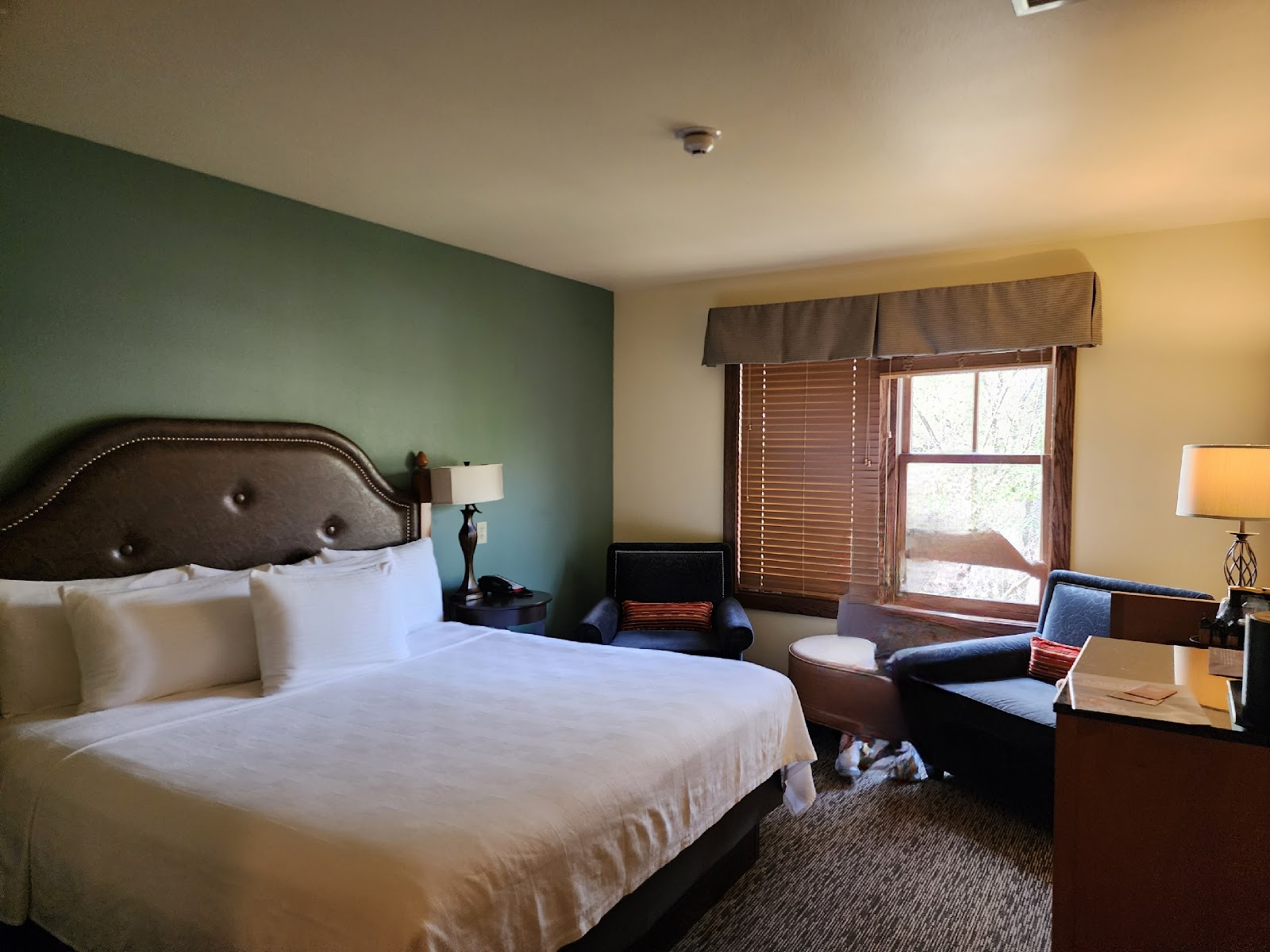
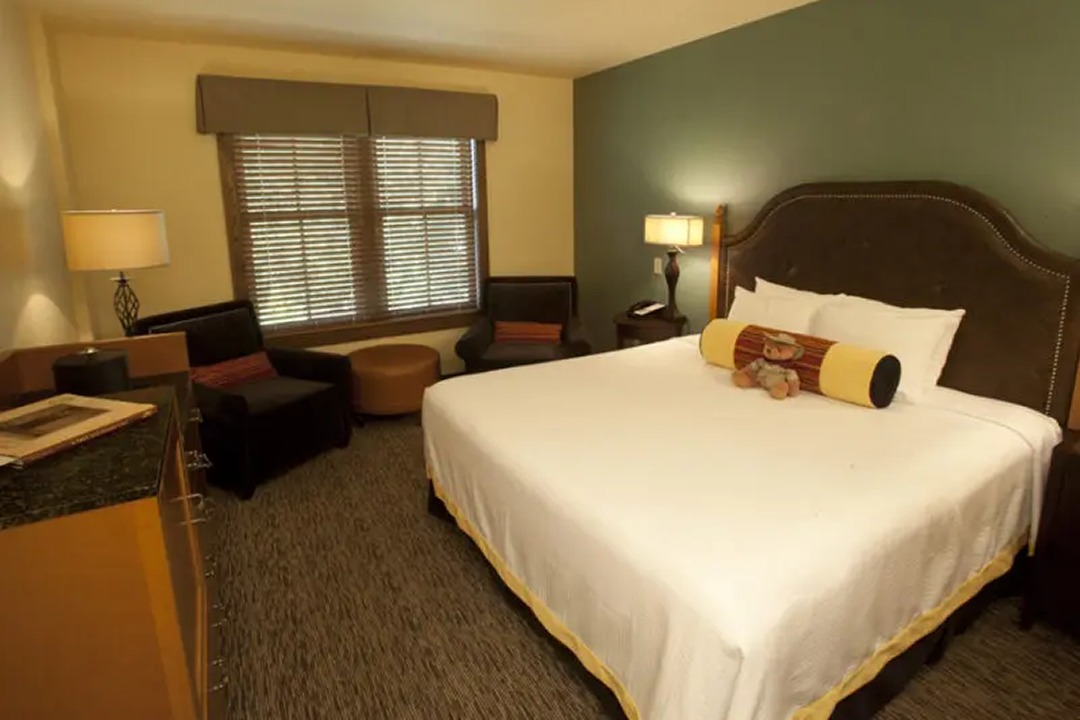
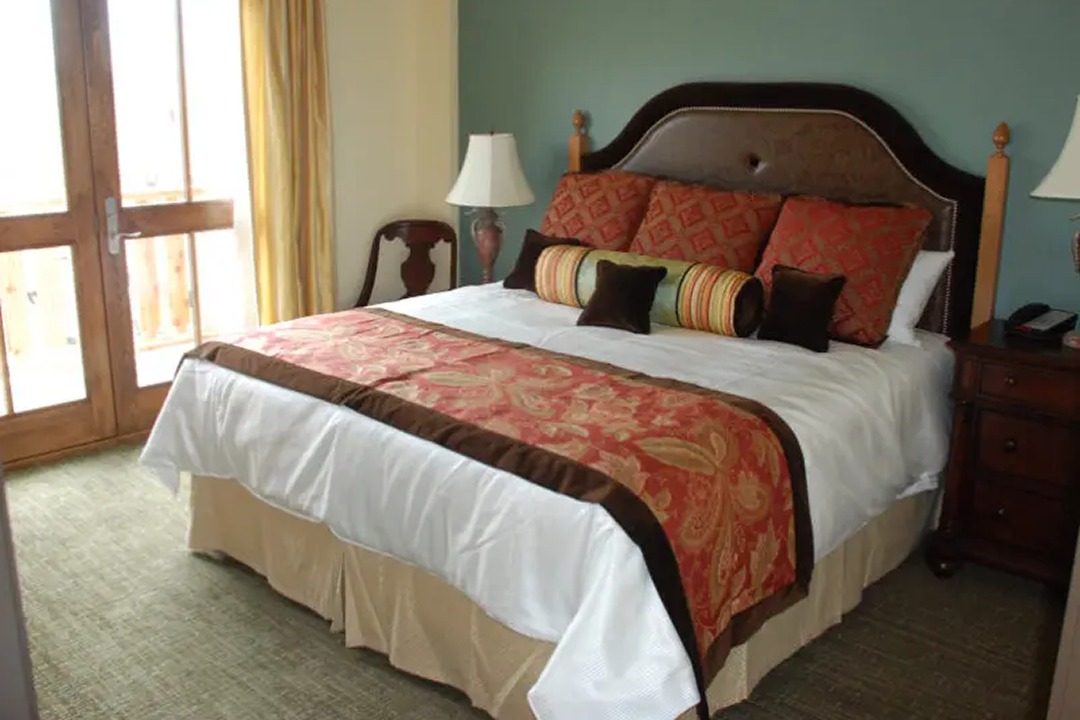
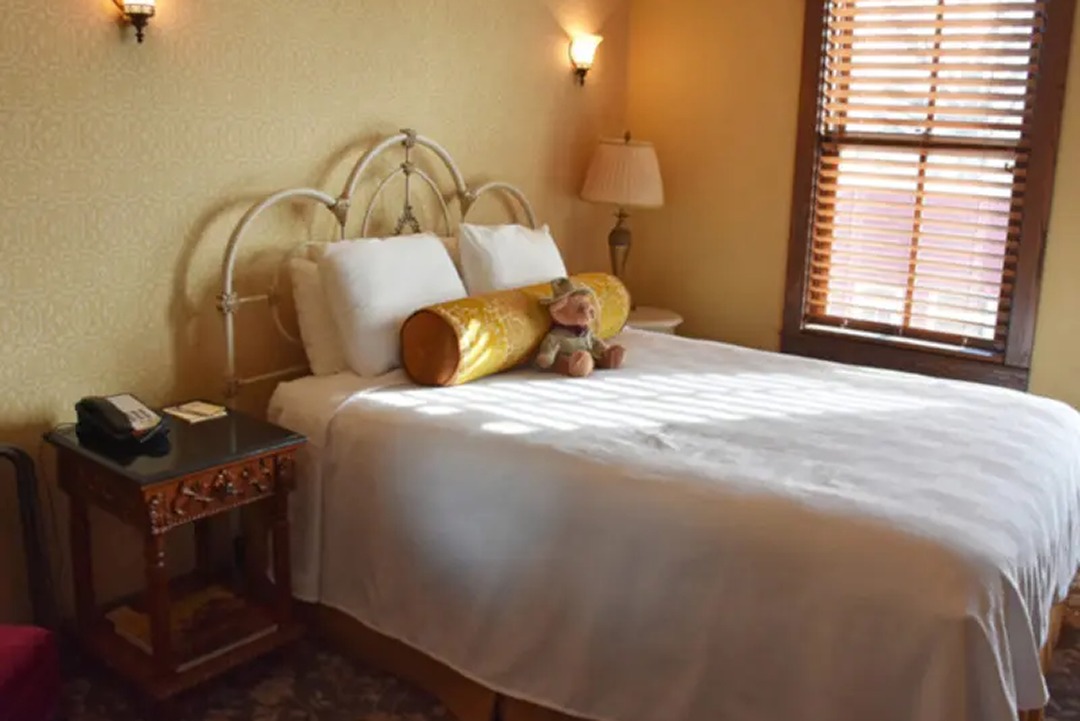
The building itself is a modest nineteenth-century timber frontier hotel, restored and extended, and the interiors follow from that.
Frontier construction means small windows in a timber frame, because glass was expensive and freighted in and winters here reach twenty or thirty below. That gives dim rooms with a specific light: a small window in a framed wall is effectively a snoot, collimating the beam so it arrives defined and directional with rapid falloff.
A subject placed in or immediately beside one has a strong key and a dark surround, which is the best light in the building and needs nothing added. The falloff is steep — a step back drops a stop, three steps and the subject is unlit — so positions are precise rather than approximate.
Interior surfaces are usually stained or painted timber, which returns relatively little, so bounce is limited and the method is direct through a modifier with a rim behind. Where a ceiling is pale, bounce off that.
Gel warm. A restored period interior is lit by warm tungsten or warm LED at modest levels, and a daylight-balanced flash against it puts a blue-white face in a warm timber room. And drag the shutter to a thirtieth or sixtieth so the fixtures register, because they are what make the room read as period.
The town is small and the building stock is frontier commercial — timber storefronts, boardwalks, painted signage — which photographs as a place rather than as a backdrop. In a town of this size it is usually possible to find an hour with no vehicles in frame, and early morning is the most reliable.
Overhead power lines are the thing to check before any wide street frame. They are invisible in a viewfinder and glaring in an edit, and in a small western town they cross everywhere.
The wind is the constant and it is worth taking seriously. North Dakota is among the windiest states in the country, and open badlands and prairie offer almost nothing to interrupt the flow — which means a breeze is the normal state of the air rather than an occasional event.
Practically: never put a modifier on an unweighted stand anywhere outdoors, hand-held with a braced assistant is the only reliable method, and a five-hundredth of a second is the default for anything with hair or fabric in it.
A veil will be moving. Read the direction and rotate the couple so it carries across or away from the camera rather than into their faces — blowing toward you it obscures faces, across it reads as a shape, away it extends into the frame.
And the wind is the best frame here, used deliberately. Mixed-grass prairie in wind moves as travelling waves, and at a thirtieth of a second on a tripod that blurs into flowing bands while a still subject stays sharp. Against banded badlands that is a genuinely distinctive photograph.
One practical note about remoteness. Medora is a long way from anywhere, the town’s infrastructure is seasonal, and mobile coverage in the badlands is unreliable. That affects logistics rather than photography, and it means backup equipment matters more than usual because there is nowhere to replace anything.
- Badlands bands only separate in raking light; midday flattens them entirely
- Seek the red scoria at low sun — the most saturated colour the region has
- Bentonite clay is genuinely slick when wet, for a day or more after rain
- Small frontier windows are snoots: precise positions, steep falloff
- Never use an unweighted stand outdoors here; the wind is constant
A northern year, and a seasonal town
North Dakota has the widest seasonal range in this library and a remote badlands town amplifies all of it.
Late September into early October is the best window and it is not close. The cottonwoods along the Little Missouri turn clear yellow, the little bluestem goes russet, the air reaches its clearest of the year, the heat has broken, and the low sun rakes the banded buttes for most of a shortening day.
That combination — yellow river bottom, russet prairie, red scoria, blue-grey clay and a deep northern sky — is the strongest thing this landscape produces and it lasts about two weeks.
It is also when the seasonal town begins to close. Medora’s economy is built on summer visitors, which means restaurants, attractions and some accommodation shut for the winter — and the dates vary. Establishing what will actually be open on a date in late September or October is a real question rather than a formality.
Summer is the operating season and it is long-lit: almost sixteen hours of daylight at the solstice, with the sun reaching about sixty-six and a half degrees at noon. That is meaningfully lower than the southern venues in this library, which means even midday light has some angle to it and the badlands never flatten completely.
The costs of summer are heat, which on open badlands regularly reaches the nineties with little shade, and haze, which softens the long views. And it is the busiest time, with the town’s visitor economy at full capacity.
Winter is severe and worth describing honestly. This is among the coldest inhabited parts of the lower forty-eight, with temperatures reaching twenty or thirty below, genuine blizzards, and about eight and a quarter hours of daylight in December.
Most of the town closes. A winter wedding here is not a variation on a summer one — it is a different proposition entirely, requiring a venue that operates year-round and an acceptance that almost nothing else will.
What winter gives photographically is extraordinary, though. Snow on banded badlands is a frame almost nobody has: the white fills the gullies and ledges while the exposed faces stay red and grey, which exaggerates the banding rather than hiding it. And snow bounces light upward into faces, which means eye sockets fill for free and a midday portrait is flattering.
Spring is the weakest season. April and May are cold, the prairie is brown and dead before it greens, the cottonwoods are bare, and the melt makes bentonite slopes treacherous. There is no spring wildflower display here of the kind the desert or the woodland offers.
Two things specific to this latitude are worth knowing.
Civil twilight runs about thirty-eight minutes, among the longest figures in this library — and in a landscape where the good light is at the ends of the day, that generous dusk is a genuine working session with three or four setups fitting comfortably rather than one being rushed.
And the sky at night is exceptional. This is one of the darkest inhabited regions in the continental United States — very little population, no nearby city, and a high dry atmosphere. The Milky Way is plainly visible on any clear moonless night, and at forty-seven degrees north the aurora borealis is a genuine possibility several times a year rather than a fantasy, most likely around the equinoxes.
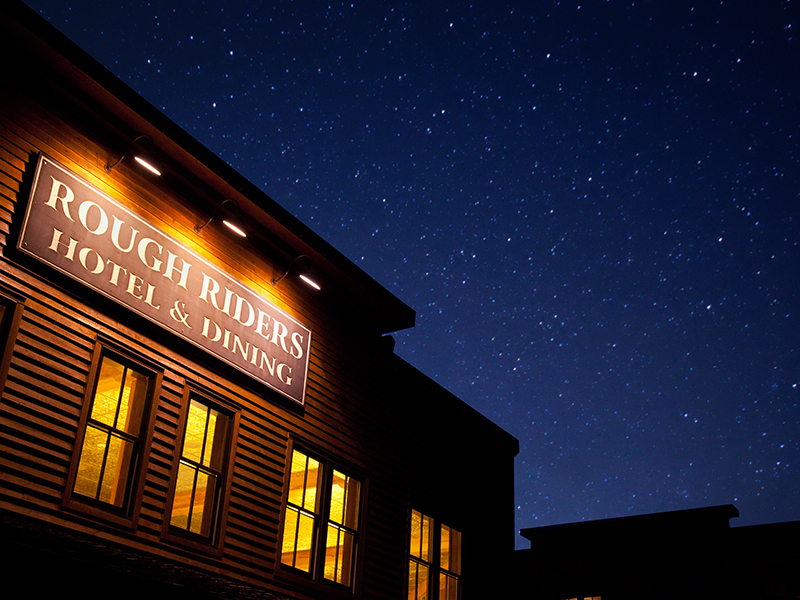
A lit frontier hotel or a banded butte under a visible Milky Way is a thirty-second tripod frame that almost no venue in this library can offer. A date near a new moon is worth more than any equipment, and checking an aurora forecast on the night costs nothing.
More frames from The Rough Riders Hotel
The Rough Riders Hotel wedding photography: common questions
Why do the badlands need low light?
The colour bands separate only when raking light picks out the small ledges where softer rock has eroded back. A high sun flattens the whole butte to a pale mass.
What is the red rock?
Scoria — clay baked hard where a lignite coal seam burned underground. It is used locally for road surfacing, which is why the roads here are red.
Is there a safety issue underfoot?
Yes. Bentonite clay becomes genuinely slick when wet and stays that way for a day or more. Worth knowing before anyone walks off a path.
Where is the shade?
The cottonwoods along the Little Missouri, and nowhere else. They need the water table, so they give the river bottom the only substantial trees for miles.
When is the best window?
Late September into early October — yellow cottonwoods, russet prairie, the clearest air of the year, and the town still open. About two weeks.
Is the night sky worth planning for?
Genuinely. This is among the darkest inhabited regions in the lower forty-eight, and at 47°N the aurora is a real possibility several times a year.
More North Dakota venue guides
We are writing a photographer’s guide to every venue we would happily shoot in North Dakota. Here are three more, plus the full index:
- The Bonanzaville, West Fargo: The One Decision That Governs Everything
- The Chateau de Mores, Medora: A Walk Through the Building
- The Fort Abraham Lincoln State Park, Mandan: What It Suits, and What It Does Not
Planning a wedding at The Rough Riders Hotel?
A frontier hotel in banded rock. Tell us your date.