 The Hilton Garden Inn Fargo: Field Notes on a Standardised Hotel
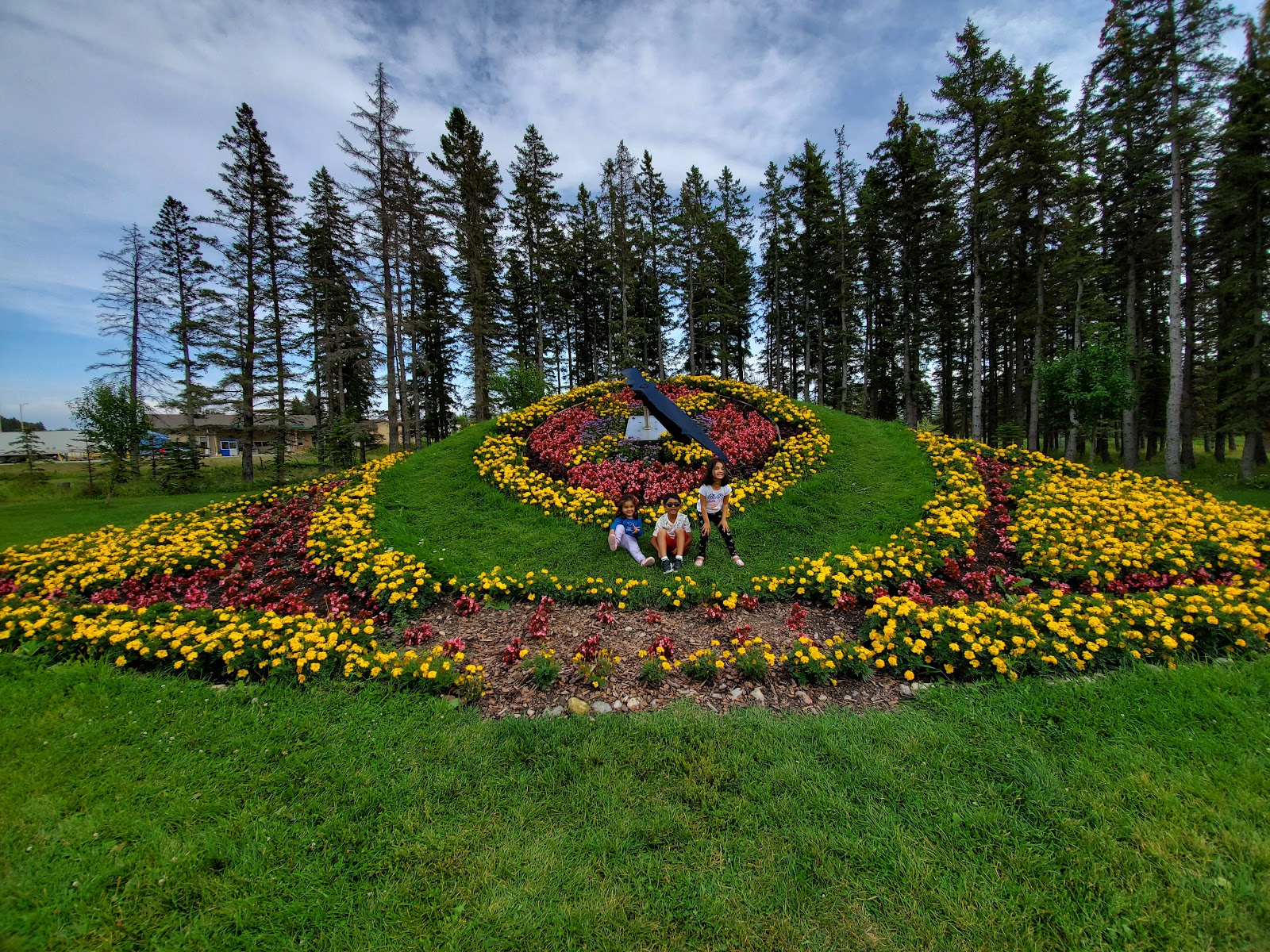
The International Peace Garden, Dunseith: Field Notes
A garden in two countries. That is a practical problem, not a poetic one.
This garden sits on the border, which sounds symbolic and is actually the most practical fact about photographing here.
The site straddles the boundary between North Dakota and Manitoba, laid out deliberately across the 49th parallel so that the formal axis runs through both countries and a cairn marks the line. Parts of the garden are in the United States and parts are in Canada.
That produces four problems and none of them is aesthetic.
The first is that crossing an international border, even within a garden, is a customs matter. Access arrangements exist and they are specific — and what a photographer may carry, where a party may walk, and whether there is any formality involved are questions with real answers rather than assumptions.
The second is the latitude. At about forty-nine degrees north this is the most northerly venue in this library, and the numbers are extreme: a midsummer day of over sixteen hours, a midwinter one of barely eight, a noon sun reaching only about sixty-four and a half degrees at the solstice and seventeen and a half in December, and civil twilight running roughly forty-one minutes — the longest figure in this entire library.
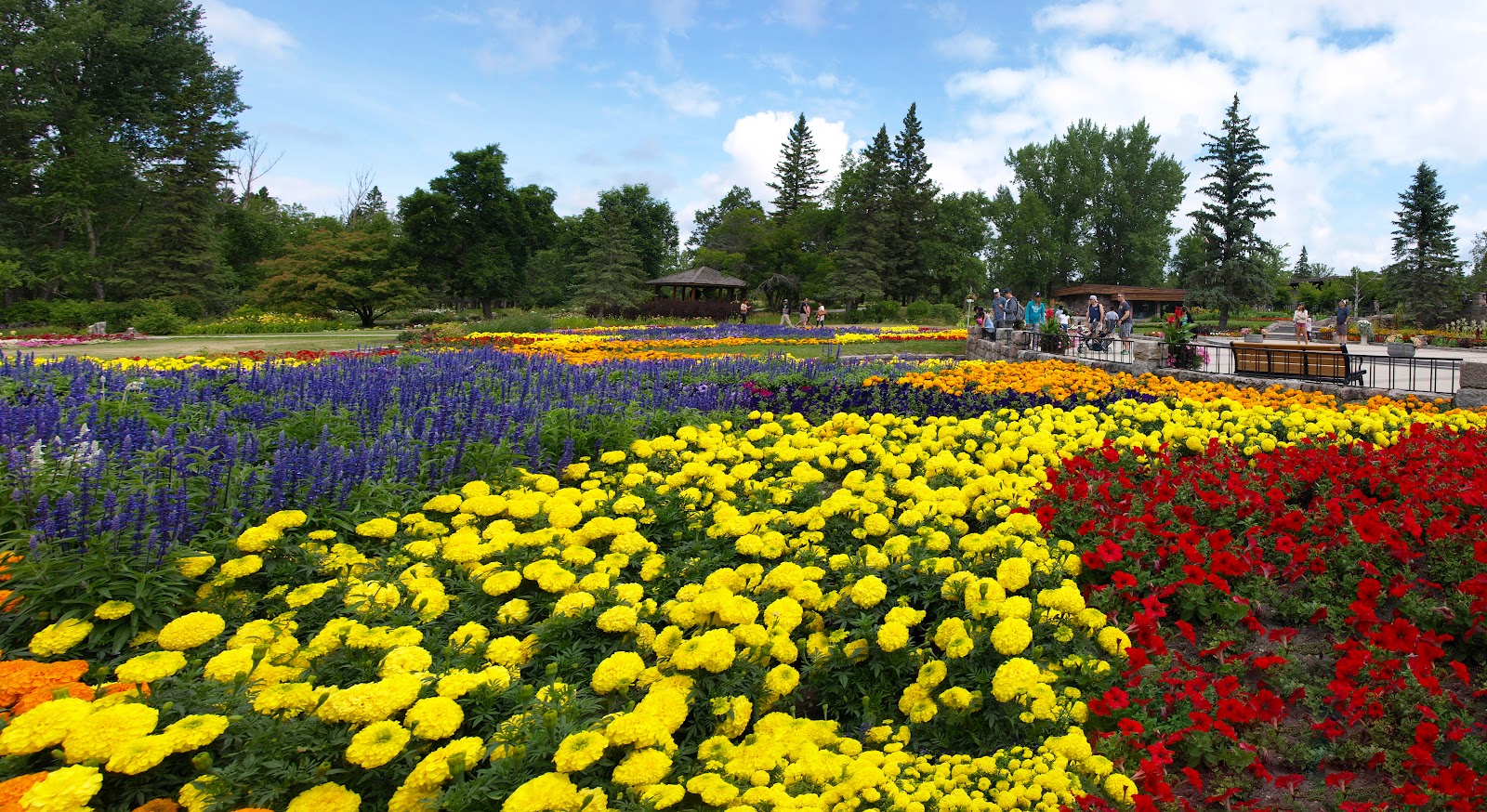
The third is that a formal garden at this latitude has a very short growing season. Bedding cannot go out until the frost risk passes in late May, which means the display peaks in July and August and is over by mid-September. A June wedding here may find beds only just planted.
And the fourth is exposure. This is prairie, in the Turtle Mountains but still essentially open country, which means wind is the normal state of the air and there is little natural shade beyond what was planted.
The compensations are real. A formal garden is a designed landscape — axes, symmetry, framed views, deliberate sightlines — which means the compositions already exist and a photographer who reads the design rather than wandering will find them. And the border itself is a genuinely unusual thing to have in a photograph.
What follows is four problems and what solves each. We have not photographed a wedding here; the border arrangements, what is bookable and the seasonal dates are questions for the garden.
The International Peace Garden at a glance
| Where | A formal garden on the US-Canada border at the 49th parallel, near Dunseith |
| Problem one | It is an international border. Access is a customs matter, not a formality |
| Problem two | About 49°N — a 41-minute twilight, the longest in this library |
| Problem three | A very short growing season; the display peaks July and August |
| Problem four | Open prairie exposure: constant wind, little natural shade |
Problems one and two: the border, and the latitude
The border question needs settling in writing well in advance, because it governs the movement of people and equipment rather than the photography.
A garden that spans two countries has arrangements for visitors to move within it, and those arrangements are specific: which entrances are used, whether documentation is needed, what may be carried, and whether there are restrictions on commercial activity on either side. Those are questions for the garden and for the relevant authorities, and the answers are not guessable.
The practical consequence for a photographer is that a plan which moves a wedding party back and forth across the line several times may not be workable, and one which stays on a single side certainly is. Establishing that shapes the schedule.
The border is also a photographic subject in its own right, and the most legible version of it is the cairn on the line and the formal axis running through it. A frame composed along that axis, with a couple standing on the boundary, is a picture that only this place can produce — and it needs the camera precisely on the centre line, because a symmetrical formal axis photographed off-centre reads as a mistake.
The second problem is the latitude and it is the defining one. At about forty-nine degrees north, the numbers are unlike anywhere else in this library.
The midsummer sun reaches only about sixty-four and a half degrees at noon — meaningfully lower than the seventy-five to eighty-three degrees of the southern venues — which means even a midday summer sun has real angle to it. Faces at noon in July here are modelled rather than flattened, and the landscape never loses its relief entirely.
That is a genuine advantage and it is worth stating, because it means the middle of a summer day is workable in a way it is not further south.
The day length is the other half. Over sixteen hours of daylight at the solstice gives an enormous working window, and the practical consequence is that the good light arrives very late — the blue hour in late June falls close to ten in the evening, which puts the best frames well after dinner.
And civil twilight runs about forty-one minutes, the longest figure in this library. That turns the blue hour from a scramble into a genuine session: four or five distinct setups fit comfortably, which no southern venue permits.
In December the same latitude reverses completely: barely eight hours of daylight, a noon sun at seventeen and a half degrees, and a twilight arriving around half past four. A seventeen-degree sun rakes everything all day, which means a clear December day here has continuously excellent light for its whole short duration — every hour is golden hour.
That is a real and under-appreciated northern advantage, and it is the strongest photographic argument for a winter date at this latitude, if the cold can be managed.
The other thing forty-nine degrees gives is the aurora. This is far enough north that the aurora borealis is a genuine possibility several times a year rather than a fantasy, most likely around the equinoxes — and the site is remote enough to have a genuinely dark sky, with the Milky Way plainly visible on any clear moonless night.
A formal garden axis under aurora is a photograph almost nobody has. It is entirely a matter of luck and checking a forecast on the night costs nothing.
Problems three and four: a short season, and open prairie
The growing season is the third problem and it compresses the garden’s display into a narrow window.
At this latitude the last spring frost comes late and the first autumn frost comes early, which means annual bedding cannot be planted out until the second half of May and is finished by the middle of September. The formal displays therefore peak in July and August.
That is worth planning around precisely. A wedding in early June will find beds newly planted and sparse; one in early July will find them filling; one in late July or August will find them at their best; and one in late September will find them over.
Institutions of this kind plant for succession within the season and the staff know exactly what will be at peak in a given fortnight. That is a five-minute conversation that changes where the portraits happen, and it is worth having.
The permanent planting is what carries the shoulder seasons. A formal garden has structure independent of its bedding — clipped hedges, specimen trees, water features, axial paths, stonework — and those read in any month. A frame composed around structure rather than flowers works in May and October as well as in August.
The trees are worth knowing. The Turtle Mountains carry aspen, bur oak, green ash and birch, which is more woodland than the surrounding prairie has — and those hardwoods cast solid shade with no dapple, which means a mature tree here is a workable midday position.
Aspen is the one to notice. It grows in clonal stands — genetically a single organism spreading by root suckers — which means a whole grove turns colour at once rather than tree by tree, and in late September that produces a block of uniform gold rather than a mixture. Its bark is pale grey-green and smooth, which makes a trunk a light-toned background.
The fourth problem is exposure, and on prairie it is chiefly about wind.
North Dakota is among the windiest states and the Turtle Mountains, while wooded, sit in open country. A breeze is the normal state of the air rather than an occasional event, which means no modifier on an unweighted stand anywhere, hand-held with a braced assistant as the only reliable method, and a five-hundredth of a second for anything with hair or fabric.
In a formal garden the wind has a specific nuisance: bedding plants move, and a close frame of a flower head at a slow shutter is unusable. Mornings are calmer — overnight the ground cools and the air stabilises — so detail work belongs in the first hours.
A veil will be moving. Read the direction and rotate the couple so it carries across or away from the camera rather than into their faces.
The shade is what was planted, plus whatever is built. A formal garden usually has structures — a pavilion, a chapel, a colonnade, an arbour — and any covered structure is a large soft source with a hard mask, controlled by depth from the open edge.
An arbour or pergola is the exception to watch: a slatted overhead structure is not a roof, and it admits stripes of direct light that are unusable on a face. Stand the subject between the stripes rather than under one, and note that they move as the sun does.
- Settle the border arrangements in writing; they govern movement, not aesthetics
- A 64-degree midsummer noon sun means midday is workable here
- Forty-one minutes of twilight: four or five setups, and it lands near ten in June
- Bedding peaks July and August; compose around structure in the shoulder seasons
- Stand between pergola stripes, never under one — and they move
Reading a formal garden, and the northern year
A formal garden is a designed landscape and that is the resource, because the compositions were laid out deliberately.
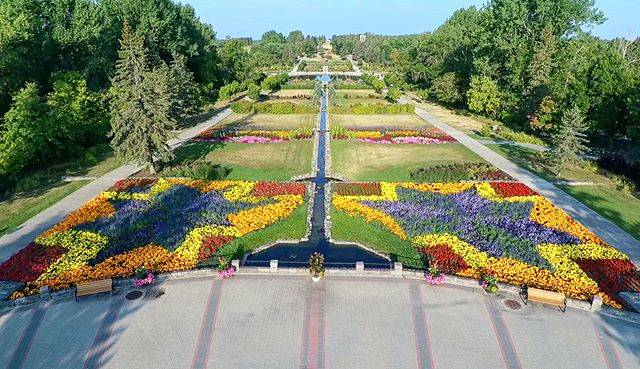
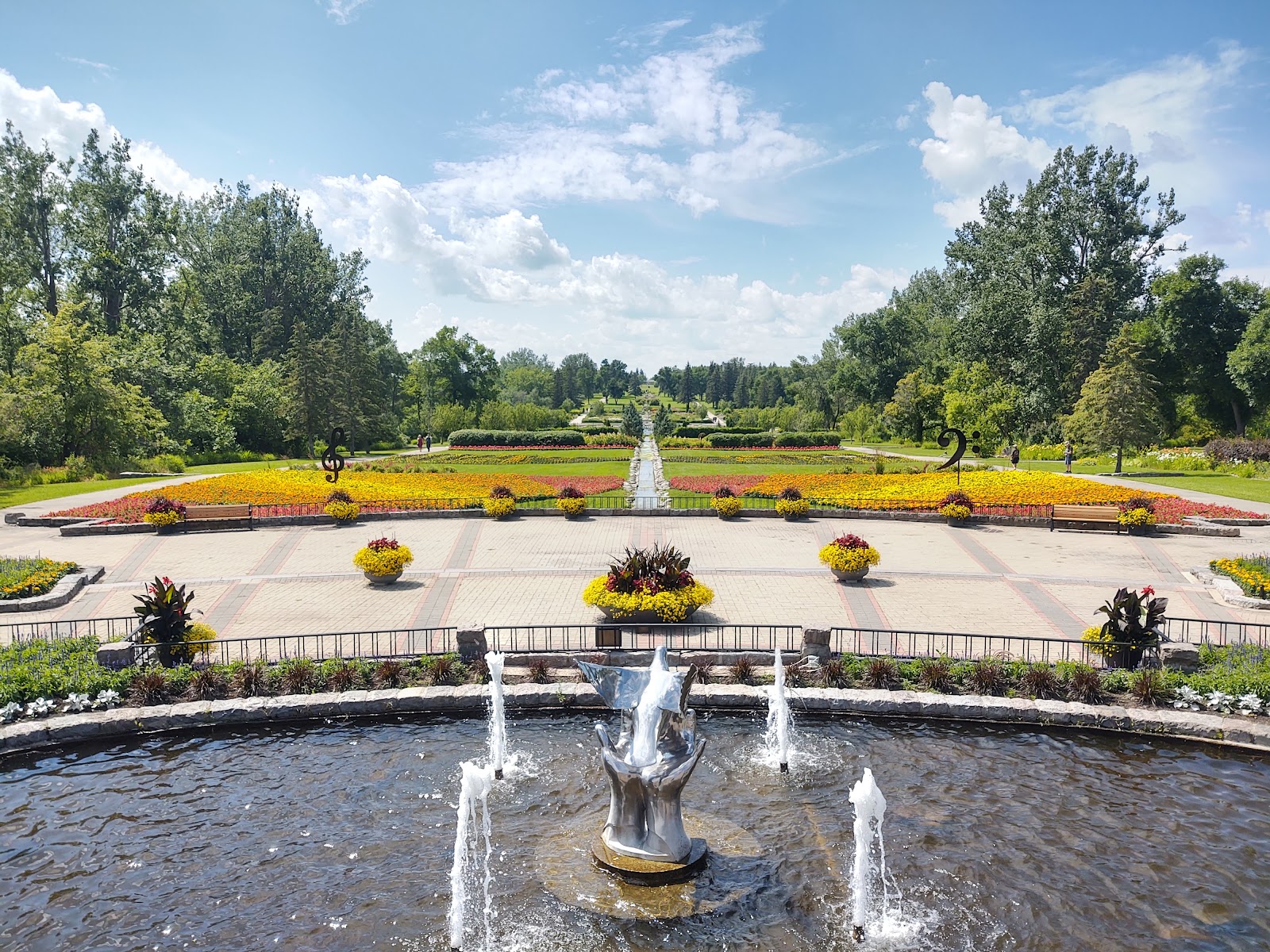
The principal axis is the strongest of them. A formal garden of this type has a central line with symmetrical planting either side and a focal point at each end — a cairn, a chapel, a fountain, a gate — and a camera placed precisely on that line renders the whole composition as intended.
Precision matters. On axis the frame reads as deliberate and monumental; half a metre off and it becomes an ordinary diagonal. The paving or the bedding will usually mark the centre, and using it is the difference.
Cross-axes and framed views are the secondary structure, and they are where the less obvious frames are. A formal garden is laid out so that a view opens at a particular point — through a gap in a hedge, along a subsidiary path, between two specimen trees — and walking the plan once to find those openings is worth more than any amount of technique applied on the day.
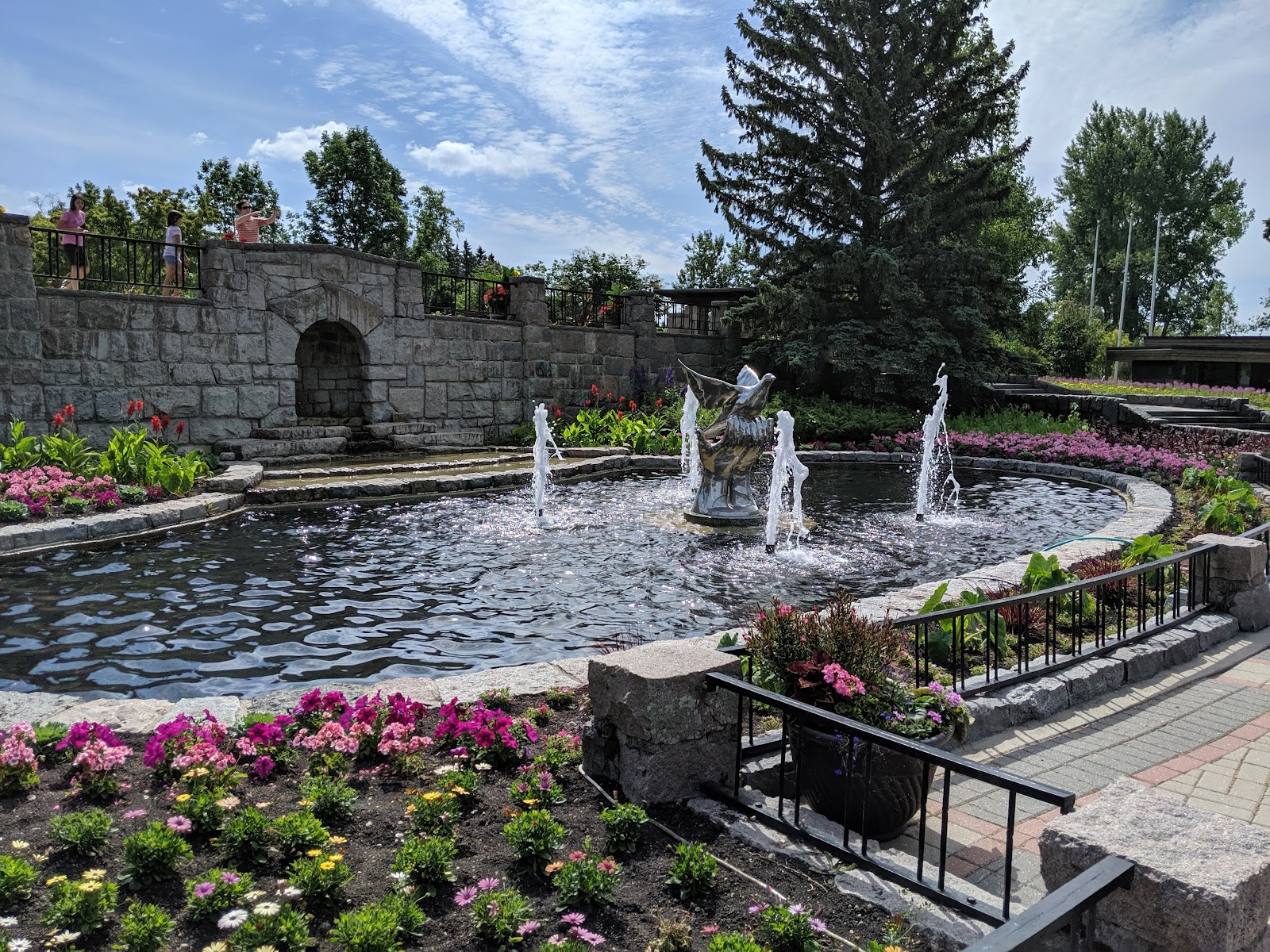
Water features are disproportionately valuable in open country. A formal pool or canal reflects the sky, which makes it a large low-angle source that fills under the chin and lifts eye sockets — strongest at grazing angles, so the last hour. And a still formal pool doubles whatever is above it, which on a symmetrical axis produces a mirrored composition that is genuinely striking.
Whether it is still depends on wind, which here is a real question rather than a formality.
The chapel, where a garden of this kind has one, is usually the only substantial interior — and if it sits on the border it is a genuinely unusual space: a building in two countries. Its light will depend entirely on its windows, and a small window in a thick wall is a snoot giving defined directional light with rapid falloff.
The northern year ranks clearly and the range is the widest in this library.
Late July into August is the peak for the garden itself: the bedding at its fullest, the days still long at fifteen or sixteen hours, and warm weather. It is also the busiest time and the haziest.
Early to mid September is the best compromise and possibly the best window overall. The bedding is still good, the aspen begins to turn, the air clears, the heat has broken, and the crowds thin — with a day length still around thirteen hours and a twilight of nearly forty minutes.
Late September into early October gives the aspen at full gold and the bur oak going russet, with the garden’s bedding finished but its structure intact. That is a structure-and-colour frame rather than a flowers frame, and it is arguably the stronger picture.
Winter is severe. This is among the coldest inhabited parts of the continental United States, with temperatures reaching twenty or thirty below, real blizzards, and about eight hours of December daylight. A formal garden under snow is reduced to its structure — clipped hedges as white shapes, axial paths as lines, specimen trees as silhouettes — which is a genuinely beautiful and very rarely photographed thing.
Access is the question. A garden of this kind may simply be closed in winter, and the border arrangements may differ. Both are worth asking rather than assuming.
And spring is the weakest season: cold into May, the beds empty, the aspen bare, and the ground wet from melt. Late April and May are the least photogenic weeks of the year here, with the compensation that the light is already long and the twilight already generous.
More frames from The International Peace Garden
The International Peace Garden wedding photography: common questions
Is the border a real complication?
Yes, practically rather than symbolically. Access arrangements, documentation and what may be carried are specific questions with real answers — settle them in writing.
What does 49°N give photographically?
A midsummer noon sun of only about sixty-four degrees, so midday is workable; and civil twilight of about forty-one minutes, the longest in this library.
When does the garden peak?
Late July into August. Frost risk keeps bedding from going out until the second half of May, and the display is over by mid-September.
What carries the shoulder seasons?
The permanent structure — clipped hedges, specimen trees, water, axial paths and stonework all read in any month, unlike the bedding.
How do I shoot the formal axis?
Precisely on the centre line, which the paving usually marks. Half a metre off and a monumental composition becomes an ordinary diagonal.
Is the aurora realistic here?
Genuinely, several times a year and most likely near the equinoxes. The site is remote enough for a dark sky and the Milky Way is plainly visible.
More North Dakota venue guides
We are writing a photographer’s guide to every venue we would happily shoot in North Dakota. Here are three more, plus the full index:
- The Medora Musical: The Light Through the Day
- The Rough Riders Hotel, Medora: The Venue’s Own Logic
- The Bonanzaville, West Fargo: The One Decision That Governs Everything
Planning a wedding at The International Peace Garden?
A garden in two countries, at the top of the map. Tell us your date.