 The Hilton Garden Inn Fargo: Field Notes on a Standardised Hotel
The Bonanzaville, West Fargo: The One Decision That Governs Everything
A village, or a collection. Decide, because it is both.
There is one decision at this venue and everything follows from it: whether to photograph the site as a village or as a collection.
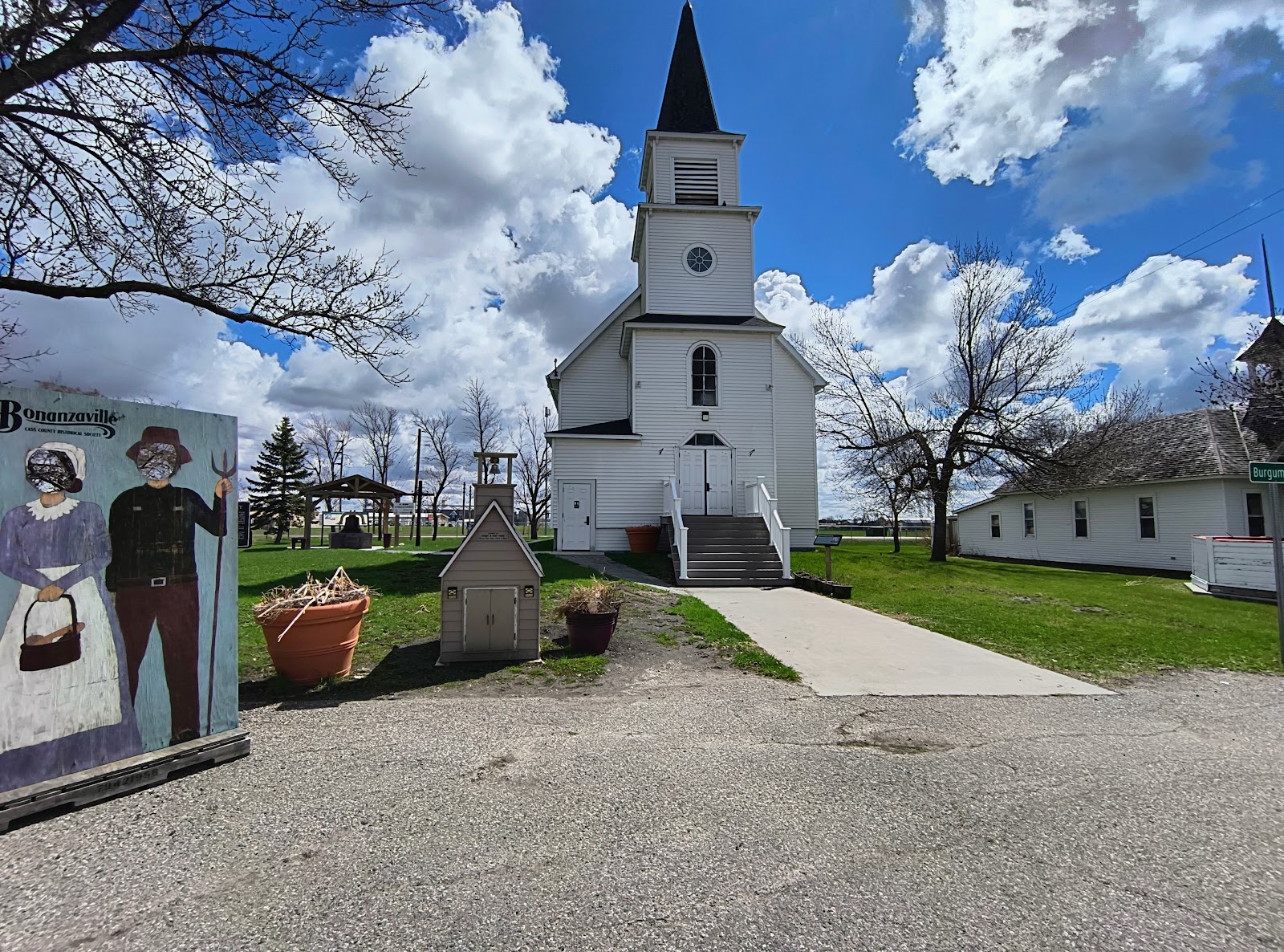
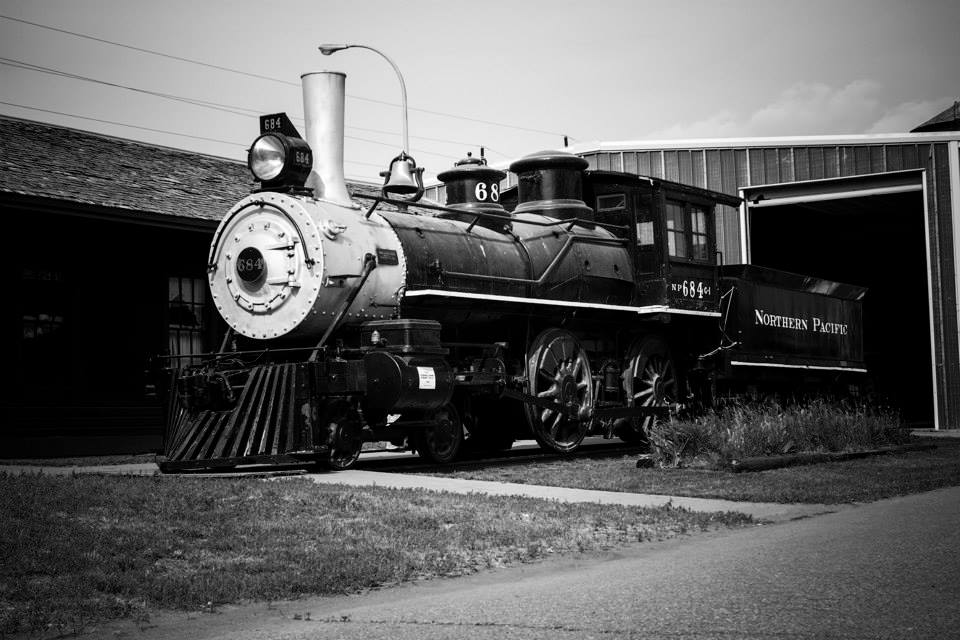
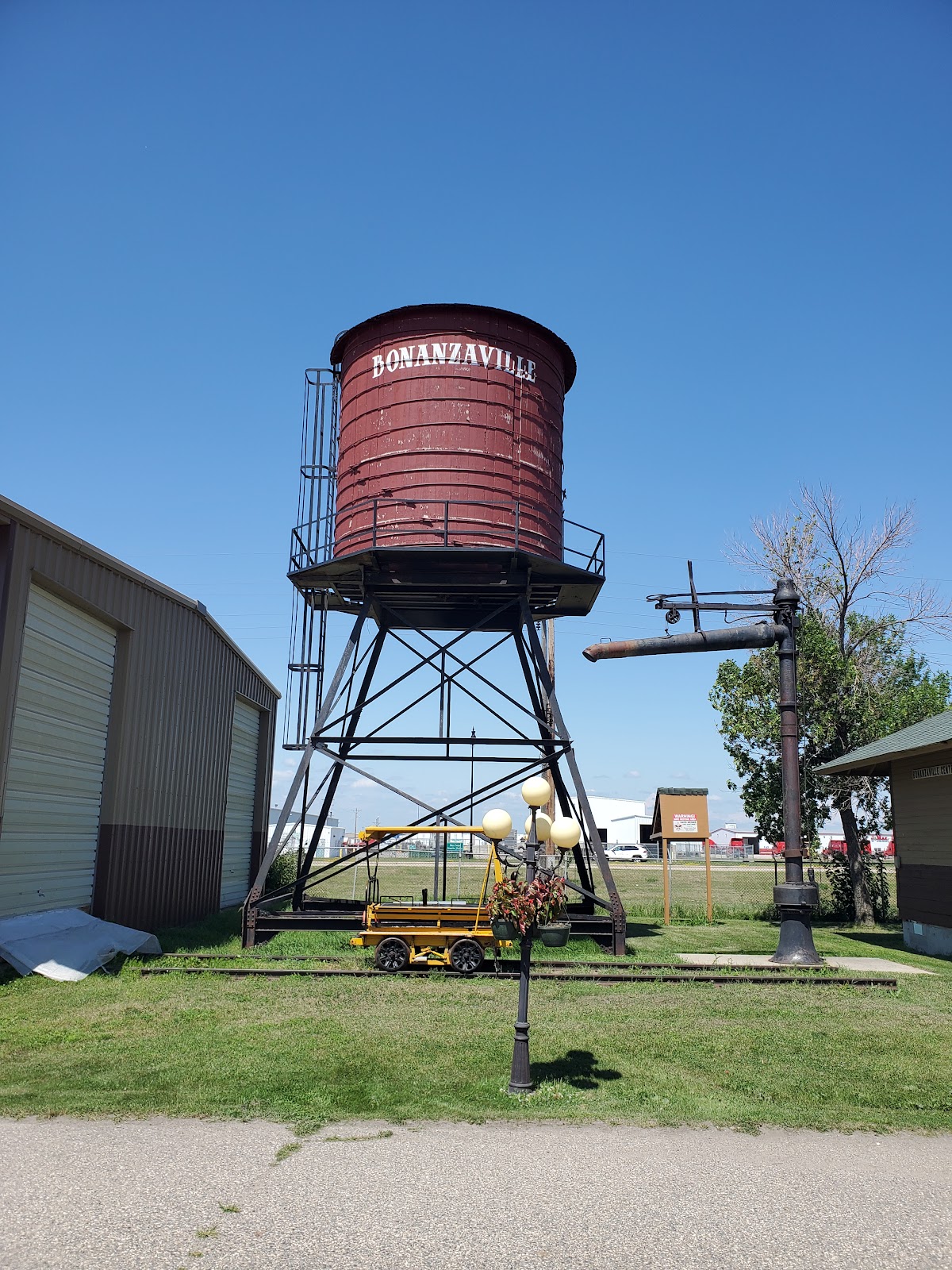
The place is made up of dozens of historic buildings moved here from across the Red River Valley and reassembled on one site — a church, a school, a bank, a depot, houses, a jail, farm buildings. Each is genuine and each came from somewhere else.
So it is a real village in the sense that every building in it is real, and not a village in the sense that they were never neighbours. The streets are museum layout rather than historical development.
Photographed as a village — wide frames down the street, buildings in relation to each other, a sense of a place — it reads as what it is, which is a museum arrangement. The spacing is too even, the styles too varied for one settlement, and the ground between buildings is mown grass rather than a street.
Photographed as a collection — each building taken on its own, tight, with its own architecture and its own light — it reads beautifully, because every individual structure is authentic and well kept.
That is the fork, and it has a clear answer for most of a wedding day: work building by building. A photographer who tries for the streetscape will produce frames that feel slightly off and will not know why; one who works each structure individually has thirty distinct backgrounds within a few hundred metres.
Thirty backgrounds in walking distance is a genuinely unusual resource and it is the reason to book a site like this.
The second thing to understand is the region, because the Red River Valley is unlike anywhere else in this library. It is the bed of a vast glacial lake, which makes it the flattest land in North America — no relief at all, deep black soil, and a horizon that is genuinely level in every direction.
That absence of topography matters: there are no elevated viewpoints, no valleys, no slopes to separate a subject from a background. Everything is at ground level and the sky is half of any wide frame.
West Fargo sits at about forty-six and three-quarter degrees north at roughly nine hundred feet. The June noon sun reaches around sixty-six and a half degrees, the December noon sun about nineteen and a half, days run from about eight hours twenty-five to fifteen hours fifty, and civil twilight is roughly thirty-eight minutes — long.
We have not photographed a wedding here. Which buildings are bookable, whether interiors are accessible and the seasonal dates are questions for the museum.
The Bonanzaville at a glance
| Where | A pioneer village museum in West Fargo, North Dakota |
| The decision | Village or collection. It is both, and only one of them photographs well |
| The answer | Work building by building — thirty backgrounds in walking distance |
| The region | The Red River Valley: the flattest land in North America, no relief at all |
| Ask first | Which buildings and interiors are accessible; seasonal dates |
Working building by building
If the site is a collection, the method is to treat each structure as its own venue — and that means reading its light rather than its history.
The church is usually the best of them and it is worth finding first. A small frame prairie church has windows along both long walls, which means cross-light: a subject can take a key from one side and a fill from the other with nothing added at all. Find which wall is brighter, turn the subject three-quarters toward it, and the ratio is typically two to four to one, which is close to ideal.
That is the best unassisted portrait light on the site and it is available in almost any small church. Where there is a window behind the altar, it is four or five stops above a face — so either silhouette them deliberately, let it blow as a bright shape, or bridge the gap with one source.
The school is the second reliable interior. A one-room prairie schoolhouse has large windows on one or two sides, because it was built before electric light and needed to be read in — and large windows in a small room give a very high ratio of glazing to floor area, which makes it the brightest historic interior on most sites of this kind.
Houses are the dimmest. Frontier domestic construction used small windows in framed walls because glass was freighted in and winters here reach twenty or thirty below — and a small window in a framed reveal is a snoot, collimating the light into a defined shaft with rapid falloff. Precise positions, and one step back is one stop.
The depot, the bank and any commercial building tend to have the most interesting details at close range: signage, joinery, a ticket window, a counter, a safe. Those are close frames and they date the site precisely in a way a wide street cannot.
The farm buildings are the largest volumes. A barn is optically a large soft source with a hard mask — a big opening at one end, a steep gradient inward — and a metre or two inside the door is the most reliable barn portrait anywhere. In this region the yard outside is often pale, and for four months of the year it is snow, which throws a strong bounce up under the chin.
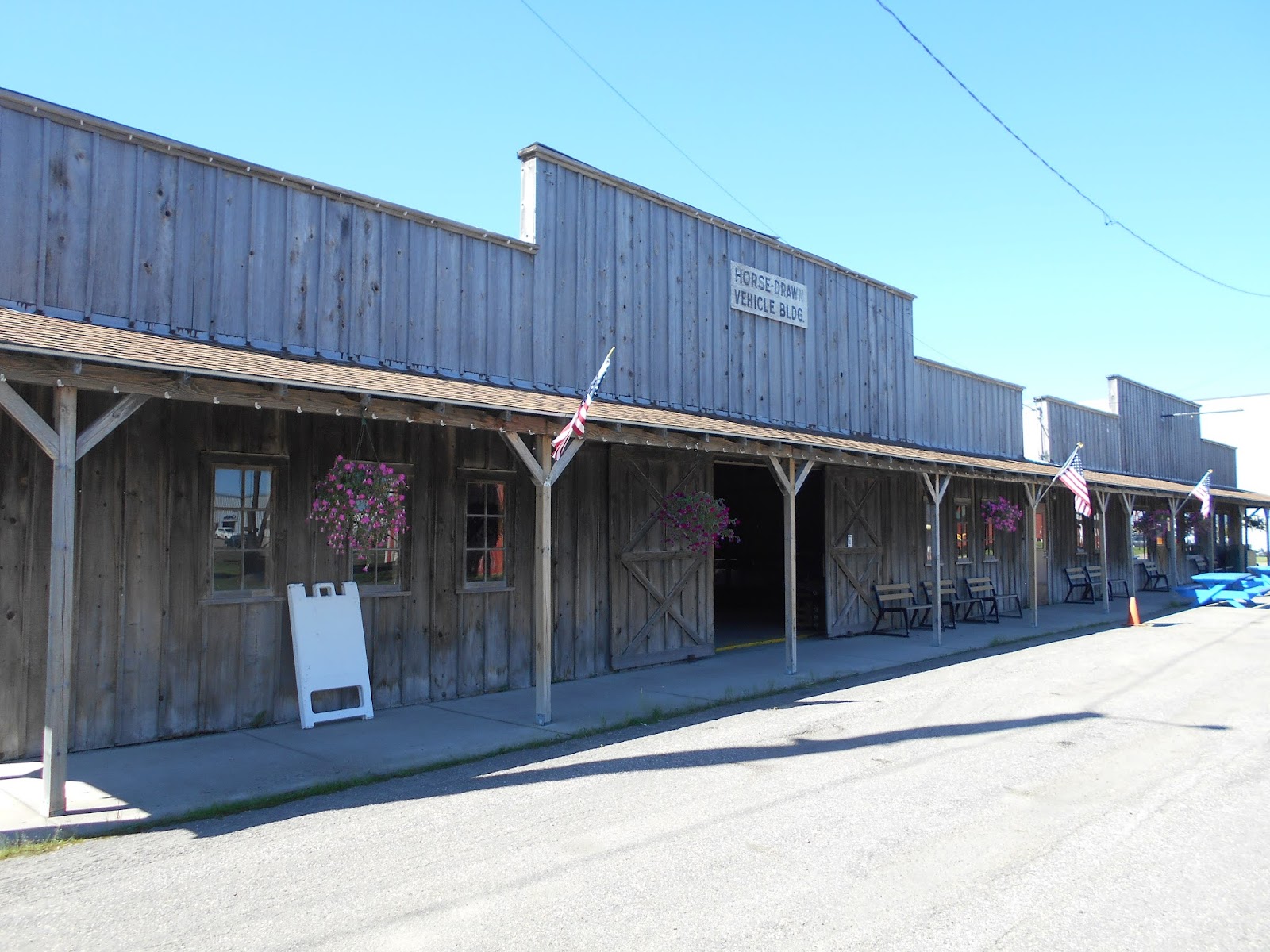
The exteriors all share one material problem. Painted timber reflects around eighty percent of incident light against skin’s thirty-five, which in direct sun puts a wall two stops above a correct face exposure — so the exterior frames are shade frames, and the Red River Valley’s frequent overcast is a gift rather than a compromise.
The practical advantage of a collection is that the buildings face different directions. At any hour some elevation is correctly shaded, and finding it takes thirty seconds of looking rather than any planning.
And keep the camera square. These are simple rectilinear structures, and tilting up to include a roof converges the corner boards so the building leans back — immediately obvious on a plain frame facade. Raise the camera instead.
Why the streetscape fails, and what replaces it
It is worth being specific about why the village frame does not work, because understanding it prevents wasting the best light on it.
A real settlement develops over time along a road, which produces uneven spacing, varied setbacks, buildings that share party walls or sit at odd angles, and ground that is a street — compacted, rutted, with kerbs or boardwalks. The irregularity is what the eye reads as authentic.
A museum arrangement is laid out for visitor circulation. Buildings sit at regular intervals with generous space between them, each freestanding, each with mown grass around it — and the eye reads even spacing and lawn as arrangement rather than as growth.
So a wide frame down the site shows a row of well-kept historic buildings on grass, which is precisely accurate and does not read as a street.
What replaces the streetscape is the single-building frame and the detail frame, and there is a third that works better than either: two buildings in deliberate relation.
A frame that places one structure in the foreground and another behind it — using a moderate telephoto to compress the distance so the gap closes — produces something that reads as a built-up place, because compression removes the generous spacing that gives the arrangement away.
That is the technique worth knowing here. A long lens from across the site, with two or three buildings stacked into each other and a couple among them, gives the density a wide lens destroys.
The flat ground is the other constraint and it needs working around rather than solving. The Red River Valley has no relief at all — it is the bed of glacial Lake Agassiz, the flattest land in North America — which means there are no elevated viewpoints, no slopes to shoot down from, and no way to separate a subject from a background by height.
Everything is therefore at ground level, and separation has to come from tone, from focus or from a doorway. A subject in a building’s shaded doorway against a sunlit exterior separates by tone; a subject at a wide aperture with a building well behind separates by focus; a subject framed in an opening separates by architecture.
The flatness also means the sky is half of any wide frame, which cuts both ways. A cloudless day gives an even blue field above a row of buildings and the wide frames are dull. A day with structure overhead — and the northern plains produce genuinely dramatic cloud, with towering convection in summer and long low banks in autumn — gives a sky worth half a picture.
So the wide frames should be built around weather rather than attempted regardless of it. And the horizon is genuinely level in every direction, which means a tilted camera is glaringly obvious: a level horizon matters more here than almost anywhere.
The wind is the constant. North Dakota is among the windiest states and the valley has nothing whatsoever to interrupt the flow, which means a breeze is the normal state of the air, no modifier goes on an unweighted stand, and a five-hundredth of a second is the default for anything with hair or fabric.
A veil will be moving. Read the direction and rotate the couple so it carries across or away rather than into their faces.
- Work building by building; the streetscape reads as arrangement, not as growth
- Find the church’s cross-light — the best unassisted portrait on the site
- Compress two or three buildings with a telephoto to restore density
- Painted timber wants shade; at any hour some elevation here is correctly shaded
- The horizon is genuinely level, so a tilted camera is glaringly obvious
The valley's year
The Red River Valley has the most extreme seasonal range in this library and a site of unheated historic buildings sits inside it completely.
Late September into early October is the best window. The valley’s shelterbelts and any planted trees turn — cottonwood and green ash to yellow, bur oak to russet — the prairie grasses on unmown ground go bronze, the heat has broken, the air reaches its clearest of the year, and a low sun rakes the painted timber for most of a shortening day.
The clarity matters here because the compressed multi-building frames are the ones that work, and compression across distance reads sharply in October and softly in the haze of August.
Summer is the operating season and it is long-lit at almost sixteen hours. The noon sun reaches only about sixty-six and a half degrees — meaningfully lower than the southern venues in this library — which means even midday retains angle and faces are modelled rather than flattened. That makes the middle of a summer day workable, which is a genuine northern advantage.
The costs are heat on open ground, haze, and mosquitoes, which in the Red River Valley in a wet summer are a real consideration rather than a joke.
Spring is the weakest season and it carries a specific local risk. The Red River flows north, which means its lower reaches thaw after its upper ones — so meltwater arrives at a still-frozen channel and the valley has a long history of significant spring flooding. On flat ground with no relief, water spreads rather than drains.
For a site in the valley that is worth asking about rather than assuming, and it makes April and May a poor bet generally: cold, brown, wet, with the trees not yet leafed.
Winter is severe and the honest position is that this is not a winter venue. Temperatures reaching twenty or thirty below, genuine blizzards, and about eight hours twenty-five of December daylight — and a collection of unheated historic buildings has nowhere to put a wedding party.
What winter gives photographically, for anyone with access, is unusually good. Painted timber against snow reduces a frame to tone and line, which suits these simple structures better than any other condition — a white frame church on white ground under grey sky is almost purely graphic. Snow also bounces light upward into faces, so eye sockets fill for free and a midday portrait is flattering.
And the flat valley in snow is genuinely striking in a way it never is in summer: an absolutely level white plane to a level horizon, with a single building on it. That is a frame the topography permits and nothing else in this library can offer.
Two closing notes about the latitude.
Civil twilight runs about thirty-eight minutes, among the longest in this library, which makes the blue hour a genuine working session — three or four setups fit comfortably rather than one being rushed. In June it lands near ten in the evening, well after dinner; in December around half past four, before a reception.
The frame worth scheduling then is a lit historic building against a deep blue sky with a level horizon — a church, a depot, a schoolhouse, its windows glowing. Painted timber takes artificial light well and reads warm against a cold northern sky, and on flat ground with nothing to obstruct it the sky occupies most of the frame.
And the night sky is exceptional. The northern plains are among the darkest inhabited regions in the continental United States, and at forty-six and three-quarter degrees north the aurora borealis is a genuine possibility several times a year, most likely near the equinoxes. A frame church silhouetted under a visible Milky Way on absolutely level ground is a photograph almost nowhere else can produce, and a date near a new moon is worth more than any equipment.
More frames from The Bonanzaville
The Bonanzaville wedding photography: common questions
What is the one decision?
Village or collection. Every building is genuine but they were never neighbours, so the streetscape reads as museum arrangement while individual buildings read beautifully.
Why does the wide street frame fail?
Museum layout gives even spacing, freestanding buildings and mown grass. The eye reads that as arrangement, where a real settlement’s irregularity reads as growth.
What restores density?
A moderate telephoto from across the site, compressing two or three buildings into each other so the generous spacing closes up.
Which interior has the best light?
The church. Windows on both long walls give free cross-light at a ratio of two to four to one, which is close to ideal for a face.
How does the flat ground affect things?
There is no relief at all — no elevated viewpoints, no slopes. Separation must come from tone, focus or a doorway, and a level horizon matters enormously.
Is spring risky?
Yes. The Red River flows north, so meltwater reaches a still-frozen channel, and on flat ground water spreads rather than drains. Ask rather than assume.
More North Dakota venue guides
We are writing a photographer’s guide to every venue we would happily shoot in North Dakota. Here are three more, plus the full index:
- The Chateau de Mores, Medora: A Walk Through the Building
- The Fort Abraham Lincoln State Park, Mandan: What It Suits, and What It Does Not
- The International Peace Garden, Dunseith: Field Notes
Planning a wedding at The Bonanzaville?
Thirty real buildings in walking distance. Tell us your date.