 The Stoweflake Mountain Resort, Stowe: One Frame, and How It Is Made
The Marsh-Billings-Rockefeller Park, Woodstock: The Problem, and Four Ways Out of It
A forest that was planted on purpose. It photographs differently.
This is a designed forest, and that is the whole problem and the whole interest.
The estate belonged to Frederick Billings, who in the 1870s set about reforesting hillsides that a century of sheep farming had stripped bare. He planted deliberately — conifer plantations in ordered stands, carriage roads engineered through them, sightlines and viewpoints laid out — following the argument George Perkins Marsh had made in the same village a generation earlier about what happens when people strip a landscape.
So the wood on Mount Tom is not a natural forest that happens to be pretty. It is a nineteenth-century plantation, now mature, with a designed circulation system running through it. That is a genuinely unusual thing and it produces a genuinely unusual photographic problem.
A natural forest is irregular: mixed species, uneven spacing, varied ages, gaps where trees have fallen. That irregularity is what makes a woodland frame read as a woodland — the eye accepts randomness as nature.
A plantation is regular. Even-aged conifers planted at consistent spacing produce parallel trunks at repeating intervals with a closed canopy above and very little understorey beneath, because nothing grows in that much shade. Photographed carelessly, it reads as a plantation — which is honest and can look industrial rather than beautiful.
Four problems follow. The regularity needs handling rather than ignoring. The conifer canopy is dark, much darker than a hardwood one. The understorey is sparse, so there is nothing at eye level. And the carriage roads, which are the site’s circulation, are hard-surfaced lines through the wood that appear in most frames.
Woodstock sits at about forty-three and two-thirds degrees north at roughly seven hundred feet in the valley, with Mount Tom rising above it. The June noon sun reaches around sixty-nine and a half degrees, the December noon sun about twenty-two and a half, days run from about eight hours fifty-five to fifteen hours thirty, and civil twilight is roughly thirty-four minutes — long.
What follows is four ways out. We have not photographed a wedding here; what a national historical park permits, which areas are accessible and the permitted hours are questions for the Park Service — and the first matters a great deal.
The Marsh-Billings-Rockefeller Park at a glance
| Where | A national historical park in Woodstock, Vermont, on Mount Tom |
| The history | An 1870s reforestation of sheep-stripped hillsides — a designed forest |
| The problem | Plantation regularity, a dark conifer canopy, no understorey, hard carriage roads |
| The species | Norway spruce and European larch among the natives — not a wild wood |
| Ask first | What the Park Service permits, and which areas are accessible |
Way one: use the regularity rather than fight it
The first answer is to stop trying to make a plantation look wild and to photograph the order as order, because regularity composed deliberately is powerful.
Even-aged conifers at consistent spacing give parallel vertical trunks at repeating intervals — and a camera placed on the line of a planting row, low, with a moderate telephoto, compresses those trunks into a dense rhythm that reads as architecture rather than as forest. That is a strong frame and it is specific to a planted wood.
The discipline is the same as any repeating structure: on axis it reads as deliberate, off axis as careless. Find the row, get on it, and keep the camera level.
A couple placed several rows deep, small in the frame, gives the depth and the scale at once — and because the trunks are evenly spaced, the recession is mathematically regular in a way a natural wood never is. The eye reads that as designed, which it was.
The species matter to the look and they are worth identifying. Billings planted Norway spruce and European larch among the native species, both of which are visibly different from a Vermont hardwood forest.
Norway spruce is the dark one: dense, conical, with drooping branchlets and very deep shade beneath. A stand of mature Norway spruce is near-black in a photograph, which makes it the best background in the park — a subject lit and placed against it is cleanly separated with no equipment at all.
European larch is the surprise. It is a deciduous conifer, which almost nothing else in this library is: needled like a pine, but it turns a clear gold in late October and drops entirely, leaving bare grey structure through the winter. A larch stand in colour is an uncommon and beautiful thing, and it runs a fortnight later than the hardwoods.
That is worth planning around. Vermont’s famous maple colour peaks in early October here; the larch turns after it, which means a mid or late October date can catch gold conifers when the hardwoods have already dropped.
Hemlock and white pine appear among the natives. Hemlock casts the deepest shade of any eastern conifer and its stands are the darkest places in the wood — useful for separation and difficult for exposure. White pine is looser and lets more light through, with long soft needles that catch a low sun.
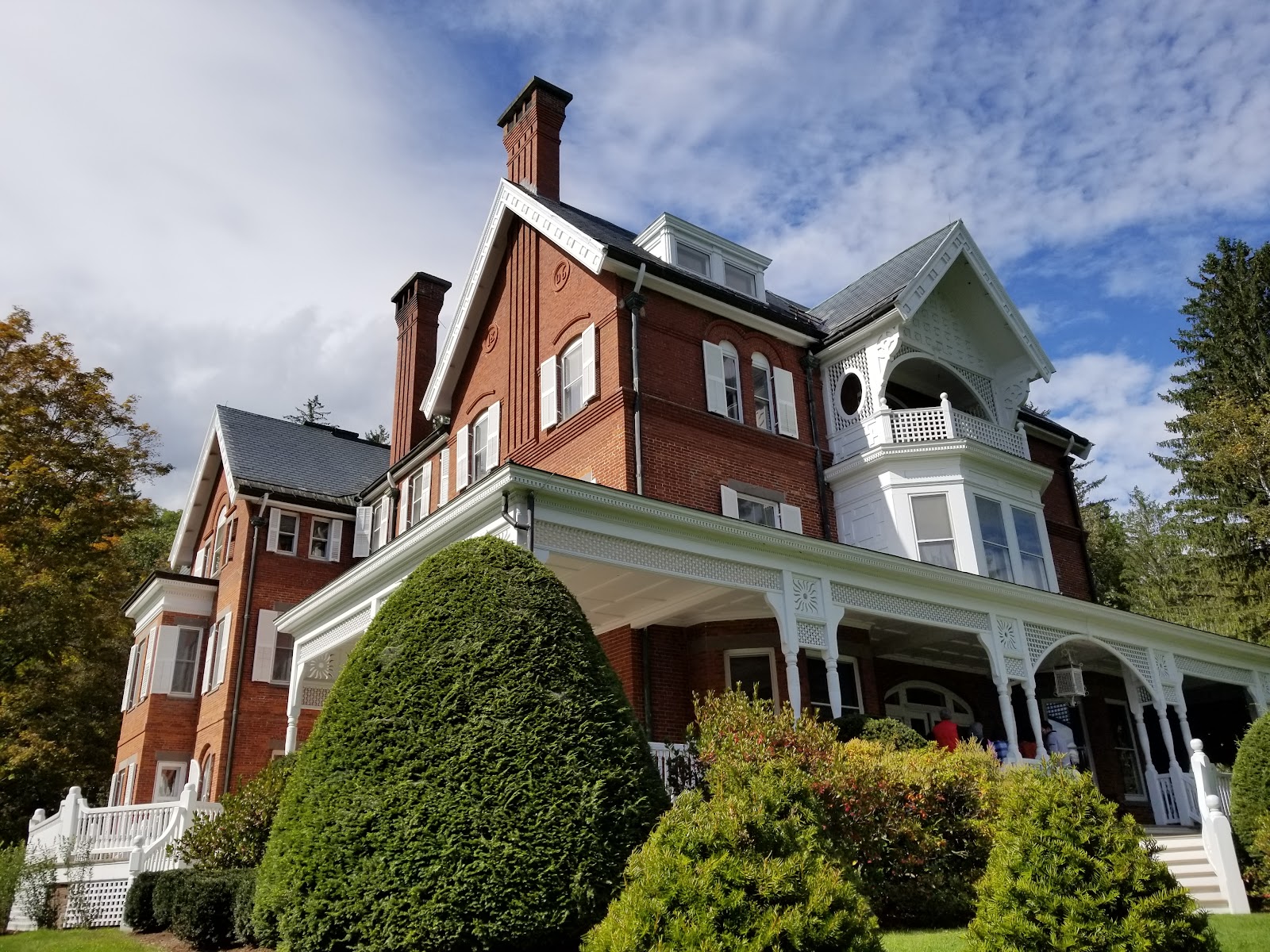
And the sugar maples are the reason people come to Vermont. Where the plantation gives way to hardwood, sugar maple is dominant and it is the species that produces the scarlet and orange the state is known for — a stronger red than any other North American maple, and the reason Vermont’s autumn is famous rather than merely pleasant.
Ways two and three: the dark canopy, and the carriage roads
The second problem is that a conifer plantation is dark, and much darker than photographers expect.
A closed hardwood canopy in summer blocks a great deal of light; a closed conifer canopy blocks substantially more, because the needles are dense, evergreen and arranged to intercept light at every level. Under mature Norway spruce or hemlock the level can be four or five stops below the open ground outside.
That has three consequences. Shutter speeds get slow, so a fast lens and a high ISO are the plan rather than the fallback, with a hundred and twenty-fifth as a floor. Contrast between the wood and any gap is extreme, so a subject in the wood with a lit clearing behind them is a four or five stop frame. And there is almost no colour, because conifer shade is green-grey and nothing beneath it flowers.
The answers are the canopy edge and the gaps.
The canopy edge is the most reliable free light in any wood and it is better here than usual, precisely because the interior is so dark. A metre or two inside the tree line, a subject has soft directional light arriving from the open ground in front and four or five stops of darkness behind — which is separation no equipment can improve on.
The gaps are the other resource. A managed forest has rides, clearings and felled areas, and light entering a dark conifer stand through a gap is a defined shaft rather than a diffuse glow — visible if there is any mist or dust in the air, which in a damp Vermont wood there often is.
A subject standing in a shaft with the plantation two or three stops down around them is theatrical and it needs only the position. The shafts move as the sun does, so this is a matter of finding them on the day rather than planning them.
The third problem is the carriage roads, which are the park’s circulation and the thing that makes it walkable.
They are nineteenth-century engineered roads: graded, drained, curving, surfaced, and laid out to reveal views in sequence. That makes them genuinely beautiful as designed objects and also a hard line through almost every frame taken near them.
There are two honest approaches. Compose them in deliberately — a curving road receding into a dark wood is a strong frame with a built-in perspective, and a couple on it reads as walking somewhere rather than standing in trees. Or step off and shoot into the wood so the road is behind the camera.
What fails is the accidental middle: a portrait with a strip of pale gravel cutting across the bottom third, which reads as carelessness. A step off the road solves it entirely.
The roads are also where the views are, because they were laid out for exactly that. A nineteenth-century carriage road reveals its prospects at designed intervals, and those viewpoints — over the village, across the valley, toward the mountains — are the best wide frames in the park. Walking the road once to find them is worth the time, because they are not visible from the wood.
One practical note about the surface. Carriage roads are graded gravel, which is reliable in dry weather and soft after rain, and in Vermont’s spring it can be genuinely bad. That is a dress consideration and it is real.
- Get on a planting row, low, with a telephoto — regularity composed is powerful
- Norway spruce is the darkest background in the park; use it for separation
- European larch turns gold a fortnight after the maples, and it is deciduous
- A metre inside the canopy edge gives four or five stops of free separation
- Step off the carriage road or compose it in; never let it cut the bottom third
Way four: the season, and a national park's rules
The fourth answer is the calendar, and in Vermont it matters more than anywhere else in this library.
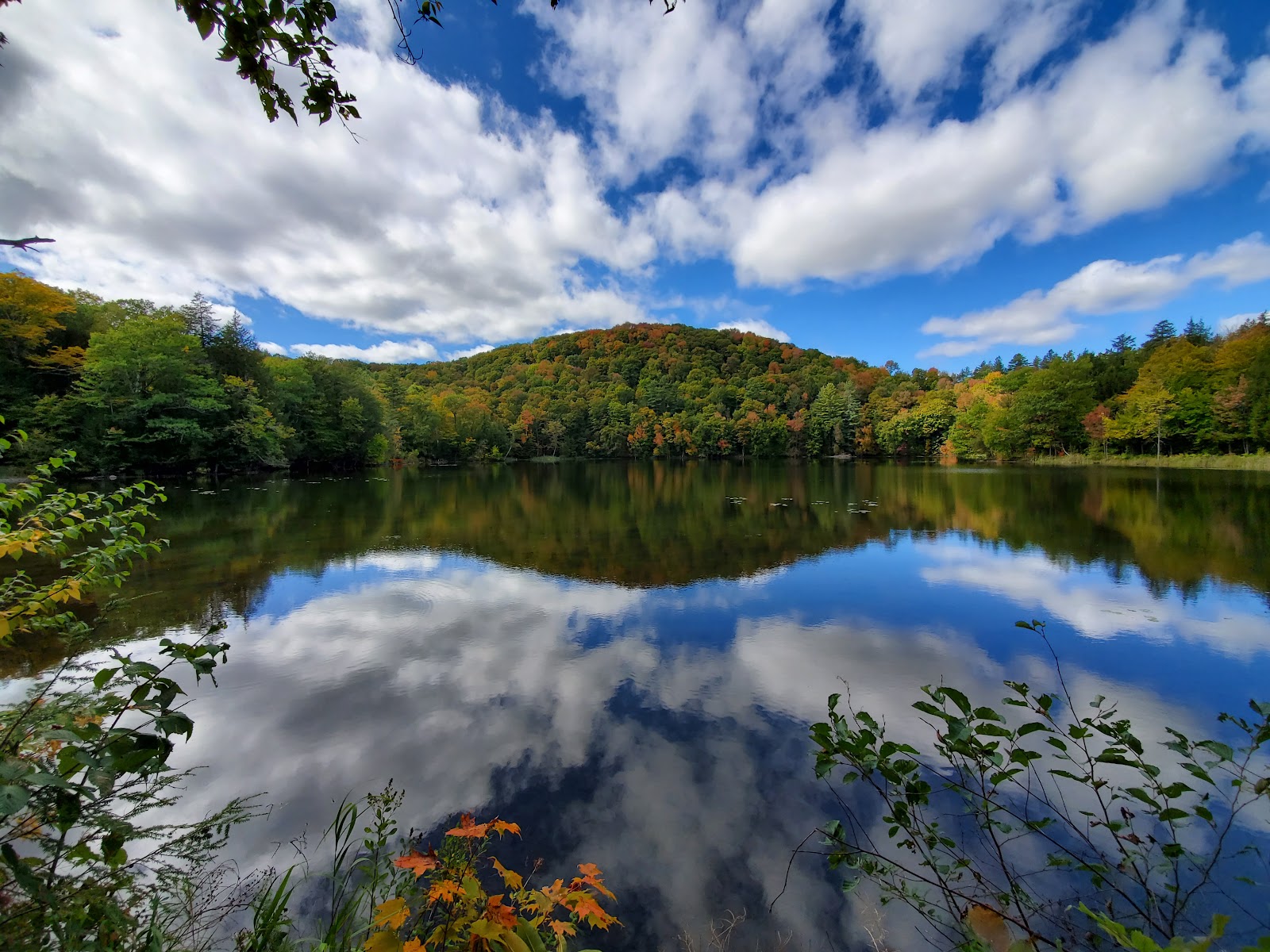
Vermont’s autumn is the most famous in America and the reason is sugar maple, which produces a scarlet and orange that no other North American maple matches. Mixed with yellow birch, bronze beech and dark conifer, it gives the combination the state is known for.
The timing is genuinely predictable within a fortnight and it moves with elevation and latitude. In this part of Vermont the valleys peak in the first half of October and the higher ground a week or so earlier — so on a site with a mountain rising above a village, the colour comes down the hillside over about ten days, which means a single date can catch peak somewhere on the slope even if it has passed or not arrived elsewhere.
That is a real advantage of a site with elevation, and it is worth knowing rather than guessing.
European larch extends the season. Being a deciduous conifer it turns after the hardwoods, in mid to late October, and a gold larch stand against dark spruce when the maples have dropped is a frame most people never see because they have already gone home.
The honest cost of October in Vermont is other people. Foliage season brings very large numbers of visitors, accommodation fills months ahead, and a national park’s roads and viewpoints are busy. That is a genuine planning consideration rather than a minor irritation, and it argues for early mornings and for booking far in advance.
Spring is the season to be careful with, and Vermont has a specific and notorious version of it. Mud season runs from roughly late March into April, when the ground thaws from the top down while remaining frozen beneath — which means meltwater cannot drain and unpaved surfaces become genuinely impassable rather than merely soft.
For a park whose circulation is graded gravel carriage roads, that is a real limitation, and some routes may simply be closed. It is worth asking rather than assuming.
The compensation of late winter and early spring is sugaring. Sugar maple sap runs when nights freeze and days thaw, which in Vermont means roughly late February into early April — and a working sugarhouse with steam pouring out of it into cold air is one of the most specifically Vermont things there is. Whether the park operates one is worth asking.
Summer is green, humid and long-lit, with fifteen hours thirty of daylight at the solstice. The plantation is at its darkest then, because the canopy is fully closed, which makes the canopy edge and the shafts the only usable interior light — but it also makes the deep shade genuinely cool, which matters on a walking site.
Winter is cold and snowy with about eight hours fifty-five of December daylight, and it transforms a conifer plantation completely. Snow on dark spruce is the classic northern frame, and a plantation in snow reads as ordered and graphic in a way it never does in summer — dark trunks, white ground, even spacing.
The practical constraint is access. Carriage roads in deep snow are for snowshoes rather than shoes, and a wedding party is not going far. A winter date here is a short excursion from a warm building rather than a walk in the woods.
Two things about a national historical park specifically. There will be rules — on where a group may go, what may be touched, whether amplified sound or decoration is permitted, whether a permit is required for a commercial photography session, and firm hours. Those are not negotiable and they are worth establishing in writing well in advance.
And civil twilight here runs about thirty-four minutes, among the longest figures in this library. That is a generous working dusk — but under a closed conifer canopy it effectively does not exist, because the wood goes dark long before the sky does. The last frames belong on the open ground, the carriage road viewpoints or the village below.
More frames from The Marsh-Billings-Rockefeller Park
The Marsh-Billings-Rockefeller Park wedding photography: common questions
Why is a planted forest harder to photograph?
Regularity. Even-aged conifers at consistent spacing read as a plantation rather than a woodland, because the eye accepts randomness as nature and order as industry.
So how do I use it?
Compose the order deliberately. Get on a planting row, low, with a telephoto — the recession is mathematically regular in a way no wild wood is.
Which tree gives the best background?
Norway spruce. Mature stands are near-black in a photograph, so a lit subject placed against one separates cleanly with no equipment.
What is special about the larch?
It is a deciduous conifer. It turns clear gold in mid to late October — a fortnight after the maples — and then drops entirely.
What about the carriage roads?
Compose them in as a curving perspective, or step off and shoot into the wood. A strip of pale gravel across the bottom third reads as carelessness.
Is spring a problem?
Yes. Vermont mud season runs late March into April, when meltwater cannot drain through still-frozen ground and gravel roads become impassable.
More Vermont venue guides
We are writing a photographer’s guide to every venue we would happily shoot in Vermont. Here are three more, plus the full index:
- The Stoweflake Mountain Resort, Stowe: One Frame, and How It Is Made
- The Woodstock Inn, Woodstock: The Venue’s Own Logic
- The Billings Farm, Woodstock: A Walk Through the Site
Planning a wedding at The Marsh-Billings-Rockefeller Park?
A forest someone designed. Tell us your date.