 Roxy’s Downtown: Photographing a Small Stage Room
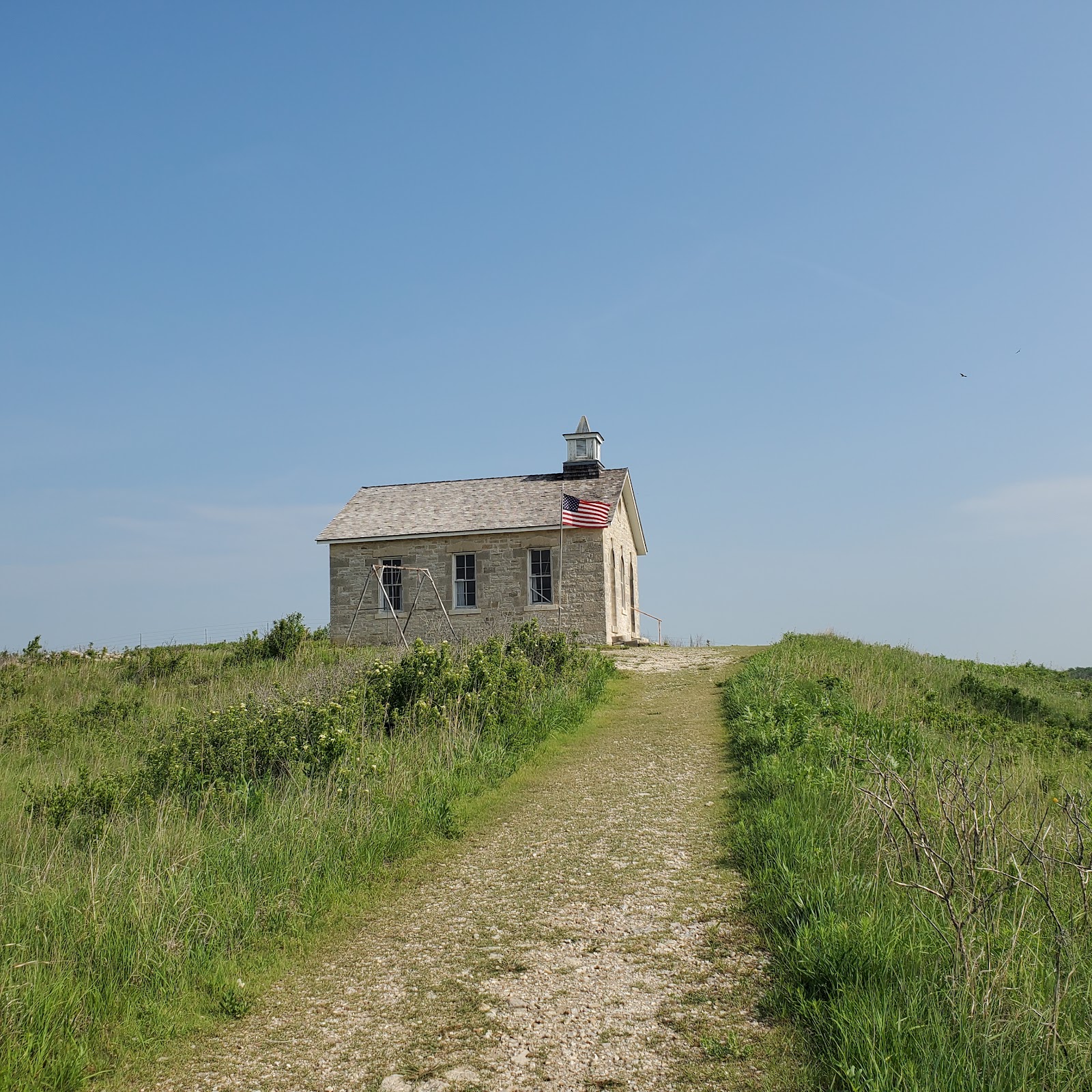
The Tallgrass Prairie National Preserve: The Problem, and Four Ways Out of It
No trees, no shade, no shelter. Four ways to work a prairie.
Less than four percent of North America’s tallgrass prairie survives, and most of what remains is here in the Kansas Flint Hills — for a specific reason worth knowing: the hills are capped with limestone and chert too rocky to plough, so the grass was grazed rather than broken.
That is why this landscape exists at all, and it is also why it presents the hardest set of conditions in this library.
There is no shade. Not filigree shade, not dappled shade — none. A true tallgrass prairie is treeless except along its watercourses, which means that between the creek bottoms there is nothing at all between a face and the sun.
There is no shelter. Kansas is among the windiest states in the country, with average wind speeds well into double figures and very little to interrupt them. Wind here is not an occasional condition but the normal state of the air.
There is nothing to bounce off, and nothing to stand against. A prairie has no walls, no trunks, no rock faces at head height — which means every frame is lit by sky and grass, and a couple standing in it has no vertical element anywhere near them.
And it is compositionally empty in a way that catches people out. A prairie looks magnificent to stand in and photographs as three horizontal bands: grass, a low horizon, and a great deal of sky. Two people in the middle of that read as incidental.
The compensations are enormous and they are what this place is for. The sky is unobstructed in every direction and it is the best sky in this library. The grass itself is a subject — big bluestem reaching six to eight feet by late summer, turning copper and bronze through autumn and holding that colour all winter. And the light at the ends of the day, raking across an unbroken surface for miles, is genuinely exceptional.
Strong City sits at about thirty-eight and a half degrees north at roughly twelve hundred feet in Chase County. The June noon sun reaches around seventy-five degrees, the December noon sun about twenty-eight and a half, days run from about nine hours forty to fourteen hours forty-five, and civil twilight is roughly twenty-nine minutes.
What follows is that problem and four ways out of it. We have not photographed a wedding here; what is permitted on a national preserve, which areas are accessible and the permitted hours are questions for their staff — and the first matters a great deal.
The Tallgrass Prairie National Preserve at a glance
| Where | The largest remaining tallgrass prairie in North America, Chase County, Kansas |
| Why it survived | Limestone and chert too rocky to plough, so it was grazed rather than broken |
| The problem | No shade, no shelter, nothing to bounce off, and a compositionally empty view |
| The compensation | The best unobstructed sky in this library, and grass as a subject |
| Ask first | What a national preserve permits, and which areas are accessible |
Way one: make the grass the subject
The most effective answer to an empty landscape is to stop photographing the view and to photograph the vegetation, which at close range is extraordinary.
Tallgrass is not a lawn. Big bluestem, the dominant species, reaches six to eight feet by late summer — taller than the people standing in it — and Indian grass and switchgrass are not far behind. Little bluestem is shorter and turns the most intense colour.
That height changes what is possible. A couple standing in mature big bluestem is surrounded and partly enclosed, which solves the emptiness problem entirely: the frame is full of texture at every distance rather than three flat bands. From a low camera, with grass in the foreground at the lens and the couple beyond it, the composition has depth that no wide landscape view provides.
The height is seasonal and it is worth knowing precisely. Prairie grass emerges in April, is knee-high by June, chest-high by August and at full height from late August into October. In early spring, after burning, it is a few inches tall and the landscape is genuinely bare.
Backlighting is the technique the grass demands. Grass stems and seed heads are translucent, and a low sun behind them lights thousands of individual blades from within — which turns a green or brown field into a glowing mass. It is the single most reliable frame on any prairie and it needs nothing but the sun in the right place.
Seed heads are the detail. Big bluestem carries a distinctive three-parted seed head — the reason it is sometimes called turkeyfoot — and Indian grass a dense golden plume. Backlit at close range against a dark background these are as good as any botanical subject in this library.
Colour is the prairie’s autumn. There are no leaves to turn here, and instead the grasses do it: big bluestem goes copper and bronze, little bluestem turns a genuine russet-orange, Indian grass goes gold. That happens through October and November, and — unlike tree colour — it holds. A prairie in January is still copper, because the dead grass stands all winter until it burns.
That is a real and under-appreciated advantage: this landscape has colour for five months rather than two weeks.
The wildflowers are the other half. Tallgrass prairie carries a succession of forbs through the season — pale purple coneflower and butterfly milkweed in June and July, compass plant and blazing star in midsummer, goldenrod and asters into autumn, and the annual sunflowers that give Kansas its nickname blooming along disturbed edges in August and September.
Those are close-range subjects rather than landscape ones, and the succession means what is available depends entirely on the fortnight. It is worth asking preserve staff what is flowering rather than guessing.
Ways two and three: use the sky, and use the terrain
The second answer is the sky, because on an unobstructed horizon it is half of every wide frame and it is the best in this library.
That cuts both ways. A cloudless Kansas afternoon gives an even blue field above a brown one, and the wide frames are dull no matter how well composed. But Kansas weather produces structure that few places match.
This is storm country. From April into June the Great Plains generate supercell thunderstorms, and the associated cloud forms are genuinely spectacular: shelf clouds advancing as a solid wall, mammatus hanging beneath an anvil, and towering convective cloud rising to enormous heights over a flat horizon that lets you see all of it.
A prairie under a storm structure is among the most dramatic photographs available anywhere, and the flat horizon is precisely what makes it possible — in hilly or wooded country the same storm is hidden.
The safety line has to be stated plainly. A supercell on the Plains is dangerous, this is tornado country, and an open prairie with no shelter for miles is the worst possible place to be caught. That is not a photographic consideration but the governing one: a wedding here in storm season needs a genuine shelter plan and someone watching the radar, and no photograph justifies staying out.
Outside storm season the sky still performs. Dust and agricultural haze in the Plains air scatter long wavelengths efficiently, which makes a clear prairie sunset unusually saturated — and with an unbroken horizon the colour spreads across the entire western sky rather than being confined to a gap between trees.
Civil twilight here runs about twenty-nine minutes, and the fall-off is relatively quick. Two or three planned setups fit; improvisation does not.
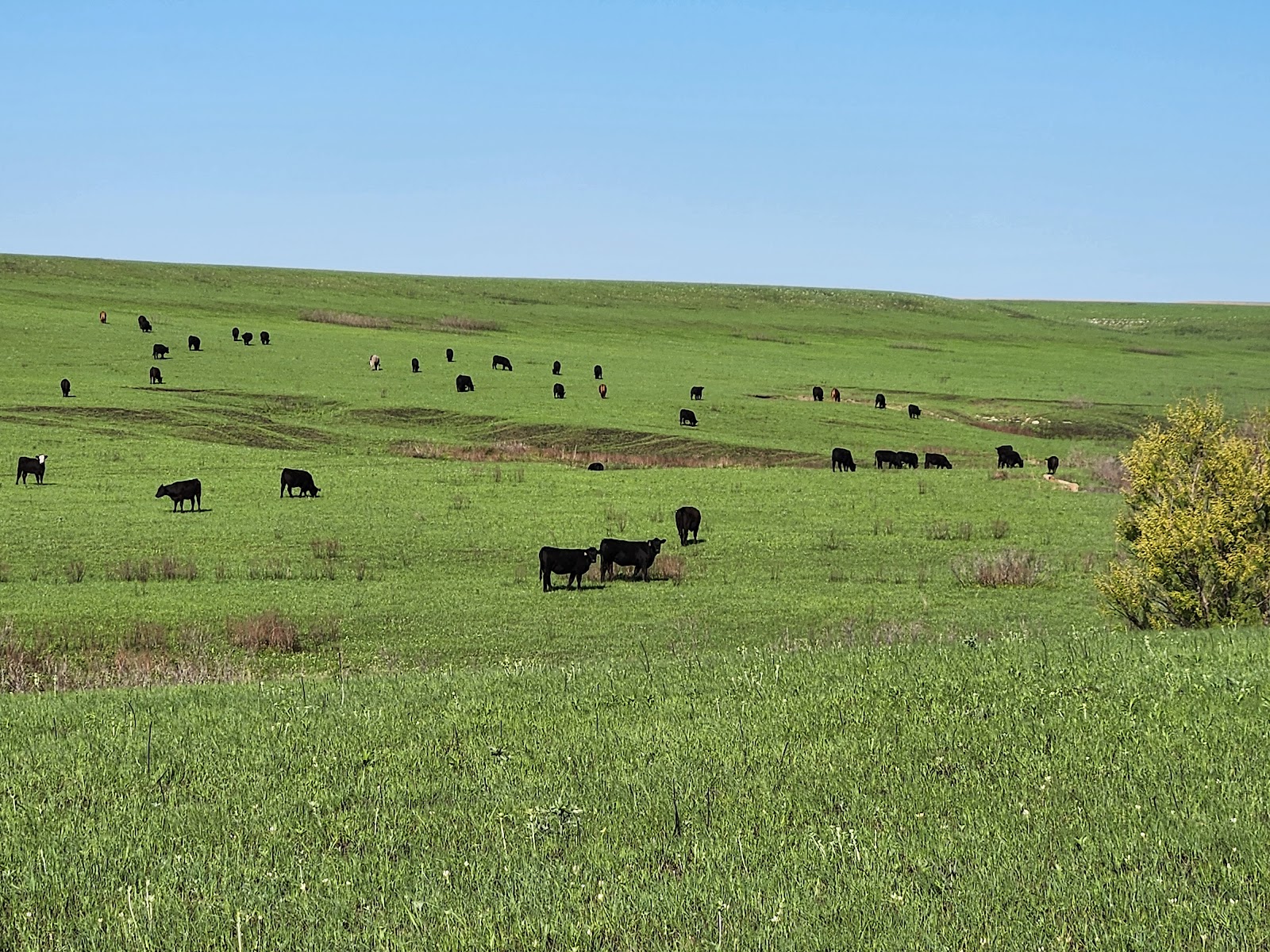
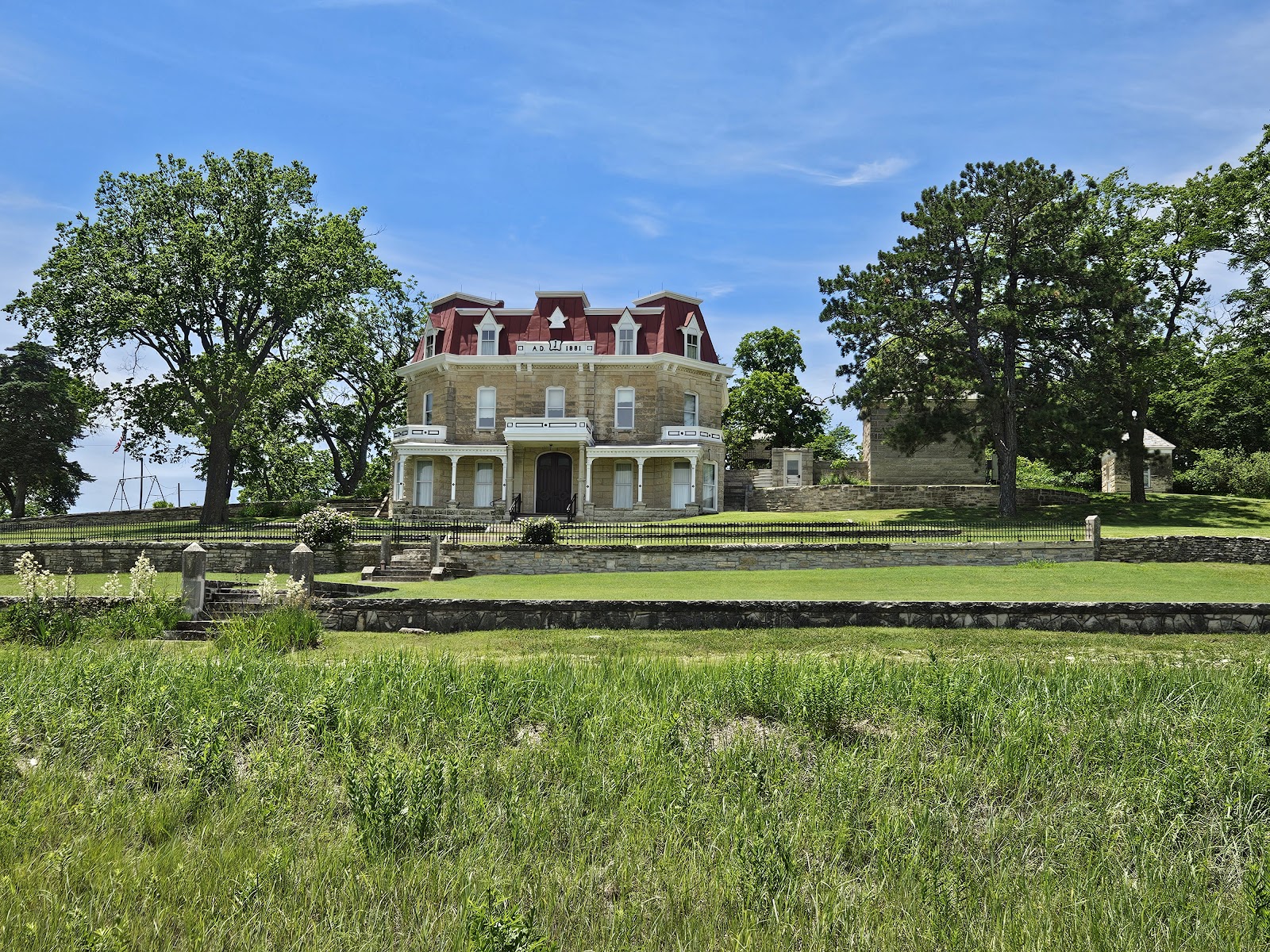
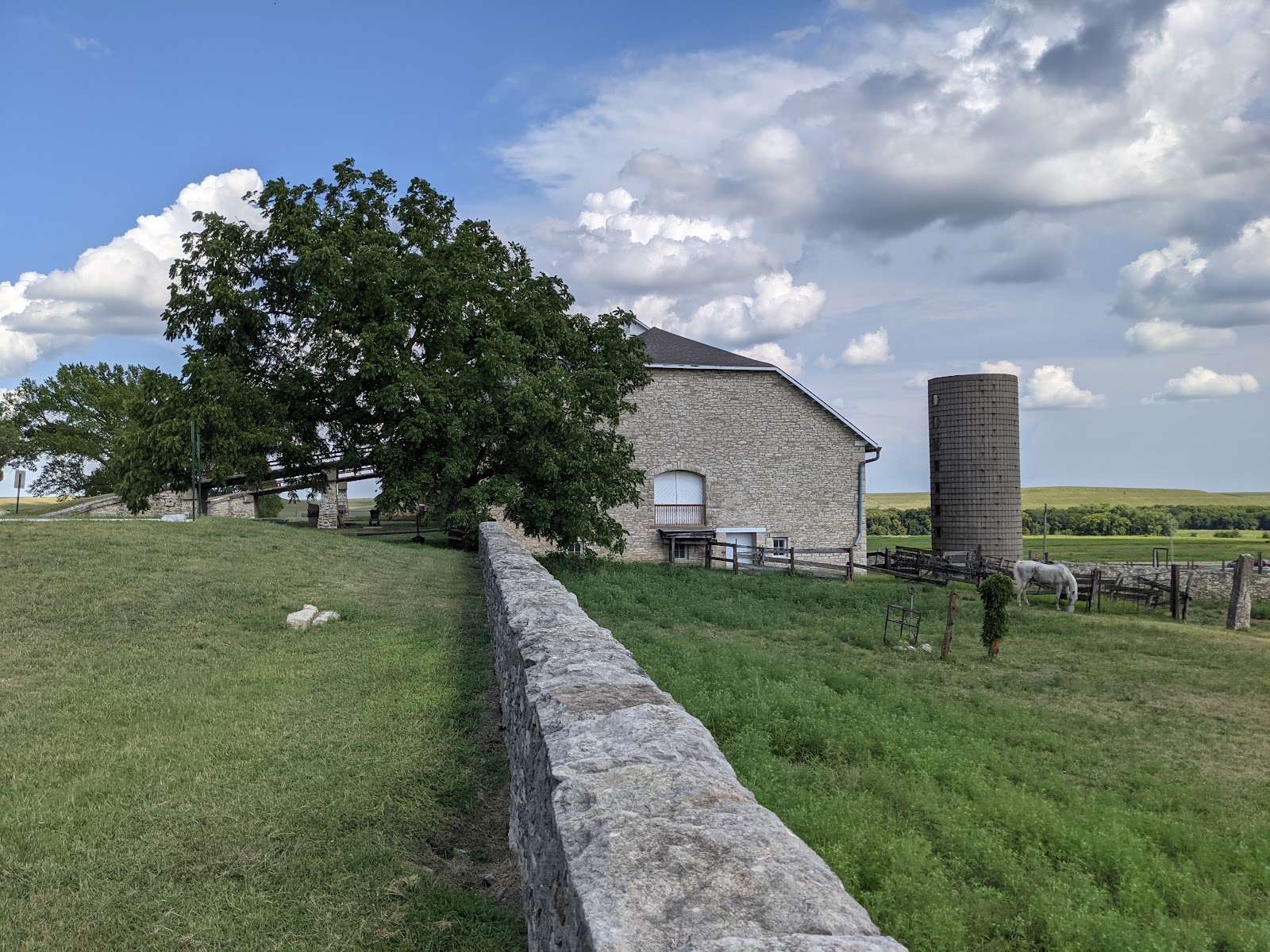
The third answer is the terrain, which is the thing people miss about the Flint Hills. This is not flat country. It is rolling, with limestone benches breaking the slopes into visible steps, and that relief is the only compositional structure the landscape offers.
Use it for elevation. From the top of a rise the camera looks down over the grass with the horizon further away, which separates a subject from the background and gives the frame layers. From the bottom of a slope, subjects on the rise stand against sky, which is the cleanest background available anywhere.
The limestone benches themselves are worth finding. Where the rock breaks through, there is exposed pale stone in horizontal courses — the only hard surface and the only vertical element in the landscape — and a couple standing against a limestone outcrop has something to be seen against.
That stone is the reason the region built in limestone, which is worth knowing as context: with no trees for timber, central Kansas built in cut stone, even to the extent of quarrying limestone fence posts. A stone post standing in open grass is one of the most specifically Kansan images there is.
And the watercourses are the exception to the treeless rule. Along the creeks there is gallery forest — cottonwood above all, with hackberry, bur oak and elm — and that is where the shade is, the only shade for miles. Cottonwood is the Kansas state tree, enormous, with a broad crown and leaves that rustle audibly in wind, and a mature one along a prairie creek is both the shelter and a landmark.
- Get low and shoot through the grass — it solves the emptiness completely
- Backlight the grass: translucent stems glow from within
- Prairie colour lasts five months, not two weeks, because dead grass stands
- Use the Flint Hills’ relief: subjects on a rise stand against sky
- In storm season, a shelter plan and someone watching radar. No frame is worth it
Way four: the hours, the wind and the fire
The fourth answer is timing, and on a site with no shade it is not optional.
At seventy-five degrees of sun elevation in midsummer, with nothing overhead anywhere, an uncovered face at midday has shadowed eye sockets, a bright forehead and a hard line under the nose. Kansas summer humidity helps a little — water vapour scatters light and fills shadows, so contrast runs perhaps a stop and a half lower than a dry climate at the same angle — but it does not solve it.
So the options are: work the creek-bottom gallery forest, which is genuine shade; carry a large diffuser and have someone hold it; or schedule around the middle of the day entirely. On an open prairie the third is the honest answer, and the first two are what you do when the schedule will not move.
The wind governs everything about equipment and it is more constant here than anywhere else in this library. Average speeds well into double figures, with little to interrupt them, mean a breeze is the default condition rather than an event.
Practically: never put a modifier on an unweighted stand, anywhere, at any time. A softbox on a prairie is a sail and it will go over. Hand-held modifiers with a braced assistant are the only reliable approach, and a five-hundredth of a second rather than a two-hundred-and-fiftieth for anything with hair or fabric in it.
The wind is also the prairie’s best feature, and this is the thing to understand rather than resent. Tallgrass in wind moves as a wave — the whole surface flexing in travelling ripples, which is what people mean when they talk about a sea of grass. Frozen at a five-hundredth it reads as texture; at a fifteenth or a thirtieth on a tripod it blurs into flowing bands while a still subject stays sharp.
That second frame is the one worth planning: a couple standing still in motion-blurred grass under a wide sky. It needs a tripod, a briefed couple and several attempts, and it is the photograph this landscape makes better than any other.
The same applies to a veil, which on a prairie is guaranteed to be moving. Read the direction first — blowing toward the camera it obscures faces, across it reads as a shape, away it extends into the frame — and rotate the couple accordingly. Only one of those is what you want.
The fire is the last thing to know, and it is specific to this landscape. Tallgrass prairie is maintained by burning: controlled fires in early spring, typically March into April, remove the previous year’s dead growth and suppress woody encroachment. It is how the ecosystem works and how the preserve is managed.
For a photographer that produces two very different landscapes weeks apart. Immediately after a burn the prairie is black — genuinely black, an expanse of charcoal with the limestone showing pale through it — which is a stark and striking condition that almost nobody photographs a wedding in. Then within two or three weeks it greens up with extraordinary speed, producing an intense new green that lasts into May.
Burn season also means smoke. On a day when neighbouring ranches are burning, the air carries haze that flattens distance, turns the sun orange and removes the long views — which is worth knowing as a spring risk that no forecast will mention.
As to choosing a season: late September into October is the best window here. The grass is at full height, the colour is turning copper and bronze, storm season has passed, the heat has broken, the air is clearest, and the light is long. May and early June are the second choice — green grass, wildflowers beginning, and the real risk of severe weather. Midsummer is hot, humid and green with a difficult midday. And winter is bare, cold, windy and copper-coloured, with a nine-hour day and genuinely good low light across standing dead grass.
More frames from The Tallgrass Prairie National Preserve
The Tallgrass Prairie National Preserve wedding photography: common questions
Why is a prairie so hard to photograph?
No shade, no shelter, nothing to bounce off and no vertical elements. And it reads as three flat bands — grass, horizon, sky — with people incidental in the middle.
What is the single best fix?
Get low and shoot through the grass. Mature big bluestem reaches six to eight feet, so the frame fills with texture at every distance instead of flattening.
How do I photograph the grass itself?
Backlit. Stems and seed heads are translucent, so a low sun behind them lights thousands of blades from within and the field glows.
Does the prairie have autumn colour?
Five months of it. The grasses turn copper, bronze and russet through October and hold that colour all winter, because the dead growth stands until it burns.
What about the wind?
It is the default condition, not an event. Never use an unweighted stand, and shoot hair and fabric at a five-hundredth — or blur the grass at a thirtieth on a tripod deliberately.
What does the spring burning mean?
Two landscapes weeks apart. Black charcoal prairie immediately after a March or April burn, then intense new green within two or three weeks. Burn season also brings smoke haze.
More Kansas venue guides
We are writing a photographer’s guide to every venue we would happily shoot in Kansas. Here are three more, plus the full index:
- The Ambassador Hotel, Wichita: Four Ways Out of the Ornate-Ceiling Problem
- Botanica Gardens: One Decision About Kansas Wind
- Crestview Country Club: How the Fairway Frame Is Actually Made
Planning a wedding at The Tallgrass Prairie National Preserve?
A sea of grass and nowhere to hide. Tell us your date.