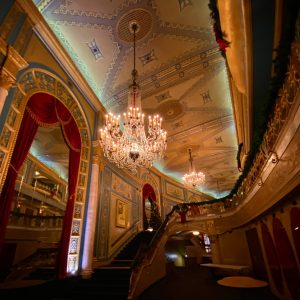
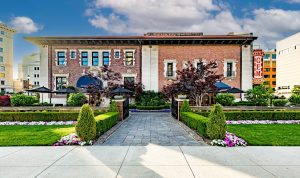
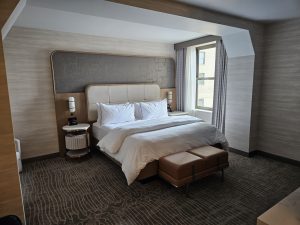
 The Westin Book Cadillac, Detroit: A Walk Up Through a Restored 1924 Hotel
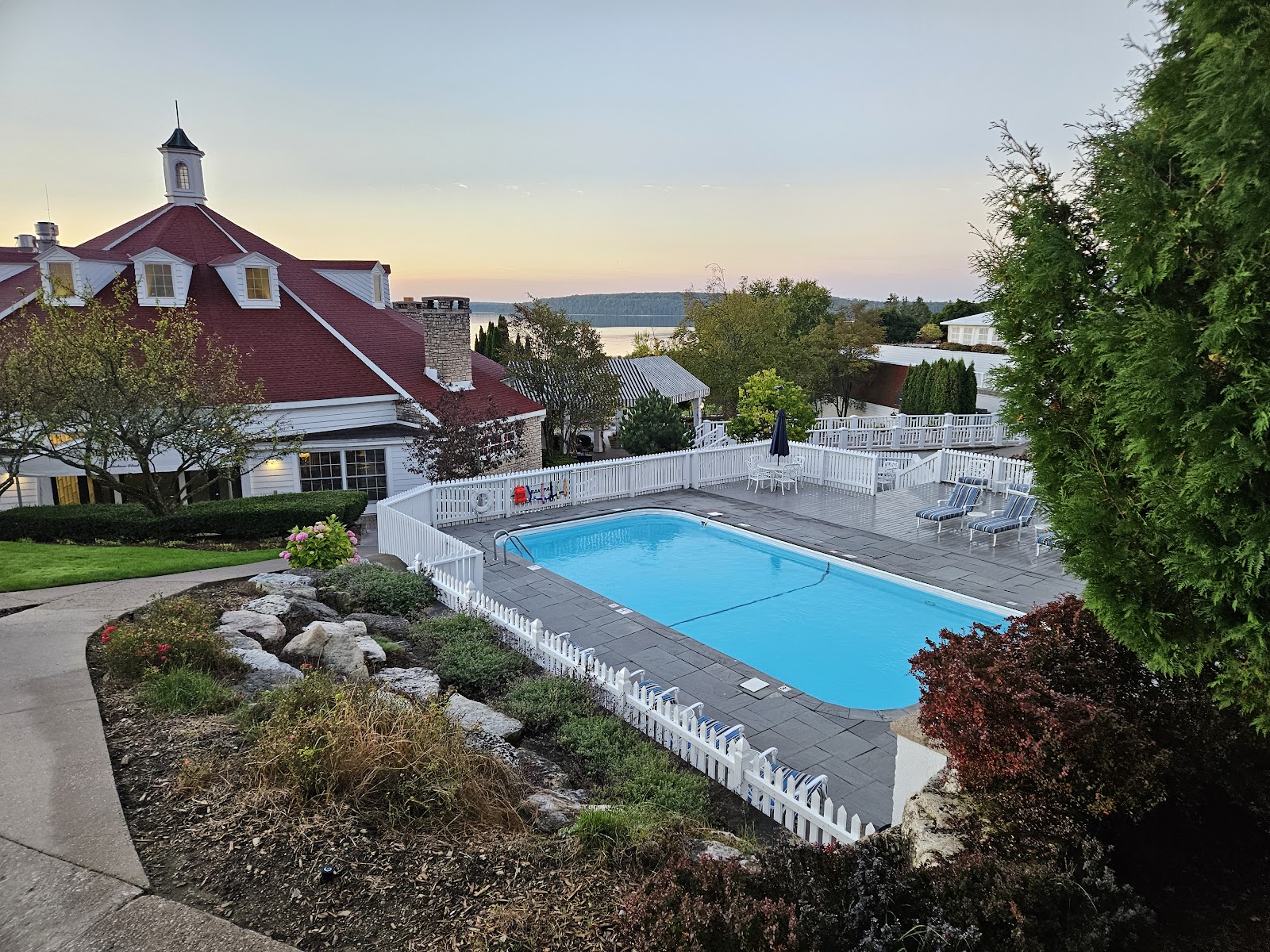
The Mission Point Resort, Mackinac Island: The Problem, and Four Ways Out of It
A big open lawn on open water. That is the problem, and it has four answers.
The problem at this kind of site is exposure, in both senses of the word.
A resort on the open end of an island, set back behind a large sloping lawn facing the water, has almost no shelter in it: no enclosing walls, no deep arcades, few mature trees on the lawn itself, and a long fetch of open water in front generating wind.
That gives four distinct difficulties. There is no shade, so the middle of a clear day has nowhere to put a face. There is no windbreak, so veils, hair and lightweight decoration are at the mercy of whatever is blowing across the Straits. There is nothing to bounce off, so every frame is lit by sky, water and grass and nothing else. And a large lawn is compositionally empty, which means a couple standing on one is a small subject in a big flat field with nothing to anchor them.
That last point is the one photographers underestimate. An open lawn looks generous and photographs as absence — a wide green plane, a strip of water, a band of sky, and two people who read as incidental.
The compensations are real and they are what the site is for. Open water in front means an uninterrupted horizon, full sky, and the best sunsets on the island; the east end of an island also means dawn light across the water, which the harbour-facing venues do not get. And a large lawn holds a large wedding with room to move.
Mackinac Island sits at about forty-five and three-quarter degrees north in the Straits of Mackinac. Summer days run to around fifteen hours thirty-five at the solstice, winter to about eight and a half, and civil twilight is roughly thirty-six minutes — a genuinely long working dusk.
And there are no motor vehicles on the island, as there have not been since 1898. Everything including the photographer’s kit moves by horse, bicycle or on foot.
What follows is that problem and four ways out of it. We have not photographed a wedding here; which lawns and rooms are included, what covered alternatives exist and the permitted hours are questions for their team.
The Mission Point Resort at a glance
| Where | A resort on the open east end of Mackinac Island, behind a large lawn |
| The problem | No shade, no windbreak, nothing to bounce off, and a compositionally empty lawn |
| The compensation | An uninterrupted horizon, full sky, and dawn light across the water |
| The latitude | About 45.75°N — 36 minutes of civil twilight, a long working dusk |
| Ask first | Covered alternatives, included lawns and rooms, permitted hours |
Way one: use the slope and the edges
The first answer to an empty lawn is to stop standing in the middle of it.
A sloping lawn is a genuine asset if it is used for what it is, which is elevation. From the top of a slope a camera looks down over a group with the water beyond, which gives separation, a clean background and a sense of place all at once — and from the bottom, subjects on the rise stand against sky rather than against more grass.
Those two positions solve most of the emptiness problem, and both are free. What fails is the level camera at the same height as the subjects in the middle of the lawn, which is the default and which produces the flat empty frame described above.
The edges are the second resource. Whatever trees, hedges, fences, paths and buildings define the lawn’s perimeter are the only vertical elements available, and a subject placed against one has something to be seen against. A couple at the lawn’s edge with the resort behind them, or with the tree line behind them, reads as located; the same couple thirty metres out does not.
The shoreline is the best edge. Where the lawn meets the water there is usually a break — rocks, a low wall, a beach, a path — and that line is both a compositional anchor and a place to stand. A frame composed along the shoreline, with it running across or diagonally through the picture, has structure that the open lawn lacks.
The water’s edge also solves the fill problem. Open water reflects the sky and acts as a very large low-angle source, so a subject standing close to it is lit from below as well as above — which lifts the shadows under the chin and in the eye sockets that overhead light would otherwise leave black.
That is genuinely useful and it is why waterside positions flatter faces. The effect is strongest at low sun angles, when water’s reflectivity rises sharply at grazing incidence, which happily coincides with the best light of the day.
The buildings are the third edge and the most reliable. A resort of this kind has porches, verandahs, covered walks and entrances, and any covered structure is optically a large soft source with a hard mask — light in from the open side, bouncing off the ceiling and floor, falling off with depth.
Depth back from the open edge is the whole control: at the edge the light is flat, two or three metres in it has real direction and a good ratio. That is the best unassisted portrait light on the property and it works at any hour in any weather, which on a site this exposed makes it the fallback for everything.
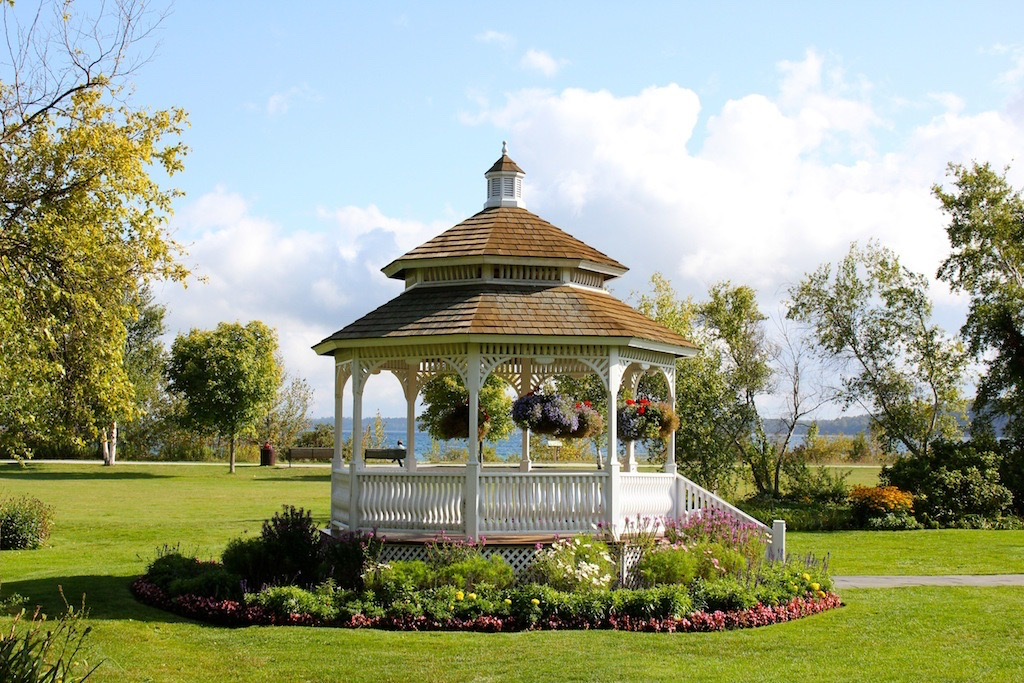
Ways two and three: carry the shade, and manage the wind
The second answer is that on a site with no natural shade, shade is something you bring.
A large collapsible diffuser held overhead by one person converts direct sun into a big soft source directly above, which turns an impossible midday position into a workable one. On an open lawn it is frequently the only option, and it requires a second pair of hands — which needs arranging in advance rather than improvising.
A reflector is the other half. Because there is nothing on a lawn to bounce off, a white or silver reflector held low and in front is doing work that a wall would do elsewhere — lifting the eye sockets and filling under the chin. In combination, a diffuser overhead and a reflector below turn open lawn into something close to studio conditions.
Both of those are wind-dependent, which brings us to the third problem.
A collapsible diffuser on an open lawn in a breeze is a sail, and it will pull an assistant off balance before it does anything useful. That is not a theoretical risk on a site facing open water with a long fetch — afternoon wind on the Straits is normal rather than exceptional.
So the honest technique is: use the diffuser in the morning when the air is calmer, use the buildings when it is not, and never put a modifier on a stand on an open lawn unless it is weighted and someone is holding it.
The wind has photographic consequences beyond equipment, and they split into problems and opportunities.
The problems are hair across faces, veils behaving unpredictably, and lightweight decoration moving. The technical answer is a fast shutter — a five-hundredth rather than a two-hundred-and-fiftieth — and the practical answer is timing: work the calm frames early, and accept that afternoon frames will have movement in them.
The opportunity is that a veil in wind is genuinely photogenic in a way a still veil is not. A long veil lifted and extended by a steady breeze is one of the most reliably striking frames available at any waterfront venue, and it needs the wind to work. The same applies to a dress with any length to it.
So the approach is to stop fighting the wind and to use it deliberately for a handful of frames: position the couple so the wind carries the veil across or away rather than into their faces, shoot fast, and take many — because the good frame is one in ten rather than one in two.
Reading the wind direction takes ten seconds and saves the sequence. A veil blowing toward the camera obscures faces; blowing across, it reads as a shape; blowing away, it extends into the frame. Only one of those is what you want, and moving the couple ninety degrees is the entire fix.
One further practical point about an exposed site at this latitude. Even in high summer, a strong breeze off water that is genuinely cold — the Straits stay cool all season — makes an open lawn feel much colder than the air temperature suggests. A wedding party standing on it for a forty-minute ceremony will feel it, and that is worth mentioning to anyone planning an outdoor ceremony here in June.
- Never shoot level from the middle of the lawn — use the slope, top or bottom
- The water’s edge fills faces from below; the effect is strongest at low sun
- Carry a diffuser and a reflector; there is nothing on a lawn to bounce off
- A diffuser is a sail — morning only, hand-held, never on an unweighted stand
- Move the couple so the wind carries the veil across or away, never toward you
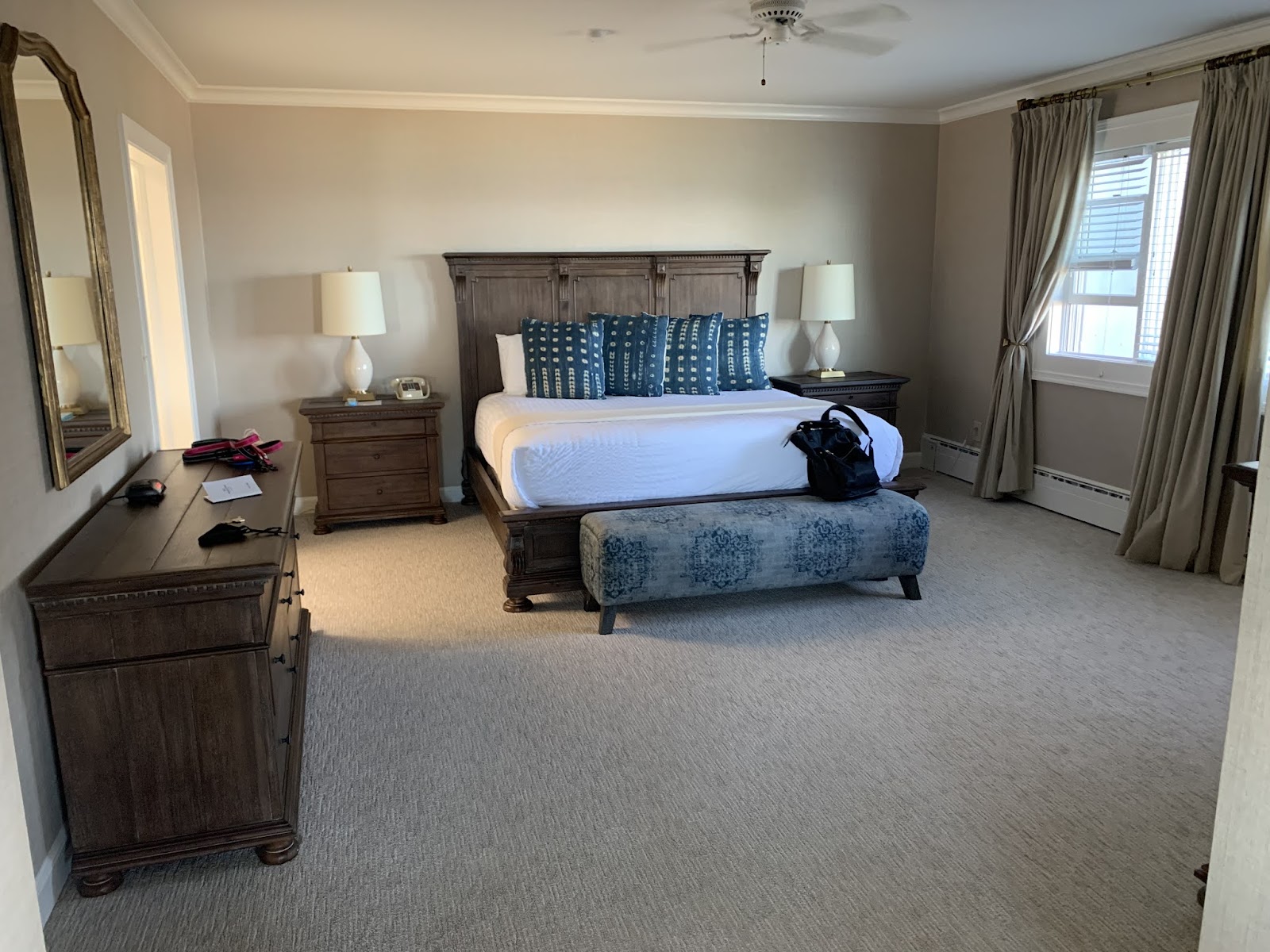
Way four: use the sky, and the hours the harbour venues don't get
The fourth answer is to treat the sky as the subject, because on a site with an uninterrupted horizon it is the largest and best thing available.
An open lawn facing open water gives a full unobstructed sky in every direction, which is rare — most venues have trees, hills or buildings taking a substantial bite out of it. Here the sky is perhaps half of any wide frame, which means that when it is doing something the pictures are excellent and when it is empty blue they are dull.
So the wide frames should be built around weather. Broken cloud, a passing front, a storm clearing, or the long northern twilight all give a sky worth half a frame; a cloudless midday does not.
The east-facing aspect is the site’s specific advantage and it is worth planning around. Almost all the island’s harbour-facing venues look broadly south and west, which gives them sunset and denies them sunrise. A site on the east end gets the low sun coming across open water at dawn — which is the same quality of light as sunset, over water, with nobody else on the island awake.
That dawn window is doubly valuable here because of the ferry. The first boat does not arrive until mid-morning, so a photographer staying on the island has the lawn, the shoreline and the whole east end entirely private for the first hours of daylight.
A couple on an empty shoreline with low sun across the water, no other people anywhere, is a frame this site can produce and most cannot. It requires being up, and it requires having stayed the night.
The long twilight is the other structural advantage. Thirty-six minutes of civil twilight at forty-five degrees north is roughly half again what southern venues get, and on a site with a full horizon that translates into a substantial working session: the sky holds colour across a wide arc for long enough to shoot three or four distinct setups.
The frame to build it around is the couple on the shoreline against the afterglow, with a warm-gelled source on them at about a stop under the sky. Because the water reflects the colour, the frame is doubled without any effort — which is the reward for a site with no shelter.
After dark the island’s lack of light pollution becomes relevant. A small community with no vehicles and no highways leaves a genuinely dark sky, and an open east-facing lawn is the right place on the island to see it. Northern Michigan is far enough north that aurora is an occasional real possibility rather than a fantasy — not something to plan for, and worth checking a forecast for on the night.
The season compresses all of this into about five months, roughly May to late October, and the shoulders behave differently from the middle.
May and June give the longest days and the coolest water, with unreliable weather and planting that runs behind southern Michigan because the surrounding lakes delay the growing season.
July and August give warmth, the water’s best turquoise over limestone shallows in overhead light, and the island’s heaviest visitor numbers — which matter less on an isolated east-end lawn than in the village, and which make the dawn window more valuable still.
Late September into early October is the best fortnight. Crowds thin sharply, the air clears, and the northern hardwoods turn — sugar maple to scarlet and orange, birch and aspen to yellow — against dark conifer and blue water. The colour peaks earlier here than in southern Michigan because of the latitude, usually in the first half of October.
The honest warning for that window is that autumn brings the season’s first real blows to the Straits, and on a site defined by its exposure that is a material risk. A covered alternative that genuinely exists is not a formality here; it is the difference between a plan and a hope.
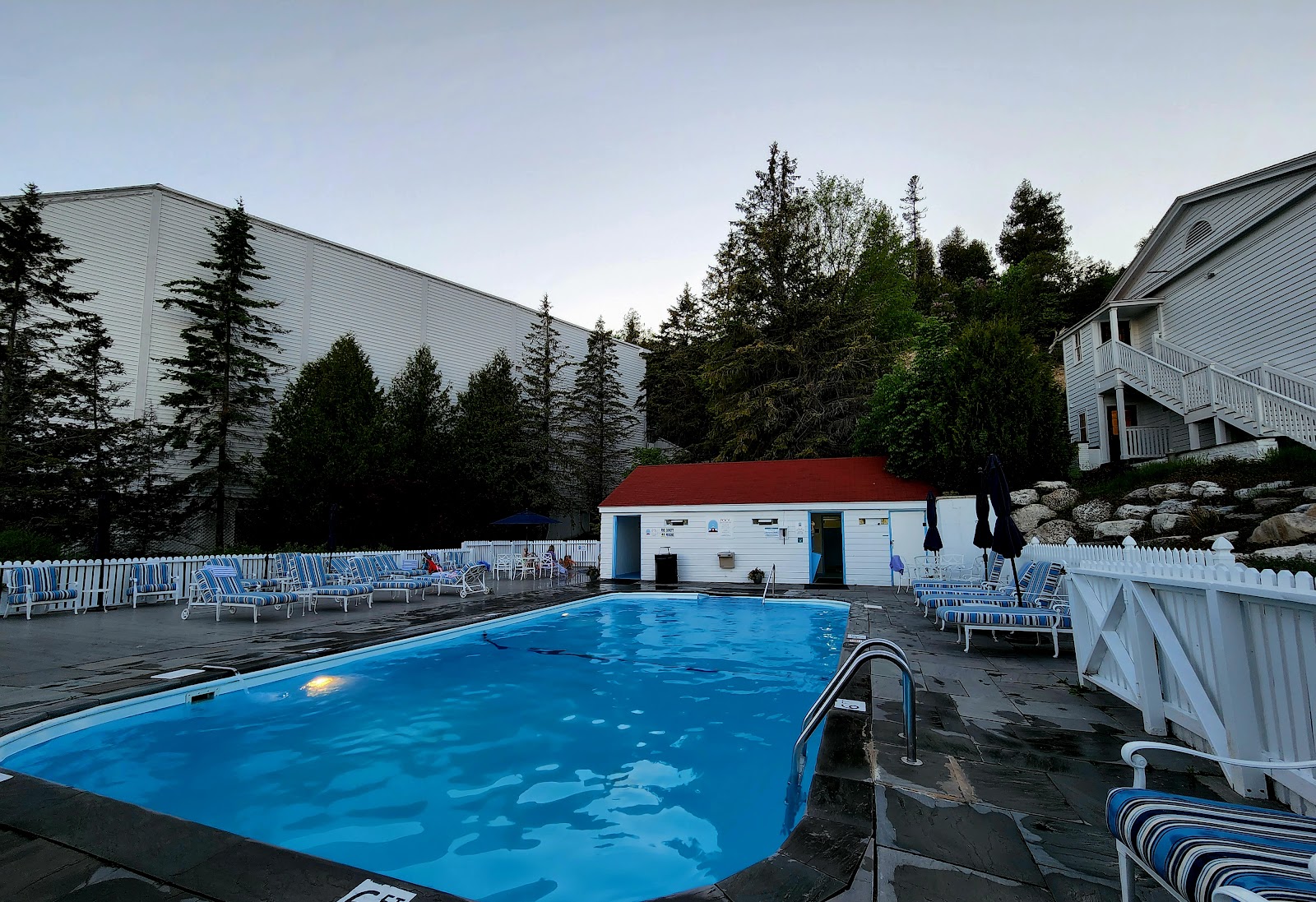
More frames from The Mission Point Resort
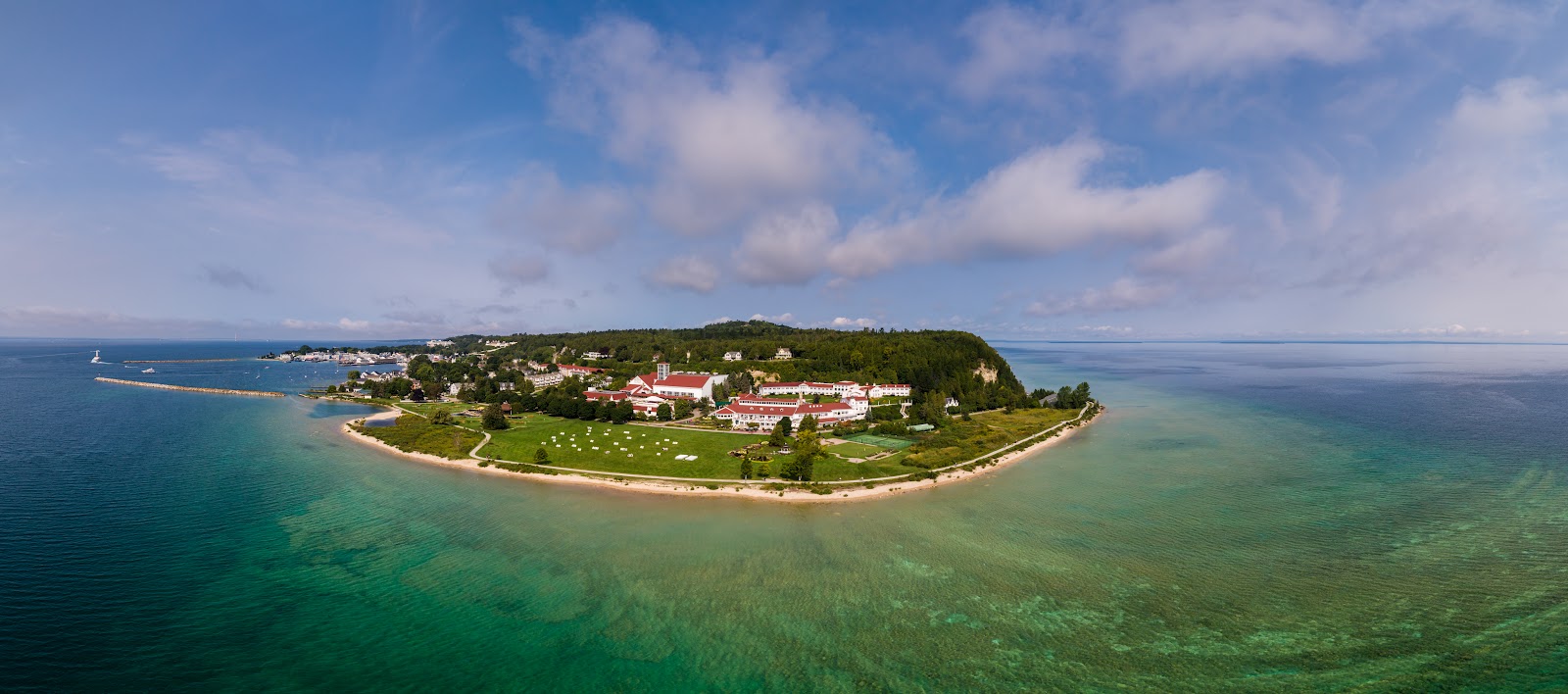
The Mission Point Resort wedding photography: common questions
Why is a big open lawn difficult?
No shade, no windbreak, nothing to bounce off, and no vertical elements — so a couple standing on it reads as incidental in a flat green field.
What is the simplest fix?
Stop shooting level from the middle. Use the slope from above or below, or move to an edge — the shoreline, the tree line, the buildings.
How does the water help?
It reflects the sky and acts as a large low-angle source, filling under the chin and in the eye sockets. The effect is strongest at low sun angles.
Can I use a diffuser on the lawn?
In the morning, hand-held. In an afternoon breeze off the Straits it is a sail and will pull an assistant over before it helps.
How should I handle the wind?
Deliberately. Position the couple so it carries the veil across or away rather than into their faces, use a five-hundredth, and take many frames.
What does an east-facing site give that others don't?
Dawn light across open water, with nobody else on the island — the first ferry does not arrive until mid-morning.
More Mackinac Island, MI venue guides
We are writing a photographer’s guide to every venue we would happily shoot in Mackinac Island, MI. Here are three more, plus the full index:
- The Grand Hotel, Mackinac Island: A Walk Through the Building
- The Island House Hotel, Mackinac Island: The Light Through the Day
Planning a wedding at The Mission Point Resort?
An open lawn, a full sky and a long dusk. Tell us your date.