 The Westin Book Cadillac, Detroit: A Walk Up Through a Restored 1924 Hotel
The Cheney Place, Grand Rapids: Field Notes
Brick absorbs light. That is the first problem and the root of three more.
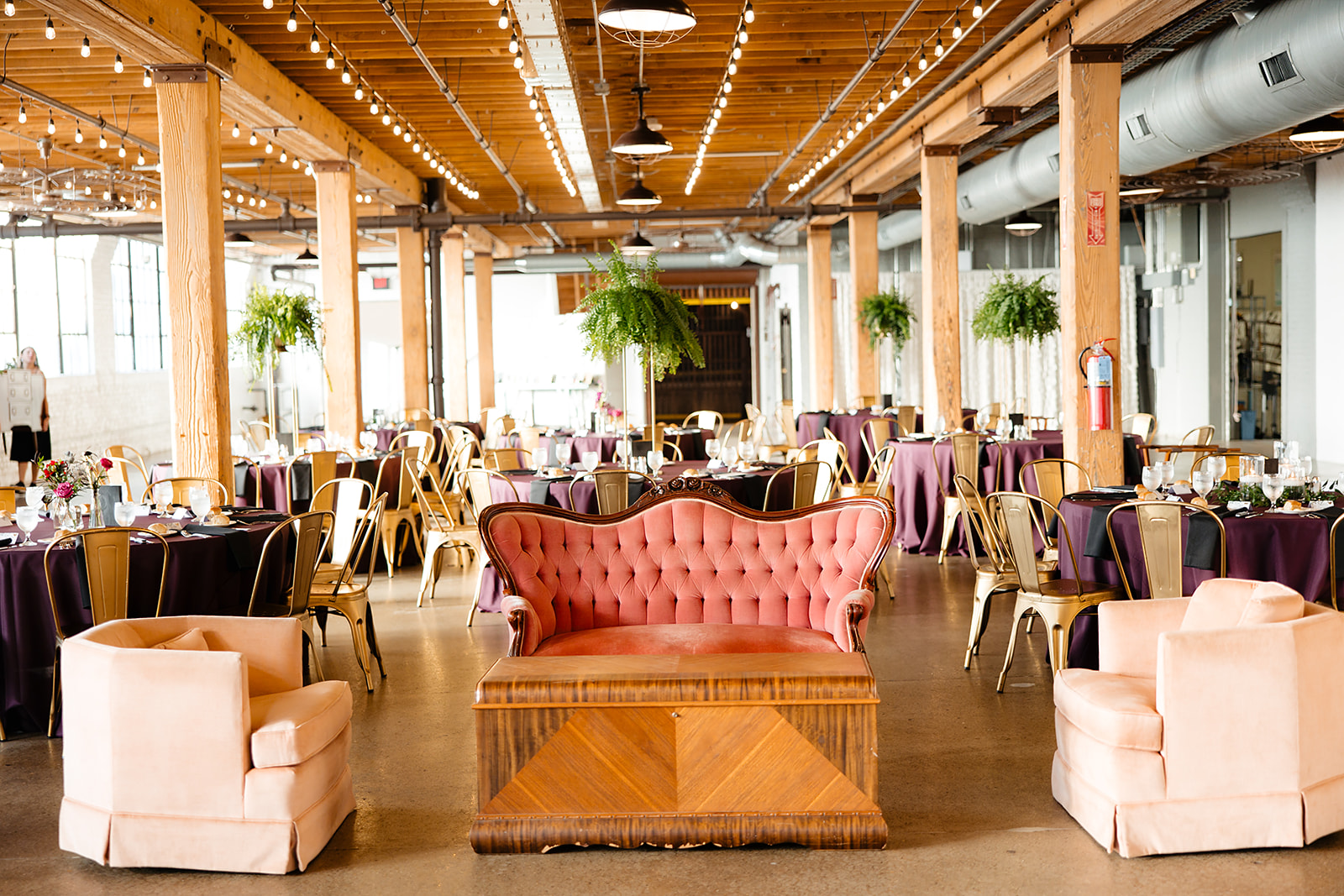
Grand Rapids was a furniture city. From the 1870s into the 1930s it was one of the great American centres of furniture manufacturing, and the building stock it left behind is substantial brick and heavy-timber industrial construction — multi-storey factories and warehouses built to carry machinery and stacked lumber.
A venue in one of those buildings inherits a specific set of conditions, and the first is that almost nothing in it reflects light.
Exposed brick reflects perhaps ten to twenty percent of what falls on it, depending on colour. Aged structural timber — posts, beams, decking — is often darker still. A room finished in both is optically a light trap, which means the standard technique of bouncing a flash off a wall or ceiling returns almost nothing.
That single fact generates three more problems. Without bounce, every frame needs direct light through a modifier, which is slower to set up and less forgiving. The ambient level is very low even with the house lights on, because the same surfaces absorb whatever the fixtures produce. And the colour is uniformly warm-red, which pushes skin tones in a direction that needs managing rather than ignoring.
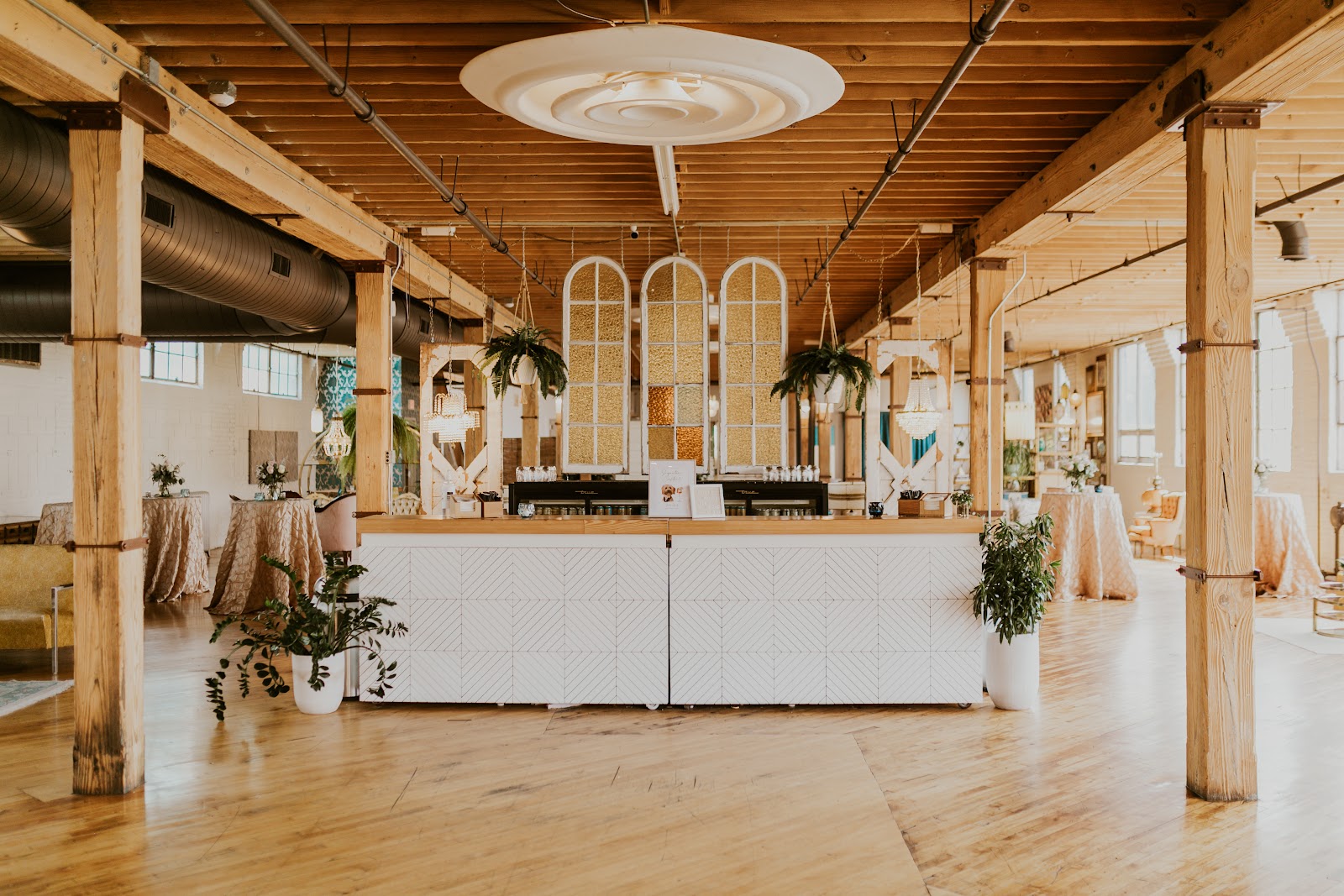
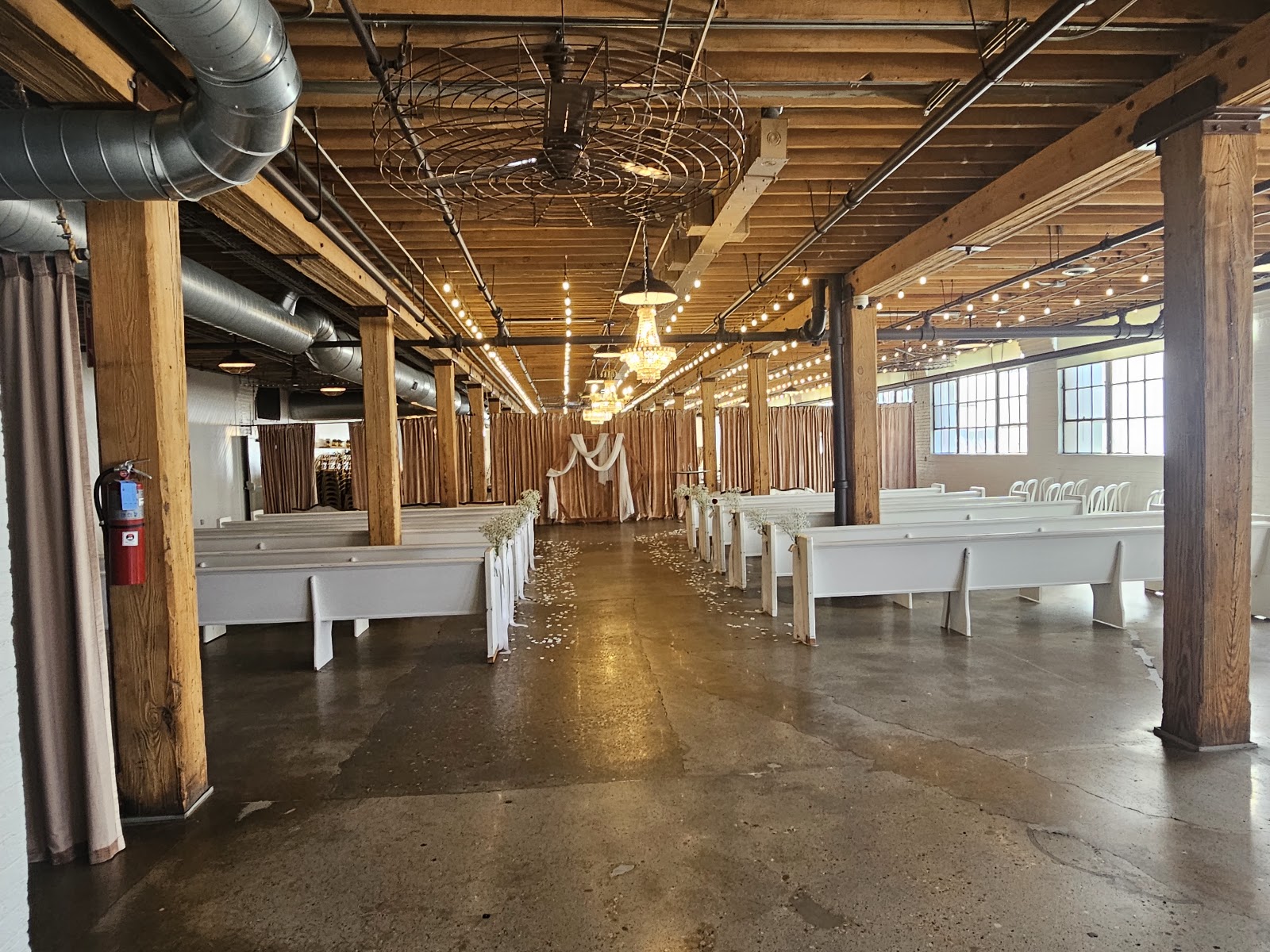
The compensations are what make these buildings popular, and they are real. Heavy-timber construction gives large open floors with a regular grid of posts, high ceilings, and enormous windows — because a factory needed daylight before electric lighting was reliable, and the windows were made as large as the structure allowed.
Those windows are the whole answer to the problem above, and most of this guide is about using them.
Grand Rapids sits at about forty-three degrees north at roughly six hundred and forty feet, thirty miles east of Lake Michigan. The June noon sun reaches around seventy and a half degrees, the December noon sun about twenty-three and a half, days run from about nine hours five to fifteen hours twenty, and civil twilight is roughly thirty-two minutes.
What follows is four problems and what solves each. We have not photographed a wedding here; which floors are included, what window orientation you have and the permitted hours are questions for their team.
The Cheney Place at a glance
| Where | A converted brick-and-timber industrial building in Grand Rapids |
| Problem one | Brick and aged timber absorb light — bounce is effectively unavailable |
| Problem two | Very low ambient, and a uniformly warm-red colour cast |
| The answer | The factory windows, which were made as large as the structure allowed |
| Ask first | Window orientation, which floors are included, permitted hours |
Problems one and two: no bounce, and a red room
Start with what the windows can do, because they solve most of it for free.
An industrial window of this period is large, tall and often multi-paned, and in a building one or two bays deep it produces a very large directional source. A subject standing two metres in from one is lit as if by a studio softbox the size of a door — strong direction, a soft shadow edge, and a rapid falloff into the dark interior behind them.
That falloff is the gift of a light-absorbing room. In a pale-walled space the light bounces around and the background stays bright; in a brick and timber room it dies immediately, which means a window-lit subject is separated from a near-black background with no effort at all. It is the single best portrait condition in the building and it costs nothing.
The distance is the control. At the glass the light is bright and flat; two metres in it has ideal direction and ratio; five metres in the subject is dim and the frame is about the room rather than the face.
Orientation decides the hours, and it is the thing to establish first. A north-facing window gives soft consistent light all day, which is the easiest case and the most reliable. A south-facing one gives hard direct sun in a shaped patch that moves across the floor — which is dramatic, difficult, and worth working deliberately. East and west give a strong raking beam at one end of the day only.
A direct sun patch on an industrial floor is one of the better frames in this building type. The beam lands as a defined shape, the plank floor takes it warmly, and a subject standing in it is brightly lit against a dark room — a four or five stop frame that reads as theatrical. Expose for the subject in the patch and let everything else go.
Where the windows are not enough or the frame is elsewhere, the technique is direct light through a modifier, because bounce is not available.
The working setup is one source at about forty-five degrees through a softbox or umbrella, plus a rim from behind at about a stop over the key. The rim matters more in a dark brick room than almost anywhere, because a subject lit only from the front against a near-black background loses their edges entirely.
Do not waste time aiming flash at a brick ceiling. A timber-decked ceiling at four or five metres in a dark finish returns effectively nothing, and the attempt costs a stop and a half of output for no gain.
The colour problem needs a decision. Exposed red brick under warm tungsten or LED is a strongly warm environment, and light bouncing off brick onto skin carries a red-orange cast — which on a face reads as flushed.
The fix is not to correct globally, because that turns the brick grey and removes the reason for being in the room. Set white balance on skin in its actual position, gel the key warm so it matches the ambient rather than fighting it, and let the brick sit warm. The eye expects a brick room to look warm; making it neutral looks wrong.
Where a subject is close to a sunlit brick wall, distance is the control. Two metres from brick in bright light, the bounce is noticeable; four metres, it is negligible. Moving is easier than correcting.
Problems three and four: the grid, and the scale
The third problem is the post grid, which is simultaneously the building’s best compositional feature and a constant nuisance.
Heavy-timber construction puts columns on a regular grid, typically every three to five metres in both directions. That means there is a post near almost anywhere you want to stand, and a post behind almost any head.
The nuisance version is a column growing out of someone’s skull, or bisecting a group. The fix is a few inches of camera movement, and the discipline is to check the background for verticals before every frame rather than after.
The useful version is that a regular grid is a perspective engine. A camera placed on a line of columns, low, renders them receding in a rhythm that gives enormous depth — and a couple placed several bays down that line, small in the frame, is one of the strongest pictures this building type makes.
That frame wants a moderate telephoto to compress the rhythm and stack the posts. A wide lens spreads them and loses the repetition that made it worth doing.
The columns also frame. A couple standing in a single bay, with posts either side and the ceiling beams above, is a natural architectural frame — and one bay per wedding is enough before it becomes a mannerism.
The ceiling structure is the fourth element worth deliberate use. Exposed beams, joists and plank decking form a strong directional pattern, and a wide lens from low with the beams converging gives a frame that says heavy-timber industrial more clearly than any wall does.
The fourth problem is scale, and it works in two directions.
A factory floor is large, which means a small wedding can look lost in it. Forty people in a space built for machinery will show a great deal of empty floor, and the answer is to work tighter and to use the columns to subdivide the space — a bay reads as a room, and a group within one bay reads as filling it.
It also means real distances for lighting. A room twenty metres across cannot be lit by a single source on a stand at one end, and the inverse-square law means a flash set for a subject at three metres is four stops down at twelve. Large groups in a big industrial room need two or three sources spread along the line, not one brighter one.
Drag the shutter so the building’s own lighting registers. Industrial conversions are typically lit by pendant fixtures, festoon strings or uplit brick, and those are what make the room look like itself — a frame exposed only for flash renders them dark and the space anonymous. A thirtieth to a sixtieth on a wide lens is the usual range.
One practical note about floors. Original industrial flooring is usually plank or end-grain maple block, often heavily worn, and it photographs beautifully — but it is also uneven and frequently splintered at the edges. That is worth knowing for anyone in a long dress, and it is a real consideration rather than a fussy one.
- Two metres in from a factory window is the best portrait in the building
- Do not aim flash at a dark timber ceiling — it returns nothing
- Direct through a modifier, plus a rim, because the background is near-black
- Check for a post behind every head before the frame, not after
- Two or three sources along a big floor, never one brighter one
The city, and a lake thirty miles west
Outside, Grand Rapids is a brick city and the reason is the same industrial history that produced this building.
That gives a consistent streetscape of substantial brick warehouses and factories, much of it converted, and brick goes genuinely warm in low evening light — which pairs well with a warm-gelled key and badly with an ungelled one. A couple against a brick elevation in the last half hour is a reliable frame that needs nothing.
The Grand River runs through the middle of the city and it is the one element that provides reflection and a horizon in an otherwise built environment. A low camera at the water’s edge, with the far bank compressed behind, gives depth that a street frame cannot — and at dusk the water doubles whatever is lit, with a reflection sitting about a stop darker than what it reflects, which keeps the whole frame within a single exposure.
Civil twilight here runs about thirty-two minutes, a genuine working blue hour rather than a scramble. The frame worth scheduling is the building’s own exterior with the interior lit, fifteen minutes after sunset — brick going deep and warm, windows glowing, and the sky still holding blue. For an industrial conversion that is the best exterior picture available, because it is the only condition in which those enormous windows read from outside.
The climate is what most distinguishes this city, and it comes from Lake Michigan thirty miles west.
Cold air crossing relatively warm open water picks up moisture and dumps it on the downwind shore, which is why Grand Rapids receives far more snow than its latitude alone would suggest — something in the region of six or seven feet in a season, concentrated in bands that can produce heavy local snowfall while it is clear a few miles inland.
For a winter wedding that is a real planning fact. It is not a general likelihood of snow but a genuine chance of a great deal of it in a short period, and an indoor venue with everything under one roof is the right answer. This building is exactly that.
Lake-effect snow largely stops once the lake ices over in late winter, so February is often drier than December — counterintuitive and occasionally useful for a date choice.
The same mechanism produces cloud, and west Michigan is among the cloudier parts of the country through the winter, with long stretches of flat grey. For faces that light is soft and even and kind; for brick architecture it is poor, because masonry without shadow loses its texture entirely.
The useful consequence is that overcast is good news indoors and bad news outdoors here, which gives a clear rule: on a grey day, work the windows and the interior, and take the exterior frames at blue hour when the building lights do the work instead of the sun.
The lake also moderates temperature, delaying spring and extending autumn along the west of the state. Colour in Grand Rapids peaks around mid to late October, slightly later than inland Michigan at the same latitude, with sugar and red maple in scarlet and orange and riverside cottonwood in yellow.
Michigan hardwoods cast solid shade, which is worth naming as a contrast to the drier regions in this library. A sugar maple has a dense rounded crown of broad leaves and gives clean even cover with no dapple to manage — so a midday exterior portrait under one is straightforward rather than a problem.
And summer’s advantage is the length of the day. Fifteen hours twenty at the solstice puts blue hour close to half past nine in the evening, which means the exterior frame happens well after the reception has started rather than interrupting it — a genuine scheduling convenience that the December equivalent, arriving around half past five, does not offer.
More frames from The Cheney Place
The Cheney Place wedding photography: common questions
Why can't I bounce light in here?
Exposed brick reflects perhaps ten to twenty percent, and aged structural timber often less. A room finished in both is a light trap, so bounce returns almost nothing.
What is the best light in the building?
Two metres in from a factory window. The light is strongly directional and the dark interior kills any fill, so the subject separates from a near-black background for free.
How do I handle the red cast from brick?
Set white balance on skin, gel the key warm to match the ambient, and let the brick stay warm. Correcting it globally turns the brick grey and loses the room.
What do I do about the columns?
Check for one behind every head before the frame. Then use them deliberately — a low camera along a line of posts with a telephoto gives enormous depth.
How many lights for a big floor?
Two or three spread along it. A single source set for three metres is four stops down at twelve, so one brighter light does not solve a large room.
Does the lake affect the date?
Yes. Lake-effect snow gives the city six or seven feet a season in concentrated bands, and long winter overcast — which suits the interior and not the brick exterior.
More Grand Rapids, MI venue guides
We are writing a photographer’s guide to every venue we would happily shoot in Grand Rapids, MI. Here are three more, plus the full index:
- The Goei Center, Grand Rapids: One Frame, and How It Is Made
- The Grand Rapids Public Museum: The Light Through the Day
Planning a wedding at The Cheney Place?
Brick, beams and very big windows. Tell us your date.