 The Venue at 60th: Field Notes on a Purpose-Built Event Space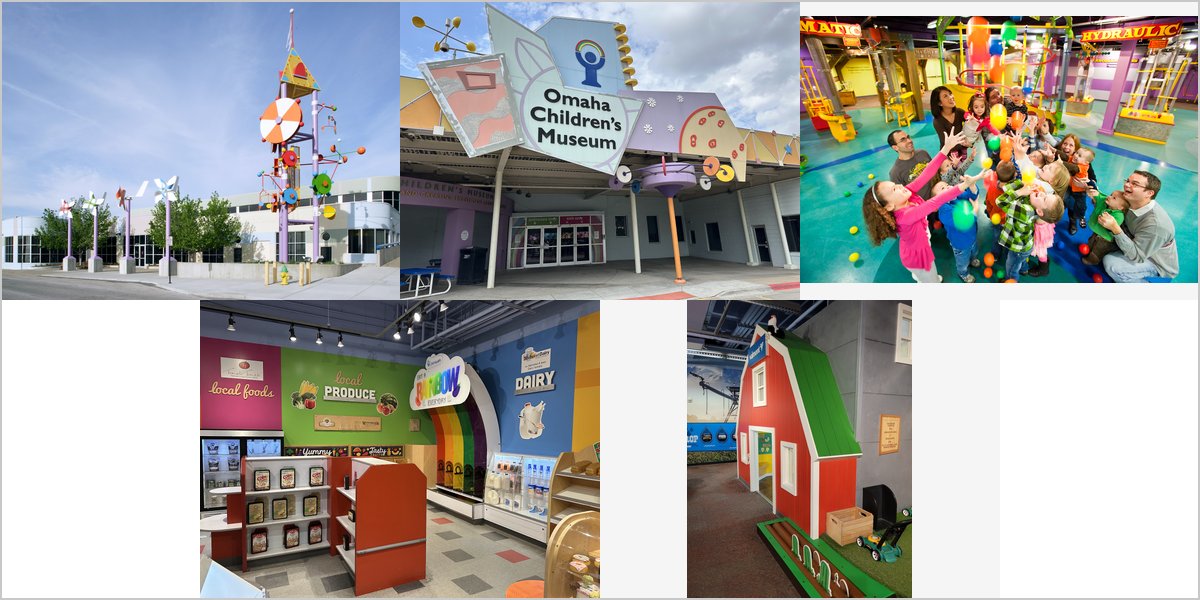
July 9, 2026
The Omaha Children’s Museum: A Photographer Answers Your Questions
Bright, saturated, playful and full of interactive equipment. An unconventional choice, and after-hours access is not optional here — it is the whole thing.
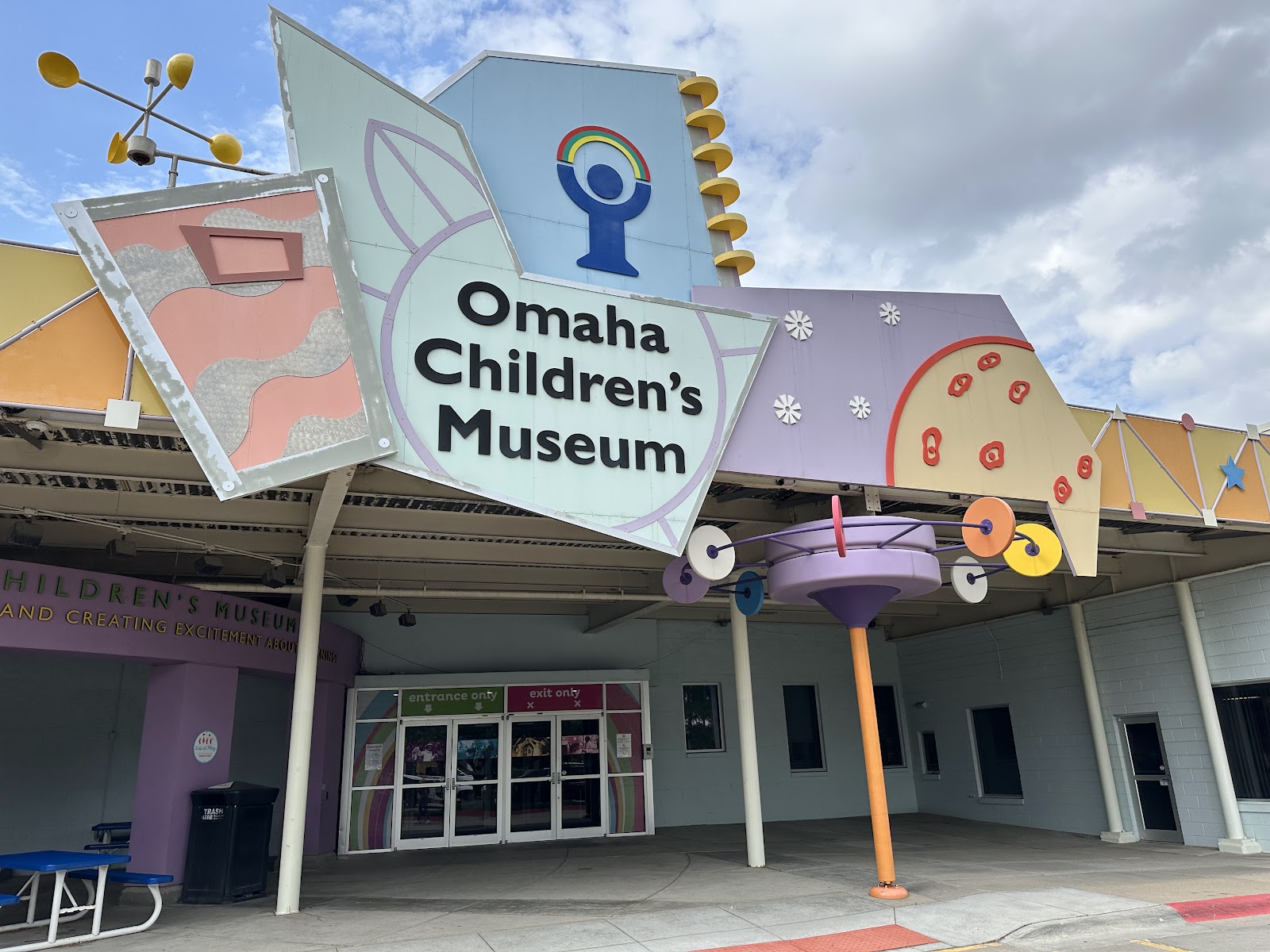
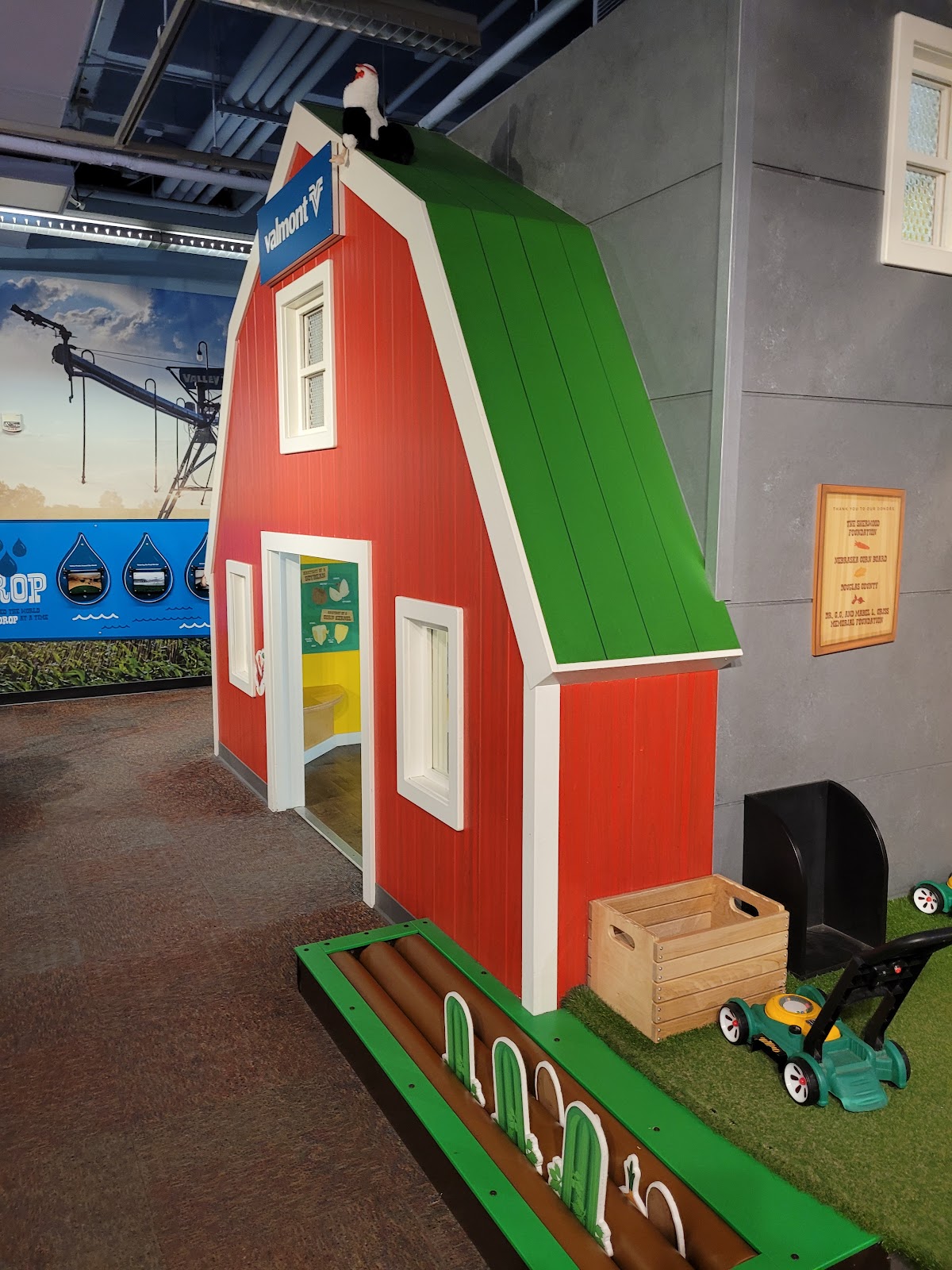
The Omaha Children’s Museum occupies a building in downtown Omaha with interactive exhibit halls, saturated colour throughout, and the kind of playful constructed environments that children’s museums specialise in. It hosts private events, which in practice means evenings after the public has gone.
Photographically this is an unconventional venue and it needs an honest assessment rather than an enthusiastic one. Children’s museums are designed to be stimulating: strong primary colours, busy interactive equipment, signage, and surfaces chosen for durability rather than for how they photograph. Every one of those is a challenge for wedding portraiture.
It is also genuinely fun, and for the right couple that matters more than any of it. These are the questions couples ask. We have not photographed a wedding here; saturated interiors and exhibit clutter behave predictably. Which halls are available, whether exhibits can be closed or covered, and access times are for their events team.
Omaha Children's Museum at a glance
| Where | Downtown Omaha, Nebraska |
| Character | Interactive exhibit halls, saturated primary colour, constructed play environments |
| Light | Bright artificial exhibit lighting; colour bouncing from every surface |
| Availability | Private events after public hours |
| The core issue | Saturated colour on skin, and exhibit equipment in every background |
How much does the colour affect skin tones?
A great deal, and it is the first thing to understand. Strong primary colours on walls, floors and equipment act as reflectors, so the light bouncing around a red exhibit hall is red light, and it lands on faces from every direction. There is no position inside a saturated room that escapes it.
That means one of two deliberate approaches. Commit: set white balance so the room reads as its colour, accept that skin is tinted, and shoot it as an intentionally bold, graphic, colourful image. Or override: light faces with a bright neutral key strong enough to dominate the ambient, so you get natural skin inside a colourful room.
What fails is the middle — auto white balance and no added light, which produces frames that are neither one thing nor the other. And be consistent across the set, because a gallery where some frames are corrected and others are not will not hold together even if each individual image is fine.
One practical note on which colours are kindest: blues and greens are more forgiving on skin, reds push faces toward flushed and yellows toward jaundiced. If you have a choice of hall, that is worth factoring in.
What about all the exhibit equipment in the background?
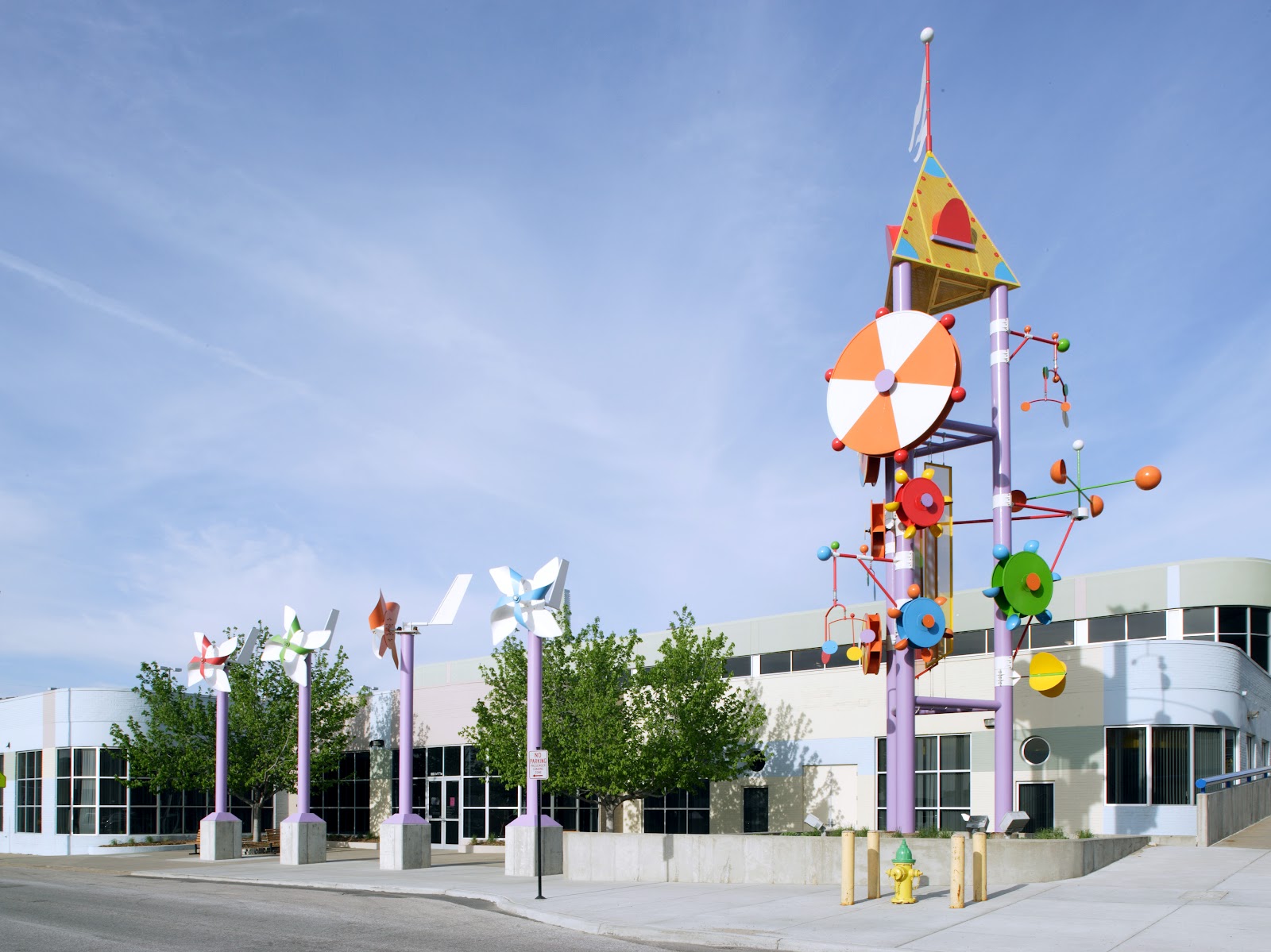
It is the second real problem, and it is more tractable than the colour. Interactive exhibits mean apparatus, signage, plastic, handrails and instructions — visually busy, brightly coloured, and reading unmistakably as a children’s attraction rather than as a wedding.
Three levers. First, ask whether exhibits can be closed, covered or partly cleared for a private event; some venues will and it transforms the available frames. Second, separation and compression — move well back from the clutter and use a longer lens at a wide aperture so it dissolves into colour rather than detail. Third, go tighter than you would elsewhere, so faces fill the frame and the background is a minor element.
The other approach is to lean in entirely and treat the playfulness as the point — a couple on a slide, in a constructed environment, obviously having fun. That is a legitimate and charming set of photographs, and it suits couples who chose this venue on purpose. What does not work is trying to make a children’s museum look like a ballroom.
Why is after-hours access so important?
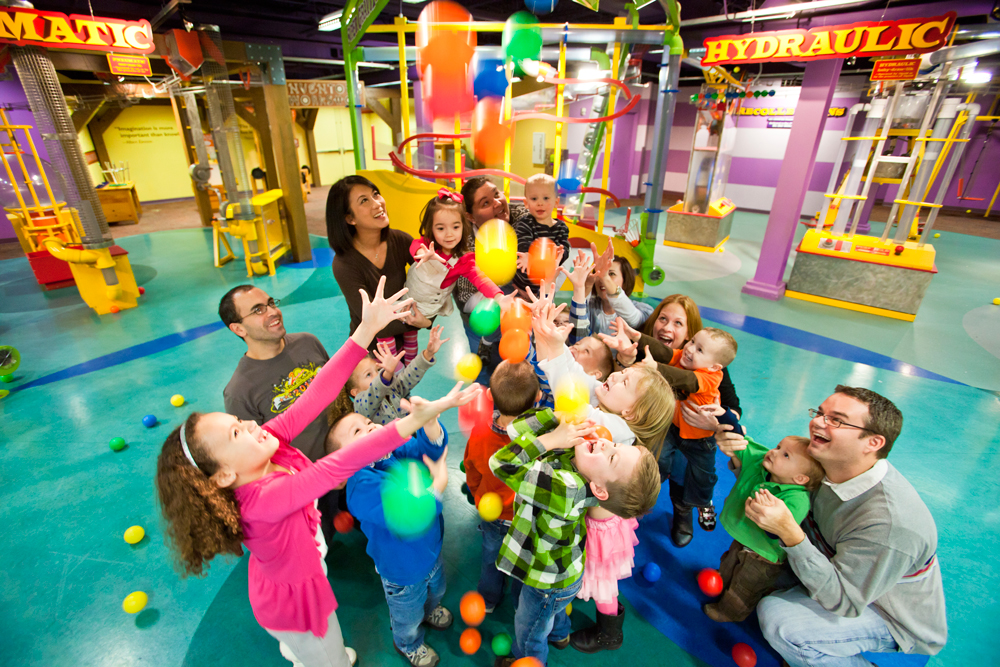
Because during opening hours this is a building full of children, and no arrangement changes that. A children’s museum in daytime is the busiest, loudest, least controllable environment of any venue type in this series, and wide frames would be unusable.
After closing it becomes something quite different: a large, brightly coloured, entirely private space with nobody in it. That is genuinely appealing — you have a set of constructed environments to yourselves, and the frames available are playful rather than chaotic.
So confirm the access window and treat it as the foundation of the plan. It also means the whole event is artificially lit, since evening in an interior building has no daylight component at all — which simplifies the lighting approach even as it removes the daylight option entirely.
Is it a good idea, honestly?
For a specific kind of couple, yes, and for most, no. If you want bold, colourful, playful, obviously joyful photographs and the museum means something to you — perhaps you work in education, or you met there, or you simply find conventional wedding imagery dull — it will deliver something no other venue can, and it will be memorable.
If you want classic, timeless, elegant photographs, this is the wrong building and it will not become the right one with effort. Saturated primary colour and interactive equipment cannot be styled into a grand interior, and a couple expecting that will be disappointed by images that are perfectly competent.
Practically, we would treat it as a reception venue rather than a whole-day one. Ceremony and portraits somewhere with neutral light and daylight — downtown Omaha or the Old Market is a short distance and offers both — then the museum for a genuinely fun evening. That structure gets you flattering portraits and joyful party photographs rather than compromising on both.
And do go outside for ten minutes. Downtown Omaha at dusk is the only naturally lit, neutrally coloured frame the evening will contain, and in a building this saturated that contrast is worth having in the gallery.
What works in your favour
- After-hours access gives a large, private, colourful space entirely to yourselves
- Genuinely playful frames that no conventional venue can produce
- Bold saturated colour makes for graphic, memorable images if committed to
- Entirely weather-independent and consistent regardless of season or hour
- Downtown Omaha and the Old Market close by for neutral daylight frames
What to plan around
- Saturated colour tints skin from every direction; no position escapes it
- Exhibit equipment, signage and plastic clutter most backgrounds
- Unusable during public hours — after-hours access is essential, not optional
- No daylight at all in an evening event
- Wrong for classic, timeless or elegant imagery, and cannot be made right
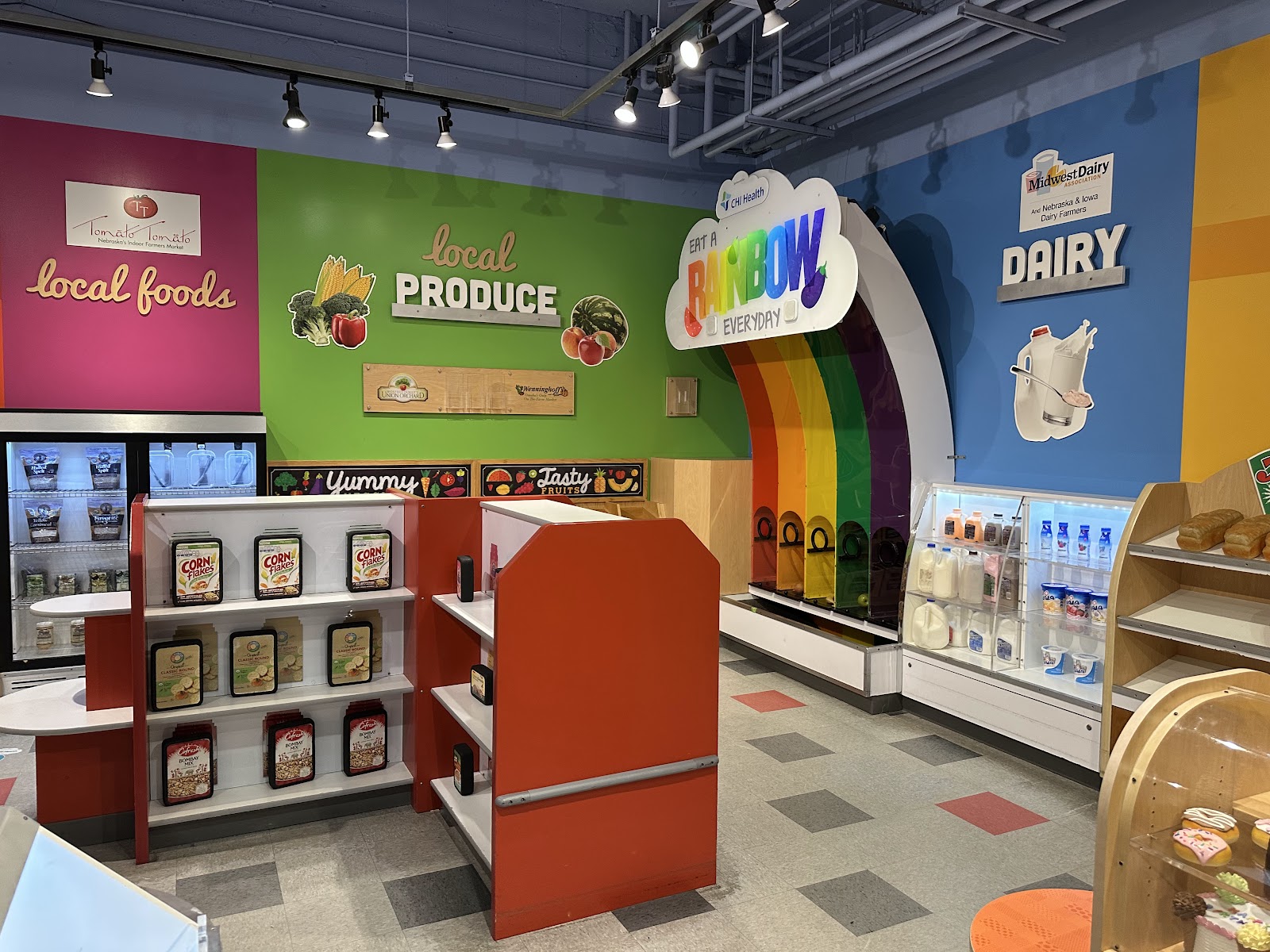
More frames from Omaha Children's Museum
Omaha Children's Museum wedding photography: common questions
Will the coloured halls change our skin tones?
Yes, unavoidably. Strong primary colours on walls, floors and equipment reflect their own hue, so the light comes at faces tinted from every direction and no position escapes it. Either commit to the colour and shoot a bold graphic image, or override it with a bright neutral key. Auto white balance with no added light fails.
Which hall colours are kindest?
Blues and greens are more forgiving on skin. Reds push faces toward looking flushed and yellows toward looking jaundiced, both of which are harder to make attractive. If you have a choice of hall, factor that in alongside the mood you want.
What can be done about the exhibit clutter?
Three things. Ask whether exhibits can be closed, covered or cleared for a private event, which some venues will do and which transforms the frames. Use separation and a longer lens at a wide aperture so clutter dissolves into colour. And go tighter than usual so faces dominate and the background is minor.
Is after-hours access essential?
Yes — it is the whole proposition. During opening hours this is a building full of children and wide frames are unusable. After closing it becomes a large, brightly coloured, entirely private space with nobody in it, which is a genuinely appealing and quite different venue.
Should the whole wedding be here?
We would treat it as a reception venue. Hold the ceremony and take portraits somewhere with neutral light and daylight — downtown Omaha or the Old Market is close and offers both — then come here for a genuinely fun evening. That gets you flattering portraits and joyful party photographs rather than compromising on both.
More Omaha venue guides
We are writing a photographer’s guide to every venue we would happily shoot in Omaha. Here are three more, plus the full index:
- The Omaha Design Center: Who This Industrial Venue Suits
- The Henry Doorly Zoo: A Photographer Answers Your Questions
- The Orpheum Theater: Field Notes on a 1927 Vaudeville Palace
Planning a wedding at Omaha Children's Museum?
This venue is a clear yes for some couples and a clear no for most. Tell us what look you want and we will be straight with you — and propose a structure that gets both good portraits and a genuinely fun party.