 The Bierstube: What Changes When the Reception Is in a Bar
July 9, 2026
The Farmhouse Inn: Four Ways Out of the Open-Ground Problem
Open valley ground gives you the whole sky and the whole range. It also gives you nowhere to hide at two in the afternoon.
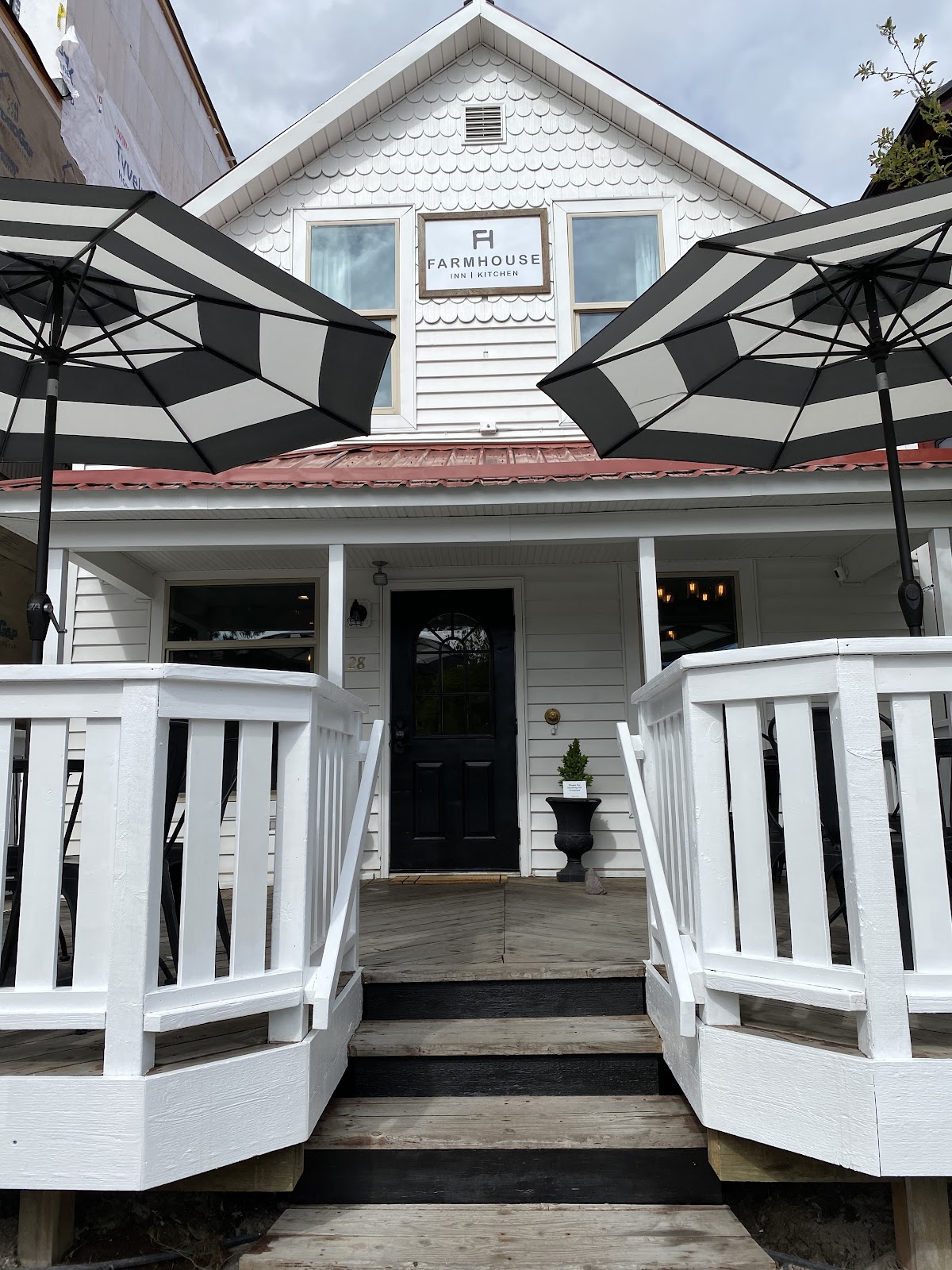
The Farmhouse Inn sits in the valley outside Whitefish in northwest Montana — open ground, agricultural land, and the Whitefish Range and Flathead valley walls standing up at the edges of the view. It is the opposite of a forested venue: sky rather than canopy, distance rather than enclosure.
That openness is the whole proposition and the whole problem. It gives you an uninterrupted horizon, mountain backdrops from any direction you choose, enormous skies that do things at sunset that a treed venue never sees, and the kind of clean simple ground that makes a couple the only thing in the frame. What it does not give you is shade, and in thin mountain air at midday that is not a minor inconvenience — it is the day’s central technical problem.
So this is a piece about one problem and four honest ways out of it. We have not photographed a wedding at this venue; open high-valley ground behaves the same everywhere. Where the property’s structures sit, what the ceremony options are and whether there is a covered space are questions for their team, and the answer to the last one matters more here than at most venues.
The Farmhouse Inn at a glance
| Where | The valley outside Whitefish, Montana |
| Character | Open agricultural ground with mountain walls at the edges |
| The gift | Uninterrupted horizon, huge skies, backdrops in every direction |
| The problem | No shade, in air thin enough to make midday sun brutal |
| Ask first | What covered space exists — for sun as much as for rain |
Why open ground at altitude is harder than it looks
At sea level, midday sun is unflattering. At three thousand feet in dry air it is a different order of problem. Less atmosphere means less scattering, which means the sun behaves more like a bare point source: shadow edges are crisp, the ratio between a lit and shaded side of a face runs to four or five stops, and the sky is a deep saturated blue that will clip to black if you expose for a face in that light.
The symptoms are familiar to anyone who has shot a summer wedding on a lawn. Squinting. Racoon eyes, where the brow throws the sockets into shade the sensor cannot hold. Hot shoulders and blown veil fabric. And group photographs where half the row is in a hat’s shadow and half is not. None of these are edit-fixable, because the information was never captured.
The one thing worth saying to couples early is that this is a schedule problem before it is a technique problem. Every technical solution below costs something. Moving the timeline costs nothing at all — it is just a conversation that has to happen before invitations go out rather than after.
Way out one: move the time, not the light
The cheapest, best and least-used solution is to hold the ceremony late. In late June this valley has usable light until nearly ten at night, which means a seven o’clock ceremony is entirely feasible and sits in warm, low, raking sun rather than overhead glare. Faces are lit from the side, the mountains behind go warm, the sky holds colour, and there is nothing to correct.
The constraint is that this only works while the days are long. A late-September wedding at the same hour is in darkness, so the same ceremony needs to be at five. The practical rule is to pick the ceremony time by counting back from sunset on the actual date — ninety minutes before sunset puts the ceremony in good light and leaves the best of it for portraits afterwards.
This is worth pressing on, gently, because the default ceremony time in most people’s heads is early afternoon, and early afternoon here is the worst hour of the day.
Way out two: bring the shade with you
If the ceremony has to be at midday, the shade has to be manufactured. A large diffusion panel held over a couple converts direct sun into soft overhead light and works beautifully for portraits — but it requires an assistant, it is unusable in wind, and it cannot cover a ceremony party.
At ceremony scale, the answer is structural: a tent, an arbour with a solid top, a covered deck, or simply positioning so the building itself throws a shadow across the seating and the couple. That last option is free and frequently overlooked. A farmhouse is a large solid object, and in the afternoon it throws a large solid shadow. Finding where that shadow falls at the ceremony hour, on a site visit at the right time of day, is the single most useful hour of preparation available at a venue like this.
One warning about partial shade: it is worse than none. A ceremony arbour that shades the couple but not the guests, or that shades one of them, produces frames with a several-stop split down the middle that cannot be balanced. Full shade or full sun. Never half.
- Full shade for everyone, or full sun for everyone — never a split
- Site-visit at the actual ceremony hour to find the building’s shadow
- A diffusion panel works for two people, never for a ceremony party
- Wind makes any large panel or unweighted structure a liability
- A solid-topped arbour beats a decorative open one, photographically

Way out three and four: overpower it, or use it
The third way is flash, and outdoors at altitude that means real power rather than a speedlight on a bracket. To fill a face against a sunlit mountain background you are competing with the sun, which needs a strong strobe, a modifier that survives wind, and high-speed sync or a neutral density filter to keep the aperture where you want it. Done well it is the most controlled result available: correctly exposed faces, a deep blue sky, and mountains that hold detail. Done with insufficient power it just looks like a dim flash in bright sun.
The fourth way is to stop fighting. Hard light is a legitimate aesthetic and open valley ground is where it makes most sense — high contrast, crisp shadows, saturated sky, the graphic look of a landscape photograph rather than a soft portrait. Shoot into the sun for flare and rim light, put people in silhouette against the range, use the shadow shapes as composition. It is a deliberate choice that has to be agreed with the couple in advance, because it produces a bolder gallery than most people expect.
What does not work is the default: no shade, no flash, no plan, aiming a camera at two people at two in the afternoon and hoping. That is how open-ground venues get their reputation, and the reputation is unearned — the ground is fine, the hour was wrong.
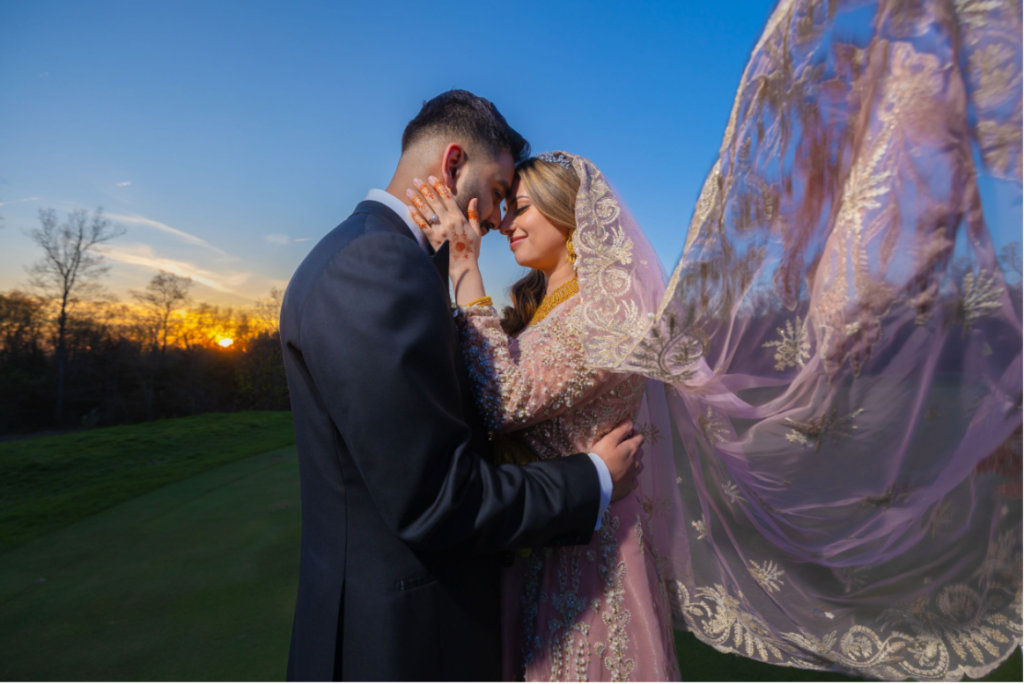
There is one more thing the open valley gives that no wooded venue can, and it is worth planning the day to catch: the sky after sunset. With an unobstructed horizon in all directions, the twenty minutes after the sun drops can fill the entire frame with colour, and the Whitefish Range holds alpenglow above a valley already in shade. Ten minutes stepped out of the reception buys the best frames of the day.
What works in your favour
- An uninterrupted horizon with mountain backdrops in any direction
- Enormous post-sunset skies and alpenglow on the range
- Clean simple ground that makes the couple the only subject
- Long June evenings that make a late ceremony genuinely comfortable
- No canopy, so no dappled light and no green colour cast
What to plan around
- No natural shade at all in thin air that makes midday sun brutal
- Group photographs split several stops if shade is partial
- Outdoor fill needs real strobe power, not a speedlight
- Wind makes diffusion panels and light stands a liability
- Weather exposure is total, so the covered-space question is critical

More frames from The Farmhouse Inn
The Farmhouse Inn wedding photography: common questions
What time should the ceremony be?
Count back ninety minutes from sunset on your actual date. In late June that puts a comfortable ceremony around seven or later; by late September the same position is around five. Early afternoon — the default in most people’s heads — is the worst hour of the day at an open venue at altitude.
Why is midday worse in Montana than at home?
Thinner, drier air scatters less light, so the sun behaves more like a bare point source. Shadow edges are crisp, the lit-to-shaded ratio across a face can reach four or five stops, and a sky exposed for skin clips to near black. It is a different order of problem, not just an unflattering hour.
Is a bit of shade better than none?
No — partial shade is the worst case. An arbour that shades the couple but not the guests, or one person and not the other, gives you a several-stop split down the middle of the frame that cannot be balanced afterwards. Full shade for everyone or full sun for everyone.
How do you find shade at a venue that has none?
The building throws one. A farmhouse is a large solid object and in the afternoon it casts a large solid shadow. Visit the site at the actual ceremony hour and find where that shadow falls — it is the single most useful hour of preparation available here, and it costs nothing.
Can you not just use flash?
You can, and it gives the most controlled result — lit faces, deep sky, mountains with detail. But outdoors at altitude that means a real strobe, a wind-resistant modifier, and high-speed sync or an ND filter. A speedlight competing with mountain sun looks like a dim flash in bright sun.
What is the best light of the day here?
The twenty minutes after sunset. With an unobstructed horizon the whole sky can fill with colour, and the Whitefish Range holds alpenglow while the valley is already in shade. Stepping out of the reception for ten minutes buys the best frames of the day.
More Whitefish venue guides
We are writing a photographer’s guide to every venue we would happily shoot in Whitefish. Here are three more, plus the full index:
- The Firebrand Hotel: Photographing a Mountain Town from Inside It
- Grouse Mountain Lodge: Broad Lawns and the Group Photograph
- Kandahar Lodge: What Heavy Timber Does to a Photograph
All Whitefish Wedding Venues →
Planning a wedding at The Farmhouse Inn?
Open ground is a scheduling problem before it is a lighting problem. Tell us your date and we will give you the ceremony time that solves most of it for free.