 The Bierstube: What Changes When the Reception Is in a Bar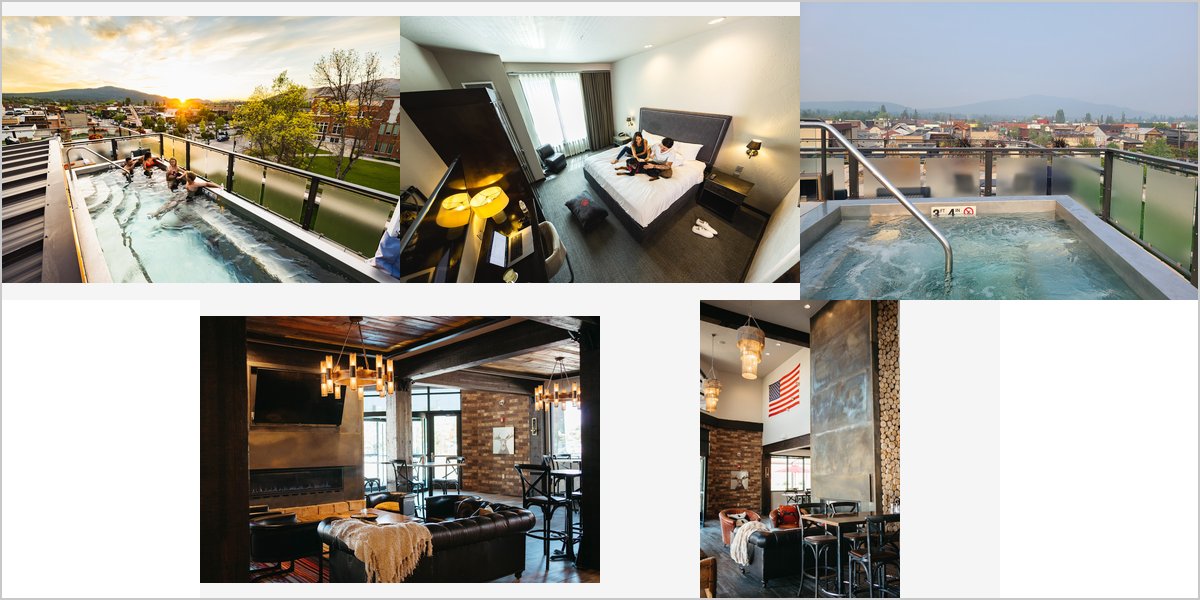
July 6, 2026
The Firebrand Hotel: Photographing a Mountain Town from Inside It
The advantage here is not a view. It is that everything is within walking distance, and that changes the day.
The Firebrand Hotel sits in downtown Whitefish, Montana — a contemporary boutique hotel in a small mountain town that serves as the western gateway to Glacier National Park, a short walk from the main street and the railway depot.
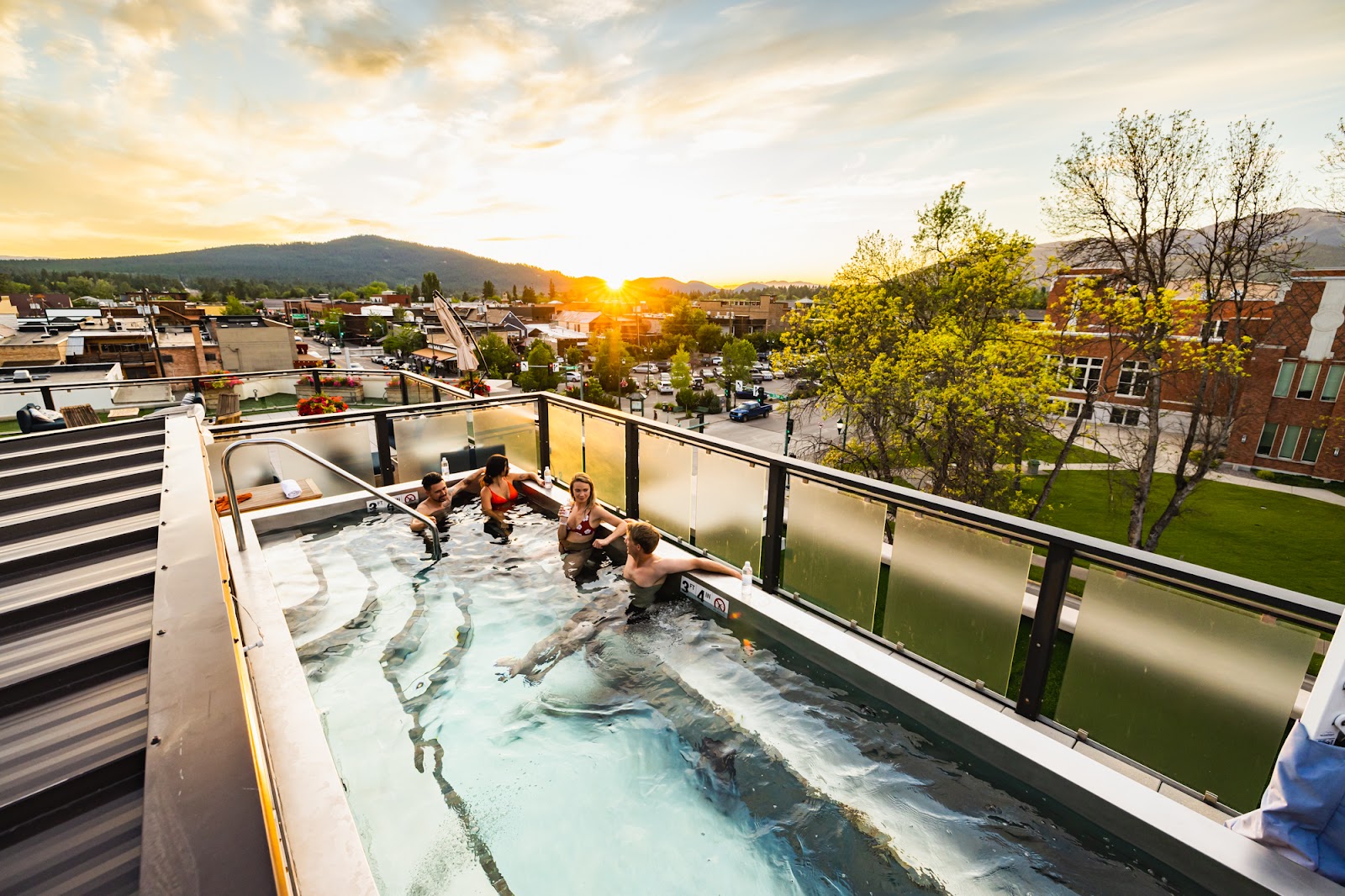
Most Whitefish venues sell a view. This one sells position, and for a photographer that is arguably the more useful asset. A wedding based downtown can move on foot: getting-ready rooms, a ceremony space, a street with genuine character, a railway depot, and a mountain visible at the end of the road, all inside a five-minute walk. Nothing is lost to driving, and time not spent in a car is time available for photographs.
This is a walk through the building and out into the town, space by space, with what each one gives and costs. We have not photographed a wedding at the Firebrand; contemporary hotel interiors and small-town street light are conditions that read the same anywhere. Which rooms are used for events, and what the hotel permits on its roof or in its public areas, are questions for their team.
The Firebrand Hotel at a glance
| Where | Downtown Whitefish, Montana, near the main street |
| Character | Contemporary boutique hotel with a mountain-town register |
| The real asset | Everything within a five-minute walk — no transit time lost |
| Light | Controlled interiors; mixed-source artificial light after dark |
| Ask first | Roof or upper-level access, and what is permitted in public spaces |
The guest rooms: where the morning is won or lost
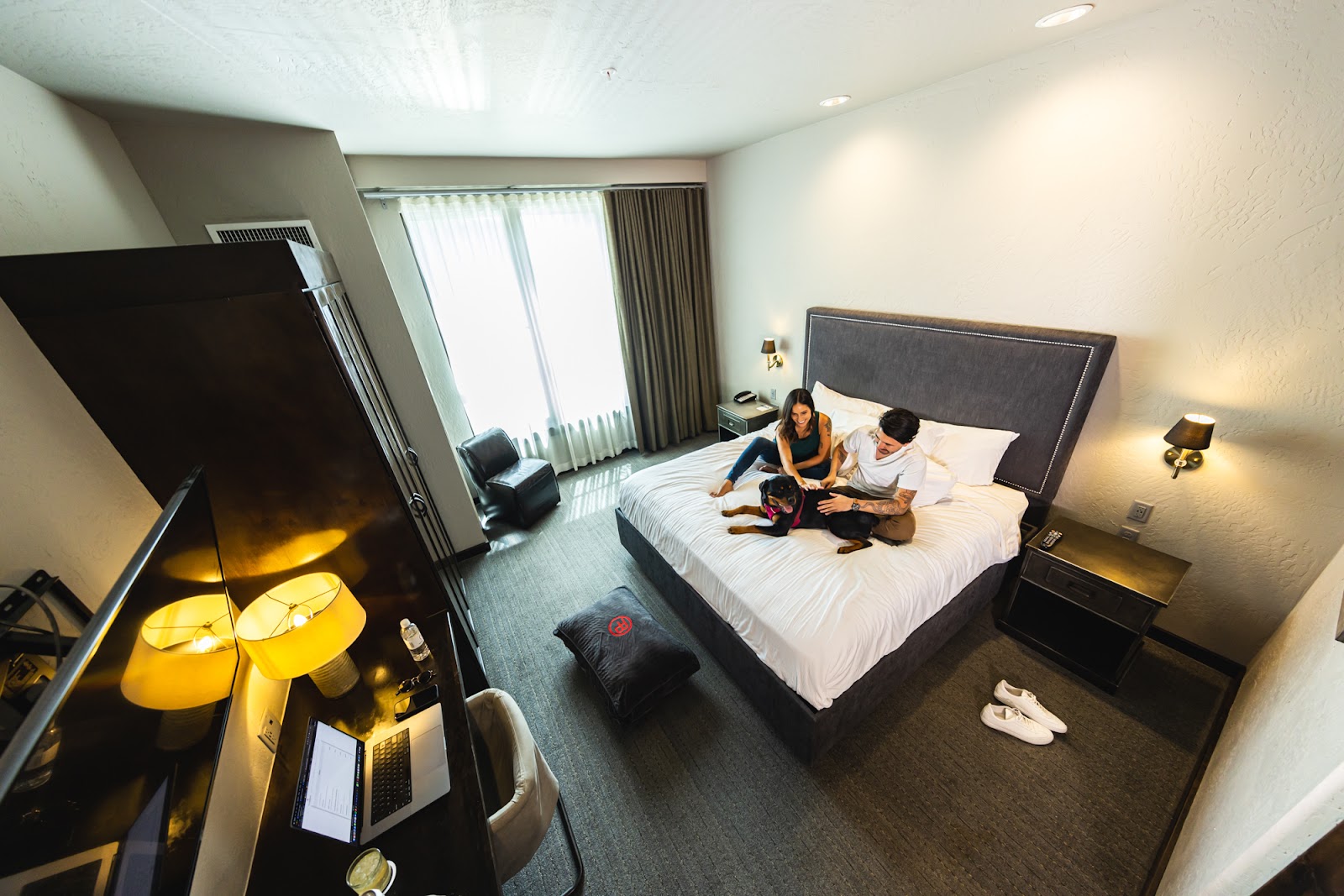
Preparation coverage lives or dies on one variable and it is not the decor — it is which way the window faces and how big it is. A room with a large window on the shaded side of the building gives you a huge soft directional source and an easy morning. A room with a small window in direct sun gives you a hard hot rectangle and everything else in gloom, which needs either a diffusion panel on the glass or a working plan to ignore the window entirely.
Contemporary hotel rooms help in one way and hurt in another. They help because the palettes are usually restrained, so the background does not fight the subject and the whole set edits consistently. They hurt because they are small, and a small room limits where you can stand — which for a bride in a full dress with three attendants and a photographer is the binding constraint, not the light.
Two requests are worth making at booking rather than on the day. Ask for the largest room available on the shaded side for the dress-and-makeup block. And ask to move every lamp and switch off every overhead — mixed tungsten and daylight in a small room is the most common cause of inconsistent skin tone across a preparation gallery, and it takes thirty seconds to eliminate.
Public spaces, and the contemporary-interior question
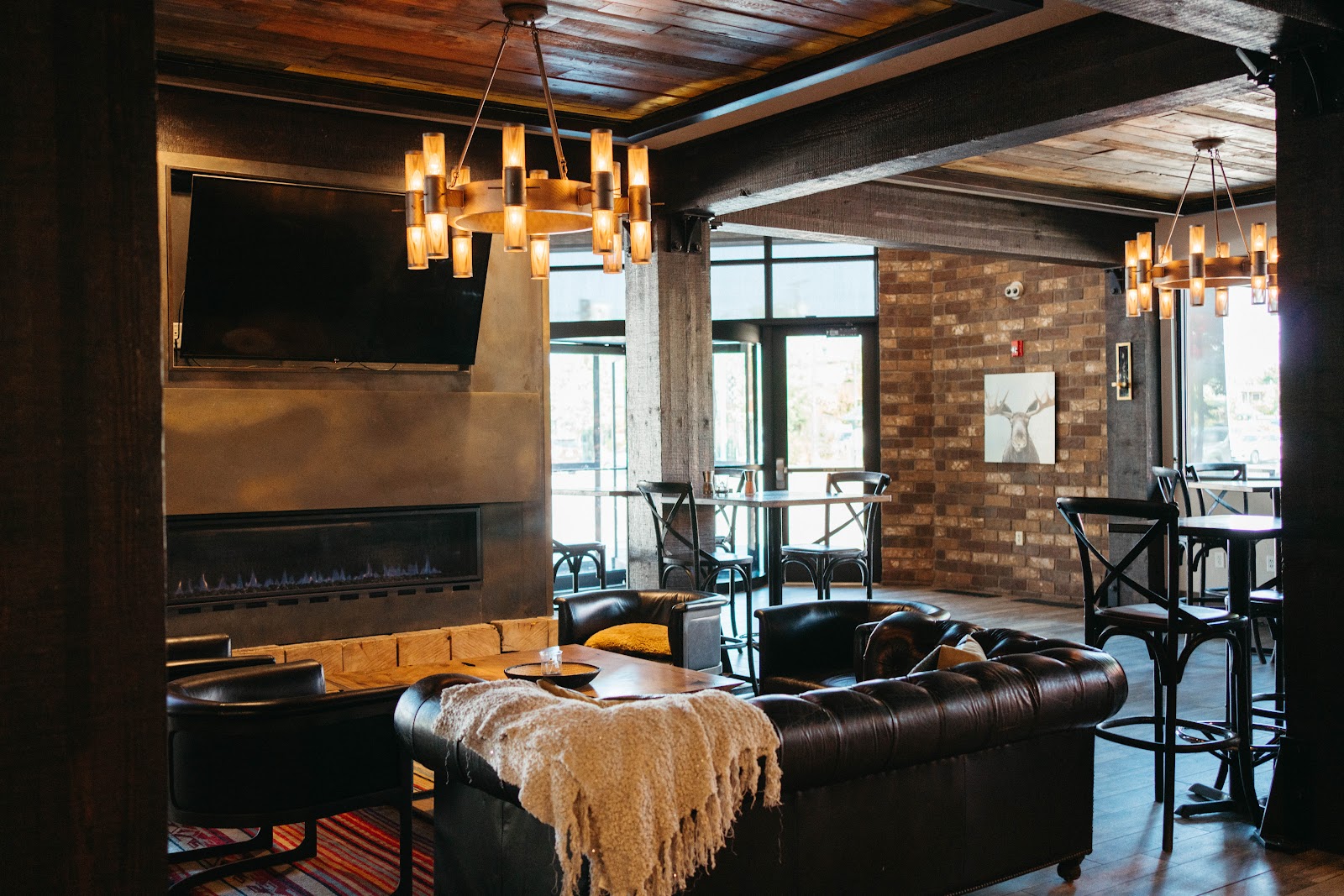
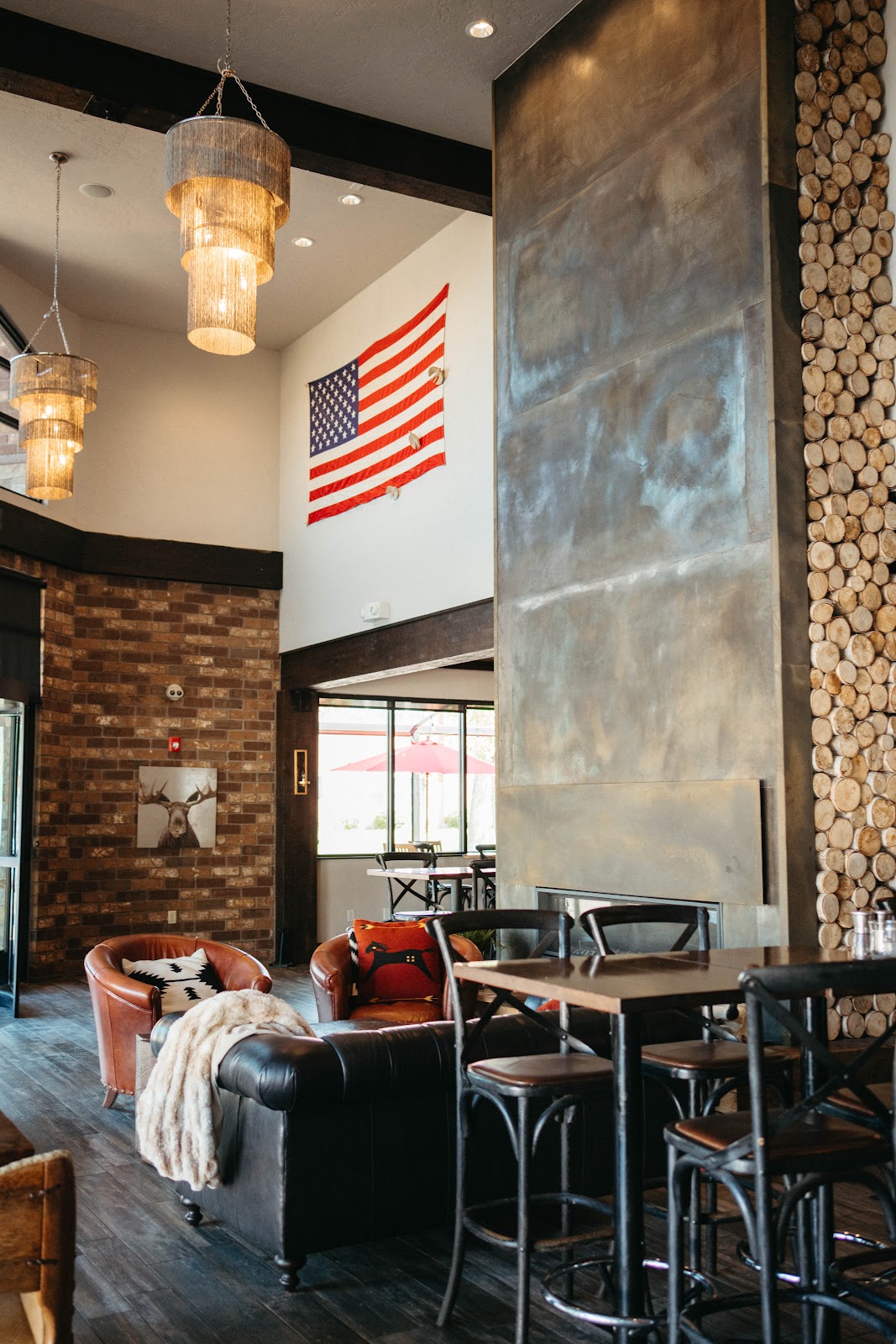
A modern boutique interior is easier to photograph than a heavily decorated one, for a simple reason: fewer competing elements. Clean lines, restrained colour and considered lighting mean you can place a couple almost anywhere and the background behaves. Compare that with a period room where every frame contains four patterns and a chandelier, and the contemporary space starts looking like a gift.
What it does not give you is character for free. A restrained room is neutral, and neutral needs the photographer to supply the interest — through light, through gesture, through what is outside the window. This is where a deliberate lighting choice matters most: a hard single source across a plain wall produces a graphic, intentional frame, where flat ambient in the same room produces a nice photograph of a hotel lobby. The room will not decide for you.
Evening is a mixed-source problem, as it is in every contemporary hotel. Warm decorative fixtures, cooler downlights, and now LED sources that are not a single colour temperature but a spike-heavy spectrum which can render skin oddly even at correct white balance. The reliable answer is to bring your own key light and let the house fixtures be background — once your light owns the faces, their colour is atmosphere rather than a problem.
Out the door: the town is the venue
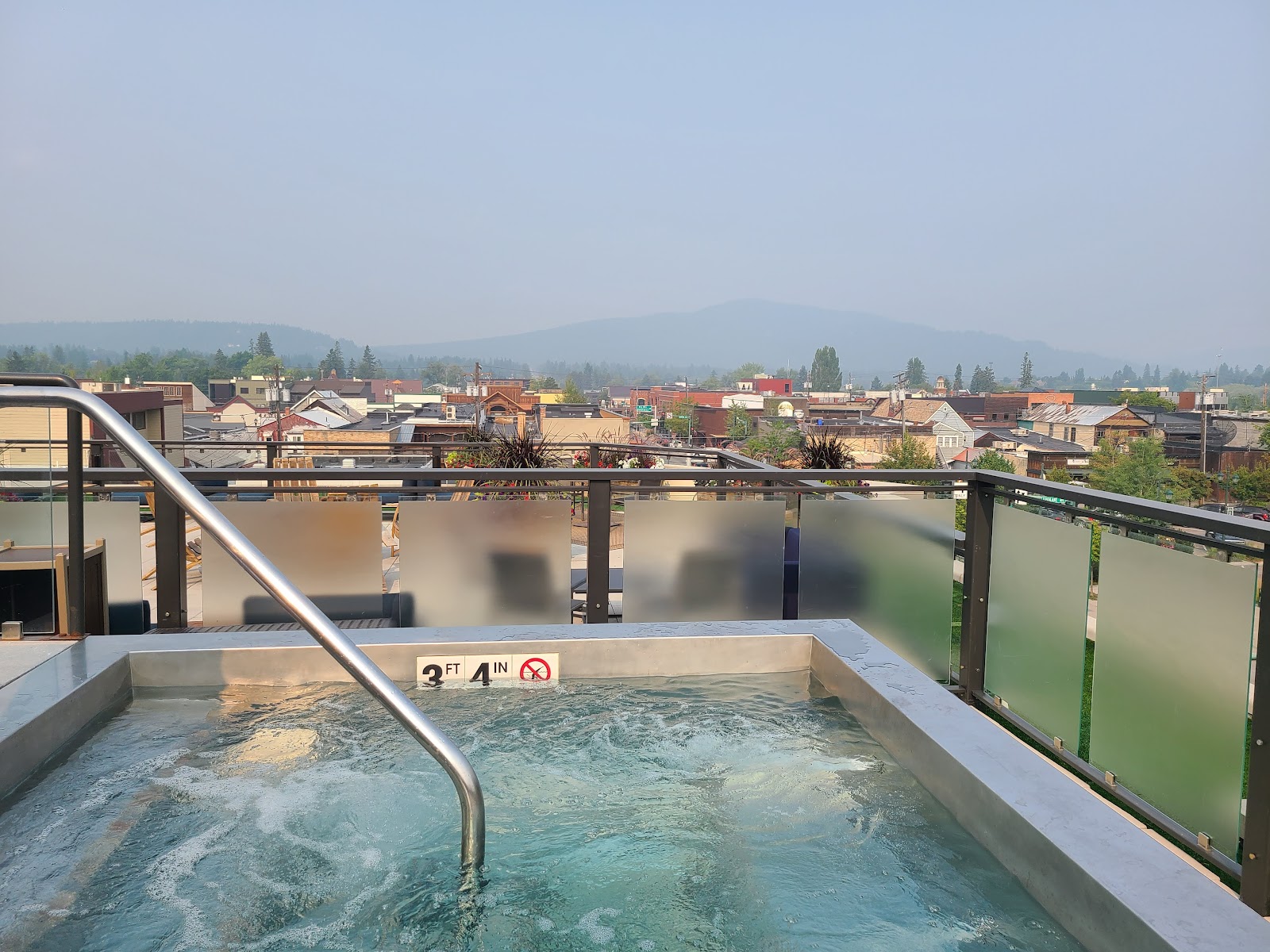
Whitefish’s main street is the reason to base a wedding downtown. It is a small mountain town with a genuine main street rather than a strip — storefronts, a walkable scale, and mountains visible at the end of the road, which is the frame that says Montana without needing a forty-minute drive to say it.
Three specific things within walking distance are worth building into the timeline. The street itself at either end of the day, when low sun runs down it lengthwise and lights both sides. The railway depot, because a historic station is a strong architectural subject with lines and repetition that a hotel interior cannot offer. And any sight line that puts the mountain at the end of the street behind the couple, which compresses the whole geography of the place into one frame with a long lens.
The practical caveat is that a public street is public. Whitefish is a tourist town and the main street has people, parked cars and traffic on it. A downtown portrait block works best early — before the shops fill — or late, when the light is good and the street is quieter, and it works better with a long lens that lets you compress out the clutter than with a wide one that includes it.
The thing this venue removes is the single most underestimated cost in a mountain wedding: transit. A venue twenty minutes up a mountain road costs forty minutes round trip, plus loading, plus the fact that nobody moves on schedule. Downtown, a portrait block is a walk. That converts directly into more coverage, and it is a better argument for this venue than any individual room in it.
What works in your favour
- Everything within a five-minute walk — transit time nearly eliminated
- Restrained contemporary interiors that do not fight the subject
- A genuine walkable main street with mountains at the end of it
- A historic railway depot nearby for architectural contrast
- Full weather independence: real interiors, real power, no exposure
What to plan around
- No sweeping view from the building itself — the view is down the street
- Guest rooms are small, which limits camera position more than light does
- Neutral interiors need the photographer to supply all the interest
- Mixed LED and tungsten fixtures render skin unpredictably after dark
- A public street means tourists, parked cars and traffic in the frame
More frames from The Firebrand Hotel
The Firebrand Hotel wedding photography: common questions
What should we ask for in the getting-ready room?
The largest room available on the shaded side of the building, for a big soft window source and room to stand back. Then move every lamp out and switch off the overheads — mixed tungsten and daylight in a small room is the commonest cause of inconsistent skin tone across a preparation gallery.
Is a modern hotel harder to photograph than a historic one?
Easier in one way, harder in another. Clean lines and restrained colour mean the background does not compete, so the set edits consistently. But neutral rooms supply no character, so the photographer has to create it with light and gesture rather than relying on the decor.
Why does the skin tone look strange under the hotel lights?
Modern LED fixtures are not a single colour temperature but a spike-heavy spectrum, so skin can render oddly even at technically correct white balance. Bring your own key light and let the house fixtures be background atmosphere rather than the source lighting faces.
What is worth photographing outside?
The main street at either end of the day, when low sun runs down it lengthwise. The railway depot, for architectural lines a hotel cannot offer. And any sight line that puts the mountain at the end of the street behind the couple — a long lens compresses the whole geography into one frame.
Is the public street a problem?
It is a tourist-town main street, so yes: people, parked cars, traffic. Shoot it early before the shops fill, or late when the light is better and it is quieter, and favour a long lens that compresses the clutter out over a wide one that includes it.
Why choose downtown over a mountain venue?
Transit. A venue twenty minutes up a mountain road costs forty minutes round trip plus loading, and nobody moves on schedule. Downtown, a portrait block is a walk. That converts directly into more coverage, which is a stronger argument than any single room in the building.
More Whitefish venue guides
We are writing a photographer’s guide to every venue we would happily shoot in Whitefish. Here are three more, plus the full index:
- Grouse Mountain Lodge: Broad Lawns and the Group Photograph
- Kandahar Lodge: What Heavy Timber Does to a Photograph
- The Lodge at Whitefish Lake: Reading a Mountain Lake Hour by Hour
All Whitefish Wedding Venues →
Planning a wedding at The Firebrand Hotel?
A downtown base buys you coverage instead of driving. Tell us your date and we will build a walking timeline around it.