 The House of Blues, Cleveland: What It Suits and What It Does Not
The Cincinnati Zoo: The Problem, and Four Ways Out of It
The barriers are the problem. Four ways round them.
The problem at a zoo is barriers, and it is more comprehensive than it first appears.
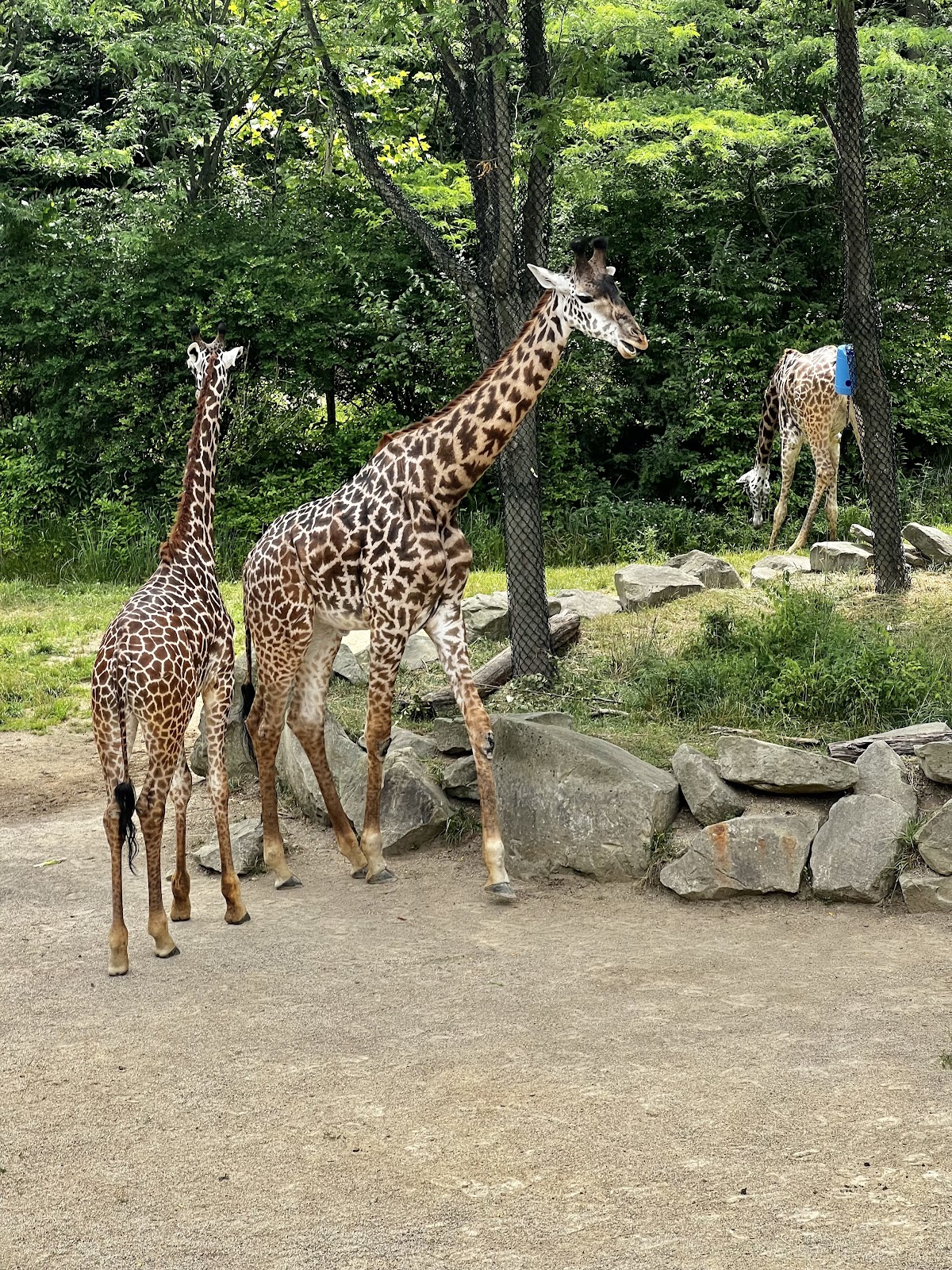
Every enclosure is separated from the public by something: glass, mesh, bars, a moat, a wire, a low wall, a hedge with a hidden fence in it. Those exist for good reasons and they are all, without exception, hostile to a camera.
Glass reflects whatever is behind the photographer and cuts contrast. Mesh sits in front of the subject and either appears as a grey haze or, worse, as a visible grid. Bars are unmissable. A moat pushes the subject far enough back that no useful frame includes both them and a person. And a wire at the top of a frame is the single most common way a zoo photograph is spoiled.
That matters for a wedding because the instinct is to combine the two subjects — the couple and an animal — and that combination is the hardest frame on the property. Almost every attempt produces a couple in front of a fence with something indistinct behind it.
The compensation is substantial and it is the thing to understand about this particular institution. Opened in 1875, it is the second-oldest zoo in the United States, and its full name includes botanical garden for a reason: it holds a serious plant collection, mature specimen trees from a century and a half of planting, and formal garden areas that have nothing to do with animals at all.
It also holds some of the oldest zoo architecture in the country — nineteenth-century animal houses built in an era when a zoo building was meant to be looked at, in brick and ironwork, with the ornament of their period.
So the venue offers a botanical garden with historic architecture, which is a strong wedding venue, plus animals, which are a bonus rather than a backdrop.
Cincinnati sits at about thirty-nine degrees north at roughly five hundred and fifty feet. The June noon sun reaches around seventy-four degrees, the December noon sun about twenty-eight, days run from about nine hours twenty to fifteen hours five, and civil twilight is roughly thirty minutes.
We have not photographed a wedding here. Which areas are bookable, what access exists after public closing and the permitted hours are questions for their team.
The Cincinnati Zoo at a glance
| Where | America’s second-oldest zoo, opened 1875, and a botanical garden, Cincinnati |
| The problem | Barriers — glass, mesh, bars, moats and wires, all hostile to a camera |
| The compensation | A century and a half of specimen planting, and historic zoo architecture |
| Best approach | Treat it as a botanical garden where animals occasionally appear |
| Ask first | Bookable areas, after-hours access, permitted hours |
Way one: photograph the garden, not the zoo
The most effective answer is to stop treating the animals as the subject and to work the botanical collection, which at an institution of this age is genuinely first rate.
A hundred and fifty years of planting produces trees that no new site can have. Mature specimen hardwoods here will include sugar maple, oak, beech, tulip poplar, ginkgo, bald cypress and magnolia, planted deliberately and given room — which means individual trees with full symmetrical crowns rather than the crowded forms of a woodland.
A full-crowned mature tree is a different photographic object from a forest tree, and better. It has a shape that reads from a distance, it casts a broad even shadow rather than a fragmented one, and it gives a subject something to stand under and something to stand against.
The shade is the practical point and it is worth contrasting with drier regions. A sugar maple has a dense rounded crown of broad leaves and it casts genuine solid cover — so unlike the filigree of arid-region trees, an Ohio hardwood at midday gives a clean even shade with no dapple to manage. That makes midday portraits straightforward here in a way they are not everywhere.
Beech is the one to look for as a background. American beech has smooth pale grey bark, almost unmarked, and a mature trunk is a large uniform light-toned surface — which is effectively a natural studio backdrop and about as good as an outdoor portrait background gets.
Ginkgo is worth timing. It is a living fossil with fan-shaped leaves, and in autumn it turns a uniform clear yellow and then drops almost its entire canopy within a day or two, producing a solid yellow carpet beneath a bare tree. That window is very short — often a single weekend in late October or early November — and it is spectacular.
Bald cypress is the other unusual one: a deciduous conifer, so it turns a rust-orange in autumn, which is a colour no evergreen produces and an uncommon note in a frame.
The formal garden areas are the second half of this approach. A botanical institution of this age typically has bedding displays, a rose garden, water features and structured axial planting — and axial planting is the photographer’s friend, because a path with symmetrical beds either side is a natural perspective frame with a built-in place to put people.
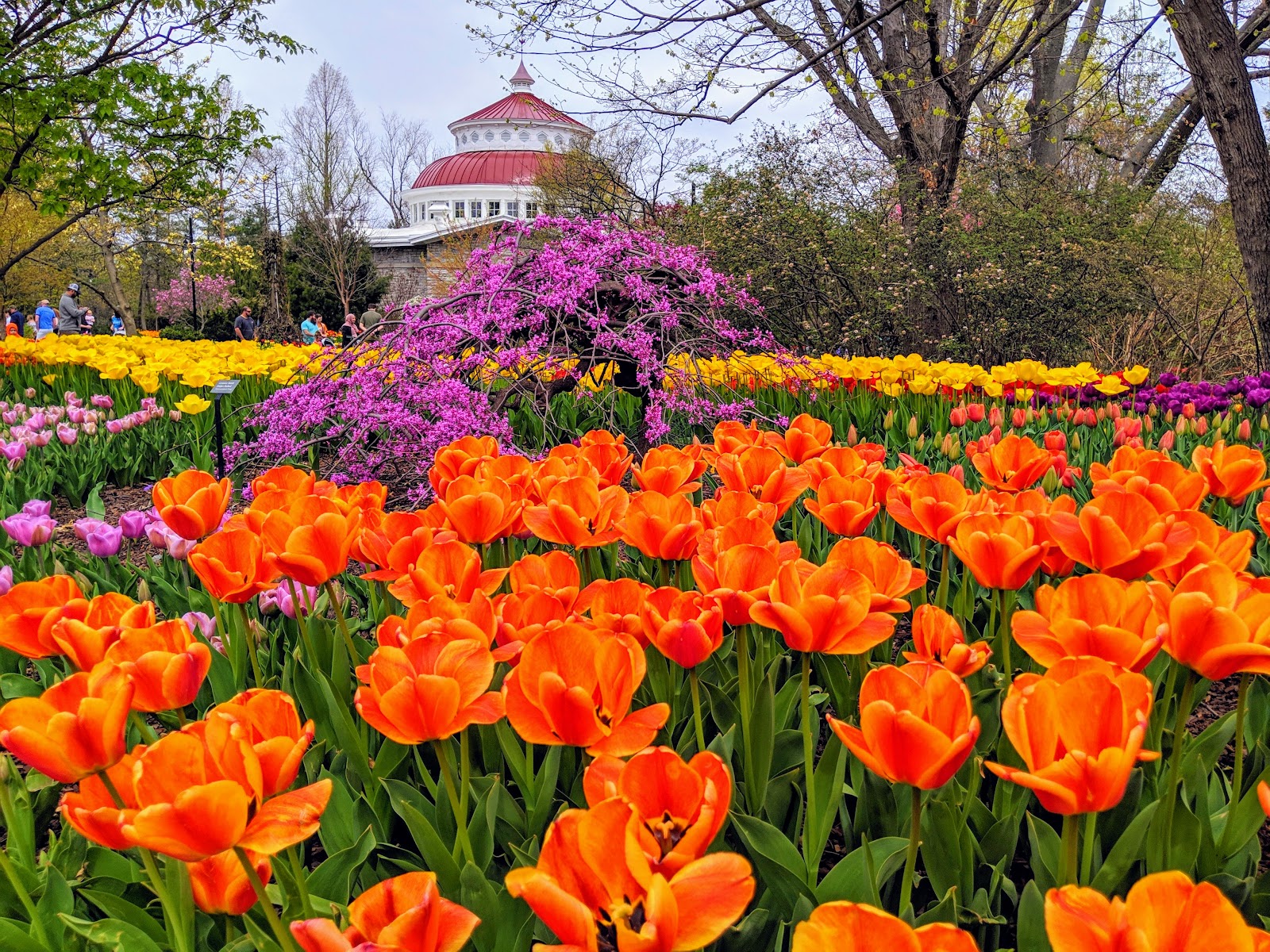
The seasonal display is worth asking about. Institutions like this plant for succession, which means tulips in April, summer bedding from June, and a substantial autumn display — and the staff will know exactly what will be in flower in a given fortnight. That is a five-minute conversation that changes where the portraits happen.
Spring is the underrated season on a site like this and the reason is the magnolias and flowering trees. Star and saucer magnolia bloom in late March or early April before their leaves appear, which means a mass of flower on bare branches — one of the cleanest frames in horticulture, and gone in ten days.
The risk with spring is frost. A late Ohio frost on open magnolia flowers turns them brown in a single night, and it happens often enough to be worth knowing. There is no plan for it; it is simply a thing that may have happened the week before.
Ways two and three: the architecture, and how to beat a barrier
The second answer is the historic buildings, which at an institution founded in 1875 are a genuine architectural collection.
Nineteenth-century zoo architecture was built to be admired as well as to house animals, which means brick, cast iron, decorative glazing and period ornament. The oldest surviving buildings at a zoo of this age predate most of the city around them, and they photograph as architecture rather than as infrastructure.
An historic animal house typically gives a tall interior volume with high clerestory or roof glazing — which is a very large soft overhead source. On a face that means even coverage with shadowed eye sockets, and the fix is the same as in any top-lit space: a low reflector, or a modest fill from the front at about a stop under the ambient.
The ironwork is the detail. Victorian cast iron is ornamental, repetitive and thin, and backlit against a bright sky it reads as black lacework — which is a strong graphic frame and needs nothing but the right position.
The third answer is technique, for the frames where a barrier genuinely cannot be avoided. Each barrier type has one method that works.
For glass: get the lens physically against it. A lens hood pressed to the glass eliminates reflection entirely, because no light from behind the camera can reach the surface at that point. Shoot wide open to throw any surface marks out of focus, and expect contrast to be lower than normal — glass in an enclosure is usually thick and often not optically clean, so a slight haze is unavoidable and best corrected afterwards rather than fought.
For mesh: get as close as possible and use the longest lens and widest aperture available. A mesh in front of the lens disappears when it is far inside the near limit of depth of field — the wires are so out of focus they blur into nothing. The failure mode is a wire that is partly resolved, which reads as a grey veil; the fix is always closer and wider, never further and stopped down.
That also requires the sun not to be on the mesh. A sunlit wire is bright enough to register even when badly out of focus, so the same mesh that vanishes in shade will haze a frame in direct light. Work the shaded side.
For bars: they do not disappear and pretending otherwise wastes time. Compose them in deliberately — a subject framed between two bars, or a portrait where the bar is a clean vertical element — or move to where the enclosure has a glass panel instead.
For moats and distance: accept that the animal and the people are two separate photographs. A long lens for the animal, a normal lens for the couple, and no attempt to force both into one frame. The composite frame everybody wants almost never works, and the two good separate frames always do.
And for the wire overhead: look up before every frame. An aviary tension wire or a containment cable crossing the top of an otherwise clean composition is the most common single fault in zoo photography, and it is invisible in a viewfinder until it is obvious in the edit.
- Work the botanical collection — it is the actual venue here
- Ohio hardwoods cast solid shade, so midday portraits are straightforward
- Lens hood pressed against glass removes reflection completely
- Mesh vanishes when you are close, long and wide open — and it is in shade
- Look up before every frame: overhead wires are the commonest fault
Way four: choose the hour, and the access
The fourth answer is scheduling, and at a public attraction it does more than any technique.
The single most valuable thing to establish is whether the booking includes access after the zoo closes to the public. An open zoo has visitors — thousands on a good Saturday — which means every frame has strangers in it, paths are crowded, and the photographer spends the day waiting for gaps rather than choosing positions.
After closing it becomes a private botanical garden with historic architecture and no one in it. That is a completely different venue and it is worth paying for if it is offered.
The hour also decides the animals, which is worth knowing if they matter. Most species are least active in the middle of a warm day and most active in the early morning and late afternoon — so the hours that suit photography also suit the animals being visible and doing something. A midday zoo is largely a zoo of sleeping animals in shade.
Indoor houses reverse that. A nocturnal house or an aquarium is on its own artificial cycle and is unaffected by the time of day, which makes those spaces the reliable option at any hour — and their light is consistent in a way nothing outdoors is.
The seasons are humid continental and each one offers something different here.
Summer is the busiest and the most humid. Ohio summer humidity has a genuine photographic effect: water vapour scatters light, filling shadows and softening shadow edges, so a sunlit path in July has perhaps two stops less contrast than the same sun angle in a dry climate. That makes midday workable and makes the sky pale rather than saturated.
It also means haze on long lenses. Photographing across the site in August, the distant end will be measurably lower in contrast than the near end, which is atmospheric rather than a lens fault and is best accepted or corrected afterwards.
Mid to late October is the best fortnight of the year. Ohio’s autumn peaks then — sugar and red maple in scarlet and orange, oak and hickory in bronze, ginkgo in clear yellow, bald cypress in rust — and a collection of mature specimen trees turns colour as individuals rather than as a mass, which means a single tree can be the entire background.
The colour timing moves a little with the year: a warm dry autumn delays and dulls it, a cool wet one brings it forward and intensifies it. A fortnight either side of the third week of October is the sensible planning window rather than a specific weekend.
Winter is honest about itself. The Ohio River basin sits under temperature inversions for long stretches, which produces weeks of flat grey overcast — beautiful even light for faces, and ruinous for architecture, because brick and ironwork without shadow have no modelling at all. It is also when the indoor houses become the whole venue, and they are entirely adequate for that.
One winter compensation worth knowing: bare deciduous trees against a grey sky read as fine black branch structure, which is a graphic frame that a leafed tree cannot produce. A mature oak in silhouette in February is a genuinely good background and it is available for four months.
And spring is the short brilliant window: magnolias in late March on bare branches, tulips in April, everything leafing in early May, and the whole collection fresh before summer’s humidity settles in. It is the season with the most colour and the least reliability, because an Ohio spring can deliver frost, heat and storms in the same fortnight.
More frames from The Cincinnati Zoo
The Cincinnati Zoo wedding photography: common questions
What is the real problem here?
Barriers. Glass, mesh, bars, moats and overhead wires all fight a camera, and the frame combining a couple with an animal is the hardest one on the site.
So what should we photograph?
The botanical collection and the historic buildings. A hundred and fifty years of specimen planting gives full-crowned mature trees that no new venue can have.
How do I shoot through glass?
Press the lens hood against it so no light from behind you reaches the surface, and shoot wide open so surface marks blur out.
How do I make mesh disappear?
Get close, use the longest lens and widest aperture you have, and work the shaded side — sunlit wire registers even when badly out of focus.
Is after-hours access worth it?
Substantially. It turns a crowded public attraction into a private botanical garden with historic architecture and nobody in it.
When is the best time of year?
A fortnight either side of the third week of October. Specimen trees turn as individuals, so a single tree can fill a background.
More Cincinnati, OH venue guides
We are writing a photographer’s guide to every venue we would happily shoot in Cincinnati, OH. Here are three more, plus the full index:
- The Hard Rock Casino, Cincinnati: The One Decision That Governs Everything
- The Taft Museum of Art, Cincinnati: One Frame, and How It Is Made
- The Cincinnati Art Museum: The Venue’s Own Logic
Planning a wedding at The Cincinnati Zoo?
A garden with animals in it. Tell us your date.