 The House of Blues, Cleveland: What It Suits and What It Does Not
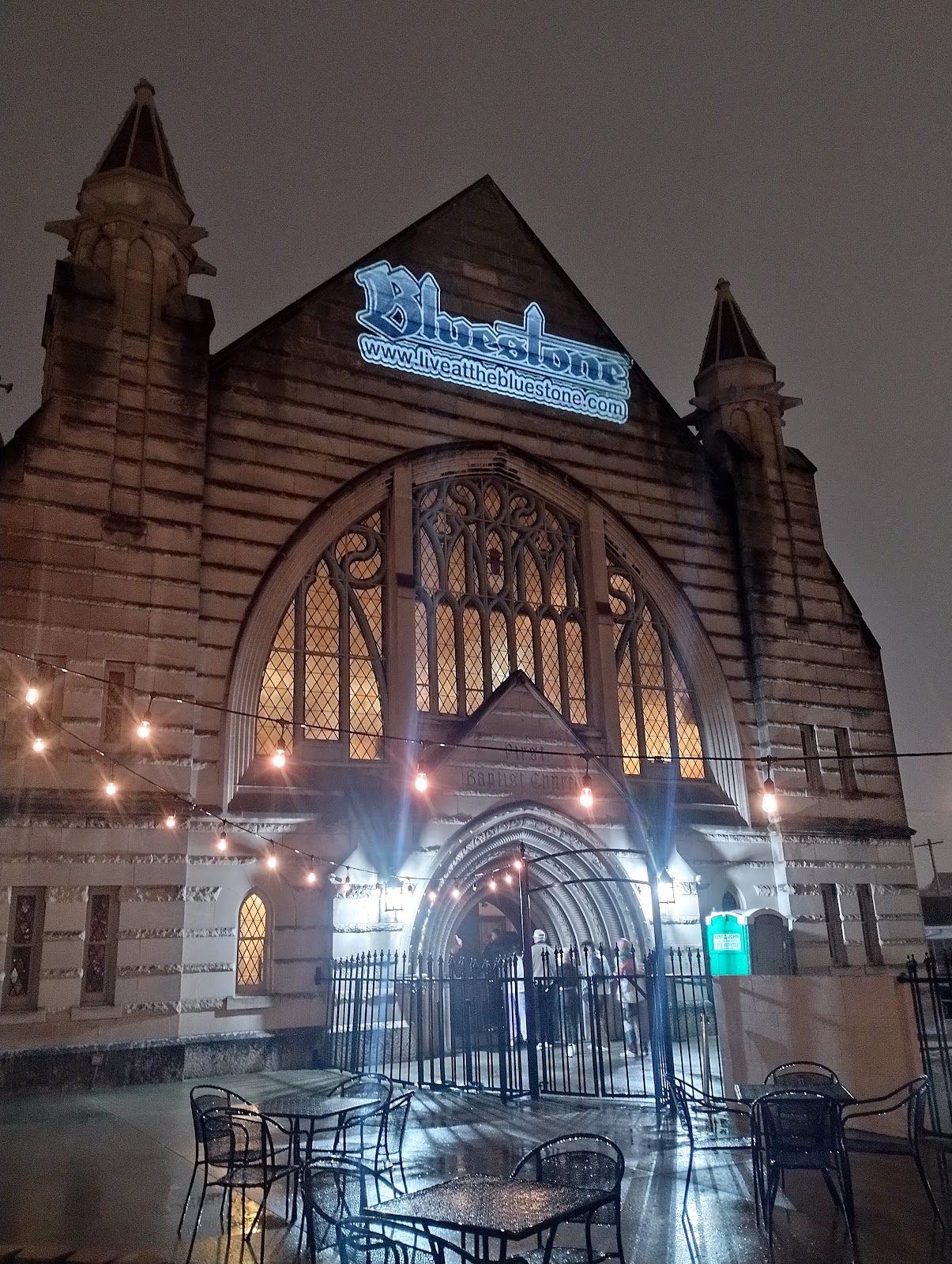
The Bluestone, Columbus: Field Notes
A church doing a different job. Four problems, four answers.
A church converted to an event venue is a building whose form and function no longer agree, and every photographic problem here comes from that mismatch.
The form is ecclesiastical: a tall nave, stone or brick walls, a pitched timber roof, an apse or chancel at one end, and tall windows — very often stained glass — set high in the walls. All of it was designed to lift the eye and to admit coloured light from above.
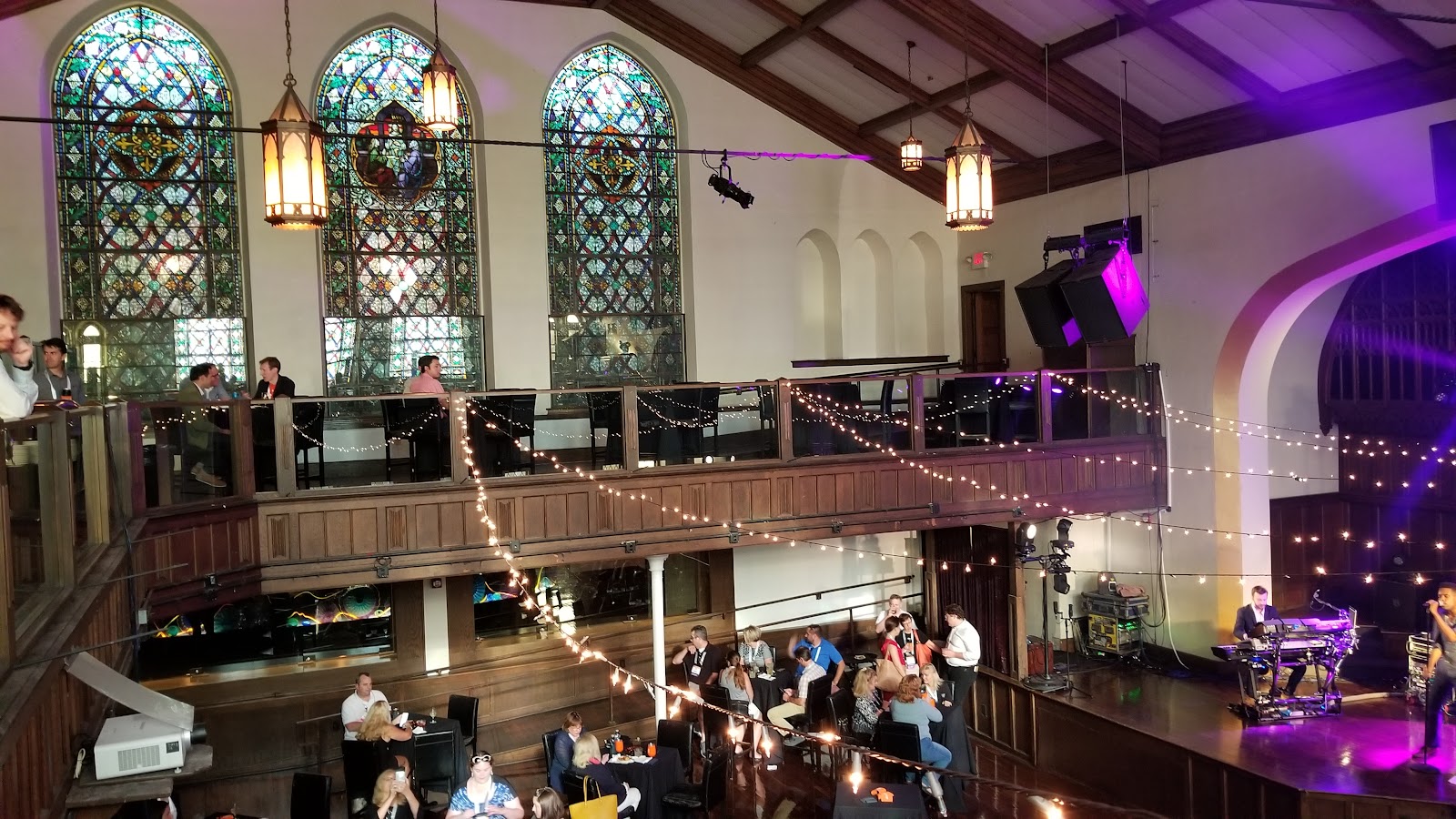
The function is now a music and event venue: a stage where the altar was, a bar along one aisle, stage lighting rigged to the roof structure, a sound system, and a floor cleared for standing crowds.
That produces four specific problems. The windows are high and coloured, which puts strong casts into the room and very little usable light at head height. The volume is tall, which puts the ceiling out of bounce range. The stage lighting is theatrical rather than architectural, which means the room is lit for performers in saturated colour. And the two registers — sacred architecture, secular fittings — appear in the same frame and have to be reconciled or deliberately separated.
The compensations are real. A nave is one of the best-proportioned interior volumes there is, with a natural axis, a natural focal point and a natural place for an aisle. Stone and timber photograph well. And a converted church has none of the restrictions of a working one: no liturgical rules, no restrictions on music or drink, and flash is nobody’s concern.
Columbus sits at about forty degrees north at roughly nine hundred feet, on the flat glaciated till plain of central Ohio. The June noon sun reaches around seventy-three and a half degrees, the December noon sun about twenty-six and a half, and civil twilight is roughly thirty-one minutes.
What follows is four problems and what solves each. We have not photographed a wedding here; the window orientation, what stage lighting exists and the permitted hours are questions for their team.
The Bluestone at a glance
| Where | A former stone church in downtown Columbus, now a music and event venue |
| Problem one | Tall coloured windows: strong casts, and no usable light at head height |
| Problem two | A tall nave — the ceiling is out of bounce range |
| Problem three | Theatrical stage lighting in saturated colour |
| Problem four | Sacred architecture and a bar in the same frame |
Problems one and two: high coloured glass, and a tall room
Stained glass is the thing everyone wants in the frame and it is the hardest element in the building to handle.
The core difficulty is dynamic range. A lit stained-glass window against a dim interior sits four to six stops above a correctly exposed face — so a frame containing both will either blow the window to white, losing the very thing that made it worth including, or hold the glass and silhouette the people.
There are three legitimate answers and no compromise between them.
Expose for the glass and treat the people as silhouettes. That works well and it is under-used: a couple in outline against a fully saturated window is a strong, graphic, unmistakably ecclesiastical frame, and it is technically trivial.
Or expose for the people and let the window go. It will render as a bright shape with its tracery visible and its colour largely gone — which is acceptable if the composition uses it as a light shape rather than as a picture.
Or bridge the gap with light: expose for the glass and bring the subjects up to within about a stop and a half of it with real output. That is the frame most people want and it needs genuine power, because the window is very bright and the subject is often at some distance from anywhere a light can stand.
The colour cast is the second half of the problem, and it is more insidious. Light through coloured glass takes that colour completely — so a subject standing in a patch of red or gold light is lit red or gold, and no white balance recovers it without wrecking everything else in frame.
So either commit to it, placing someone in a coloured patch deliberately and letting the cast be the point, or keep faces out of the patches entirely and photograph the patches as their own subject. What fails is a face half in a green patch and half in neutral light.
Those patches move predictably, and working out where they will be at ceremony time is worth fifteen minutes. A window’s throw depends on its orientation and the sun’s height: high windows on a south wall throw patches onto the opposite wall and floor in the middle of the day, and the patch travels visibly across the space.
In a church the geometry helps here. Because the windows are set high, their light lands on walls and upper surfaces rather than on people — which is why a nave is dim at head height even on a bright day, and why the coloured patches are usually a background element rather than a lighting problem.
The tall volume is the second problem and it rules out the usual shortcut. A nave roof is eight, ten, fifteen metres up, which means a flash aimed at the ceiling returns nothing — the light travels up and back and the inverse-square law takes all of it.
So bounce off walls, not ceilings. A source aimed at a side wall three or four metres away gives a large soft key with direction, and in a stone or pale-plaster church that bounce is neutral enough to be easy.
Where the walls are dark stone — and many are — bounce is unavailable and the answer is direct sources through modifiers with the room left dark. That suits the building: a tall dark nave with a couple picked out by two controlled lights is a more truthful picture of the place than a nave flattened by enough light to see all of it.
Problems three and four: stage light, and two registers
The stage lighting is the third problem and it is the one that most often ruins a reception sequence.
A music venue’s rig is designed for performers seen from a distance under saturated colour — deep blues, magentas, ambers — and it moves, strobes and changes. On a face at close range that produces colour no white balance resolves, uneven coverage, and a frame that changes completely between one shot and the next.
The answer is not to fight it but to decide which side of it you are on, frame by frame.
For frames where the rig is the background, let it be saturated. Light the subject with a warm-gelled source, expose so the subject is correct, and let the magenta and blue wash behind them read as colour. That is the picture the venue actually looks like and it is the right default for dancing and for the band.
For frames where the rig is falling on the subject, either get them out of it or match it. A face lit by a deep blue wash and a neutral flash reads as two different people; the same face lit by a blue wash and a blue-gelled flash reads as a deliberate look.
For portraits, ask for the rig to be brought down or set to a neutral state for five minutes. Venue staff will usually do it and almost nobody asks. Five minutes of white light in a church nave is worth more than any amount of technique.
The fourth problem is the one that needs a decision rather than a method: the building contains two incompatible registers, and every wide frame has to handle both.
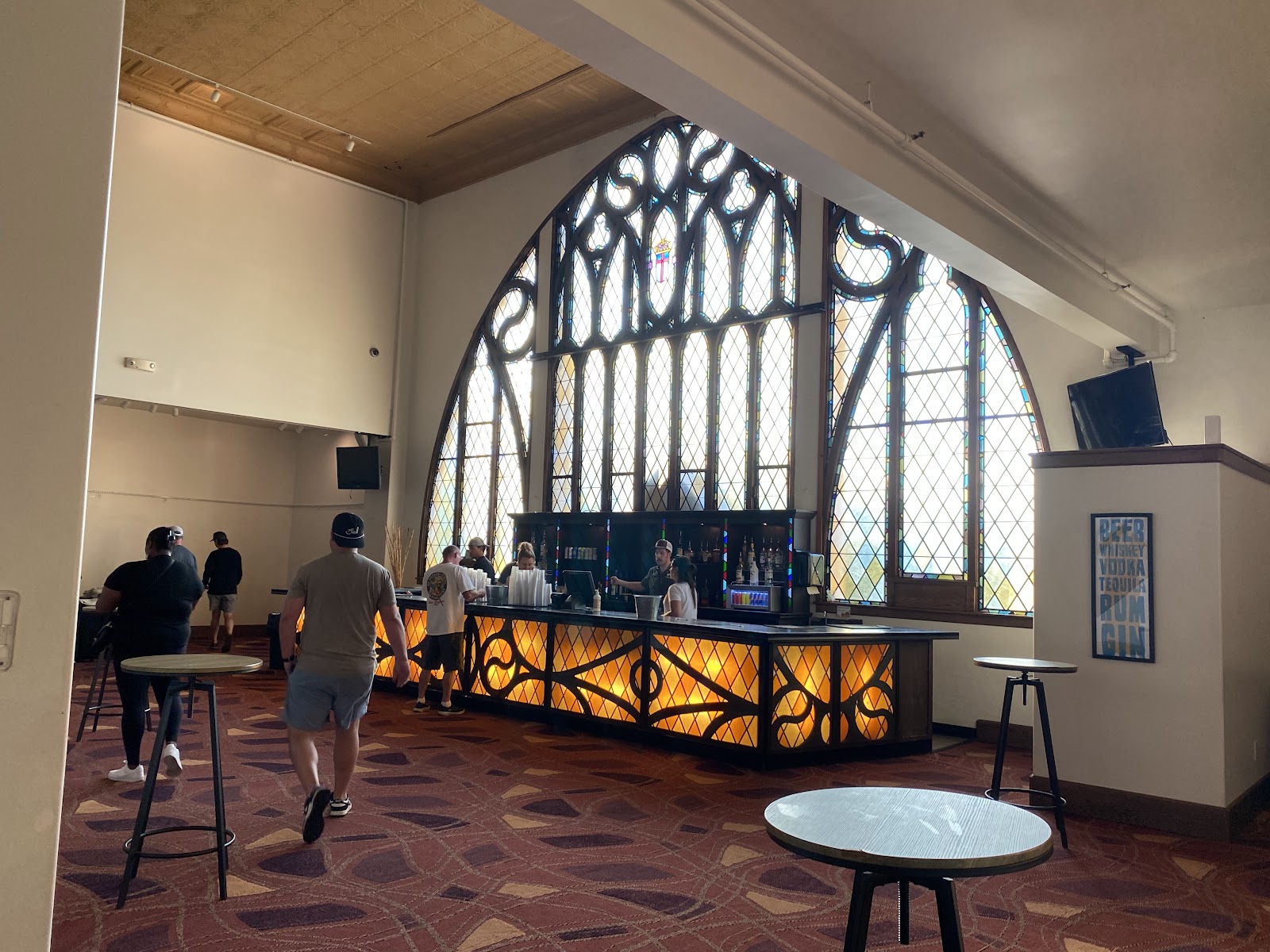
A nave with a pointed arch and a stone chancel says one thing. A bar with beer taps, a PA stack and a lighting truss says another. Put them in the same frame carelessly and the picture reads as confused rather than as interesting.
There are two coherent approaches. Separate them: compose so that a frame is either architectural — looking up the nave toward the chancel, with the fittings out of shot — or contemporary, working tight on the bar and the stage with the architecture cropped out. Both are clean.
Or combine them deliberately, which is the more interesting option and needs commitment. A frame that places a lighting truss squarely against a Gothic arch, or a bar beneath a stained-glass window, is making a point about what the building is now — and that is an honest and rather good picture, as long as it looks chosen.
What fails is the accidental middle: a portrait in front of the chancel with the corner of a PA speaker intruding at the edge. That reads as carelessness, and the fix costs nothing — a step sideways, or thirty seconds spent moving one object.
The nave’s axis is the compensation for all of this and it is a substantial one. A church is built along a single line toward a focal point, which means the aisle is a natural processional route, the chancel is a natural place to stand, and a camera on the centre line has a composition handed to it.
Use it squarely. A nave photographed off-axis loses the symmetry that is the whole point; on the centre line the arches, the roof structure and the chancel arch all align, and the frame has an authority that no other room shape provides.
The roof structure is worth looking up at. An exposed timber roof — trusses, purlins, boarding — is a strong repetitive pattern, and a wide lens from low on the centre line renders it converging toward the chancel. It is the frame that shows what kind of building this is.
- Expose for the glass or for the faces — there is no middle ground
- Bounce off walls; a nave ceiling is far out of flash range
- Ask for the stage rig to be set neutral for five minutes of portraits
- Warm-gel the key and let the coloured wash read as background
- Compose the nave squarely on its centre line, or not at all
The day, and the year
Two practical matters shape a day in a building like this, and then the climate decides the rest.
The first is that the light indoors barely changes. High windows in a tall nave admit light that lands mostly on walls and upper surfaces, which means head-height illumination is dim and fairly constant from mid-morning to late afternoon. That is a genuine advantage: the lighting plan does not need to be revised as the day moves, and a ceremony at two and a ceremony at five are photographically similar.
The exception is the coloured patches, which move a great deal, and the direct beams. On a clear day with the sun striking a high window at the right angle, a defined shaft can cross the nave — visible if there is any haze in the air, which in a crowded room there usually is. That is the single most atmospheric thing the building offers and it is worth knowing which windows can produce it and when.
The second is that a converted church is unrestricted, which is worth stating positively. A working church constrains music, drink, dress, confetti, photography during the ceremony, and often the hours. A deconsecrated one constrains none of it — so the ecclesiastical architecture comes without the ecclesiastical rules, and flash during a ceremony is nobody’s business but the couple’s.
That combination is the real reason to book a building like this, and it is worth using: if flash during the vows would help, here it is permitted.
As to the year, central Ohio is humid continental and each season does something specific.
Summer humidity has a measurable effect: water vapour scatters light, which fills shadows and softens shadow edges, so a sunlit exterior in July carries perhaps two stops less contrast than the same sun angle in a dry climate. Indoors it means the beams through high windows are more visible, because humid air holds more haze.
Mid to late October is the best window for anything outside. Sugar and red maple turn scarlet and orange in roughly the third week, and Ohio hardwoods cast dense solid shade rather than dapple, which makes even a midday exterior portrait straightforward. Stone and autumn colour is a reliable pairing.
The flat glaciated plain limits what outdoors can offer, and that is worth saying plainly. Central Ohio has no relief — no distant views, no valley fog, no elevated vantage points — so the exterior frames here are about the building itself and the immediate street rather than any setting. A downtown church photographs from the pavement.
Winter is when the venue is at its most useful. A nine-hour December day with weeks of flat overcast and regular snowfall is a serious problem for an outdoor venue and none at all for a stone nave, whose interior light is artificial anyway. And the blue hour arrives around five, which puts a lit exterior frame before the reception rather than in the middle of it.
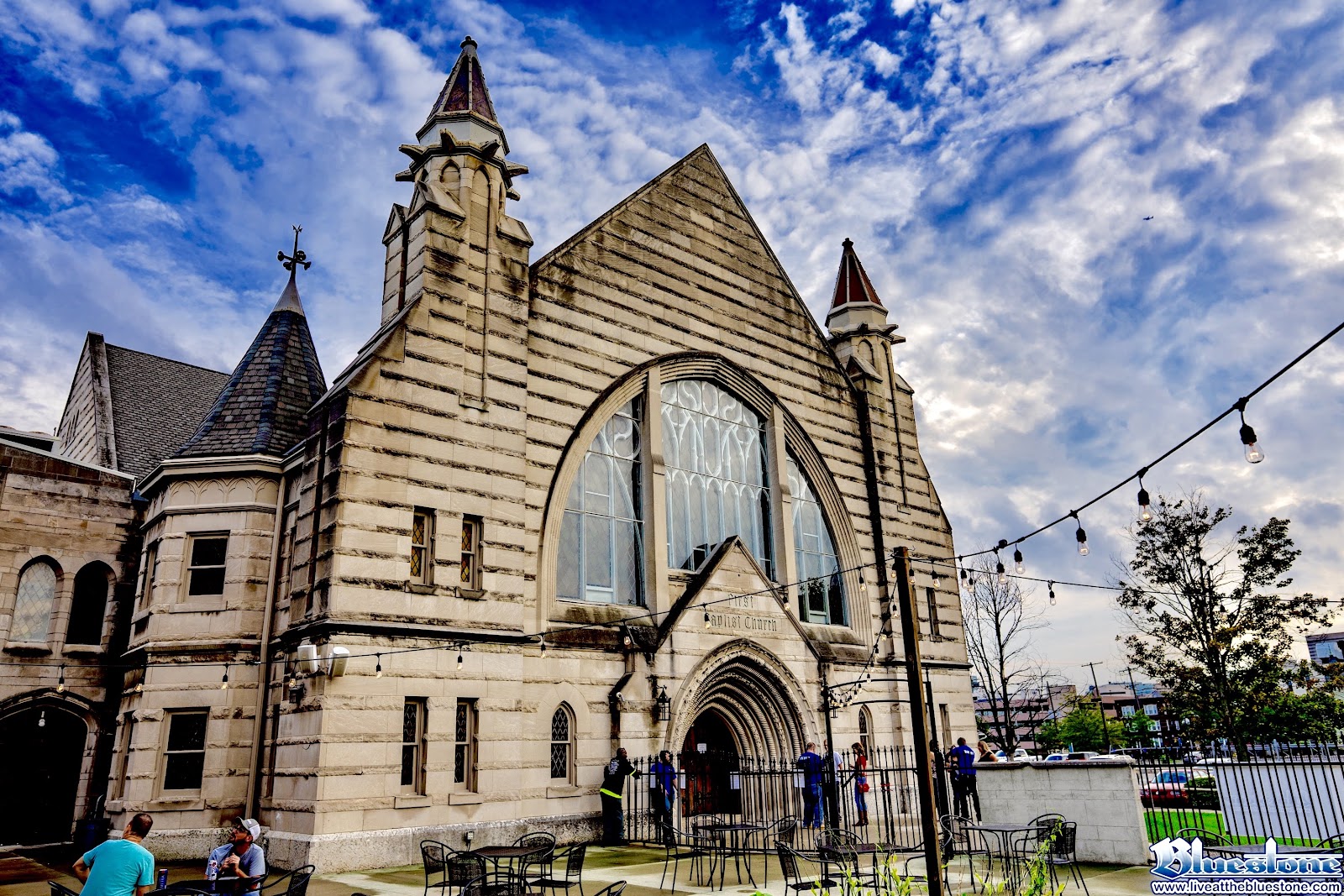
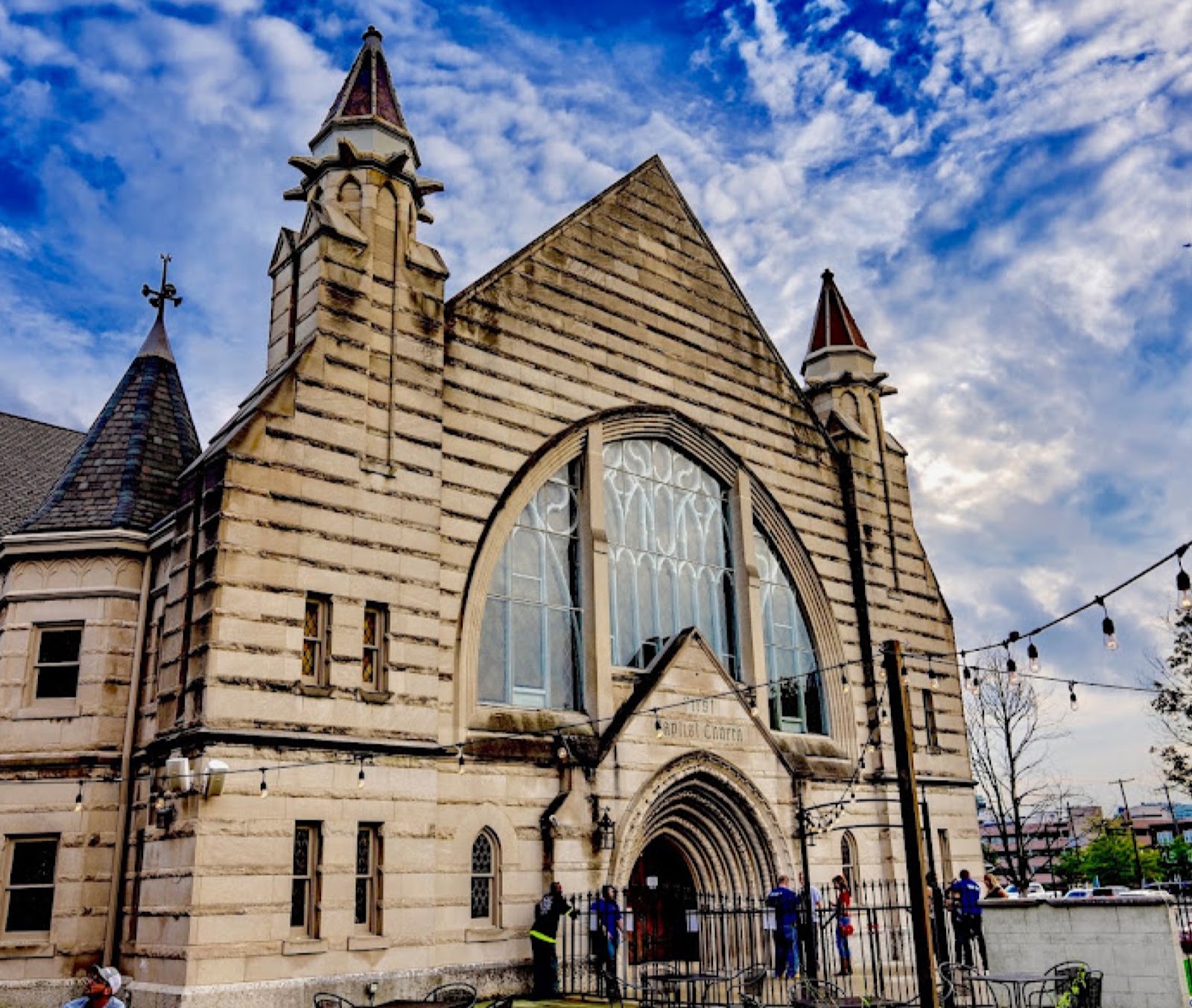
Civil twilight runs about thirty-one minutes here, which is a real working window. A stone church exterior with the interior lit and glowing through stained glass, fifteen minutes after sunset, is the best exterior frame the building has — better than anything available in daylight, because it is the only condition in which the windows read from outside.
That frame is the one to schedule deliberately. It takes ten minutes, it needs the interior lights on and the exterior sky still holding colour, and it is the photograph that makes the building look like what it is.
More frames from The Bluestone
The Bluestone wedding photography: common questions
How do I photograph stained glass with people?
Pick one. Expose for the glass and silhouette them, expose for them and let the glass go, or bridge the four-to-six stop gap with real output. There is no compromise setting.
What about the coloured light it throws?
Either put someone in a patch deliberately and let the cast be the point, or keep faces out entirely. A face half in a green patch is the failure.
Why can't I bounce off the ceiling?
A nave roof is eight to fifteen metres up. The light goes up and back and the inverse-square law consumes it. Bounce off side walls instead.
How do I handle the stage lighting?
Warm-gel the key and let the coloured wash be background. For portraits, ask staff to set the rig neutral for five minutes — they usually will, and nobody asks.
What about the bar next to a Gothic arch?
Separate the registers or commit to combining them. The failure is the accidental middle — a portrait with a PA speaker intruding at the edge.
What is the best exterior frame?
Fifteen minutes after sunset with the interior lit, so the stained glass reads from outside. It is the only condition in which it does.
More Columbus, OH venue guides
We are writing a photographer’s guide to every venue we would happily shoot in Columbus, OH. Here are three more, plus the full index:
- The Columbus Museum of Art: The Venue’s Own Logic
- The Columbus Zoo: Field Notes
- COSI Columbus: What It Suits, and What It Does Not
Planning a wedding at The Bluestone?
Sacred architecture, no sacred rules. Tell us your date.