 The Tlaquepaque Arts Village, Sedona: Field Notes on Courtyards
The Westin Kierland Resort, Scottsdale: What It Suits, and What It Does Not
Open slope, long sightlines, and a night that no longer cools.
The distinguishing feature of a north Scottsdale resort is the ground it stands on, and the ground is a bajada.
A bajada is the coalesced alluvial fan at the foot of a mountain range — the gently sloping apron of material washed down over a very long time, continuous, smooth, and typically the best saguaro habitat in the Sonoran Desert. North Scottsdale sits on the bajada below the McDowell Mountains, and that produces two things a valley-floor property does not have.
The first is grade. A bajada has a steady one-to-three percent fall across it, which means a property on one has a slight but genuine elevation change and therefore sightlines: from the upper part of a site you look out over everything below, which on flat valley ground you cannot.
The second is the cactus. Bajada slopes have the best drainage and the least frost of any desert surface, which is why the great saguaro stands occur there rather than on flats or in washes. A north Scottsdale property is likely to sit in genuinely good saguaro country.
Scottsdale sits at about thirty-three and three-quarter degrees north at this end of town, at roughly seventeen hundred to two thousand feet on the bajada. The June noon sun reaches around eighty degrees, the December noon sun about thirty-three, and civil twilight is roughly twenty-five minutes.
What follows is what a resort of this type suits and what it does not. We have not photographed a wedding here; which lawns and ballrooms are bookable, what the McDowell sightlines are and the permitted hours are questions for the resort.
The Westin Kierland Resort at a glance
| Where | A large resort on the north Scottsdale bajada below the McDowell Mountains |
| Suits | Large counts, long sightlines, saguaro country, multi-day events, winter dates |
| Does not suit | Small weddings, exclusivity, tight budgets, and a summer afternoon |
| The bajada | A gentle continuous slope — good sightlines and the best saguaro habitat |
| The catch | The urban heat island means the evening no longer cools the way the desert does |
What it suits
It suits a large guest count, which is the simple case. A resort with multiple ballrooms and several hundred rooms holds three hundred for dinner in a space designed for it, with aisles, a proper dance floor and room for a photographer to stand back with a longer lens. A converted barn at the same headcount offers none of that.
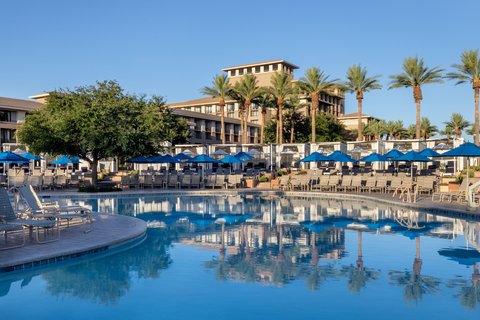
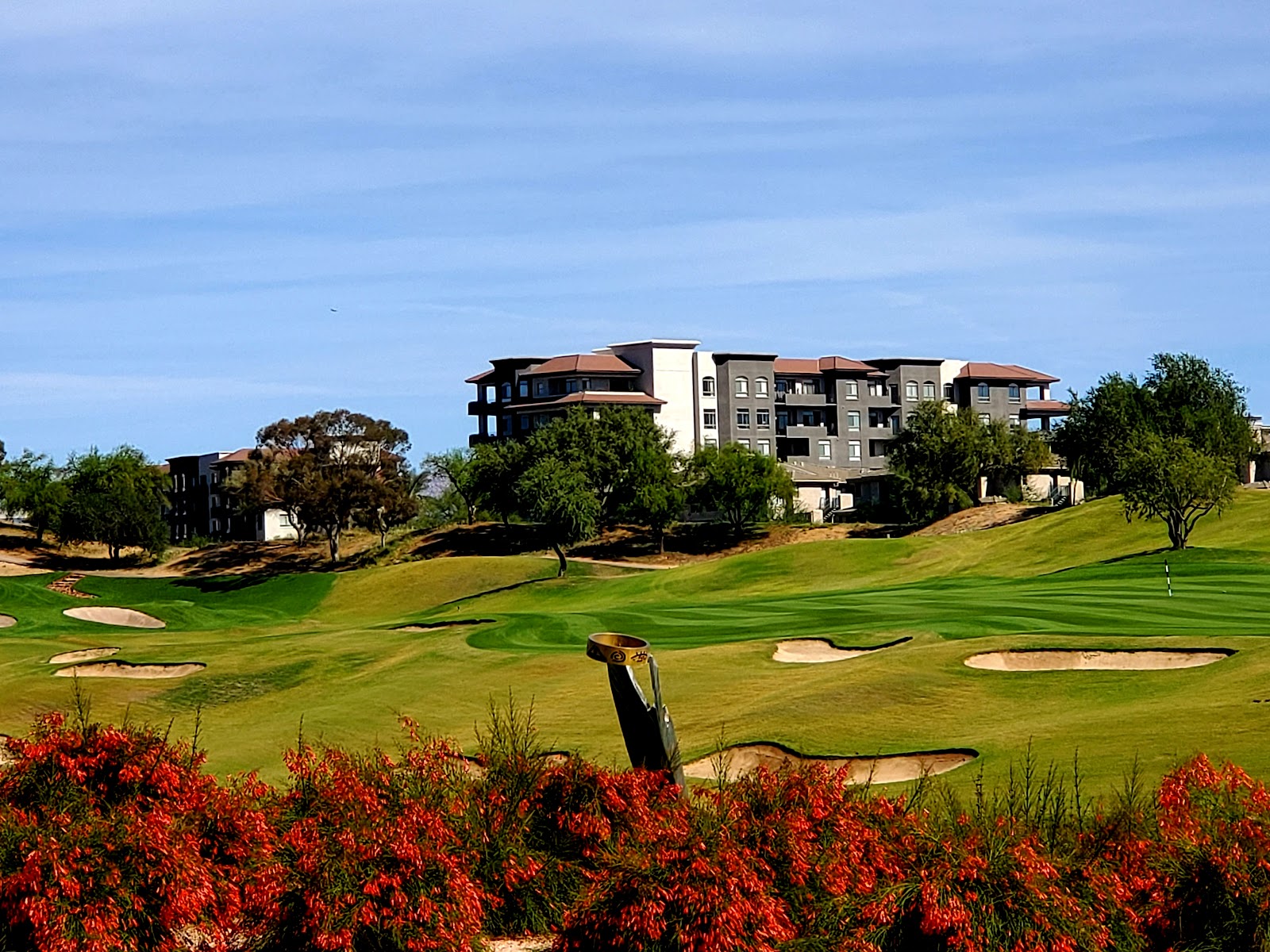
It suits a long sightline, and this is the bajada’s gift. From the upper part of a sloping site the camera looks out across the lower part and then across the valley, which means a wide frame with the subjects raised, the resort below and the Phoenix basin beyond is available without a drone or a ladder.
That frame is worth planning for, because it is the one thing a north Scottsdale property has that a Camelback-adjacent one does not. The valley-floor resorts look up at mountains; a bajada resort looks down at a city.
It also means the McDowell Mountains are close and above. They are granite and gneiss, rugged and steeply weathered, rising to around four thousand feet — and they take the last light frontally and go a warm pink-grey at a moment when the ground below has already gone into shade.
That lag is the frame to wait for and it recurs across these Arizona guides because it is the region’s most reliable good light: the subject in soft even shadow, easily exposed and flattering, with a warm lit range behind them and a manageable ratio between the two.
It suits saguaro country, and on a good bajada that is a real photographic asset rather than a decorative one. A mature saguaro is a columnar cactus several metres tall with an instantly recognisable silhouette, and in a dense stand the columns overlap and stack into a texture that can fill a background the way trees do elsewhere.
The technique is a low camera and a long lens, which compresses the stand and puts the columns into layers. A wide lens from standing height scatters them and the frame reads as sparse ground rather than cactus forest.
A single saguaro is a different object and it is placed rather than included: behind a head it is a distraction, offset with space around it it is an anchor, and backlit against clean sky at low sun its silhouette needs nothing else in the frame.
It suits a multi-day event, for the reasons any resort does — rooms, restaurants, a spa and no driving, which for an out-of-town party removes most of the friction and gives a photographer three days of different light instead of eight hours of one.
And it suits a winter date emphatically. From November to April the low desert is mild, dry and calm, and a December noon sun of about thirty-three degrees never climbs high enough to flatten a face — so the whole short day works, every outdoor space is available, and there is no bad hour at all.
What it does not suit
It does not suit a small wedding. A ballroom built for three hundred photographs forty badly — too much ceiling, too much floor, too much distance — and the smaller rooms at a large resort are usually its least distinguished spaces. Forty people are better served by a venue built at forty.
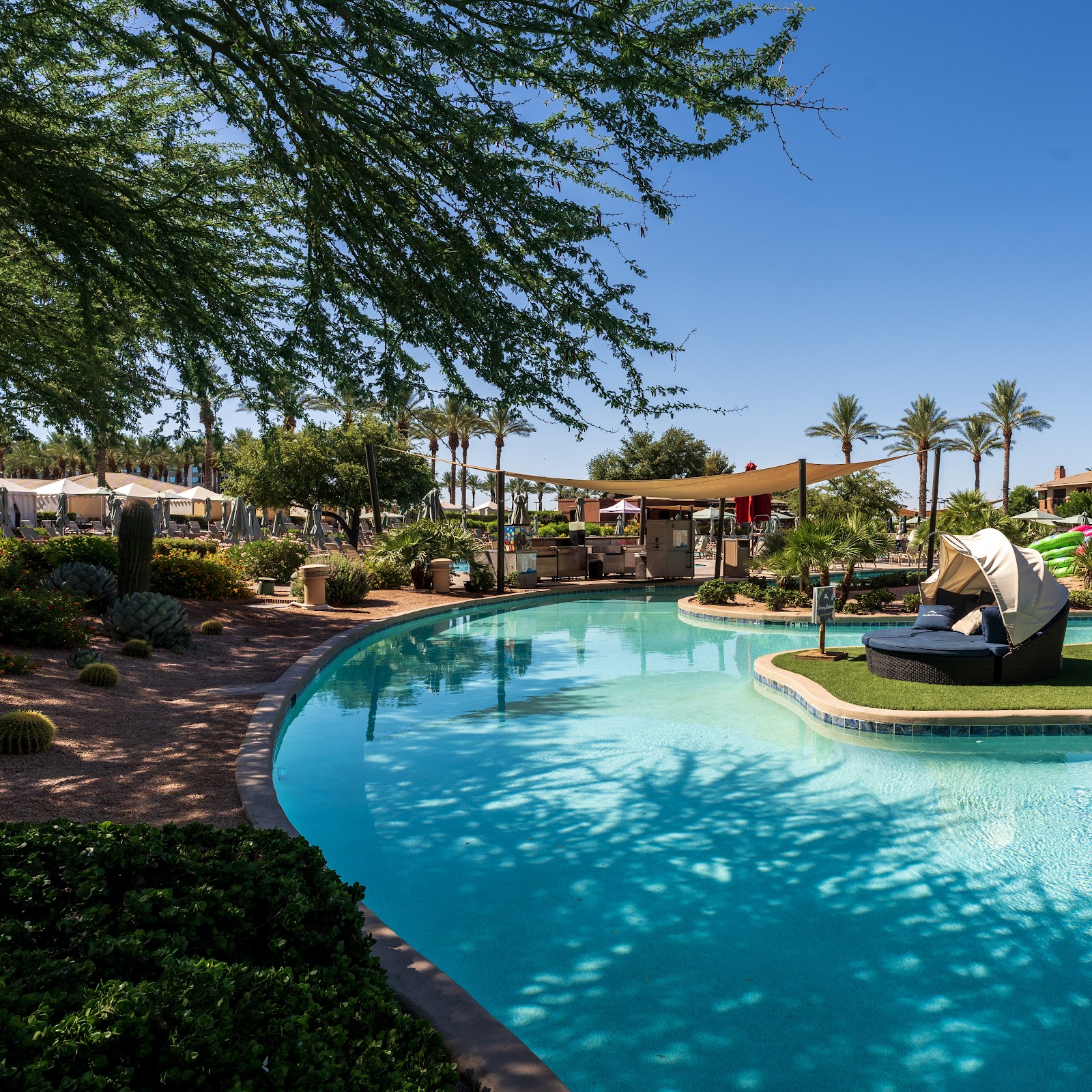
It does not suit exclusivity. A working resort has other guests, other events and quite possibly another wedding on the same lawn schedule, which means swimwear in the background, a second party in earshot, and a photographer being tactical about backgrounds rather than assuming clear ones.
It does not suit a tight budget, and the specifics matter: minimum spends, mandatory catering, service charges, and sometimes a preferred-vendor list with real consequences for anyone outside it. That last item bears directly on photography and it is worth asking about before anything else is agreed.
It does not suit a strong sense of place indoors. A large international-standard resort is designed to be legible and excellent for a guest from anywhere, which tends to make the interiors handsome rather than local — so the burden of place falls entirely on the exteriors, and the question of what is actually visible from your ceremony site becomes the important one.
And it does not suit a summer afternoon, which no low-desert venue does. Phoenix-area afternoons regularly exceed a hundred and ten degrees, and for a party in formal clothing outdoors that is a welfare question rather than a comfort one.
But there is a specific summer problem at a metropolitan-edge resort that is worth naming, because almost nobody plans for it: the evening does not cool.
In an undisturbed desert the daily temperature swing is very large — often twenty-five or thirty degrees — because dry air holds little heat and the ground radiates freely to a clear sky after dark. That is why a desert evening is traditionally the pleasant part of a hot day.
The Phoenix metropolitan area has largely lost that. Decades of growth have replaced desert with paving, buildings and irrigated landscape, and the result is one of the most pronounced urban heat islands in the world: the built area stores the day’s heat in its mass and releases it through the night, so nighttime lows in the city now run roughly ten degrees warmer than the surrounding desert and have risen substantially over the last several decades.
The practical consequence for a summer wedding is direct. An outdoor evening reception in the metropolitan area in July is still genuinely hot at ten at night, in a way the same event in open desert forty miles out would not be. Guests notice, dancing suffers, and a plan that assumed a cool evening was wrong.
A bajada site on the northern edge is better than a central one, because it has more open desert around it and less thermal mass — but it is not immune, and the honest framing is that a summer evening in the metro area is warm rather than cool. That is worth knowing when choosing between an outdoor and an indoor reception.
- Shoot from the upper slope: the bajada gives a valley sightline without a drone
- Low camera and a long lens to make a saguaro stand read as a forest
- Wait for the lag — ground in shade, McDowells still lit above
- Ask about preferred-vendor restrictions before anything else is agreed
- A summer evening in the metro does not cool; the heat island holds it
Technique, and the year
Four things govern the day and the first is the shade, because the low desert has essentially none.
Palo verde and mesquite, the region’s two significant trees, carry leaves measured in millimetres on open filigree branch structures — drought adaptations that make them cast a fine hard moving dapple rather than cover. A face under one at eighty degrees of sun elevation is covered in small hard-edged patches and nothing recovers it.
So the shade at a resort is the built structures and the irrigated plantings, and the irrigated plantings are the useful discovery. An irrigated property grows what the surrounding desert cannot — olive, Aleppo pine, eucalyptus, oversized mesquite — and those do cast genuine shade. Find them on arrival.
The second is the colour split, and it is the state’s most reliable correction. At this latitude in very dry air the sky is a deep saturated blue, which means open shade is lit by a blue source and reads distinctly cool while direct sun reads warm. An ungelled flash puts a yellow-green face into a frame that is warm above and cold below. Warm-gel everything, by about a quarter to a half.
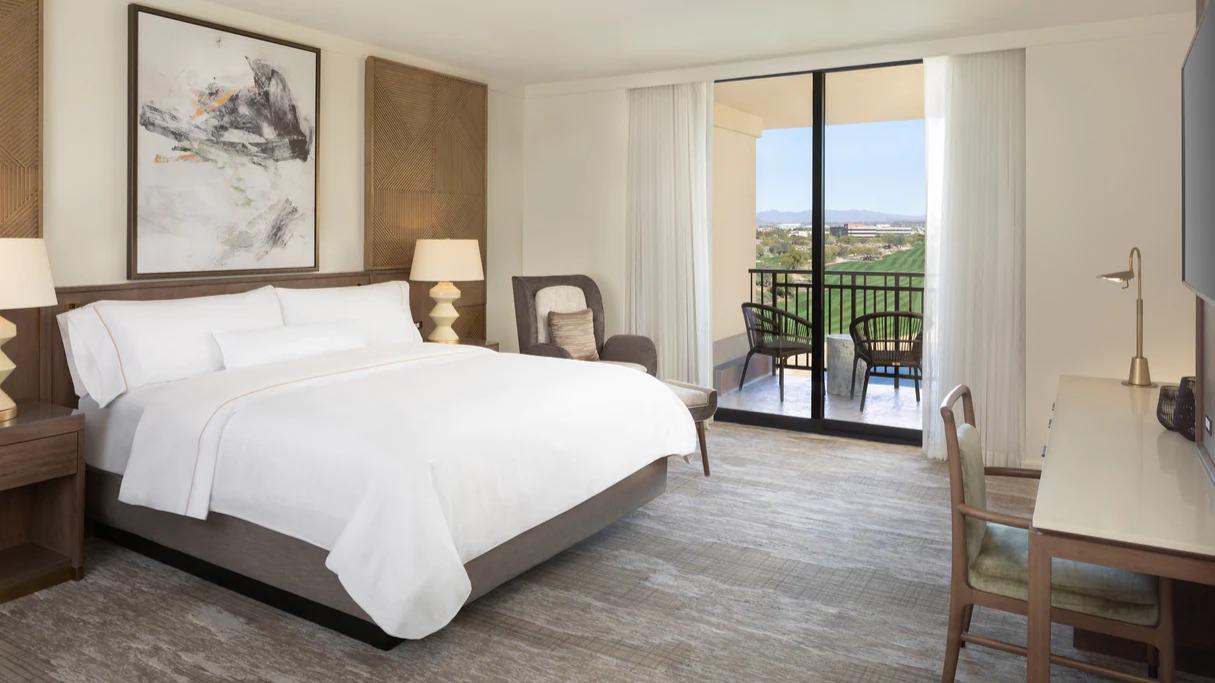
The third is the ballroom, and the failure there is universal. A large modern ballroom is lit by high-level recessed downlights on a low dimmer, which gives a strong top light with dark eye sockets and a chin shadow. The fix is to stop treating it as a key: bounce a warm-gelled source for a directional key, drag the shutter so the room’s own light registers behind the subject, and use real sources on stands because the distances are too large for anything on-camera.
The fourth is the dusk, and it is short. Civil twilight here runs about twenty-five minutes and the fall-off in exceptionally clear air is abrupt rather than gradual. Three end-of-day frames fit into that only if none of them is being decided at the time — so the discipline is to know them, walk to the first before the light arrives, and move without discussion.
What follows is worth staying for. Dry dust-carrying desert air scatters long wavelengths very efficiently, which makes a clear desert dusk more saturated than the same sun angle produces in a humid climate — ten minutes after sunset the whole western sky can be an orange-to-violet gradient, with the McDowells dark against it.
The year completes the picture and it runs opposite to most of this library. November to April is the season: mild, dry, calm, with directional light all day and no bad hour.
February to April is the best window in the state, because this desert flowers in spring rather than autumn. Brittlebush yellow across the bajada from February, Mexican gold poppy and lupine in March in a year with adequate winter rain, ocotillo putting red on the tips of its whip-like stems, and palo verde flowering a mass of bright yellow through April into May — the strongest colour the low country produces, and entirely dependent on the previous winter’s rainfall.
A bajada is the best surface in the desert to see that on, because the drainage suits the annuals and the slope puts them at a viewing angle. A good bloom year on a north Scottsdale bajada is genuinely spectacular and it is knowable a month or two in advance rather than a year.
In May the saguaros flower white at the crown of the column, five metres up, which needs a long lens and is a small specific subject rather than a landscape one.
The monsoon, from July into September, is the summer’s compensation: clear mornings, towering convective cloud building over the McDowells through the afternoon, thunderstorms late, and the best light of the year in the half hour after a cell passes — washed air, wet ground, saturated colour and a low sun under a broken ceiling. It also brings the haboob, a wall of dust advancing across the valley ahead of a collapsing storm, which on a bajada’s long sightlines is as dramatic as anything in these guides and entirely unplannable.
October is underrated: the heat breaks, the monsoon has ended, the air is at its clearest of the year and the season has not started. There is no autumn colour in the low desert, so nothing says October except the light.
More frames from The Westin Kierland Resort
The Westin Kierland Resort wedding photography: common questions
What is a bajada and why does it matter?
The gently sloping alluvial apron at the foot of a range. It gives a property real sightlines over the valley and it is the best saguaro habitat in the desert.
How do I photograph a saguaro stand?
Low camera, long lens. Compression stacks the columns into a texture; a wide lens from standing height scatters them into sparse ground.
What is the most reliable good light here?
The lag after the ground goes into shade while the McDowells above are still lit — an easily exposed subject against a warm background with a manageable ratio.
Why doesn't a Phoenix summer evening cool down?
The urban heat island. Paving and buildings store the day’s heat and release it overnight, so metro lows run about ten degrees warmer than the surrounding desert.
Where is the shade at a desert resort?
Under the irrigated specimen trees. Native palo verde and mesquite have millimetre-scale leaves and cast a hard dapple rather than cover.
When is the bloom?
February to April, depending on the previous winter’s rain — and a bajada is the best surface in the desert to see it on.
More Arizona venue guides
We are writing a photographer’s guide to every venue we would happily shoot in Arizona. Here are three more, plus the full index:
- The Windmill Winery, Florence: A Walk Through the Site
- The Chapel of the Holy Cross, Sedona: One Frame, and How It Is Made
- The Enchantment Resort, Sedona: The One Decision That Governs Everything
Planning a wedding at The Westin Kierland Resort?
A slope, a saguaro stand and a long view. Tell us your date.