 The Tlaquepaque Arts Village, Sedona: Field Notes on Courtyards
The McCormick Ranch, Scottsdale: Field Notes
Engineered water in a desert. It behaves differently, and better.
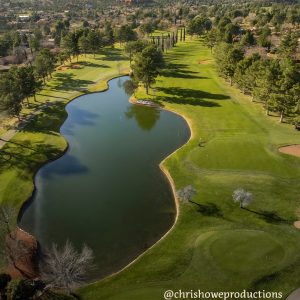
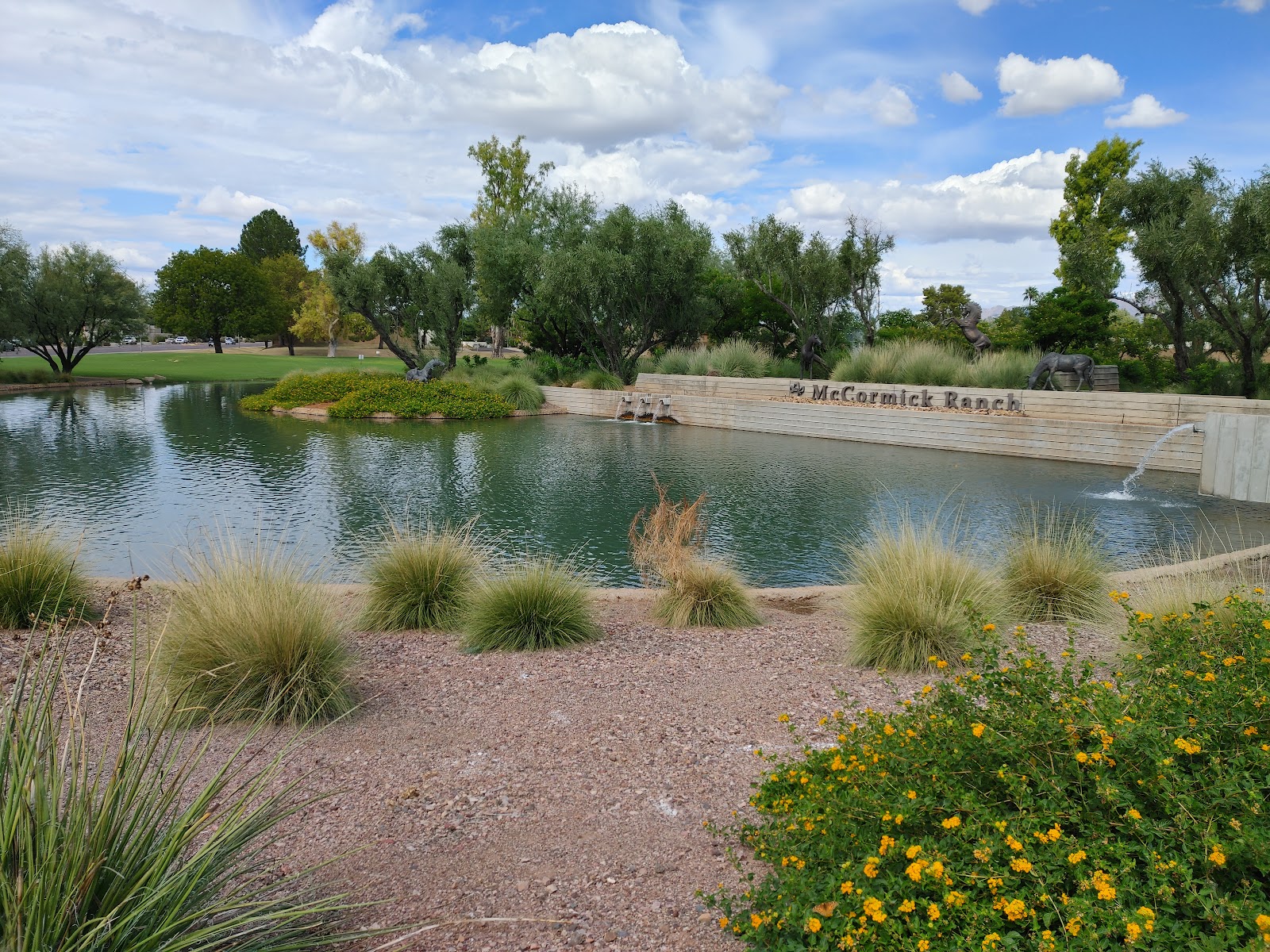
The water here is not natural and that is the most useful thing to know about it, because an engineered lake behaves better than a natural one in almost every respect that matters to a photograph.
The Salt River valley has been irrigated for a very long time — the Hohokam built hundreds of miles of canals here a thousand years ago, and the modern system was laid over their alignments — which means that water in central Arizona arrives through infrastructure rather than through a watershed.
The consequence for a lake fed from that system is level stability. A natural desert reservoir is drawn down through the dry season and refilled by runoff, which produces the bathtub ring: a pale mineral-stained band of exposed shoreline above the current waterline, sometimes many feet high, and the single most consequential compositional problem at any desert reservoir.
An engineered ornamental lake fed from a canal does not do that. It is held at a designed level year-round, which means the shoreline is planted right down to the water, the edge is a designed edge, and there is no ring to compose around.
That is a genuine advantage and it is worth naming, because it makes the water usable at every position and in every season rather than only in spring.
Scottsdale sits at about thirty-three and a half degrees north at roughly twelve hundred and fifty feet, with Camelback Mountain to the south-west and the McDowell Mountains to the north-east. The June noon sun reaches around eighty degrees, the December noon sun about thirty-three, and civil twilight is roughly twenty-five minutes.
What follows is four problems and what solves each. We have not photographed a wedding here; the lakeside access, the bookable spaces and the permitted hours are questions for the venue.
The McCormick Ranch at a glance
| Where | A lakeside property in central Scottsdale |
| The advantage | An engineered lake holds a designed level — no bathtub ring, ever |
| Problem one | Still water is a morning thing; the desert breeze builds all afternoon |
| Problem two | Turf and water put two different colour casts on the same face |
| Problem three | No natural shade, and about twenty-five minutes of twilight |
Problem one: the water is only still in the morning
The reflection is the reason to be at a lake, and whether it exists is decided by the hour rather than by the weather.
The mechanism is the desert’s own diurnal circulation. Overnight and in the early morning the ground is cool and the air above it is stable, so there is very little movement — desert mornings are genuinely calm in a way that temperate mornings are not. As the sun heats the ground through the day, air rises off it, a thermal circulation establishes, and a breeze develops that typically builds through the afternoon and is often strongest in the two or three hours before sunset.
So the mirror is a morning proposition and the afternoon has texture instead. That is the reverse of the standard advice about lakes and it follows directly from the climate.
In the first hours the surface is glass and the reflection is a near-perfect inversion of everything above it. Camelback reflected in still water at dawn, with the red rock doubled, is the strongest frame the property offers and it is available for perhaps ninety minutes.
The exposure works because a reflection is about a stop darker than what it reflects. That means a frame containing both the sky and its reflection has a range a single exposure holds comfortably, which is not true of most high-contrast desert compositions.
Broken water is not a loss and it should not be treated as one. A low sun on a rippled surface produces a path of bright specular highlights running from the sun toward the camera, and the length of that path is controlled entirely by camera height: from standing height it is short, and from a few inches above the water it stretches across the whole frame.
A subject silhouetted against that path from a low camera is one of the strongest pictures available at any water venue, and it is an evening frame precisely because it needs the breeze.
The third water frame is the fill. A subject at the water’s edge with the sun behind them receives a bounce off the surface, and although water reflects only a few percent at high angles, its reflectivity rises sharply at grazing angles — which means the fill is strongest in exactly the last hour when the light is best. That coincidence is worth exploiting.
One practical note on edges. An engineered lake has a designed edge, which may be a planted bank, a stone rim, a bulkhead or a mown turf slope. Each photographs differently and one of them is usually much better than the others, so walking the whole perimeter before the day is the single most useful piece of preparation at a water venue.
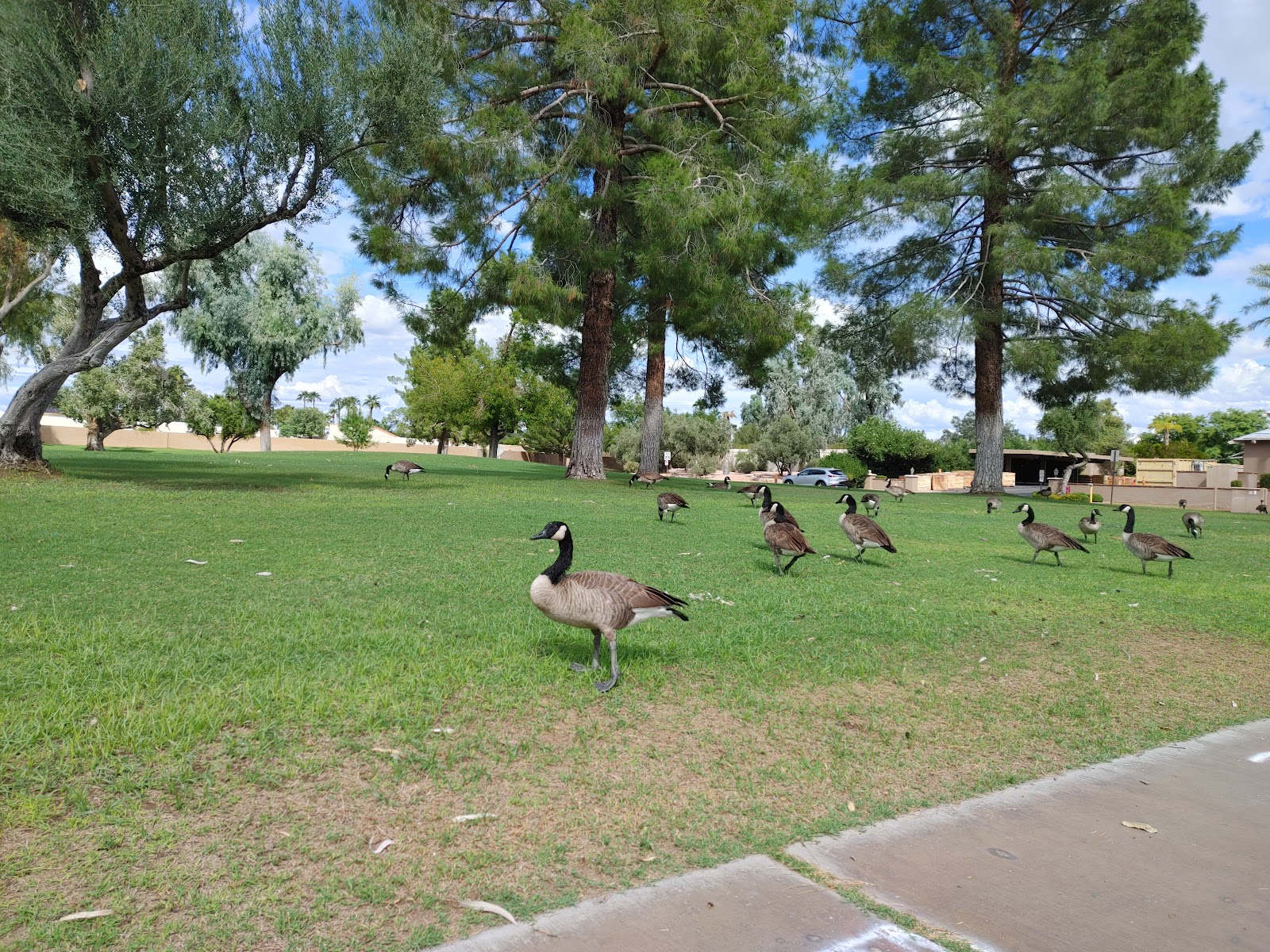
And water concentrates wildlife. Permanent water in the Sonoran Desert attracts birds in quantity — herons, egrets, ducks, cormorants and a great deal else — which makes a bird lifting off behind a couple a realistic possibility rather than a fantasy. It is worth watching for rather than waiting for.
Problems two and three: two colour casts, and no shade
The second problem is colour and it comes from having two large coloured reflectors in play at once.
A lakeside property in the desert is almost always a turfed one, because the same water that fills the lake irrigates the ground around it. That means a subject standing near the shore has irrigated turf filling part of the lower half of their surrounding hemisphere and water filling another part — and those two surfaces return completely different colours.
Turf returns green, and it returns a lot of it. A sunlit lawn is an intense saturated green-blue reflector, and the light it throws up shows most visibly under the chin and in the eye sockets, where the fill dominates. It reads as a slightly ill grey-green tone that is hard to correct globally because the rest of the frame is balanced correctly.
Water returns sky, which at this latitude in very dry air is a deep saturated blue. That is cool rather than green and it is much more flattering, but it is still not neutral.
And the desert’s third source completes the problem: direct sun, which reads warm. So a subject at a desert lake’s edge on a sunny afternoon can be lit by warm sun from above, blue sky-in-water from one side and green turf from the other — three casts on one face.
The solution is a warm-gelled key at a level that dominates. That gives the face one consistent colour and demotes the rest to environment, which is what the eye does anyway. It is the single most reliable correction in this state and it should be the default rather than a remedy.
Position helps too. Moving a subject off turf onto paving, a path, a dock or a bare bank removes the green entirely and leaves only sky and sun, which is a far simpler problem. The water’s-edge position is genuinely better for skin than the lawn position, and that is a useful thing to know when choosing between them.
The third problem is the shade, and the low desert’s answer is stark: there is none.
Palo verde and mesquite, the region’s two significant native trees, carry leaves measured in millimetres on open filigree branch structures — drought adaptations that make them cast a fine hard moving dapple rather than cover. A face beneath one at eighty degrees of sun elevation is covered in small hard-edged patches, and in air that gives shadows almost no atmospheric fill that is not recoverable.
What does work is the irrigated planting, and a lakeside property has more of it than anywhere else in the desert. Water makes it possible to grow things the surrounding landscape cannot: eucalyptus, olive, Aleppo pine, ash, sycamore, oversized mesquite, and in the older Scottsdale plantings a great many date palms.
Those broadleaf and pine species do cast real shade, and finding them on arrival is five minutes that changes the whole midday. An irrigated sycamore or a mature ash beside a lake is the best unassisted noon portrait on any desert property.
The date palms are the exception and they need understanding. A palm’s crown is high and its fronds sparse, so its shadow is a small pattern on the ground well away from the trunk — which makes it useless as shelter and excellent as a background. A tall clean trunk with a burst at the top reads as a strong graphic vertical, and it photographs best against open sky rather than against other vegetation.
Reflected in still water, a row of palms is one of the more distinctive frames the Southwest offers, and it is worth composing for deliberately at dawn.
- The mirror is a morning thing; the thermal breeze builds all afternoon
- Get the camera inches above the water to lengthen the specular path
- Walk the whole perimeter beforehand — one edge is always much better
- Warm-gel the key by default: sun, sky-in-water and turf give three casts
- The irrigated broadleaf trees are the only real shade; palms are background only
Problem four: the dusk, and the year
The fourth problem is time, and at a desert water venue it is the one that most often costs a picture.
Civil twilight at this latitude runs about twenty-five minutes, which is among the shortest figures in these guides, and in exceptionally clear dry air the fall from usable light to unusable is abrupt rather than gradual. A temperate dusk gives a long soft decline; a desert dusk gives a cliff.
At a lake that matters more than elsewhere, because the best frames are the ones that combine a coloured sky with its reflection — and that combination exists for perhaps twelve or fifteen minutes rather than for an hour.
The answer is rehearsal. Decide the two or three end-of-day frames in advance, walk to the positions in daylight, know which is first, and move without discussion. Three planned setups fit into twenty-five minutes; two unplanned ones do not.
What the desert gives back is the colour. Dry dust-carrying air scatters long wavelengths very efficiently, which makes a clear desert dusk more saturated than the same sun angle produces in a humid climate — so ten minutes after sunset the whole western sky can be an orange-to-violet gradient, doubled in the water if the breeze has dropped, with Camelback dark against it.
That is the frame the property is for, and it is worth organising the evening around rather than treating as an afterthought.
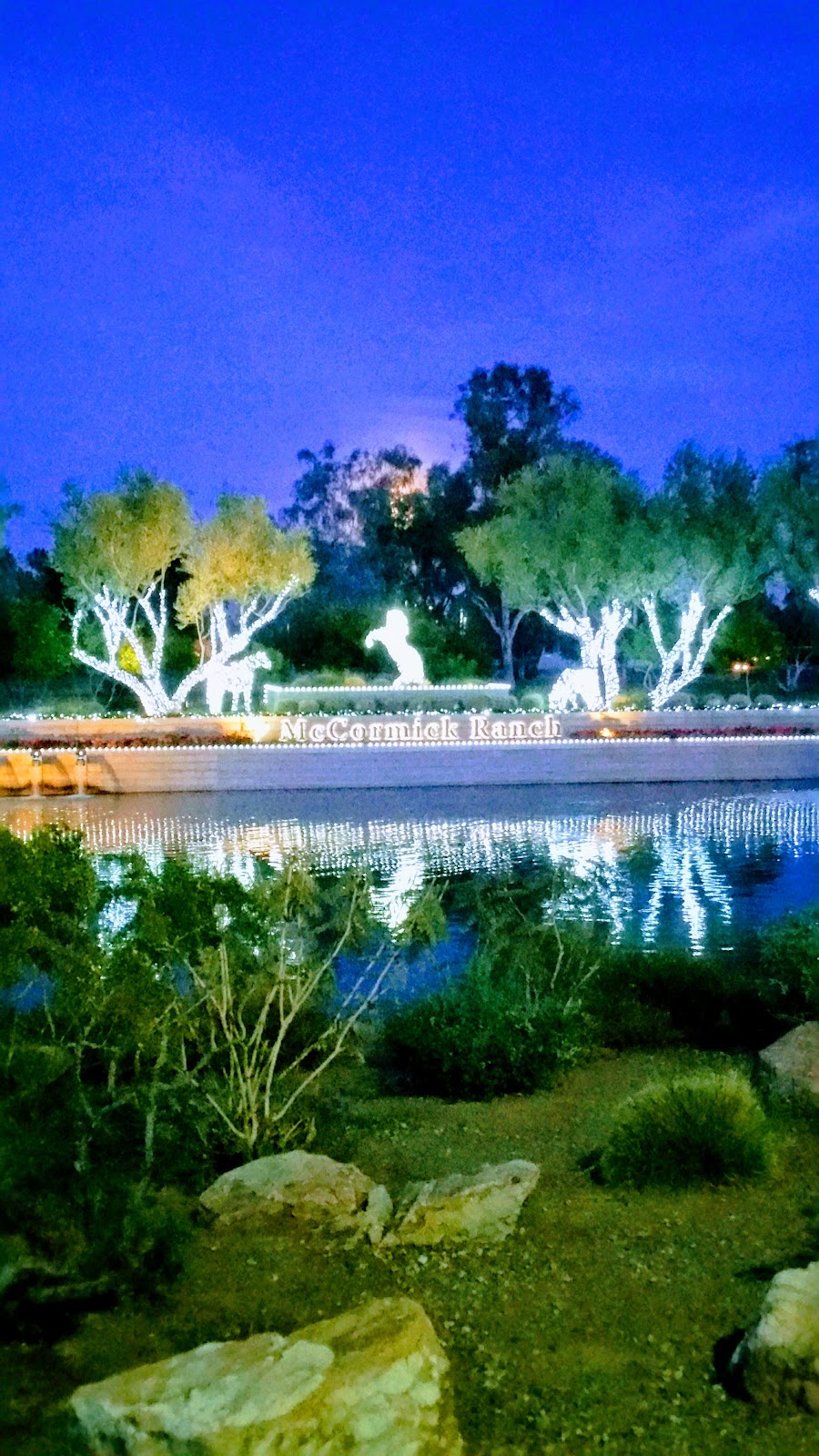
After dark the water becomes a different asset. A lit building or a string of lights reflected in still water gives a long vertical column of colour that doubles whatever illumination exists — which means a modest amount of light produces a substantial picture. A thirty-second exposure on a tripod with the reception lit behind and the reflection running toward the camera is the frame to close on.
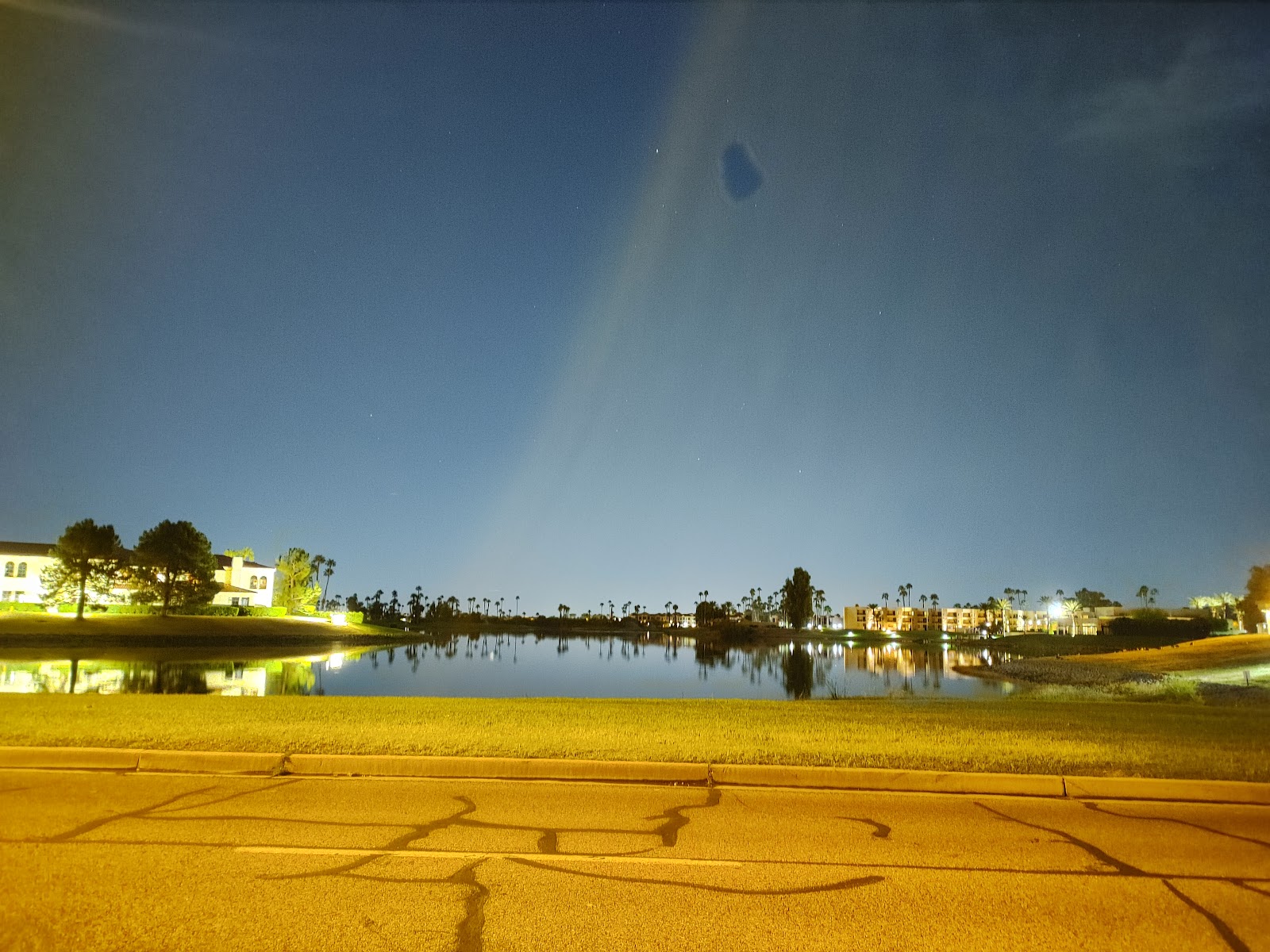
The urban location limits the sky. Central Scottsdale is inside a large metropolitan area, so the night sky here is bright and stars are not a realistic subject — unlike the properties out on the desert edge. Light the foreground and let the sky go black rather than trying for both.
The year governs the rest and it runs opposite to most of this library. November to April is the season: mild, dry, calm, with a December noon sun of about thirty-three degrees that never climbs high enough to produce the midday problem — which means directional light for the whole short day and no bad hour at all.
An engineered lake is at full level in that season as in every other, which is the advantage over a reservoir: the winter frames are as good as the spring ones.
February to April is the best window in the state, because this desert flowers in spring rather than autumn. Brittlebush yellow, Mexican gold poppy and lupine in a wet year, ocotillo red on the tips of its whip-like stems, and palo verde in mass yellow bloom through April into May — the strongest colour the low country produces, and dependent entirely on the previous winter’s rainfall.
At an irrigated lakeside property the reliable colour is the planting rather than the wild bloom: bougainvillea, whose display is in bracts rather than petals and therefore holds for months instead of weeks, and citrus, which flowers white and fragrant in February and carries coloured fruit through the winter.
May to September is the constraint. Phoenix-area afternoons regularly exceed a hundred and ten degrees, which for a party in formal clothing outdoors is a welfare matter, and a large body of water raises the local humidity slightly without cooling anything meaningfully.
The monsoon from July is the compensation, and at a lake it is a substantial one: convective cloud building over the McDowells through the afternoon, thunderstorms late, and a water surface that doubles a structured sky instead of an empty one. The half hour after a cell passes — washed air, wet paving, a low sun under a broken ceiling, all of it reflected — is the best light of the year.
The safety line is worth stating. An open shoreline during a thunderstorm is an exposed place, and a monsoon cell can arrive faster than a wedding party can walk indoors. That is the reason a covered alternative needs to be genuinely available rather than nominally listed.
More frames from The McCormick Ranch
The McCormick Ranch wedding photography: common questions
Why is an engineered lake better than a reservoir?
It holds a designed level year-round, so there is no bathtub ring of exposed mineral-stained shoreline to compose around. The water is usable in every season.
When is the water still?
Mornings. The desert’s thermal circulation builds a breeze through the afternoon, so the mirror is a dawn proposition and the afternoon gives texture instead.
How do I lengthen the specular path?
Lower the camera. From standing height the path is short; from a few inches above the surface it stretches across the whole frame.
Why does a lakeside lawn hurt skin tones?
Sunlit turf is an intense green reflector and its light lands under the chin and in the eye sockets. Move the subject onto paving or the bank, or overwhelm it with a warm key.
Where is the shade?
Under the irrigated broadleaf and pine plantings — sycamore, ash, olive, Aleppo pine. Native palo verde casts a hard dapple, and date palms cast almost nothing.
Can we photograph stars here?
No. Central Scottsdale is inside a bright metropolitan area. Light the foreground, let the sky go black, and save the star frames for a desert-edge property.
More Arizona venue guides
We are writing a photographer’s guide to every venue we would happily shoot in Arizona. Here are three more, plus the full index:
- The Oasis at Wild Horse Ranch, Tucson: One Frame, and How It Is Made
- The Omni Tucson National Resort: The Problem, and Four Ways Out of It
- The Paseo, Scottsdale: The Light Through the Day
Planning a wedding at The McCormick Ranch?
Engineered water, and a mountain to double. Tell us your date.