 The Tlaquepaque Arts Village, Sedona: Field Notes on Courtyards
The Cave at Lake Pleasant, Peoria: The One Decision That Governs Everything
Two opposite worlds, thirty feet apart. Choose deliberately.
This venue presents one decision more starkly than almost any other in these guides, because the two options are not variations on a theme — they are opposites.
Inside is enclosed, dark and controlled: a low-light space where whatever light exists is the light you brought, the walls are close, and the exposure is a matter of building rather than metering.
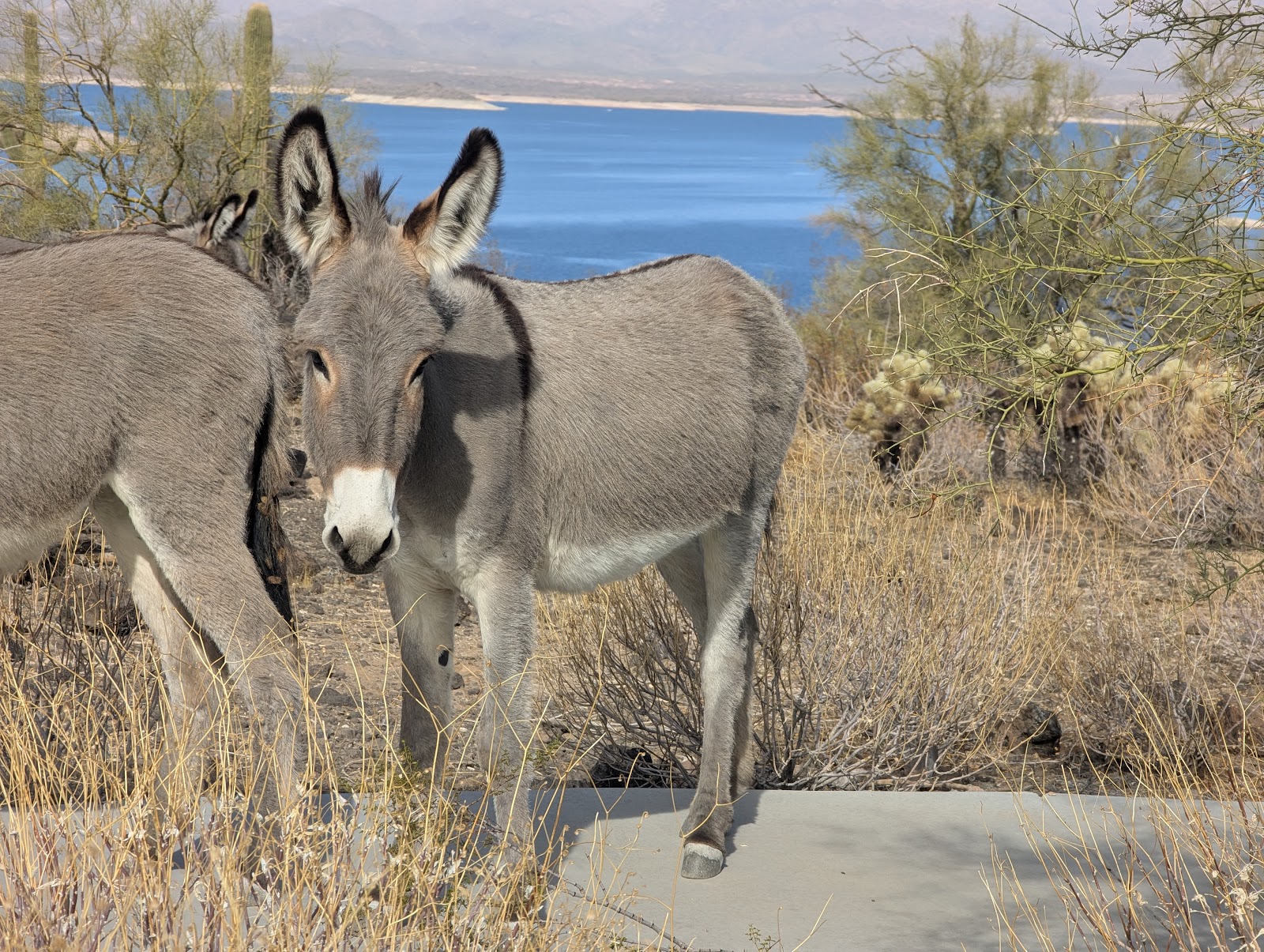
Outside is the Sonoran Desert in the open, above a reservoir, with an unobstructed sky, no natural shade of any kind, and a direct sun that arrives almost unmodified because the air carries so little moisture and so few particulates to scatter it.
The gap between those two conditions is something like eight or nine stops at midday, and nothing on the property bridges it. There is no dappled courtyard, no deep verandah, no half-light transitional space. There is dark and there is glare, and the decision is which one a given frame belongs in.
Getting that wrong is the characteristic failure here, and it takes a specific form: a photographer working outdoors at the ambient exposure walks inside and shoots at whatever the meter says, which produces either a hand-held two-thirtieth at a very high ISO or a small flat frontal flash frame. Both are avoidable and both are common.
Peoria sits at about thirty-three and three-quarter degrees north at roughly seventeen hundred feet, north-west of Phoenix above Lake Pleasant. The June noon sun reaches around eighty degrees, the December noon sun about thirty-three, and civil twilight is roughly twenty-five minutes — short.
We have not photographed a wedding here. What the interior lighting actually is, whether it can be adjusted, and what the permitted hours and access to the shoreline are, are questions for the venue — and the interior lighting question is the one to ask first.
The Cave at Lake Pleasant at a glance
| Where | An enclosed venue above Lake Pleasant, a desert reservoir near Peoria |
| The decision | Enclosed interior or open desert. They are opposites, not variations |
| The gap | Roughly eight or nine stops at midday, with nothing in between |
| The failure | Metering the interior as if it were a room with windows |
| Ask first | Interior lighting and whether it can be adjusted; shoreline access; hours |
The enclosed side
An enclosed space with no daylight is not a difficult place to photograph; it is a different discipline. The change is that light stops being something to find and becomes something to construct.
The first decision is whether to work with the house lighting or to replace it. House lighting in a venue of this kind is usually a small number of fixtures producing pools rather than coverage, often coloured, often at a very low level — which means a frame lit by it has extreme falloff, strong colour casts, and a level that puts a hand-held camera at the edge of its capability.
Working with it means accepting that character, and there is a real argument for doing so. A dark space with pooled warm light is atmospheric in a way a fully lit one is not, and a couple standing in a single pool with everything else falling to black is a strong photograph. The technique is to expose for the pool, not for the space, and to let ninety percent of the frame go dark deliberately.
What kills that frame is a slow shutter. In a low-light interior the instinct is to open up and slow down until the meter is happy, and at a thirtieth of a second a moving subject is soft. The discipline is to hold the shutter at a two-hundredth or faster, accept the high ISO, and add light rather than time.
Replacing the house light means bringing sources, and in an enclosed space that is easier than it sounds because the walls work for you. Bounce a single source off a close pale ceiling or wall and the room fills; bounce it off a dark surface and nothing happens. So the interior’s finishes decide the method, and that is worth checking before the day rather than discovering at it.
If the surfaces are dark — stone, dark timber, unfinished masonry — bounce is unavailable and the answer is directional: two sources, one as a key at forty-five degrees through a modifier and one behind the subject as a rim, with the room left dark. That produces a deliberate, sculptural frame that suits an enclosed venue and it needs no cooperation from the architecture.
Colour is the other trap. Mixed sources in a dark room — tungsten fixtures, coloured LED washes, a daylight-balanced flash — produce a frame where a face is one colour and the background is another, and no single white balance corrects it. The fix is to gel the flash to match the dominant ambient rather than to correct the ambient to match the flash: warm the source to tungsten, set the camera warm, and the coloured washes become deliberate accents rather than errors.
The advantage of an enclosed space is consistency. Unlike every outdoor location in these guides, it is identical at noon and at midnight, in July and in January, in rain and in glare — which means the interior frames can be planned in advance with complete confidence and shot whenever the schedule allows.
That is genuinely valuable at a desert venue, because it means the interior is the safe harbour for exactly the hours the outside is unusable. A midday slot indoors and a late-afternoon slot outdoors is the natural shape of a summer day here, and it uses each space for what it does.
The open side
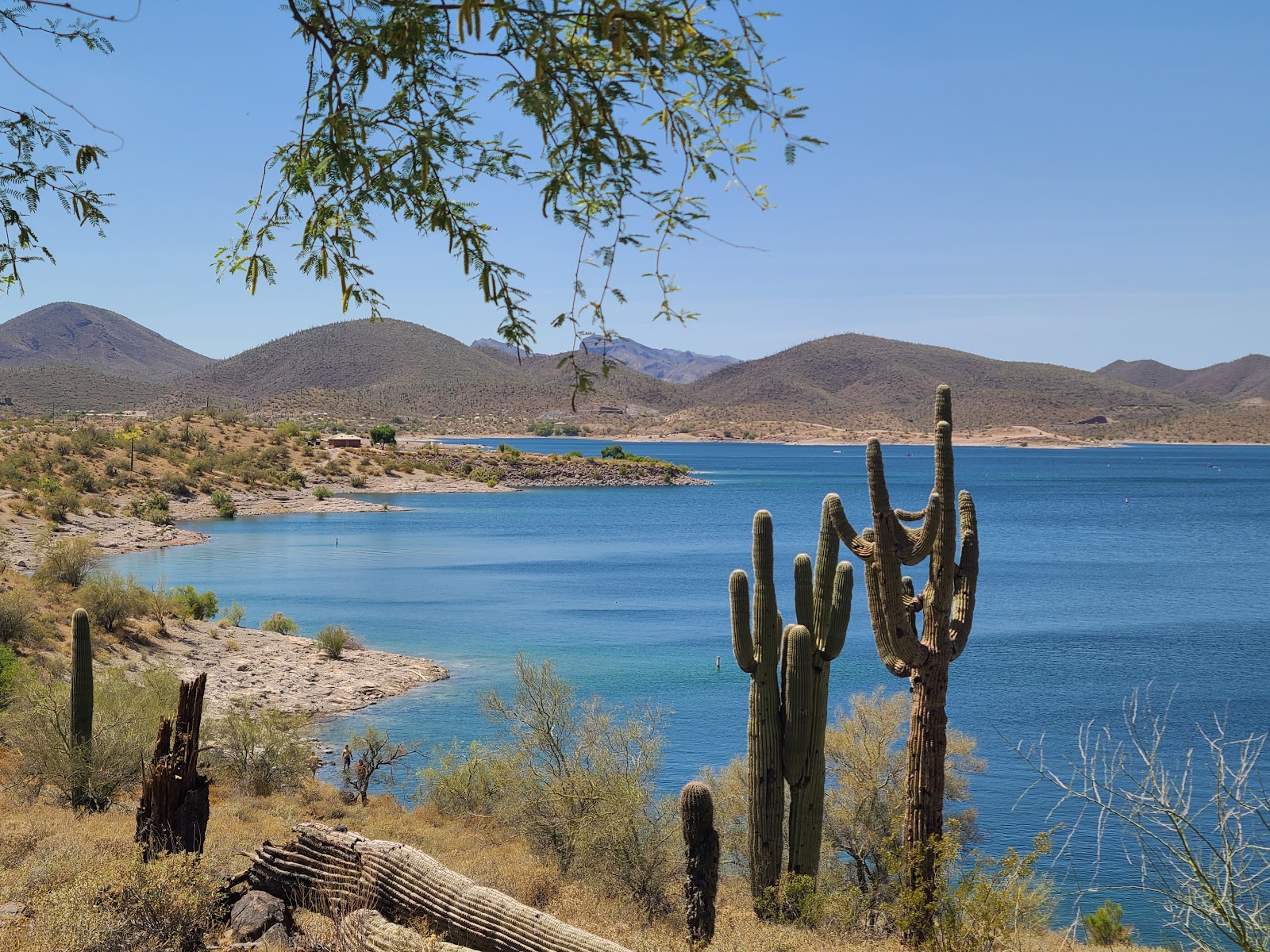
Outside is the opposite problem and it has two subjects: the desert and the reservoir.
The desert light is the harder of the two to manage because it is unmodified. Low humidity and minimal particulate scattering mean the beam arrives almost as it left the sun and the shadows receive almost no fill from the atmosphere — so a lit surface and a shaded one differ by roughly two stops more than the same sun angle gives in a humid climate.
And there is no natural shade to retreat into. Palo verde and mesquite, the region’s trees, have millimetre-scale leaves and open branch structures that produce a fine hard dapple rather than cover, which means a subject placed under one at midday has small bright patches across their face and nothing recoverable in post. The shade outdoors is the building’s shadow, a carried diffuser, or nothing.
The compensation is that the low-sun hours here are exceptional. In the last ninety minutes the beam travels a long air path, the short wavelengths scatter out, and in dry dust-carrying desert air that happens efficiently — so the light turns a deeper orange earlier in the descent than a humid climate produces, and the modelling on a face is superb.
The reservoir adds the element the desert otherwise lacks, which is a reflective surface, and it behaves in a specific way that is worth understanding.
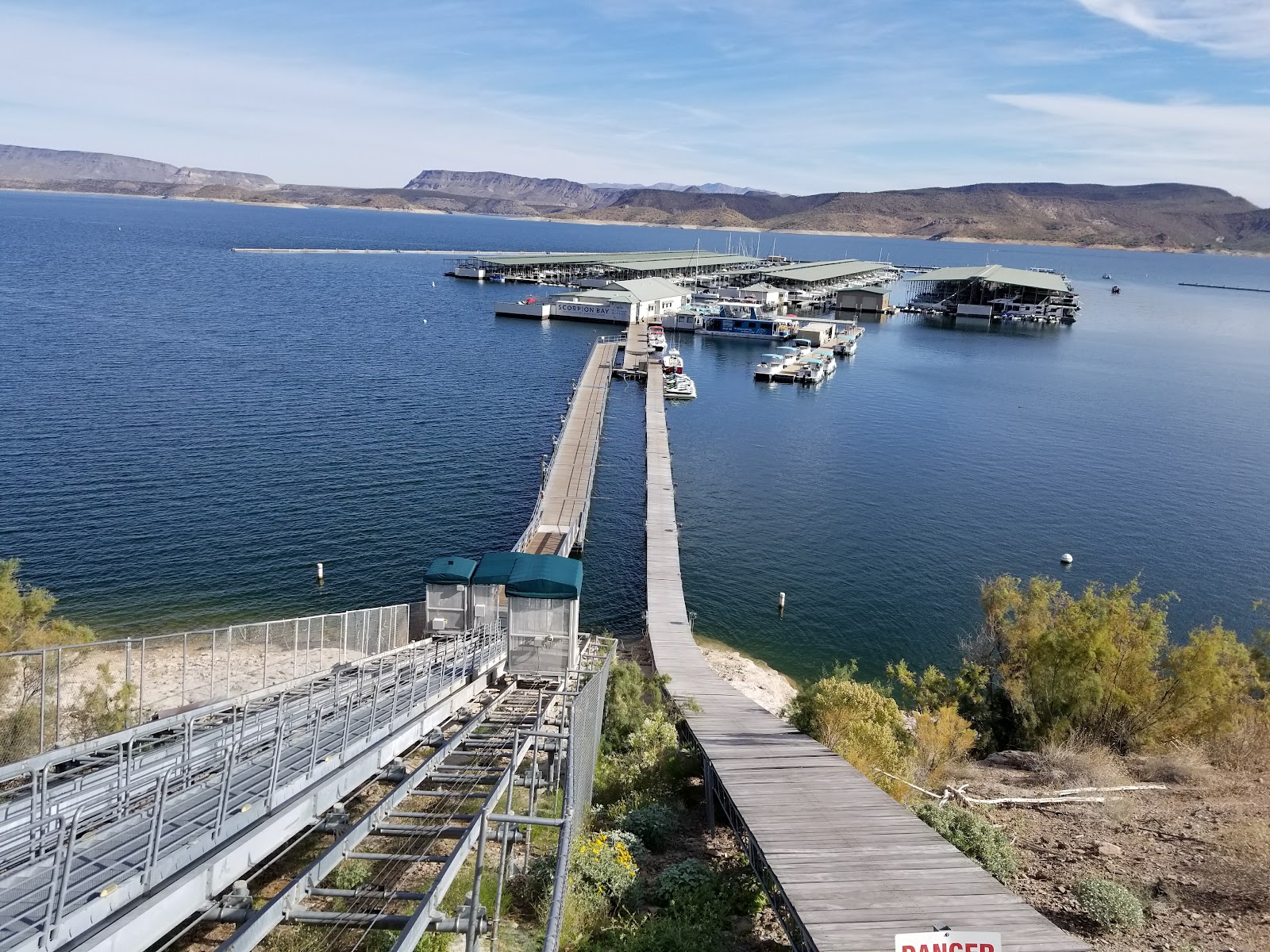
A desert reservoir has fluctuating levels, because it is a storage body drawn down through the dry season and refilled by winter runoff and monsoon inflow. That produces a visible bathtub ring — a band of pale, bare, mineral-stained shoreline above the current waterline, sometimes many feet high — and it is the single most consequential compositional fact about a reservoir frame.
The ring is not a flaw to hide and it is not attractive either. The honest options are three. Shoot from a position where the ring is out of frame, which usually means low and close to the water so the far shore’s ring is below the horizon line. Shoot when the level is high, which in most years means spring after winter runoff. Or include it deliberately as a horizontal band, which works in a wide graphic frame and not in a portrait.
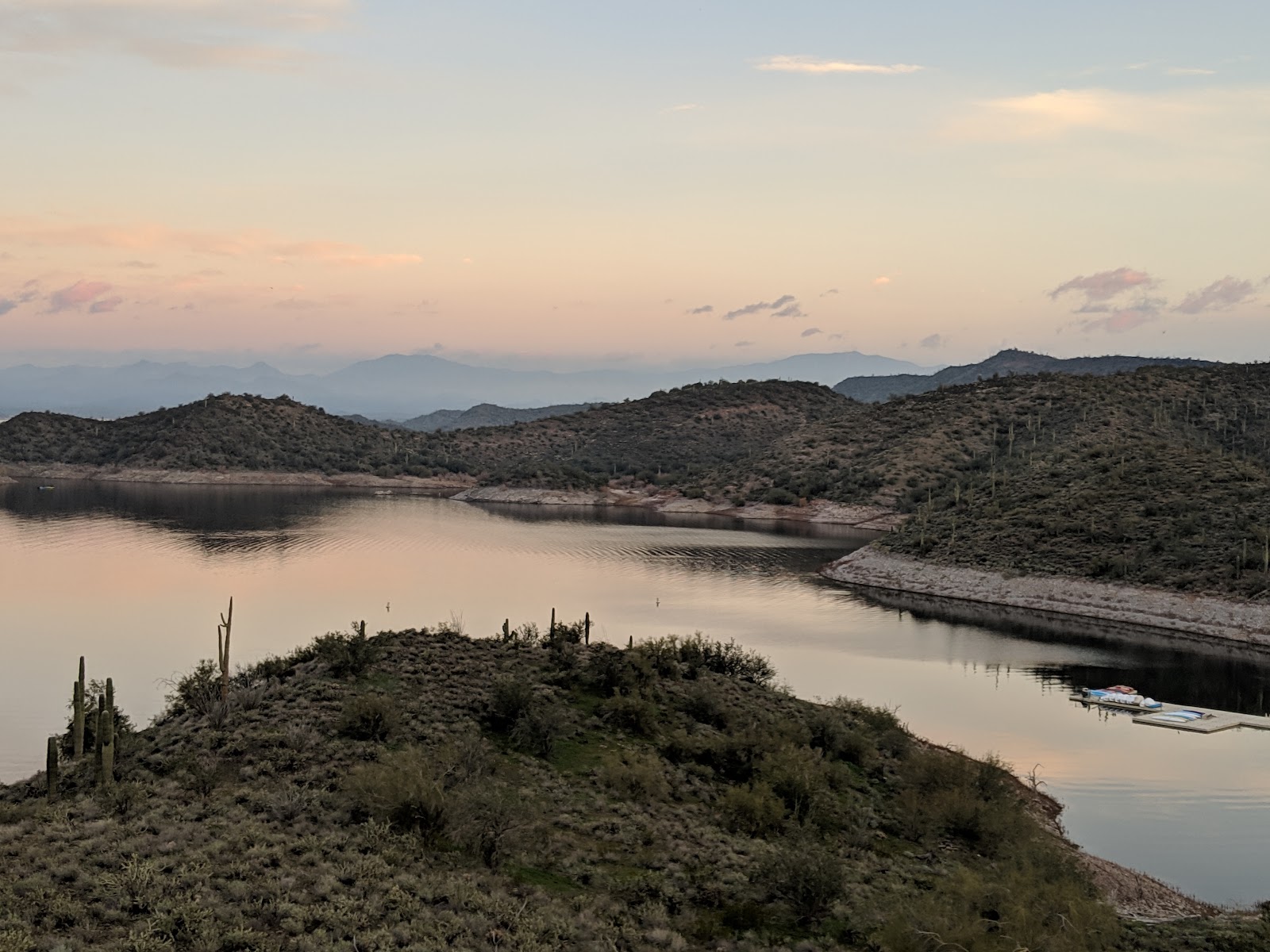
The water itself is the reward. A large body of still water in a desert reflects the sky, which in this climate means it reflects an exceptionally saturated dusk — and a reflection is darker than the sky it reflects by a stop or so, which brings the whole frame into a range a single exposure can hold.
Wind decides whether the reflection exists. Desert afternoons develop a thermal breeze that builds toward evening, which breaks a reflection into texture — so the mirror frames are a morning proposition and the textured ones are the evening’s. That is the reverse of the usual advice and it follows directly from the desert’s own diurnal circulation.
Two practical notes about the shoreline. The ground is exposed lakebed, which is soft, often muddy just above the waterline, and mineral-stained — a dress consideration rather than a technical one, and worth mentioning in advance. And the light off water at midday is brutal in a way it is not elsewhere, because the surface adds a second nearly-as-bright source from below to an already unmodified sun from above.
The mountains behind are the third element. The desert ranges around a reservoir take low evening light frontally and turn red-brown, and in exceptionally clear air they hold colour and detail across many miles — which means a long lens compressing a far range behind a near shoreline is a frame the site gives for free.
- The gap between inside and outside is eight or nine stops — decide which world each frame is in
- Indoors, hold the shutter fast and add light rather than time
- Gel to match the dominant ambient, not the other way round
- The reservoir’s bathtub ring decides the composition: exclude it, or use it as a band
- Mirror reflections are a morning thing here — afternoons develop a thermal breeze
Putting the day together
The natural shape of a day at a venue with these two halves is to use each for the hours it suits, and the desert’s calendar decides how sharply that applies.
From November to April the outside is available all day. The December noon sun at this latitude reaches only about thirty-three degrees, which means it never gets high enough to produce the overhead problem — the whole short day has directional light and there is no bad hour outdoors at all.
That makes a cool-season wedding here the most flexible version: the interior becomes a choice rather than a refuge, and the shoreline works from morning to dusk. The costs are a ten-and-a-quarter-hour day at the solstice, cool evenings that dry desert air makes drop fast, and a reservoir often at its lowest before the winter runoff arrives.
February to April is the best of it, for two reasons. The reservoir fills with winter runoff, which raises the waterline and reduces the ring. And the Sonoran Desert flowers: brittlebush yellow across the slopes from February, Mexican gold poppy and lupine in March in a year with adequate rain, ocotillo red on the tips of its whip-like stems, and palo verde in mass yellow bloom through April into May.
That combination — a full reservoir and a flowering desert — is the site at its best and it is a narrow window. The bloom depends on the previous winter’s rainfall, which makes it knowable a month or two ahead rather than a year, and worth asking about close to a spring date.
May to September is when the indoor half earns its place. Afternoon temperatures in the low desert regularly exceed a hundred and ten degrees, which for a party in formal clothing on open exposed ground above a reservoir is a welfare matter — and the honest plan is the interior for the middle of the day and the shoreline for the last ninety minutes.
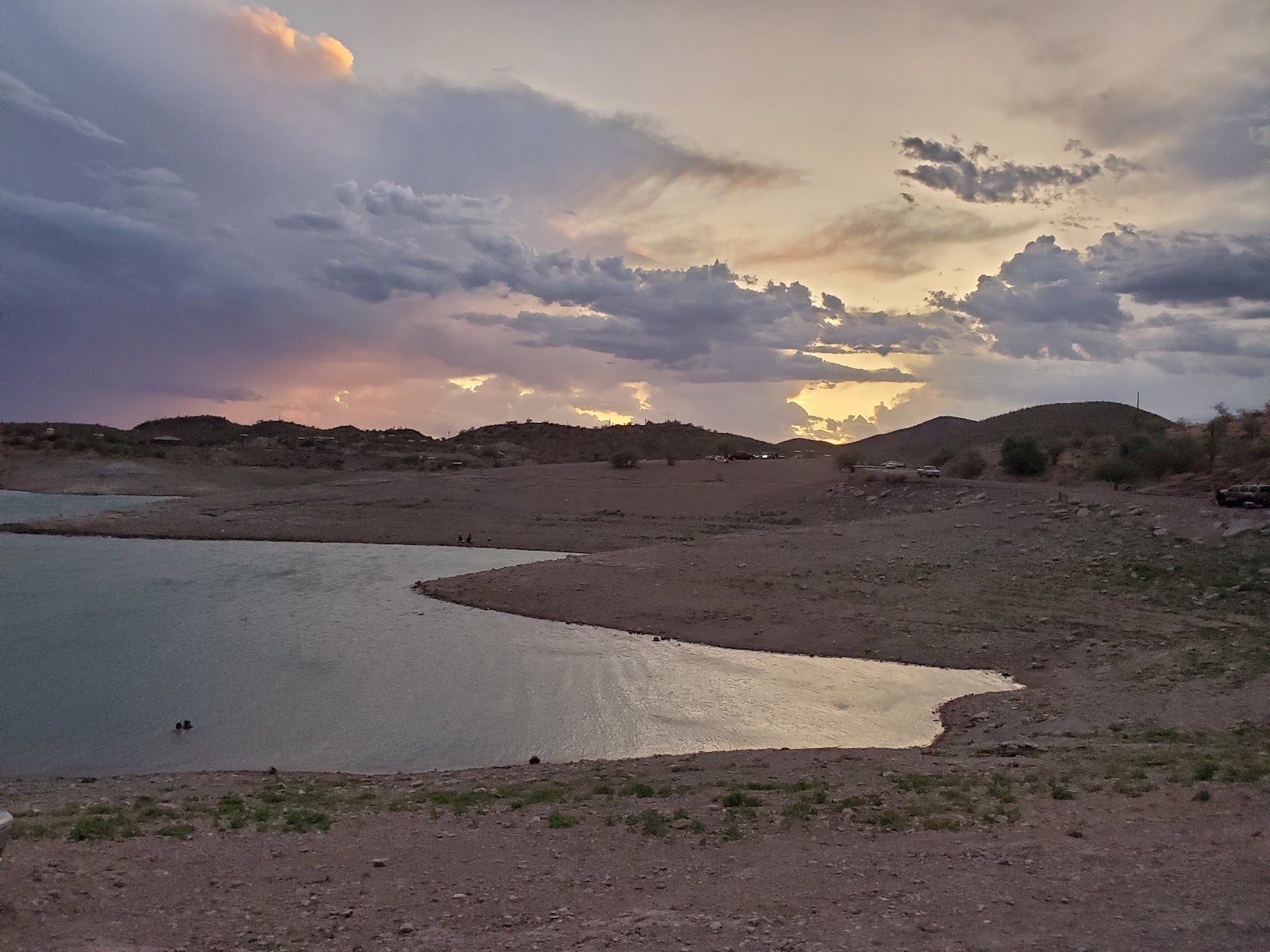
The monsoon from July is the photographic compensation and it is considerable on a site with a big sky and a big water surface. Clear mornings, towering convective cloud building over the surrounding ranges through the afternoon, and thunderstorms late — which means a reservoir reflecting a structured sky rather than an empty blue one.
The half hour after a cell passes is the best light of the year: washed air, a low sun under a broken ceiling, saturated colour and wet ground. And lightning at distance over open water is a real subject for a tripod and a long exposure, if it is genuinely at distance.
The safety line is worth stating plainly. An open shoreline in a thunderstorm is one of the more exposed places to be, and a monsoon cell can arrive faster than a wedding party can walk. That is not a photographic consideration; it is the reason the enclosed half of this venue matters in summer.
The haboob is the other monsoon phenomenon — a wall of dust advancing across the desert ahead of a collapsing storm, sometimes thousands of feet high and visible for many miles. Over open water with a long horizon it is among the most dramatic things in these guides, entirely unplannable, and another argument for the interior existing.
October is underrated and it suits this site particularly. The heat breaks, the monsoon has usually ended, the air is at its clearest of the year, and the reservoir is at a level that reflects the monsoon inflow rather than the summer drawdown. There is no autumn colour in the low desert, so nothing says October except the light — which on water is enough.
More frames from The Cave at Lake Pleasant
The Cave at Lake Pleasant wedding photography: common questions
What is the one decision?
Whether a given frame belongs inside or outside. The two conditions are roughly eight or nine stops apart at midday and nothing on the property bridges them.
What is the common mistake indoors?
Metering the room and slowing the shutter until the meter is happy. Hold a two-hundredth or faster, accept the high ISO, and add light rather than time.
How do I handle mixed colour indoors?
Gel the flash to match the dominant ambient rather than correcting the ambient to the flash. Then the coloured washes read as accents rather than errors.
What is the bathtub ring?
The pale mineral-stained band of exposed shoreline above a reservoir’s current waterline. Either keep it out of frame by shooting low and close, or use it deliberately as a horizontal band.
When is the water highest?
Usually spring, after winter runoff — which is also when the desert flowers, making February to April the site’s best window.
When do we get mirror reflections?
Mornings. Desert afternoons develop a thermal breeze that builds toward evening and breaks the surface into texture.
More Arizona venue guides
We are writing a photographer’s guide to every venue we would happily shoot in Arizona. Here are three more, plus the full index:
- Copper Sky, Maricopa: The One Decision That Governs Everything
- Desert Botanical Garden, Phoenix: What It Suits, and What It Does Not
- El Chorro, Paradise Valley: The Venue’s Own Logic
Planning a wedding at The Cave at Lake Pleasant?
A dark room and a bright desert. We will use both. Tell us your date.