 The Blue Ball Barn, Wilmington: A Walk Through a Converted Barn
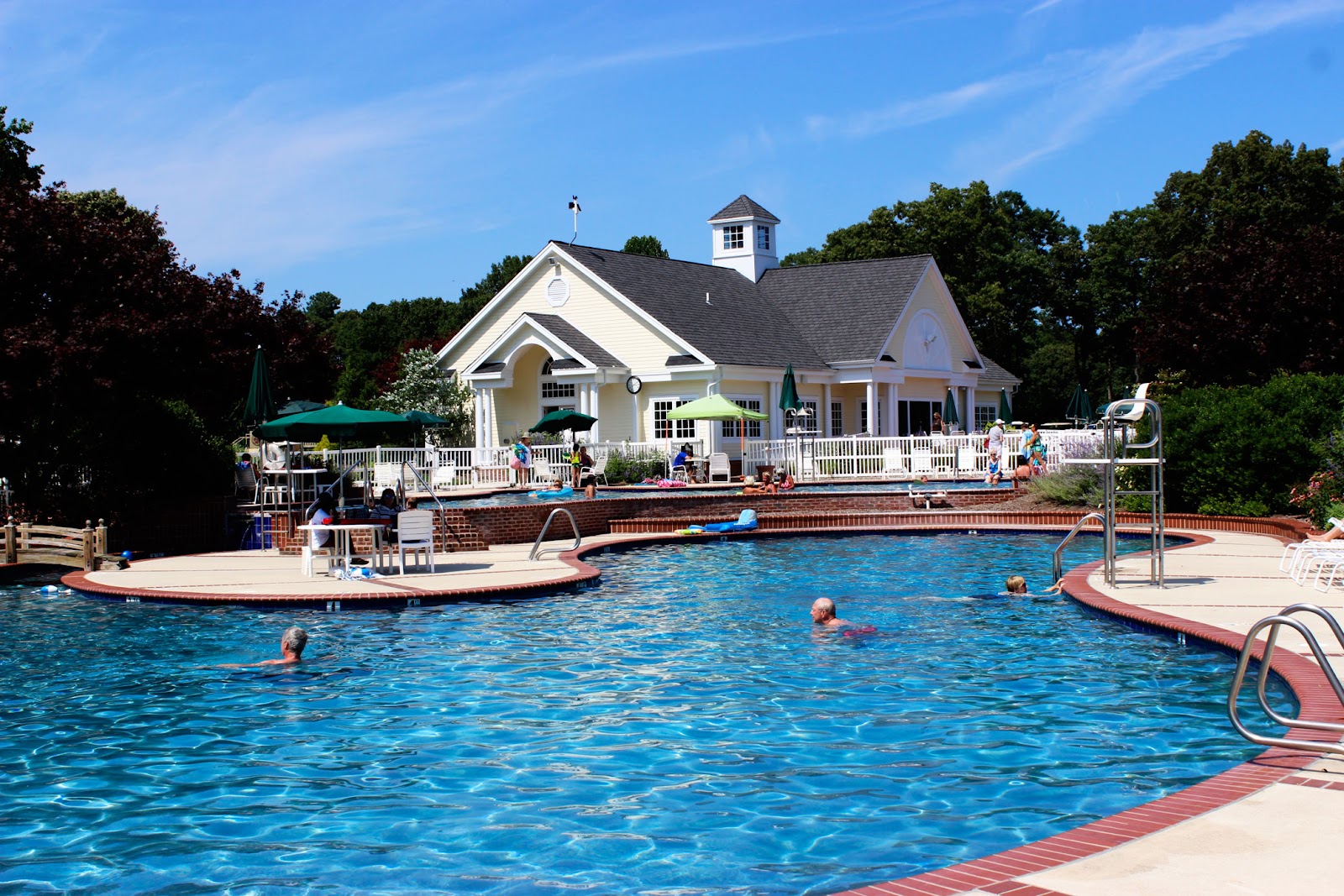
Baywood Greens, Long Neck: The Venue’s Own Logic
A course planted as a garden. That solves the problem every other course has.
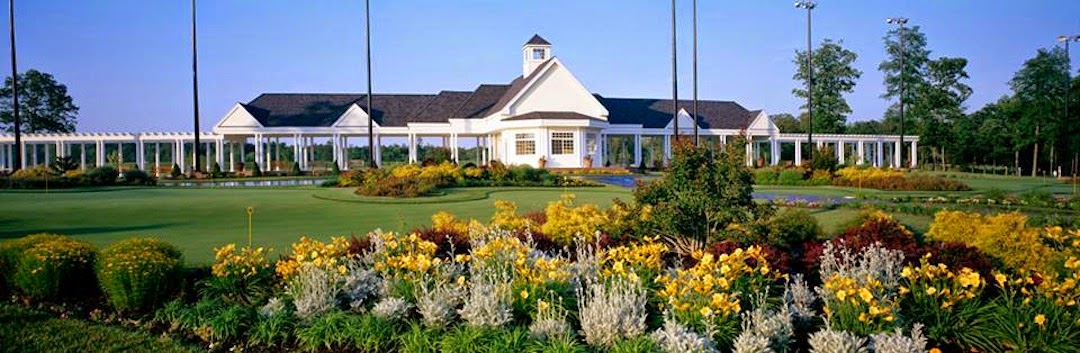
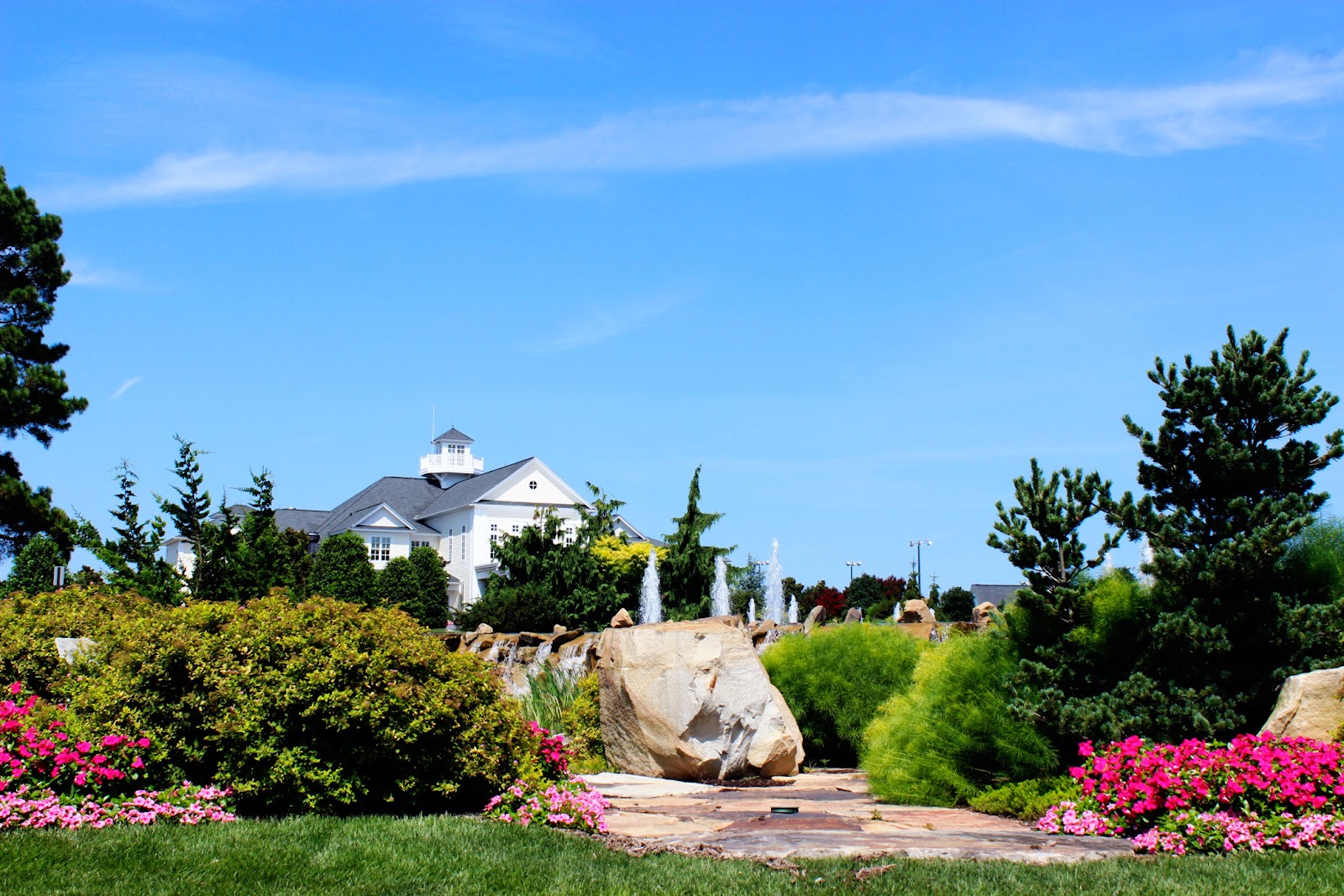
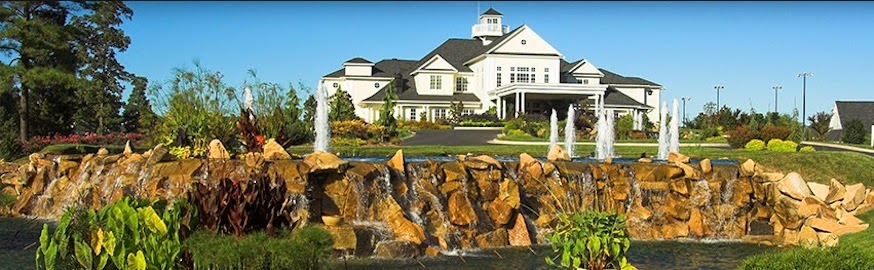
This venue has one organising idea and it directly addresses the biggest photographic weakness of its own type: it is a golf course that was planted as an ornamental garden.
The standard problem with a course is uniformity. Mown turf is one colour, the mowing pattern is consistent, the tree lines are similar all round, and the features repeat — which means a set of photographs made on one looks monotonous even when every frame is competent. And from May to October the whole thing is green, which is the least useful background colour there is, because skin sits close to it in luminance and complementary to it in hue.
A course that has been extensively planted with ornamental beds, flowering shrubs and specimen trees solves both at once. It supplies colour that is not green, structure that is not turf, and variety within short distances — which means the five-scales discipline that a plain course requires is replaced by genuinely different material every hundred metres.
That is the logic and it is worth taking seriously rather than treating as decoration, because it changes how the day should be planned. On a plain course the plan is built around light, because the material is uniform. Here it is built around the planting, because the material varies and the good positions are where the beds are.
The consequence is that this venue rewards a walk in advance more than almost any other in this state. Knowing where the strongest colour is, what it is, which way it faces and whether it will be in flower on the date is preparation that cannot be improvised.
The setting is coastal plain Delaware — flat, sandy-soiled, low-lying country near the inland bays, which means no relief, a low horizon and a great deal of sky. That flatness is the venue’s real limitation and it is dealt with below.
Long Neck sits at about thirty-eight and two-thirds degrees north, between the inland bays. The June noon sun reaches around seventy-four and a half degrees, the December noon sun about twenty-eight, days run from about nine hours twenty-five to fourteen hours fifty, and civil twilight is around twenty-nine minutes.
We have not photographed a wedding at this club. Which spaces are included, what course and garden access is available and when, and what the permitted hours are, are questions for their team.
Baywood Greens at a glance
| Where | A heavily planted golf course near the inland bays of coastal Delaware |
| The logic | A course planted as an ornamental garden — colour and structure, not just turf |
| What it solves | The uniformity and the green that limit every other course |
| The limitation | Flat coastal plain: no relief, so camera height is the only variable |
| Ask first | Included spaces, course and garden access, permitted hours |
Reading the planting
Ornamental planting has to be used deliberately, because a strong bed of colour is not a background — it is a subject, and the eye will find it before it finds a face.
There are three ways to use one and the difference between them is distance.
Close, with the planting as a field: a subject in front of a mass of flowering shrub at portrait distance, with the bed filling the frame behind them and thrown soft. At that range the individual flowers stop reading as flowers and become a colour field, which is the most flattering use of planting and the one that keeps the picture about the people.
The technical note is the bounce. A large mass of saturated colour in sunlight reflects its own hue onto skin at close range — a red bed puts red into the shadow side of a face, a yellow one puts yellow. That is an effect if intended and a problem if not, and the control is distance: at two metres it dominates, at six it is a cast, at fifteen it has gone.
Middle, with the planting as a structure: a subject beside or within a bed, with the planting’s shape and the path through it composing the frame. This is the version that shows what the venue is, and it needs the bed to be coherent — a single mass or a single sweep rather than a mixture of three different things at once.
Distant, with the planting as a pattern: a wide frame from far enough back that the beds read as blocks of colour in a green landscape. That is the establishing shot and one or two of them belong in a set.
The specimen trees do the same job at a different scale. A mature tree standing alone on turf is a strong compositional object with a trunk, a canopy and a shadow, and a subject placed in relation to one has structure that open turf does not provide. And a specimen tree in autumn colour is a single subject, which is a stronger photograph than a whole hillside of mixed colour.
The evergreen planting is the most under-used element and it is the most useful. Any ornamental conifer, and in particular American holly — Delaware’s state tree — is dense, dark and evergreen, which makes it one of the few genuinely near-black backgrounds available in this state.
A subject a metre inside an evergreen mass, facing out toward the sunlit turf, has soft directional light in front and three or four stops of near-blackness behind. That is a free studio portrait with a dark background at any hour of any day, including the middle of a July afternoon when open turf is unusable — and on a property full of colour, one frame against near-black is worth having precisely because it is the opposite of everything else.
The water is the fourth element. A course near the inland bays will have ponds and bay frontage, and still water is a horizontal reflector that fills faces from below — precisely where a high sun leaves them dark — and a mirror when calm. Calm means the early morning and the last hour, because the air moves as the land heats.
The reflection rule applies: a reflection is about a stop darker than what it reflects, so compose so the reflection is of a dark treeline or an evergreen mass rather than the open sky, and the two sit within a stop of each other and need nothing at all. A pond reflecting a mass of flowering colour is the frame this venue offers that no plain course can.
The flat coastal plain
The limitation is the ground and it should be stated plainly: this is flat coastal plain, and flatness removes the most useful tool a photographer has.
At a venue with relief, a camera can be put below the subjects to place them against clean sky or above them to place them against landscape — two completely different frames from one spot. Here neither is available by walking, which leaves camera height at close range as the only variable.
That makes kneeling and lying disproportionately valuable. With the camera low and turf or planting across the bottom of the frame, everything behind the subjects is above the horizon — sky — which removes the flags, the cart paths, the buildings and the other players in one move. It is the only reliable way to make a clean background on flat ground and it should be a habit rather than an occasional move.
It also means what the sky is doing matters more here than at a venue with relief, because there is so much of it in every wide frame. A clear blue coastal sky is even and featureless; a convective sky with structured cloud is the best background this landscape ever has, and on a mid-Atlantic summer afternoon it is frequently available.
The inland bays are the other coastal-plain feature and they behave nothing like the ocean. They are shallow, brackish lagoons fringed with salt marsh, which means they read brown-green rather than blue, they are far calmer than the Atlantic, and their tidal range is small — often under two feet, because they connect to the sea only through narrow inlets.
That small range is a genuine convenience: a bay-front composition planned in the morning still works in the evening, which is not true on the ocean beaches a few miles east.
The marsh is the bay’s background and it is the largest seasonal change on the property. Salt marsh cordgrass is green in summer, turns gold and then tawny through autumn, and stands pale straw through winter — which means the bay side’s colour changes completely across the year, and the tawny and straw versions are better backgrounds than the summer green.
The native trees of the coastal plain are worth distinguishing from the ornamental planting. Loblolly pine dominates here: tall with a high open crown, which means it dapples badly in direct sun and is background material rather than cover. Sweetgum, red maple and oak fill in, and they behave as hardwood does everywhere — soft even light with a green cast, corrected by standing two metres inside the canopy edge and facing out.
American holly is the exception and the one to find, for the reasons given above.
Indoors, a clubhouse here is likely to be pale and modern with generous glazing, which means light is never the problem and separation always is. Find something dark, use the glazing as a directional source at forty-five degrees, or add a source a stop over ambient so the subject has a shadow side at all.
Two practical notes. The mid-Atlantic severe-weather season brings thunderstorms from April into summer, and on open turf with no cover a named indoor alternative is a requirement rather than a courtesy. And greenhead flies are a genuine consideration near salt marsh in July and August — biting, persistent and specific to that environment.
- Close, middle or distant — decide how the planting is being used
- Control the colour bounce with distance: two metres dominates, fifteen has gone
- Evergreen and holly give the one near-black background on a colourful property
- On flat ground, camera height is the only variable — kneel as a habit
- Reflect a dark treeline, not the sky; the bays barely move with the tide
The coastal Delaware year
Four real seasons, and at a venue whose whole proposition is planting the season is not a backdrop but the subject.
That means one thing above all others: what is in flower on the date is the single most important fact about a booking here, and it is knowable in advance. Asking the venue what will be out, rather than hoping, is the preparation that matters most.
Spring is the strongest season and coastal Delaware’s is early. Leaf-out runs through April, and the flowering trees and shrubs come in sequence from March: the earliest bulbs and flowering cherry, then dogwood and redbud, then azalea and rhododendron into May.
The sequence matters photographically. The March and April flowers are lit directly, because the canopy has not closed, and they photograph as colour. The May flowers under any high canopy are lit through leaves and photograph as glow, which needs the green cast managed by position or by a warm-gelled source.
Spring’s costs are the mid-Atlantic severe-weather season building from April, and ground that is wet in early spring.
Summer is when the beds are at their fullest and the light is at its worst. Everything not in flower is green, the middle of the day at seventy-four and a half degrees of elevation on open turf is the hardest light of the year, and dew points in the low twenties Celsius put haze in the air.
The compensations are real: perennial and annual planting is at its peak in July, the days run to nearly fifteen hours at the solstice with a twenty-nine-minute twilight, and low sun across a planted course at the end of a summer day is transformative — it rakes the turf, backlights flowering masses so they glow, and turns flat green to gold.
Backlit planting is the frame worth waiting for. A mass of flowers with the low sun behind it becomes translucent, which no other lighting direction produces, and it is available for about forty minutes at the end of a clear summer day.
Autumn is the second strong season and on the Delaware coastal plain it is late: the second half of October into early November. The palette is sweetgum purple-red, red maple scarlet, oak russet and any ornamental maple or gum in the planting — all of it against dark loblolly pine and evergreen holly.
Warm colour against near-black conifer is a better combination than colour against colour, and on a planted course with specimen trees that colour arrives on individual objects rather than as a mass, which is stronger.
The marsh on the bay side turns gold then tawny through October, which is the largest single background change of the year here.
Winter is the weakest season at a planting-led venue and it should be said. The beds are cut back, the hardwoods are bare, the turf is dormant, and the ornamental structure that carries the rest of the year is largely gone.
What remains is better than nothing: evergreen and holly as near-black masses, tawny marsh, brown turf and a December noon sun at around twenty-eight degrees that rakes all day, so there is no bad hour. Snow is variable and rarely deep, and when it lies it is the best natural fill available. But a winter date here is an argument for weighting the day toward the clubhouse and the evergreen frames rather than the gardens.
More frames from Baywood Greens

Baywood Greens wedding photography: common questions
What is this venue's logic?
It is a golf course planted as an ornamental garden, which supplies the colour, structure and variety that every plain course lacks.
How should I use a flowering bed?
Close as a soft colour field, middle as a structure, or distant as a pattern — decided rather than drifted into, because a bed of colour is a subject, not a background.
What about the colour bouncing onto skin?
Control it with distance. At two metres a saturated bed dominates the shadow side of a face; at six it is a cast; at fifteen it has gone.
What gives a dark background here?
Evergreen planting and American holly. On a property full of colour, one frame against near-black is worth having precisely because it is the opposite.
How do I deal with the flat ground?
Camera height at close range is the only variable. Kneel or lie with turf across the base so everything behind the subjects is sky.
What is the single most useful piece of preparation?
Asking the venue what will be in flower on the date. At a planting-led venue that is the most important fact about the booking.
More Delaware venue guides
We are writing a photographer’s guide to every venue we would happily shoot in Delaware. Here are three more, plus the full index:
- Bethany Beach Ocean Suites: What It Suits and What It Does Not
- Big Chill Beach Club, Bethany Beach: The Problem and Four Ways Out of It
- Buena Vista, New Castle: How the Light Moves on a Greek Revival House
Planning a wedding at Baywood Greens?
A course that solved its own problem. Tell us your date and we will ask what is out.