 The Blue Ball Barn, Wilmington: A Walk Through a Converted Barn
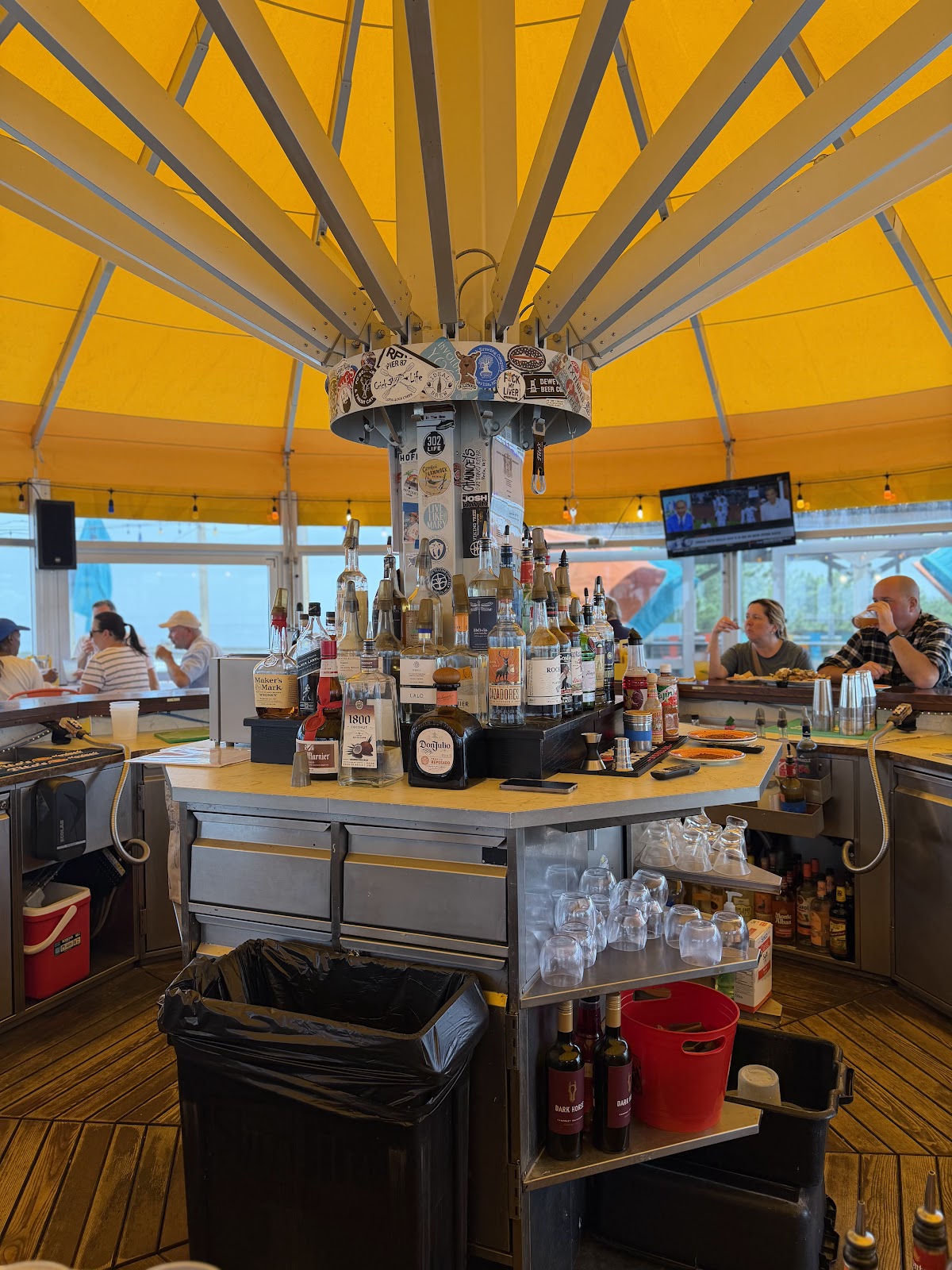
Big Chill Beach Club, Bethany Beach: The Problem and Four Ways Out of It
An east-facing ocean and an inlet behind. That combination is the answer.
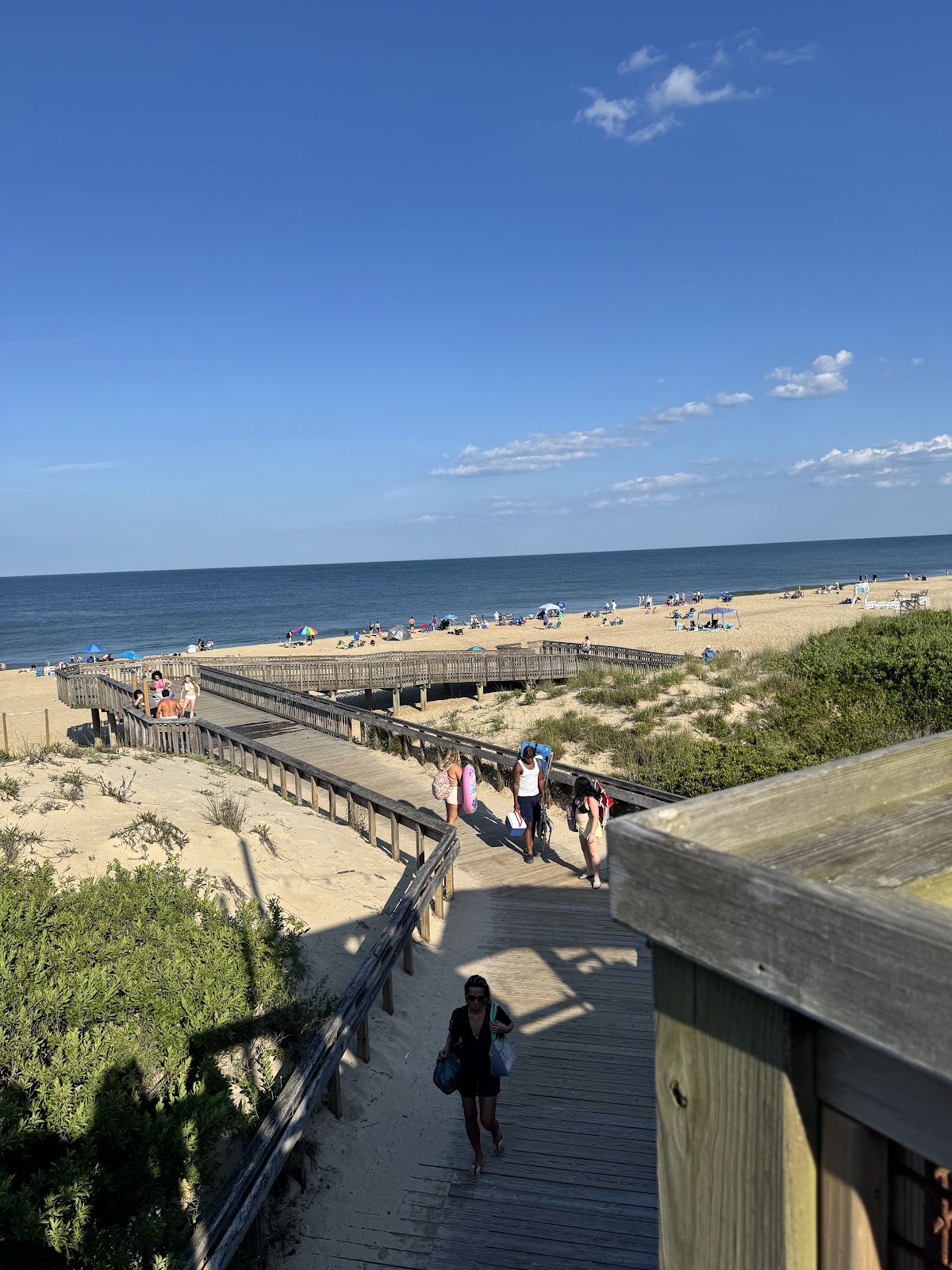
A beachfront venue on the Delaware shore presents a problem in two parts and both are worth stating before the day rather than discovering on it.
The first is the orientation. This coast faces east, which means the sun rises out of the Atlantic and sets over the land behind. Every expectation imported from a west-facing coast — the sun sinking into the sea behind a silhouetted couple — is unavailable here at any price in the evening.
What is available at sunset instead is an east-facing beach lit entirely by the afterglow in the sky: soft, even, slightly cool, completely shadowless, with a pink band above the horizon opposite the sunset — the Earth’s own shadow rising, which is more visible over a flat sea horizon than anywhere else. That is a real and underrated light and it is not the picture in the brochure.
The second part of the problem is that there is no shade. A dune-line venue has no trees, because salt and wind prevent them growing, which means between roughly ten and four in the summer months a face outdoors has shadowed eyes and a lit forehead with no position available that fixes it. At thirty-eight and a half degrees north the June noon sun reaches seventy-five degrees, which is high.
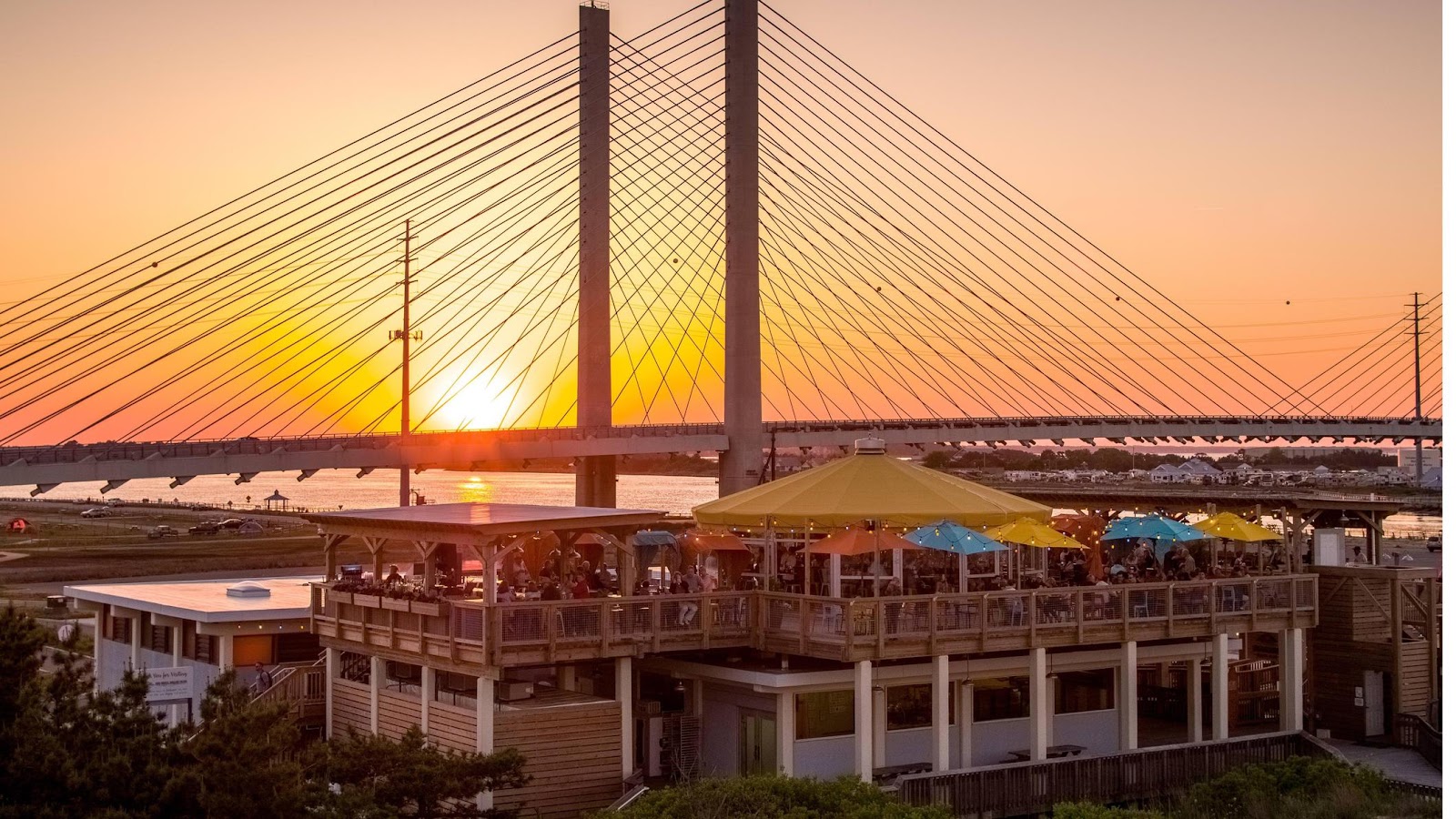
And there is a third factor that is an advantage rather than a problem, and it is the reason this particular site is more useful than a plain beachfront. There is water on more than one side: the Atlantic in front, and an inlet and the inland bays behind. An inlet-side shore faces west.
That is the key. A venue with an east-facing ocean and a west-facing inlet within a short walk has both the sunrise over water and the sunset over water, which almost no single-aspect coastal venue in this guide can offer.
The problem has four solutions and each produces a different photograph. Bethany Beach sits at about thirty-eight and a half degrees north. Days run from about nine hours thirty to fourteen hours fifty, and civil twilight is around twenty-nine minutes.
We have not photographed a wedding here. Which spaces are included, what beach and inlet access allows, what covered alternatives exist and what the permitted hours are, are questions for their team.
Big Chill Beach Club at a glance
| Where | A beachfront venue between the Atlantic and an inlet at Bethany Beach, Delaware |
| The problem | An east-facing ocean and no natural shade at all |
| The advantage | Water on two sides — the inlet behind faces west |
| Four ways out | Turn around; the structure; the inlet; the ends of the day |
| Ask first | Included spaces, beach and inlet access, covered alternatives, hours |
The first two ways out
The first way out is to turn around, and on an east-facing coast it is the most important technique there is.
With the subjects facing inland and the low sun behind the camera, they are lit frontally and warmly, and the sky behind them is the eastern sky — which at that hour is the anti-solar side, always deeper in colour and lower in brightness than the part near the sun.
That combination is the best evening light on this coast and it is the opposite of what people attempt. It gives warm directional light on faces, a saturated background, and a brightness range small enough that nothing needs adding. It is also the frame that cannot fail, and it should be taken first when the window is short.
The complement is the low camera. With the camera below the subjects and sand across the bottom of the frame, everything behind them is above the horizon — sky — which removes the venue’s buildings, the boardwalk, the beach furniture and every other person in one move. On a public beach in season that is not a refinement but the only way to make a clean frame.
The sand helps throughout, and Delaware’s is pale quartz with a high albedo. It returns a great deal of light upward, which fills under brows and chins — precisely where a high sun leaves people dark — and makes a beach portrait survive hours that would be unusable inland. It also fools a meter by a stop or more in any frame containing much of it, which needs deliberate positive compensation checked on skin, re-checked whenever the framing changes.
The second way out is the structure, and on a treeless dune line it is the only shade there is.
Any covered outdoor space — a roofed deck, a colonnade, an overhang, a doorway — works the same way: a directional soft source with a hard mask, where depth back from the open edge is the whole control. At the edge the light is flat and frontal; two or three metres back, against the wall, the ratio is dramatic and the sunlit sand beyond has fallen four or five stops.
That deep position is the best unassisted portrait on the property, it works at any hour including the middle of a July afternoon, and it works in rain and wind — which on an exposed Atlantic dune line is worth as much as the light.
A doorway is the purest version. A subject a metre inside an open door is lit by the entire open sky and backed by the dark interior: a giant softbox and a four or five stop black backdrop, positioned by the architecture.
Modern glazing is the indoor equivalent and at a beachfront venue it is unusually good, because the light coming through it has bounced off pale sand and bright sea rather than off grass — brighter, cooler and more neutral than any inland window. A subject at forty-five degrees to it gets a room-sized softbox with a lit side and a shadow side.
The caution is colour: sand-and-sea light is cool, so the white balance goes on a face rather than on a preset.
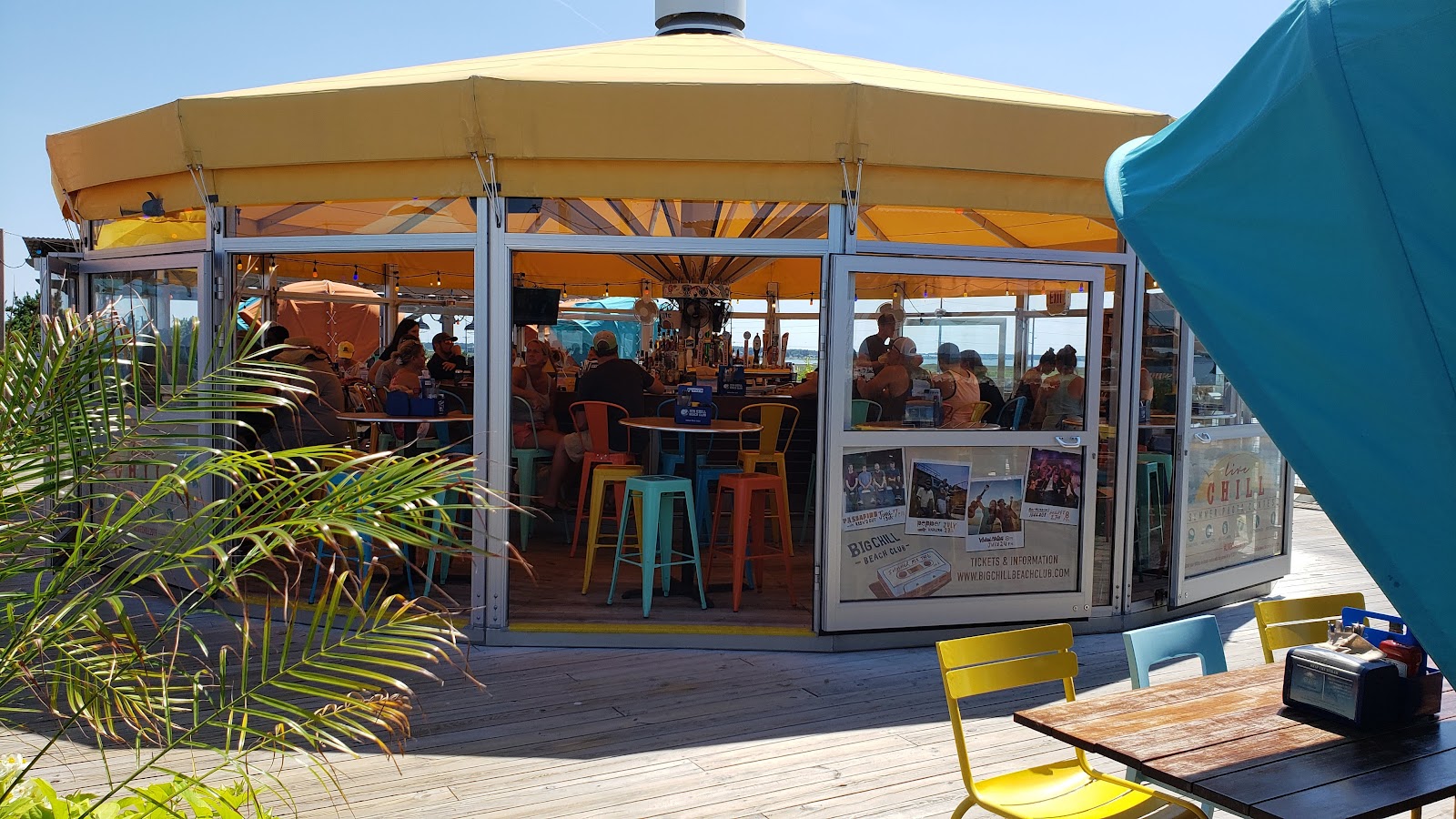
The second two, and the coast
The third way out is the inlet, and it is the site’s specific advantage.
An inlet and the inland bays behind a barrier beach face broadly west from their eastern shore, which means the sun sets over that water. That gives the classic backlit sunset frame that the Atlantic side cannot provide, a short walk from it — and it means a day here can have sunrise over the ocean and sunset over the bay.
The backlight problem applies on the inlet side and the three standard answers work. Add a close warm-gelled source at about a stop over the ambient on the faces and expose for the sky and water, which keeps the colour and gets the frame most people want. Expose for the sky alone and silhouette, which works well because an inlet gives a clean horizontal base of far shore. Or turn around and use the low sun frontally with the bay behind.
The inland bays are a different kind of water from the ocean and the difference shows. They are shallow, brackish lagoons fringed with salt marsh, which means they read brown-green rather than blue, they are far calmer than the Atlantic, and they are backed by marsh rather than by dune.
The tidal range is the distinction worth knowing. The Atlantic beach here has a range of around four feet, while the inland bays — connected to the sea only through a narrow inlet — have much less, often under two feet. That means the ocean beach changes width noticeably across a day and the bay shore barely changes at all, which makes the bay side the more reliable of the two for a composition planned in advance.
The marsh is the bay side’s background and it is a strong seasonal one. Salt marsh cordgrass is green in summer, turns gold and then tawny through autumn, and stands as pale straw through winter — which means the bay shore’s colour changes completely across the year, and the tawny autumn and straw winter versions are considerably more photogenic than the summer green, because a uniform mid-green field is the least useful background colour there is.
The fourth way out is the ends of the day, and on a coast with two aspects that means two windows rather than one.
Sunrise belongs to the Atlantic: a low warm sun coming straight out of the water into the subjects’ faces, on an empty beach, in the calmest air of the day. That is the best light this site has and it requires getting up for it — before half past five at midsummer.
Sunset belongs to the inlet. And the afterglow, which follows, belongs to the ocean beach: a shadowless even light with the pink band above the eastern horizon, which is forgiving and excellent for groups.
Civil twilight here is around twenty-nine minutes, which is a workable window that has to be planned rather than drifted into. Four setups fit into it only if none of them is being decided at the time.
The dune vegetation is the last element. Delaware’s dune line is planted with American beachgrass to hold it, which gives a knee-high, fine, constantly moving foreground — excellent as texture at the bottom of a frame and useless as cover. Behind the dunes, where salt exposure drops, loblolly pine and American holly grow.
Holly is worth locating and it is Delaware’s state tree: evergreen, dense and very dark, which makes its margin one of the few near-black backgrounds in this state. Loblolly pine has a high open crown and dapples in direct sun, which makes it background material rather than cover.
And two practical notes: greenhead flies are a genuine consideration on the marsh side in July and August — biting, persistent and specific to salt marsh — and salt aerosol on an exposed beach settles on front elements within minutes rather than hours.
- Turn around: frontal light on faces and the deep anti-solar sky behind
- A low camera puts the whole venue out of frame in one move
- Depth back from any covered edge is the only shade on a dune line
- The inlet faces west — sunrise on the ocean, sunset on the bay
- Marsh in autumn tawny or winter straw beats summer green as a background
The Delaware coast year
Four real seasons on a barrier coast, and the good ones are not summer.
Winter is austere, empty and photographically excellent. The December noon sun at around twenty-eight degrees means the whole short day rakes rather than floods, which is exactly what pale sand, dune grass and painted structure want — and there is no bad hour at all.
The beaches are entirely empty, which removes the one problem a Delaware shore has in season, and the marsh is pale straw, which is a far better background than summer green. The ocean runs grey-green under a low sun, the bays sometimes ice at their margins, and snow on a beach — uncommon here — is remarkable when it happens.
Winter also brings the earliest dusk, sunset just after half past four in December, which puts the whole low-light sequence in the late afternoon rather than after eight.
The costs are cold, a nine-and-a-half-hour day, and wind that is worse in winter than in any other season on an exposed dune line.
Spring is the fog season and it is the weak window for the seaward frames. Warm air moving over an ocean still cold from winter condenses, and this coast produces genuine advection fog with some regularity in April and May — which erases the horizon and turns every seaward frame into a subject against white. Beautiful once, monotonous five times.
Late spring brings one distinctive event to the Delaware Bay side a short distance north: horseshoe crabs spawn on the bay beaches around the new and full moons in May and June, with migrating shorebirds arriving to feed on the eggs. It is of real interest and a reason to check beach access in those weeks.
Summer is the season for the venue and the worst for the light. Days run to nearly fifteen hours at the solstice, and the middle of one at seventy-five degrees of elevation on pale sand is the hardest light in this state — hard overhead sun with strong uplight and no shade anywhere.
Dew points in the low twenties Celsius put haze in the air, which softens the ocean horizon; greenhead flies are active on the marsh; and the beaches are busy, which makes the low camera and the long lens essential rather than optional.
The compensations are the warmth, the long evening, the afterglow at its most reliable, and the fact that both water bodies are at their most active.
Early autumn is the strongest window on this coast and it is emphatic. September and October bring drier, clearer air than August, the end of the fog season, the crowds gone, an ocean still warm enough that the light over it is stable, and the calmest conditions of the year.
The marsh turns gold then tawny through October, which is the single largest background change of the year on the bay side and it is a considerable improvement. And the Delaware coastal plain turns late — the second half of October into early November — with sweetgum purple-red, red maple scarlet and oak russet against dark loblolly pine and evergreen holly behind the dunes.
Warm colour against near-black conifer is a better combination than colour against colour, and that is the state’s best autumn background.
November empties the coast completely, the sun is low all day, the air is at its clearest of the year, the marsh is tawny, and the dusk arrives at a civilised hour. It is quietly the best month here.
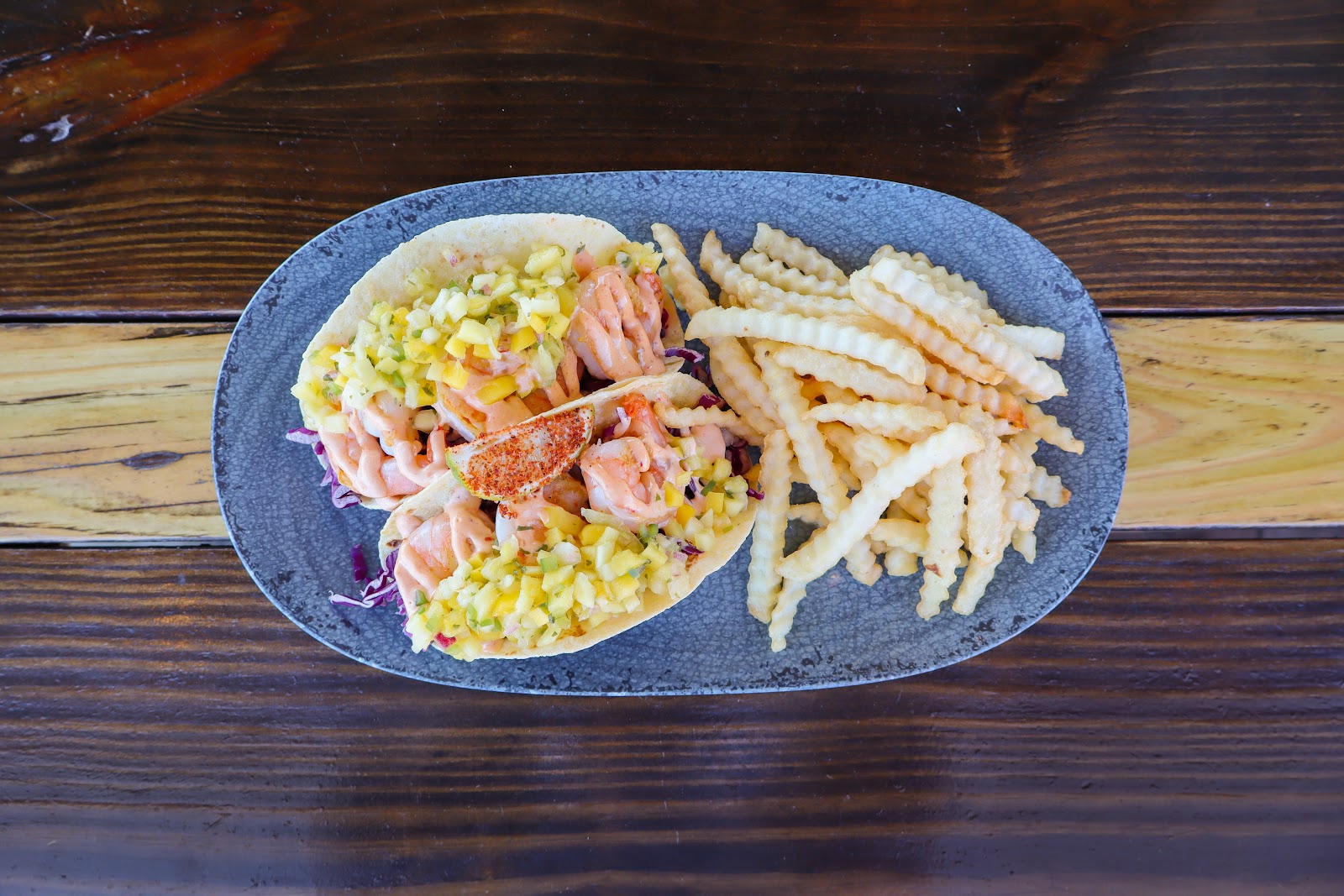
More frames from Big Chill Beach Club
Big Chill Beach Club wedding photography: common questions
Can we have a sunset over the ocean?
Not on the Atlantic side — this coast faces east. But the inlet and bays behind face west, so the sunset frame is available a short walk away.
What is the best evening light on the ocean side?
Turn around. Frontal warm light on the faces with the deep anti-solar eastern sky behind them — and the shadowless afterglow that follows.
Where is the shade?
Only in the structure. Salt and wind prevent trees growing on a dune line, so depth back from a covered edge is the whole of it.
Why is my exposure wrong?
Pale quartz sand returns a great deal of light. Compensate deliberately and re-check whenever the proportion of sand in the frame changes.
Does the tide matter?
On the ocean, moderately — around four feet. On the bays, barely: connected to the sea through a narrow inlet, they often run under two feet.
When is the coast at its best?
September and October: clear air, empty beaches, calm conditions, and a marsh turning from green through gold to tawny.
More Delaware venue guides
We are writing a photographer’s guide to every venue we would happily shoot in Delaware. Here are three more, plus the full index:
- Buena Vista, New Castle: How the Light Moves on a Greek Revival House
- The Cape May–Lewes Ferry, Lewes: The One Decision That Governs Everything
- Deerfield Golf Club, Newark: Field Notes, Problem and Solution
Planning a wedding at Big Chill Beach Club?
An east-facing ocean and a west-facing inlet. Tell us your date and we will use both.