 The Redd on Salmon Street: Building the Shot List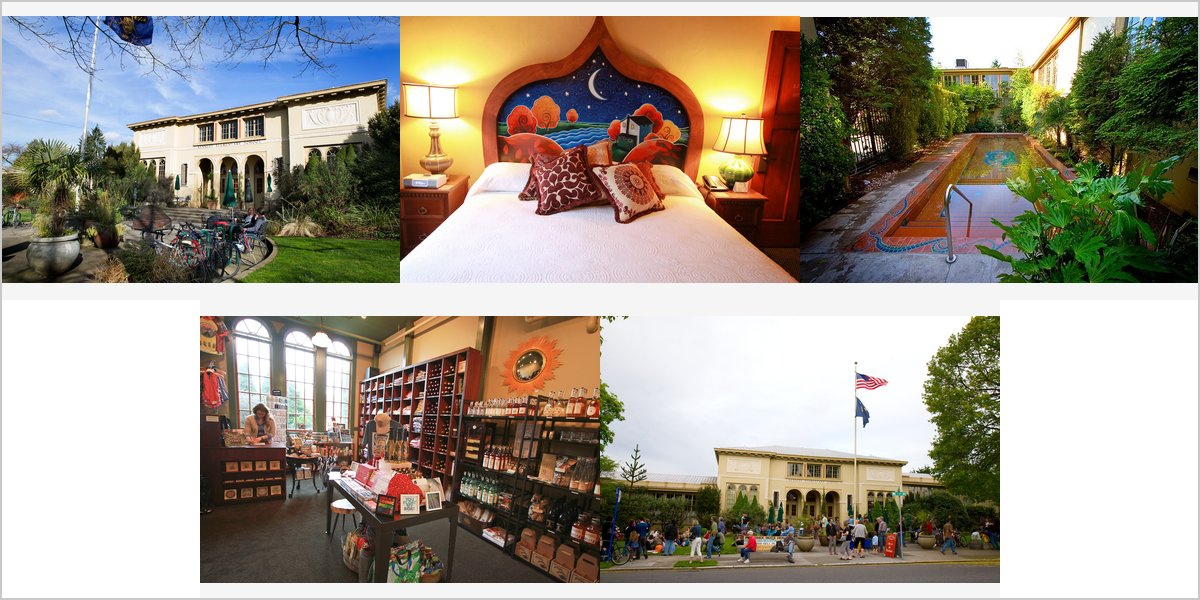
May 17, 2026
McMenamins Kennedy School: Field Notes for a Wedding Photographer
Four problems define this venue: mixed artificial light, saturated painted walls, corridors that are too narrow, and almost no daylight. All four are solvable, and none are optional.
Kennedy School opened in 1915 as a Portland public elementary school, closed in 1975, and reopened under McMenamins in 1997 as a hotel with bars, a restaurant, a cinema in the old auditorium and event space in the gymnasium. Guest rooms are former classrooms. Almost every surface carries painted artwork.
It is one of the most characterful buildings you can get married in anywhere in Oregon, and photographically it is a genuine technical challenge — not because it is unattractive, but because it breaks most of the defaults a photographer relies on. The light is artificial and mixed, the walls are strongly coloured, and the spaces were designed to move children through, not to stage a wedding party in.
These are field notes: four specific problems, and what we would actually do about each. We have not shot a wedding here, so nothing below asserts what the venue permits or how its rooms are configured on your date — ask them. The optical and lighting problems, though, are fully predictable from what the building is.
McMenamins Kennedy School at a glance
| Where | Northeast Portland, Oregon — a converted 1915 public elementary school |
| Since | Closed as a school in 1975; reopened as a McMenamins property in 1997 |
| Spaces | Former gymnasium, auditorium turned cinema, bars, restaurant, classroom guest rooms |
| Light | Overwhelmingly artificial, warm, mixed sources, very little usable daylight |
| Defining feature | Painted murals and saturated colour on nearly every wall |
Problem one: the light is artificial, warm, and never one colour
A building like this accumulates fixtures over decades — incandescent, halogen, assorted LED retrofits, neon and painted-glass shades, all in the same room. Each has a different colour temperature, and auto white balance averages them into something that is wrong everywhere. Skin goes orange in one corner and green in another, and no single correction in editing fixes a frame that contains both.
The working solution is to stop trying to neutralise it and start controlling one thing: the light on the face. Bring your own source, gel it warm to sit inside the building’s existing colour rather than fighting it, and let the room’s mixed light fall where it likes in the background. Mixed colour in the background reads as atmosphere. Mixed colour on skin reads as a mistake.
Set white balance manually per room and shoot raw. And resist the urge to correct the whole frame to neutral — a warm building photographed warm looks intentional; a warm building corrected to grey looks like a different, worse venue.
Problem two: painted walls throw colour onto everyone
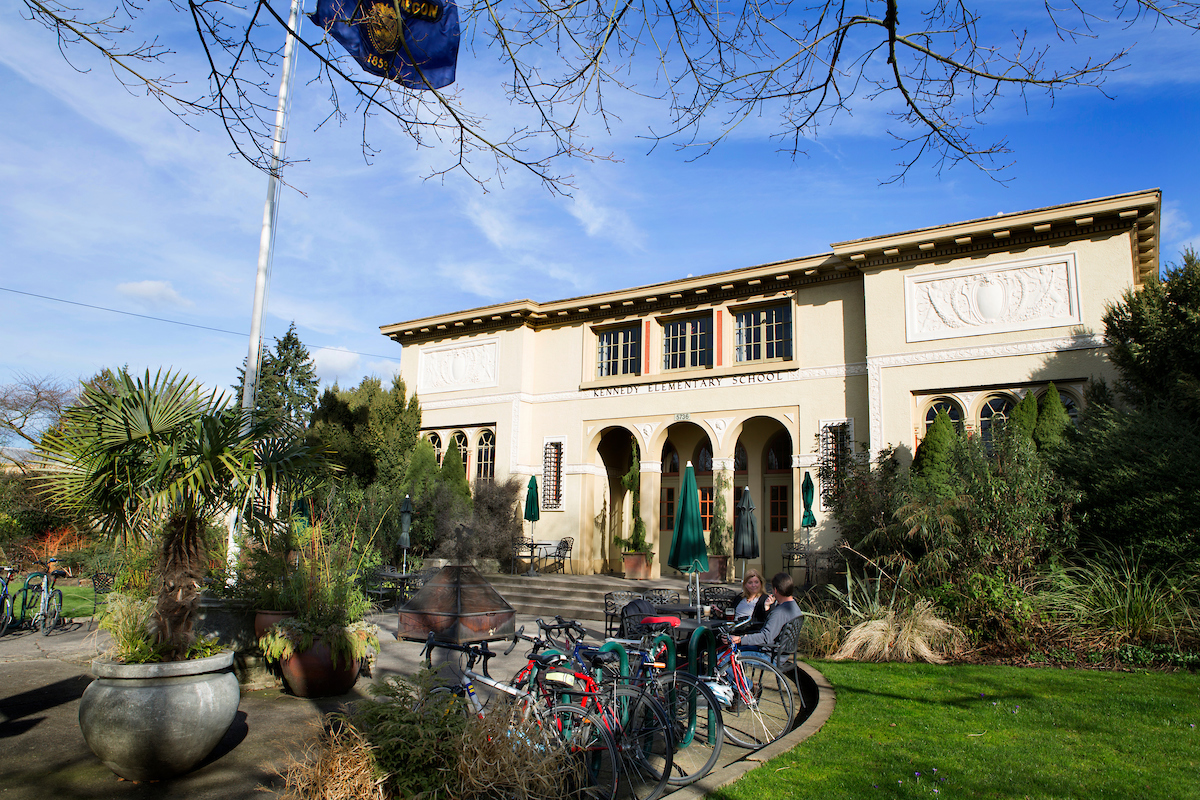
This is the issue specific to this venue and the one most photographers meet unprepared. Strongly coloured walls bounce that colour onto whatever stands near them. Stand a bride two feet from a deep red mural and her face picks up red; put her beside a green one and she looks unwell. It is the same physics as the green cast in a garden, but far more aggressive because the colours are saturated pigment rather than foliage.
Three fixes, in order of preference. Move people away from the wall — a metre of separation dramatically reduces the bounce and also lets the mural go slightly soft, which improves the composition anyway. Second, light the face with your own gelled source so your light dominates the bounce. Third, choose your walls: the murals are an asset as background, but you do not have to stand in front of every one.
Used well, those painted surfaces give you backgrounds nobody else in Portland has. The discipline is treating them as background, not as a light source.
Problem three: the circulation spaces are the wrong shape
School corridors are long, narrow and lined with hard parallel surfaces. They photograph beautifully as graphic compositions — receding lines, repetition, a figure at the far end — and they are close to useless for anything involving more than three people. You cannot back up far enough, and a wide lens at close range distorts faces at the frame edges.
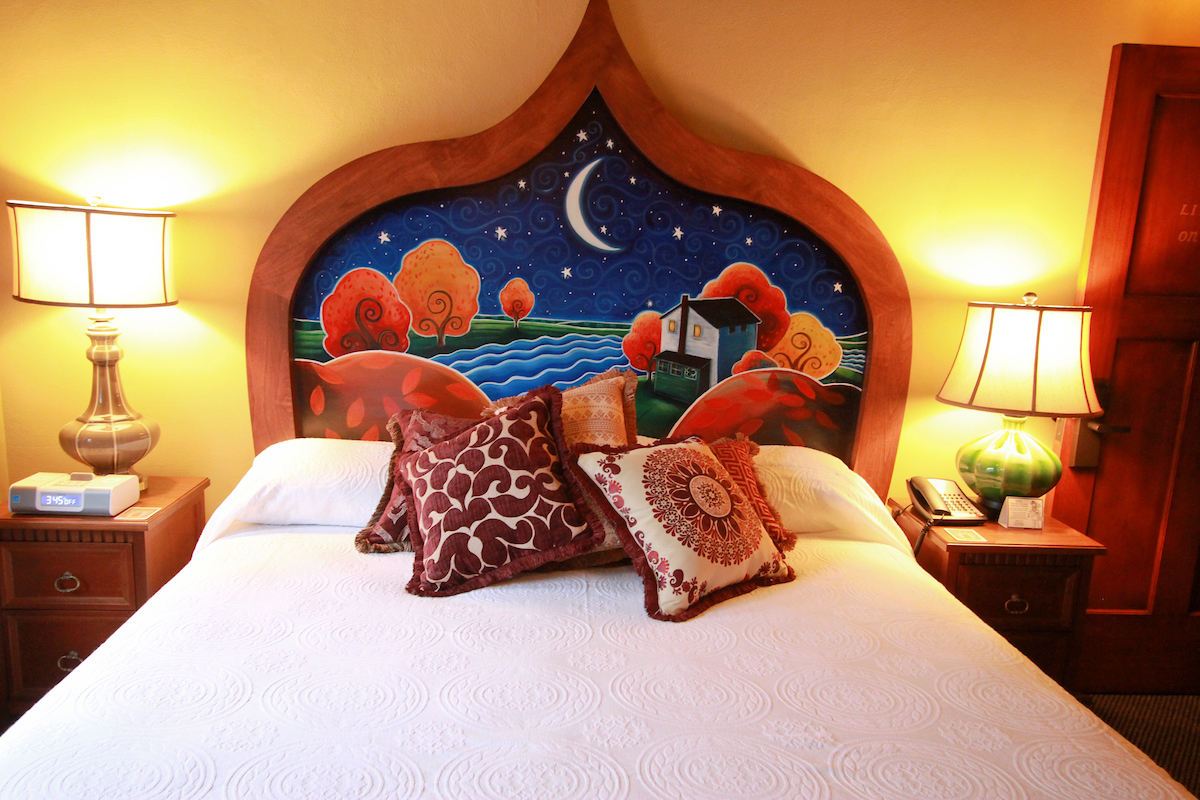
So corridors are for deliberate, composed frames: one couple, centred, using the symmetry. Groups belong in the larger volumes — the gymnasium, the auditorium, the outdoor courtyard areas — where there is room to stand back and use a normal focal length.
It is worth walking the building in advance and deciding which room hosts the family photographs, because improvising that on the day in a building of small linked spaces goes badly. Twenty minutes of scouting saves the group photographs entirely.
Problem four: there is almost no daylight to fall back on
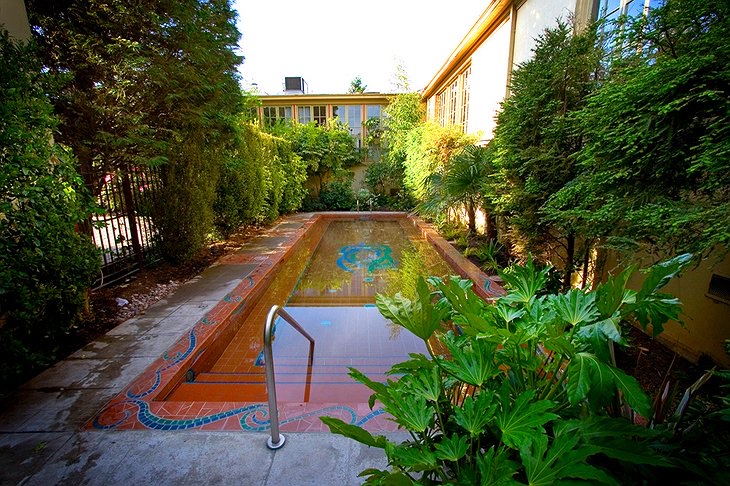
Most venues give a photographer an escape route: find a window, use the daylight. Here the interiors are deep, the good spaces are largely internal, and a Portland overcast does not supply much through old school windows in any case. Assume you will be lighting most of the day yourself.
That changes the kit and the timeline. Two bodies with fast primes, at least one off-camera flash on a stand with a warm gel, and a small on-camera bounce for moving coverage. It also means the getting-ready photographs are worth thinking about: a former classroom with one bank of windows is the best natural light in the building, and shooting preparation there rather than in a dim interior room is an easy win.
The upside of a venue this artificial is consistency. It looks the same at two in the afternoon as at nine at night, and it does not care what the weather does. In Portland, a venue that is completely weather-proof and completely time-of-day-proof has real value — you simply pay for it in lighting work.
What works in your favour
- Character no purpose-built venue can match — murals, a gymnasium, a cinema, classroom guest rooms
- Completely weather-independent, which in Portland is worth a great deal
- Looks identical regardless of time of day, so the timeline is unusually flexible
- Accommodation on site, which shortens the logistics and the getting-ready problem
- Backgrounds genuinely unique to this building
What to plan around
- Heavily mixed artificial colour temperatures — manual white balance per room is mandatory
- Saturated painted walls cast strong colour onto skin at close range
- Corridors are too narrow for groups; large-group locations must be chosen in advance
- Very little usable daylight, so you are lighting most of the day yourself
- A working hotel and public bar — expect other guests in and around the spaces
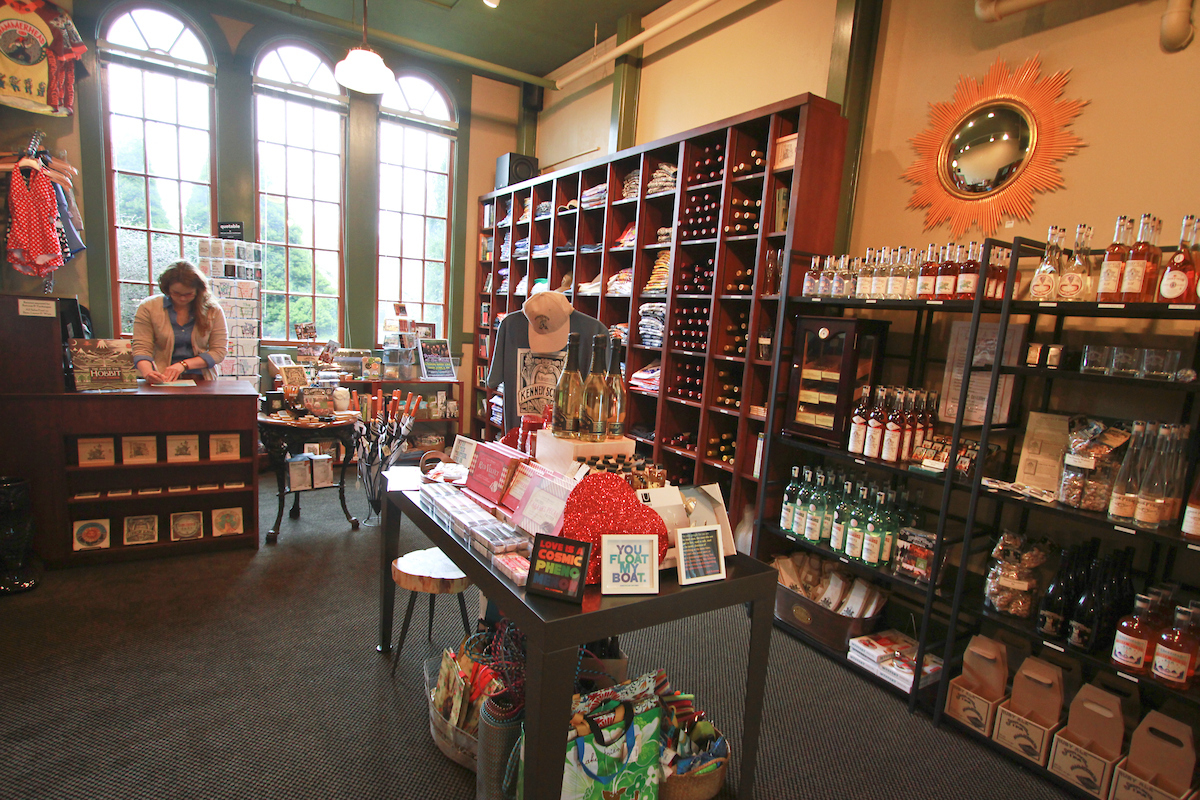
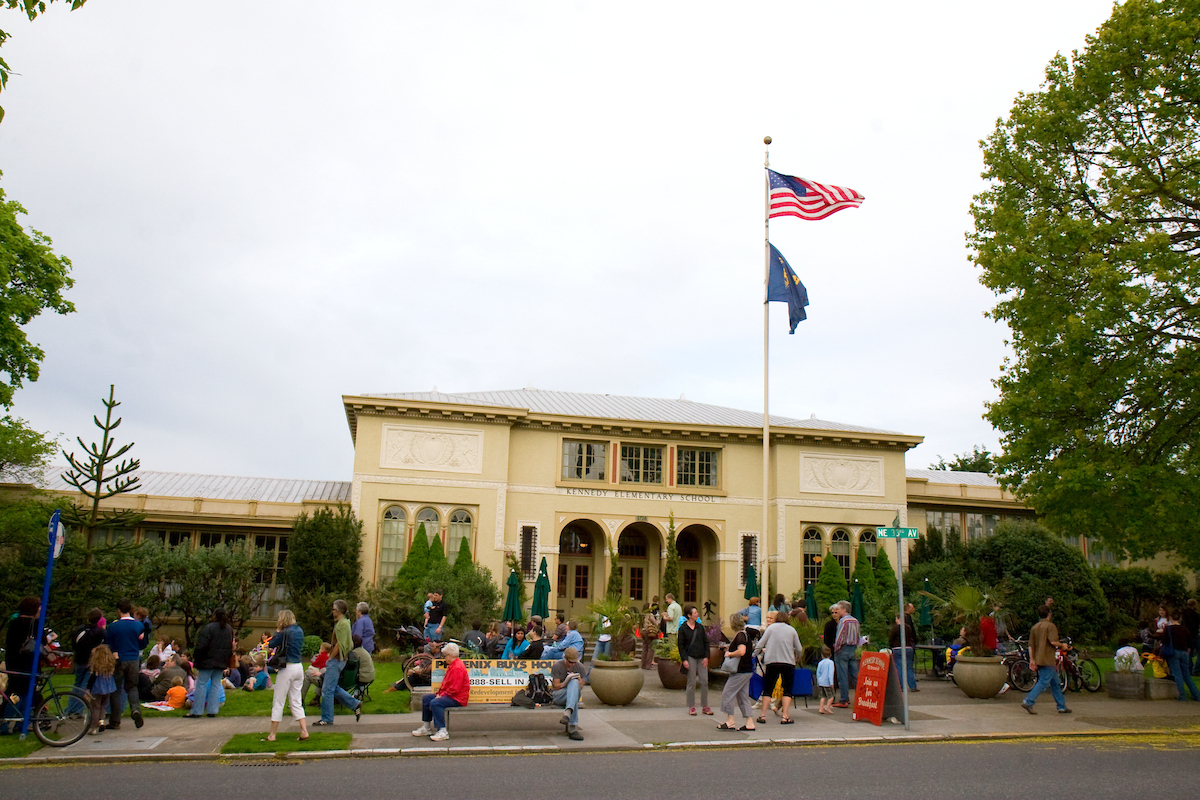
More frames from McMenamins Kennedy School
McMenamins Kennedy School wedding photography: common questions
Why is Kennedy School considered difficult to photograph?
Because it breaks the defaults. The light is almost entirely artificial and mixes several colour temperatures in the same room, the walls are covered in saturated painted artwork that bounces colour onto skin, and there is very little daylight to fall back on. All of it is manageable, but it needs a photographer who plans for it rather than adapting on the day.
Do the murals cause problems in photographs?
As backgrounds they are the best thing about the venue. The problem is proximity: standing close to a strongly coloured wall bounces that colour onto faces. Keep about a metre of separation, light the face with a gelled source so your light dominates, and choose which murals you use rather than defaulting to whichever is nearest.
Is there anywhere with good natural light?
The former classrooms with a bank of windows are the best natural light in the building, which makes them the sensible choice for getting-ready photographs. Beyond that, assume the day is lit artificially — the main event spaces are deep and largely internal.
Where should we do the large family photos?
In one of the bigger volumes — the gymnasium, the auditorium or an outdoor courtyard area. Not in the corridors: they are narrow, you cannot stand back far enough, and a wide lens at close range distorts faces at the edges. Pick the room in advance rather than improvising.
Is it a good venue for a rainy-season wedding?
Unusually good. It is entirely indoors and weather-independent, and it looks the same at two in the afternoon as at nine at night, so neither the forecast nor the sunset time constrains your timeline. That reliability is the main practical argument for it in a Portland winter.
More Portland, OR venue guides
We are writing a photographer’s guide to every venue we would happily shoot in Portland, OR. Here are three more, plus the full index:
- Multnomah Athletic Club: Is It Right for Your Photographs?
- The Nines: A Walk-Through for Wedding Photographs
- A Photographer’s Walk-Through of Pittock Mansion
All Portland, OR Wedding Venues →
Planning a wedding at McMenamins Kennedy School?
Kennedy School is one of our favourite kinds of assignment — a building with real character that demands actual lighting work. Tell us your date and we will map the rooms, the colour problems and where your group photographs should happen.