 Tulsa Country Club: Field Notes on a 1908 Club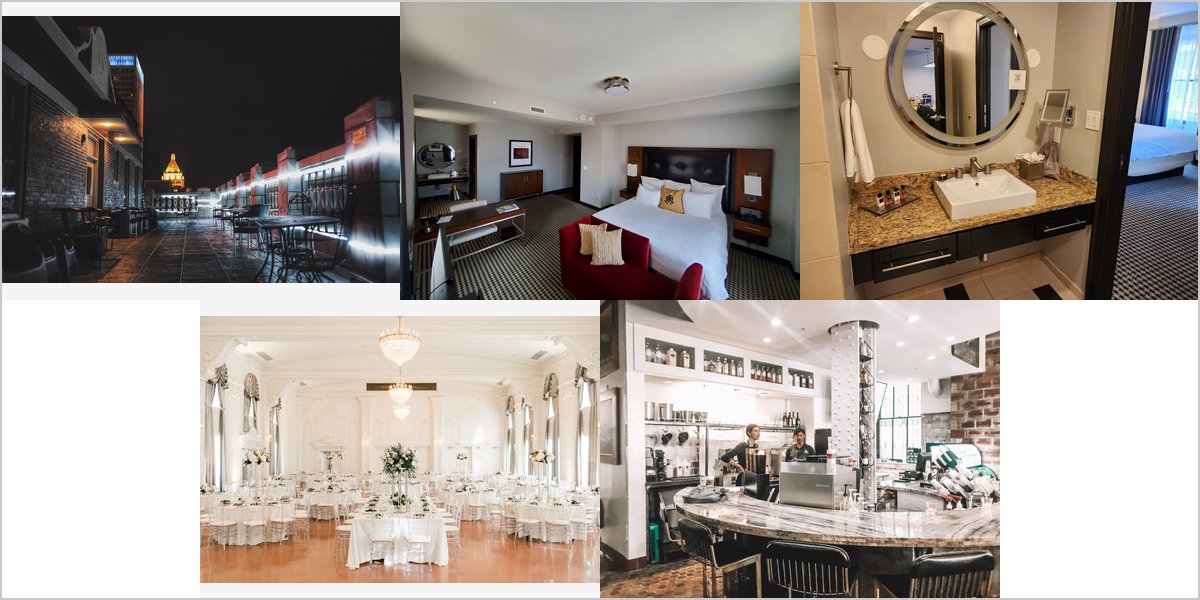
May 1, 2026
The Mayo Hotel: Lighting a 1925 Terracotta Tower
A 1925 grand hotel with a crystal ballroom and a rooftop. Chandeliers, ornate plaster and a terracotta facade — three problems, and side light solves two of them.
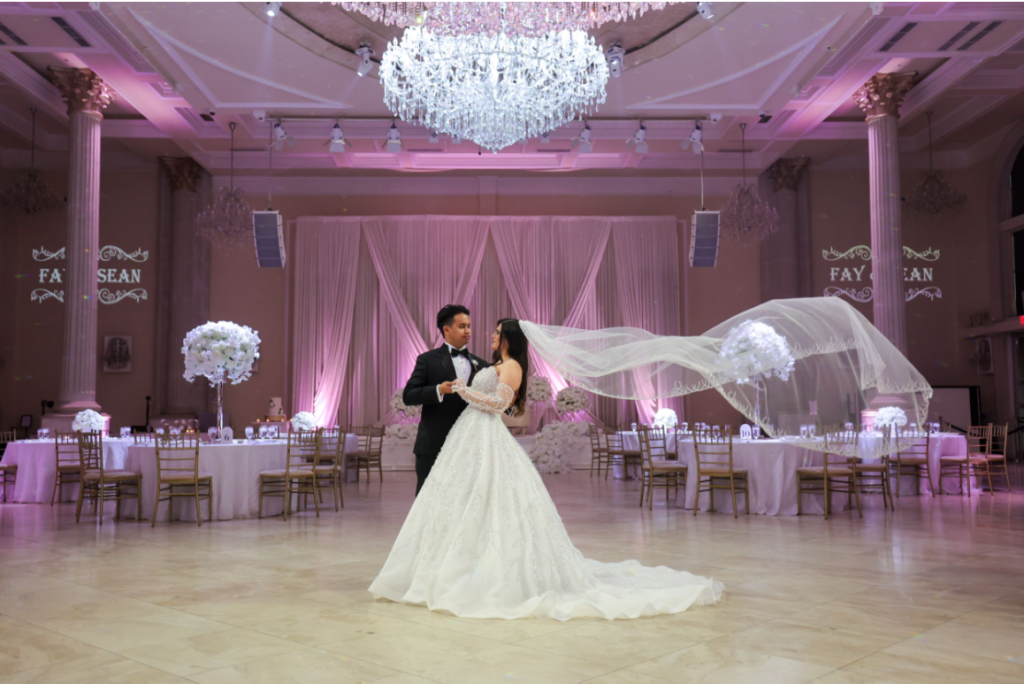
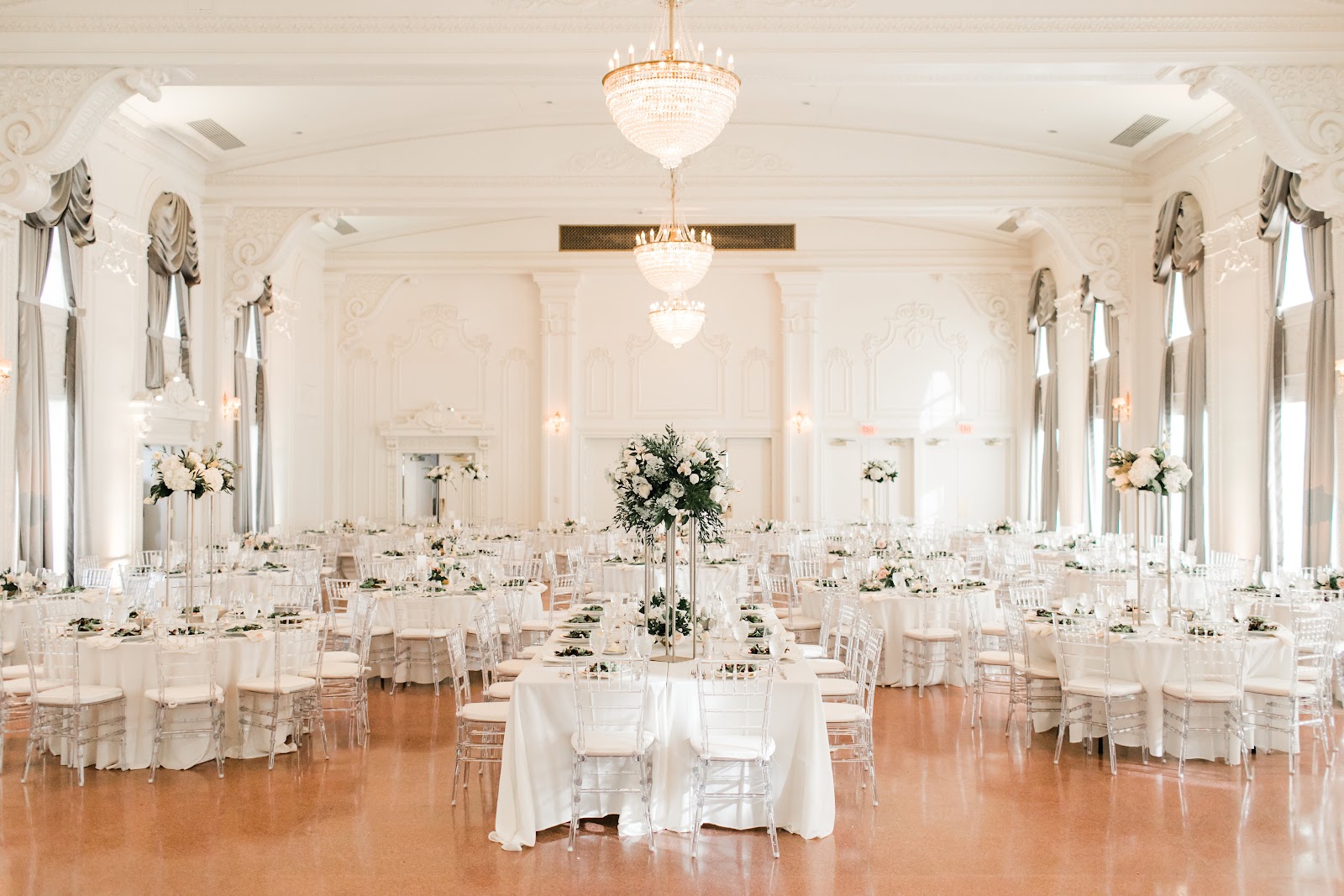
The Mayo Hotel opened in 1925 in downtown Tulsa, an eighteen-storey building from the city’s oil-boom era, and was restored and reopened in 2009. It retains the period apparatus of a grand hotel of that moment — an ornate lobby, a crystal ballroom with chandeliers, and a terracotta-detailed facade — and has a rooftop bar with views over downtown.
Photographically it is a well-defined type with well-understood problems. Ornate low-relief plasterwork that reads only under raking light. Chandeliers several stops brighter than the room around them. High decorated ceilings that defeat bounce flash. No daylight in the event spaces. And a terracotta exterior whose fine detail depends entirely on the sun’s angle.
This is the technical guide. We have not photographed a wedding at the Mayo; 1920s plasterwork, chandeliers and terracotta behave identically wherever they occur. Which spaces your booking includes and rooftop access are for their events team — and the rooftop is worth confirming, because it is the only daylight-adjacent space.
Mayo Hotel at a glance
| Where | South Cheyenne Avenue, downtown Tulsa, Oklahoma |
| Opened | 1925; eighteen storeys, restored and reopened in 2009 |
| Spaces | Ornate lobby, crystal ballroom with chandeliers, rooftop bar |
| Light | Warm artificial in the event spaces; rooftop and guest rooms hold the daylight |
| Technical headline | Relief plaster and terracotta both need raking light; chandeliers need a darker ambient |
Ornate plaster: the one decision that matters most
The lobby and ballroom carry low-relief plasterwork — cornices, mouldings, ceiling detail, applied ornament — and relief is visible only through the shadows it casts. Those shadows exist when light crosses the surface at a shallow angle and vanish when light comes from the camera position.
Light a 1925 ballroom frontally and its ceiling flattens into painted plaster. The single most impressive feature of the room disappears from the photograph and the space reads as a modern function suite with cornices. This is the commonest error in period hotels and it costs nothing at all to avoid.
So: one flash on a stand, well off the camera axis, feathered so the beam skims the surface. The relief stands up, the ornament gains depth, and the frame looks like the room feels. Same equipment, entirely different photograph — purely a decision about where the light stands.
Chandeliers and the exposure hierarchy
A crystal chandelier is several stops brighter than everything else in the room. Meter for the room and it becomes a structureless white blob; meter for the chandelier and the room goes black. Since the chandelier is usually the visual centre and the reason the room looks grand, losing its detail is the worse outcome.
Expose so the crystals retain shape — individual elements distinguishable rather than fused — and bring the rest of the room up with your own light. That means the ambient exposure sits deliberately darker than instinct suggests, with faces lit by flash rather than by the room.
If the hotel dims the chandeliers for dinner service, take the wide room frame then. The dynamic range collapses and a single exposure holds everything — crystals reading, room glowing, no blending required. It is the easiest good frame of the night and it depends entirely on being ready when the lights come down.
Terracotta outside, and the downtown grid
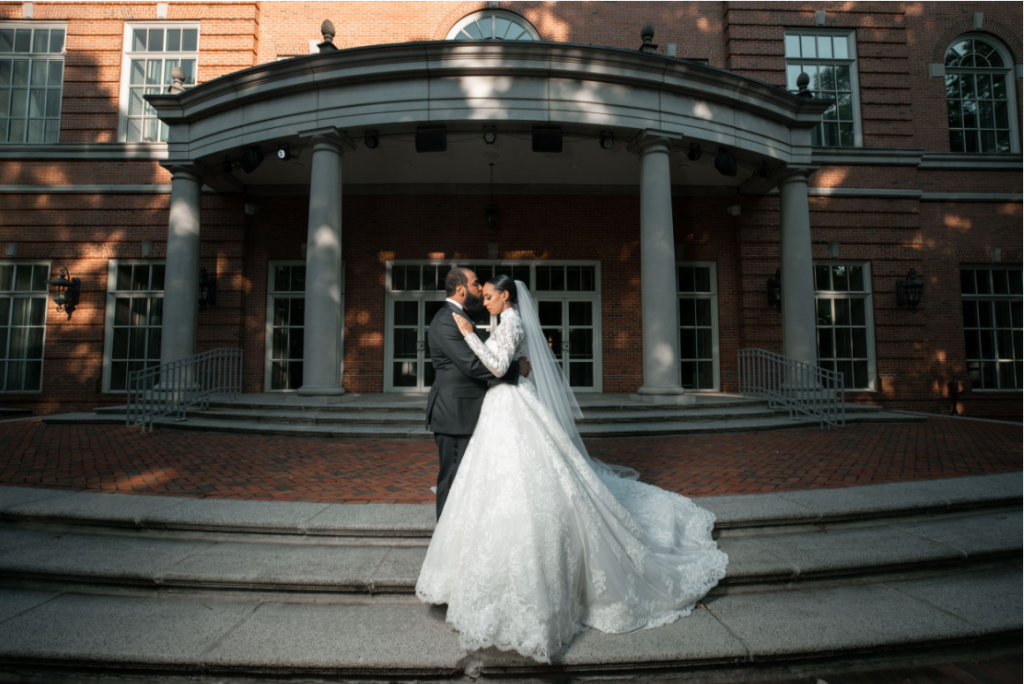
Oil-boom Tulsa built in terracotta and the city has an exceptional stock of it, much of it Art Deco. Architectural terracotta is moulded in fine detail and low relief, which means — exactly like the plaster inside — it comes alive under raking light and disappears under flat or frontal light.
So the establishing exterior frame belongs in the hour when low sun rakes along the facade, shot obliquely rather than square-on so the detail runs away from the camera. A longer lens compressing several bays of terracotta is more effective than a wide sweep.
In a downtown grid that hour is short and depends on gaps between buildings — a dense street may give fifteen or twenty minutes of genuinely raking light before the sun goes behind the next block. Worth establishing on a site visit rather than guessing, because it is the difference between a notable frame and a photograph of a tall building.
The rooftop, daylight and the timeline
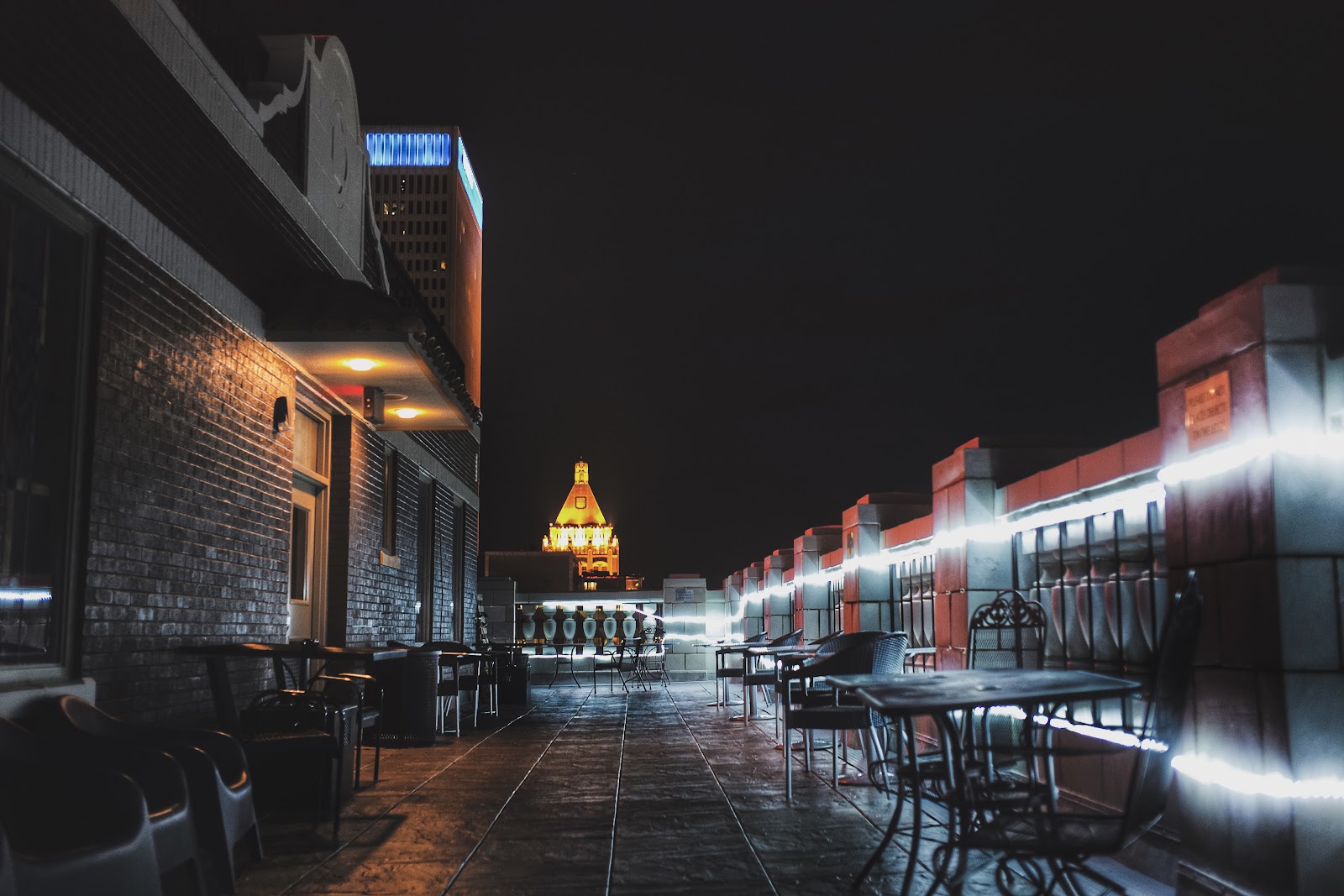
The rooftop is the only space here with open sky, and on an eighteen-storey building it gives genuine elevation over downtown Tulsa. That makes it the place for groups in natural light and for the twenty minutes after sunset, when the sky holds colour and the city lights come up. Confirm access, because without it the whole day is interior and artificial.
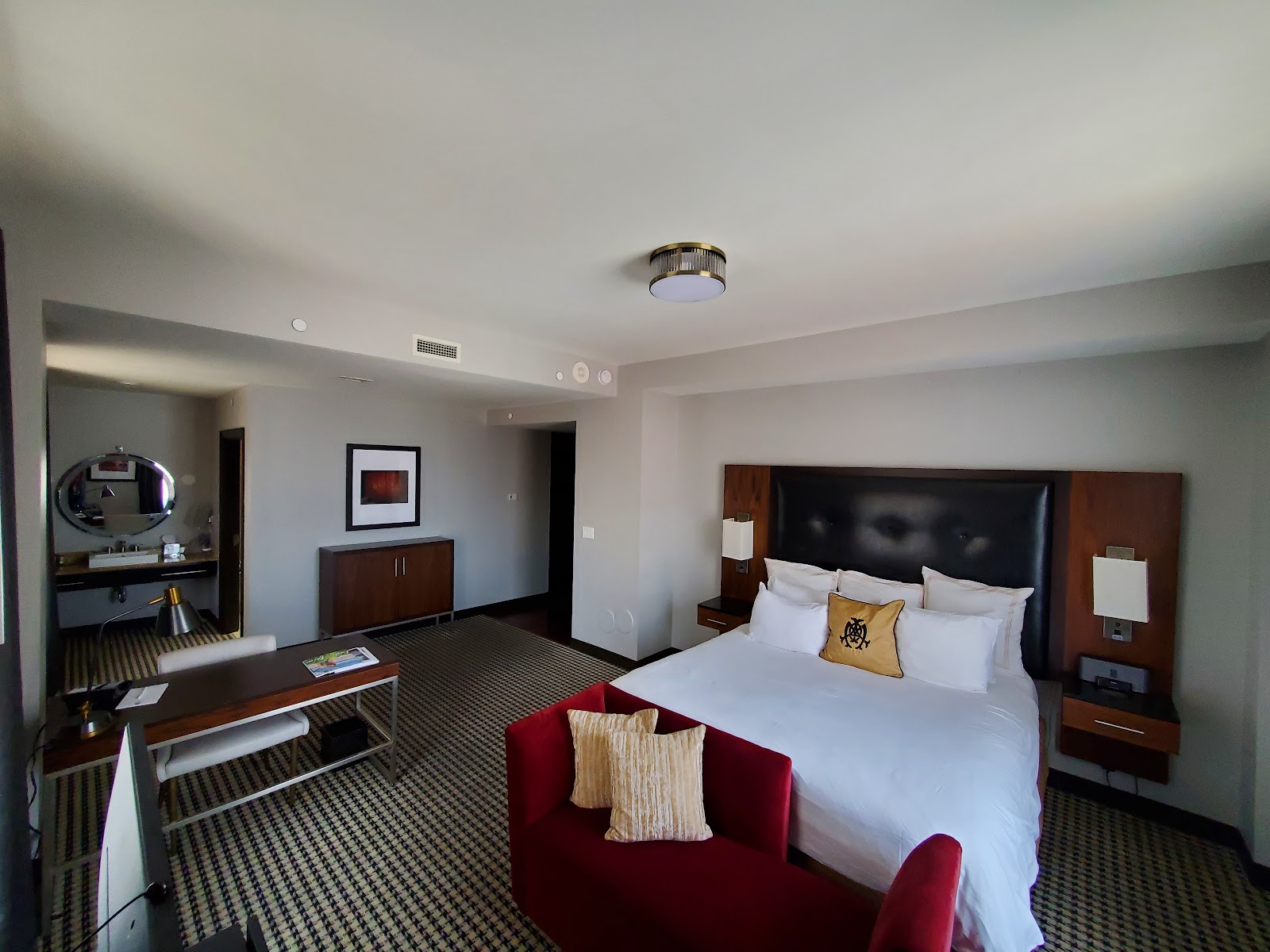
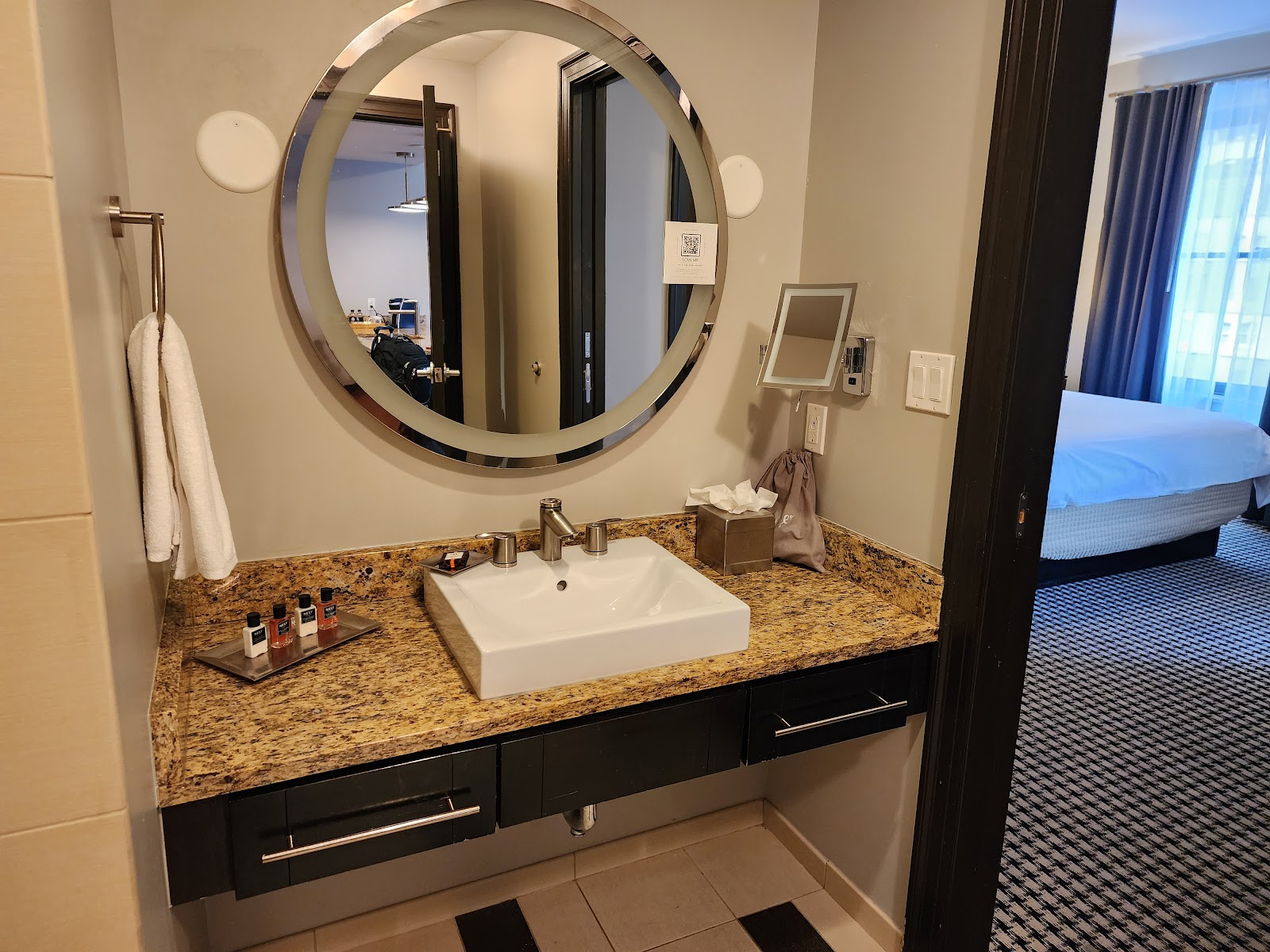
Guest rooms hold the other daylight. Ask for a higher floor — in a tall building that means both window light and a view worth including in a frame. Turn off every artificial fixture so daylight and tungsten are not mixing, and work within a metre or two of the glass.
Colour needs the usual differential: keep the room warm because a 1925 hotel genuinely is, and light faces slightly cooler so skin retains some coolness. Gilding, tungsten, timber and patterned carpet all add amber and nothing subtracts it.
Oklahoma’s wind matters even on a rooftop — more so, in fact, at eighteen storeys. Large modifiers are impractical up there, and hair and veils will move continuously. Plan for bare or minimally modified flash and shoot bursts.
A final note on tall hotels that is easy to overlook when planning. The lift is a bottleneck. Moving a wedding party from a high guest room to the ballroom to the roof and back involves several lift journeys, and in a busy hotel each one can take five minutes of waiting. Three location changes can quietly consume half an hour that nobody budgeted, and the block most likely to be sacrificed is the rooftop dusk window — which is the one frame that cannot be rescheduled. Build the lift time in, or plan to be on the roof before you need to be.
What works in your favour
- Genuine 1925 ornate plasterwork and a crystal ballroom, restored in 2009
- An eighteen-storey rooftop giving real elevation over downtown Tulsa
- Exceptional architectural terracotta outside, spectacular under raking light
- Dimmed chandeliers at dinner give a wide frame a single exposure can hold
- High guest rooms give window light and a city view together
What to plan around
- Frontal flash flattens the plaster relief and the terracotta detail alike
- Chandeliers clip several stops before the room; ambient must sit darker
- High decorated ceilings make bounce flash ineffective
- No daylight in the event spaces at all
- Persistent Oklahoma wind, worse at eighteen storeys, rules out modifiers on the roof
More frames from Mayo Hotel
Mayo Hotel wedding photography: common questions
What is the single most important lighting decision?
Put the light well off the camera axis. Low-relief plasterwork is visible only through the shadows it casts, so frontal flash flattens a 1925 ceiling into painted plaster and the room’s best feature vanishes. It costs nothing to fix and it transforms the photographs.
How should the crystal chandeliers be exposed?
So the individual crystals stay distinguishable rather than fusing into a white blob, which means letting the ambient sit darker than instinct wants and bringing faces up with your own light. If the hotel dims them for dinner, take the wide room frame then — the range collapses and one exposure holds everything.
When should the terracotta exterior be photographed?
In the short window when low sun rakes along the facade, shot obliquely so the detail runs away from the camera. Architectural terracotta is fine and low-relief, so it disappears under flat light. In a dense downtown grid that window may be only fifteen or twenty minutes.
Why does rooftop access matter?
Because it is the only space with open sky. On an eighteen-storey building it gives real elevation over downtown, which makes it the place for groups in natural light and for the twenty minutes after sunset. Without it the entire day is interior and artificially lit.
Is wind a factor on the roof?
Very much so, and worse at eighteen storeys than at street level. Oklahoma is persistently windy, so large modifiers are impractical up there and hair and veils will move continuously. Plan for bare or minimally modified flash and shoot bursts so the movement works for you.
More Tulsa venue guides
We are writing a photographer’s guide to every venue we would happily shoot in Tulsa. Here are three more, plus the full index:
- The Philbrook Museum: Reading the Light in an Italian Villa and Its Gardens
- Southern Hills Country Club: Who This Venue Suits
- The Summit Club: Working a Private Club at the Top of a Tower
Planning a wedding at Mayo Hotel?
Plaster and terracotta both want the same thing: light from the side. Tell us your date and whether the rooftop is included, and we will send a plan for the ballroom, the facade and the dusk window.