 The Ozark Mountain Lodge, Eureka Springs: The Problem, and Four Ways Out
The Crystal Ballroom, Little Rock: The Venue’s Own Logic
Built to be lit by its own fittings, which is both the problem and the answer.
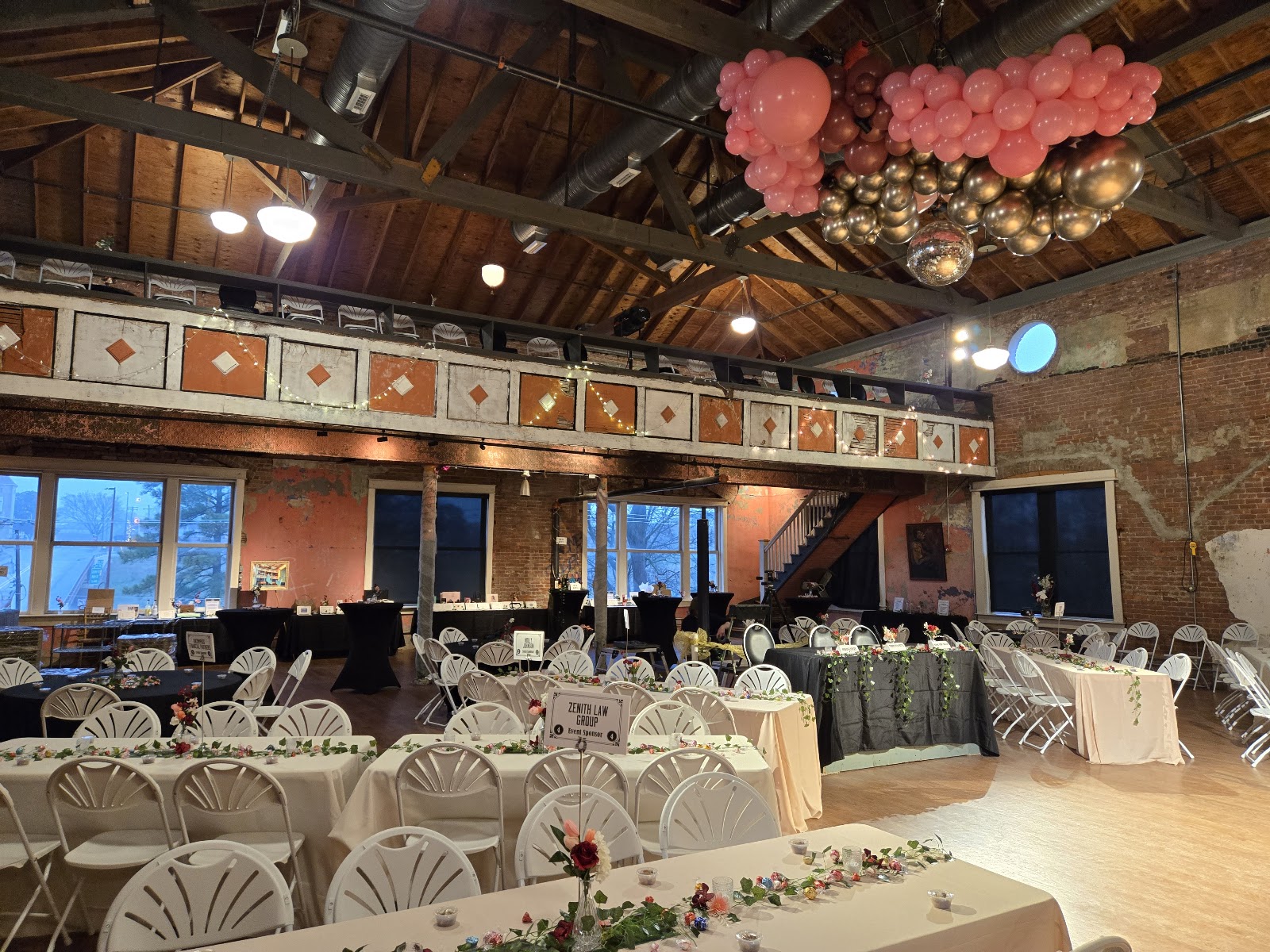
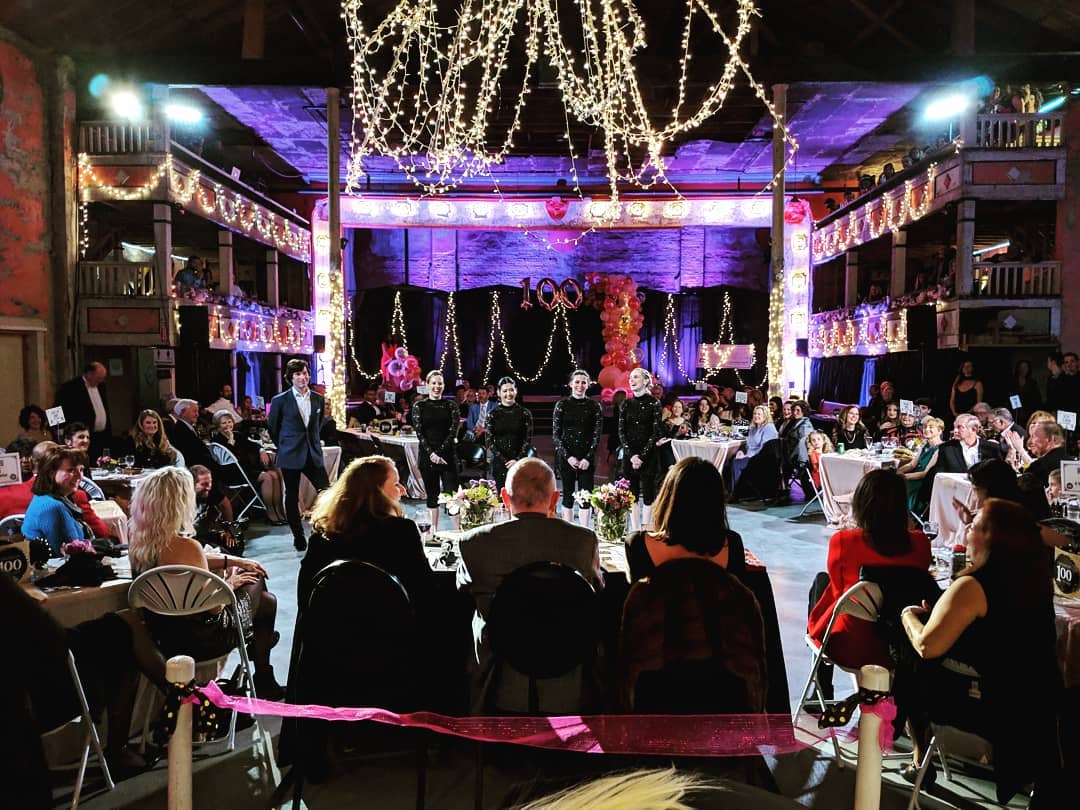
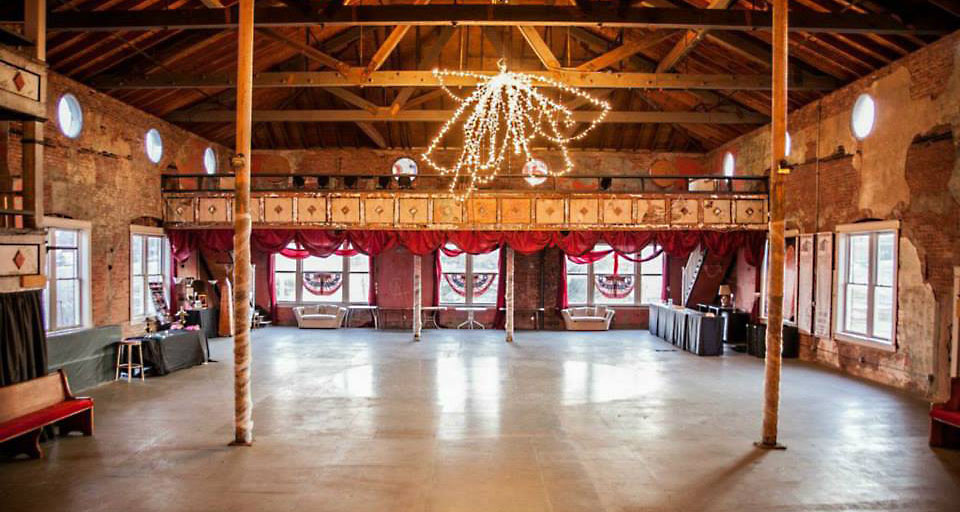
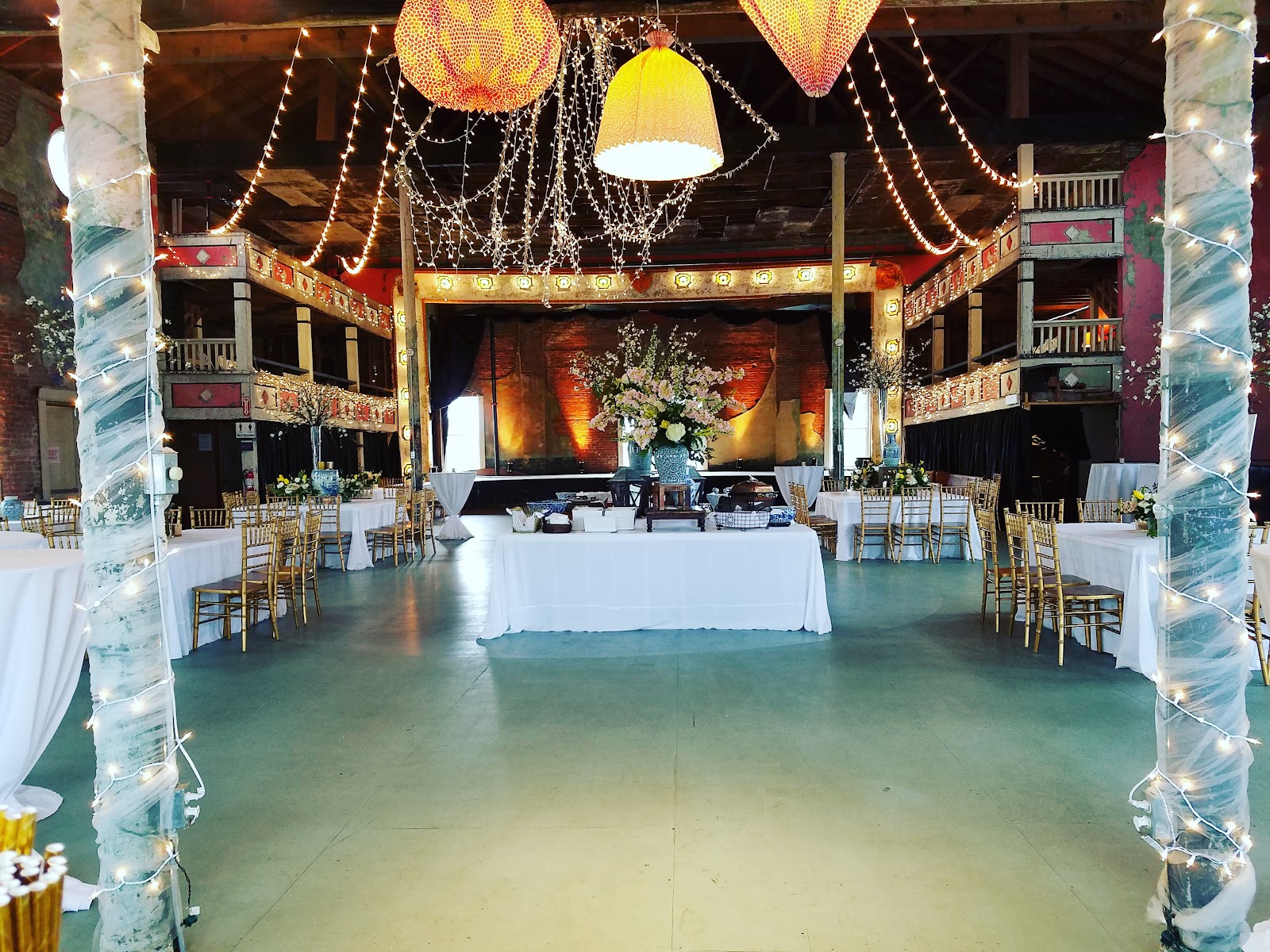
A ballroom of this kind has one organising idea and it is worth being explicit about: the room was designed to be lit by its own fittings, in the evening, with the daylight excluded.
That is a genuinely different proposition from every other venue type in this guide. A chapel was designed around windows. A barn was designed around doors. A veranda was designed around shade. A ballroom was designed around chandeliers — which means the light it wants to be seen in is artificial, overhead, warm, and arranged as a pattern of sources rather than as a single direction.
Understanding that changes the approach from overriding the room to working inside its logic. A ballroom photographed with a powerful flash looks like a ballroom with a flash in it: the fittings become decorative objects rather than sources, the warm colour is neutralised, and the room’s whole reason for existing disappears from the photograph.
A ballroom photographed on its own terms looks like the room. That means balancing for the fittings rather than for a flash, letting the ceiling and the corners go dark, using the pools of light where they fall, and adding only as much of your own light as is needed to give faces modelling.
The three technical facts that follow from the logic are these. The ambient is low — considerably lower than the eye reports, because the eye adapts and a meter does not. The colour is warm and often mixed, because decorative fittings, architectural lighting and any event lighting are all at different temperatures. And the light is top-heavy, because it comes from the ceiling, which leaves eye sockets dark without intervention.
The fourth fact is the mirrors, and in a room of this type there will usually be some. A mirrored or highly reflective surface doubles everything, including the photographer, the equipment and the lighting stands — which makes camera position a compositional decision rather than a convenience.
Little Rock sits at about thirty-four and a half degrees north, on the Arkansas River. The June noon sun reaches around seventy-nine degrees, the December noon sun about thirty-two, days run from about ten hours to fourteen hours ten, and civil twilight is around twenty-seven minutes.
We have not photographed a wedding at this venue. Which spaces are included, whether the fittings are dimmable, what rigging and lighting are permitted, and what the permitted hours are, are questions for their team — and whether the fittings dim is the one that most changes the result.
The Crystal Ballroom at a glance
| Where | A historic ballroom in downtown Little Rock, Arkansas |
| The logic | Designed to be lit by its own fittings, in the evening, without daylight |
| Three facts | Low ambient, warm and mixed colour, and top-heavy direction |
| The mirrors | They double everything, including you and your stands |
| Ask first | Whether fittings dim, lighting and rigging permissions, included spaces, hours |
Working inside the room's logic
Balance for the room first. Set the white balance to the fittings — a custom reading on a face under them, not a preset — and let the room be the colour it is. Warm is what a ballroom looks like, and a technically neutral ballroom photograph is a wrong photograph.
Then gel any added source to match. A daylight-balanced flash in a warm room produces subjects of a different colour from their surroundings, which reads as artificial instantly and is the single most common error in this kind of interior. A warming gel and a balance set for the room resolves it in one move.
Add light off-axis and sparingly. The problem to solve is direction, not quantity: the room already has enough light for a face to be exposed, it just arrives from above. A single source at about forty-five degrees and slightly above eye level, close enough to fall off before it reaches the far wall, gives the subject modelling and leaves the room as it is.
The amount matters. A source at a stop above the ambient on the subject is enough to model; two stops above starts to look lit; three and it looks like a flash photograph in a dark room. Restraint is the whole technique here.
Do not bounce off the ceiling. A pale ceiling in a room whose light already comes from the ceiling produces exactly the top-heavy result the fittings already give — correctly exposed, with dark eye sockets and no modelling. It is the intuitive move and it is the wrong one.
Use the pools. A room lit by discrete fittings has bright patches and dark gaps, and those patches are pre-placed key lights. Standing a subject in one, with a gap behind them, gives separation for nothing. Standing a subject in a gap, with a pool behind them, gives a silhouette. Both are usable and both are better than flattening the room out to an even level.
The chandeliers themselves are a compositional problem worth solving deliberately. A chandelier in frame is very much brighter than anything else and the eye goes to it first, which means it either belongs in the picture as a deliberate element — included whole, placed where it does not compete with a face — or it does not belong in the frame at all.
A chandelier half-cropped at the top of a frame is the worst of the options: bright, cut off, and distracting. A lower camera angle, a tighter crop, or a step to one side removes it. Or it can be made the subject: a frame of the fitting alone, or a wide frame in which the fittings and the room are the content and the people are small within it, is one of the strongest photographs a ballroom produces and it belongs in any set made here.
The mirrors need managing rather than avoiding. A reflective wall doubles the room, which is why it is there — it makes the space feel larger and the lighting richer. It also doubles the photographer and any stand in use.
The practical approaches are: shoot at an oblique angle so the camera’s reflection falls outside the frame; use the mirror deliberately as a second view of the subject, which is a genuinely good frame and specific to this kind of room; or keep the lighting handheld and close so there is no stand to appear. What does not work is standing square to a mirror and hoping.
The rest of the building, and outside it
The pre-function and circulation spaces are usually where the best light in a building like this lives, and they are worth ten minutes before the room fills.
A historic building of this type has a foyer, a stair and corridors, and any of them with a window is better lit than the ballroom. A corridor with a window at one end is a directional source with several stops of fall-off along its length, and a subject placed three or four metres in gets studio separation from architecture alone.
A stair gives a level change, a handrail line and — in a building of this period — usually a decorative balustrade, which is a strong graphic element at exactly the height a seated or leaning subject occupies.
Where there is daylight anywhere in the building, that is the best light available and it should be used before the evening’s artificial light takes over. A tall window in a historic interior, used at forty-five degrees with the room falling away behind, produces a portrait that nothing in the ballroom can match — and in a room with dark finishes the fall-off is three or four stops for free.
The exterior is downtown Little Rock and it is a better resource than most city-centre venues offer. The Arkansas River runs through the city, which gives a large water frontage, bridges, and a genuine skyline reflected in it; the River Market district has nineteenth-century brick warehouse architecture; and the state capital’s civic buildings give scale and stone.
The river is the useful part. A large river through a city is a horizontal reflector that fills faces from below, a mirror when calm — which on a river means the early morning and the last hour — and a source of the one thing a downtown lacks, which is space. The Arkansas River here carries sediment and reads brown-green rather than blue, so the colour in a river frame has to come from the sky.
Brick is the material to understand downtown. Nineteenth-century brick is a mid-toned, strongly saturated red-brown surface, which means two things: it bounces its own colour onto skin at close range, warming the shadow side of a face, and it is a much better background for a white dress than any pale wall because the contrast does the separating.
The bounce is controllable by distance: at two metres from a sunlit brick wall it dominates, at eight metres it is a warm cast, at twenty it has gone.
At dusk the crossing point applies as it does at any lit building: the sky and the lit façades sit within about a stop of each other for roughly ten minutes, and that crossing is the frame. At this latitude civil twilight runs around twenty-seven minutes, so the window is short — it has to be planned for rather than waited for, with the camera position scouted in daylight.
Two practical notes for downtown. Mixed artificial light after dark is the technical problem, and the answer is to choose one dominant source and balance for it, or to use enough flash to override the mixture entirely. And Arkansas sits in the secondary severe-weather corridor of the southeastern states, with peaks in April–May and a smaller one in November — which for a fully indoor venue is a logistics question rather than a photographic one, and is one of this venue type’s real advantages.
- Balance for the fittings and gel your source to match
- One source off-axis at a stop over ambient — restraint is the technique
- Never bounce off the ceiling in a room lit from the ceiling
- Chandeliers belong whole in the frame or not at all
- Shoot mirrors obliquely, or use them deliberately as a second view
The season, and why it matters less here
A ballroom is among the least seasonal venues in this guide and, for a couple choosing a date in an Arkansas summer or a severe-weather spring, that is the point rather than a shortfall.
Nothing about the room changes between January and July. The fittings are the same, the exposures are the same, the colour is the same. A February wedding here produces the same photographs as a July one, and in a state where July means dew points in the low to mid twenties Celsius and April means supercells, that consistency has real value.
What the season changes is the daylight spaces and the exteriors, and both are worth knowing about.
Winter improves every window in the building, which is counter-intuitive. Bare trees and a low sun mean more open sky reaching the glass and less green cast from foliage, so a historic interior with tall windows is brighter and considerably more neutral in January than in leafy July. The December noon sun at around thirty-two degrees also models rather than flattens, so a daylight portrait in a window works at any hour of a winter day.
Winter also brings the earliest dusk: sunset just after five in Little Rock in December, which puts the crossing point for a lit-façade exterior frame at around half past five rather than after eight. For an evening reception that lands the exterior sequence before the event rather than in the middle of it.
The characteristic Arkansas winter weather event is freezing rain rather than snow, which glazes everything in clear ice — spectacular for a day, hazardous for longer, and impossible to plan for. Downtown in an ice storm is one of the more unusual conditions in this guide.
Spring is the region’s best outdoor season and it arrives early. Leaf-out runs through late March, and before the canopy closes the flowering trees do the work: redbud flowering magenta on bare wood and dogwood white beneath. Downtown street trees give some of this, and it is the one time of year the exterior portion of a day here competes with the interior.
The cost is the severe-weather peak in April and May, and an indoor venue’s indifference to it is a genuine advantage rather than a consolation.
Summer is hot and humid with haze at distance, which costs a downtown venue with no long view almost nothing, and makes the air-conditioned interior the sensible place to be. Days run to fourteen hours ten at the solstice and the dusk exterior sequence does not arrive until after half past eight — usually after the point in a reception when people can be taken out, which is worth planning around.
Autumn is the other strong outdoor season and it is late: central Arkansas turns from the last week of October into the first half of November, three to five weeks behind New England, with a richer palette of hickory gold, oak russet, sweetgum purple-red and sassafras orange. Against downtown brick, that warm palette is a better match than northern reds would be, and the window is genuinely three weeks.
November brings a second smaller severe-weather peak, and by late in the month the city is bare and the low sun models everything all day. Inside, the room is exactly what it always is — which for a couple who want every photograph to look the way it was planned to look is the whole reason to choose it.
More frames from The Crystal Ballroom
The Crystal Ballroom wedding photography: common questions
What is a ballroom's logic?
It was designed to be lit by its own fittings, in the evening, with the daylight excluded. That makes the light low, warm, mixed and top-heavy.
Should I overpower the room with flash?
No. A ballroom photographed with a powerful flash looks like a ballroom with a flash in it, and its whole reason for existing disappears from the picture.
How much light should I add?
A stop over the ambient on the subject is enough to model. Two starts to look lit, three looks like a flash photograph in a dark room.
Can I bounce off the ceiling?
It is the intuitive move and the wrong one. In a room already lit from the ceiling it reproduces the same top-heavy light with dark eye sockets.
How do I handle the chandeliers?
Include one whole and deliberately placed, or keep it out of frame entirely. Half-cropped at the top of a frame is the worst option.
Does the season matter?
Barely inside, which is the point in a state with severe-weather springs and humid summers. Winter does improve the daylight rooms and lands the dusk exterior before the reception.
More Arkansas venue guides
We are writing a photographer’s guide to every venue we would happily shoot in Arkansas. Here are three more, plus the full index:
- The Grandview Venue, Bentonville: The One Decision That Governs Everything
- The Greenbrier, Greenbrier: Field Notes, Problem and Solution
- Pratt Place Inn, Fayetteville: How the Light Moves
Planning a wedding at The Crystal Ballroom?
A room that already knows how it wants to be lit. Tell us your date.