 The Ozark Mountain Lodge, Eureka Springs: The Problem, and Four Ways Out
The Barn at Twin Oaks, Rogers: The Venue’s Own Logic
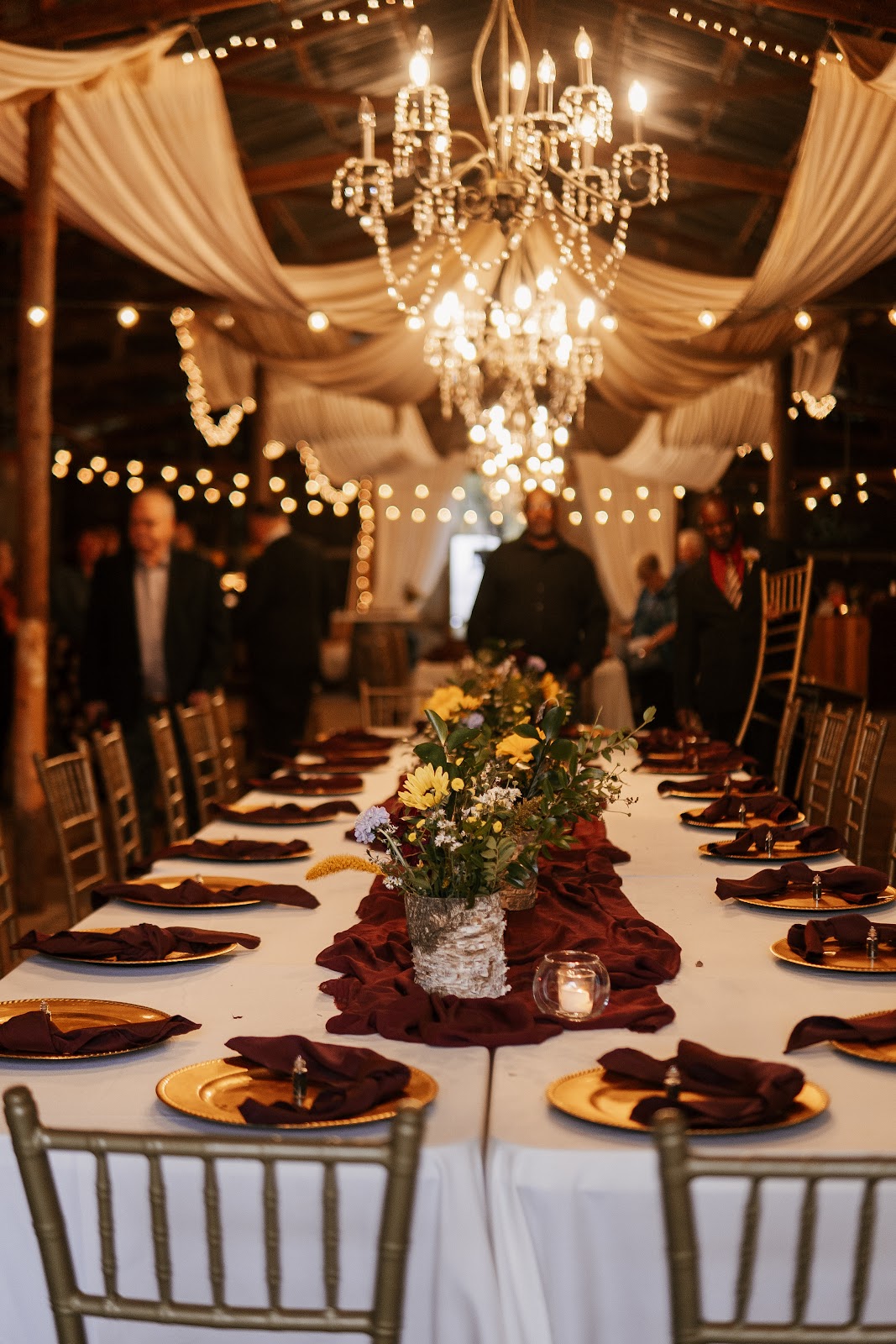
Built to be dark and ventilated. Both of those turn out to be gifts.
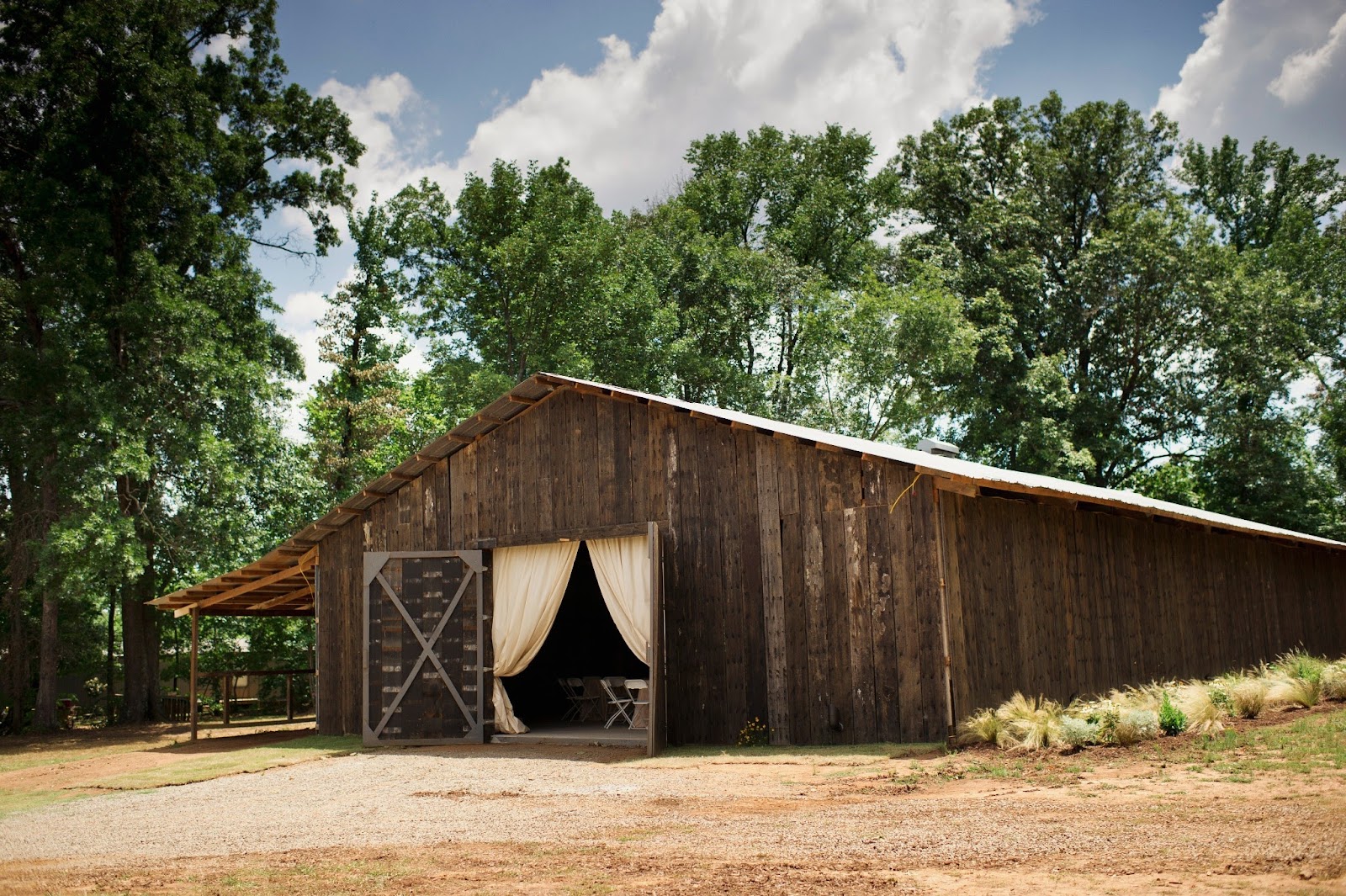
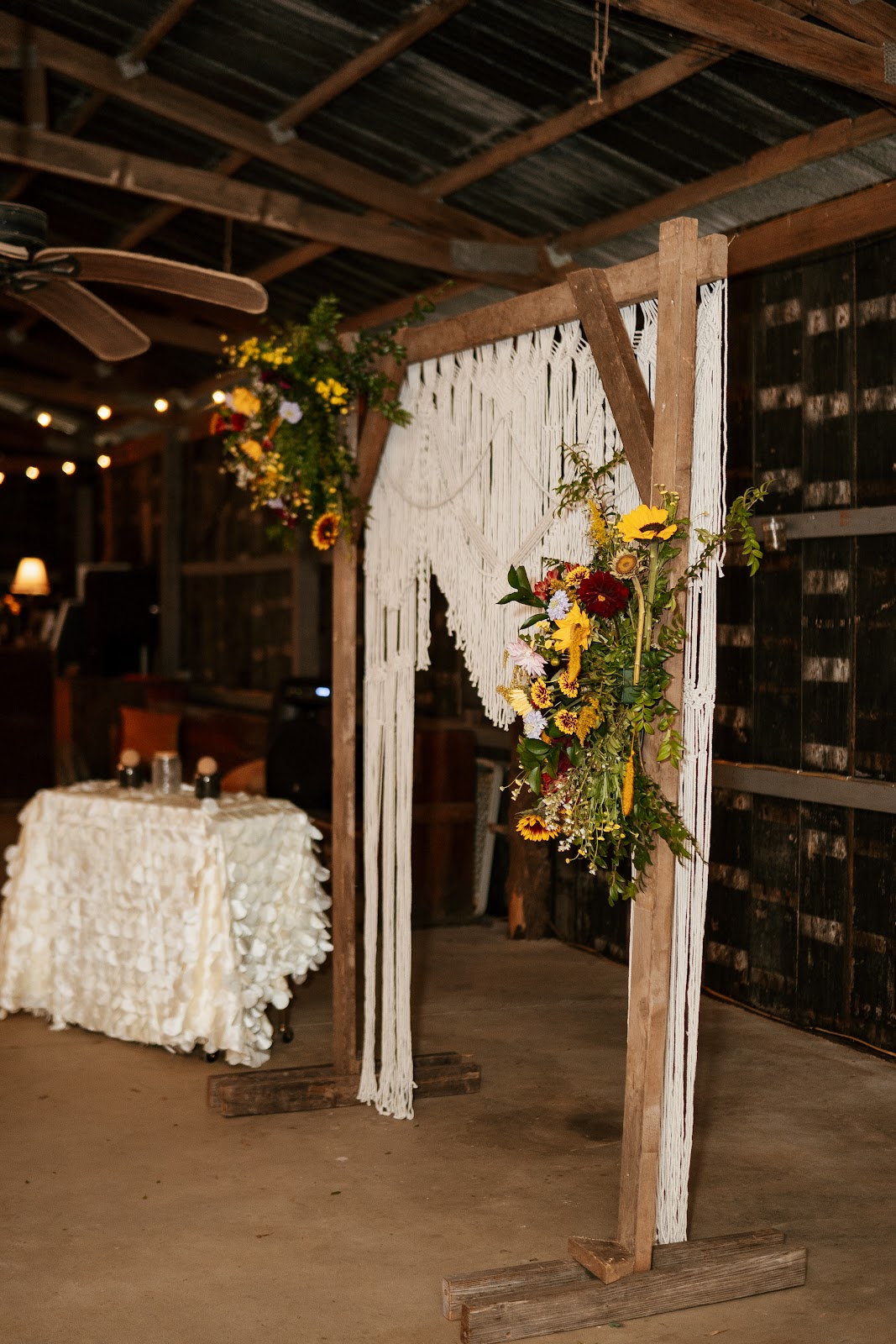
A barn has a logic and it has nothing to do with photography, which is precisely why it works so well. It was built to keep hay dry, to shelter animals, to move air, and to let a loaded wagon in and out. Every one of those requirements produced a feature that a photographer can use.
Keeping hay dry meant a large roofed volume with solid walls and a limited number of openings — which produced a dark interior. Moving air meant gaps: gaps between wall boards, gable vents, opposing doors positioned to create a draught. Getting a wagon in meant very large doors, often at both ends. And working inside meant that where light was needed, an opening was cut.
The result is a building with a dark interior and a small number of very bright apertures, which is the single best raw material for portraiture in this guide. It is what a studio is: a large dark space with controllable openings. A barn is a studio that somebody built for another reason.
The numbers are worth stating. A large open barn door on a bright day admits light at close to full outdoor levels, while the interior three metres back is four or five stops below it. That is a lighting ratio no domestic room can produce and no equipment is needed to produce it here.
The second half of the logic is the material. Aged timber is warm in colour and it absorbs rather than reflects, which means two things: the ambient inside is a stop or two below what the eye estimates, and the light that does bounce around has picked up a warm cast. Both matter to how a frame is exposed and balanced.
Rogers sits in northwest Arkansas at about thirty-six and a quarter degrees north, on the Ozark plateau near Beaver Lake. The June noon sun reaches around seventy-seven degrees, the December noon sun about thirty, days run from about nine hours fifty to fourteen hours twenty, and civil twilight is around twenty-eight minutes.
We have not photographed a wedding at this venue. Which spaces and grounds are included, whether the loft and the upper structure are accessible, what the covered alternatives are and what the permitted hours are, are questions for their team.
The Barn at Twin Oaks at a glance
| Where | A barn venue near Rogers, on the Ozark plateau of northwest Arkansas |
| The logic | Built dark, dry and ventilated — which produced a studio by accident |
| The numbers | Four or five stops from a large open door to three metres inside |
| The material | Aged timber: warm in colour, and it absorbs rather than bounces |
| Ask first | Included spaces, loft access, covered alternatives, permitted hours |
Reading the openings
Work the main doors first, because they are the strongest light in the building and the easiest to use.
Depth is the only control and it is a complete one. At the threshold the light is bright and nearly frontal, the ratio is low, and the result is flat. A metre in, the light acquires a direction and the ratio opens to something like three to one. Three metres in, the ratio is dramatic, the background falls to near-black, and the doorway itself has become a blown rectangle.
Each of those is a different photograph and the difference between them is a step. Deciding the depth deliberately, rather than standing where the party happens to have stopped, is the single most useful thing to do inside a barn.
Opposing doors are the barn’s specific gift and they are worth looking for. A barn built for through-ventilation often has large doors at both ends, which means a subject can be lit from one and backed by the other — key light from the near door, a blown rectangle behind them from the far one, and the dark interior framing both.
That produces a rim-lit silhouette-and-key combination that would otherwise take two lights and two stands, and it exists in the building already. The requirement is that both doors are open, which is worth asking for.
The board gaps are the barn’s signature effect. Where a timber wall has gaps between boards and direct sun outside, hard parallel stripes of light fall across the interior — the most recognisable image in barn photography and the one most often misused.
On a face the stripes are unusable: a hard-edged band across an eye is not recoverable. On a floor, a wall, a dress at distance, or across the whole depth of a room, they are structure. The rule is to keep the pattern off the faces and in the frame, which in practice means standing the subject in a shadow band and letting the stripes fall behind and around them.
The angle of the stripes changes through the day as the sun moves, and their contrast changes with the weather — hard and graphic in direct sun, soft and almost absent under overcast. Which means the effect is available for a limited window on any given day and worth timing rather than hoping for.
Gable vents and small high openings do something different again. Light from high up is a top source, which on a face gives dark eye sockets — but on a standing figure at a distance it gives a pool of light in a dark volume, which is one of the most dramatic frames a barn produces. Used for a wide frame with a small subject, it is excellent; used for a portrait, it is not.
The loft, where it is accessible, is worth the climb. A loft has its own openings, usually a large gable door, and it gives elevation over the main volume — a top-down frame of a lit floor in a dark building. It is also usually the warmest and dustiest part of the structure, and dust in a beam of light is the thing that makes a barn frame read as a barn frame rather than as a dark room.
Metering and colour: meter on skin, always, and never on the scene. A camera reading a dark interior with a bright doorway will overexpose everything that matters. And set a custom white balance on a face in the position being used — aged timber biases warm, and the further a subject is from an opening the warmer the light on them becomes, which no single preset handles.
Outside the barn
A barn venue is not only a barn, and the ground around it carries the rest of the day.
Open pasture or mown field is the likely ceremony ground and it behaves as open ground does everywhere: excellent when the sun is low or the sky is overcast, difficult when the sun is high. At this latitude the June noon sun reaches seventy-seven degrees, which is high enough to put eyes in shadow and foreheads in light, and a field has no cover.
What the field gives instead is the barn itself as a background, and that is the strongest exterior frame here. A weathered timber structure is a dark, textured, low-saturation field, which treats a white dress and skin better than any bright wall — and in low raking light the boards’ texture reads as relief rather than as flat surface.
The gradient is a resource in Ozark country because almost nothing here is flat. From below the subjects on any rise, they stand against open sky with no horizon behind them — the cleanest background available in any conditions. From above them, the field and the woods fill the space behind. Two photographs from one spot, by walking twenty metres.
The woodland at the field edges is the outdoor shade and in northwest Arkansas the species mix is oak, hickory and eastern redcedar. Redcedar is the one to know: it is dense, very dark, and blocks almost all direct light, which makes its edge the best free separation outdoors — a subject a metre inside a cedar margin has soft directional light in front and three or four stops of near-black behind.
Oak and hickory canopy gives soft even light with a green cast, corrected by standing at the canopy edge rather than deep inside it, where most of the light on a face arrives from open sky rather than through leaves.
Limestone is the local stone and it shows as ledges, outcrops and walls on this plateau. Pale grey and weathered, it is a low-saturation background that is kind to skin and to white fabric, and a high-frequency texture that is spectacular in raking light and dull under flat light. A limestone ledge and a weathered barn wall in the same frame is a very Arkansas combination.
Where there is water — and in karst country there often is, because limestone bedrock produces springs and clear creeks — it is worth finding. A limestone-bedded stream runs clear with a blue-green tint from dissolved carbonate, quite unlike a muddy lowland river, and moving water in shade is one of the most forgiving subjects there is: the shade prevents the blown highlights that ruin a sunlit stream and a slow shutter is easy when the light is already low.
Two practical matters. Chiggers and ticks are a genuine consideration in Arkansas in any tall grass or woodland edge from about May into September, and they belong in the planning conversation rather than in the surprises.
And this state sits in the secondary severe-weather corridor of the southeastern United States, with a peak in April and May and a second smaller one in November. Supercells, hail and high winds are real, and on open ground with a timber building as the only shelter a named indoor alternative is a requirement rather than a courtesy. It is also worth knowing that the barn’s usefulness in bad weather is total: the frames described in the first half of this page are entirely unaffected by rain, which makes this one of the more weather-proof venue types in the guide.
- Depth back from the door is the whole lighting control — choose it
- Opposing doors give key and rim in one frame, free
- Stripes from board gaps belong behind the subject, never on a face
- Meter on skin; a dark interior with a bright door will fool the camera
- Redcedar margins give three or four stops of free separation outdoors
The northwest Arkansas year
Four real seasons, with much longer shoulder seasons than the northern states, and a barn that is largely indifferent to all of them.
That indifference is worth stating first because it is the venue’s practical advantage. The light inside a barn comes from doorways and board gaps, and it behaves the same in January and July — the only variable is how bright it is outside, and since the metering is done on skin rather than on the scene, most of that variation does not matter.
The one seasonal difference inside is colour. A door facing bare winter woods admits light that is cool and relatively neutral; the same door facing full summer canopy admits light that has bounced off leaves and arrives noticeably green. A custom white balance on a face handles both; a preset handles neither.
Winter here is short, cool and variable. Snow occurs but rarely lasts. The more characteristic Arkansas winter event is freezing rain, which glazes every twig in clear ice — spectacular for about a day, hazardous for longer, and impossible to plan for. The December noon sun at around thirty degrees means the whole short day models rather than flattens, and at nine hours fifty the day is meaningfully longer than a northern winter one.
Spring is the region’s best season and it is early. Leaf-out runs from late March into early April on the plateau, and the flowering understory does the work before the canopy closes: redbud flowering magenta on bare wood, dogwood white beneath, and serviceberry. Redbud is the one to plan for, because it flowers before its own leaves and before the canopy closes, which means it is lit directly rather than filtered — a saturated magenta mass in full sun, for about two weeks.
Against a weathered grey barn wall, redbud is the strongest colour combination this venue offers all year.
The cost is the severe-weather peak in April and May, and it should be taken seriously rather than mentioned in passing.
Summer is hot and humid, with dew points in the low to mid twenties Celsius, which puts haze into the air and takes the contrast out of anything at distance. On a dissected plateau, where the views are across wooded valleys, that is a real loss — and it is the strongest argument for weighting a summer day toward the barn interior and the close frames rather than the wide ones.
Summer also brings the hardest light of the year at seventy-seven degrees of elevation, chiggers and ticks at their worst, and fireflies in the Ozark valleys in June, which are worth a frame if an evening session runs late.
Autumn is the other strong season and it is much later than in the north. Oak-hickory forest turns from the last week of October into the first week of November — three to five weeks behind New England — and it holds longer, because oak colours slowly and drops slowly.
The palette is richer and more varied than the northern reds: hickory gold, oak russet and deep red, sweetgum purple-red, sassafras orange, black gum near-claret. Against weathered timber and pale limestone that is a better match than a pure red autumn would be, and the window is genuinely three weeks rather than two.
November brings a second, smaller severe-weather peak, and by late in the month the woods are bare, the limestone is exposed, and the low sun models everything all day. The barn is unchanged, which is the point.
More frames from The Barn at Twin Oaks
The Barn at Twin Oaks wedding photography: common questions
Why does a barn work so well photographically?
It was built dark, with a few large openings for wagons and gaps for ventilation. That is what a studio is: a dark space with controllable apertures.
What is the lighting ratio from a barn door?
Four or five stops from the threshold to three metres inside. No domestic room produces that, and no equipment is needed here.
What should I do with opposing doors?
Light the subject from the near one and back them with the blown rectangle of the far one. That is key and rim in one frame, for free.
How do I use the light stripes from board gaps?
Keep them off the faces and in the frame. Stand the subject in a shadow band and let the stripes fall behind and around them.
How should I meter inside?
On skin, always. A camera reading a dark interior with a bright doorway will overexpose everything that matters.
When is the best time of year?
Late March to mid-April, for magenta redbud against weathered grey timber; and the last week of October into early November for a three-week oak-hickory autumn.
More Arkansas venue guides
We are writing a photographer’s guide to every venue we would happily shoot in Arkansas. Here are three more, plus the full index:
- The Box Turtle Venue, Rogers: The Problem and Four Ways Out of It
- The Chapel at Sugar Creek, Pea Ridge: One Frame and How It Is Made
- The Columns at The Grand, Benton: What It Suits and What It Does Not
Planning a wedding at The Barn at Twin Oaks?
Every opening in this building is a light. Tell us your date and we will use them.