 Dry Tortugas National Park: A Walk Through an Island Fort
The Don CeSar, St. Pete Beach: The One Decision That Governs Everything
How close you stand to a pink wall decides the colour of the whole picture.
Most venues present a list of choices. This one presents a single choice that governs everything else, and it is not about where the ceremony happens or which room is used. It is about distance from a pink wall.
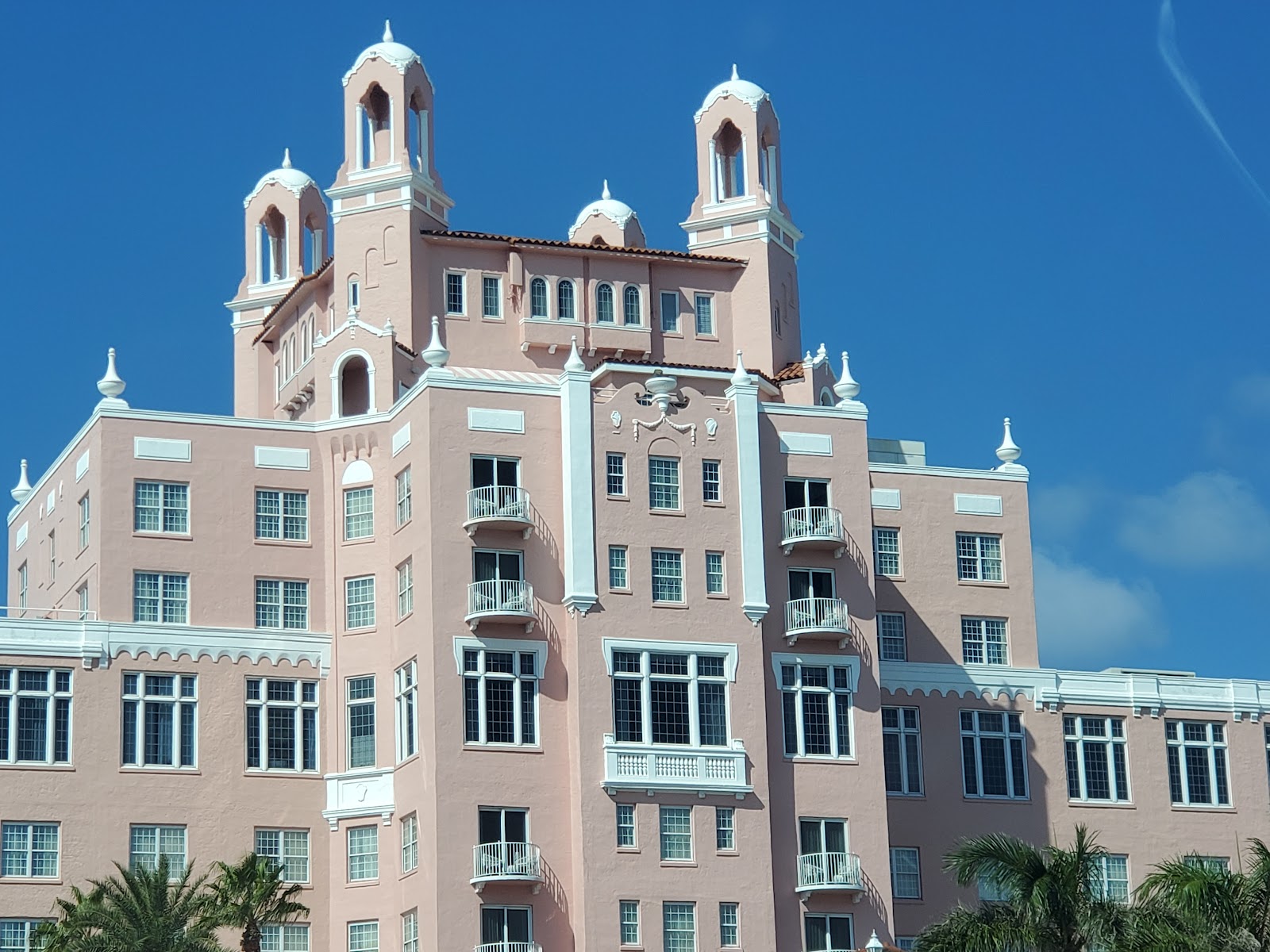
The Don CeSar is a very large building on a Gulf barrier island, and it is painted an unmissable pink. In a place where the sun is fierce and the sand is white, a building of that size in that colour does not sit passively in the background. It becomes part of the lighting.
The physics is straightforward. A surface returns the wavelengths it does not absorb, which means a pink wall in direct sun is a magenta light source, and its output scales with its area and falls off with distance. A few metres from a sunlit pink façade, a significant fraction of the light reaching a face has bounced off it — which shows up as a warm magenta cast on the shadow side of every person in the frame, on every white dress, and on the sand.
That cast is not an error to be corrected. Corrected globally, it turns the building grey and defeats the reason anyone chose it. Left alone, it unifies the frame and reads as warmth. The decision is how much of it to accept, and the only control is distance.
The second half of the decision is that the effect reverses with the sun. When the façade is in shade — the eastern faces in the afternoon, the western faces in the morning — the wall is lit by a blue sky and returns a cool mauve rather than a warm pink. The same wall gives two different colours depending on the hour, and standing in the wrong one produces faces that look unwell rather than lit.
We have not photographed a wedding at the Don CeSar. Which spaces are included, what the beach access allows, whether the upper terraces are available and what the restrictions are on the public shoreline are questions for their team.
The Don CeSar at a glance
| Where | A large pink 1920s hotel on a Gulf barrier island at St. Pete Beach |
| The decision | Distance from the pink wall — it sets the colour of everything |
| Sunlit pink | Warm magenta bounce; flattering, and it unifies the frame |
| Shaded pink | Cool mauve bounce; unflattering, and it needs a correction |
| The coast | West-facing: the sun sets into the Gulf |
Working the decision
There are three usable positions and it is worth treating them as three separate setups rather than as points on a slider.
Close — within two or three metres of a sunlit pink wall — is full commitment. The bounce dominates the shadow side, skin goes warm, a white dress picks up an unmistakable blush, and the whole frame reads as one colour family. This is the most distinctive picture the venue produces and it looks like nowhere else. It is also the position where a white balance set neutrally destroys the effect, so the balance goes on the sun and the cast is left in.
Middle distance — six to ten metres — is the compromise and usually the best all-round portrait position. The wall still fills, but it fills gently: enough to warm the shadows and lift the contrast of a high sun, not enough to colour the dress. This is where group photographs belong, because a group spread across a few metres of ground all receive a similar amount of bounce, where a group standing right against the wall does not.
Far — twenty metres and out, on the beach — removes the building from the lighting entirely and returns it to the role of background. Here the sand takes over as the reflector, and it is a strong one: Gulf-coast quartz sand on this stretch is very pale and its albedo is high, which puts a great deal of neutral light up under chins and brows. A face on the open beach at midday is filled from below far better than the same face on dark ground, which is why beach portraits here survive hours that would be unusable inland.
It is also why meters fail. A frame filled with white sand and bright sky will be underexposed by a stop or more if the camera is trusted, and the correction is deliberate positive compensation, checked on skin rather than on the histogram’s overall shape.
The reversal is the part that catches people. In the morning the east side of the building is in sun and the west side is in shade; in the afternoon it swaps. A pink wall in shade is lit by the sky, and at this latitude a clear sky is a deep and saturated blue, so the wall returns a cool mauve. Skin in that bounce reads slightly grey-violet, which is the one genuinely unflattering light on the property.
The fix is to move to the sunlit side, to move out onto the sand, or to add a warm-gelled source a stop over the ambient. What does not work is trying to fix it in white balance afterwards, because the correction that neutralises the faces turns the sky green.
The beach, the interiors and the Gulf
The orientation of this coast decides the schedule: the Gulf lies to the west, so the sun sets into the water. That is the reverse of the Atlantic side of the same state, and it means the last ninety minutes of the day on the beach are the strongest of the day rather than the flattest.
The sequence in that window is worth planning tightly, because at twenty-seven and a half degrees north the sun descends steeply and civil twilight runs a little over twenty minutes — so the whole low-light period is shorter than a northern photographer’s instinct expects.
The standard Gulf frame is the couple on the sand with the sun behind them over the water. Exposed for the faces, the sky goes white and the water goes colourless; exposed for the water, the faces go black. The working version exposes for the sky and water and lifts the subjects with a close source, warm-gelled to match the sun, held rather than standed because the sea breeze on an open beach will take a lightstand over.
The second frame in that window is the building itself. A pink façade lit by a low, strongly warm sun is the most saturated thing on this coast, and at that point the colour stops being a bounce problem and becomes the subject. A long lens from down the beach, compressing the building behind the couple, is the picture.
The third is the water. The Gulf here is shallow and the bottom is pale quartz sand, which is why it reads green-blue rather than deep blue and why its colour is strongest in the middle of the day and drains toward evening. Anyone who wants that particular green in a photograph has to take it at a time when the light is otherwise difficult, which is a genuine trade to make consciously.
The tide barely matters, and that is worth saying because on most coasts it dominates. The Gulf here has a small mixed tide, often well under a metre of range, so the width of the beach changes little across a day and a composition planned in the morning still works at seven.
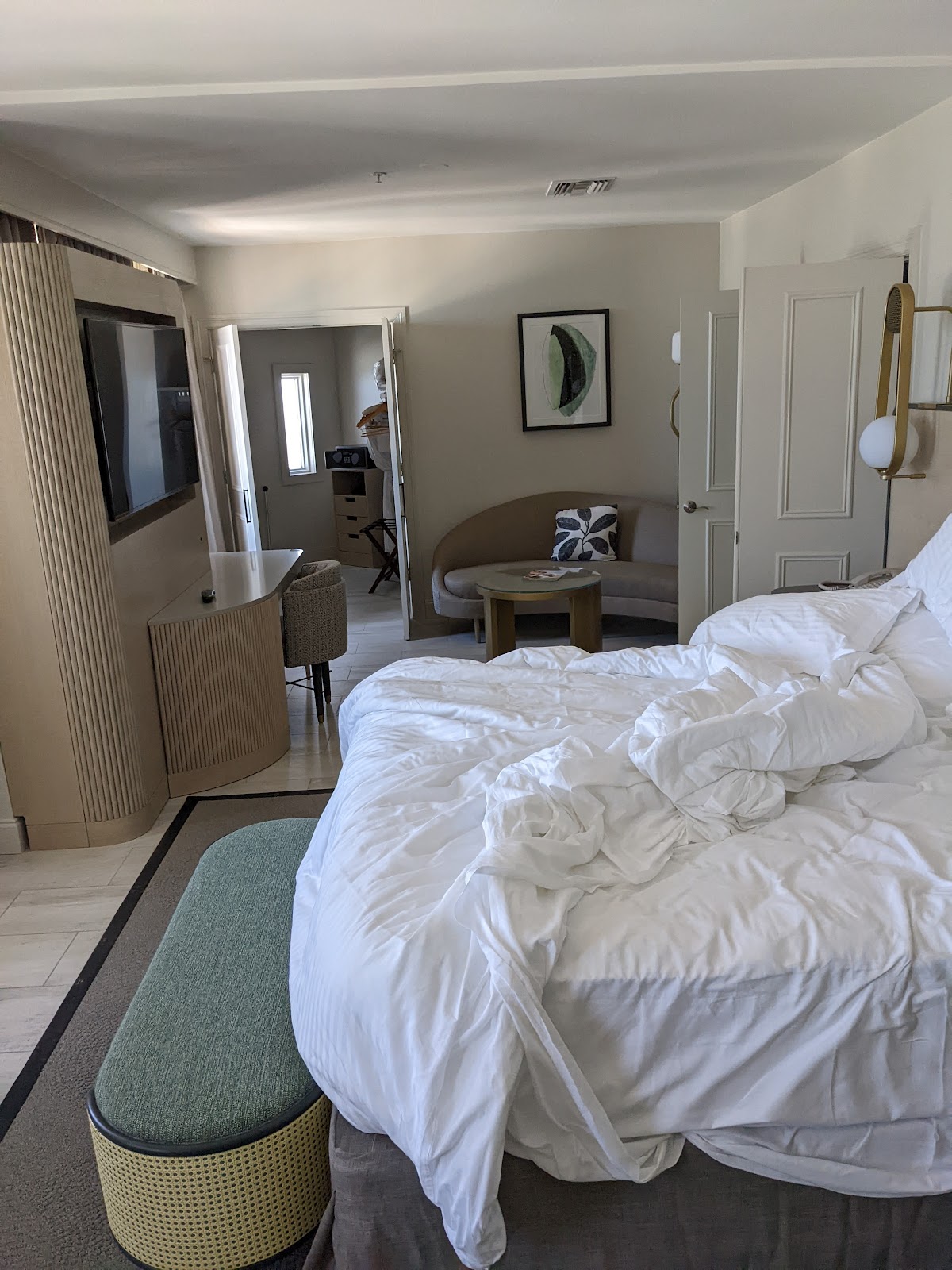
Indoors, a hotel of this period has high ceilings, deep-set openings and long corridors, and the corridors are the surprise asset: a long hallway with a window at one end is a directional source with several stops of fall-off along its length, and a subject placed three or four metres in gets studio separation from a building feature.
Ballroom light is ballroom light. Expect a low ambient at a warm colour temperature, chandeliers that read as hot points, and a room that absorbs more than it bounces. Gel the flash warm, balance for the room, and let the ceiling go dark rather than trying to fill a volume that large.
One recurring practical note applies to every frame that crosses the threshold. Air-conditioned interiors on this coast sit far below the outdoor dew point in the wet season, so a lens carried from a cooled ballroom onto a humid beach fogs instantly and takes ten to twenty minutes to clear. At a wedding that moves back and forth all evening, that is the structural problem of the day — solved by acclimatising gear in a bag and keeping a body outdoors rather than cycling one.
- Close to sunlit pink: commit, and balance for the sun
- Six to ten metres: the best general portrait and group position
- On the sand: white quartz fills from below, and fools the meter by a stop
- Shaded pink returns cool mauve — move, or gel warm
- Handhold the light; a barrier-island breeze takes stands over
The barrier island year
A Gulf barrier island runs on two seasons and the good one is winter.
The dry season from November to April is the strong half of the year: humidity drops, the air clears, the daily storms stop and distance holds detail, which matters on a coast where half the frames are looking out over water. The December noon sun here reaches about thirty-nine degrees, which models a face rather than flattening it — so the whole day is usable rather than just its ends.
It is also cool enough that the sand is comfortable underfoot and breezy enough that the light stands still need holding down.
The wet season from May to October is hot, humid and reliably stormy in the afternoon. Dew points in the mid-twenties Celsius produce haze rather than fog, which takes the contrast out of any distant frame — the horizon over the Gulf softens to a pale band and the far end of the beach loses definition.
The afternoon storms have a mechanism worth knowing, because it makes them predictable. Sea breezes push inland from the Gulf and from the Atlantic, and where the two fronts meet over the peninsula the air is forced up — which is why the interior of Florida records more lightning than anywhere else in the country. On the coast the timing is earlier and the cells often track inland, which means an exposed beach ceremony in July has a real and roughly schedulable risk in the afternoon, and a named indoor alternative is a requirement rather than a courtesy.
It also means the clearing is reliable. The half hour after a cell passes offshore — broken cloud lit from beneath, wet sand returning the sky, and the Gulf in three colours at once — is the best light the wet season produces, and it is worth being outside for.
Hurricane season runs from June to the end of November and peaks between mid-August and mid-October. On a barrier island that is a planning fact with more weight than it has inland, because access and evacuation, not just weather, are in play.
There is a seasonal detail specific to this coast: red tide. Blooms of the local algae occur irregularly, most often in late summer and autumn, and when one is inshore it affects the air enough to irritate throats and eyes and can leave fish on the sand. It is unpredictable, it is not every year, and it is worth a question to the venue close to the date rather than a worry months out.
The vegetation gives no seasonal signal at all. Sea oats on the dune line, palms, and salt-tolerant shrubs are evergreen and look much the same in January as in July, which means the only reliable seasonal cue in a photograph here is the quality of the light and the number of people on the beach — both of which say winter far more clearly than any plant will.
Two final practical notes. Salt spray on an open Gulf beach settles on front elements within minutes, not hours, so a cloth and a habit matter more here than at any inland venue. And ultraviolet reflected off white quartz sand burns a wedding party faster than a cloudy sky suggests it should.
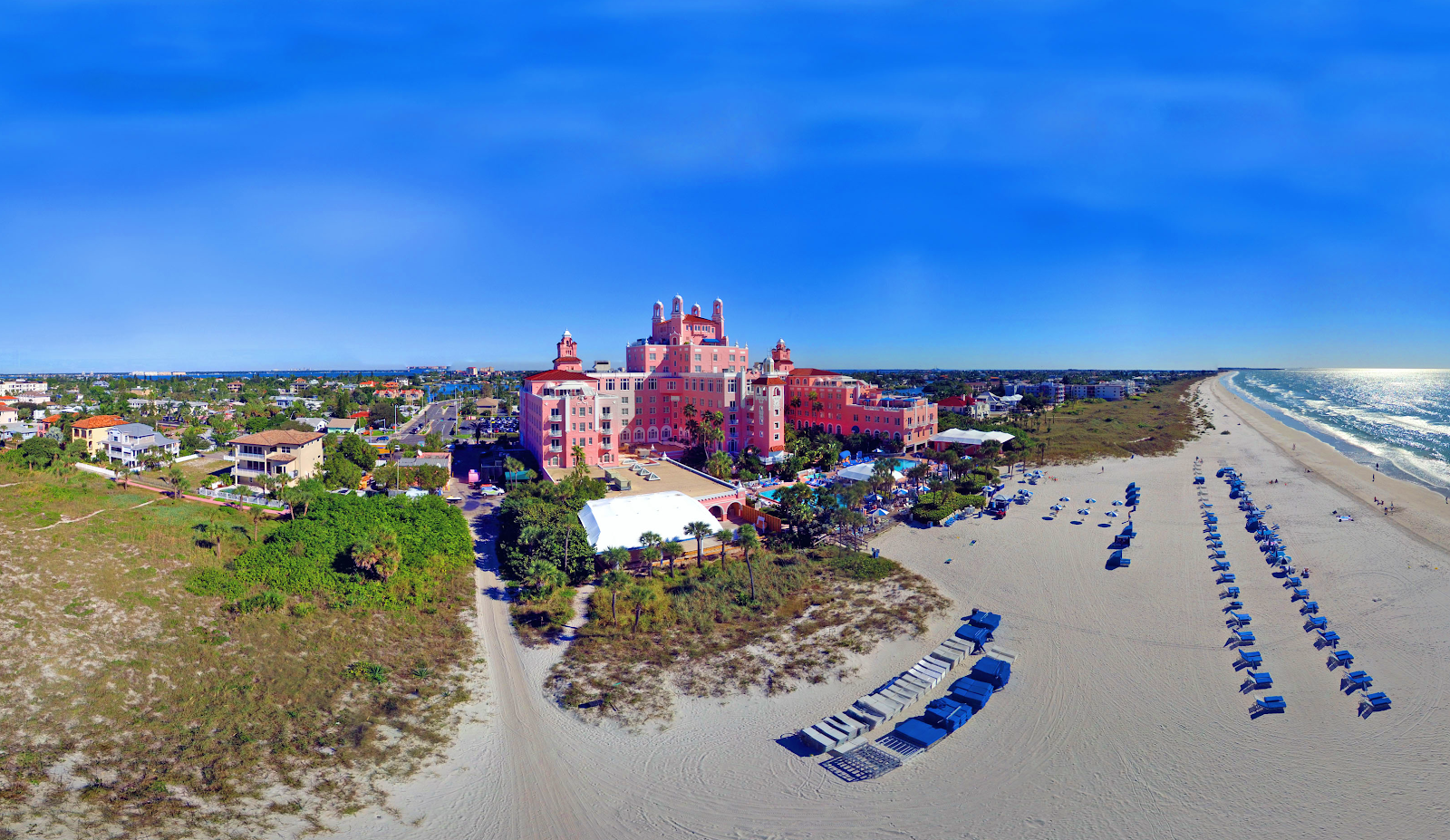
More frames from The Don CeSar
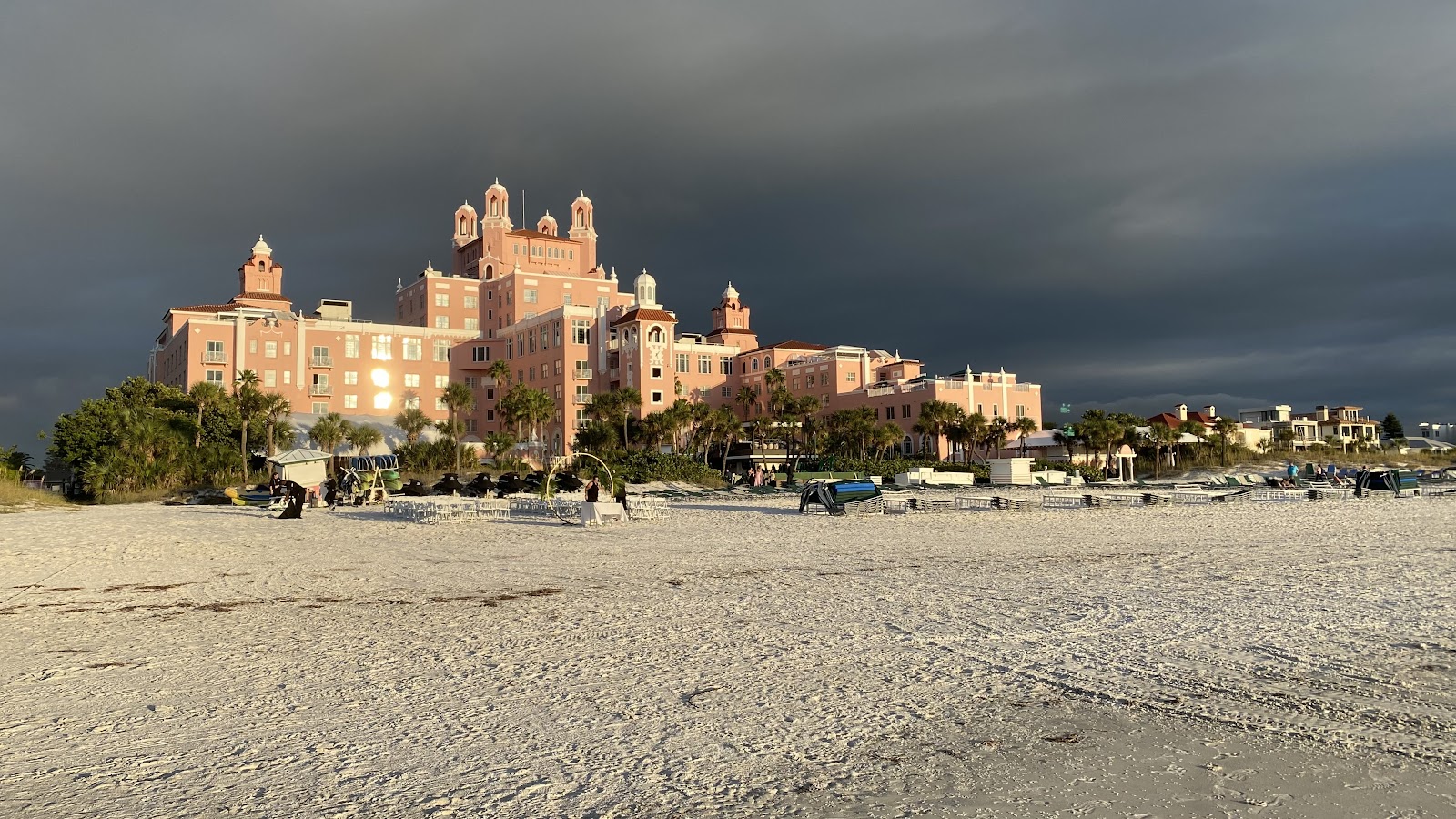
The Don CeSar wedding photography: common questions
What is the one decision?
How close to stand to the pink wall. A building that size in that colour becomes a light source, and distance is the only control over how much of it lands on faces.
Should I correct the pink cast?
Not globally. Balancing it out turns the building grey. Balance for the sun and let the warmth unify the frame.
Why does the wall sometimes look wrong?
Because a pink wall in shade is lit by a deep blue sky and returns a cool mauve instead of a warm pink. Move to the sunlit side or add a warm-gelled source.
Which way does the water face?
West. The Gulf takes the sunset here, the reverse of Florida’s Atlantic coast.
Does the tide matter?
Very little. The Gulf here runs a small mixed tide, so the beach width barely changes across a day.
Which season is best?
November to April — clear air, no daily storms, and a sun low enough at noon to model faces.
More Florida venue guides
We are writing a photographer’s guide to every venue we would happily shoot in Florida. Here are three more, plus the full index:
- Everglades National Park, Homestead: One Frame and How It Is Made
- Fairchild Tropical Botanic Garden, Coral Gables: A Walk Through the Site
- Gaylord Palms Resort, Kissimmee: The Venue’s Own Logic
Planning a wedding at The Don CeSar?
A pink building and a white beach. Tell us your date and we will decide the distance together.