 Salmonberry Inn, Anchorage: One Frame, and How It Is Made
Tordrillo Mountain Lodge, Skwentna: The One Decision That Governs Everything
A floatplane has a weight limit. That single number decides the wedding.
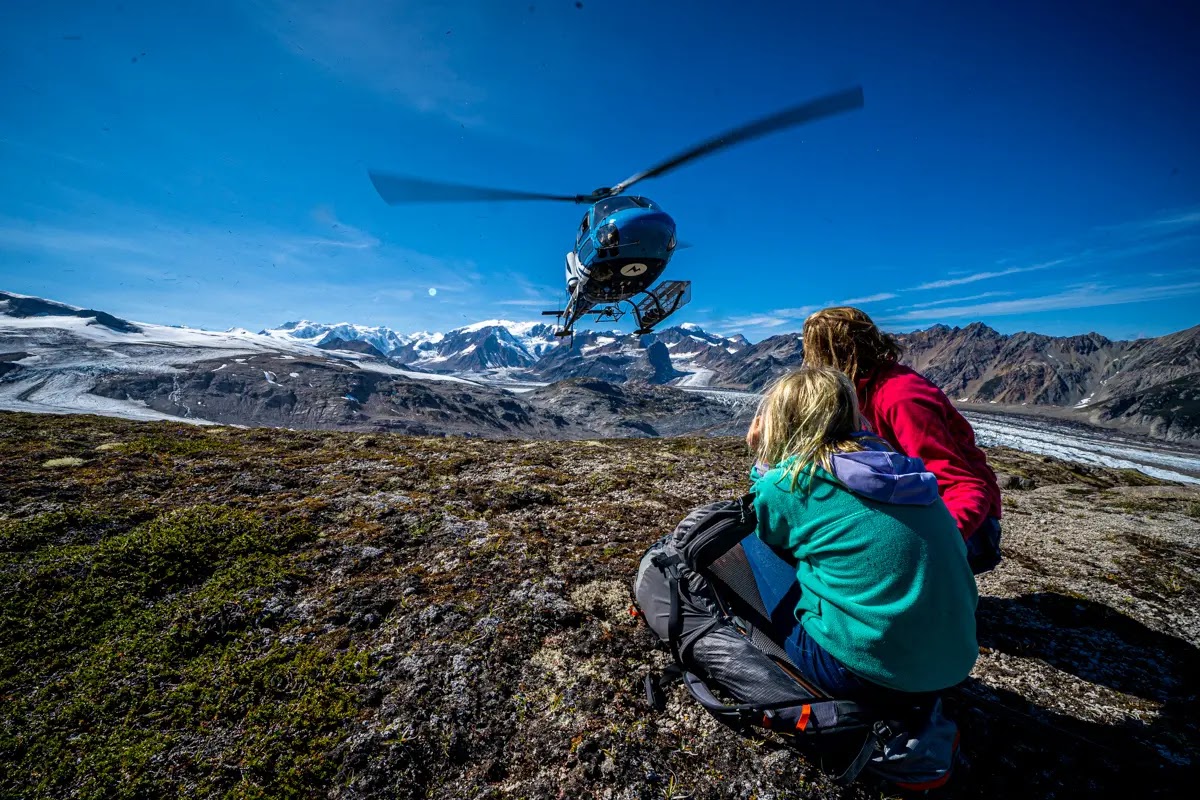
At a fly-in Alaskan lodge there is one decision that governs everything, and it is not photographic. It is how many people and how much weight the aircraft will carry.
A lodge reached only by small aircraft has a hard capacity that is not about beds or dining tables. Each flight carries a limited number of passengers and a limited weight of baggage, and the number of flights available on a given day is limited by aircraft, pilots and weather. That single constraint sets the guest list, the schedule, the equipment and the contingency.
The photographic consequences are direct and they should be settled before anything else. How many bodies and lenses can be carried. Whether lighting equipment is worth its weight. Whether there is power at the lodge to charge anything. And what happens if the weather closes and the aircraft cannot fly — which in Alaska is a real possibility rather than a remote one.
That last point deserves stating plainly: a fly-in wedding can be delayed by weather, and a photographer arriving on the same day as the wedding is taking a risk that a photographer arriving the day before is not. Flying in early is the single most important practical decision available.
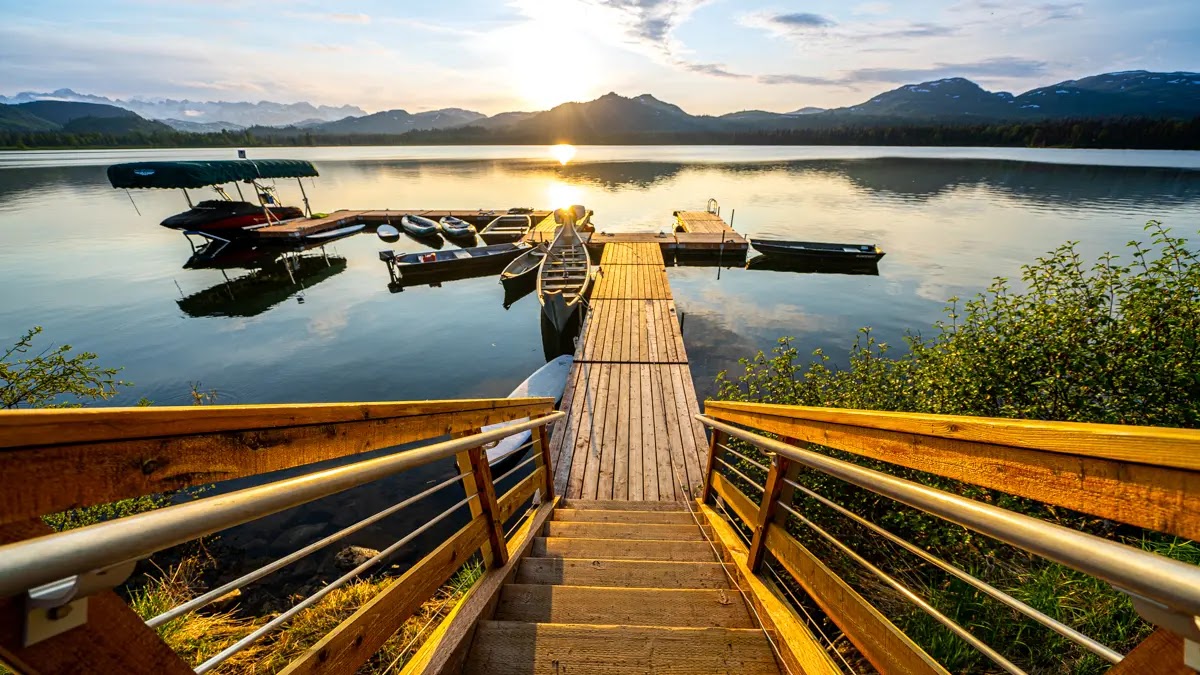
What the constraint buys is the reason to be here. A lodge in the Alaska Range foothills, reached by floatplane, has nothing in any frame that is not landscape — mountains, water, tundra, boreal forest, and glaciers on the skyline. In a guide full of bounded properties, that is the rarest thing in it.
And the light is the other reward: at around sixty-two degrees north the sun reaches only about fifty degrees above the horizon at midsummer noon and far less the rest of the year, which means it rakes rather than falls, all day, and the low warm light lasts hours rather than minutes.
We have not photographed a wedding at the Tordrillo Mountain Lodge; fly-in Alaskan lodges behave consistently. Aircraft capacity, weight allowances, flight schedules and the weather contingency, guest limits, what power is available, the covered alternative, and what the bear guidance is are questions for their team — and the first of those decides everything else.
Tordrillo Mountain Lodge at a glance
| Where | A fly-in lodge in the Alaska Range foothills near Skwentna |
| The decision | Aircraft capacity and weight — it sets the guest list and the kit |
| The risk | Weather can stop the flights. Arriving early is the fix |
| The reward | Nothing man-made in any frame, and a sun that never gets high |
| Ask first | Capacity and weight, flight schedule, contingency, power, bear guidance |
If the constraint is tight
A tight weight allowance is the normal case and working well within it is a matter of choosing rather than compromising.
The kit that earns its weight is two bodies, two or three fast lenses, and one battery light with a small modifier. Two bodies rather than one, because there is no shop and no second chance — redundancy matters more than range at a fly-in site, and a failed body with no backup ends the coverage.
Fast lenses rather than many lenses, because the low light at the ends of a long Alaskan day and the dim timber interiors both reward aperture, and because a fast lens partly substitutes for the lighting equipment that cannot be carried.
One light rather than several, because the situations that genuinely need added light at a site like this are few: the interiors, and lifting faces against a bright landscape. Both are single-source problems, and a second light is weight that will not be used.
What gets left behind is the tripod unless there is a specific reason — and there are two good ones. Aurora frames need it, and so does any frame in the deep dark of an Alaskan winter. If the date is between September and April, the tripod is worth its weight; in June it is not.
The other thing worth carrying is power. Battery capacity is the constraint that bites at a remote lodge, and whether the lodge has generator, solar or limited supply is a question with a definite answer. Charging may be rationed, which means more batteries rather than fewer.
Working within the constraint changes the approach in one useful way: it pushes the day toward natural light, which at this latitude is better than it would be almost anywhere else. Because the sun never gets high, the light outdoors is directional and flattering at any hour — there is no midday to avoid, no vertical shadows, and no blacked-out eye sockets.
So a fly-in wedding shot almost entirely on available light is not a compromise. It is what the latitude supports, and the frames are better for the discipline.
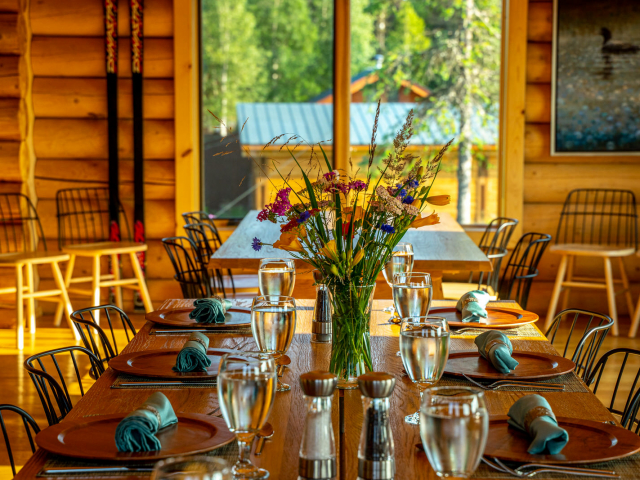
The interiors are the one place added light earns its weight. A lodge in this climate is timber and it absorbs, which means the ambient is a stop or two below what the eye estimates and nothing bounces — so one source, close and gelled warm, at about a stop above the ambient, is the difference between a usable interior frame and a noisy one. Close matters because the light reaching a face is only the light aimed at it: a source at two metres needs roughly a quarter of the output it needs at four.
And the windows are better than they look, for a reason specific to the latitude: a low sun enters a window almost horizontally and travels much further into a room than it would further south, which means a timber lodge in Alaska is well lit relative to its window size. A subject a metre from the glass turned about forty-five degrees to it needs nothing added at all.
Room lights off, and a custom white balance set on a face, because a window facing snow or water delivers markedly cool light.
If the constraint allows more, and what the landscape gives
Where the aircraft allows more weight or more flights, the things worth adding are specific rather than general.
A second light, used as a rim or a background source rather than as fill, is the first — because in a dark timber interior or against a dark landscape a rim light separates a subject in a way a single source cannot. It is a genuine addition rather than insurance.
A longer lens is the second and at a mountain site it is the most valuable single item. The Alaska Range foothills give distant peaks and glaciers, and those need compression: a wide lens renders them as a thin pale band above a great deal of foreground, while a longer lens stacks the ridges into layers and brings them forward as a presence behind the couple.
In the exceptionally clean cool air here that compression holds detail with almost no haze — which is why the frame works in Alaska and would not in humid country, and why the lens is worth the weight.
The exposure for that frame goes on the distance rather than on skin, with the faces lifted by a close warm-gelled source, because metering on faces gives a white sky and a washed-out range.
The third addition is a tripod, for the reasons above: aurora, winter dark, and any long exposure over water.
What the landscape gives is worth describing because it is the reason for the whole exercise.
Water is the first element. A lake or river at a fly-in lodge is the aircraft’s runway as well as the view, which means the floatplane itself is part of the site — and a wedding party with a floatplane on the water behind them is a frame that belongs to this kind of place and no other. A still lake is also a mirror, doubling mountains and sky, with a reflection running about a stop darker than what it reflects.
Glacial water is grey-green rather than blue because it carries rock flour, which means it does not brighten a frame the way clear water does and it fills nearby faces with a cool grey-tinged light. A custom white balance set on a face at the water’s edge handles it.
Boreal forest is the second element and it supplies the shade. White and black spruce are dense, dark and narrow-crowned, and a spruce mass behind a subject is three or four stops down, which is free separation. The canopy edge — a metre or two inside a stand at the margin of an opening — gives soft directional light in front and near-darkness behind, and it is the most reliable position on the property.
Birch and cottonwood are the deciduous element and they do the opposite: paper birch has bright white bark, which makes a birch stand a pale background and a strong graphic element of white verticals. White birch against near-black spruce in one frame is the northern landscape’s signature contrast and it exists nowhere in temperate woodland.
Tundra is the third element, above the treeline, and it is where the autumn colour is. Alpine tundra turns red and orange in late August at this latitude — weeks before foliage anywhere in the lower forty-eight — and a whole slope of it is a colour field rather than a scattering of trees.
And the practical constraints of remoteness apply throughout. There is no backup venue, no shop, no road out, and the bear question is a real one in this country rather than a formality — which means the lodge’s guidance is followed rather than judged. A photograph is not worth a risk at a site where help is an aircraft away.
- Settle the weight allowance before anything else; it sets the whole plan
- Two bodies beats five lenses — redundancy matters more than range
- Fly in the day before. Weather delays are real and they end coverage
- One light, close and gelled, for the interiors; natural light for everything else
- A longer lens earns its weight: compression is what makes the mountains read
The Alaska Range foothills year
This is one of the most seasonally extreme places in this guide and the calendar runs weeks earlier than a photographer from further south will expect.
Midwinter gives about five hours of daylight with the sun reaching only about four or five degrees above the horizon — which means the whole short day is an extended twilight, soft and blue-toned and entirely raking. Against snow and mountains that is genuinely beautiful rather than merely dim, and it is the most distinctive light in this guide.
The honest winter note is access. Flying into a remote Alaskan lodge in winter depends on weather and daylight both, and the window each day is short — which makes a winter wedding here a considerably larger logistical proposition than a summer one. That is a question for the lodge rather than a guess.
Snow is the winter asset: the best natural fill available outdoors, lifting every shadow and throwing light upward into faces. Snow against near-black spruce is the widest brightness range in this guide — expose for the snow and let the conifer go black, overexposing deliberately relative to the meter, which snow fools by about two stops.
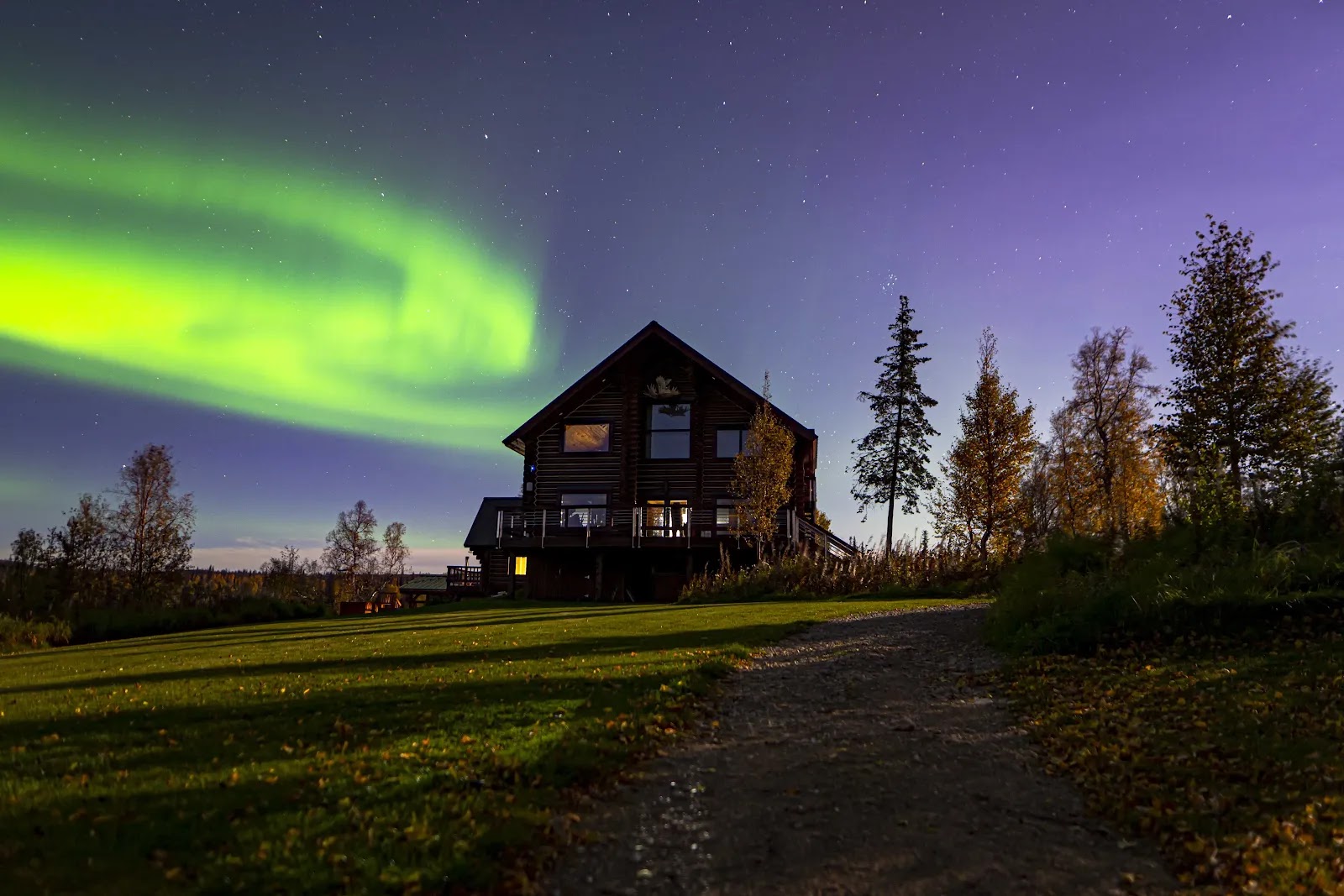
Winter is aurora season, and at a remote lodge with no light pollution at all it is as good as it gets anywhere. A frame with northern lights over mountains and spruce is the single most distinctive picture available in this guide — and it needs a tripod, a wide fast lens, a few seconds to half a minute, a clear sky, and a party willing to stand outside in serious cold. It cannot be promised, only planned for.
The costs are cold that drains batteries fast, a camera that fogs badly when carried into a heated lodge, a very short working day, and the possibility of being weathered in. Spares in an inside pocket and bodies bagged until they warm.
Break-up in April and May is the least attractive time of year and it also affects access: a lake used as a floatplane runway is unusable between the ice going out and the water clearing, which is a hard constraint rather than an aesthetic one. Early May here is not spring in any recognisable sense.
June is when it turns, and it turns fast. Under twenty hours of daylight the green arrives within a fortnight, the days are enormous, and the flying is at its easiest. The costs are mosquitoes, which in the boreal forest in June and early July are a genuine consideration.
The great asset of a June or July wedding here is the length of the day. Because the sun’s path is shallow, the low warm light that lasts forty minutes further south lasts two or three hours, and the usable light runs until near midnight — which means a portrait session at ten in the evening is entirely reasonable and will be better lit than one at two in the afternoon.
July is the warmest and greenest month, and fireweed gives the strongest colour of the Alaskan summer: tall magenta spires across cleared ground, a genuine foreground rather than a detail.
Late August into September is the best season overall and it is not close. Birch and cottonwood turn gold in late August; the tundra above the treeline turns red and orange; the first snow appears on the peaks, locally called termination dust; and the nights are dark enough for aurora while the days are still long enough to work in.
Gold birch against near-black spruce, red tundra above it, fresh snow on the Alaska Range and northern lights after dark, all on one date and with no man-made thing in any frame, is the strongest combination anywhere in this guide. The window is roughly the last week of August through mid-September, and it is the single best argument for a date here.
The autumn caveat is that September weather is less settled than July’s, which at a fly-in site is the risk that matters — and another reason to fly in early.
More frames from Tordrillo Mountain Lodge
Tordrillo Mountain Lodge wedding photography: common questions
What is the governing decision?
Aircraft capacity and weight allowance. It sets the guest list, the schedule, the equipment and the contingency.
What should I carry?
Two bodies, two or three fast lenses, one battery light with a modifier, and spare batteries. Redundancy matters more than range.
Is a tripod worth the weight?
Between September and April, yes — for aurora and for the deep winter dark. In June, no.
What is the main risk?
Weather stopping the flights. Arriving the day before rather than on the day is the single most important practical decision.
Why is a longer lens worth carrying?
Compression is what makes distant peaks and glaciers read as a presence. In this clean cool air it holds detail with almost no haze.
When is the site at its best?
Late August into mid-September: gold birch, red tundra, fresh snow on the range, and aurora after dark, with nothing man-made in any frame.
More Alaska venue guides
We are writing a photographer’s guide to every venue we would happily shoot in Alaska. Here are three more, plus the full index:
- ZJ Ranch, Delta Junction: The Light Through the Day
- The Alaskan Garden, Palmer: Field Notes, Problem and Solution
- The Aurora Ice Museum, Fairbanks: One Frame, and How It Is Made
Planning a wedding at Tordrillo Mountain Lodge?
The aircraft first, then everything else. Tell us your date and the flight plan.