 Salmonberry Inn, Anchorage: One Frame, and How It Is Made
Blueberry Lodge, Homer: Field Notes
A bluff facing south across water at glaciers. The direction is the whole advantage.
These are field notes on a lodge on the bluff above Kachemak Bay, and the first note is about which way the site faces, because at this latitude that matters more than it does further south.
The bluff at Homer looks roughly south across the bay at the Kenai Mountains, with hanging glaciers visible on the far side. At around fifty-nine degrees north the sun never travels far from the southern part of the sky — it rises in the northeast in summer, arcs low across the south, and sets in the northwest — which means a south-facing site here has the sun in front of it for most of the day.
That is an advantage rather than a problem, because the sun is low. A south-facing view at a temperate latitude would be backlit and hard for much of the day; here the sun never gets above about fifty-eight degrees even at midsummer noon, and for most of the year far less — which means the view is side-lit and raked rather than flattened or silhouetted.
The practical consequence is that the bay and the mountains hold detail and modelling through most of the day, and the subject can be turned to face into, across or away from the light without moving position. That flexibility is unusual.
The second note is the tide, and Kachemak Bay has a large one — several metres between high and low water on a roughly six-hour cycle. From a bluff that changes the whole foreground of every wide frame: at high water a full bay reaching the beach, at low water a broad expanse of exposed flats, rock and kelp. It is knowable in advance and checking it takes a minute.
The third note is the eagles. Homer has a substantial bald eagle population and they are a genuine presence rather than a rarity — which means a long lens kept in reach is worth more here than at most venues.
We have not photographed a wedding at the Blueberry Lodge; bluff-top lodges above Kachemak Bay behave consistently. Which spaces are included, what access there is to the beach below and how long it takes, the covered alternative, and what the wind exposure is are questions for their team.
Blueberry Lodge at a glance
| Where | The bluff above Kachemak Bay at Homer, lower Kenai Peninsula |
| The direction | South-facing, with a low sun — the view is raked rather than backlit |
| The tide | Several metres of range, which changes every wide frame’s foreground |
| The wildlife | Bald eagles in numbers, plus whales and otters in the bay |
| Ask first | Spaces included, beach access and walking time, covered alternative, wind |
The view: the problem, and the solutions
The problem with a bluff-top view is exposure range: the bay is bright, the far mountains are brighter still where there is snow on them, and a face in the foreground is not. A frame containing all three spans more than one exposure holds.
The solution is the one that applies at every view site and it needs committing to. Expose for the distance — the water and the mountains — and lift the faces with a close source gelled warm to match the light. That keeps the view legible, which is the reason for the frame.
The alternative is to expose for the faces and let the bay and the peaks go bright, which makes the picture about the couple with a suggestion of place behind them. Legitimate, and usually the wrong trade at a site chosen for the view.
What fails is the average, which gives a grey bay, a washed-out mountain and slightly dark faces — and it is what every automatic mode produces, which is why this frame is made in manual.
Close matters because nothing over water bounces enough to lift a backlit face: a source at two metres needs roughly a quarter of the output of the same source at four. And the gel matters because the light at the ends of the day here is strongly warm while the faces are in cool shade, which means an ungelled source produces faces that read colder than the frame.
The lens is the second decision and the far side of a bay is a long way off. A wide lens renders the Kenai Mountains as a thin band above a great deal of water and bluff, which loses them entirely; a longer lens compresses the ridges and the hanging glaciers into layers and brings them forward as a presence. In the cool clean air here that compression holds detail well, and it is best after a front has passed.
The glaciers on the far side deserve their own note. Glacier ice is blue because ice absorbs the red end of the spectrum and scatters the blue, and the denser the ice the stronger the blue — which means the colour only reads if the ice is exposed correctly. A stop over and it clips to white, and no adjustment afterwards recovers it. Meter so the ice holds texture, and set the white balance for the faces rather than trying to neutralise the ice, because the blue is the subject.
The tide is the third element and it changes the foreground rather than the distance. A wide frame from a bluff has the beach and the flats in the bottom third, and at low water that is a broad ribbed expanse of grey and brown with kelp and rock in it — which is a graphic foreground layer that a full bay does not provide.
Neither state is wrong and both are usable, which makes the tide a compositional choice rather than a problem. Where the reflection matters — because a calm bay mirrors the mountains — high water is better; where the foreground pattern matters, low water is.
The water’s colour is worth knowing. Kachemak Bay carries glacial silt, which makes it grey-green rather than blue and means it does not brighten a frame the way clear water does. A custom white balance set on a face near the shore handles the cool cast it throws.
And the wind is the constant practical fact on a bluff. There is nothing between an exposed bluff top and the bay, which means a lightstand is a liability, a held modifier is a sail and a veil is unpredictable — so handheld or bracketed sources are the working configuration, planned from the start rather than discovered at nine in the evening.
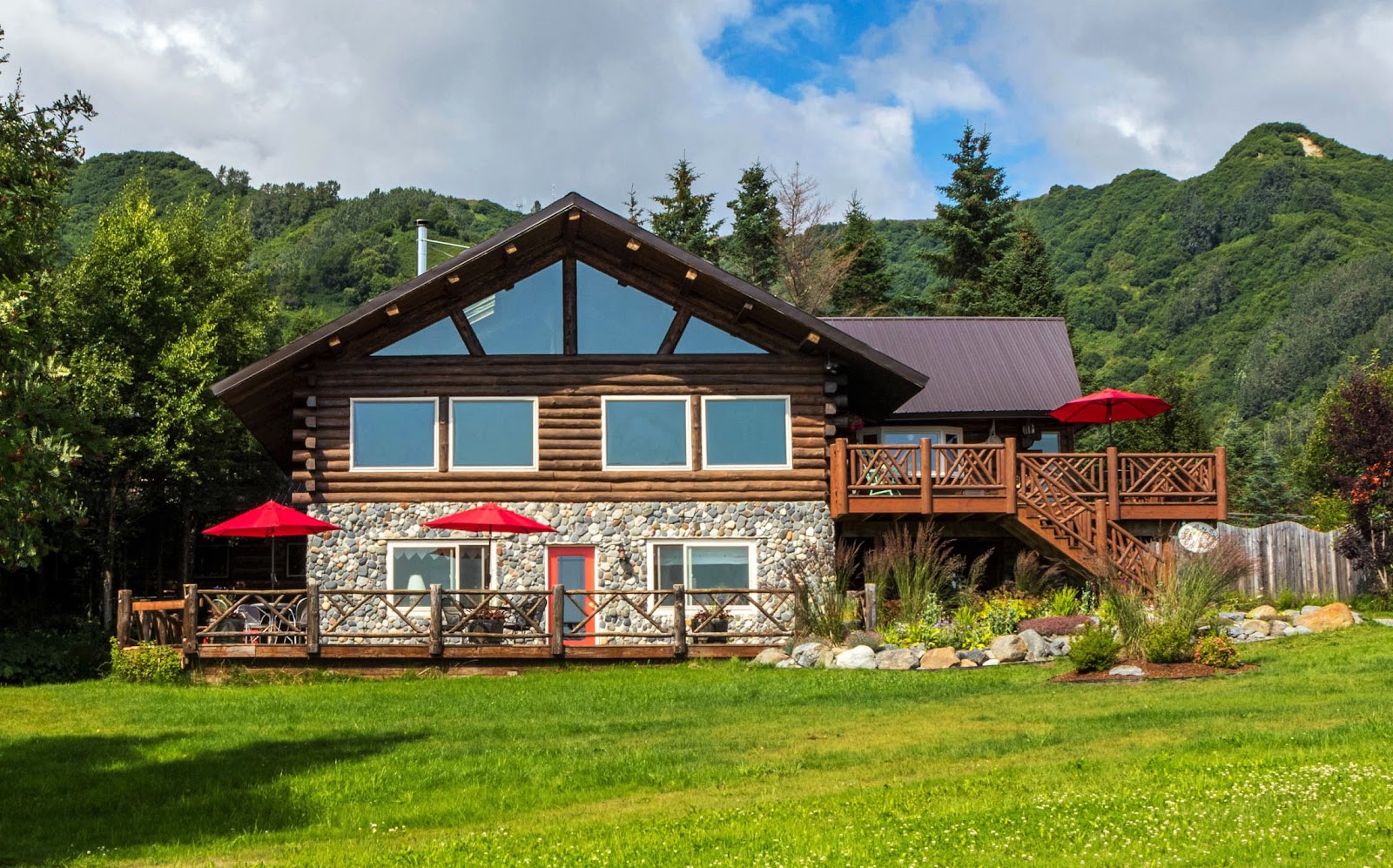
The bluff, the beach and the long Alaskan evening
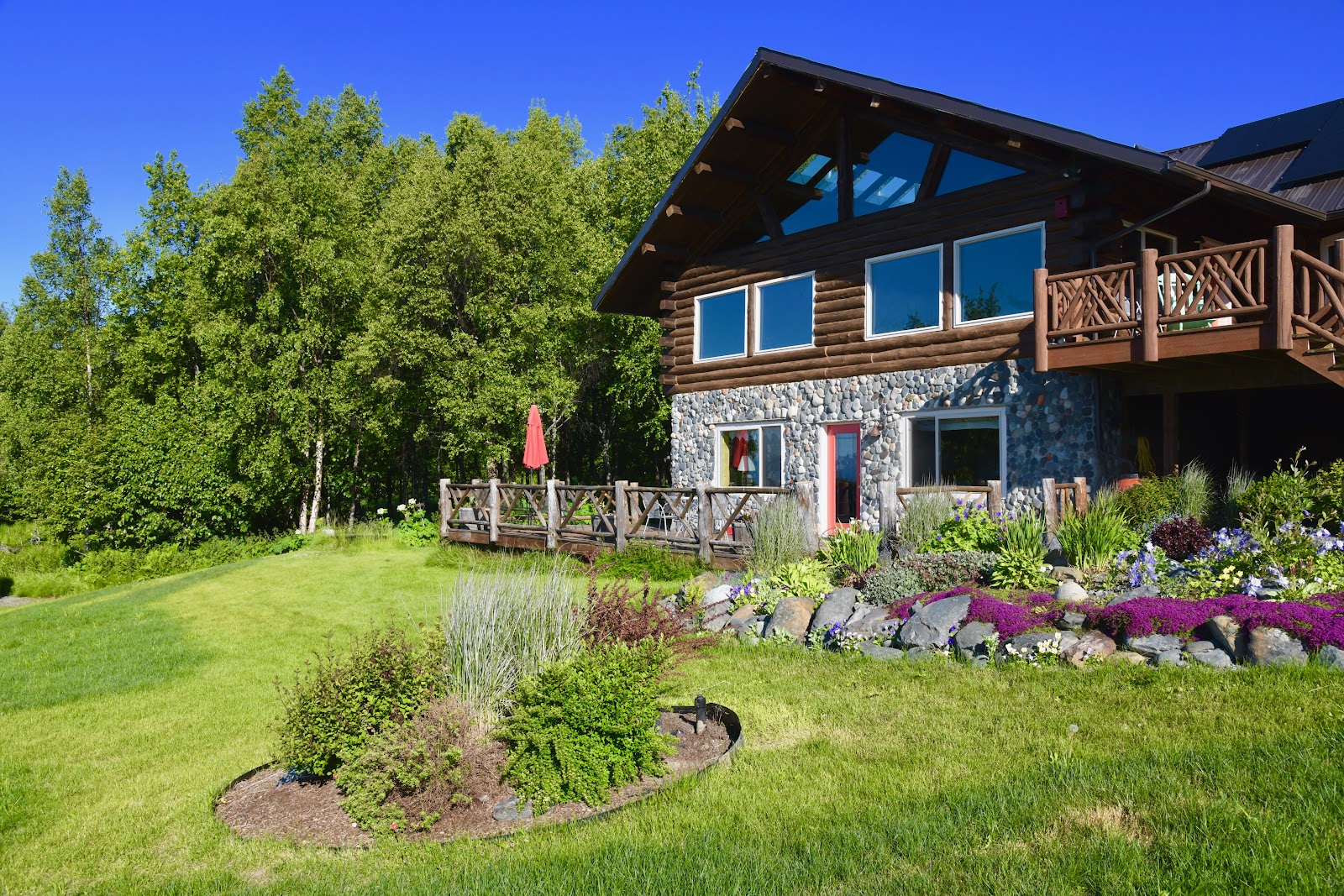
The bluff itself is the second environment and its vegetation is the low coastal mix: alder, willow, spruce in stands, and the berry ground that gives the area its character — blueberry, crowberry and low shrubs across the open slopes.
That berry ground is the thing worth knowing, because it turns. In late August the low shrubs on the bluff go red and crimson across whole slopes, which is the tundra effect at sea level — a field of colour rather than a scattering of trees, and it happens weeks before foliage anywhere in the lower forty-eight.
Used as a foreground layer with a low camera, that colour gives depth to a bay frame in a way nothing else does; and used as a background mass on a longer lens it is a wall of red behind a couple.
Spruce is the shade. Where there are stands, the canopy edge is the reliable position: a metre or two inside at the margin of an opening gives soft directional light in front and near-darkness behind, three or four stops of free separation. Coastal spruce on a windy bluff is frequently wind-shaped and one-sided, which means a stand that gives shade from one direction gives none from the other — worth checking rather than assuming.
The metering trap is severe here: dark spruce makes a meter overexpose a face by a couple of stops and a bright bay fools it hard the other way, and those positions can be a few paces apart. Manual, metered on skin, reset at every transition.
The beach below the bluff is the third environment and getting to it is a scheduling question rather than a photographic one. A path down a bluff takes real time with a wedding party in formal shoes, and the same again coming back — which makes it a deliberate twenty or thirty minute expedition placed in the running order rather than a wander.
What it gives is worth the trip. From the beach the bluff rises behind, which gives scale that a top position cannot; wet flats and sand are specular rather than diffuse, so they mirror the sky and the figures on them; and the rock, kelp and tidepools at low water give foreground structure.
The tide decides whether the beach exists at all at a given hour, which is another reason to check it.
The eagles are the fourth element and they need a long lens rather than a plan. Homer’s eagle population means birds perched on bluff trees, on the beach and in the air are an ordinary sight — and a frame with a wedding party and a bald eagle in it is realistic here rather than fanciful. The caution is distance: a long lens from where the party already is, rather than an approach.
The long evening is the site’s greatest practical asset. Because the sun’s path is shallow at this latitude, the low warm light lasts two or three hours rather than forty minutes, and in June the usable light runs until near eleven at night.
And because the site faces south, the sun sets to the northwest rather than into the view — which means the warm colour at the end of the day is off to one side of the bay rather than behind it. That is worth knowing because it changes where to stand: the colour frame looks along the bluff to the west rather than straight out at the mountains, and finding that position is ten minutes of walking beforehand.
The compensation is that the mountains across the bay catch the last light directly, which produces the site’s signature evening condition: the bluff already in shade while the Kenai Mountains and their glaciers are lit gold across the water. That is made by exposing for the lit range and lifting the faces with a close warm-gelled source, and it is the best frame of the day.
Indoors, a lodge in this climate is timber and it absorbs, which means the ambient is a stop or two below what the eye estimates and the background drops away for free. A subject a metre from a window turned about forty-five degrees to it gets horizontal light with steep fall-off — room lights off, custom white balance on a face — and because the sun is low all year, that light travels much further into the room than it would further south.
- Expose for the bay and the mountains; lift the faces close and gelled
- Longer lens across the bay, and meter so any glacier ice holds its blue
- Check the tide: it decides the foreground of every wide frame
- Get low and use the red berry ground as a foreground in late August
- The sun sets to the northwest, not into the view — walk to find the colour
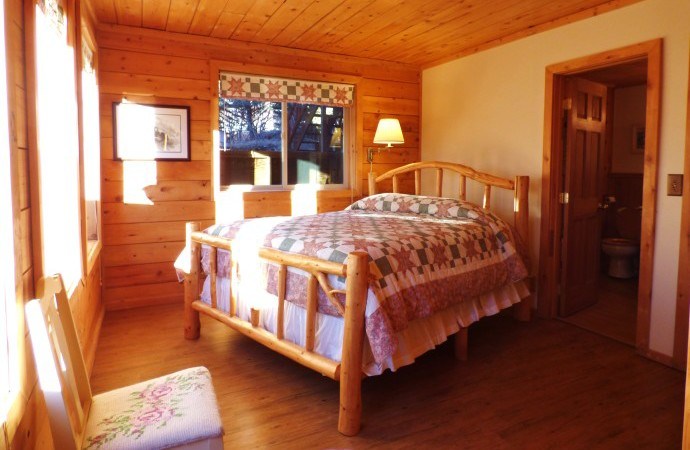
The Kachemak Bay year
This coast has a maritime Alaskan climate: wet, cool, with a narrow temperature range and the enormous daylight swing that defines the state.
Midwinter gives about six hours of daylight with the sun reaching only about seven degrees above the horizon, which means the whole short day is an extended twilight — and on a south-facing bluff that is the best possible orientation for it, because the low sun is directly in front of the site for the entire short day.
That makes winter genuinely good here rather than merely survivable. A clear December afternoon on a south-facing Alaskan bluff gives raking light across the bay and full-on light on the mountains opposite, for hours, with no bad hour in it at all.
Snow is the winter asset: the best natural fill available, lifting every shadow and throwing light upward into faces. Snow against near-black spruce and grey-green water is the widest brightness range in this guide — expose for the snow and let the conifer go black, overexposing deliberately relative to the meter, which snow fools by about two stops.
The costs are wind, which on an exposed bluff in winter is serious; cold that drains batteries fast; a camera that fogs when carried into a heated lodge; and a short day. Spares in an inside pocket and bodies bagged until they warm.
Aurora is possible from September to April and the cloud cover on this coast makes clear nights less frequent than in the interior. It is a possibility rather than a plan.
Break-up in April and May is the least attractive time of year: patchy dirty snow, mud, bare alder and cold water. On this coast spring arrives earlier than in the interior because the winters are mild, and May is when the bluff begins to green.
June is when the season opens properly. The green arrives fast, the days are enormous, the bay is at its calmest, and the wildlife is at its most active. Mosquitoes are less of a problem on a windy bluff than in sheltered woodland, which is a genuine advantage of this site.
July and August are the warmest months and the busiest. Whales are in the bay in summer, salmon run, and the eagles and otters are everywhere — which makes the long lens worth carrying throughout.
Late August into September is the best season and it is not close. The berry ground on the bluff turns red and crimson; alder and cottonwood turn gold; the alpine tundra across the bay turns red and orange; the first snow appears on the Kenai Mountains; the crowds thin; and the days are still long enough to work in.
Red bluff, gold alder, a grey-green bay, red tundra and fresh snow on the mountains opposite, with blue glacier ice among them, is the strongest combination this site produces — and the window is roughly the last week of August through the middle of September.
September has one further advantage here: the highest tides of the year tend to fall near the equinoxes, which for a site whose wide frames benefit from a full bay is worth knowing when choosing a date. And the air is at its clearest of the year, which is when the compressed mountain and glacier frames hold the most detail.
The autumn caveat is weather: September brings the first of the season’s storms to this coast, and wind-driven rain on an exposed bluff removes every outdoor option at once. It cannot be planned for, only acknowledged, and it is why the covered alternative matters.
October brings the heaviest rain and the shortening days, and by November the season has closed.
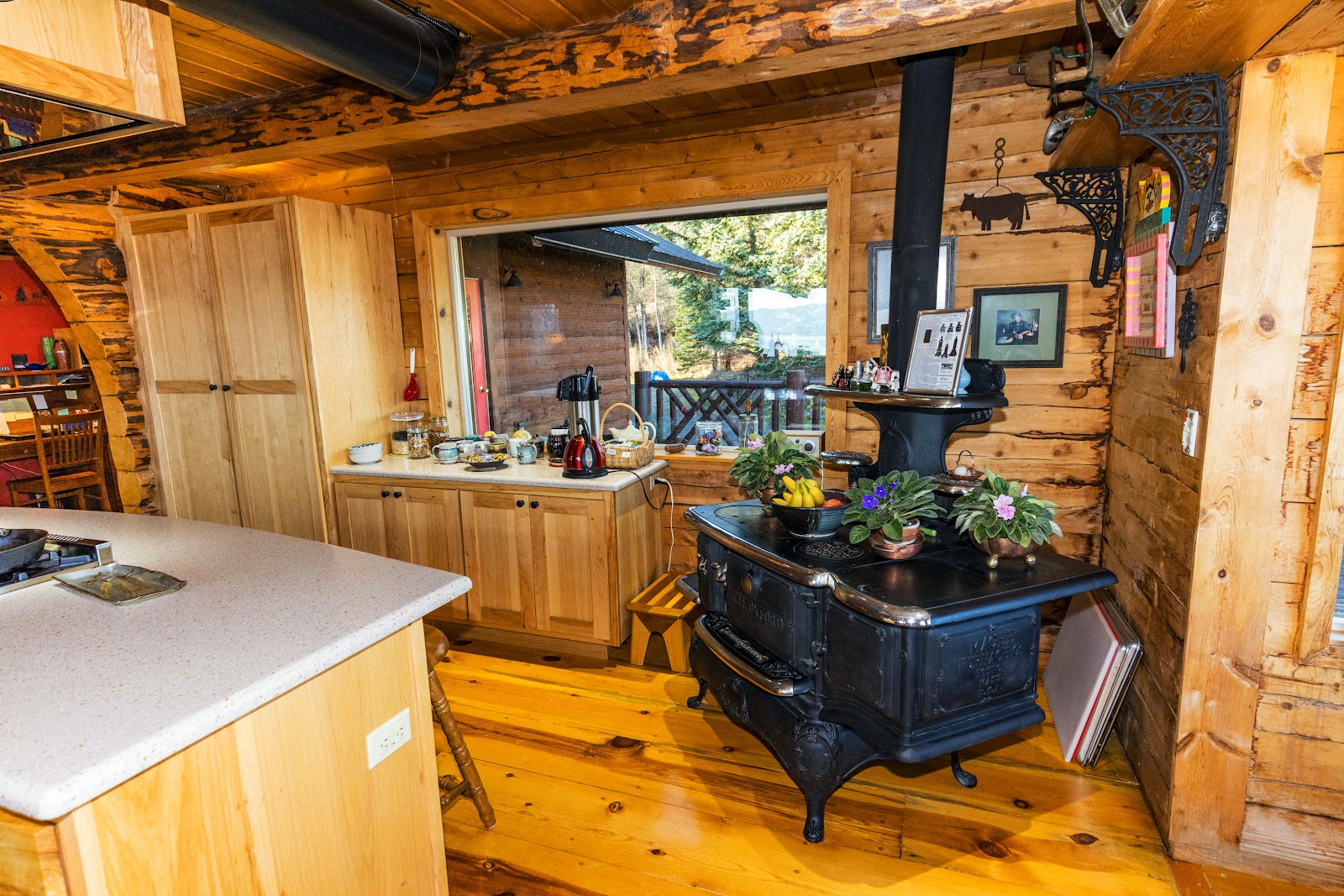
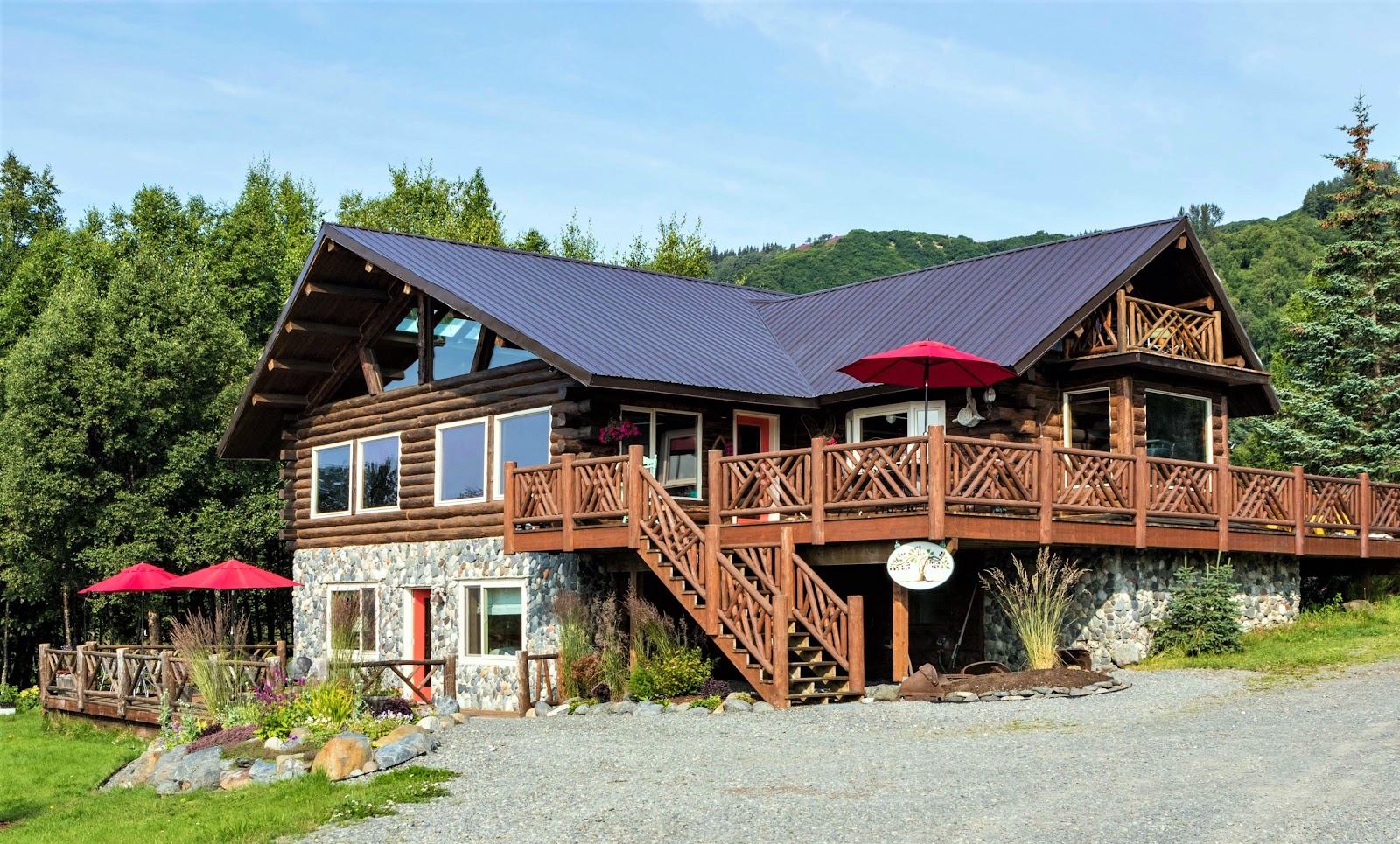
More frames from Blueberry Lodge
Blueberry Lodge wedding photography: common questions
Why does the south-facing direction matter?
At this latitude the sun stays in the southern sky and never gets high, so a south-facing view is raked and modelled for most of the day rather than backlit.
How is the view exposed?
For the bay and the mountains, with the faces lifted by a close warm-gelled source. Metering on faces gives a washed-out range.
What about the glaciers across the bay?
Meter so the ice holds texture — a stop over and the blue clips to white — and set the white balance for the faces, because the blue is the subject.
Does the tide matter from a bluff?
Yes, for the foreground. High water gives a full bay and reflections; low water gives a broad ribbed expanse that is a graphic foreground layer.
Where does the sun set?
To the northwest, off to one side of the view rather than into it. The colour frame looks along the bluff rather than out at the mountains.
When is the site at its best?
Late August into mid-September: red berry ground on the bluff, gold alder, red tundra and fresh snow across the bay, with the year’s clearest air.
More Alaska venue guides
We are writing a photographer’s guide to every venue we would happily shoot in Alaska. Here are three more, plus the full index:
- Eagle Crest Lodge, Eagle River: The Problem, and Four Ways Out
- Glacier View Lodge, Glacier View: One Frame, and How It Is Made
- Hearthside Lodge, Talkeetna: The Building’s Own Logic
Planning a wedding at Blueberry Lodge?
A bluff facing the right way. Tell us your date and we will check the tide.