 Salmonberry Inn, Anchorage: One Frame, and How It Is Made
Alaska Botanical Garden, Anchorage: A Walk Through the Site
A garden at sixty-one degrees north has six good weeks and a light that never gets hard.
This is a walk through the site in the order a wedding day tends to use it, and two facts about a subarctic garden govern everything on it.
The first is the season, and it is far shorter than anywhere else in this guide. At this latitude the growing season runs roughly from late May to early September — about a hundred days — which means the garden goes from bare ground to full growth and back again in a little over three months. A date in mid-May and a date in mid-June are two entirely different gardens.
The compensation is that plants grow with startling speed under twenty hours of daylight, and northern perennials are correspondingly vigorous. The garden at its peak in July is denser and more colourful than the length of its season suggests, which surprises people.
The second fact is the light, and it is the thing that makes a northern garden unexpectedly easy to photograph. At around sixty-one degrees north the sun reaches only about fifty degrees above the horizon at midsummer noon, and far less the rest of the year — which means it rakes rather than falls, all day.
The vertical overhead sun that makes a garden unusable at noon in the lower forty-eight simply does not occur here. There is no hour that has to be avoided, faces are modelled rather than flattened at any time of day, and the dappling that ruins a canopy position further south is far less severe because the light comes in at an angle.
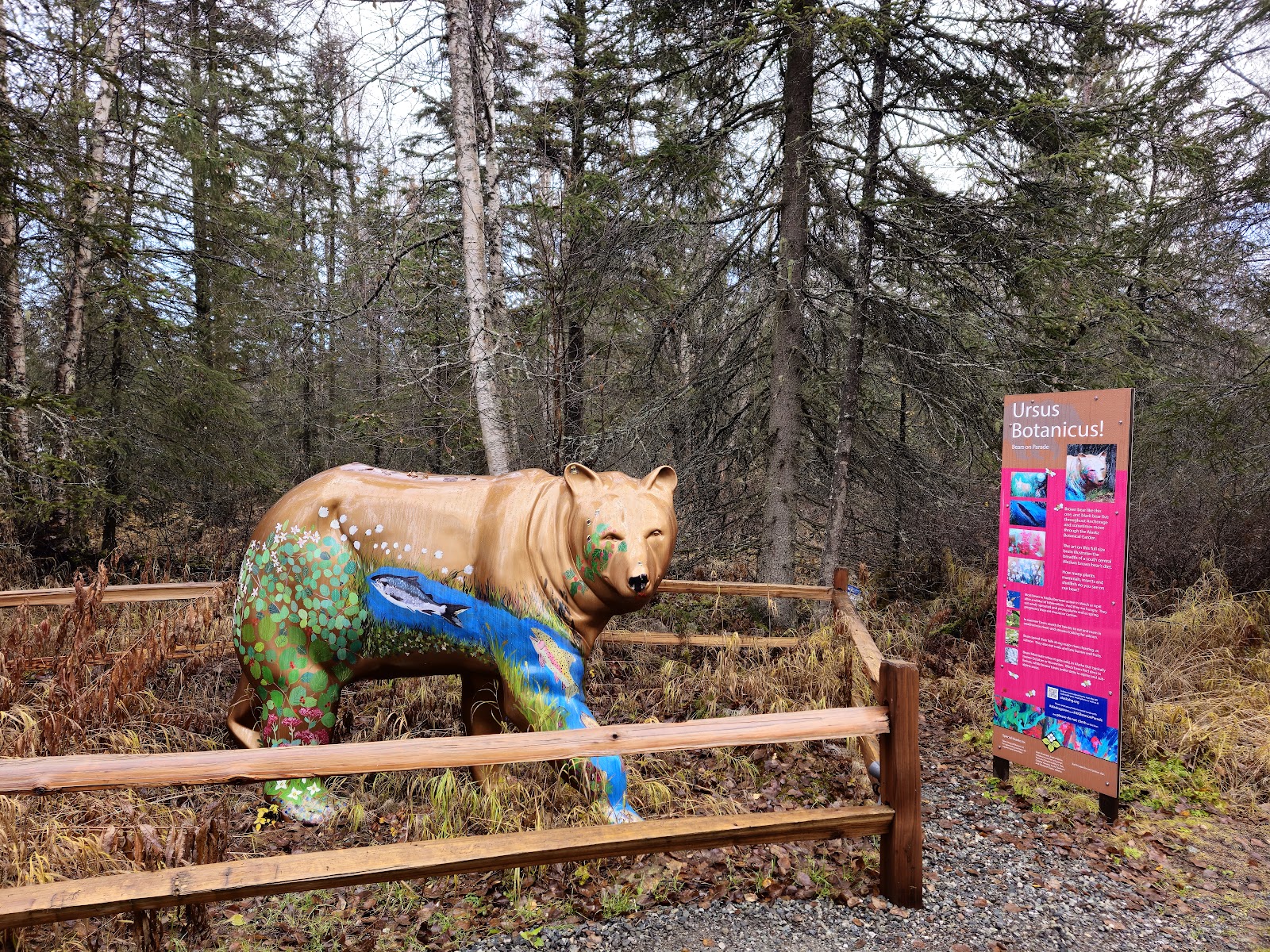
The third element is the setting: this is boreal forest — white and black spruce, paper birch, cottonwood and alder — which gives the surrounding structure, the shade and the autumn colour.
We have not photographed a wedding at the Alaska Botanical Garden; subarctic botanical gardens behave consistently. Which areas are available and under what conditions, guest limits, the covered alternative, what the path access is like, and what the bear and wildlife guidance is are questions for their team — and the last of those is a genuine planning matter in Anchorage rather than a formality.
Alaska Botanical Garden at a glance
| Where | Boreal forest garden at Anchorage, Alaska, around 61° north |
| The season | Roughly late May to early September — about a hundred days |
| The light | The sun never gets high, so it rakes all day and there is no bad hour |
| The forest | Spruce, birch, cottonwood and alder around the planted areas |
| Ask first | Areas available, guest limits, covered alternative, wildlife guidance |
The planted areas, and the light that never gets hard
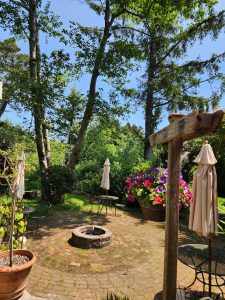
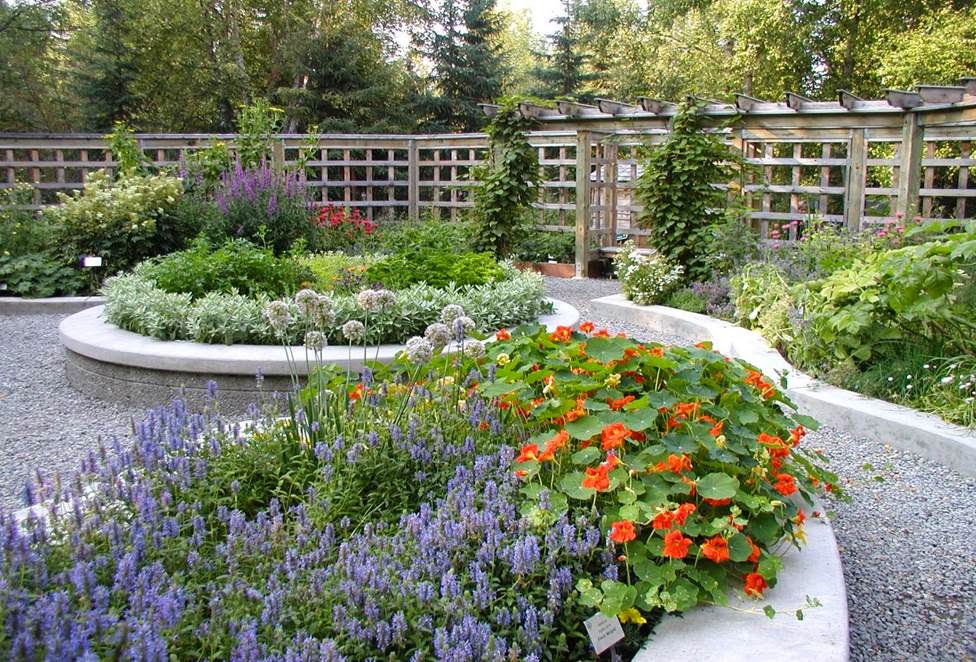
Start in the planted beds, because they are what the garden is for and because they behave better here than a garden further south does.
The reason is the sun’s angle. A perennial bed in full sun at noon in Pennsylvania has clipped highlights, hard shadows and no modelling; the same bed at noon in Anchorage has light arriving at fifty degrees or less, which rakes across the planting, puts texture into every leaf and flower, and leaves shadows that are directional rather than vertical.
So the usual instruction to avoid the middle of the day does not apply. What applies instead is that the light is good all day and the difference between eleven and seven is one of direction rather than quality — which means the position matters more than the hour.
Flower colour still needs the standard exposure discipline. A saturated red is the first thing in a frame to lose detail, clipping in one channel while the rest of the picture still looks correct — so exposing for the reds is the rule, and skin can be lifted afterwards. Northern perennial gardens tend toward strong blues, magentas and yellows, and blue in particular is easy to overexpose without noticing.
Thin petals transmit light as well as reflecting it, which means a bed lit from behind or the side glows rather than being lit from outside. With a sun that rakes all day, that backlit condition is available far more of the time here than it is in a garden at forty degrees north.
A custom white balance set on a face in position is worth the thirty seconds, because a garden in boreal forest bounces green from every surface and the overcast light that is common here is cool. A daylight preset renders both badly.
The garden’s structure is the next element and in a northern garden it is different from a temperate one. There is very little clipped evergreen hedge, because the species that make good hedging further south do not thrive at this latitude — which removes the reliable dark background that most gardens in this guide supply.
What replaces it is spruce. White and black spruce are dense, dark and narrow-crowned, and a spruce mass behind a subject is three or four stops down — which is the same free separation a hedge gives, with a different shape. The metering correction is identical: a meter looking at dark spruce overexposes a face by a couple of stops, so metering on skin in manual is the rule.
Birch is the other structural species and it does the opposite. Paper birch has bright white bark, which means a birch stand is a pale background rather than a dark one — and in a frame it is a strong graphic element of white verticals. A subject against birch needs the separation built by light rather than by tone, and the meter will underexpose because the bark is bright.
That pairing is the northern garden’s signature: white birch trunks and near-black spruce in the same frame, which is a contrast no temperate woodland offers. Used deliberately it is the strongest background on the property.
Alder is the understorey and it is worth knowing because it is everywhere: a dense low thicket that gives no useful shade and no useful background, and which grows fast enough to close a path in a season.
The forest, the practicalities, and the very long day
The boreal forest around the planted areas is the site’s shade and its enclosure, and the rules differ from a temperate wood.
Spruce blocks almost everything. A mature spruce stand is dark, and the canopy edge — a metre or two inside at the margin of an opening — gives soft directional light in front and near-darkness behind, which is the same physics as a window in a dark room and the most reliable position on the property. Crowns here are narrow and conical, which means full shade is inside a stand rather than under one tree.
Birch and cottonwood are the deciduous element and they transmit rather than block: broad thin leaves pass light through, so the light beneath them is soft, even and green-tinged. That is the most flattering outdoor light in the garden and it needs a custom white balance.
Because the sun is low, the dappling problem that dominates temperate woodland is much reduced here — light arriving at an angle through a canopy makes long soft patches rather than small hard ones. The test still applies, which is to look at the face rather than the ground, but it fails far less often.
The ground is the northern practicality that surprises people. Boreal soils are shallow over permafrost or glacial till in places, drainage is poor, and paths through a garden at this latitude are frequently boardwalk, gravel or wet — which is a real consideration for a party in formal shoes and worth raising in advance.
Mosquitoes are the second and they are not a joke in June and July in Alaska. A ceremony at a wooded garden in early July without any provision for them is uncomfortable in a way that shows in the photographs, and it is worth mentioning to a couple rather than discovering.
Bears are the third and it belongs in a planning conversation rather than a footnote. Anchorage has both black and brown bears within its bounds, and a wooded garden is bear habitat — so whatever the venue’s guidance is should be followed, and that is their answer rather than a photographer’s judgement.
The very long summer day is the site’s greatest practical asset and the thing most worth building a schedule around. Because the sun’s path is shallow, the low warm light that lasts forty minutes further south lasts two or three hours here — and in June the usable light runs from early morning until near midnight.
So a wedding here does not have to compress its portraits. A ceremony at six and a portrait session at nine is entirely reasonable, and the light at nine will be better than the light at two. That is a real freedom and it should be used deliberately rather than treated as though the day ended at eight.
The corollary is that it never gets properly dark in June, which removes the night frames and adds a long blue twilight instead.
Where the garden has any built structure — a pavilion, a shelter, a gazebo — that is the covered alternative and the reliable rain position: a solid roof blocks the overhead component, restricts the light to a horizontal band, and cannot dapple. In a climate where rain is frequent, knowing what and where it is matters more than at a southern garden.
And rain suits this garden. Boreal planting and moss saturate, birch bark goes luminous against wet dark spruce, the whole brightness range collapses, and there is no dappling anywhere. A grey wet day here is straightforwardly easier than a bright one and it is worth presenting to a couple that way.
- There is no bad hour here — the sun never gets high enough to flatten a face
- Spruce is the dark background; birch is a bright one. Both need manual metering
- Expose for the reds and blues; northern gardens saturate hard
- In June the good light runs to eleven at night — do not compress the day
- Ask about bears, mosquitoes and path conditions. All three are real here
The Anchorage year
A subarctic garden’s year is the shortest in this guide and the most sharply divided, and the differences between consecutive months are larger here than anywhere.
Winter is snow and darkness. Midwinter gives about five and a half hours of daylight with the sun reaching only about five degrees above the horizon, which means the whole short day is an extended twilight — soft, blue-toned, entirely raking, and genuinely beautiful rather than merely dim.
A garden under snow is bare structure: spruce holding its shape, birch bark against white, and the beds reduced to mounds. That is spare and graphic rather than empty, and snow against near-black spruce is the widest brightness range in this guide — expose for the snow and let the conifer go black, overexposing deliberately relative to the meter, which snow fools by about two stops.
Winter is also aurora season: the northern lights are visible on clear nights from roughly September to April, and a frame with aurora over snow and spruce is available nowhere else in this guide. It needs a tripod, a wide fast lens, a few seconds to half a minute, a dark clear sky, and a party willing to stand still in the cold — and it cannot be promised, only planned for.
The costs of an Alaskan winter are real: cold that drains batteries quickly, a camera that fogs badly when brought into a heated building, a very short day, and access that depends on weather. Spares in an inside pocket and bodies bagged until they warm.
Break-up in April and May is the least attractive time of year and it deserves stating plainly: dirty patchy snow, mud, bare trees and nothing green. A garden in early May at this latitude has essentially nothing in it, and a couple should know that before choosing the date.
Late May into June is when it turns, and it turns fast. Under twenty hours of daylight the green arrives within a fortnight, and by mid-June the garden is growing visibly week to week. Mosquitoes arrive at the same time and are at their worst in June and early July.
July is the peak and the garden’s whole case rests on it. Northern perennials flower vigorously under continuous daylight, and fireweed — tall magenta spires that come up across cleared ground in quantity — is the strongest colour the Alaskan summer produces and a genuine foreground rather than a detail. There is a local saying that when fireweed blooms to the top of its spike, six weeks remain until snow, and it is roughly true.
Late August into September is the best season and it is not close. Birch and cottonwood turn gold in late August here — weeks before foliage anywhere in the lower forty-eight — and against near-black spruce that is the strongest colour contrast in this guide. The alpine tundra on the mountains behind the city turns red and orange at the same time, and the first snow appears on the peaks, locally called termination dust.
And by early September the nights are dark enough for aurora while the days are still long enough to work in comfortably. Gold birch, dark spruce, red tundra, fresh snow above and northern lights after dark, all available on one date, is unique in this guide — and the window is short, roughly the last week of August through the middle of September.
October brings rain, dark and the end of the garden’s year. The whole calendar runs several weeks earlier than a photographer from further south expects, and that is the single most useful thing to tell a couple choosing a date.
More frames from Alaska Botanical Garden
Alaska Botanical Garden wedding photography: common questions
How short is the season?
Roughly late May to early September — about a hundred days. A date in mid-May and one in mid-June are two entirely different gardens.
Is midday light a problem here?
No. At sixty-one degrees north the sun reaches only about fifty degrees at midsummer noon, so it rakes rather than falls and there is no hour to avoid.
What replaces hedging as a dark background?
Spruce. White and black spruce are dense and dark, giving three or four stops of separation — and paper birch does the opposite, as a bright background.
What is the signature frame?
White birch trunks against near-black spruce in one frame. It is a contrast no temperate woodland offers.
What practical things should we plan for?
Path conditions, mosquitoes in June and July, and the venue’s bear guidance. All three are real considerations in Anchorage.
When is the garden at its best?
Late August into mid-September: gold birch against dark spruce, red tundra and fresh snow on the mountains, with nights dark enough for aurora.
More Alaska venue guides
We are writing a photographer’s guide to every venue we would happily shoot in Alaska. Here are three more, plus the full index:
- Alaska Wedding Chapel, Seward: One Frame, and How It Is Made
- Alyeska Resort, Girdwood: The Light Through the Day
- Bear Creek Winery, Ketchikan: What It Suits and What It Does Not
Planning a wedding at Alaska Botanical Garden?
A hundred-day garden at sixty-one degrees north. Tell us your date.