 Roots Run Deep, Fruita: The Site’s Own Logic
The Sunrise Amphitheater, Boulder: What It Suits, and What It Does Not
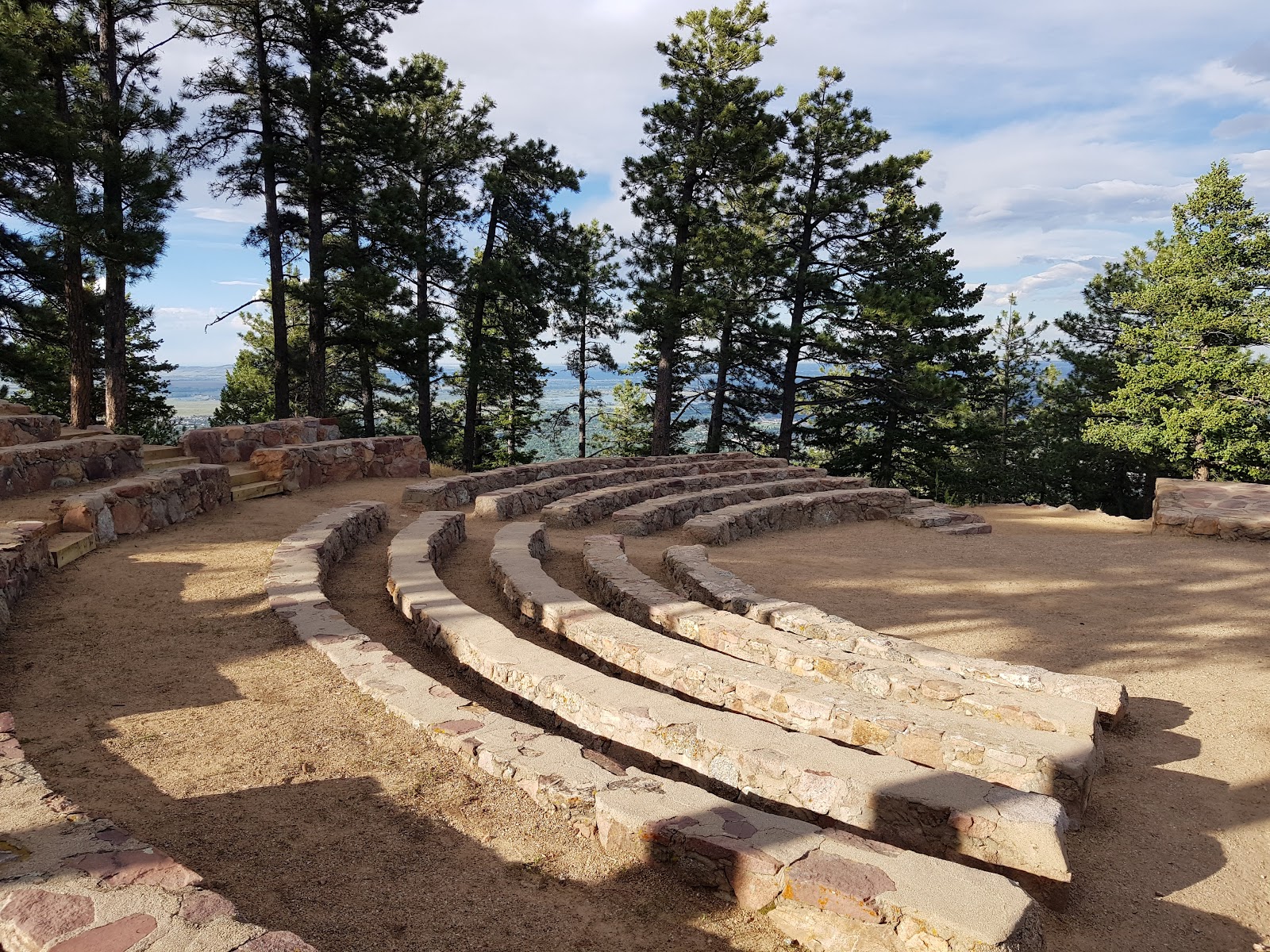
A stone amphitheatre on a summit facing east. It gives one hour and withholds everything else.
A small stone amphitheatre on a mountain summit is the most single-purpose venue in this guide: it exists for one thing, it does that thing better than almost anywhere, and it offers very little else.
The thing is sunrise. A summit amphitheatre facing east looks out over a plain with nothing between it and the horizon, which means the sun comes up out of open distance rather than from behind anything — and at around seven thousand feet, in dry clear air, that light is harder, cleaner and more saturated than the same moment at sea level.
What it withholds is everything a building provides. There is no shelter, no shade, no power, no interior, no facilities and no alternative — it is stone seating on a bare summit, reached by a mountain road, exposed on every side.
That combination means a wedding here is a short, early, weather-dependent event with extraordinary pictures attached, and a couple who understand that in advance will be delighted while one who expects a venue will not.
We have not photographed a wedding at the Sunrise Amphitheater; open summit sites behave consistently. Permits, access, group limits, vehicle arrangements and whether the road is open are questions for the managing authority rather than for a photographer, and the last of those can decide the day.
The Sunrise Amphitheater at a glance
| Where | A summit above Boulder, Colorado, at about 7,000 feet |
| Suits | Sunrise over open distance, and a genuine sense of altitude |
| Resists | No shelter, no shade, no power, and no alternative on site |
| The one hour | First light, and the twenty minutes before it |
| Ask first | Permits, access, group limits, vehicles, whether the road is open |
What it suits
First light is what the site exists for and it is worth being precise about why it is better here than elsewhere.
The site faces east over open plain, which means there is nothing between it and the horizon — so the whole sequence is visible, from the first colour in the sky through to the sun clearing the edge of the world. At a site with terrain to the east, that sequence is compressed into the last part of it; here it runs in full.
Altitude sharpens it. At around seven thousand feet there is meaningfully less atmosphere overhead to scatter light, which means the colours before sunrise are more saturated, the sun when it arrives is harder and cleaner, and the sky above is a markedly deeper blue as it lightens. Dry air also means the transition is fast, which is worth knowing: the good light here arrives and passes more quickly than in a humid climate.
The twenty minutes before the sun appears are the better half, and they are the part most people miss. In that window the sky holds colour, the plain below is still dark, and a couple lit by a modest source against a colouring sky is a frame that no daytime hour gives. It needs the couple in position before anything happens rather than arriving as it does.
The stone seating suits two things. Elevation, because tiered rows mean a camera above a group sees faces rather than the backs of heads; and rhythm, because parallel curved rows of stone give a strong graphic pattern that low raking light turns into a pattern of shadows.
The stone itself suits raking light, as all stone does: light running along a course lifts it, while light facing it square flattens the surface. At sunrise, with the sun coming almost horizontally from the east, every stone edge on the site is raked at once — which is the one moment the architecture reads as strongly as the view.
It suits the couple-as-figures composition, because the scale is genuine: two people on a summit against open distance is a real picture, and the requirement is only that the figures be readable — separated by tone, placed where the eye lands, and lit rather than silhouetted unless silhouette is the intent.
And it suits a short, decisive plan. Twenty minutes of preparation and thirty minutes of light produce four or five extraordinary frames. Treated that way the site is superb; treated as a place to spend an afternoon, it is a hot bare summit with nowhere to sit out of the sun.
What it does not suit
No shelter is the first refusal and it is the one that decides whether a date works. There is no building, no roof and no alternative on the site — which means weather is not an inconvenience but a question of whether the event happens.
At this elevation that matters more than it sounds. Afternoon convection builds almost daily from July into September and those storms produce lightning, which on a bare summit is among the most dangerous places to be in the state. Colorado has one of the highest rates of lightning casualties in the country, and exposed high ground under afternoon convection is precisely the reason.
So a summit ceremony is a morning event in summer, not an afternoon one, and there has to be a named alternative somewhere else entirely — not on the site, because there is nothing on the site. That belongs in the planning rather than in the photography.
No shade is the second and it follows from the same fact. There are no trees on a bare summit and no structure to stand behind, which means after the first hour the site is unusable for faces: hard altitude sun from above, pale stone reflecting from below, and nowhere to escape to. A held diffusion panel works and needs a person and fails in wind.
The honest version is that this is a sunrise venue and nothing else, and saying so in advance is better than discovering it at ten in the morning.
Wind is the third and on a summit it is constant. There is nothing to break it, which means a lightstand is not viable, a veil will not behave, a held panel is a sail, and anything unweighted will move. A source in a hand or on a bracket is the only workable configuration — and at sunrise, before the day’s heating, the wind is at its lightest, which is one more argument for the early hour.
The cold is the fourth and it is larger than people expect. The diurnal swing at altitude in dry air is substantial, and a summit before dawn in any season is genuinely cold — twenty degrees Celsius below the afternoon temperature is normal, and wind chill on exposed ground adds to it. A party in formal clothes on a summit at five in the morning needs coats, and that is a welfare point rather than a preference.
The access is the fifth and it is the practical one. A summit reached by a mountain road means a drive in the dark, parking that may be limited, a walk from wherever vehicles stop, and a road that may be closed seasonally or in weather. Those answers belong to the managing authority and they should be confirmed close to the date rather than at booking, because they change.
And there is no power and nothing may be left. The working assumption is: everything carried, one body and two lenses, a source in a hand, no stands, small numbers, and a plan that fits in the window available.
- This is a sunrise venue and nothing else — say so in advance
- Be in position twenty minutes before the sun; the better half is before it
- Afternoon lightning makes a summit the wrong place in summer
- No stands: wind is constant and there is nothing to break it
- Confirm the road, the parking and the permits close to the date
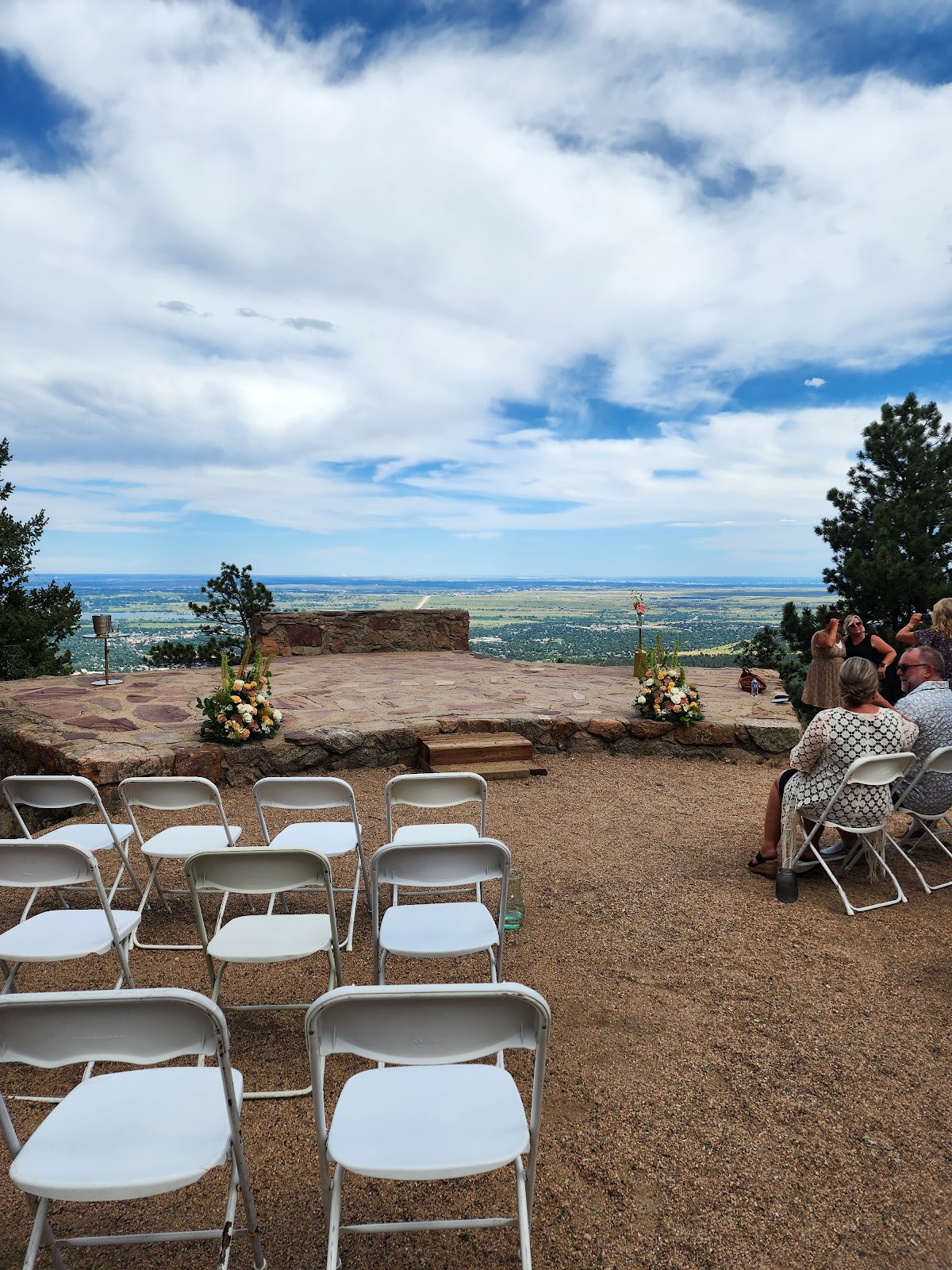
The Colorado year
The seasons decide whether this site is usable at all, and they matter more here than at any building.
Summer is when the road and the site are most reliably open and when sunrise is earliest — which at this latitude means before half past five in June, and that is a real conversation with a couple rather than a detail. The compensation is that the mornings are stable: convection builds later in the day, so a dawn ceremony in July is far safer than an afternoon one.
It is also when the site is busiest, because a summit with a view is a destination. Early is the answer, and at sunrise that is automatic.
Autumn is the best window of the year. The air is at its clearest so the plain below holds detail to the horizon, the mornings are stable, sunrise arrives at a civilised hour, and the temperatures before dawn are cold but manageable. Late September into October is the strongest period — and the aspen in the foothills below turn gold in that window, which means a drive down after the summit gives a completely different second location.
Winter is the real question and the answer is access. At seven thousand feet snow lies and mountain roads close, so a winter date depends entirely on whether the road is open — which is a question for the managing authority and one that cannot be answered far in advance.
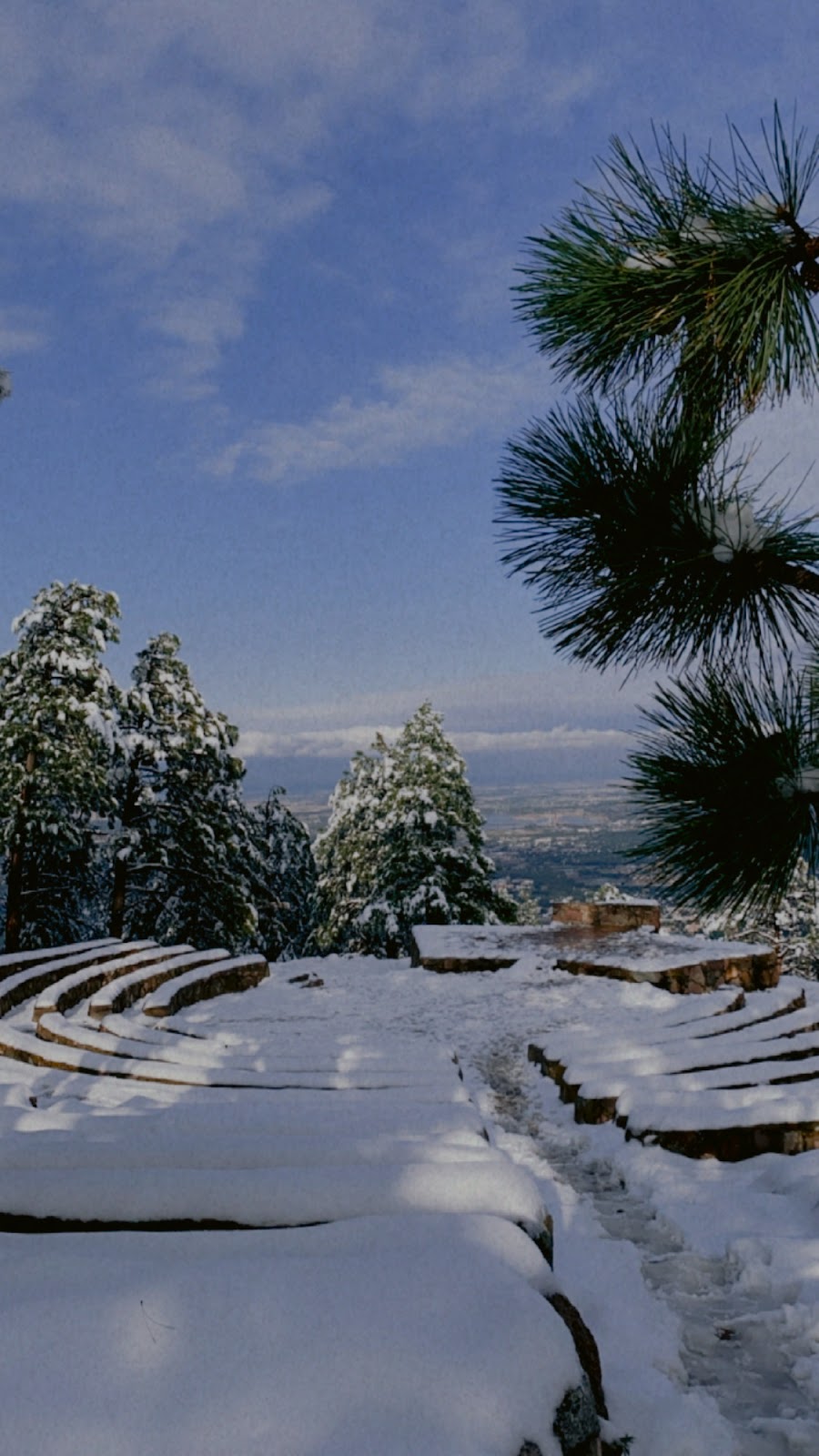
Where it is open, winter gives the strongest version of the site’s frame. The December sunrise is late enough to be civilised, the sun rises further south so the whole sequence is longer, snow on the stone seating is a high-key contrast nothing else provides, and snow on the plain below reflects the colouring sky. Snow is also the best natural fill available, lifting exactly the shadows a low sun carves while fooling a meter by about two stops toward underexposure.
The cost is cold on exposed ground, which in winter at altitude before dawn is severe rather than uncomfortable. That is a welfare judgement and it belongs to whoever is responsible for the party.
Spring is the least useful season: the road may still be closed, the ground is wet or snowbound, and the storm season is beginning. Late May into June is the practical opening of the year.
Two closing practicalities. Cold and altitude both drain batteries, so spares belong in an inside pocket rather than a bag — and a dawn shoot means the coldest part of the day. And the dry air means less fogging than a humid climate, though carrying a body from a warm vehicle into pre-dawn air will still condense it, so equipment should be out and acclimatised before the light arrives rather than after.
The last note is the honest one. This site produces a handful of frames that nowhere else can, at a time of day most couples would not choose, in conditions that require real planning. Told that in advance, the couples who say yes are the right couples for it.
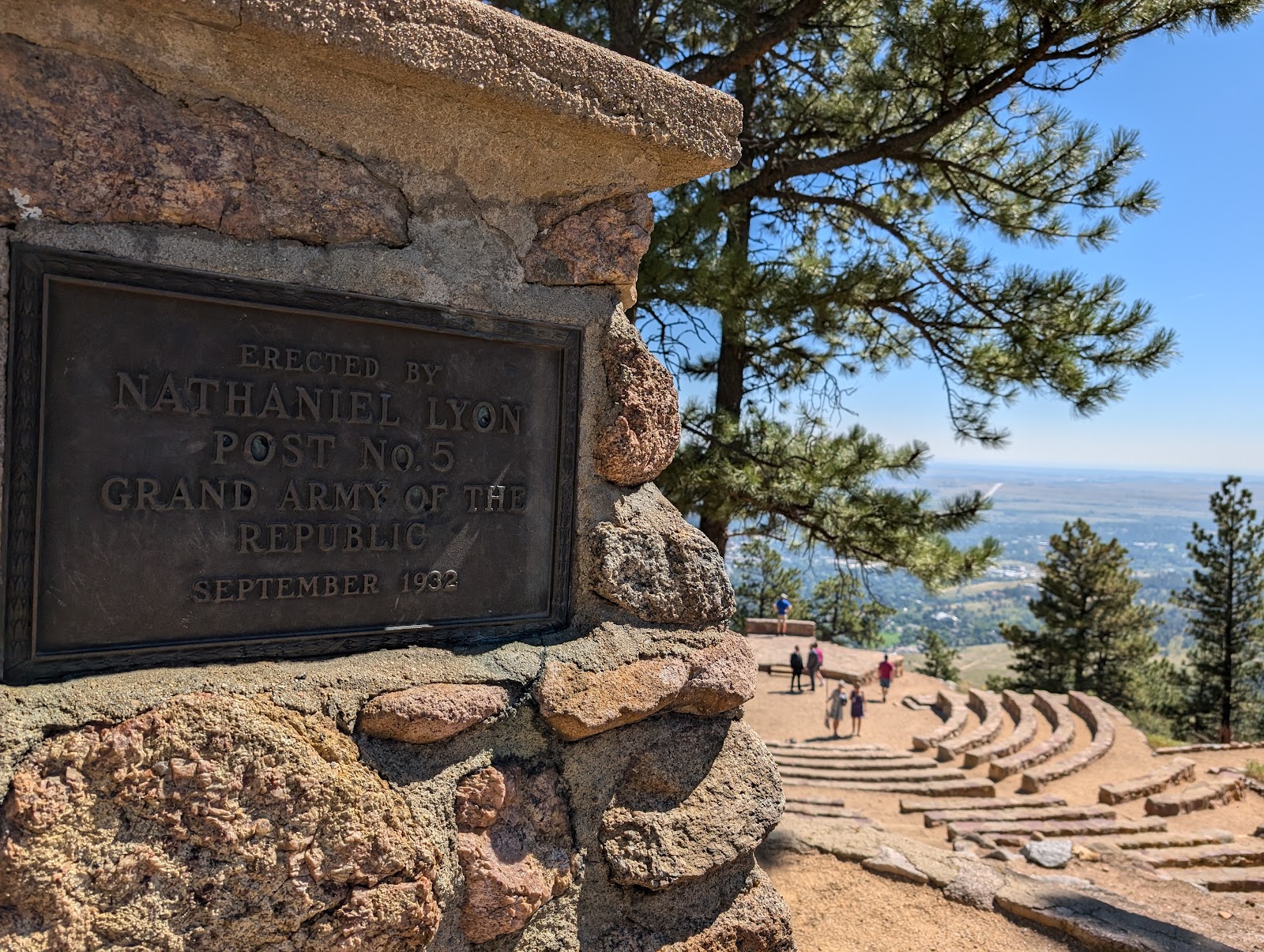
More frames from The Sunrise Amphitheater
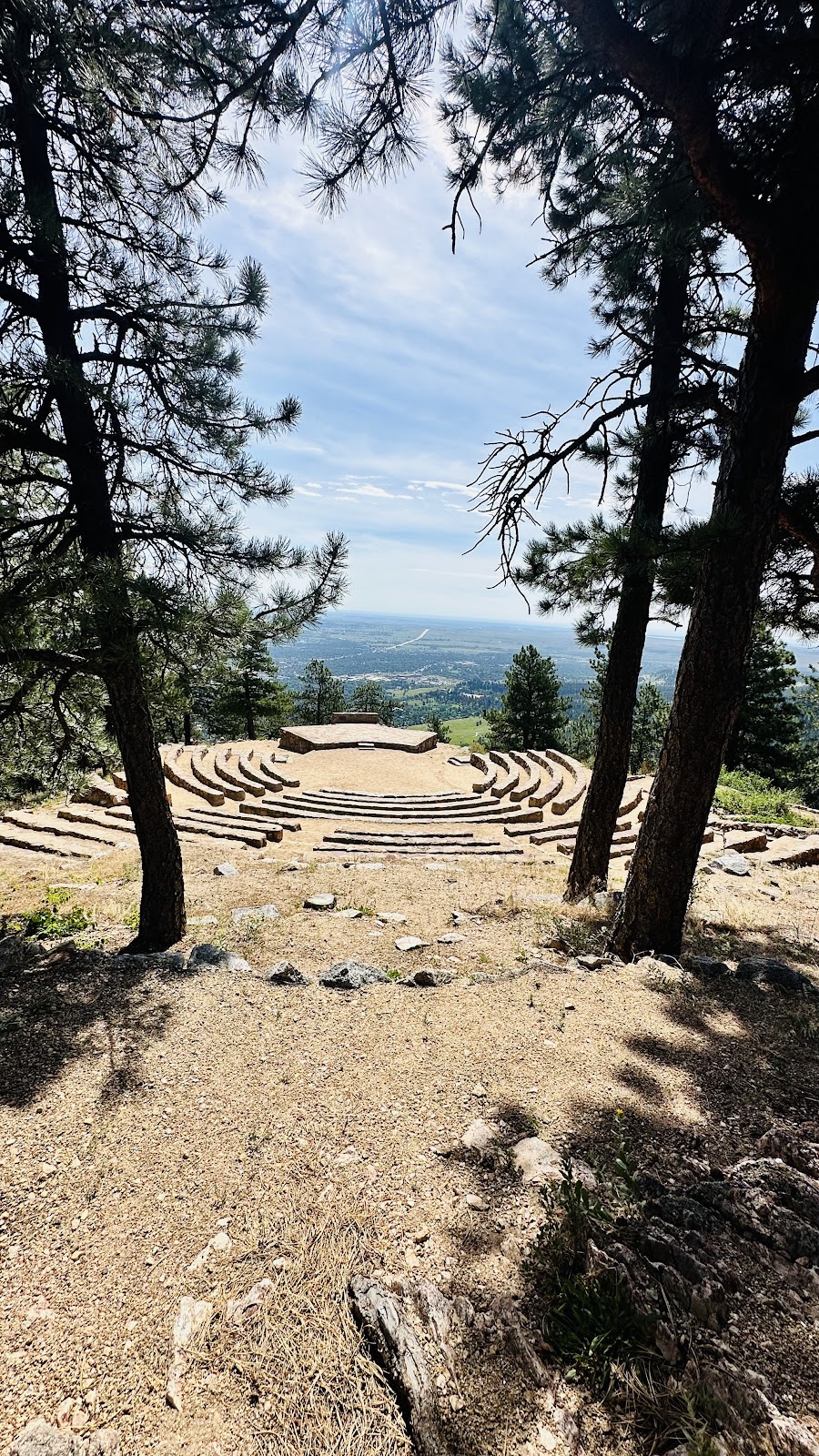
The Sunrise Amphitheater wedding photography: common questions
What does this site do best?
Sunrise over open plain with nothing between the site and the horizon, sharpened by altitude — the whole colour sequence rather than the last part of it.
When should you be in position?
Twenty minutes before the sun appears. The better half of the light is before sunrise, not after it, and it passes quickly in dry air.
Is it usable later in the day?
Not for faces. There is no shade on a bare summit and hard altitude sun from above with pale stone below leaves nowhere to escape to.
What is the main hazard?
Afternoon lightning from July into September. A bare summit is among the most dangerous places to be in a state with one of the highest lightning casualty rates.
What has to be confirmed?
Permits, group limits, parking and whether the mountain road is open — the last of which can decide the day and changes close to the date.
Is winter usable?
Only if the road is open, and it gives the strongest version of the frame: a civilised sunrise hour, snow on the stone, and snow reflecting the colouring sky.
More Colorado venue guides
We are writing a photographer’s guide to every venue we would happily shoot in Colorado. Here are three more, plus the full index:
- Windy Point Camp, Colorado: Field Notes on a High Mountain Camp
- The Woodland Park Zoo, Colorado: One Frame, and How It Is Made
- YMCA of the Rockies, Estes Park: What It Suits and What It Does Not
Planning a wedding at The Sunrise Amphitheater?
One hour, planned properly. Tell us your date and we will check the road.