 Tulsa Country Club: Field Notes on a 1908 Club
The BOK Center, Tulsa: A Building Wrapped in Curved Glass
A curved glass skin around a windowless bowl. Everything worth photographing is in the gap.
A contemporary arena is built on a logic that is the same everywhere and worth understanding, because it puts the photography in an unexpected place.
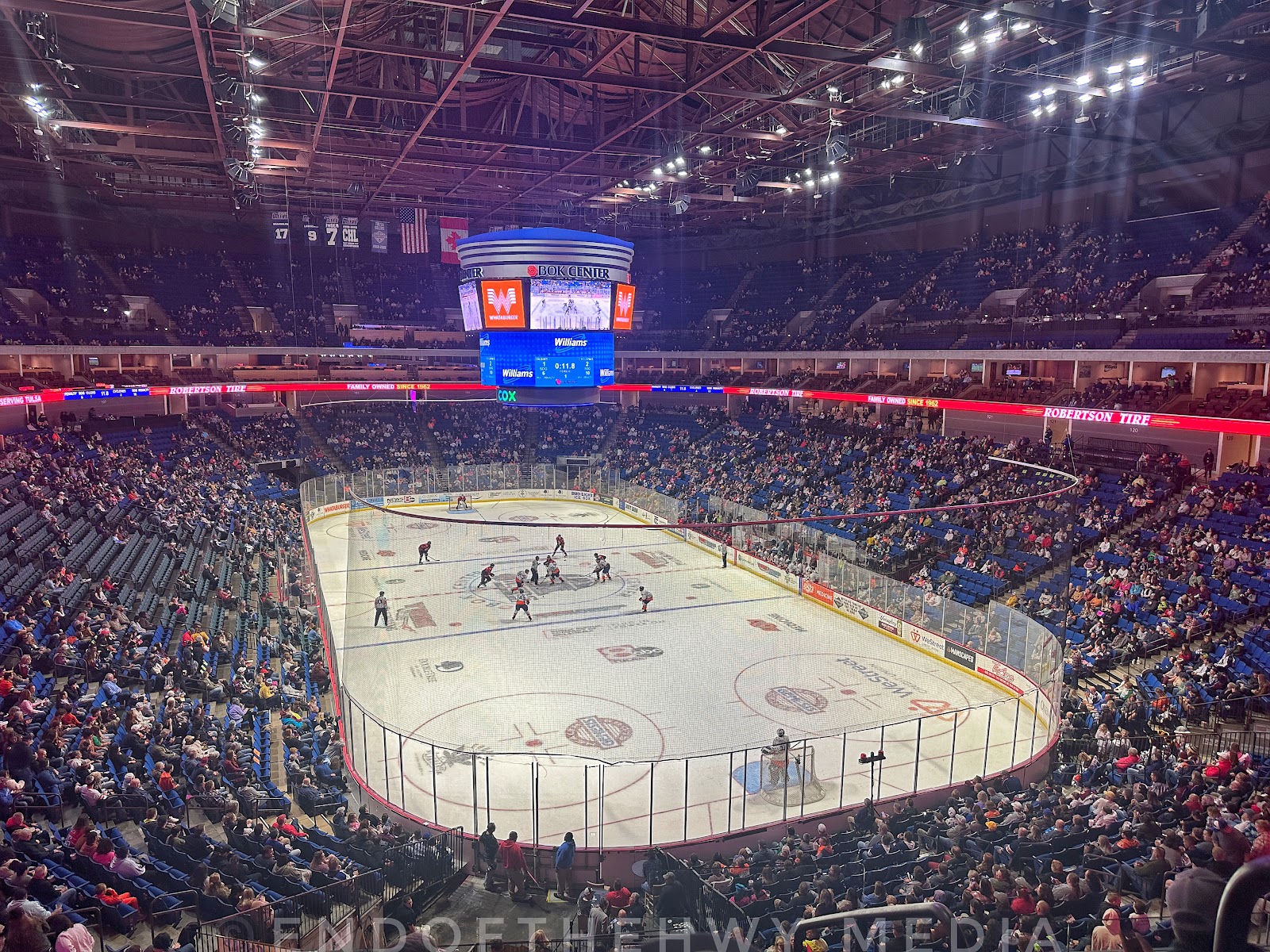
The bowl at the centre has to be sealed. An arena floor needs controllable light for events and no daylight at all, which means the seating bowl is a windowless room lit entirely by high-bay fittings on a rig.
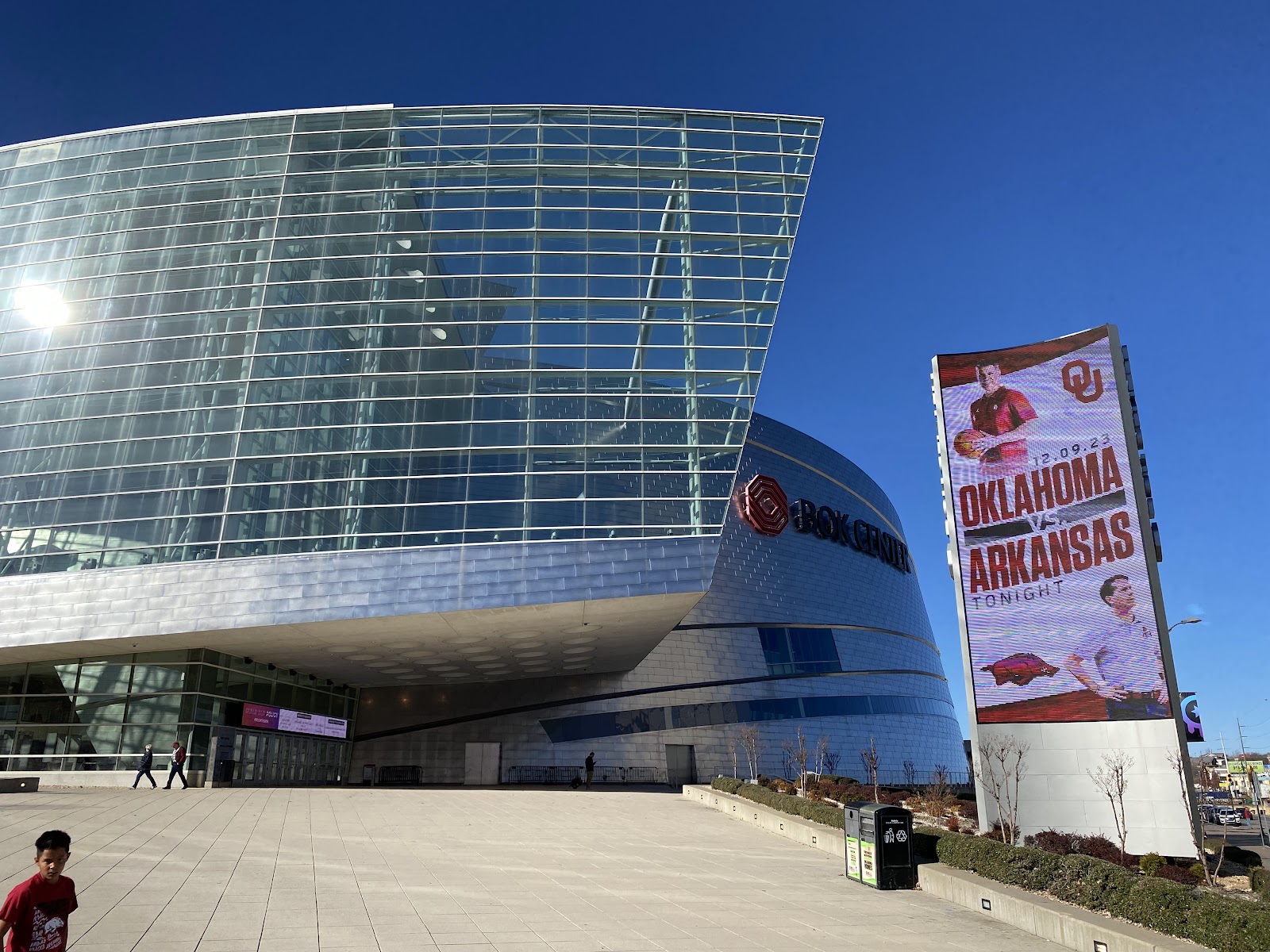
The envelope around it is the architecture, and in a building of this generation that frequently means a curved glazed skin — a glass wall that wraps the structure, admits daylight into the circulation, and makes the building read as light rather than mass from outside.
Between those two is the concourse: the ring of circulation running between the glass and the bowl. That gap is where all the daylight in the building is, and it is therefore where all the good frames are. A photographer who understands the logic walks past the arena floor to work in the concourse, which is the correct instinct here and a strange one anywhere else.
We have not photographed a wedding at the BOK Center; glazed modern arenas behave consistently. Which spaces are included, whether the bowl lighting can be set, and what the access arrangements are are questions for their team.
The BOK Center at a glance
| Where | Downtown Tulsa, Oklahoma |
| The logic | A curved glazed skin around a sealed seating bowl |
| Where the light is | The concourse ring between the glass and the bowl |
| The bowl | No daylight, high-bay fittings, and no bounce from a distant roof |
| Ask first | Spaces included, bowl lighting control, access arrangements |
The concourse, and what curved glazing does
A glazed concourse is an unusually good light source and the curve makes it better rather than worse. A flat glass wall gives light from one direction; a curved one wraps, which means a subject standing near it receives light across a range of angles — softer and more enveloping than a flat window of the same area.
The working distance is the familiar one: two to three metres back for a couple, three metres for a row of people so the fall-off is even rather than dropping two stops across it. And the great advantage of a large glazed wall over a domestic window is that it is big enough to light a group at all, which most venues cannot do without equipment.
Two checks. Architectural glazing is frequently coated for solar control, which shifts the light passing through it, usually towards green or blue. One test frame on arrival rather than a discovery in editing, and a custom white balance set on a face in position if the shift is significant.
And a curved glass wall varies in brightness along its length, because different parts of it face different directions — which means one section is bright and another shaded at any given hour. Walking the concourse and looking at the glass rather than through it takes three minutes and identifies the positions worth using, and at Tulsa’s latitude, about thirty-six degrees north, the north-facing arc is shaded all year and is the most reliable.
The concourse’s second asset is depth. A circulation ring is a long curving space, which means a subject at one point in it has the ring receding behind them and darkening by itself — the cheapest separation available anywhere, and a composition the curve makes stronger than a straight corridor would.
The third is the threshold. Where the concourse meets a portal into the bowl, there is a natural light gradient: standing two or three metres inside a dark portal facing out into the glazed concourse gives a very large soft source in front and total darkness behind. That is the best portrait position in a building of this design and it needs no equipment at all — one test frame at two, three and four metres in shows where the trade sits, watching the wall behind rather than the face.
Hard modern surfaces run under all of it: polished concrete, steel, glass and painted block all reflect, which means the concourse is brighter than the glazing alone would suggest and bounce flash may work even where the ceiling is high, because the walls contribute. One test frame settles it.
And the same surfaces will show a badly placed light at full brightness, so the fifteen-second check from the camera position applies — stand where the camera will stand, look at every reflective surface in the frame, and place the source where none of them sees it.
The bowl, and the frame from outside
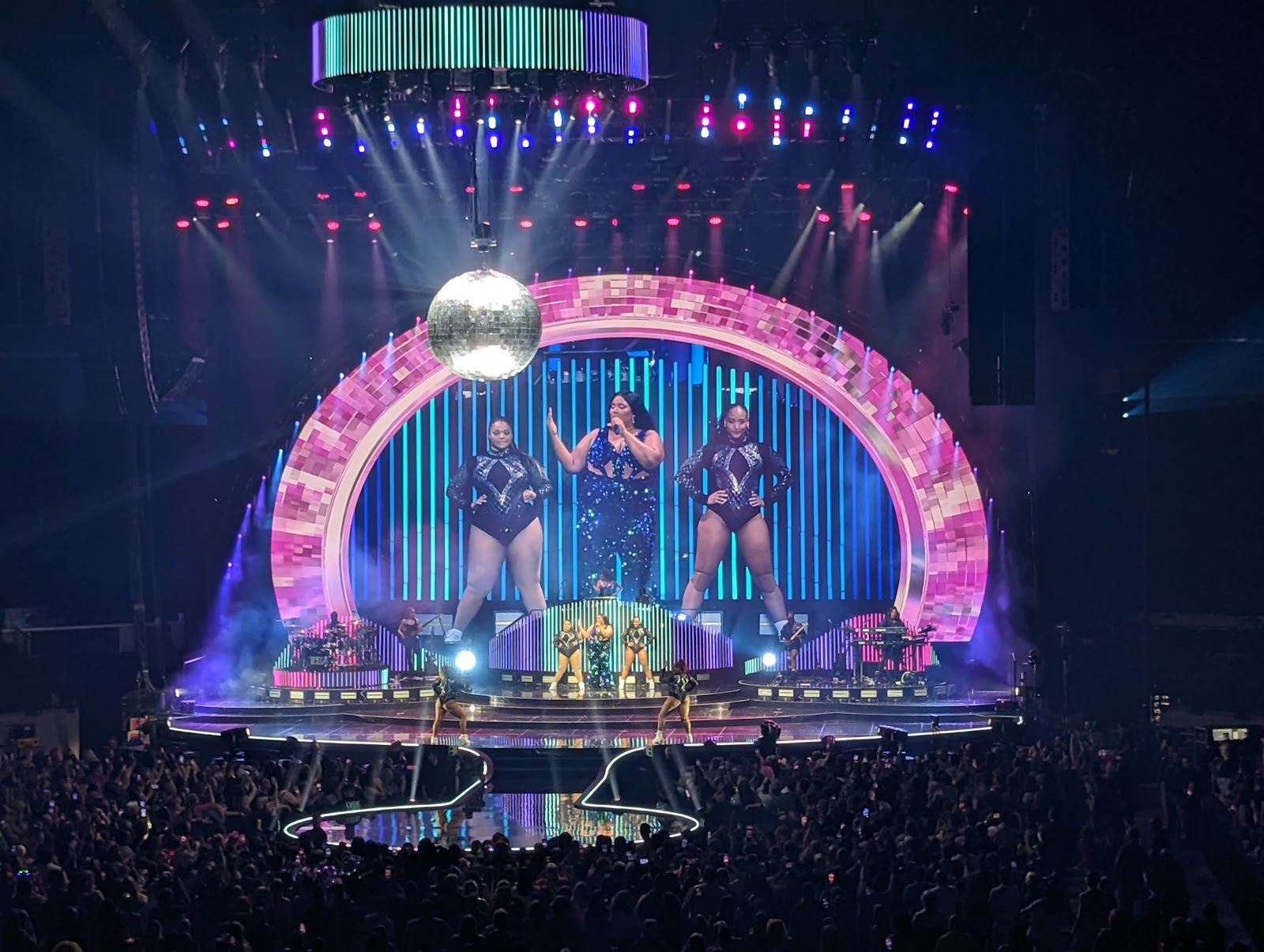
The seating bowl is a sealed room and it has the conditions of a large clear-span space, which are worth knowing mainly so the time is spent in the right places.
There is no daylight, so it never changes through the day — which means every frame there is movable and the daylit concourse frames are the ones that need scheduling.
Bounce is unavailable. A rig and roof structure twenty metres or more above the floor returns essentially nothing from a flash, and one test frame confirms it in five seconds. So a source goes direct into a modifier, close — because light falls off with the square of distance and a modifier at two metres needs a quarter of the output of the same modifier at four.
The high-bay fittings are the other condition and they need identifying rather than assuming. Arena lighting has historically meant discharge lamps, which render skin poorly because their energy sits in a few narrow spectral bands, and increasingly means LED. Either way, one gelled source should own the faces with white balance set to it, and the building’s own lighting treated as background illumination.
Some older discharge fittings also flicker at a rate that interacts with a fast shutter, producing frames in a burst that differ in brightness and colour from one another. A slower shutter averages it out.
The compensation is scale and free separation. A subject can stand twenty metres from anything, which gives a genuinely dark and genuinely deep background at no cost — and the couple-as-figures frame, two people small in an enormous volume with a rig overhead, is a picture nowhere else gives. It needs the figures readable: lit, and placed where the eye lands.
And where the bowl lighting switches in banks — as arena lighting almost always does — turning most of it off is the most valuable control in the building, because it creates exactly the darkness the frame wants. It is worth asking about by name.
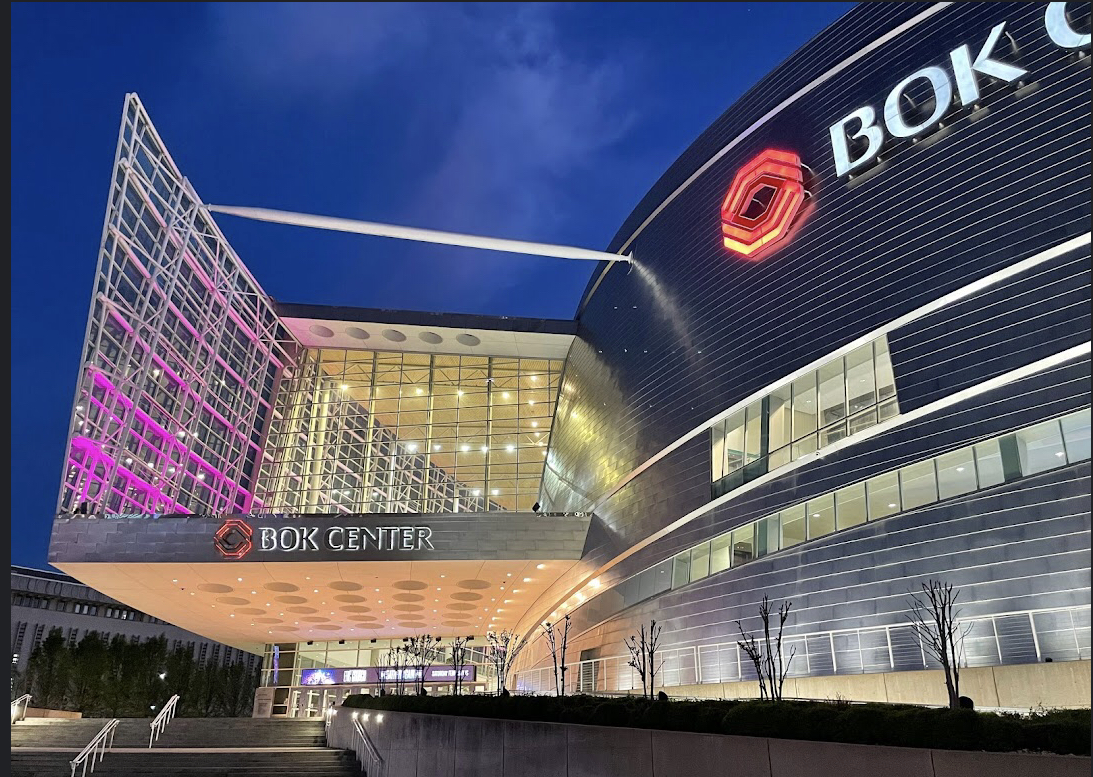
The signature frame, though, is from outside. A curved glass building glows when the interior lighting is on and the exterior light has dropped to match, which happens in the twenty-five to forty minutes after sunset — and in that window one exposure holds the couple, the glowing building and the sky, with the curve reading as a lit form rather than a flat wall.
The position matters: a glazed building glows most from the side with the most interior lighting behind it, which is the concourse rather than the bowl. Worth establishing in daylight rather than discovering in the dark. And since the interior does not change through the day, taking ten minutes for it costs nothing.
By day the same glazing reflects sky and surroundings rather than glowing, which is a different and perfectly good frame — and it wants low sun raking across the curve so the panel grid reads as a texture rather than a flat sheet.
- Work the concourse, not the bowl — that is where the daylight is
- A curved glass wall wraps the light; three metres back for a group
- Stand two or three metres inside a bowl portal facing the concourse
- Ask whether the bowl lighting switches in banks; it is the best control
- Book ten minutes at the crossing; the building only glows then
Outside, and Oklahoma's year
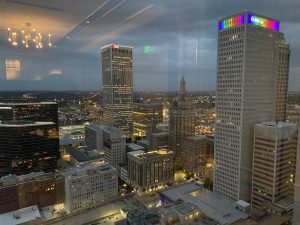
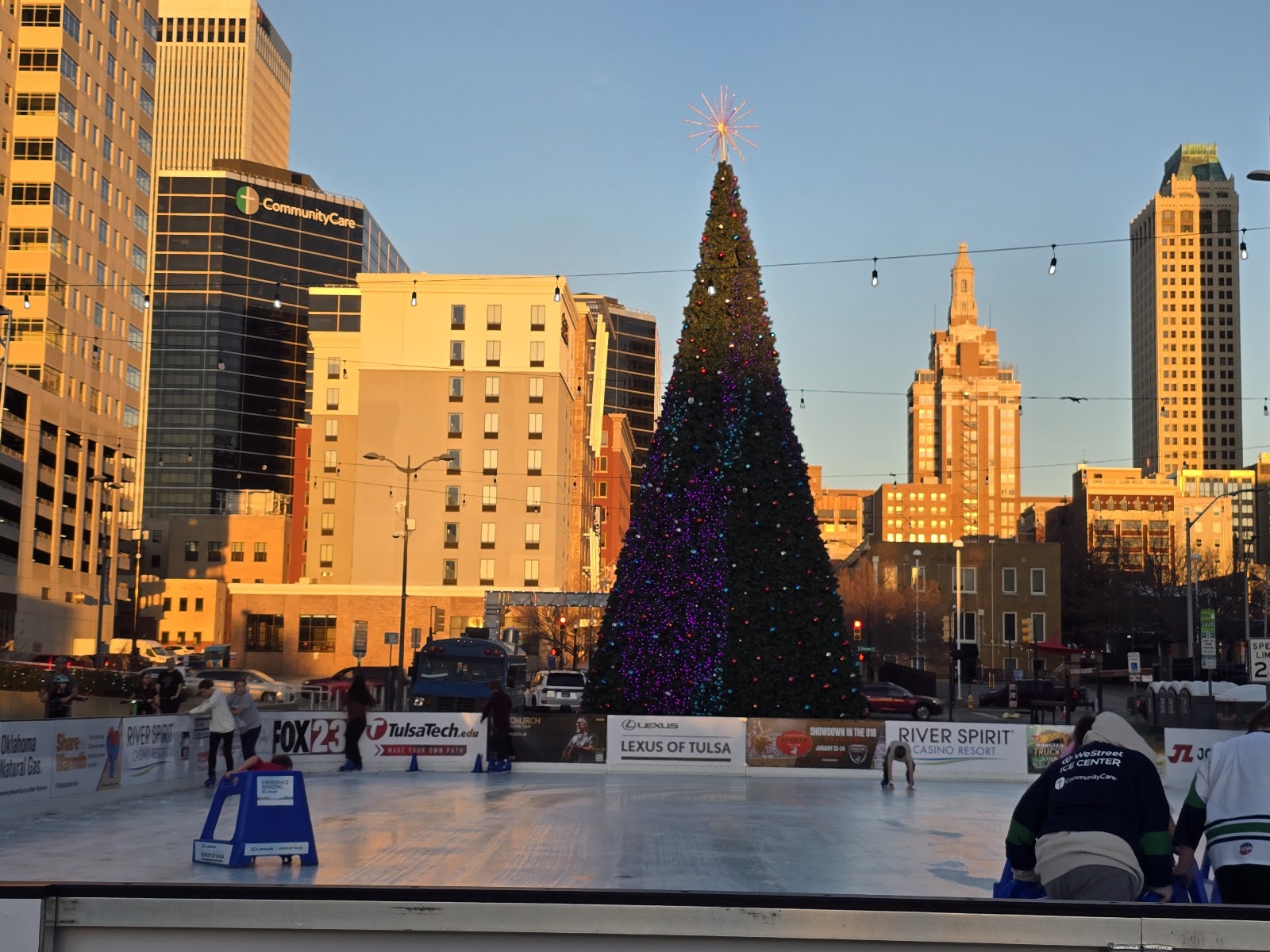
Downtown Tulsa has one exterior asset that is genuinely distinctive and worth building frames around: the city holds one of the largest concentrations of Art Deco architecture in the country, built on oil wealth in the nineteen-twenties and thirties.
That matters photographically because of what Deco is made of. Terracotta, polychrome tile, cast stone and geometric relief ornament all read only under raking light — light running along a moulded surface lifts every step and chevron, while the same light facing it flattens the whole facade into a field of one colour. So the Deco frames are low-sun frames, and a short walk to find which elevation the sun is skimming is worth more than any accessory.
Deco is also strongly graphic and repetitive, which means it suits tight framing and deliberate geometry rather than wide establishing shots — a couple against a single bay of patterned terracotta reads better than the same couple in front of a whole building.
And in a mid-sized city the streets are wide enough to stand back in, which means those buildings can be photographed whole — rare enough to be worth using.
The Arkansas River is the other exterior element, and a riverside position gives water that reflects and doubles anything lit, with camera height deciding whether it reads as a mirror or as its own sediment colour. Low is nearly always the answer.
The seasons here are emphatic and one of them needs naming plainly. Spring in Oklahoma brings severe convective storms, and this region sits in the part of the country with the highest frequency of them — which means a spring date carries a genuine risk of severe weather rather than mere rain. That is a planning fact for whoever is responsible for the party, and at an entirely indoor venue it costs a decision rather than a picture.
The compensation is that a storm approaching across open country is visible for a long time before it arrives, which is both a useful warning and the most dramatic sky the region produces.
Summer is hot and humid, and the humidity rather than the heat is the photographic fact: moist air scatters light, which softens shadows and slightly flattens distance. The fogging problem is severe and an arena makes it worse, because a large building is cooled hard for occupancy — a body carried straight out into July air fogs on every surface at once and does not clear quickly, so a bag opened twenty minutes early is the whole fix.
Autumn is the best light of the year: humidity drops, the air clears, and low sun arrives at a civilised hour, usually late October into November. That is also when the Deco frames are at their best, because the raking angle lasts longer.
Winter is mild by northern standards with cold snaps rather than sustained freeze, and the December midday sun at about thirty-one degrees above the horizon rakes terracotta and tile all day rather than lighting them from overhead — which makes winter quietly the best season for the city’s architecture. Snow is occasional and when it comes it turns the ground into a reflector, brightening the glazed concourse further.
More frames from The BOK Center
The BOK Center wedding photography: common questions
Where is the light in an arena?
The concourse — the circulation ring between the glazed skin and the sealed bowl. The bowl itself has no daylight at all.
Why does a curved glass wall help?
Because it wraps: a subject near it receives light across a range of angles, which is softer and more enveloping than a flat window of the same area.
Where is the best portrait position?
Two or three metres inside a bowl portal, facing out into the glazed concourse — a very large soft source in front, total darkness behind, no equipment needed.
Can you bounce flash in the bowl?
No. A roof and rig twenty metres up returns essentially nothing. Light directly into a modifier, close, because distance costs at the square.
What is the most valuable thing to ask for?
Bank switching in the bowl. Turning most of the lighting off creates exactly the darkness the couple-as-figures frame wants.
What is Tulsa's exterior asset?
One of the country’s largest concentrations of Art Deco. Terracotta and relief ornament read only under raking light, so those are low-sun frames.
More Oklahoma venue guides
We are writing a photographer’s guide to every venue we would happily shoot in Oklahoma. Here are three more, plus the full index:
- The Hard Rock Casino Tulsa: The Light Through a Day
- The River Spirit Casino, Tulsa: Field Notes on a Riverside Resort
- The Tulsa Convention Center: The Problem, and Four Ways Out
Planning a wedding at The BOK Center?
The frames are in the gap. Tell us your date and we will work it.