 The 1886 Crescent Hotel, Eureka Springs: Field Notes on a Hillside Hotel
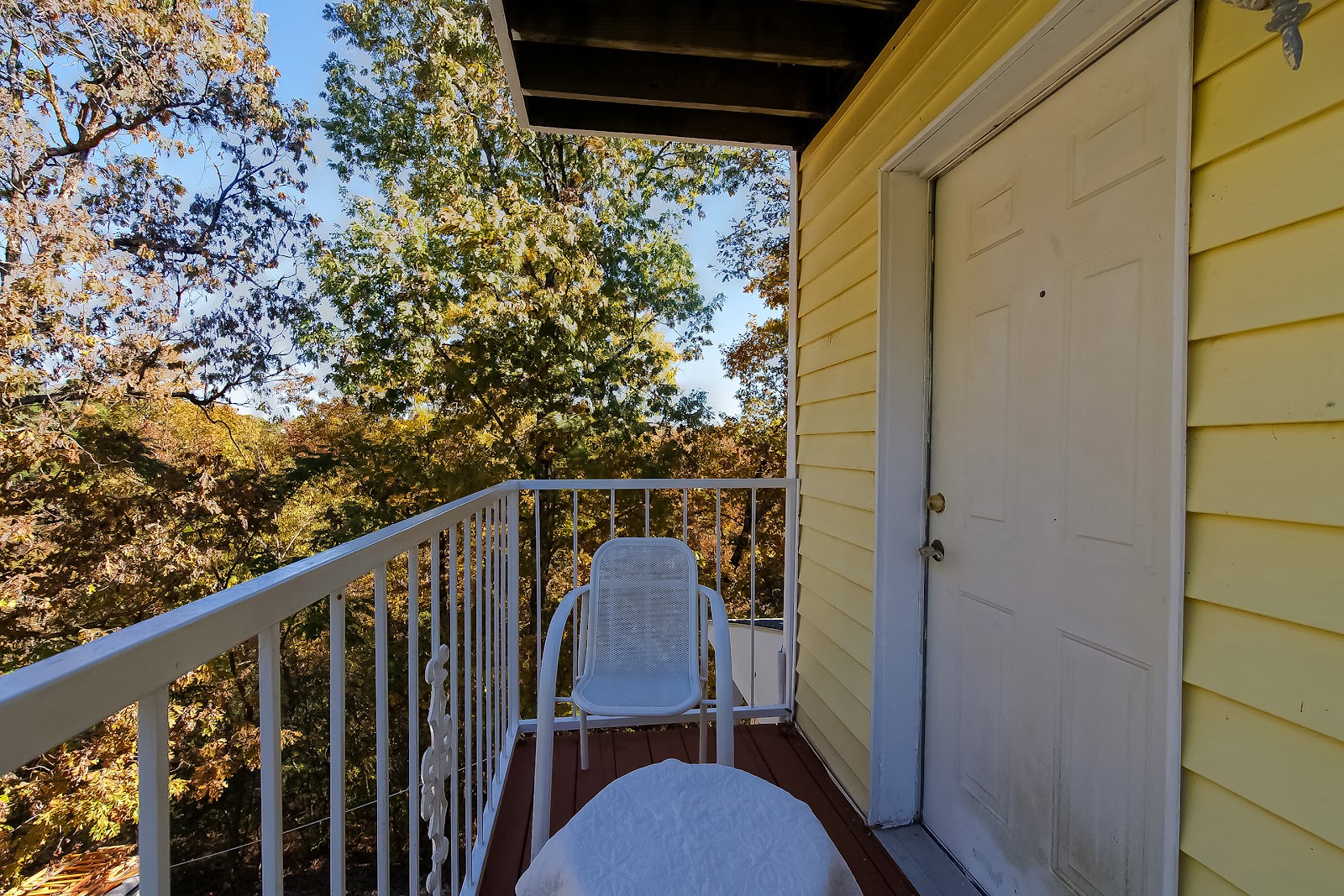
The Ozark Mountain Lodge, Eureka Springs: The Problem, and Four Ways Out
Dappled light is the commonest failure in outdoor photography. In dense hardwood on steep ground it is the default.
The central photographic problem at a lodge in Ozark woodland is dappled light, and it is worth being specific about why it is worse here than in most wooded places.
Dappling happens when direct sun comes through a canopy in patches, putting bright spots and deep shadow on the same face centimetres apart. The ratio between those is typically five or six stops, which exceeds what any sensor holds — and no editing recovers it, because the highlight has clipped and the shadow has no information in it.
Ozark hardwood makes it acute for three reasons. The canopy is broadleaf rather than needled, which means large opaque leaves with large gaps between them — a very efficient stencil. The latitude is low enough that the summer sun is high, at about seventy-seven degrees above the horizon at midday, which drives the patches straight down onto faces rather than across them. And the terrain is steep, which means the ground is rarely level and a couple standing on a slope may have one face in a patch and the other not.
There are four ways out and all of them work. We have not photographed a wedding at the Ozark Mountain Lodge; Ozark hardwood, steep terrain and this climate behave consistently. Which areas are included, what the covered alternative is and whether the lighting is adjustable are questions for their team.
The Ozark Mountain Lodge at a glance
| Where | Eureka Springs, Arkansas, in the Ozarks |
| The problem | Dappled light through broadleaf canopy on steep ground |
| Way one | Find genuinely full shade — and know the difference |
| Way two | Use the terrain. Way three: use the buildings |
| Way four | Wait for overcast or fog, both of which are frequent here |
Ways one and two: full shade, and the terrain
The first way out is to find genuinely full shade, and the important part is knowing the difference between that and what merely looks shaded.
Full shade means no direct sun reaching the subject at all — not a thin patch, not a moving fleck, none. The test is not to look at the ground but at a face: if any part of it has a bright spot on it, the position is not full shade and moving a metre will fix it. That test takes two seconds and it is the single most useful habit in woodland photography.
The reliable positions are specific. The deep interior of a dense stand, well back from its edge, where the canopy layers have closed over. The shadow side of a large tree trunk or a rock face, where a solid object rather than leaves is doing the blocking. And the north side of any substantial building, which is shaded all day at this latitude.
Ten minutes on arrival walking the site and marking two or three of those is the most valuable ten minutes of the day, because full shade positions in woodland are not evenly distributed and they are not obvious from a path.
Full shade has one deficiency, which is direction, and it is supplied by geometry: standing near a trunk, a rock or a wall blocks the light from one side and restores modelling. The middle of an open shaded clearing is the flattest light available.
And dense canopy throws green onto skin from whichever side it is thickest, localised so global white balance cannot remove it. A custom white balance set on a face in the position being used is the fix, and a metre further from the foliage roughly halves it.
The second way out is the terrain, and in this part of the Ozarks it is extreme enough to be a tool. The ground here is exceptionally steep — the nearby town has streets at multiple levels and buildings whose entrances are storeys apart front and back — which means there are positions genuinely above and below almost everything.
Above matters because a camera looking down at a group sees faces rather than the backs of heads, and it costs a short walk rather than a stair. Below matters because it puts sky behind a subject rather than ground, which separates them completely at no cost.
And the steepness creates edges — rock faces, road cuts, retaining walls and drops — which are solid rather than leafy, and therefore make genuine full shade with direction rather than dappled shade. A subject standing in the shadow of a rock face, with lit woodland in front of them, has directional soft light and no dapple at all: that is the terrain solving the canopy problem, and it is the best free light in the woods.
The practical cost of the terrain is real. Steep ground in formal shoes is a consideration, the distance between two positions may involve a storey of climbing, and a route should be walked in advance rather than improvised.
Ways three and four: the buildings, and the weather
The third way out is the buildings, and the useful thing about a lodge is that it has several kinds of covered edge.
A porch or veranda is the best of them. A roof with an open face does three things at once: blocks the overhead component of the sun, which is what shadows eye sockets; restricts the light to a horizontal band, which is direction; and bounces off the floor to fill under the chin. That is a balanced three-source setup occurring naturally, available at any hour, and it cannot dapple because the roof is solid.
The working position is about a third of the way in from the open edge, and looking along a porch rather than out of it gives posts repeating into depth with the far end darkening by itself. A pale painted floor returns considerably more than a dark-stained one, which is worth a glance before choosing.
A porch is also rainproof, which matters more than it sounds in this climate. It is the wet-weather version of the outdoor block rather than its cancellation.
Inside, a lodge is typically timber, which absorbs — putting a room a stop or two below a pale one with the same fittings and returning little to a bounced flash. One test frame aimed at the ceiling settles it, and where it fails the answer is to light directly into a modifier, gelled warm to match the room’s own register with white balance set to the gel.
Steep fall-off is the compensation: a subject three metres in front of anything else in a dark timber room sits against natural darkness with no equipment, which is free separation.
The fourth way out is the weather, and in this region it is more available than a photographer might expect.
Overcast removes the problem entirely. Under cloud the canopy becomes a uniform filter rather than a stencil, which means the light reaching the ground is soft, even and dapple-free — and a woodland under a grey sky is one of the better portrait environments there is, with saturated greens and no hard shadows anywhere. A photographer who treats a grey day here as a setback has it backwards.
Morning fog is the stronger version and this terrain produces it readily, because steep ground creates deep hollows and moisture settles in them. Fog is diffusion at landscape scale: it removes every hard shadow, separates successive treelines into grey layers at three or four distances, and gives a depth effect nothing else produces. From higher ground it does something better still — fog filling the hollows below while the top is clear, with ridges separating above it.
It burns off, so it is an early opportunity rather than something to schedule. But in autumn and spring it is frequent enough to be worth building a dawn excursion around.
And rain does the same job wetter: wet foliage darkens and saturates, wet limestone and timber both improve, and a shower followed by clearing gives the best light of any day because the air is washed clean.
- Look at the face, not the ground — any bright spot means move a metre
- Ten minutes on arrival marks two or three genuinely full-shade positions
- Use rock faces and road cuts: solid edges make shade with direction
- A porch cannot dapple, because the roof is solid
- Overcast and fog remove the problem entirely — both are frequent here
The Arkansas year
Spring is the region’s best window and it is short. Dogwood and redbud through late March and April, azaleas alongside them, mild temperatures, and the clearest air of the growing year — and critically a canopy that has not yet closed, which means more light reaches the ground and the dappling problem is at its mildest of the whole year.
That last point is worth acting on: if the woodland is the venue’s asset and dappling is the venue’s problem, April is when the two are least in conflict.
Summer is the hardest season for exactly the opposite reason. The canopy is at its densest and the sun at its highest, which gives the most acute dappling of the year at the edges and the most reliable full shade in the interiors. It is hot and genuinely humid, and the humidity rather than the heat is the photographic fact: moist air scatters light, softening shadows slightly — which helps a little but does not solve dapple, because the direct component is still direct.
Severe afternoon thunderstorms are a real possibility, which in woodland on steep ground is a genuine hazard rather than an inconvenience, and it means a named covered alternative with a known capacity, agreed at booking.
The fogging problem is severe in this climate and it runs the opposite way from a cold one: a body carried from an air-conditioned interior into July air fogs on every surface at once and does not clear quickly, so a bag opened twenty minutes before going out is the whole fix.
Autumn is the other good window and the stronger one for the surroundings. Ozark hardwood colour usually peaks from late October into the first week of November, and on steep terrain it reads across whole hillsides and in receding layers rather than in patches. The humidity drops, the air clears, and morning fog in the hollows becomes frequent.
It is also when the canopy begins to thin, which means the dappling problem eases through the second half of the season — so early November combines good colour with a more forgiving canopy, which is arguably the best single week of the year here.
Winter strips the canopy entirely and removes the problem this whole piece is about. With no leaves there is no stencil, which means the woodland becomes open, bright and dapple-free; the ground gets far more light; and the terrain’s structure becomes fully visible rather than screened. The December midday sun at about thirty degrees above the horizon rakes everything all day rather than coming from overhead.
That combination — no dapple, low raking light, open sightlines from steep ground — makes winter the easiest season to photograph here, which is the reverse of most people’s assumption. The costs are bare branches rather than foliage and a short day that compresses the outdoor block into a couple of hours.
Snow is occasional rather than reliable in the Ozarks. When it comes it turns the ground into a reflector, lifting exactly the shadows a low sun carves while fooling a meter by about two stops — and snow on bare hardwood over steep ground is a genuinely unusual frame for this region.
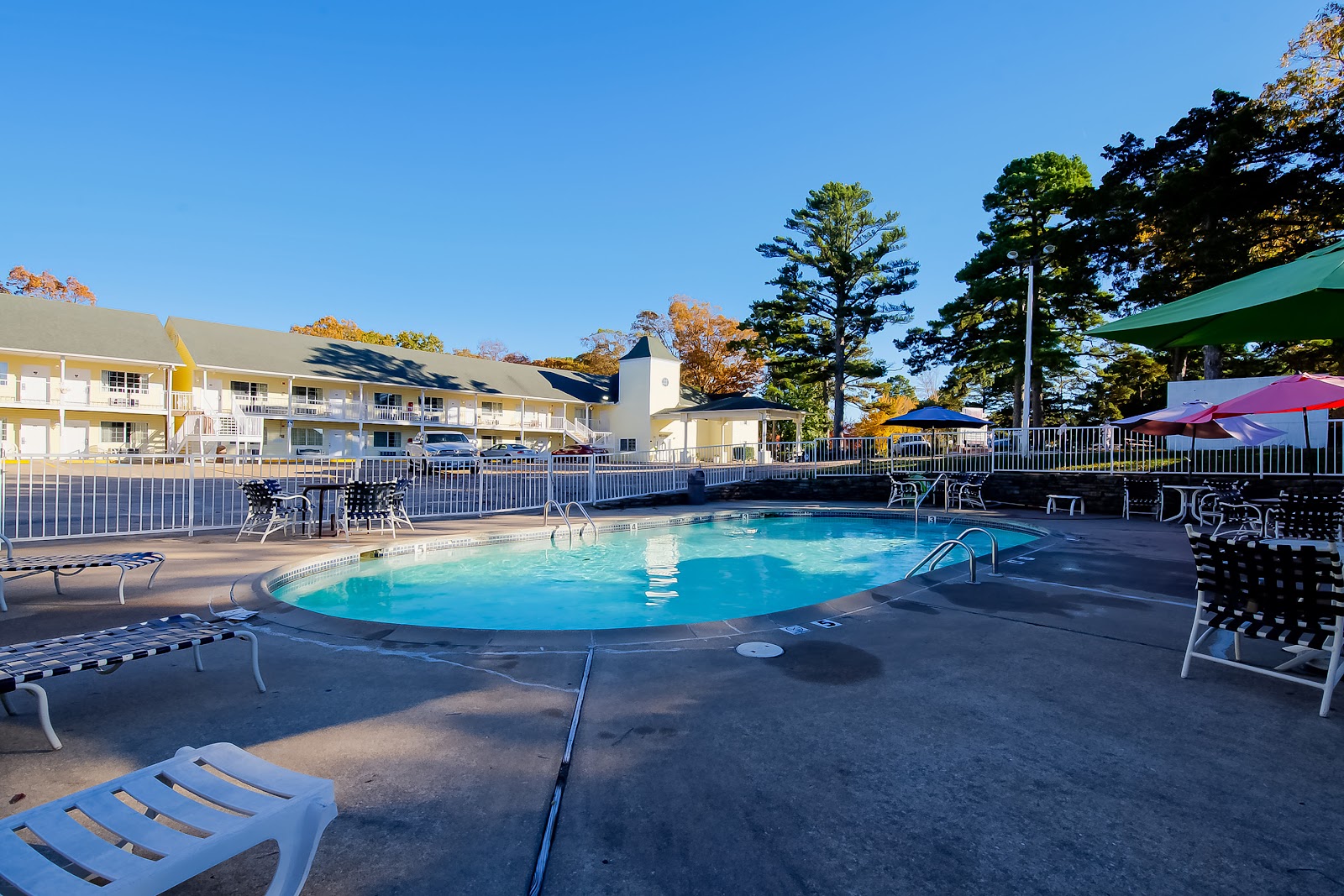
More frames from The Ozark Mountain Lodge
The Ozark Mountain Lodge wedding photography: common questions
Why is dappling worse in Ozark woodland?
Broadleaf canopy makes an efficient stencil, the summer sun here is high enough to drive patches straight down onto faces, and steep ground means uneven footing.
How do you test for full shade?
Look at the face, not the ground. Any bright spot on it means the position is not full shade, and moving a metre will fix it.
How does the terrain help?
Rock faces, road cuts and retaining walls are solid rather than leafy, so they make genuine shade with direction — and steep ground gives positions above and below anything.
Why can a porch not dapple?
Because the roof is solid. It blocks the overhead component entirely, restricts the light to a horizontal band, and the floor bounces back to fill.
Is a grey day bad here?
The opposite. Overcast turns the canopy into a uniform filter rather than a stencil, which removes the problem entirely and saturates the greens.
Which is the easiest season?
Winter, which surprises people. No leaves means no stencil, the low sun rakes all day, and the steep terrain’s structure becomes fully visible.
More Arkansas venue guides
We are writing a photographer’s guide to every venue we would happily shoot in Arkansas. Here are three more, plus the full index:
- Thorncrown Chapel, Eureka Springs: What It Suits, and What It Does Not
- All Souls Chapel, Fayetteville: The Problem and Four Ways Out of It
- The Barn at the Springs, Garfield: A Walk Through the Site
Planning a wedding at The Ozark Mountain Lodge?
One problem, four solutions. Tell us your date and we will use all four.