 Dry Tortugas National Park: A Walk Through an Island Fort
The Ernest Hemingway Home, Key West: One Frame, and How It Is Made
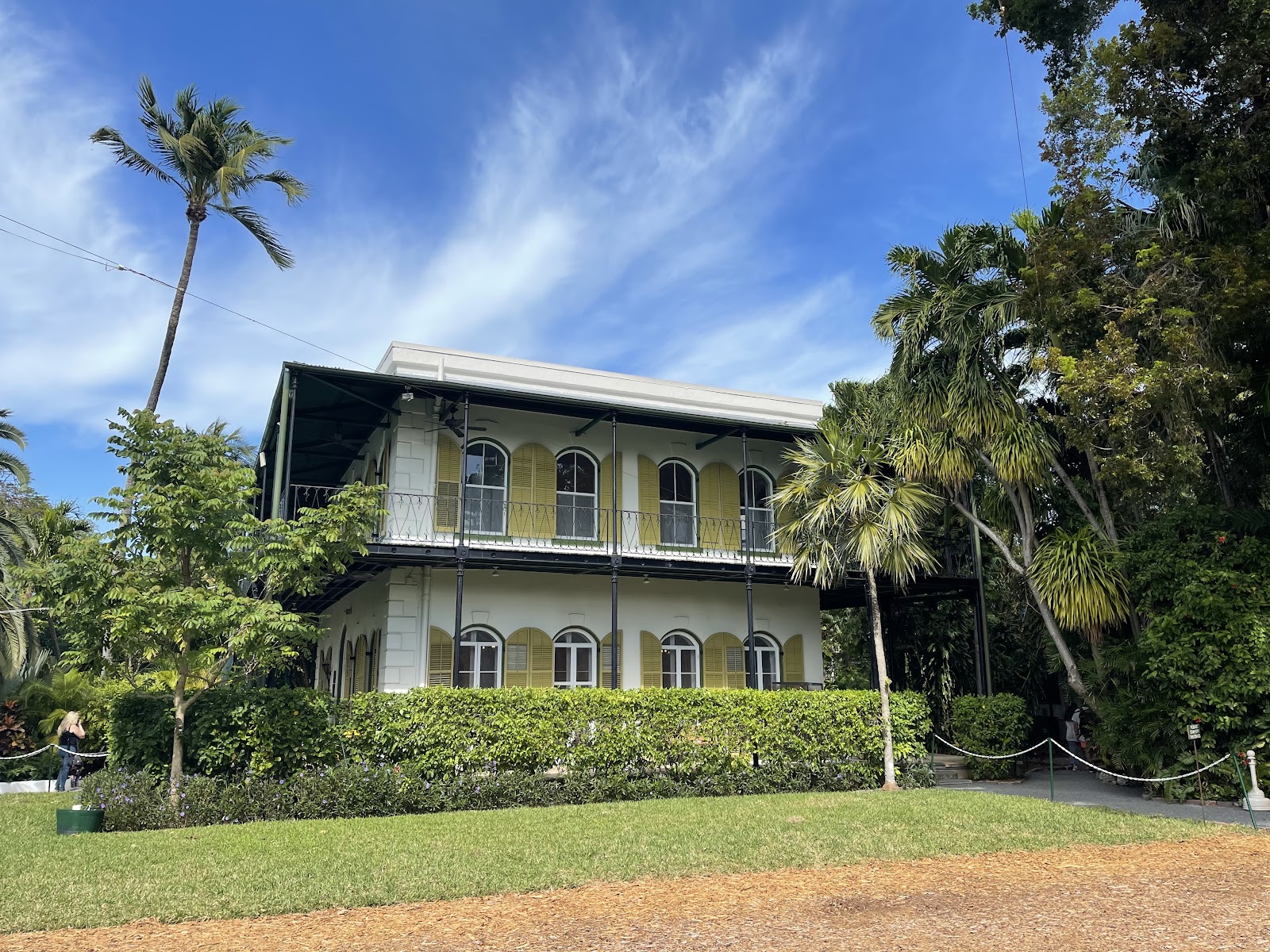
At this latitude the midday sun is within a degree of vertical. The veranda is not decoration; it is the only answer.
Key West is at about twenty-four and a half degrees north, which is further south than anywhere else in the continental United States — and that single number produces the most extreme overhead light a photographer will meet on the mainland.
At the summer solstice the midday sun here is within about a degree of vertical. Not high: vertical. Shadows fall directly beneath things, there is no shadow side to a face because there is no side the light is coming from, and a person standing in the open at noon in June has black eye sockets, a black line under the chin and a bright patch on the top of the head.
That is why the architecture here looks the way it does. Deep verandas, wide eaves, louvred shutters and shaded galleries are not stylistic choices; they are the local answer to a vertical sun, arrived at long before anyone was photographing weddings.
So the frame is this. A couple stands on a deep veranda, two or three metres in from its open edge. The roof blocks the vertical component entirely. The light arrives horizontally from the open side, which gives direction. The painted floor and wall bounce it back to fill under the chin. Behind them the shaded interior of the veranda goes dark. Nothing is added and nothing needs to be.
Six decisions make it. We have not photographed a wedding at the Ernest Hemingway Home; Key West architecture and this latitude behave predictably. Permitted areas, the rules on flash and proximity to collections, group limits and whether photography is allowed in certain rooms are questions for their team.
The Ernest Hemingway Home at a glance
| Where | Key West, Florida, at about 24.5 degrees north |
| The condition | A midday sun within a degree of vertical in midsummer |
| The frame | A couple two or three metres in on a deep veranda |
| Why it works | The roof removes the vertical component; the floor fills from below |
| Ask first | Permitted areas, flash and collection rules, group limits |
Decisions one to three: the depth, the side, the floor
The first decision is how far in to stand, and it has a narrow range with a clear test. At the very edge of a veranda the light is bright but the sun can reach in at the ends of the day, and in midsummer it can reach almost to the wall around noon because it is so nearly vertical. Against the house wall the light has bounced twice and lost its direction.
Two or three metres in is the working position, and the test is to look at the eyes: if there is a catchlight in them and no bright patch on the top of the head, the depth is right. One test frame at three depths settles it and the position is worth marking, because the day will return to it.
The second decision is which side of the house, and at this latitude it matters less than anywhere else in the country — which is a rare piece of good news. Because the sun is so nearly overhead for so much of the day, a deep veranda on any elevation is shaded for most of it, and the question of north-facing versus south-facing largely dissolves.
What does matter is the ends of the day, when the sun is low enough to come in under the roof. That is when an east veranda is unusable in the morning and a west one in the afternoon — and it is also the only time of day when the open ground is usable at all, so it is worth knowing which is which.
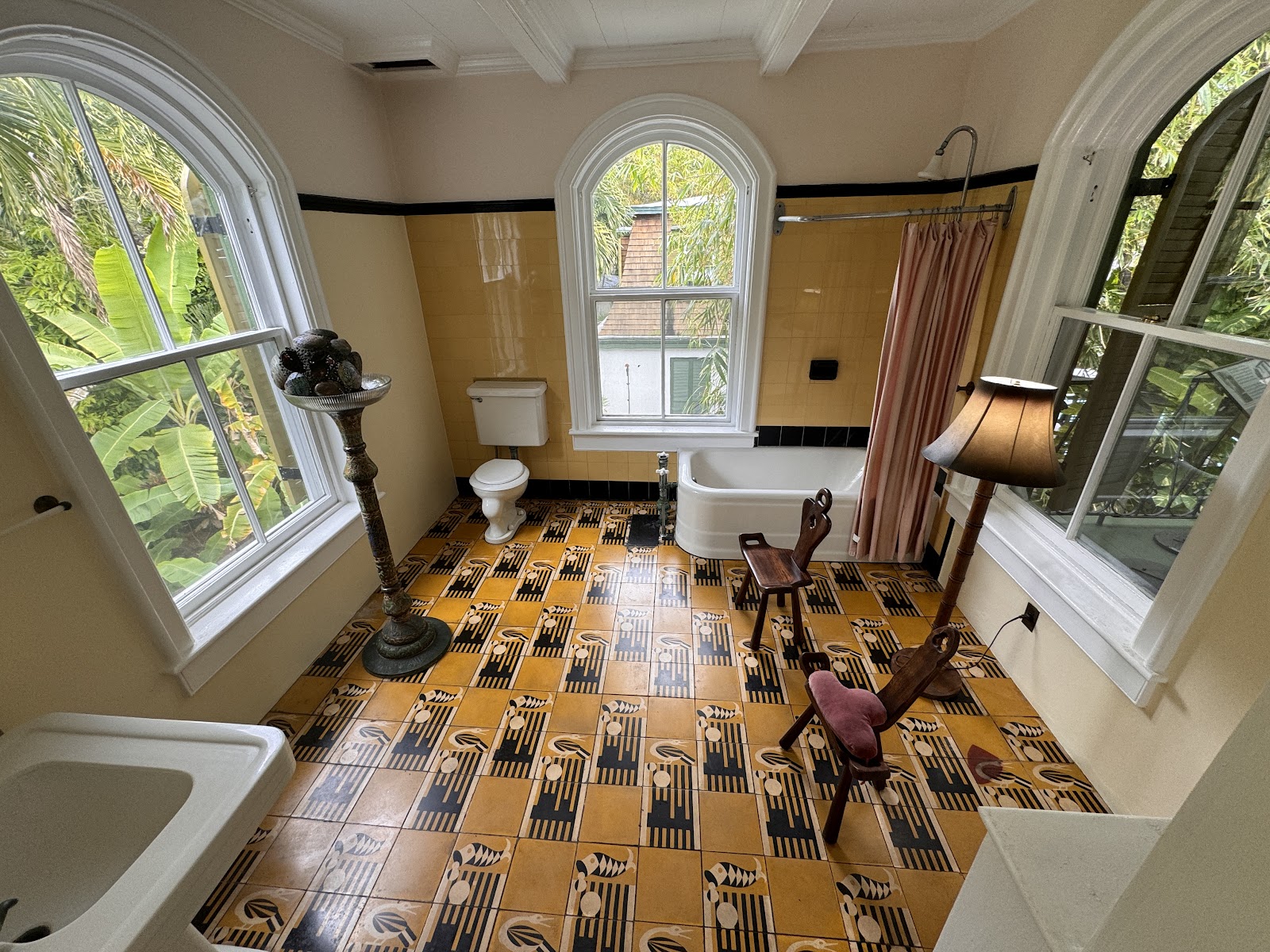
The third decision is the floor, and in Key West it is the strongest element in the frame. Verandas here are typically painted timber, frequently pale, and pale paint is the most reflective architectural surface a photographer regularly meets. A pale veranda floor under a bright sky returns a great deal of light upward, which fills exactly the shadows a vertical sun carves under eyes and chins.
That is the reason this frame works so well: the roof removes the bad direction and the floor supplies a good one from below. A dark-stained floor gives much less, so it is worth a glance downward before choosing a position — and if the floor is dark, a pale wall alongside can do some of the same work.
Painted colour transfers. A veranda ceiling painted a colour — and in this region pale blue and green ceilings are a local tradition — throws that colour onto faces from above, localised and not separable by global white balance. One custom white balance set on a face in the position being used handles it, and it is worth doing rather than assuming, because a coloured ceiling over a pale floor puts two casts on the same face from opposite directions.
Decisions four to six: the background, the shutters, the interior
The fourth decision is the background and a veranda gives three, of which one is much better than the others.
Looking along the veranda is the best: columns or posts repeat into depth, the far end darkens by itself, and the whole composition organises around the recession. That is the cheapest separation available anywhere and it is the frame worth making first.
Looking outward through the columns gives the garden as a bright field, which needs the exposure set for the faces with the outside allowed to go bright — legitimate, and a different picture.
Looking at the house wall is the one to avoid: flat, close and roughly as bright as a face, which flattens the picture entirely.
The fifth decision is the shutters, which in this region are louvred and which are a lighting instrument rather than a fitting. A louvred shutter partly closed turns a window or a doorway into a slotted source, which throws bars of light rather than an even wash — and that is a strong effect that has to be committed to or avoided, because half-committed it puts a bar across one eye.
Fully open they are simply a frame. Fully closed they make a dark wall. Partly closed and used deliberately, with the bars falling along a body rather than across a face, they give a frame that is specific to this architecture and available nowhere else.
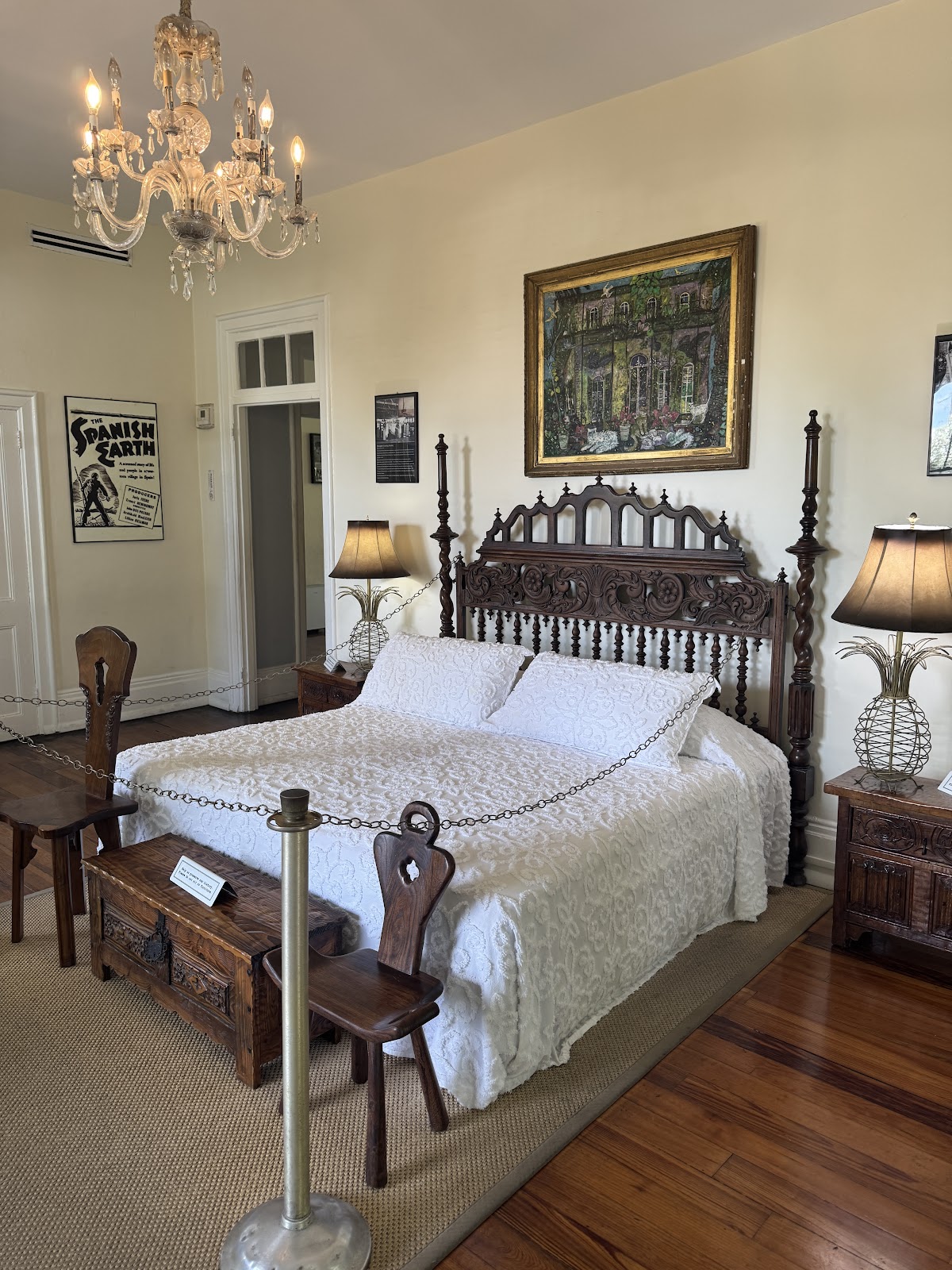
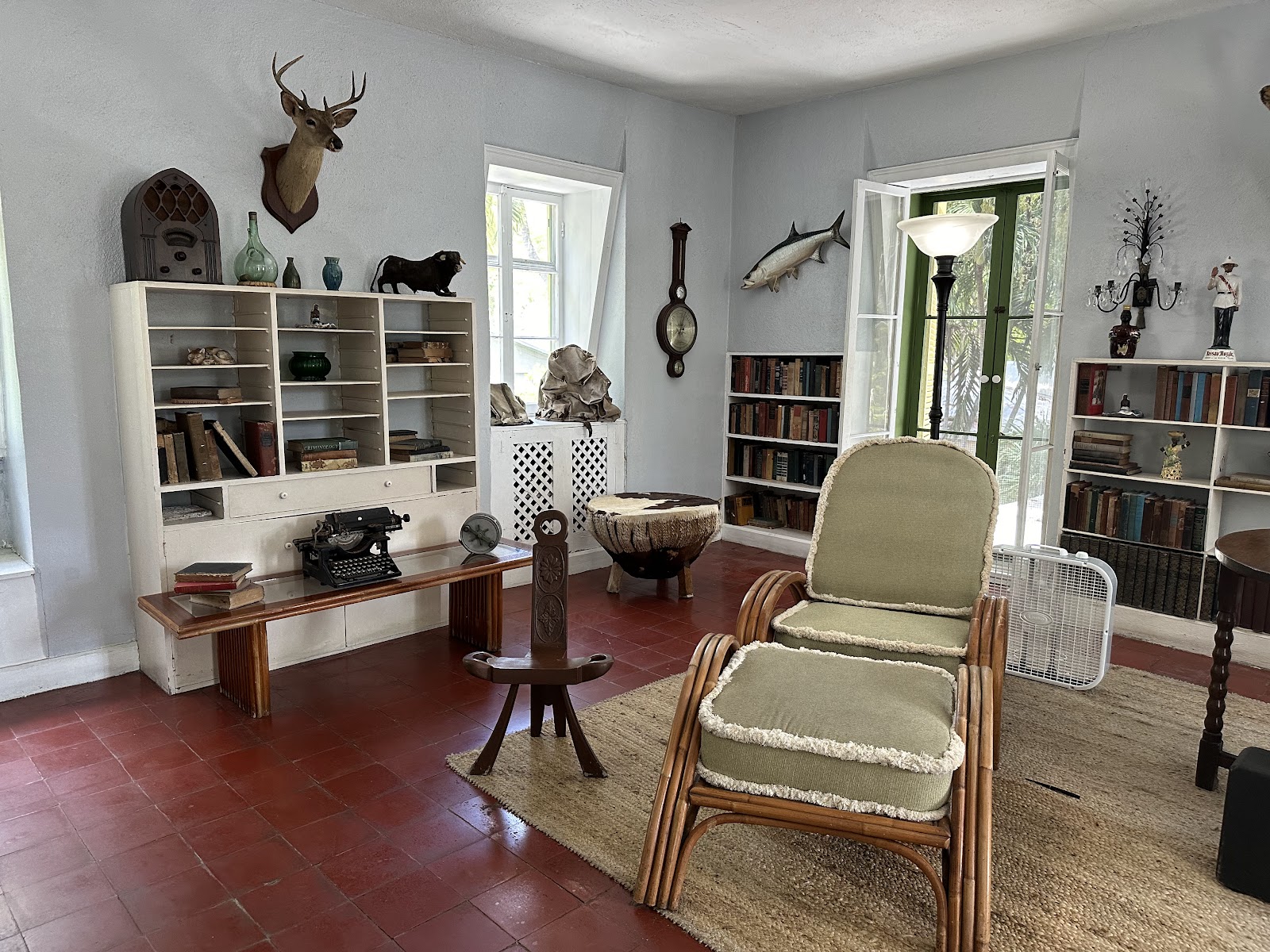
The sixth decision is the interior, and a house of this period in this climate has a consistent character: high ceilings to let heat rise, tall shuttered windows, timber floors and relatively dark furnished rooms. Three things follow.
The ambient is low, because the verandas that shade the walls also shade the windows — which is the trade this architecture makes. Measure it with one frame on arrival rather than estimating, because eyes adapt and meters do not.
The best interior light is a threshold rather than a window: standing two or three metres inside a doorway onto a bright veranda gives a very large soft source in front and darkness behind, which needs nothing added and is better than any window in the house.
And the rules matter, because a house museum contains original textiles, paper and finishes that fade or damage irreversibly. Expect restrictions on flash, stands, moving anything and numbers per room — the terms of using the building rather than obstacles to negotiate, and they belong in the booking conversation. The working assumption is no stands, a source in a hand, small numbers, and groups on the veranda or outdoors.
- Two or three metres in; the test is a catchlight in the eyes and no patch on the head
- At this latitude a deep veranda is shaded on any elevation for most of the day
- Look down: a pale floor is what fills under the chin
- Look along the veranda, never at the house wall
- The best interior light is a doorway onto the veranda, not a window
The twilight, the garden, and the Florida year
There is a second consequence of this latitude that catches northern photographers out, and it is the opposite of the first.
Because Key West is so far south, the sun sets at a steep angle to the horizon rather than a shallow one — which means twilight here is short. Civil twilight lasts roughly twenty-two to twenty-five minutes, against well over an hour on the northern plains in June. The crossing frame, when the sky still holds colour at about the brightness of the building’s own lighting, is therefore a genuinely brief window that has to be scheduled with the couple already in position.
That is a real planning fact rather than a nicety: a photographer who drifts towards a dusk frame here will find the colour gone.
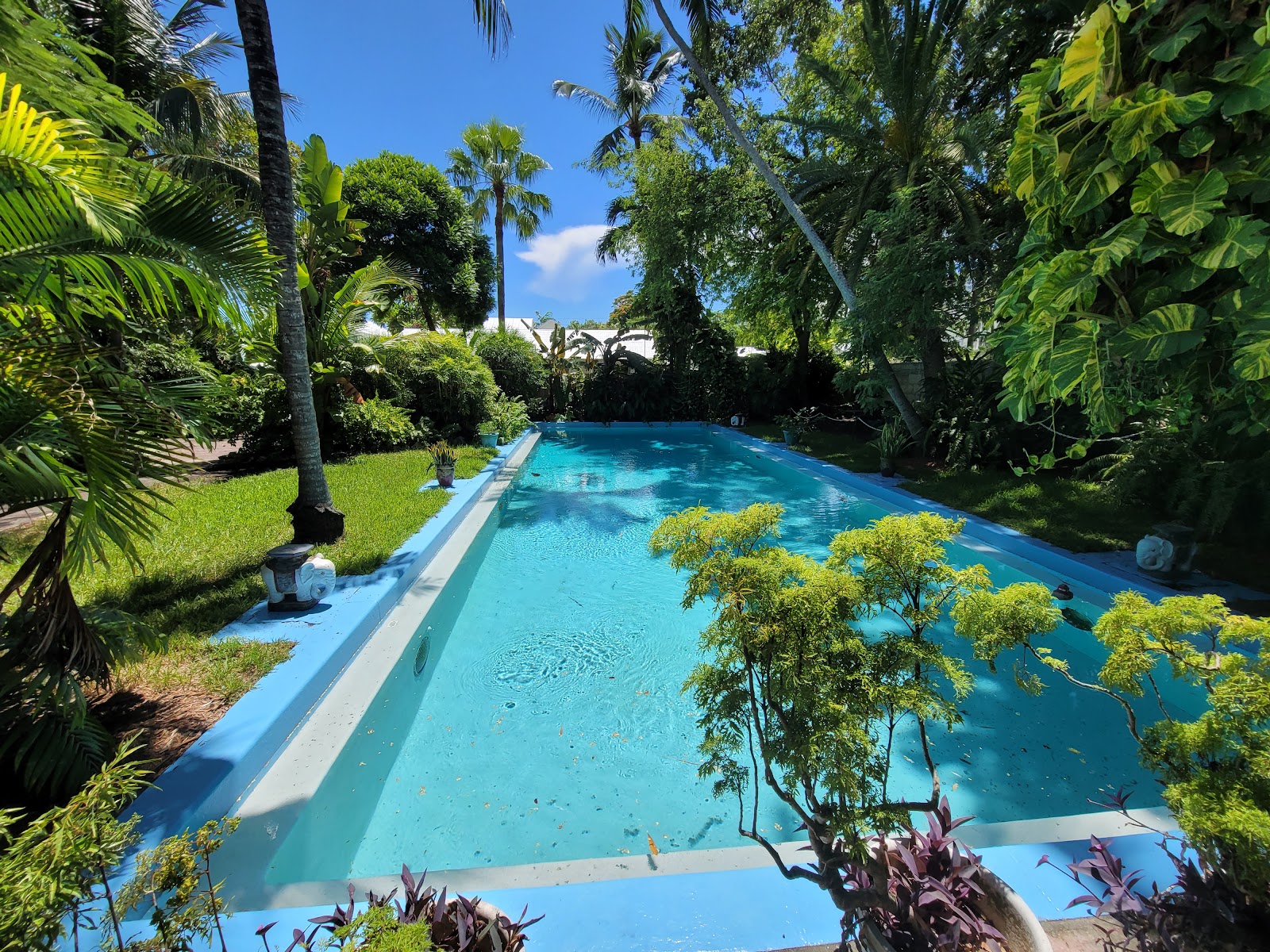
The garden is the other environment and its shade is unreliable in a specific way. Palms are the worst canopy there is — long stiff fronds with wide gaps between them, which produce hard-edged moving dapple rather than shade, and under a near-vertical sun the patches land straight down on faces. Gumbo limbo, banyan and other broad-crowned trees do give genuinely full shade, and those are the ones worth finding.
The test is the same everywhere: look at the face rather than the ground, and any bright spot means move a metre.
Bougainvillea and other saturated flowering planting is the region’s colour and it needs a compositional decision per frame: commit to a mass of magenta or orange, placing the couple so both read, or subordinate it with a long lens at a wide aperture. It also bounces its colour onto skin at close range, which distance halves.
The seasons here are two rather than four, and they are wet and dry. The dry season, roughly December into April, is the good one and by a wide margin: lower humidity, clearer air, comfortable temperatures, and a December midday sun at about forty-two degrees above the horizon — which is a genuinely usable angle rather than a vertical one, and which means open ground works in the middle of the day for the only time in the year.
The wet season, roughly May into October, is hot, very humid and afternoon-thundery, and it carries the hurricane season with it — peaking from August into October. That is a planning fact rather than a photographic one and it belongs in the conversation when a date is chosen.
The humidity is the equipment problem and it is severe here. A body carried from an air-conditioned interior into July air fogs on every surface at once, inside and out, and at these dew points it does not clear quickly — a bag opened twenty minutes before going out is the whole fix, and with a twenty-two-minute twilight window, a fogged lens means missing it entirely.
The trade winds are the compensation: a persistent easterly breeze moderates the heat and keeps the air moving, which makes shaded positions genuinely comfortable. It also means a veil will not behave and a lightstand outdoors is a liability, so the source goes in a hand or on a bracket.
More frames from The Ernest Hemingway Home
The Ernest Hemingway Home wedding photography: common questions
Why is the light here so extreme?
At about twenty-four and a half degrees north, the midsummer midday sun is within roughly a degree of vertical — so there is no shadow side to a face at all.
Why is the veranda the answer?
Because the roof removes the vertical component entirely, the open side supplies direction, and a pale painted floor bounces light back to fill under the chin.
Where exactly should the couple stand?
Two or three metres in. The test is a catchlight in the eyes and no bright patch on the top of the head.
Does the elevation matter?
Less than anywhere else in the country, because the sun is so nearly overhead that a deep veranda is shaded on any side for most of the day.
Why is the dusk window so short?
Because at this latitude the sun sets at a steep angle. Civil twilight is about twenty-two to twenty-five minutes, against over an hour on the northern plains.
Are palms useful shade?
No — the worst canopy there is. Long stiff fronds with wide gaps make hard moving dapple. Gumbo limbo and banyan give genuinely full shade.
More Florida venue guides
We are writing a photographer’s guide to every venue we would happily shoot in Florida. Here are three more, plus the full index:
- Fort Zachary Taylor, Key West: What It Suits, and What It Does Not
- The Key West Butterfly Conservatory: The One Decision That Governs Everything
- The Biltmore Hotel, Coral Gables: The Logic of a Pre-Air-Conditioning Building
Planning a wedding at The Ernest Hemingway Home?
A vertical sun and one good answer. Tell us your date and we will use it.