 The Portland Regency: A Season-by-Season Guide
The Asticou Inn, Maine: One Frame, and How It Is Made
White painted timber is the most powerful reflector in New England. Here is the frame it makes.
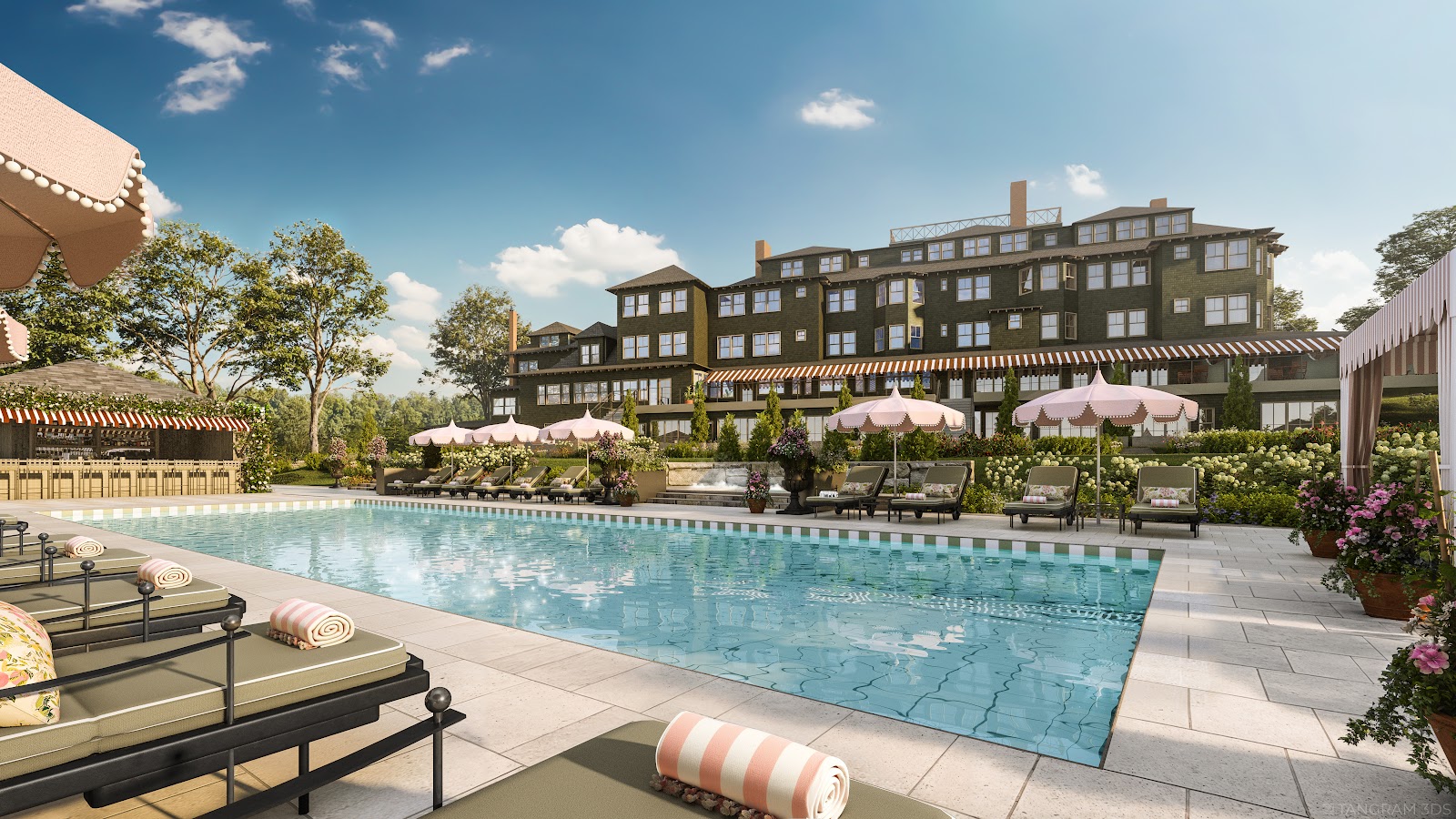
There is a frame that coastal New England gives and almost nowhere else does, and its whole basis is a building material that nobody thinks of as a light source.
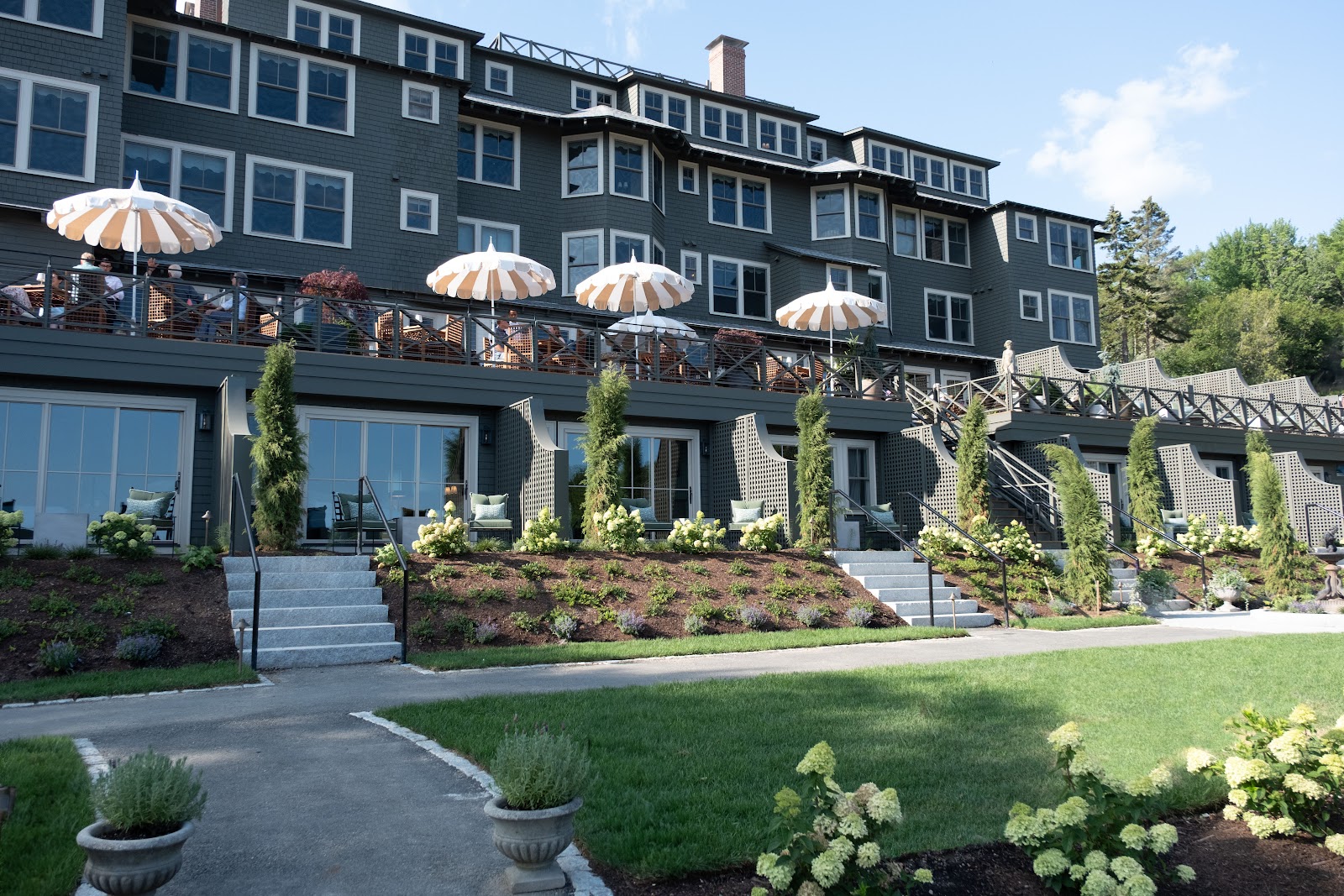
White painted clapboard is the most reflective architectural surface a photographer regularly meets. A white timber elevation in daylight returns a very large proportion of what falls on it, which means a wall of it is a genuine soft source at architectural scale — far more so than limestone, which is merely warm, or brick, which is mid-toned, or fieldstone, which absorbs.
So the frame is this. A couple stands beside a white clapboard wall, in shade, three or four metres out from it and facing it. They are lit by a source the size of the building: soft because it is large, directional because it comes from one side, and neutral in colour because the paint is white. Behind them is dark spruce or open water. Nothing is added and nothing needs to be.
It takes six decisions and most of them are about not spoiling it. We have not photographed a wedding at the Asticou Inn; white clapboard, coastal light and spruce behave consistently. Which spaces are included, whether the gardens and shore are part of the offer and what the covered alternative is are questions for their team.
The Asticou Inn at a glance
| Where | Mount Desert Island, Maine |
| The frame | A couple beside white clapboard, lit by the wall, spruce or water behind |
| Why it works | White paint is the most reflective architectural surface there is |
| The distance | Three to four metres out, facing the wall |
| Ask first | Spaces included, garden and shore access, covered alternative |
Decisions one to three: the wall, the distance, the background
The first decision is which wall, and it is settled by where the sun is rather than by which elevation looks best. The frame needs a wall in daylight and a subject in shade — which means an elevation that is lit while the position in front of it is not, and that combination exists at specific hours on specific sides.
The most reliable version is an elevation in bright open shade rather than direct sun: a white wall under a bright overcast sky, or on the shaded side of a building under a clear one, still returns a great deal of light because white paint reflects diffuse light almost as efficiently as direct. That is worth knowing because it makes the frame available in conditions where a limestone or brick equivalent would give nothing.
A wall in direct sun is stronger and harder to control: the bounce is bright enough to be a genuine key light, and it is also bright enough that the wall itself will clip if it is in the frame. So if direct-sun bounce is being used, the wall should be out of shot or accepted as a white field.
The second decision is the distance and it has a narrow working range. Closer than two metres and the fall-off across two faces becomes uneven, with the near one noticeably brighter. Further than five and the open sky above takes over as the dominant source, which is flatter and comes from the wrong direction.
Three to four metres is the figure, facing the wall, with the camera positioned so that the wall is behind the photographer rather than in the frame. That is the whole geometry and it takes one test frame to confirm.
The third decision is the background, and this is where the frame is usually lost. A subject lit by a bright white wall has a bright face — which means the background must be dark or the picture flattens, and the two best dark backgrounds on this coast are both available.
Dark spruce is the first and the most reliable: dense conifer absorbs almost all the light falling on it, so a subject in front of it is separated by three or four stops with no equipment at all, and it does not change through the day or the season. Open water is the second, and in shade or under overcast it reads as a deep grey-blue field that is darker than a lit face by a comfortable margin.
What fails is another white wall, or a bright sky, or pale gravel — anything as bright as the subject. So the frame is a specific pairing rather than a general technique: bright white wall in front, dark spruce or water behind, couple in the gap between them.
And the exposure trap comes with it: a meter looking at a dark spruce background tries to lift it and overexposes the face by two stops. Meter on the face, or off a hand in the same light, and work in manual.
Decisions four to six: the colour, the sky, the fog
The fourth decision is the colour and white paint makes it easy in one respect and tricky in another.
The easy part is that white bounce is essentially neutral, unlike limestone bounce which is markedly warm or foliage bounce which is green. So a daylight white balance renders it correctly with no custom setting needed — which is unusual and worth appreciating.
The tricky part is that white paint is rarely pure white. Coastal New England clapboard is frequently an off-white, a cream or a very pale grey, and each of those tints the bounce slightly. It also weathers. One test frame on a face in the position being used tells you whether a custom white balance is worth setting, and usually it is not.
The other colour consideration is that the sky contributes. On a clear day the open sky above is blue and cool, and a subject lit partly by white wall bounce and partly by blue sky gets a mixture — cool from above, neutral from the side. That is subtle and pleasant rather than a problem, and under overcast it disappears entirely.
The fifth decision is how much sky to include, and the answer is very little. A bright sky behind a subject lit by wall bounce will be several stops above their face, which clips and pulls the eye off them — so the frame should look along the building or into the spruce rather than up. Where sky is in the frame it should be a band rather than a field, and the exposure set for the faces with it allowed to go bright.
The sixth decision is what to do in fog, which on this coast is frequent and which transforms this particular frame rather than removing it.
The mechanism is the cold sea: the Gulf of Maine stays cold through the summer, so warm air moving over it condenses — which makes June through August the foggiest months here, and it can persist all day rather than burning off by nine.
In fog the white wall stops being a directional reflector and becomes part of a uniformly bright field, because the light is arriving from everywhere at once. That removes the frame as described — and replaces it with something else worth having: a white building in fog is a pale shape dissolving into a pale ground, which is a genuinely striking high-key effect, and spruce behind it separates into flat grey layers.
So the fog version inverts the tonality: instead of a bright subject against a dark background, it is a soft mid-toned subject in a pale field. It needs the exposure set deliberately bright rather than letting a meter pull it to mid-grey, and it needs the couple close enough to the camera to have edges, because everything further away will not.
That is worth describing to a couple in advance rather than apologising for on the day, because it is frequently the more memorable of the two.
- Three to four metres out from the wall, facing it, wall behind the camera
- White paint bounces diffuse light efficiently — bright overcast works
- Pair it with dark spruce or water behind; another pale surface kills it
- Meter on the face and work in manual; spruce fools a meter by two stops
- In fog the frame inverts: expose bright and keep the couple close
The gardens, the shore, and the Maine year
A coastal inn of this kind generally has planted grounds, and in this region that means a particular palette: spruce and fir, birch with white reflective bark, moss, and acid-soil planting. Two things follow.
Birch is the second reflective surface on the island and it works like a miniature of the clapboard: white bark returns light, which means a stand of birch is brighter than the spruce around it and a subject near one gets a modest fill from the side. Birch trunks are also strong vertical graphic elements against dark conifer.
And the shade rule is absolute, as everywhere: full shade under a dense crown is excellent, while dappled light through a thin one puts bright patches and deep shadow on the same face at a ratio nothing holds. In a spruce-and-fir landscape full shade is abundant and reliable, which is one of the region’s quieter advantages.
The shore is granite rather than sand and it behaves differently. Coarse pink-grey granite is mid-toned, which means it reflects a useful amount without flooding light upward the way a beach does — so there is less uplift under chins here and the light stays more directional. It reads only under raking light though: low sun across granite lifts every crystal and fracture, while flat light flattens it to grey.
The tide is worth putting in the schedule alongside the sunset time, because the Gulf of Maine has one of the world’s largest tidal ranges. At high water the granite is at the water’s edge; at low water there is a wide apron of exposed rock, weed and pool — textured, reflective and completely different. The table is published and reliable, and exposed tidal rock is slippery, which with long dresses is a real consideration.
Autumn is the season here and it comes early: colour on the island usually peaks in the first half of October, earlier than further south, and the palette of hardwood colour against black-green spruce against white clapboard is the region’s own. October also brings the clearest air, a sharp drop in fog frequency and thinner crowds.
Summer is cool because the sea is cold, which makes it comfortable, foggy and very busy. The long twilight is the compensation — at this latitude the June sun sets at a shallow angle so the sky holds usable light for well over an hour — at the cost of happening very late.
Winter is cold, quiet and empty. The December midday sun at about twenty-two degrees above the horizon makes the whole short day raking light, which suits granite and clapboard both; snow is the best natural fill available outdoors and turns the ground into an enormous reflector, which makes the white-wall frame brighter still; and snow against dark spruce is the widest natural brightness range there is, so expose for the snow and let the conifer go near-black.
Salt spray settles on a front element and etches coatings over time, so a damp cloth at the end of the day is routine. And a cold body brought into a heated inn fogs on every surface at once and does not clear quickly, so bodies stay bagged until warmed.
More frames from The Asticou Inn
The Asticou Inn wedding photography: common questions
Why is white clapboard a light source?
Because white paint is the most reflective architectural surface a photographer regularly meets — far more so than limestone, brick or fieldstone.
Where exactly should the couple stand?
Three to four metres out from the wall, facing it, with the wall behind the camera rather than in the frame.
Does it need direct sun on the wall?
No. White paint reflects diffuse light almost as efficiently, so a bright overcast day works — which is unusual and useful on this coast.
What background does it need?
Dark spruce or open water. A bright face against another pale surface flattens, so the frame is a specific pairing rather than a general technique.
Why work in manual?
Because a dark spruce background makes a meter overexpose the face by two stops, and a snow or bright-water frame a minute later fools it the other way.
What happens in fog?
The frame inverts: a soft mid-toned subject in a pale field rather than a bright subject against darkness. Expose deliberately bright and keep the couple close.
More Bar Harbor, ME venue guides
We are writing a photographer’s guide to every venue we would happily shoot in Bar Harbor, ME. Here are three more, plus the full index:
- The Bar Harbor Inn, Maine: A Venue Built Facing the Water
- The Jordan Pond House, Acadia: Field Notes on a Mountain Pond
- Acadia National Park, Maine: The Problem, and Four Ways Out
Planning a wedding at The Asticou Inn?
A wall as a light source. Tell us your date and we will find the right one.