 The Somerset Club on Beacon Street: Is It Right for You?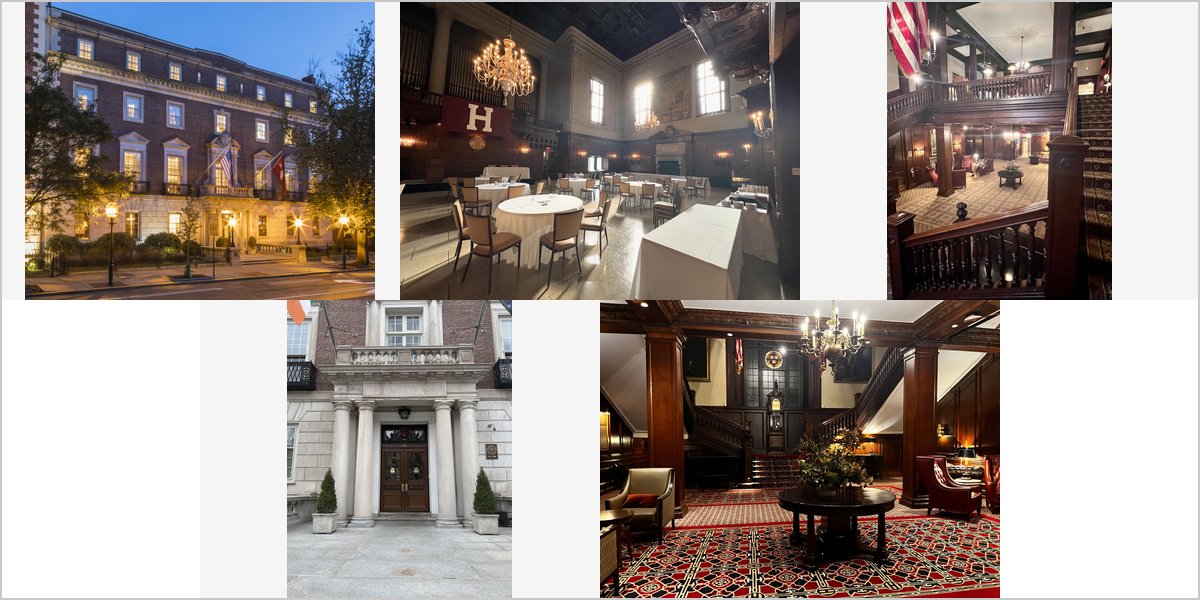
June 9, 2026
The Harvard Club of Boston: A Season-by-Season Guide
An entirely indoor venue, yet the season still decides your photographs — because in Boston the season decides your daylight, your streets and whether you can go outside at all.
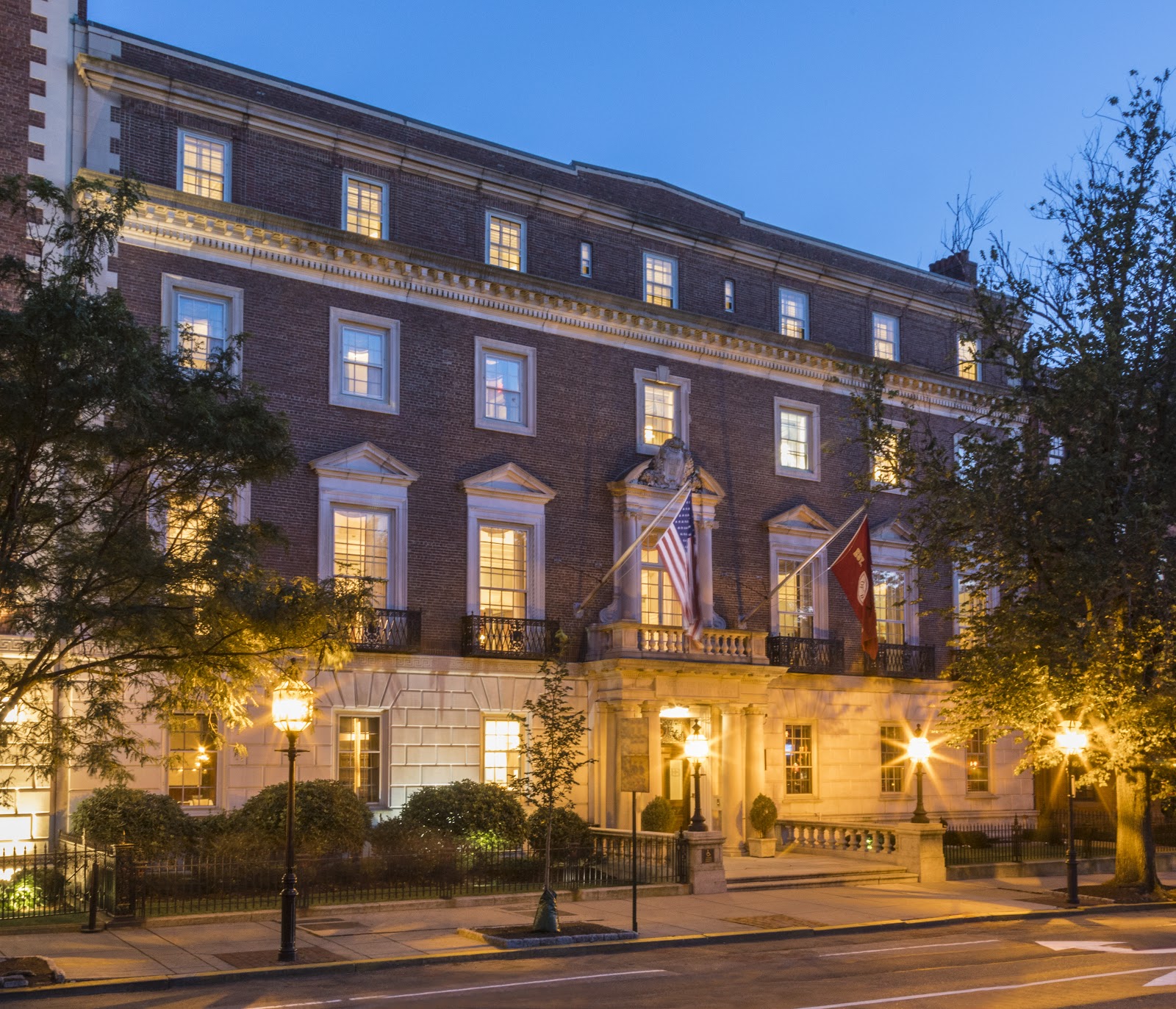
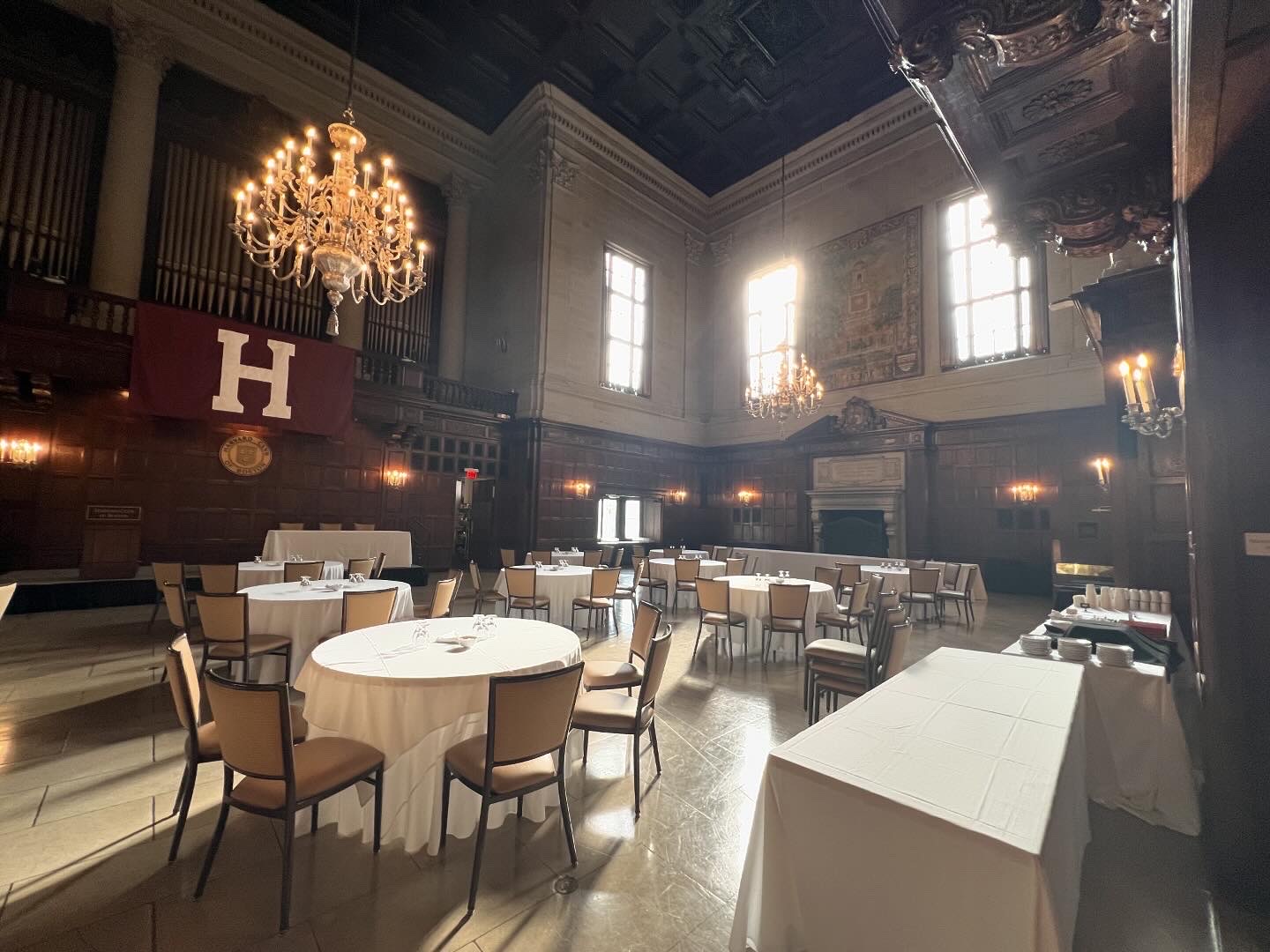
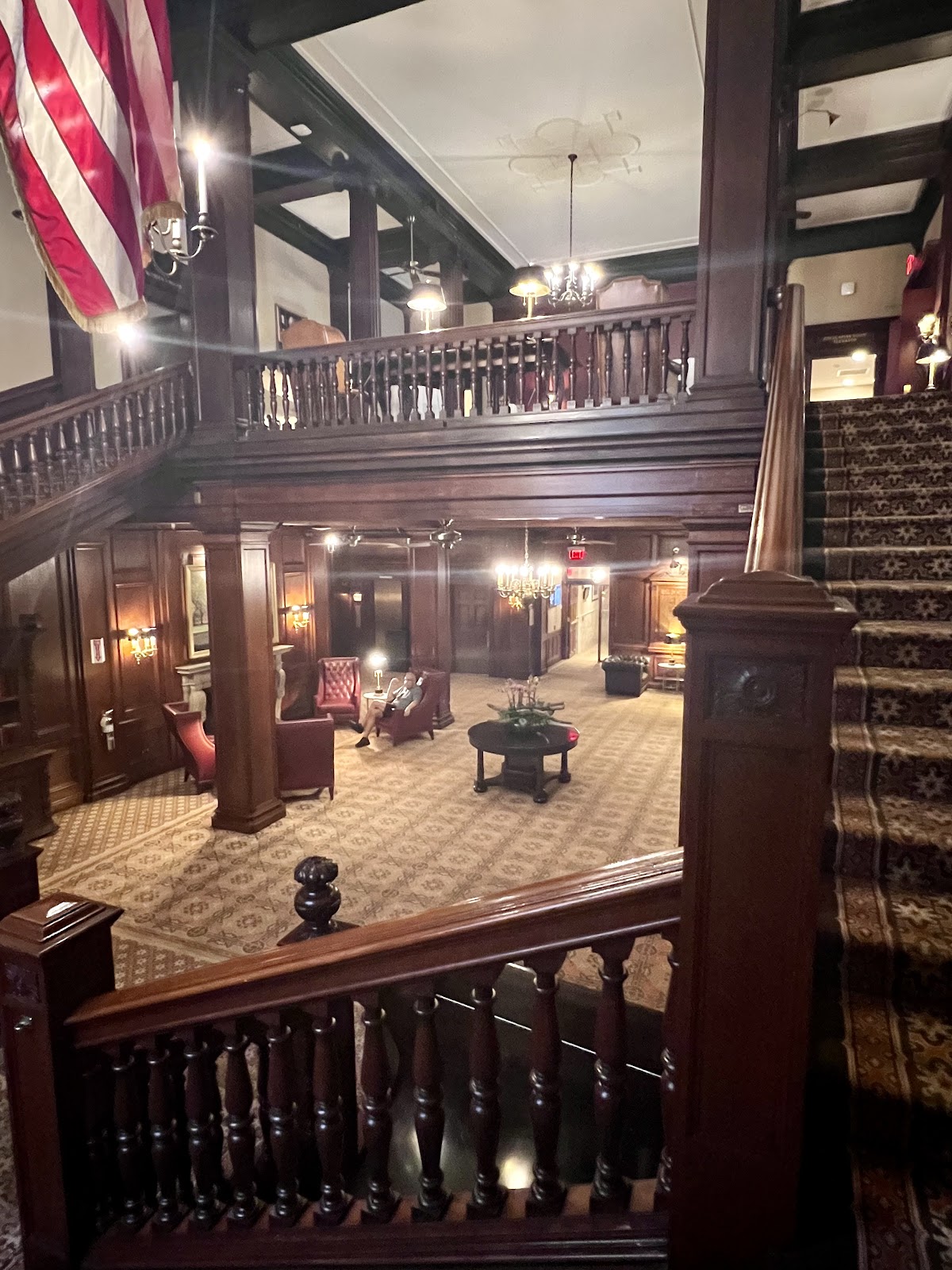
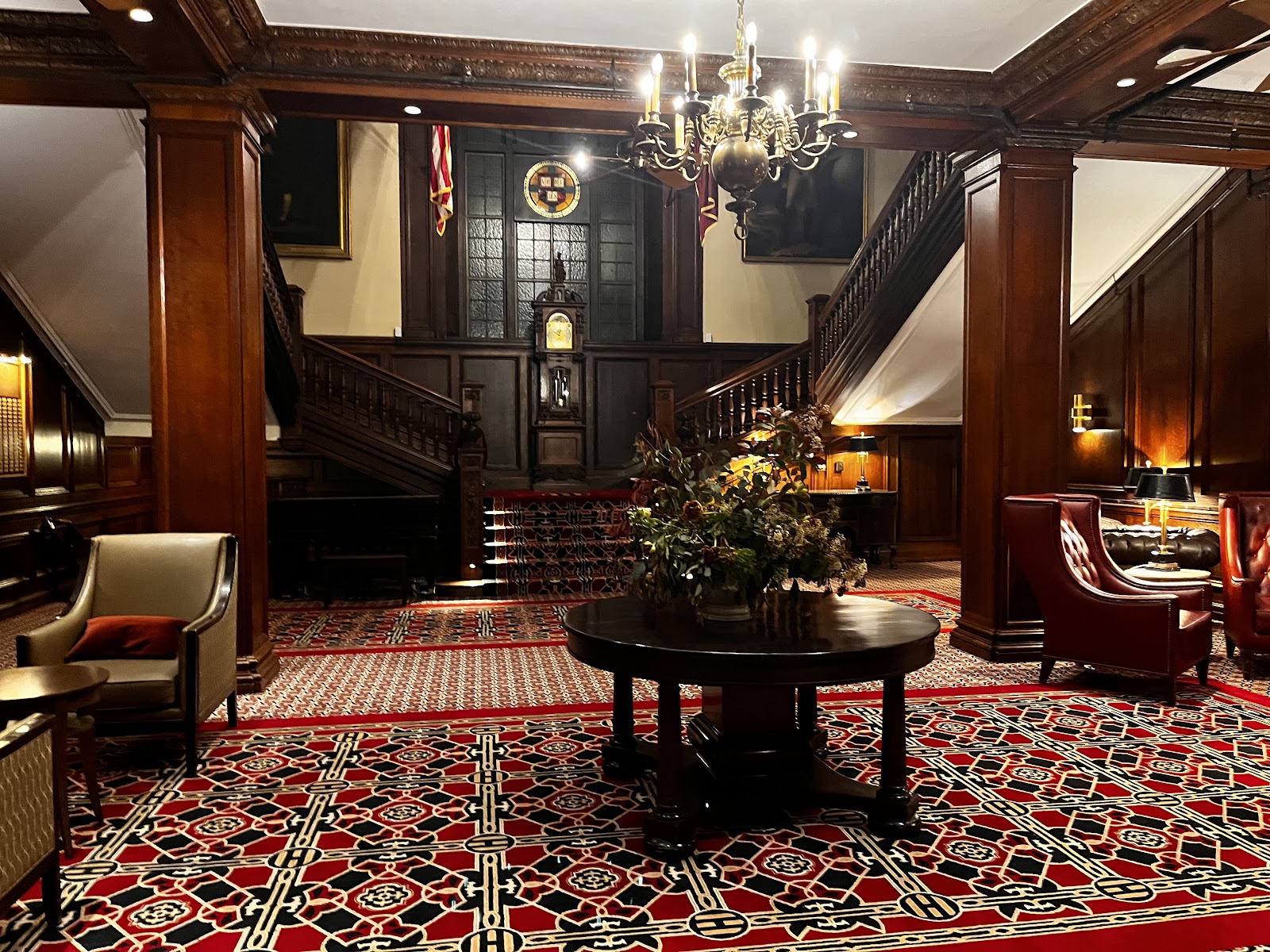
The Harvard Club of Boston is a private members’ club in the Back Bay with function rooms in the traditional idiom: timber panelling, oil portraits, patterned carpet, brass and warm lamps. It is the archetype of the American city club interior, and photographically it behaves accordingly — handsome, warm, dark and entirely artificial once the sun is down.
Because the interior is consistent year-round, couples often assume the season does not matter. In New England it matters enormously, and for three reasons that have nothing to do with the building: how much daylight exists, whether the Back Bay streets are usable, and how long anyone can comfortably stand outside.
So this guide is organised by season. We have not photographed a wedding here, and club rules — sponsorship, dress code, and whether photography is permitted in member areas — are for their office to confirm. At private clubs those rules are firmer than at hotels, and they are worth settling first.
Harvard Club of Boston at a glance
| Where | Back Bay, Boston, Massachusetts — a private members’ club |
| Character | Traditional panelled function rooms, oil portraits, warm lamps and brass |
| Light | Warm artificial throughout; daylight varies sharply by room and season |
| What changes by season | Available daylight, street usability, and outdoor comfort |
| Ask first | Sponsorship, dress code for suppliers, photography in member areas |
Spring: the best balance of the year
April into June is the strongest window for a Back Bay wedding, and it has little to do with the building. Days are long enough that a late-afternoon ceremony still leaves usable light for portraits, temperatures allow people outside without a coat over the dress, and Commonwealth Avenue’s mall and the Public Garden come into leaf and blossom.
For the interiors, longer days mean genuine daylight through the club’s windows well into the evening, which gives you a choice the winter does not: window-lit portraits indoors, without flash, in a room that in December would need lighting from scratch.
The one caution is that spring in Boston is unreliable week to week. A cold, wet May afternoon behaves like March. Plan the outdoor block as a firm intention with an indoor equivalent ready, rather than as a certainty.
Summer: long light, harsh middays, empty streets
July and August give the longest days and the most reliable weather, which makes the timeline forgiving. The complication is that summer sun in a city of brick and stone is harsh between roughly eleven and four, and Back Bay’s south-facing streets become high-contrast environments where you are choosing between blown highlights and dark shadow.
The technique is to work the shade deliberately. Brownstone streets are narrow enough that one side is almost always shaded, and that shaded side — with sunlit buildings opposite bouncing warm light into it — is one of the best portrait situations in the city. It is soft, directional and warm, and it costs nothing.
Summer evenings are long, which pushes the good dusk light past nine o’clock and therefore past most receptions. That is worth planning around: if you want the dusk street frames in July, they happen during dinner, not after it.
Autumn: the best photographs, the tightest schedule
Late September through October is when New England earns its reputation, and the Back Bay is one of the better places to experience it — Commonwealth Avenue’s mall and the Public Garden both hold mature trees that turn well. Autumn light is low and warm for most of the afternoon, which means the good window is wide rather than confined to the final hour.
It is also when the interiors look their best. Warm panelled rooms and warm autumn light through the windows agree with each other, and the whole gallery holds together tonally in a way it does not in the blue-grey light of February.
The constraint is daylight length. By late October, sunset in Boston arrives in the late afternoon, and usable light on a narrow street goes earlier still. An autumn wedding here needs the portraits before the ceremony or immediately after it — not saved until after dinner, when there will be nothing left.
Winter: an honest account
December and January are the hardest, and it is worth being direct about why. Sunset arrives in the mid-afternoon, so a five o’clock ceremony happens in full darkness. Outdoor time becomes genuinely uncomfortable — wind between Back Bay buildings is severe and standing on a pavement in a dress for ten minutes is not a small ask. Snow may be beautiful or may be grey slush.
What winter gives you in exchange is the building at its best. Panelled rooms, lamps, fires if there are any, and warm light are exactly what a cold dark evening wants, and photographs taken in that setting feel appropriate rather than merely competent. The whole day happens indoors, which removes weather risk entirely.
The practical plan is to commit to it: schedule everything inside, light the rooms properly, and treat any outdoor frame as a quick two-minute excursion if conditions allow. A winter club wedding photographed as an interior wedding works. One photographed as a summer wedding that happens to be cold does not.
One winter-specific technical note, because it catches people out. Moving a camera from a cold street into a warm panelled room fogs the front element, and it takes several minutes to clear — during which you cannot shoot. If the plan involves stepping outside and coming back, either accept the gap or keep one body acclimatised indoors and only take the other out. It sounds trivial and it has ruined more entrance photographs than any other cold-weather problem.
What works in your favour
- Handsome traditional interiors that photograph consistently regardless of weather
- Back Bay location with Commonwealth Avenue, the Public Garden and brownstone streets nearby
- Private club privacy — no strangers in frames, no crowds to work around
- Warm panelled rooms suit autumn and winter light exceptionally well
- Narrow shaded streets give excellent soft directional light even in harsh summer sun
What to plan around
- Entirely artificial light in the event spaces once the sun is down
- Winter sunsets in the mid-afternoon mean ceremonies happen in darkness
- Summer middays are harsh and summer dusk falls after most receptions have started
- Panelled rooms are dark and absorb light; bounce is limited and warm
- Private club rules on sponsorship, dress code and photography are typically strict
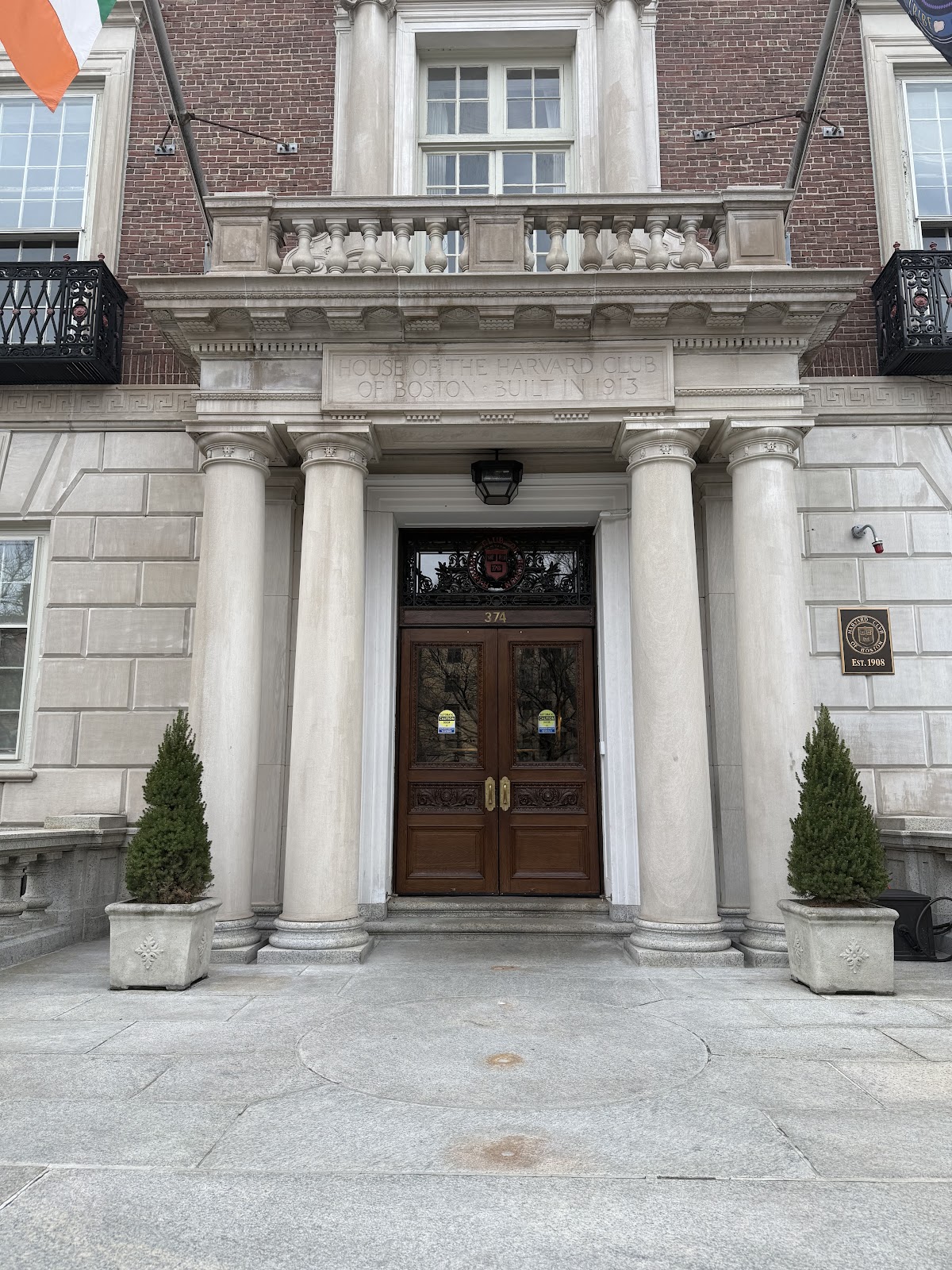
More frames from Harvard Club of Boston
Harvard Club of Boston wedding photography: common questions
Does the season matter if the venue is indoors?
Yes, a great deal, though not because of the building. In Boston the season decides how much daylight reaches the club’s windows, whether the Back Bay streets are usable for portraits, and how long anyone can comfortably stand outside in formalwear. A December wedding and a June wedding here produce very different galleries.
What is the best season overall?
Spring, roughly April to June, for the balance — long enough days for portraits after a late-afternoon ceremony, comfortable temperatures, and the Public Garden in leaf. Late September into October produces the most beautiful photographs but on a much tighter daylight schedule.
How do you handle harsh summer light in Back Bay?
Use the shaded side of the street. Brownstone streets are narrow enough that one side is nearly always in shade, with sunlit buildings opposite bouncing warm light into it. That combination is soft, directional and warm, and it is one of the best portrait situations in the city.
When should portraits happen for an autumn wedding?
Before the ceremony or immediately after it. By late October, Boston’s sunset is in the late afternoon and usable light on a narrow street disappears earlier still. Saving portraits for after dinner in autumn means there will be no daylight left at all.
Is a winter wedding here a bad idea?
Not at all, provided it is planned as an interior wedding. Panelled rooms, lamps and warm light suit a cold dark evening perfectly, and holding everything indoors removes weather risk entirely. What fails is treating a winter date as a summer plan that happens to be cold.
More Boston venue guides
We are writing a photographer’s guide to every venue we would happily shoot in Boston. Here are three more, plus the full index:
- The Isabella Stewart Gardner Museum: Light, Timing and the Courtyard
- The Liberty Hotel: Who This Venue Suits
- The Somerset Club on Beacon Street: Is It Right for You?
Planning a wedding at Harvard Club of Boston?
Tell us your date and we will send you the actual sunset time, the usable-light window for Back Bay’s streets that week, and a plan that treats your season as an asset rather than a constraint.