 Roxy’s Downtown: Photographing a Small Stage Room
The Manhattan Arts Center, Manhattan: A Walk Through the Building
An arts centre is three venue types under one roof. Each needs a different approach, and they are adjacent.
A community arts centre is an unusual venue because it contains three distinct building types in one address: a gallery, a theatre and a public lobby. Each has its own lighting logic, and the logics are incompatible.
The gallery is lit at low levels with directional fittings aimed at walls, because light damages work. The theatre is deliberately dark, because a house is built so that a lit stage reads. And the lobby is glazed and bright, because a public entrance is meant to feel open.
Between the brightest and the darkest of those there can be four stops or more, and they are frequently separated by one door. A photographer moving between them without changing configuration produces a sequence that looks like three different weddings — and automatic exposure makes it worse by splitting the difference in all three.
So this is a walk, taken in the order a day uses the building, with the configuration change named at each door. We have not photographed a wedding at the Manhattan Arts Center; community arts centres behave consistently. Which spaces are included, the rules on flash near work, and whether the stage lighting can be set are questions for their team.
The Manhattan Arts Center at a glance
| Where | Manhattan, Kansas |
| Three buildings in one | A bright glazed lobby, a dim gallery, a dark theatre |
| The span | Four stops or more, sometimes through a single door |
| The best frame | A couple on a lit stage seen from the dark house |
| Ask first | Spaces included, flash rules near work, stage lighting control |
The lobby, and the gallery
The lobby is the first space and it is the only significant daylight in the building, which makes it more valuable than its size suggests. A glazed street frontage behaves like a large window: the working conditions are the shaded side or an overcast day rather than direct sun, and about three metres back from the glass so a row of people is evenly lit rather than dropping off the far end.
That makes the lobby where the large groups belong — and in a building of this type it is frequently the only place they will fit. It also has normal ceiling heights, which means bounce flash works, and that is worth confirming with one test frame, because neither the gallery nor the theatre will return anything.
At Manhattan’s latitude, about thirty-nine degrees north, the midday sun reaches roughly seventy-four degrees above the horizon in June and about twenty-seven in December, so a south-facing frontage is a high soft source in summer and carries direct low sun through most of a winter afternoon. Which condition applies is a seasonal question with a definite answer.
The gallery is the second space and its lighting exists for a reason that has nothing to do with faces: light damages work cumulatively and irreversibly, so fittings are low-output and aimed at the walls. The result is bright pools on the work and comparative darkness where people stand.
Measure that rather than estimating it, because eyes adapt and meters do not — a gallery that reads as pleasant can be two or three stops below a normal interior. And walk it noting where the pools fall, because that survey determines every position worth using.
Used deliberately the pools are the best thing the building offers short of the stage. A subject standing in a pool of directed light with an unlit gallery behind them is separated completely with no equipment at all — the steepest fall-off any venue type gives. Used accidentally it puts faces half in a beam and half out, which has the same answer as dappled sunlight: move.
There is a decision to make about the work itself, and it should be made rather than drifted into. Art in the frame means accepting that a painting is a detailed object competing with a face, and handling glazing that reflects like a mirror — the fifteen-second check from the camera position, looking at every glazed work and placing the source where none of them shows it. Art out of the frame turns the gallery into plain pale walls in even light, which is one of the cleanest portrait environments there is.
And there is a rights dimension worth one question rather than nervousness: artists hold rights in their work, and a photograph that reproduces a piece prominently and is then published engages those rights. A community gallery will know its position, and the answer is usually simply which works may appear.
The theatre, and the changes at each door
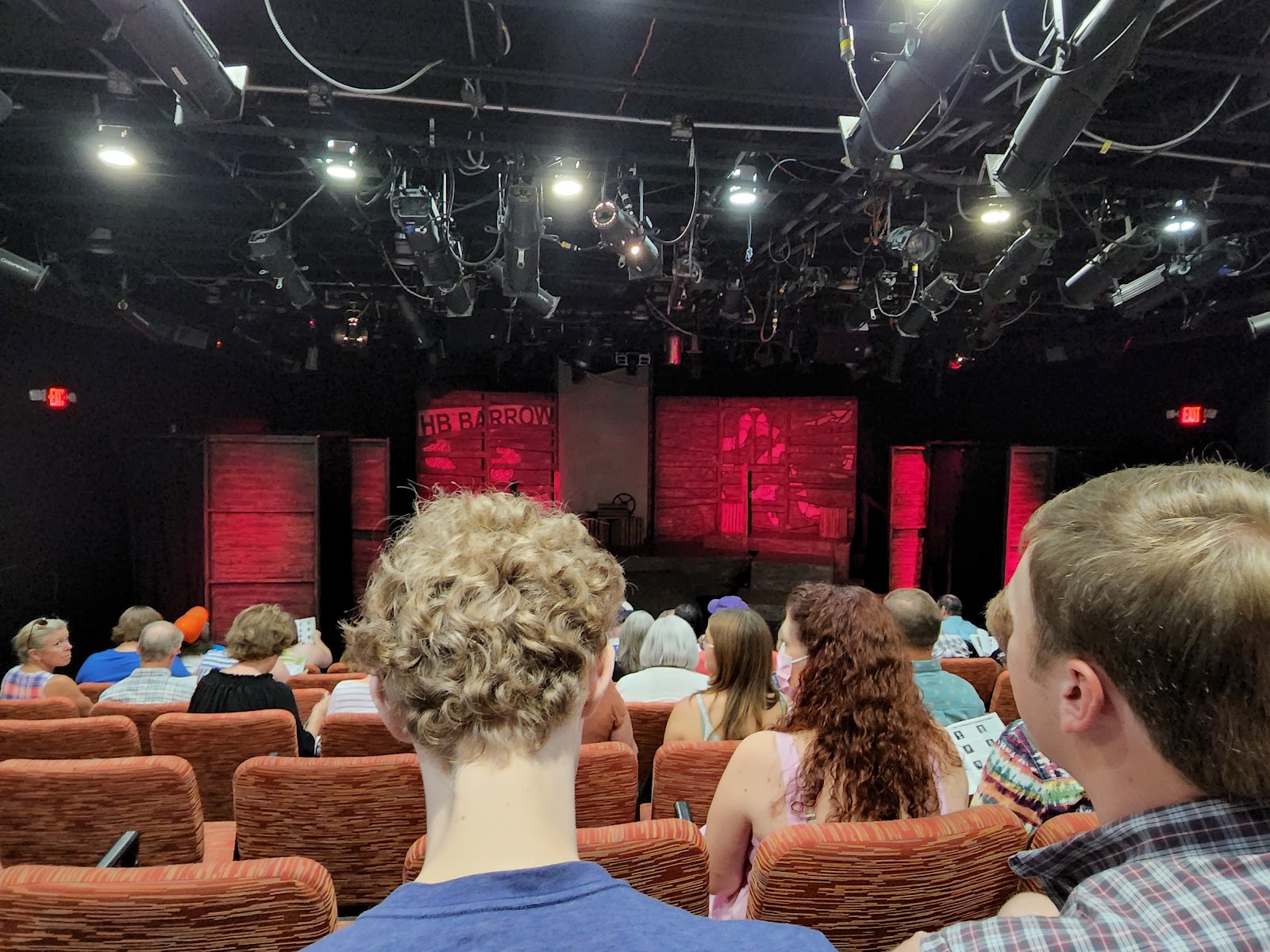
The theatre is the third space and it gives the building’s best frame. A couple on a lit stage photographed from the house sits in a pool of light with absolute darkness around and behind — the most complete separation available in any building, and it needs no equipment at all if the rig can be set.
The setting is what to ask about, because a stage rig is a controllable instrument and most community venues will help. A warm wash from the front at a low angle is a better portrait light than anything else in the building; a backlight from above separates hair from the darkness; a side light gives shape. What to avoid is the default, which is a rig set for a play and frequently downlit from overhead, filling eye sockets with shadow and cutting a line under every chin.
Saturated gels deserve a specific warning: a coloured gel is a narrow-spectrum source, so skin lit by it has almost no information in two of its three colour channels and no editing recovers what was never recorded. Coloured light belongs behind or above a couple, and asking for the wash set open white is entirely reasonable.
The house itself is several stops below a normal interior with a high dark ceiling, which means bounce returns nothing and any frame made there needs a source direct into a modifier, close and handheld — a raked floor between fixed seats has nowhere safe or level for a stand. And close matters: a modifier at a metre and a half is a large soft source relative to a face and needs almost no power, while the same modifier at four metres is hard and needs seven times as much.
The configuration changes at each door and that is the practical discipline in a building like this. Lobby: low ISO, moderate aperture, daylight white balance, probably no flash. Gallery: higher ISO, wide aperture, white balance to the fittings or a gel, one close source, no stand. Theatre: higher again, white balance to the rig or a gel, a source close and handheld or nothing at all if the stage is lit.
Switching at the door rather than in the middle of a room is what produces a coherent gallery, and it means the schedule should cluster by space rather than by activity — everything in the lobby while there, everything in the gallery while there, everything in the theatre while there. That is worth agreeing with the couple in advance, because it changes the order they might expect.
And the best frame in the building after the stage is at a threshold. Standing two or three metres inside the dim gallery or the dark house, facing out towards the lit lobby, gives a very large soft source in front and total darkness behind — which needs nothing added and is worth finding on arrival with one test frame at two, three and four metres to see where the trade sits.
Colour is the standing condition throughout, because a building like this is relit in stages: original fittings, later fluorescents, recent LEDs of varying quality, gallery track lighting chosen for the work, stage instruments, and LED exit lighting. Pick the temperature that should be correct, set white balance to it, and let one gelled source own the faces where legibility matters.
- Large groups in the lobby, three metres back from the glass
- Walk the gallery and note where the light pools fall
- Decide whether the art is in frame or out, and ask about publication
- Ask for a warm front wash open white, not the overhead default
- Change configuration at each door, and cluster the schedule by space
Outside, and the Flint Hills year
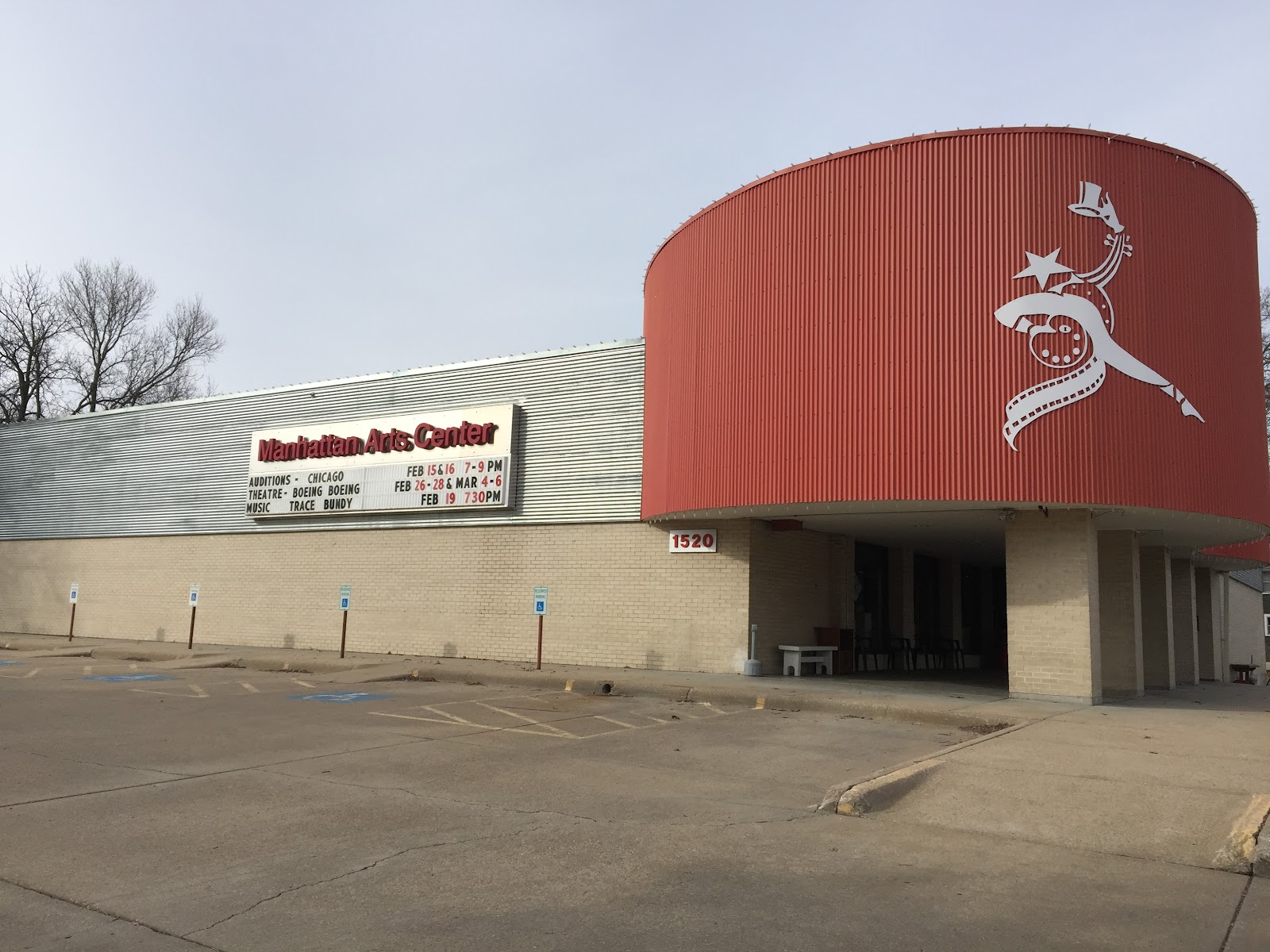
Because the building’s daylight is confined to the lobby, the outdoor frames matter here — and in a small city a building like this can usually be photographed whole, because the streets are wide and there is room to stand back.
Where the elevation is native Kansas limestone, as much local building is, that material is worth understanding: it is pale, warm, coarse and a strong reflector, which means a sunlit limestone wall is a large warm light source rather than a background. A couple in shade three to four metres out from a lit limestone face, turned towards it, is beautifully lit for nothing — and it needs a custom white balance set on a face in position, because limestone bounce is markedly warmer than daylight.
The stone also reads only under raking light: coarse limestone shows its tool marks and courses when light runs along it, while light facing it flattens the wall to a pale field.
The timed frame is the twenty-five to forty minutes after sunset, when the sky still holds colour while the building’s own lighting comes up so one exposure holds couple, building and sky. That is the one picture the interiors cannot give, and since none of them change through the day, taking it costs nothing.
Manhattan sits in the Flint Hills at the confluence of two rivers, with limestone bluffs above the valley — so there is genuine relief here rather than the flat prairie people expect. The Flint Hills is the largest remaining expanse of tallgrass prairie in North America, preserved because flint-bearing limestone close to the surface made the hills unploughable.
Tallgrass changes through the year more than almost any surface. Big bluestem and Indian grass grow through summer and by late August stand well above head height, which makes them foreground and background at once; in autumn they turn bronze and hold that standing through winter, so bronze grass against pale limestone is the region’s own colour pairing. And in late March and April the grassland is burned, giving blackened ground, smoke on the horizon, and an intense green flush within weeks — three landscapes inside two months.
Wind is the constant with little to break it on open ground, which conveniently matches the handheld, no-stands configuration this building already requires.
Summer is hot and humid, with moist air softening shadows and slightly flattening the rolling distance, and severe thunderstorms a real possibility from spring onward. The fogging problem is the equipment issue: a body carried from an air-conditioned interior into July air fogs on every surface at once and does not clear quickly, and a gallery is climate-controlled for the work, which makes the difference larger.
Winter is cold with a December midday sun at about twenty-seven degrees, which makes the whole short day raking light — exactly what limestone needs — and snow that turns the ground into a reflector, brightening the lobby glazing and giving the best natural outdoor fill available.
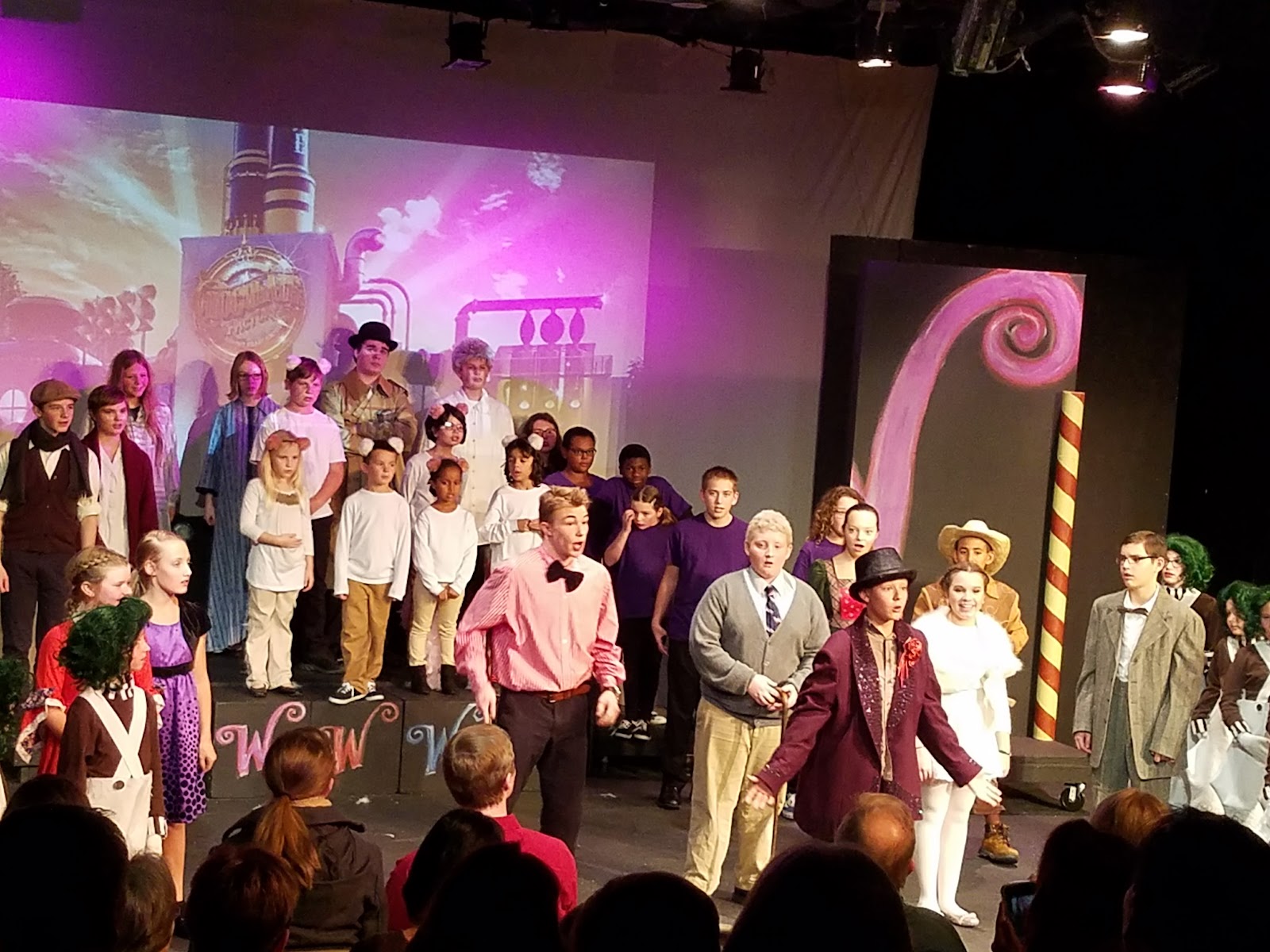
More frames from The Manhattan Arts Center
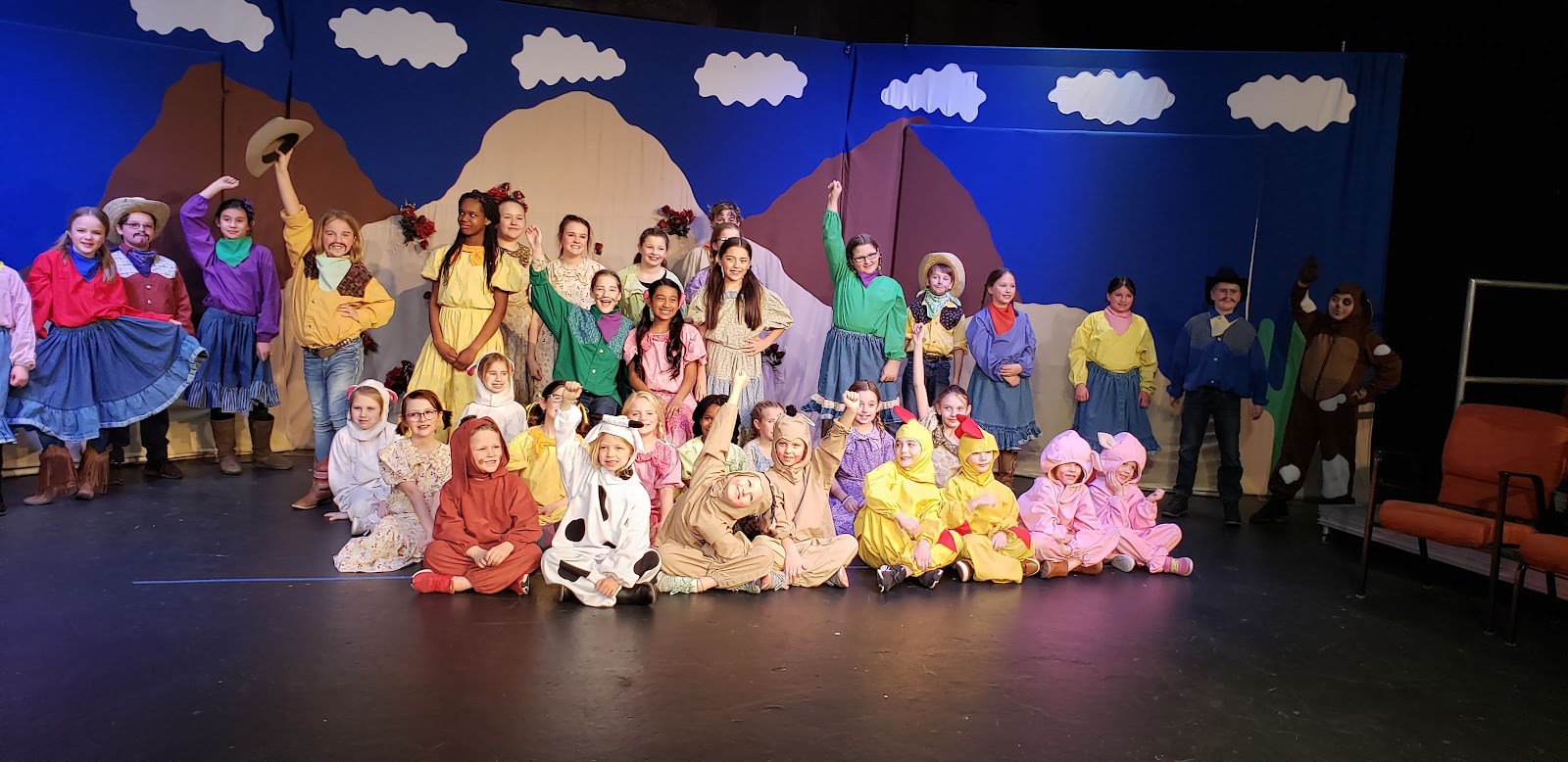
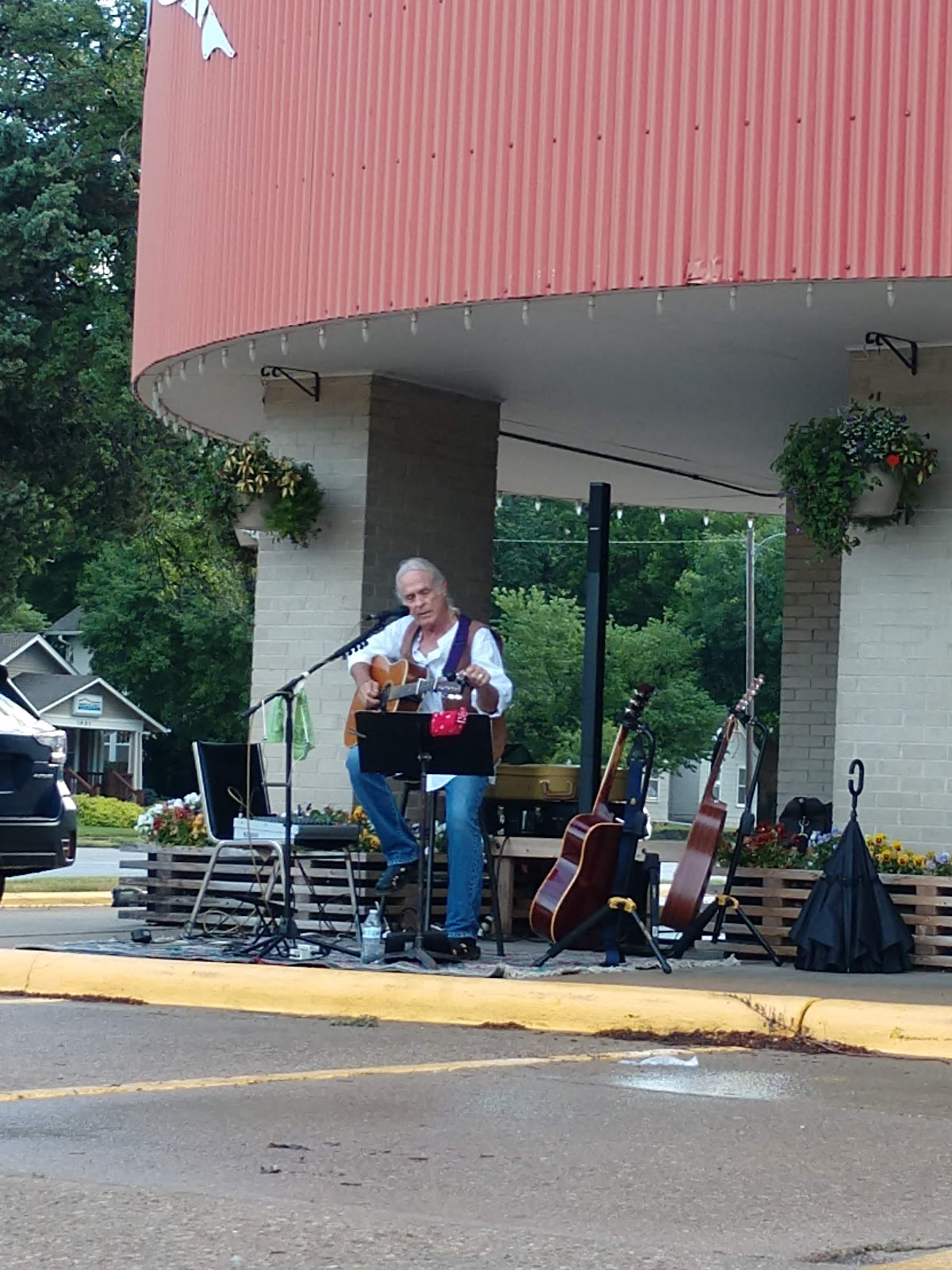
The Manhattan Arts Center wedding photography: common questions
What are the three buildings in one?
A bright glazed lobby, a dim gallery lit in pools to protect the work, and a deliberately dark theatre — four stops or more apart, sometimes through one door.
Where do the large groups go?
The lobby, three metres back from the glass. It is the only significant daylight and often the only place a group will fit.
What is the best frame in the building?
A couple on a lit stage photographed from the dark house — the most complete separation anywhere, with no equipment needed if the rig can be set.
What should be asked of the stage rig?
A warm front wash at a low angle rather than the overhead default, set open white rather than gelled, plus a backlight for separation.
What is the practical discipline here?
Change configuration at each door and cluster the schedule by space rather than by activity, so the gallery reads as intentional rather than mixed.
Is there a question to ask about the artwork?
Yes — which works may appear in published photographs. Artists hold rights in their work, and a community gallery will know its position.
More Kansas venue guides
We are writing a photographer’s guide to every venue we would happily shoot in Kansas. Here are three more, plus the full index:
- The Barn at the Ranch, Goddard: Field Notes
- The Chase County Courthouse: A Walk Through the Building
- The Haury Farm, Newton: The Light Through the Day
Planning a wedding at The Manhattan Arts Center?
Three buildings, three configurations. Tell us your date and we will walk them in order.