 The Blue Ball Barn, Wilmington: A Walk Through a Converted Barn
The Boardwalk Plaza Hotel, Rehoboth Beach: A Hotel Built Facing East
A hotel built to face the Atlantic faces east. That reverses everything you know about wedding light.
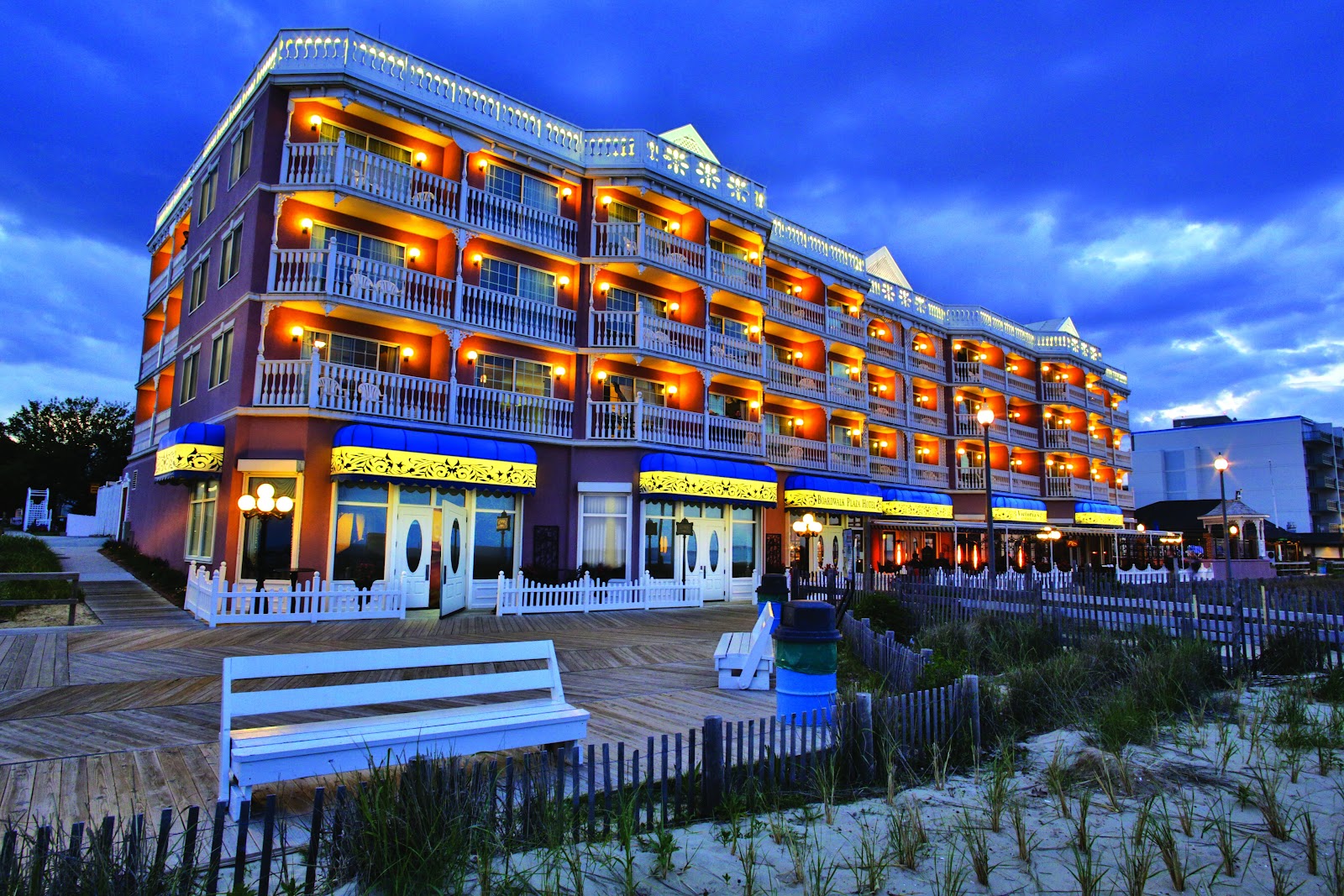
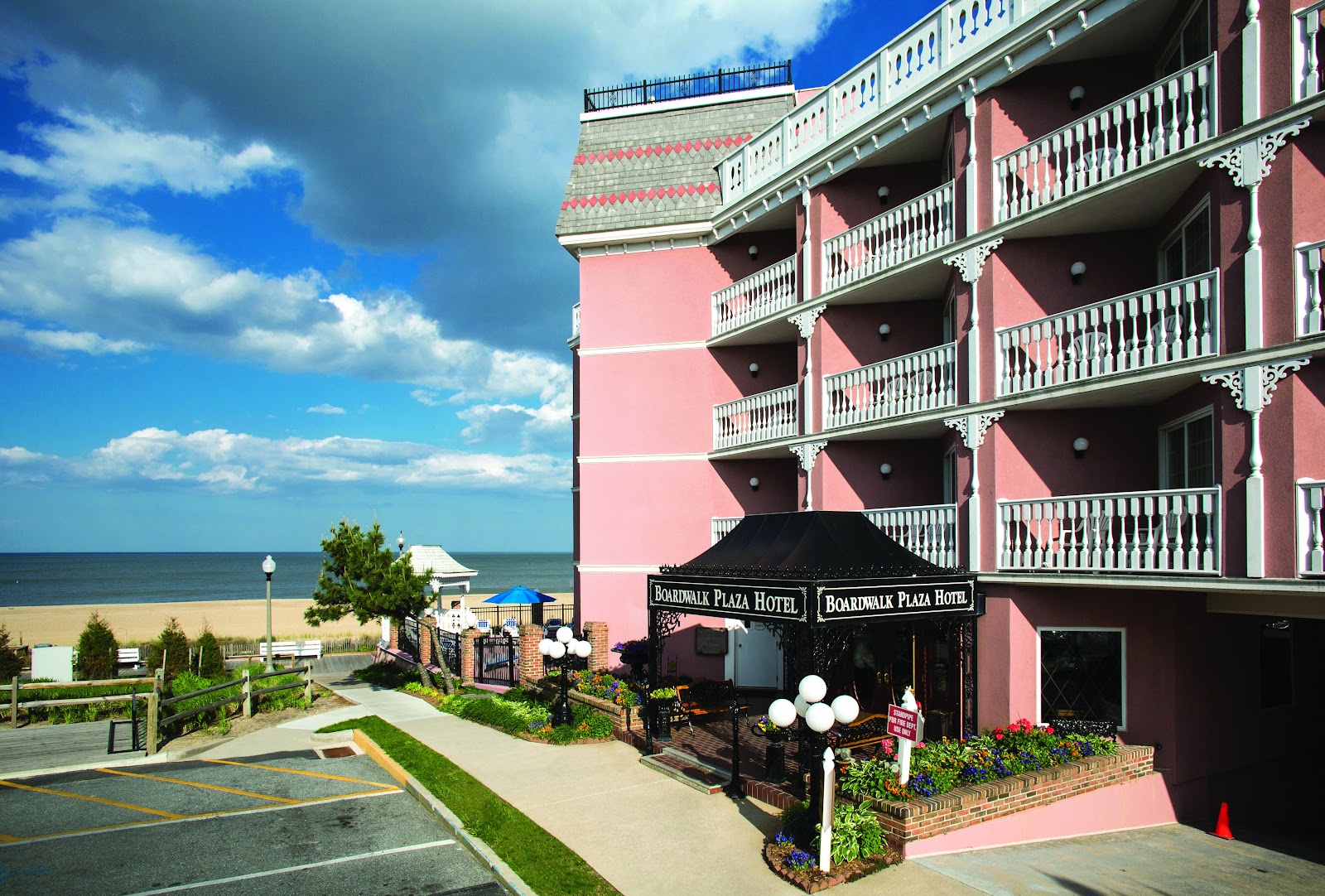
An oceanfront hotel on the Atlantic coast is built to do one thing: look at the water. The rooms, the balconies, the public spaces and the terraces are all arranged on the ocean side, and on this coast the ocean is east.
That single orientation reverses the usual photographic order of a wedding day. At most venues the light improves towards the end of the day and the best frames come in the last hour before sunset. Here the building’s own aspect is lit at dawn and in shadow by mid-afternoon, which means the frame the hotel exists to give happens before most weddings have started.
Everything else follows. The ocean-facing rooms are soft and bright in the early morning and in their own shade by the afternoon. The beach in front is frontlit at sunrise and backlit by evening, which are entirely different pictures. And the sunset happens behind the building, over the town and the bay beyond, which means the evening frames face away from the water.
We have not photographed a wedding at the Boardwalk Plaza Hotel; oceanfront hotels behave consistently and orientation is geography. Which spaces are included, whether beach and boardwalk access is part of the offer and whether the lighting is adjustable are questions for their team.
The Boardwalk Plaza Hotel at a glance
| Where | Rehoboth Beach, Delaware, on the Atlantic |
| The logic | Everything faces east, towards the water |
| Dawn | The building’s best light, and the beach frontlit |
| Afternoon | The ocean side is in its own shade — genuinely good, and soft |
| Evening | The sunset is behind the building, over the town and bay |
What an east-facing hotel does through the day
At sunrise the whole logic pays off at once, and it is worth persuading a couple to use it. The building’s ocean elevation is lit directly, the beach in front of it is frontlit and every ripple and footprint has texture, and the sun rises out of the water rather than behind anything — which is a frame that almost no inland venue can offer at all.
It is also the only time of day the beach is empty. In a resort town in summer that is not a small consideration: by nine in the morning the sand is populated and by midday it is crowded, and no amount of long lens work removes that. A twenty-minute excursion at first light produces frames that cannot be made at any other hour.
Through mid-morning the sun climbs off the water and the ocean-facing rooms become the best interior light of the day, briefly, before they lose the sun entirely. A tall east-facing window with the sun still low in it is a strong directional source; an hour later, with the sun above and behind, the same window is a soft one.
Which brings the afternoon, and this is the part that surprises people. An east-facing elevation in the afternoon is in its own shadow, lit by the open sky over the ocean and by light bouncing up off the sand and the water — and that is genuinely excellent light. Soft, directional, cool in colour, and remarkably even, because the sea and the pale sand together form an enormous low reflector.
So the ocean-facing rooms and balconies are usable all afternoon, which is the opposite of what a west-facing hotel offers. The working method is the ordinary one: every overhead fitting switched off so the room has one colour of light, lamps out of frame, two to three metres back from the glass so the fall-off is even across two faces.
Sand and water as a reflector deserve a specific note, because the effect is stronger here than photographers expect. Pale dry sand reflects a great deal, and it reflects upward — which fills exactly the shadows under eyes and chins that the sky alone leaves. The cost is uplight under the chin and into the nostrils, which is corrected by having something solid on one side: a wall, a dune, a structure, a beach shelter.
The evening reverses everything again. The sun sets behind the building, over the town and the inland bay, which means the evening frames face away from the water — the boardwalk and the streets are lit, the ocean side is in deep shade, and the good exterior positions are the ones looking inland. And the crossing after sunset, when the sky still holds colour at about the brightness of the building’s lighting, is the day’s one unmovable frame.
The beach, the boardwalk, and the interiors
The beach is the venue’s real asset and it has one governing variable that most people get wrong: the direction the couple faces relative to the sun.
Frontlit, at sunrise, the sand has texture, the water has colour and the faces are lit — a clean, simple picture. Backlit, in the evening with the sun behind the building or low over the land, the water goes silver, the couple rim-lights and the sand in front becomes a bright field which needs the exposure set for the faces. Both work and they are not interchangeable.
Sidelit is the best of the three and it happens in the middle hours, when the sun is south of the beach’s axis rather than along it: the sand rakes, the couple has modelling, and the ocean is a plain dark or bright field behind. That is the frame worth walking for.
The boardwalk is the second asset and it does something the beach cannot: it gives structure. A boardwalk is a strong receding line with repeating rails and boards, which means it is a background that darkens by itself and organises a frame — and the built frontage behind it gives colour, signage and shelter. A boardwalk shelter or a shop awning is a roof with an open face, which makes a directional soft source at the scale of two people, and works in rain.
That matters, because an oceanfront venue needs a wet-weather answer and the beach is not one. A named indoor space, plus the boardwalk’s own shelters and awnings, is the plan — and wet boards reflecting signage and sky photograph better than dry ones, so a shower is an opportunity delayed rather than a day lost.
Inside, the conditions depend on which side of the building a space is on, and that is worth mapping on arrival. Ocean side: bright in the morning, soft and cool all afternoon, and the good light. Town side: the reverse, soft in the morning and carrying direct sun through the afternoon.
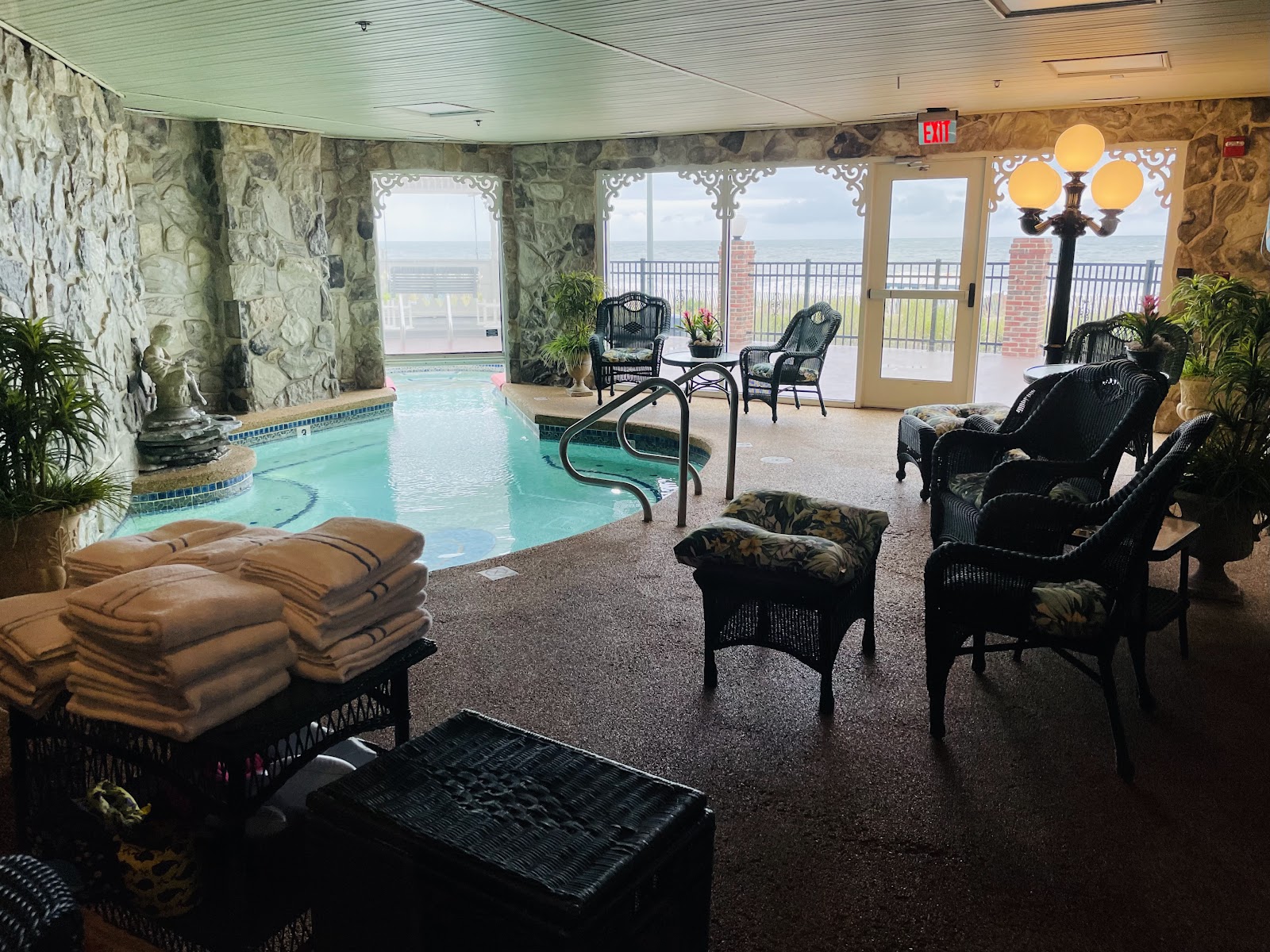
Where the public rooms have no windows at all, standard function-room conditions apply: pale evenly lit surfaces give no natural separation, which is fixed geometrically — distance between subject and background, the darker end of the room, depth behind rather than a near wall, and a source brighter on the face than the room is on the wall. Ceiling heights decide the bounce and it varies by space, so one test frame each.
Mixed colour is the standing condition after dark: warm decorative fittings, cooler recessed downlights, and any coloured uplighting installed for the event. Pick the temperature that should be correct, set white balance to it, and switch off or overpower whatever else lands on skin.
- Use first light: the building is lit, the beach is frontlit and empty
- The ocean side is in soft shade all afternoon — genuinely good light
- Check the chin in the first beach frame; sand overfills from below
- Sidelight is the best beach light, and it happens in the middle hours
- The evening frames face inland; the sunset is behind the building
The coast, and the Delaware year
Salt is the first thing a coastal venue does to equipment and it deserves plain statement, because the damage is cumulative and not always obvious. Airborne salt spray settles on a front element and on any exposed metal, and once there it attracts moisture and etches coatings over time. A body used on a beach and put away unwiped is a body being slowly degraded.
The fix is routine rather than complicated: a damp cloth on the front element and the body at the end of the day, lens changes kept to a minimum in wind, and everything bagged between positions. Sand is the other half of it and it is worse than salt in the short term, because a grain on a sensor or in a zoom barrel is a repair rather than a clean.
Sea fog is the coast’s distinctive seasonal condition and it runs on a lag that catches people out. Ocean water warms and cools much more slowly than land, which means the sea is coldest in spring — so warm spring air moving over cold water condenses, and late spring is the foggiest season here rather than autumn.
Fog is not a problem. It is diffusion at landscape scale: it softens everything, separates the boardwalk and the pier into grey layers, and makes a frame no clear morning gives. It also erases the horizon entirely, which turns a beach into a plain field of tone — a genuinely striking and unusual background.
The same lag makes September the best month on this coast. The ocean is at its warmest, the air is clear, the summer crowds have gone, and sunset falls at a civilised hour. If there is an ideal month for an oceanfront wedding here, it is September into early October.
Summer is hot and humid with the crowds at their peak, which is the real constraint rather than the light: a beach that is full is a beach that cannot be photographed wide. Long lenses, tight framing and first light are the answers. The humidity also makes fogging severe — a body carried from an air-conditioned interior into July air fogs on every surface at once and does not clear quickly, so a bag opened twenty minutes early is the whole fix.
Autumn brings nor’easters, which are genuine coastal storms with wind and surf rather than mere rain, and they need the named indoor alternative rather than optimism. A heavy surf and a grey sky are also the most dramatic frames this coast produces, so a storm day is a different gallery rather than a lost one.
Winter is cold, windy and empty, and for a photographer that last word is the point: an empty beach with a low sun — at this latitude the December midday sun reaches only about twenty-eight degrees above the horizon, so the whole short day is raking light — is the strongest version of this location. The constraint is wind chill on an exposed shore, which means five minutes with coats rather than twenty without.
And wind is the constant here in every season. A lightstand on a beach is a liability, a veil behaves unpredictably, and a held diffusion panel is a sail — so the source goes in a hand or on a bracket, and the lee of a dune or a building is worth walking to.
More frames from The Boardwalk Plaza Hotel
The Boardwalk Plaza Hotel wedding photography: common questions
Why does the orientation matter so much?
Because an oceanfront hotel on this coast faces east. The building’s best light is at dawn and the sunset happens behind it, over the town and bay.
Is the afternoon a problem then?
No — an east-facing elevation in the afternoon is in its own shade, lit by open sky and by sand and water bouncing up. That is genuinely excellent light.
What is the best beach light?
Sidelight, in the middle hours when the sun is south of the beach’s axis: the sand rakes, the faces have modelling, and the ocean is a plain field behind.
Why check the chin on a beach?
Because pale sand reflects strongly upward and can overfill under the chin and into the nostrils. Something solid on one side corrects it.
When is sea fog most likely?
Late spring. The ocean is coldest then, so warm air over cold water condenses — which makes spring foggier than autumn on this coast.
What is the best month?
September into early October. The ocean is at its warmest, the air is clear, the crowds have gone and sunset is at a civilised hour.
More Delaware venue guides
We are writing a photographer’s guide to every venue we would happily shoot in Delaware. Here are three more, plus the full index:
- The Bottle & Cork, Dewey Beach: The Light Through a Day
- The Crooked Hammock, Rehoboth Beach: What It Suits, and What It Does Not
- The Delaware Art Museum, Wilmington: One Frame, and How It Is Made
Planning a wedding at The Boardwalk Plaza Hotel?
An east-facing day runs backwards. Tell us your date and we will plan it that way.